ART CITIES: N York-Robert Gober
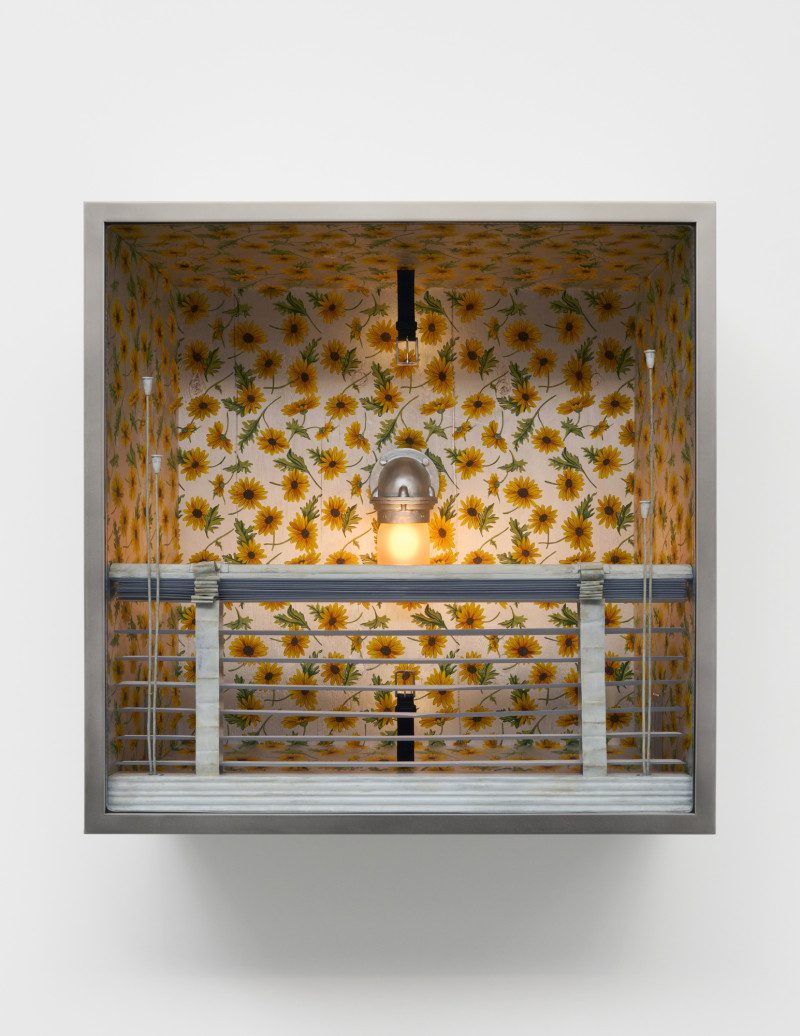
Since the 1970s, Robert Gober has built a body of work that probes the fault lines between sexuality, religion, domestic life, and American politics. His art occupies a peculiar territory: emotionally charged yet materially restrained, conceptually rigorous yet rooted in handcraft. Early in his career, critics described his sculptures as “minimal forms with maximum content,” a phrase that continues to capture the paradox at the center of his practice. Everyday objects—shoes, sinks, bags of cat litter—become vessels of layered meaning, simultaneously intimate and uncanny.
By Efi Michalarou
Photo: Matthew Marks Gallery Archive
At the heart of Gober’s method is fabrication. Nothing is merely found; everything is made. What appears to be a dented can of house paint may in fact be a hand-painted sculpture in solid lead crystal, an object that quietly destabilizes perception. His work consistently rejects the readymade in favor of labor-intensive construction, underscoring the physical act of making as both subject and strategy. This approach has long distinguished him within contemporary sculpture, aligning his work with craft traditions even as it engages with conceptual art and post-minimalism.
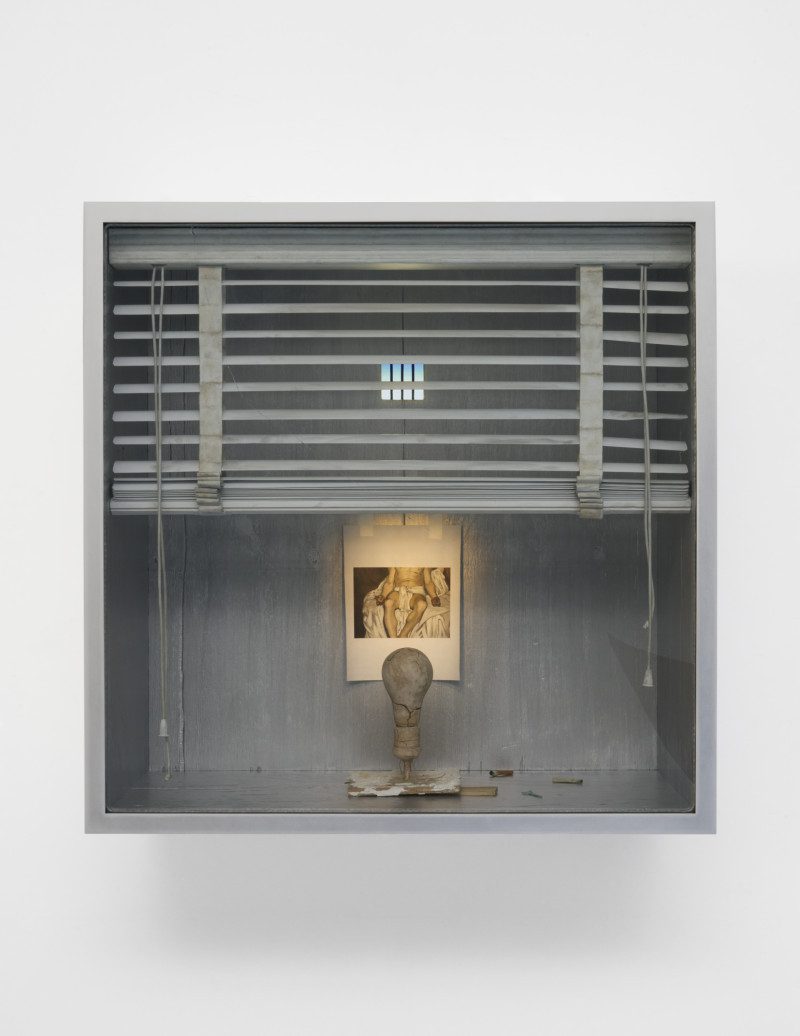
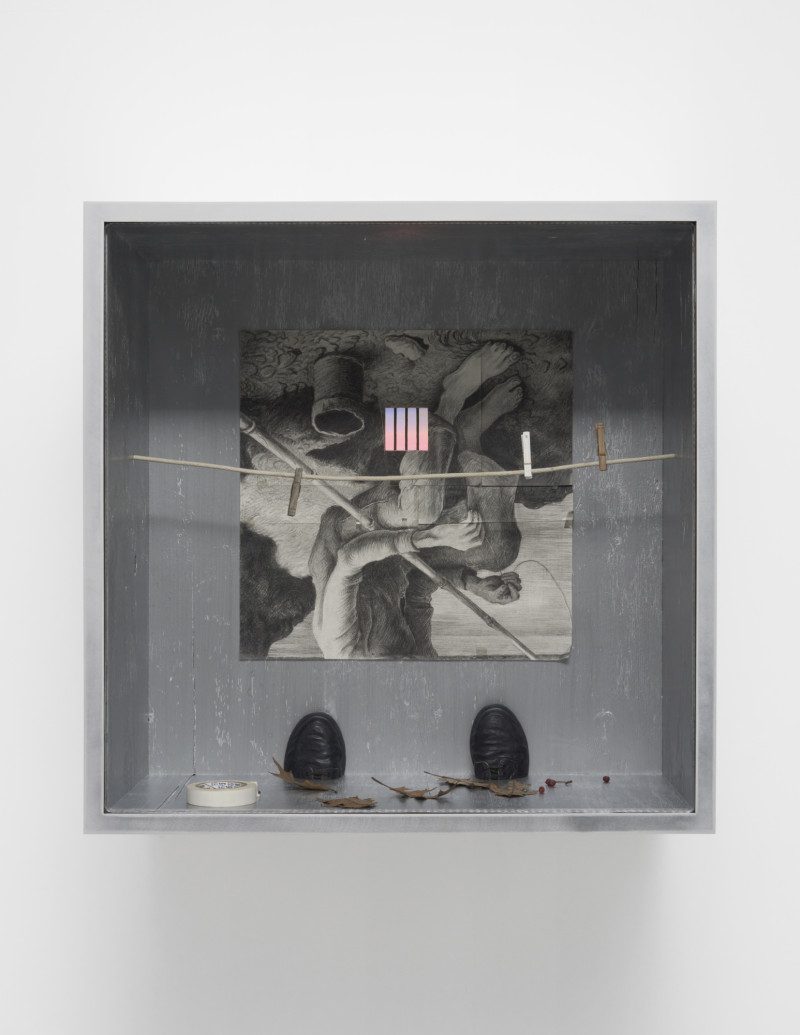
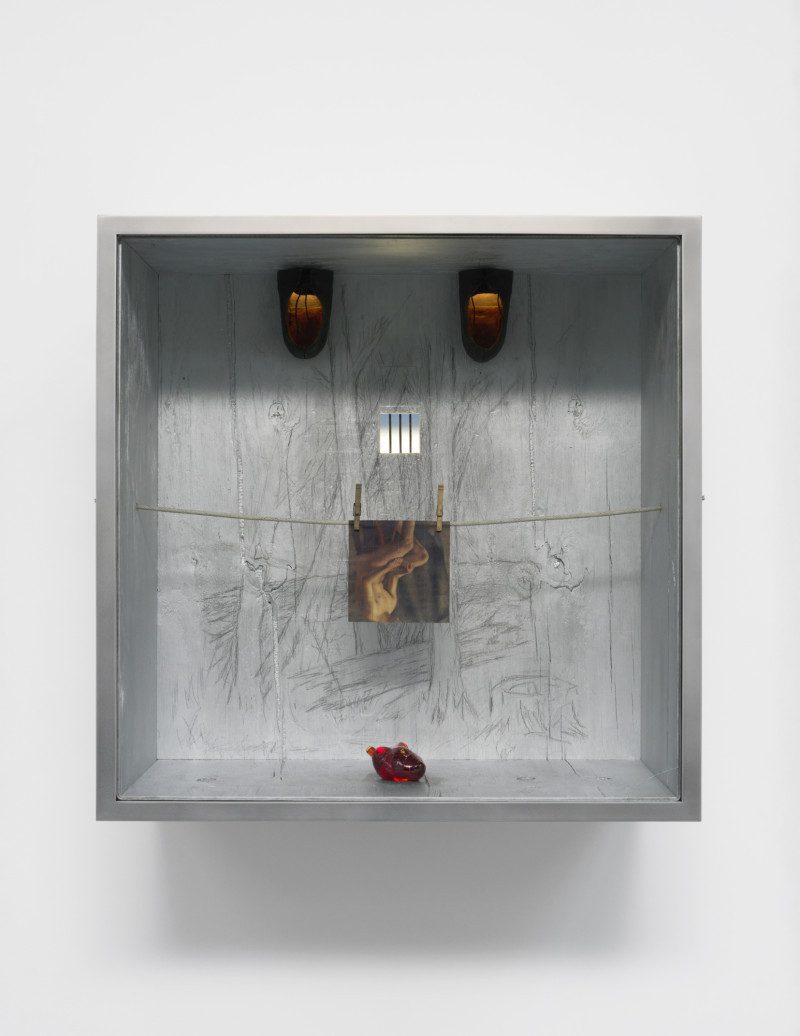
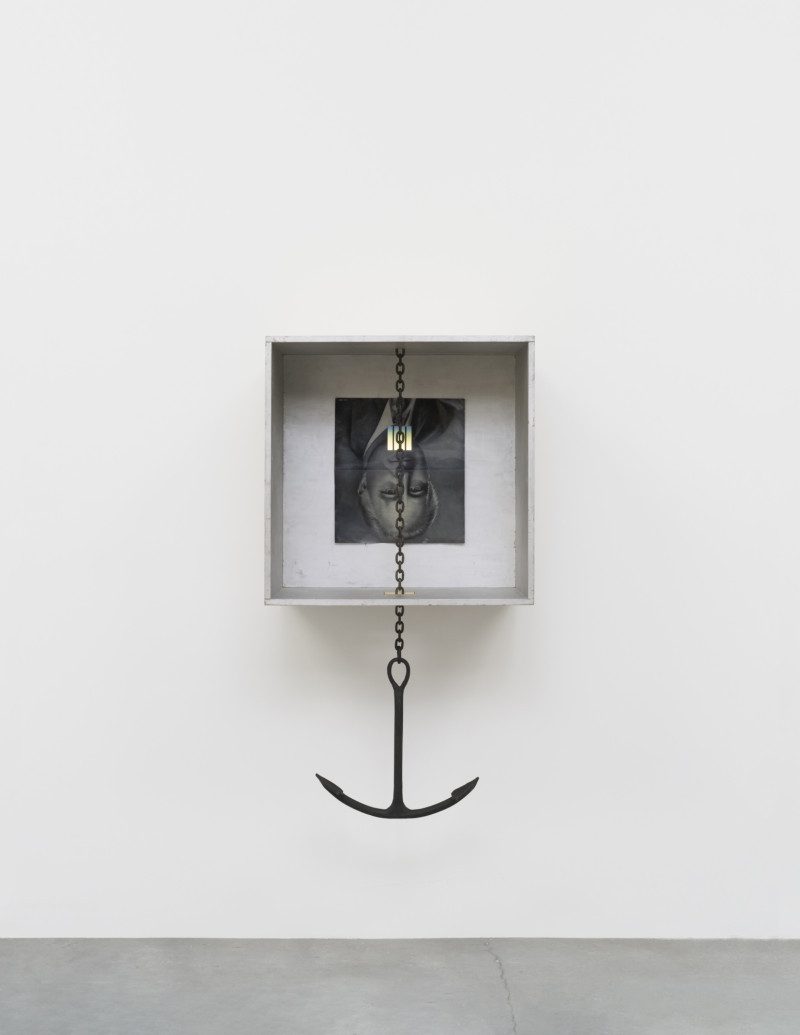
The exhibition “Plein Air” brings together a group of recent sculptures produced in Gober’s New York studio over the past three years. The works deploy a wide range of materials—bronze, pewter, wood, handblown glass, acrylic paint, and handmade paper—and several incorporate internal illumination, transforming the sculptures into luminous presences rather than inert forms. These pieces suggest a continued investment in material ambiguity: surfaces appear familiar yet resist immediate identification, while light becomes both a literal and symbolic device.
Alongside his own sculptures, Gober has organized a companion presentation devoted to the painters John Folinsbee and Harry Leith-Ross, two key figures associated with the Pennsylvania Impressionists. The pairing is not incidental. It reveals Gober’s longstanding engagement with American visual culture and with artists who sought poetry in the everyday landscape.
Folinsbee and Leith-Ross met in 1913 at the Art Students League of New York and remained lifelong friends and colleagues, later working within the New Hope art colony in Pennsylvania. Their paintings, often executed en plein air, emphasized changing light, seasonal atmosphere, and the emotional tenor of ordinary places—canals, riverbanks, and rural industry. Folinsbee, in particular, became known for impressionist scenes along the Delaware River, where factories and quarries were rendered with a lyrical sensitivity to color and weather.
Leith-Ross, a British-American painter and teacher, shared this sensibility, producing landscapes characterized by precise draftsmanship and subtle tonal effects. His work frequently focused on humble environments—farmland, winter roads, quiet towns—imbued with a contemplative mood. Both artists were integral to the Pennsylvania Impressionist movement, which balanced observational realism with expressive atmosphere.
Gober’s decision to place his sculptures in dialogue with these painters suggests a curatorial argument: that contemporary sculpture and early twentieth-century American landscape painting share a common attention to the charged potential of the ordinary. Where Folinsbee and Leith-Ross translated light into pigment, Gober transforms domestic objects into psychological landscapes. The “plein air” of the exhibition’s title therefore functions as both reference and metaphor—pointing not only to outdoor painting but to a broader exposure of inner life.
Throughout his career, Gober has returned to the tension between interiority and exteriority. His installations often evoke architectural fragments—sinks, doors, drains, or bodily forms emerging from walls—creating spaces that feel at once private and public. Critics have noted how his work grapples with memory, loss, and sexuality, positioning personal narrative within broader social histories. In earlier projects, fabricated environments merged idyllic imagery with unsettling undertones, producing scenes that oscillate between comfort and threat.
The new sculptures continue this trajectory while deepening his material experimentation. Internal lighting, for example, introduces a theatrical dimension, as if the objects themselves contain an unseen narrative. Glass and metal surfaces alternately absorb and reflect light, creating perceptual shifts that echo the ambiguities of his subject matter. Even when the forms remain spare, their symbolic density persists.
Seen in this context, the presence of Folinsbee and Leith-Ross feels less like historical framing and more like a conceptual counterpoint. Their plein-air paintings capture fleeting atmospheric conditions, translating sensation into image. Gober, by contrast, compresses experience into objects that resist temporal specificity. Yet both approaches hinge on close observation: the artists attend to what is directly in front of them, trusting that the familiar holds deeper resonance.
“Plein Air” ultimately positions Gober as both artist and interlocutor—someone who not only produces objects but also constructs conversations across time. The exhibition bridges early twentieth-century American Impressionism and contemporary sculptural practice, linking outdoor light to interior illumination, landscape to domestic space, and painterly observation to conceptual fabrication.
In an era saturated with digital imagery and mass production, Gober’s commitment to handcraft carries renewed urgency. Each sculpture asserts the value of time, touch, and material specificity. At the same moment, his curatorial inclusion of Folinsbee and Leith-Ross underscores the continuity of artistic inquiry: the search for meaning within the everyday, the belief that ordinary objects and places can hold profound emotional and cultural significance.
What emerges is not simply an exhibition but a proposition about art itself. Whether through a painted riverbank or a meticulously fabricated sink, the act of looking—slow, attentive, and materially grounded—remains central. Gober’s work reminds us that the most unassuming forms can contain entire worlds, waiting to be illuminated.
Info: Matthew Marks Gallery, 522 West 22nd Street, New York, NY, USA, Duration: 13/2-18/4/202, Days & Hours: Tue-Sat 10:00-18:00, https://matthewmarks.com/