PRESENTATION:John Skoog-REDOUBT
John Skoog s an artist and filmmaker based in Copenhagen. After studying at Städelschule in Frankfurt, graduating in 2012, he has worked with film, video, photography, and installation. His practice often returns to the landscape where he grew up – its people, machines, animals, and natural terrain. In his films, dusk and twilight recur as thresholds, carrying a sense of quiet unease. Skoog’s work combines historical research and close observation of everyday life with a poetic sensibility. His process is defined by long-term collaborations with people both in front of and behind the camera. Alongside his artistic practice, he runs the nomadic cinema Terrassen in Copenhagen and is Professor of Film at the Academy of Fine Arts Mainz.
By Dimitris Lempesis
Photo: Moderna Museet Archive
How do we build safety in a world that trembles? In the Turbine Hall at Moderna Museet Malmö, John Skoog and his collaborators ( Laslo Chenchanna, Julian Ernst, Gabriel Karlsson, Erlend Rødsten, Søren Schwarzberg, Ernst Skoog) present «REDOUBT», a monumental sculptural and filmic work that reflects on fear, care, and collective unease in our own time. Coinciding with the exhibition, Skoog’s new feature film of the same title premieres in Swedish cinemas.
Armoured bunker or a simple hut? A protective «REDOUBT» for a Scanian village—or a brutalist sculpture? In «REDOUBT», visitors move through the borderlands of twilight: between fantasy and reality, between play and gravity. Here are austerity and petrified paranoia—but also the deepest care.
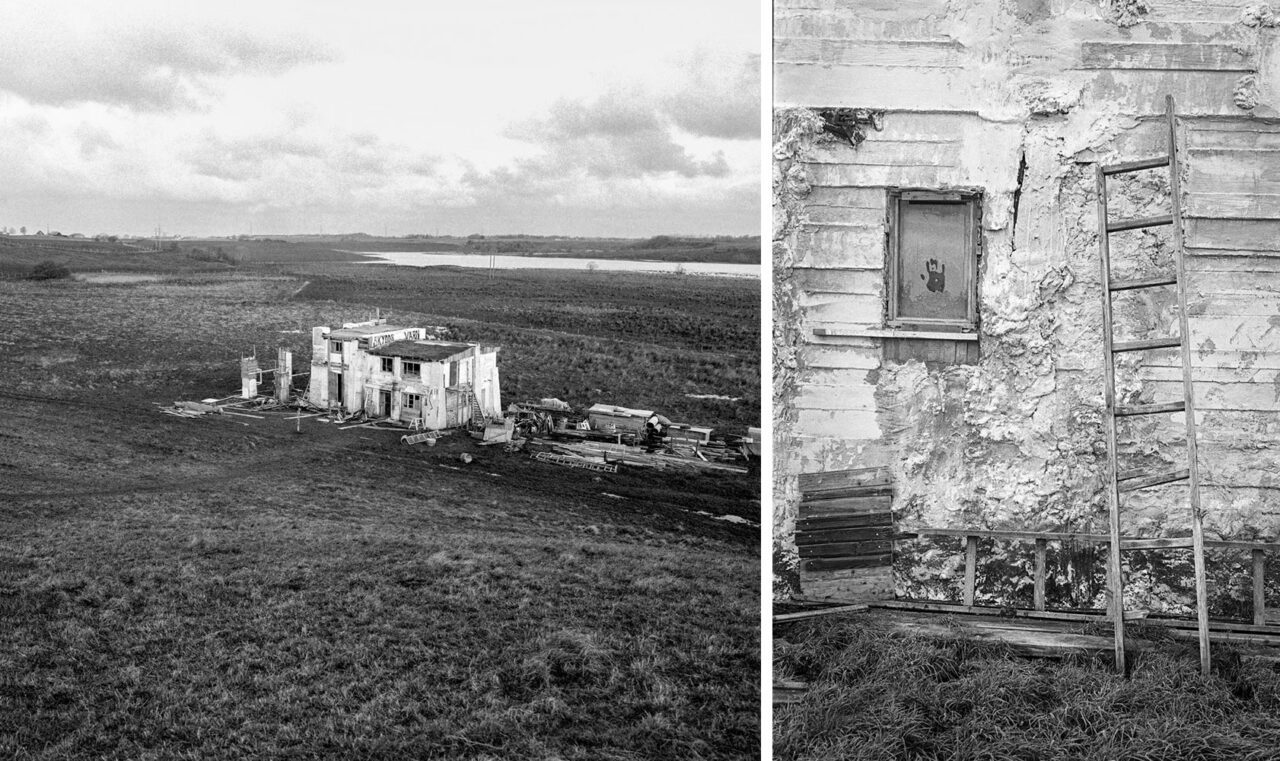
At the centre of the project stands the life and labour of Karl-Göran Persson (1894–1975), an agricultural worker who, on the plains near Hörby in southern Sweden, gradually transformed his home into an armoured structure. The fortress was conceived as protection against a war he feared but never witnessed: a concrete embodiment of private anxiety and collective dread.
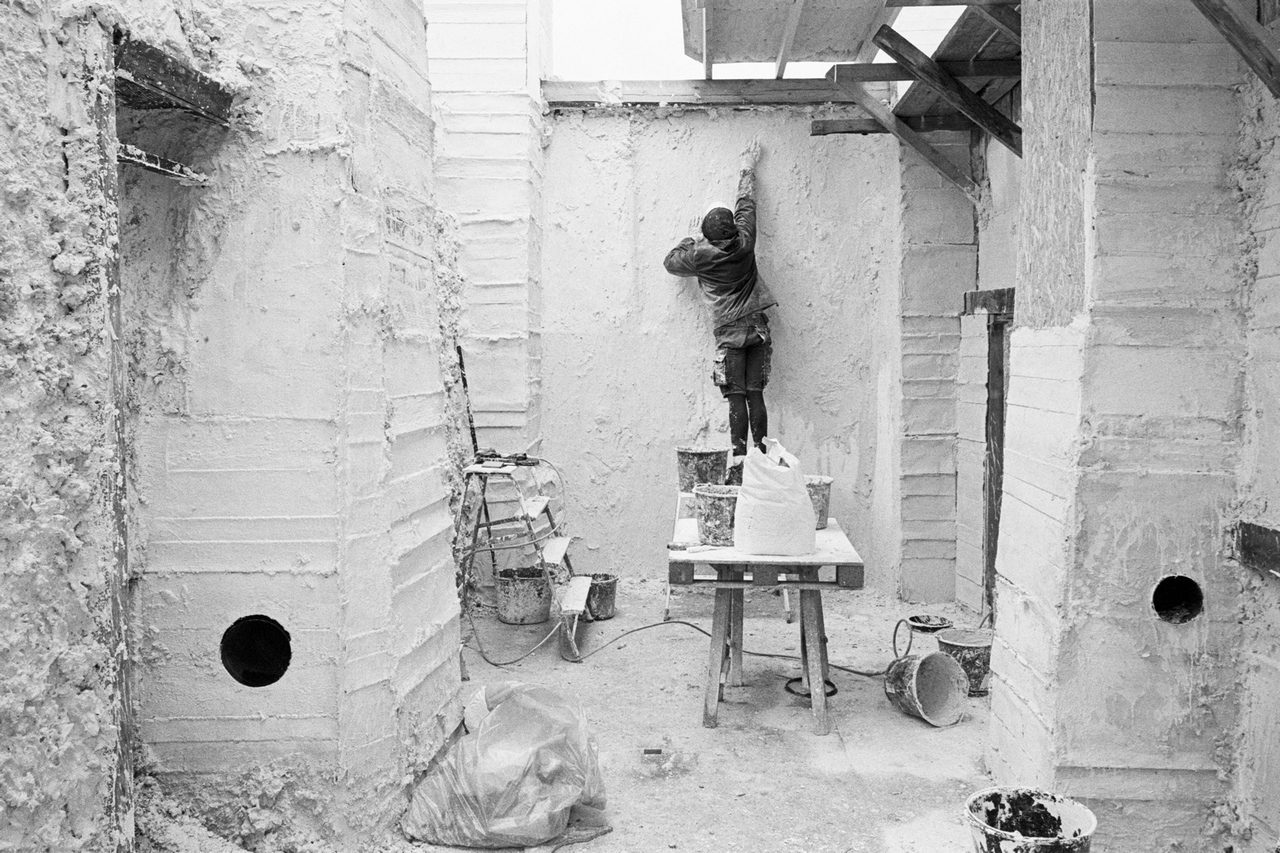
Persson’s project unfolded across decades. Beginning in the 1930s, it gained urgency after Sweden’s civil-defence pamphlet If War Comes circulated nationally in 1943, and continued amid Cold War tensions. His construction was meant to shelter not only himself but the entire village—even the King. Scrap metal gathered from a rapidly modernising agricultural sector was hauled home by bicycle and embedded into the structure’s walls: farm tools, milk churns, and machine parts appearing like fossils of a disappearing rural economy.
Persson belonged to the community while remaining slightly apart from it. Suspended between adult labour and children’s games, he worked obsessively on his dwelling, converting loneliness into masonry. What emerged was less a bunker than a social artefact: a physical negotiation between fear and solidarity.
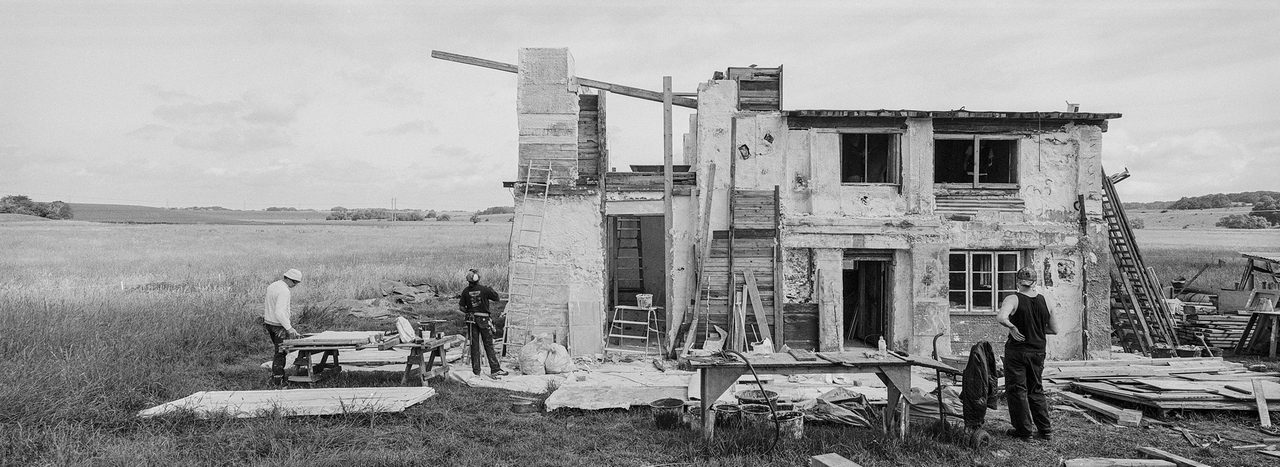
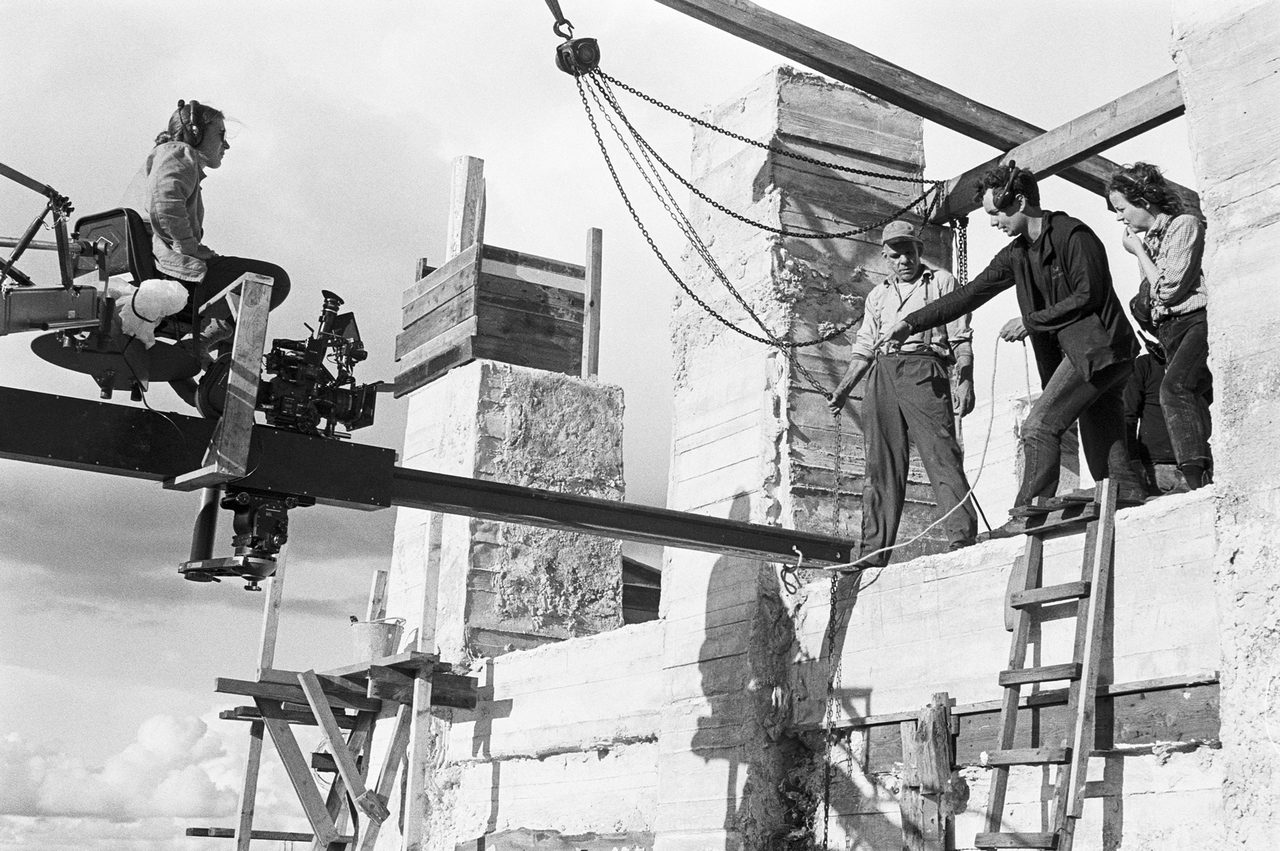
«REDOUBT» marks the culmination of a twelve-year artistic inquiry by Skoog and his collaborators into Persson’s life and architecture. In preparation for filming, the team reconstructed Persson’s building; this act of reconstruction gradually evolved into a collective artistic process. The resulting monumental sculpture is now exhibited for the first time in the museum’s Turbine Hall. (
The exhibition, extends Skoog’s earlier work, including a short film that received the Baloise Art Prize in 2014. The project situates Persson’s structure as both historical testimony and contemporary mirror: a sculptural life’s work born from unrest and reframed for the present moment.
In this expanded form, «REDOUBT» operates as an interdisciplinary environment—part installation, part cinematic apparatus. The Turbine Hall becomes a site where archival research, reconstruction, and narrative filmmaking converge. Skoog’s practice, long rooted in close observation of rural life and collaboration across disciplines, here achieves a synthesis between ethnography and poetics.
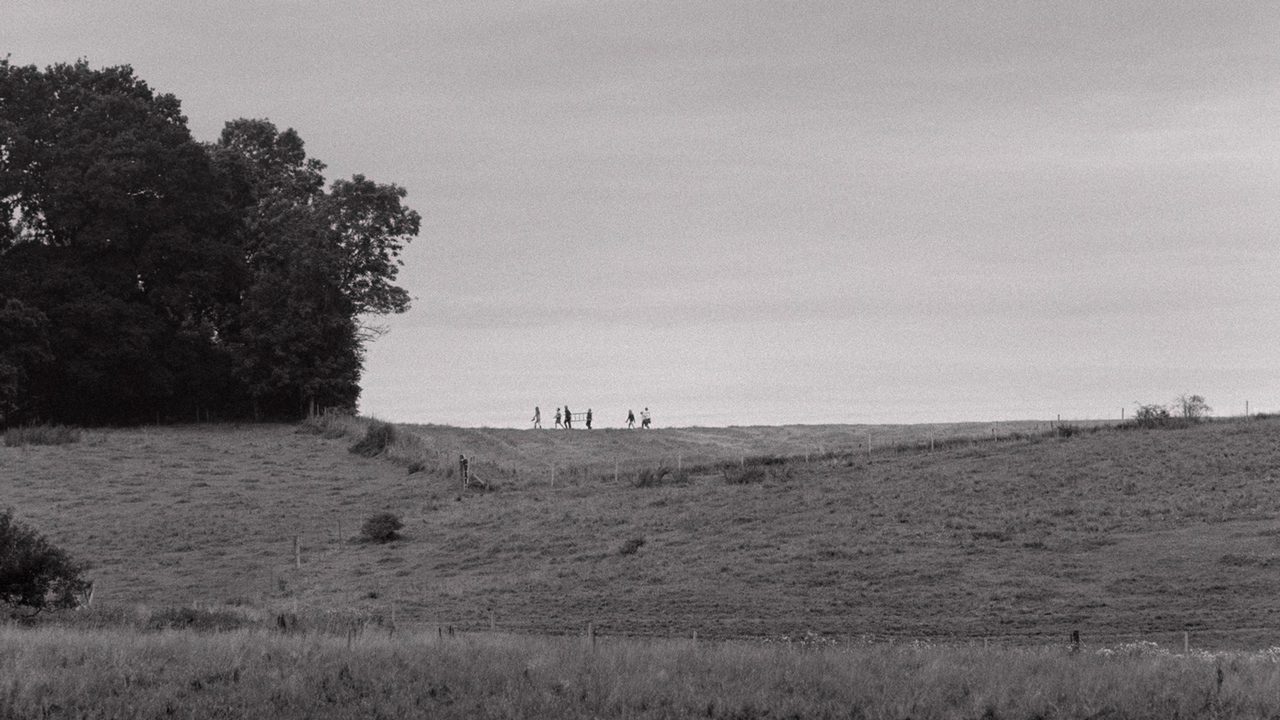
Alongside the exhibition, Skoog’s feature film «REDOUBT» (2025) reimagines Persson’s story through a restrained, visually composed narrative. Set during the Cold War, the film portrays the labourer’s attempt to fortify his home as both rational survival strategy and eccentric obsession.
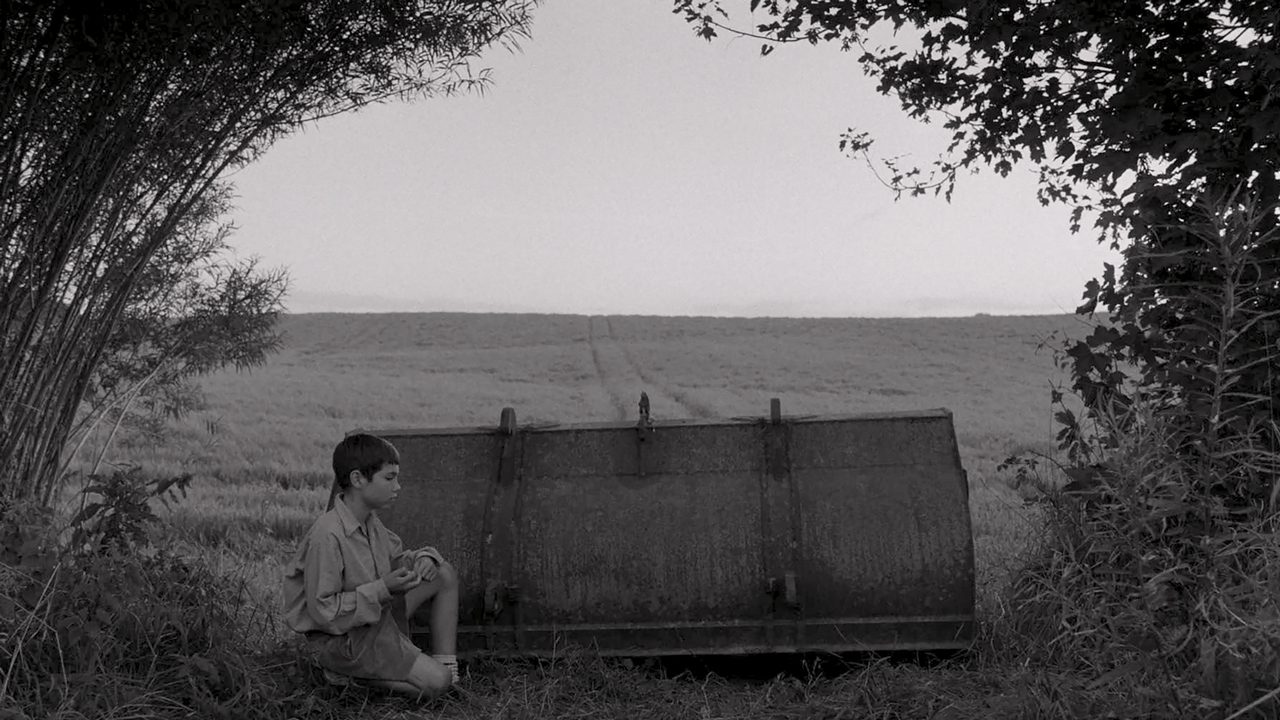
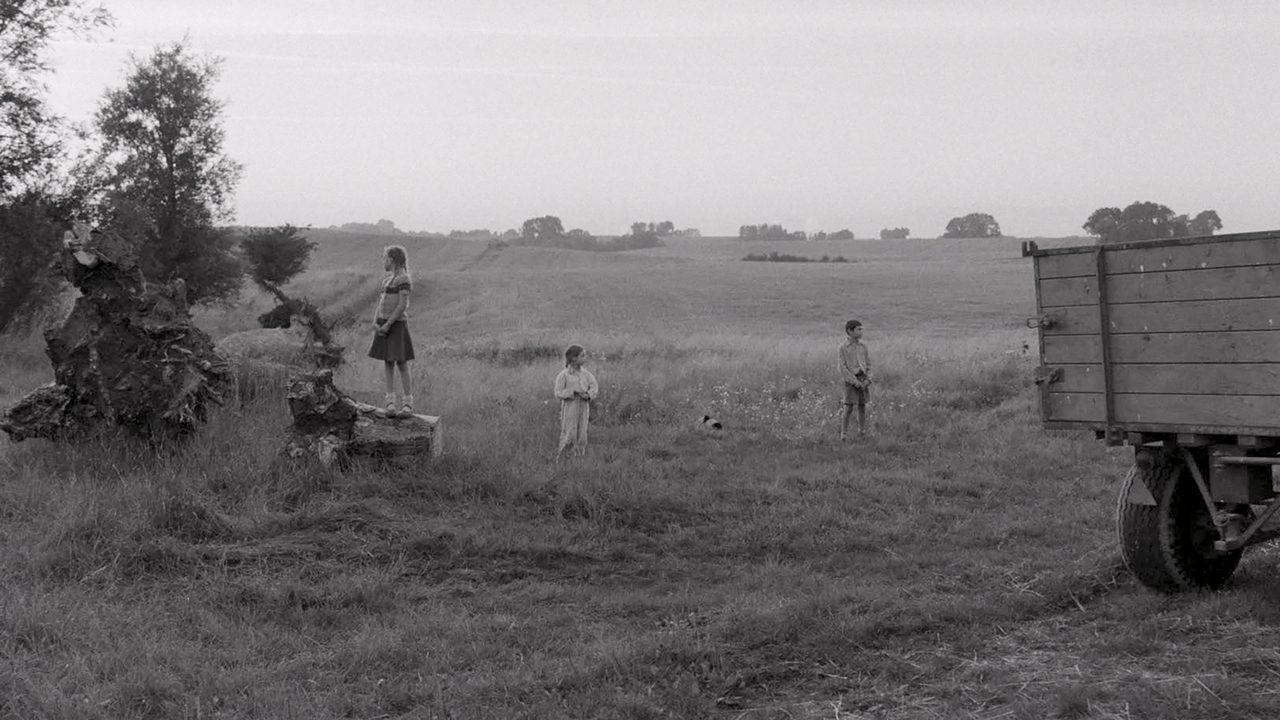
French actor Denis Lavant embodies Persson with an intensely physical performance, as the character collects scrap metal, pours it into concrete walls, and envisions a communal haven from nuclear catastrophe. Shot in stark black-and-white, the film emphasises materiality and bodily effort, situating the bunker within the rhythms of rural daily life and the psychological landscape of fear.
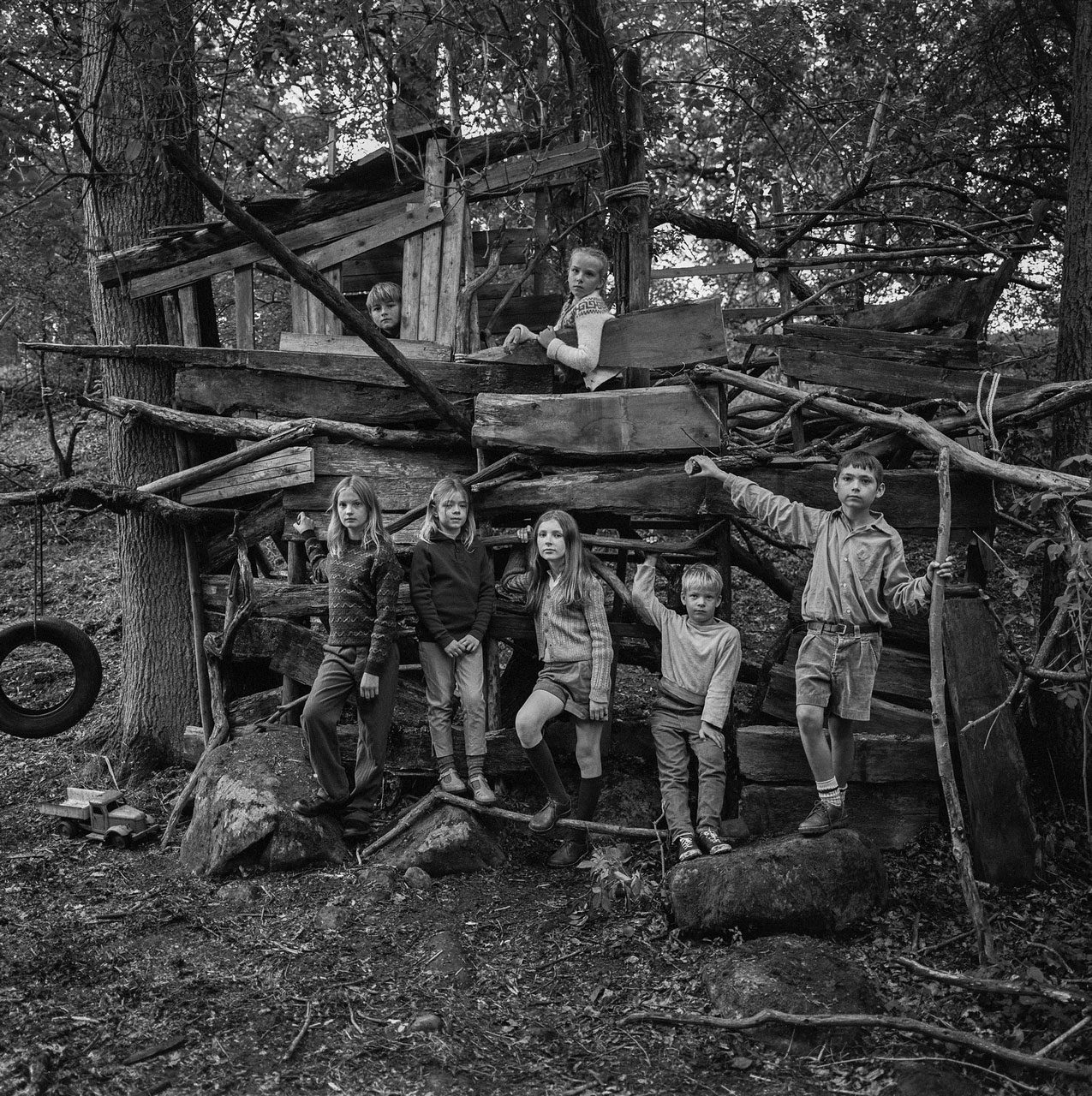
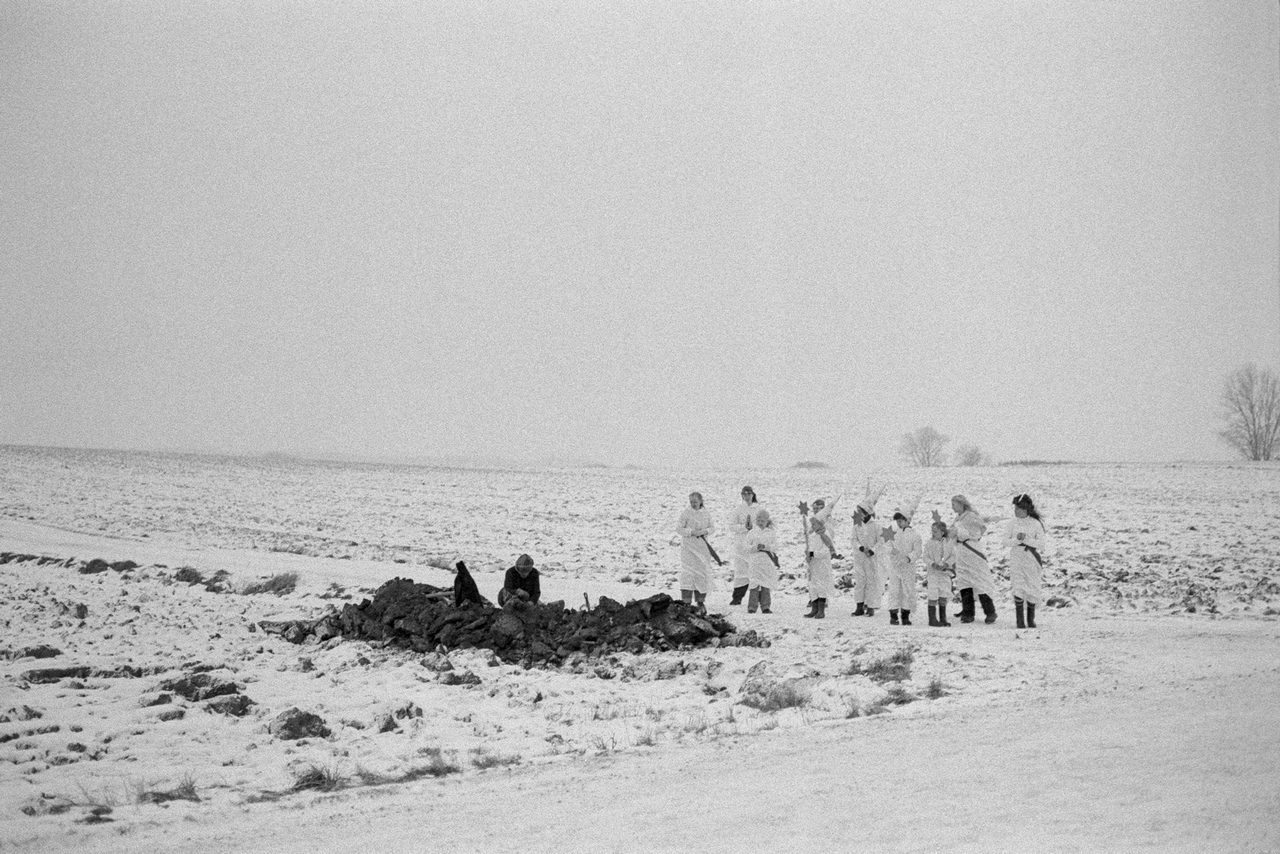
Children, drawn to Persson’s construction, appear as the only figures who instinctively accept his project—suggesting a fragile continuity between imagination, play, and survival. Meanwhile, adult society oscillates between ridicule and reluctant admiration, revealing the social tension embedded in acts of preparedness.
The conceptual force of «REDOUBT» lies in its refusal to reduce Persson’s undertaking to pathology or heroism. Was his project excessive? Naïve? Irrational? The work leaves the questions open. Instead, it reframes them: what constitutes a reasonable response to the possibility of war?
In Persson’s case, care and paranoia are inseparable. His structure is defensive architecture and social gesture simultaneously—an attempt to materialise solidarity through concrete. The embedded scrap metal, drawn from a transforming agricultural world, also testifies to shifting relationships between humans, machines, animals, and landscape in twentieth-century Sweden.
Skoog’s installation underscores this ambiguity. The reconstructed «REDOUBT», placed within the institutional architecture of the museum, becomes a speculative commons: a shelter that is also an image, a memory, and a question addressed to the present.
Viewed today, Persson’s fortress reads less as an eccentric relic than as a prototype of contemporary anxiety. The twentieth century’s civil-defence rhetoric—once tied to nuclear fear—echoes in present concerns about war, climate, and systemic instability.
«REDOUBT» thus operates as a temporal hinge. It connects rural Scandinavian history with a globalised present in which preparedness and vulnerability coexist. By situating Persson’s structure within an expanded artistic framework—sculpture, film, archive, and collaboration—Skoog transforms an individual’s private response into a collective reflection.
War, the work suggests, is not only an event but a condition: the breakdown of solidarity, reason, and shared imagination. To build a «REDOUBT» is therefore not simply to defend against violence; it is to negotiate what care might look like when the future feels precarious.
In the Turbine Hall, amid concrete, light, and cinematic fragments, that negotiation unfolds. Visitors move through a space shaped by fear yet sustained by an insistence on protection—on the possibility that even in times of trembling, acts of making can still hold a community together.
Photo: John Skoog, REDOUBT, 2026 St. Lucia celebration, 2023 Photo: David Skoog
Info: Moderna Museet, Ola Billgrens plats 2–4, Malmö Sweeden, Duration: 14/2-17/5/2026, Days & Hours: Tue-Wed & Fri-Sun 11:00-17:00, Thu 11:00-19:00, www.modernamuseet.se/