
PRESENTATION: De/Collecting Memories from Turtle Island
In 2026, as the United States marks the 250th anniversary of its independence, Cologne’s Museum Ludwig turns its attention to the cultural and historical entanglements underpinning that milestone. With one of the most extensive Pop Art collections outside North America and a long-standing institutional dialogue with U.S. art, the museum situates its exhibition “De/Collecting Memories from Turtle Island” within this commemorative context. At its center are two contemporary Indigenous artists—Marie Watt and Wendy Red Star—whose practices confront the visual and ideological frameworks through which America has been imagined.
By Efi Michalarou
Photo: , Museum Ludwig Cologne Archive
The exhibition unfolds as a critical inquiry into memory, representation, and the production of historical narratives. Rather than retelling a national story, it interrogates the images and assumptions that have shaped it. The project juxtaposes contemporary artistic positions with a body of historical material: photochrome prints produced around 1900 by the Detroit Publishing Company, many based on earlier black-and-white photographs by William Henry Jackson. These widely circulated images—sold as wall décor and postcards in the millions—depict monumental landscapes and burgeoning cities, often conspicuously devoid of human presence. For generations, they helped construct a visual mythology of the United States as a vast, empty terrain awaiting discovery.
Yet this apparent emptiness was always a fiction. The landscapes celebrated in such imagery were long inhabited by Indigenous nations whose histories were marginalized or erased in dominant visual narratives. By pairing these archival images with contemporary Indigenous artistic practices, the exhibition seeks to expose the mechanisms through which collective memory is assembled—and what is systematically excluded. It is an invitation to reconsider the mental pictures through which “America” has been understood and to acknowledge the multiplicity of perspectives embedded within the concept of Turtle Island, a term used in several Indigenous traditions for the Americas and, in some cosmologies, the world itself.
Wendy Red Star’s photographic self-portraits occupy a crucial role in this reframing. Her work operates through staged self-representation, deploying humor and satire to confront Western expectations of Indigeneity. Rather than offering an ethnographic image, Red Star exposes the institutional frameworks that shape how Indigenous identity is perceived and categorized. As she notes, the label “Native artist” can function less as a description than as a container that preconditions the reception of the work before it is even encountered. Her practice, grounded in Apsáalooke history, challenges this reduction by foregrounding specificity, agency, and critical self-inscription.
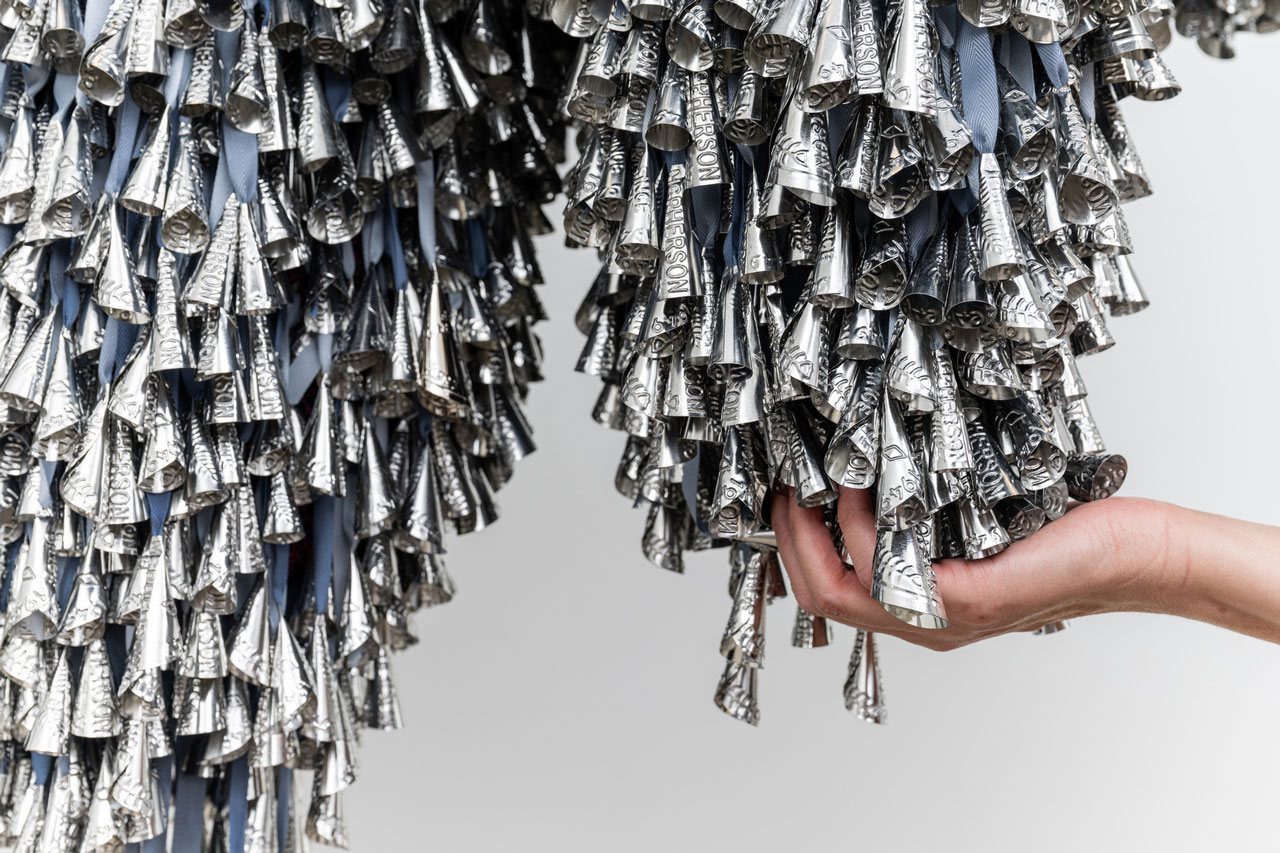
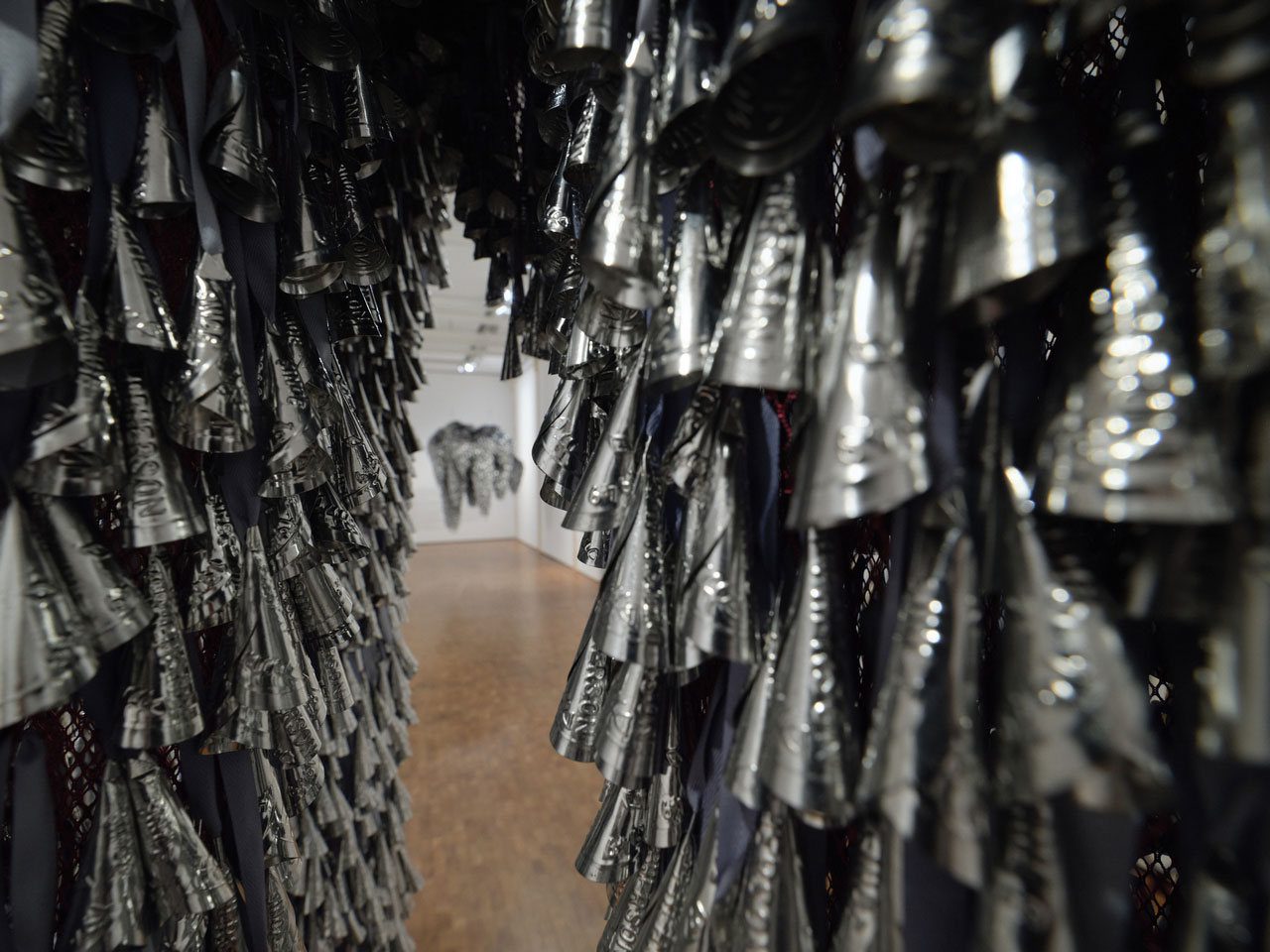
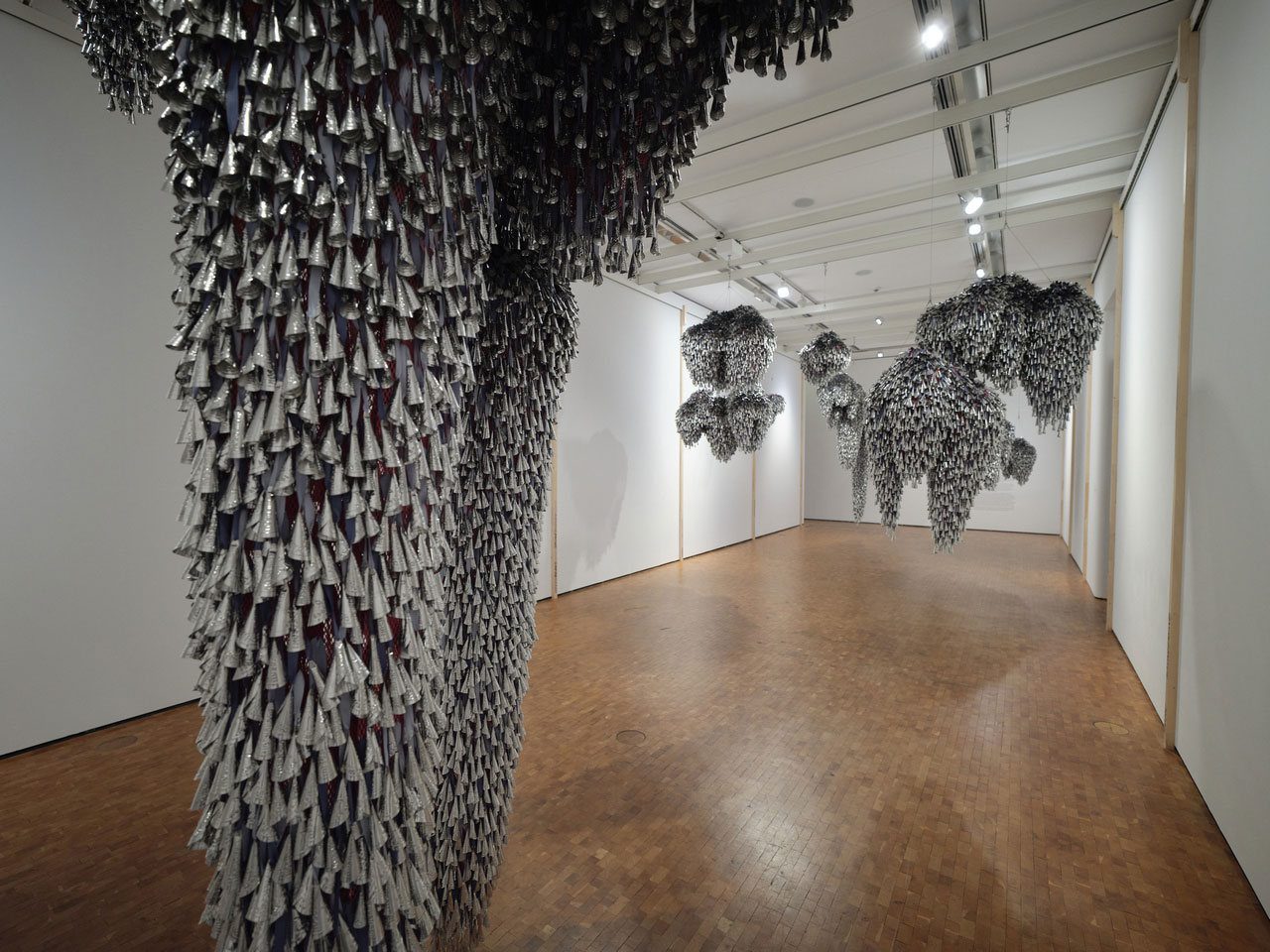
If Red Star interrogates representation through the photographic image, Marie Watt addresses memory through material, sound, and embodied experience. Born in Seattle in 1967, a member of the Seneca Nation, and based in Portland, Watt is known for large-scale installations that weave personal, communal, and historical narratives into spatial form. For Museum Ludwig she created Thirteen Moons, an expansive installation of thirteen suspended sculptures composed of tin jingles. The work inhabits the gallery as a tactile and sonic environment: the elements only sound when touched or set in motion, producing a subtle, shifting field of metallic resonance.
The installation references the Jingle Dress Dance, a healing ritual that emerged among the Ojibwe around the turn of the twentieth century during an influenza pandemic. Originating from a dream experienced by a tribal elder, the dance was believed to restore health and spiritual balance. Its continued practice was itself an act of resistance: Indigenous ceremonial gatherings were banned in the United States in 1883, and the prohibition lasted until the passage of the American Indian Religious Freedom Act in 1978. Despite this repression, the dance persisted and spread among communities; today it remains associated with healing and collective resilience. Watt’s sculptures function as both homage and reactivation, linking historical memory with contemporary sensory experience.
The exhibition thus operates across temporal registers: archival image, living tradition, and contemporary artistic intervention. It begins where the postcard views end—at the point where dominant visual culture falls silent. By recontextualizing historical photochromes alongside Indigenous artistic voices, the museum foregrounds the constructed nature of national narratives and the ideological work performed by images. The project also reflects an institutional self-critique: part of the “HERE AND NOW” series, it reassesses the museum’s own collection and exhibition strategies, proposing new ways to integrate Indigenous perspectives into art-historical discourse.
Within the broader frame of the U.S. semiquincentennial, De/Collecting Memories from Turtle Island resists celebratory rhetoric. Instead, it offers a layered meditation on remembrance, absence, and the politics of representation. By centering Indigenous voices and epistemologies, the exhibition shifts attention from the mythology of discovery to the persistence of communities, stories, and cultural practices that have long preceded and outlasted it.
In doing so, Museum Ludwig does not simply present contemporary art; it constructs a dialogic space in which historical imagery, institutional memory, and Indigenous knowledge systems intersect. The result is an exhibition that reframes Turtle Island not as a static geographical entity, but as a contested field of narratives—constantly rewritten, re-heard, and re-imagined.
Photo: Marie Watt, Thirteen Moons, 2025, photo: Mario Gallucci, courtesy of the artist
Info: Curators: Miriam Szwast and Santi Grunewald, Museum Ludwig Cologne, Heinrich-Böll-Platz, Cologne, Germany, Duration: 7/2-8/11/2026, Days & Hours: Tue-Sun 10:00-18:00, www.museum-ludwig.de/
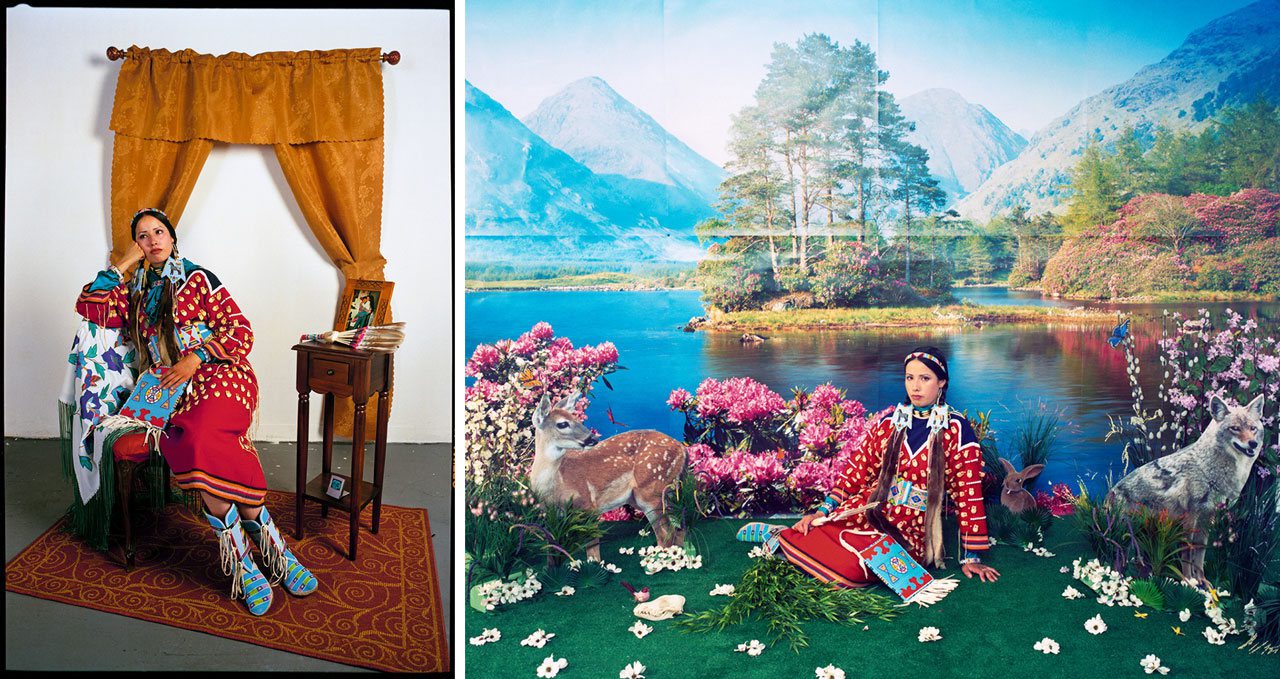
Right: Wendy Red Star, Four Seasons (Spring), 2006, One of four works from the series “Four Seasons”, © Wendy Red Star
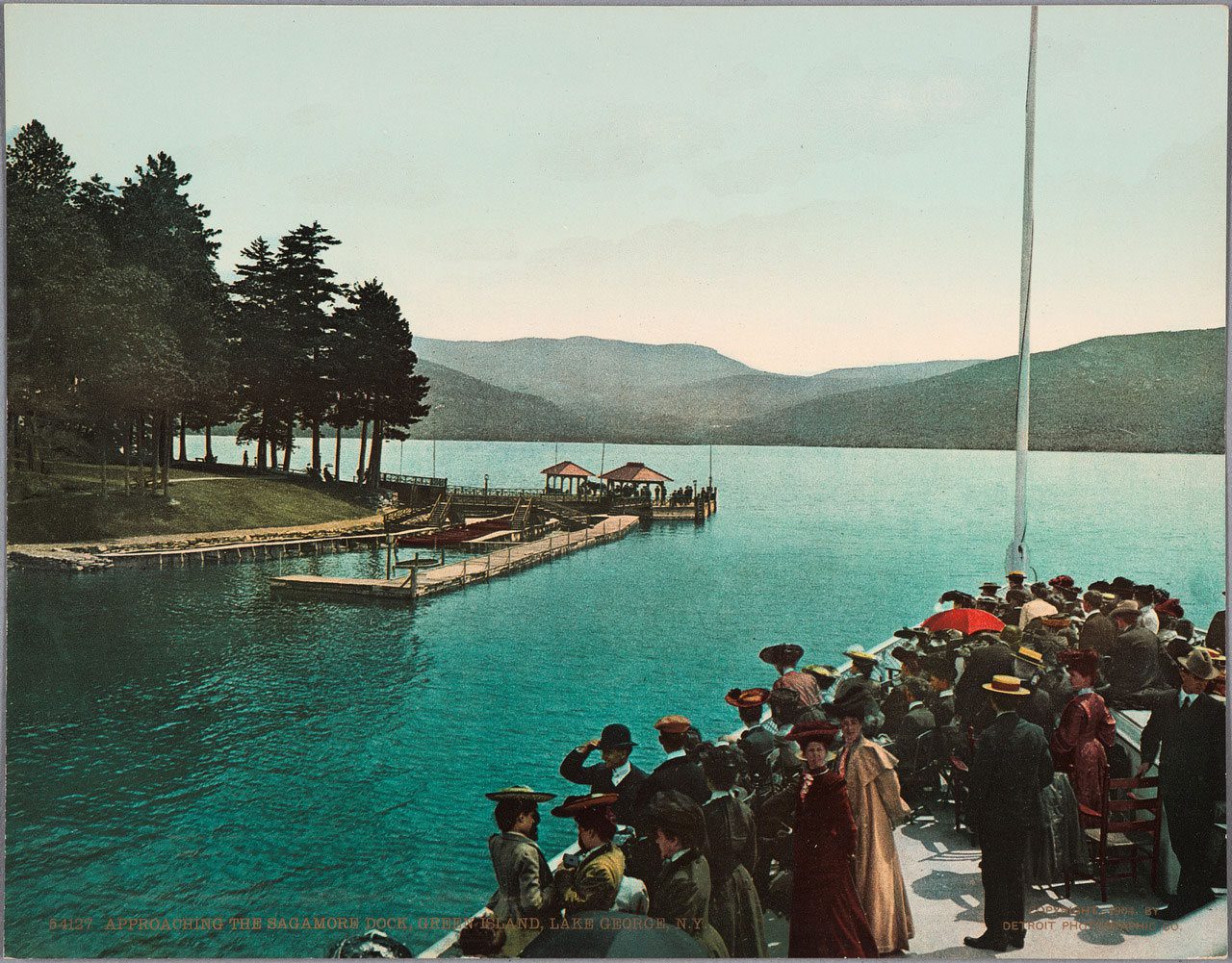
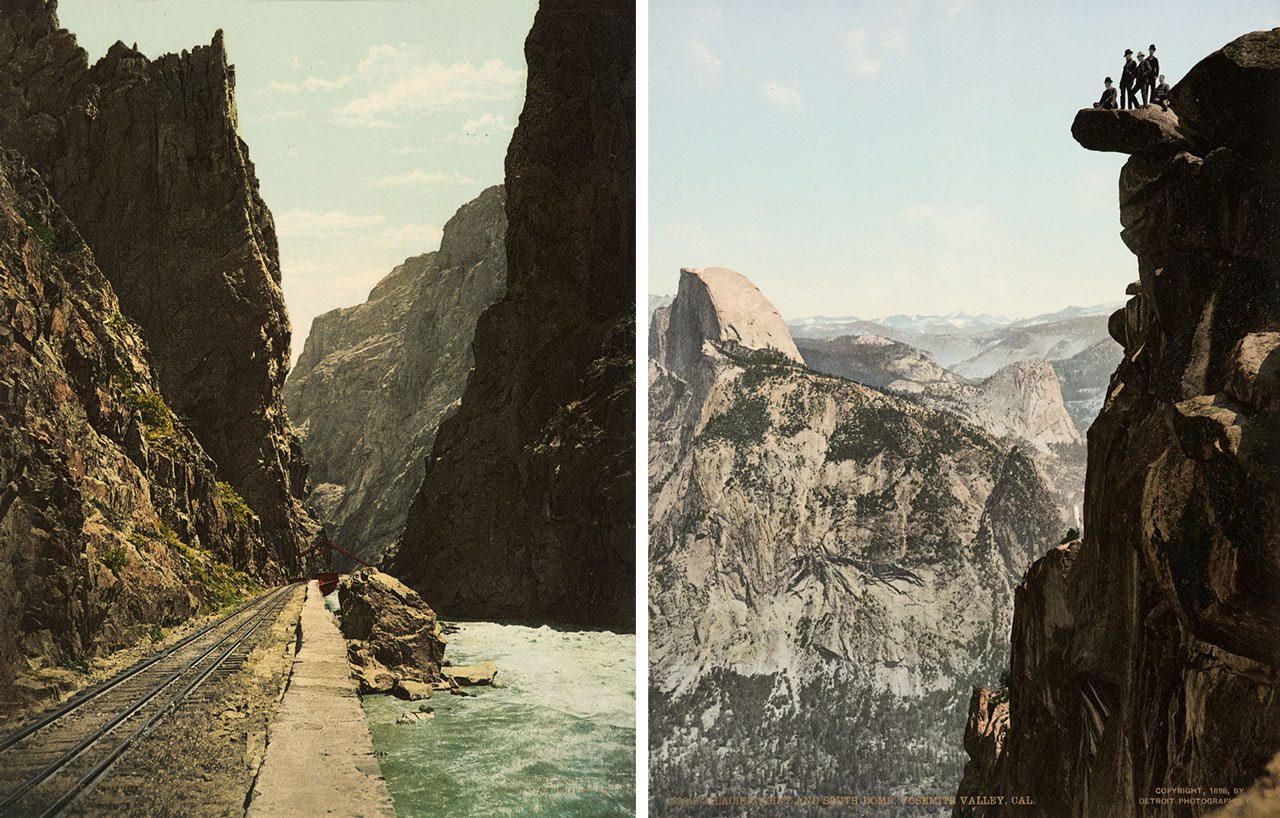
Right: Detroit Publishing Company / William Henry Jackson, View from Glacier Point of the South Dome, or Half Dome, Yosemite Valley, California, 1898, Peoples: Me-Wuk (Southern Sierra Miwok), Nüümü (Northern Paiute), Miwok, Me-Wuk (Miwok) place name: Yohhe’meti (“Those Who Kill”), Photochrom, Museum Ludwig, Cologne, Reproduction: Historical Archive of the City of Cologne with Rhenish Photo Archive