ART CITIES: Geneva-Carte blanche à John M. Armleder
John M Armleder has, since the late 1960s, developed a distinctive body of work that wryly explores the boundaries between art, design, and popular culture. In 1969, he co-founded in Geneva the Ecart group, an alternative and community-based contemporary art collective, close to Fluxus—the New York–born artistic movement of the 1960s—which produced concerts, objects, happenings, and published books and journals. The artist claims an open practice grounded in chance, quotation, and the juxtaposition of objects and styles. His work unfolds through painting, sculpture, and installation, notably in the emblematic series “Furniture Sculptures”, where furniture interacts with abstract compositions. There, Armleder questions the hierarchy of forms and the value of the artwork in the age of industrial production and spectacle.
By Dimitris Lempesis
Photo: MAH Archive
For its sixth edition of “Carte Blanche”, the Musée d’art et d’histoire (MAH) in Geneva entrusted John M Armleder with the rare opportunity to curate an exhibition drawn from the museum’s own extensive holdings. With over 500 of his works already in the MAH collection, Armleder was uniquely positioned to bridge the historical and the contemporary, creating a show that is as much about the museum’s collection as it is about his own artistic universe. The resulting exhibition is an invitation to wander: each room unveils a different world, from abstract painting to floral compositions, from musical instruments to light installations, from animals to self-portraits. Through ephemeral structures, layered compositions, and careful juxtapositions, Armleder weaves ordinary and aesthetic objects into a network of ideas that constantly generates new associations.
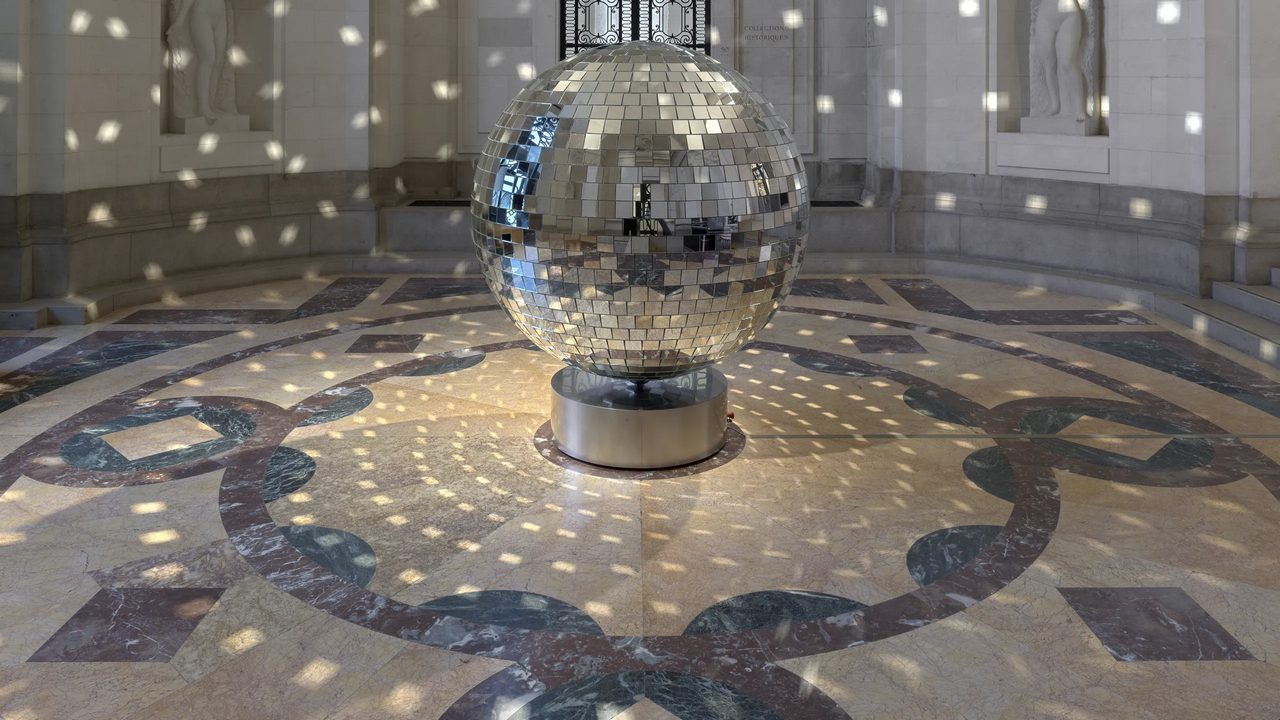
The entrance hall immediately sets the tone. Armleder introduces a giant mirrored disco ball, slowly rotating and projecting reflections across the hall’s surfaces. By transplanting a symbol of disco culture into a museum setting, the artist disrupts traditional perception and establishes his signature aesthetic: deliberate excess, irony, and a playful engagement with Duchampian readymades. The mirrored ball’s light dances over Carl Albert Angst’s sculptures of the Four Seasons, creating the illusion of movement and establishing a dialogue between contemporary installation and classical art. Visitors are immersed in a luminous and disorienting atmosphere, a fitting overture to the exhibition.
From here, the journey unfolds. Room one references Armleder’s seminal 1984 exhibition “Abstract Painting” at the Ecart gallery. Three of his works are mounted opposite a semicircular wall painting of vertical bands in decreasing thickness, upon which he displays abstract paintings from the MAH collection. Among them are pieces by his friend Olivier Mosset, including the renowned black circle on white background—a radical experiment in the “zero degree” of painting. This arrangement illustrates Armleder’s enduring interest in geometry and reduction, emphasizing context and spatial dialogue as key components of meaning.
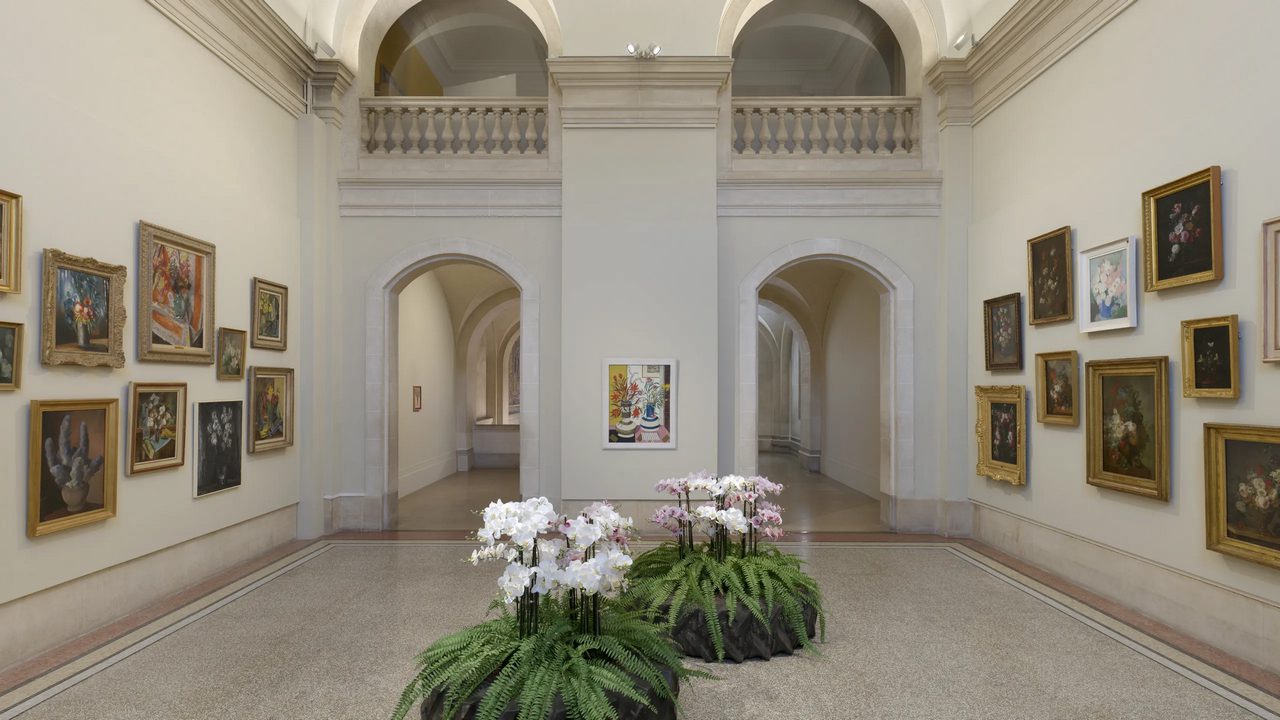
Rooms two and three turn to nature, where plants and flowers are a recurring motif in Armleder’s installations. Here, three tractor tires serve as planters for artificial flowers, an ironic yet poetic commentary on industrial materials, reuse, and the readymade. Surrounding this installation are paintings spanning centuries, from Dutch vanitas still lifes to works by Marie Laurencin, which together form abstract compositions on the walls. Through these juxtapositions, Armleder underscores the tension and resonance between historical and contemporary approaches to color, form, and composition.
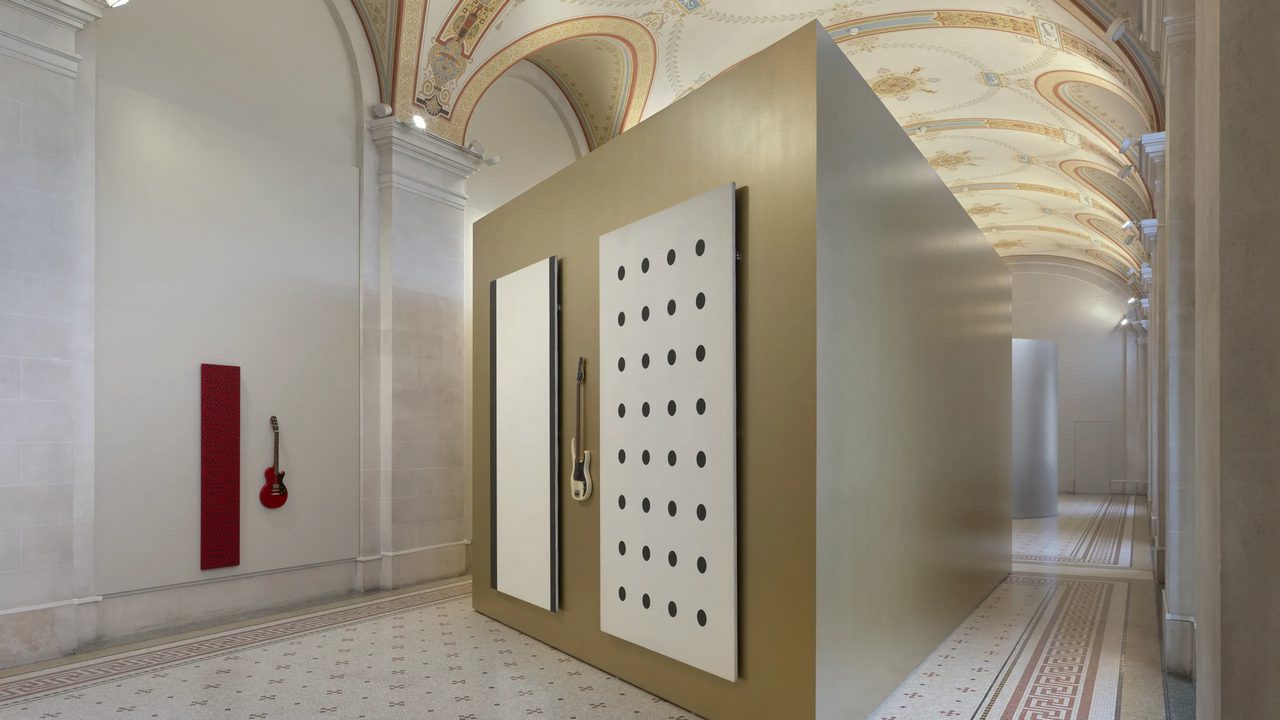
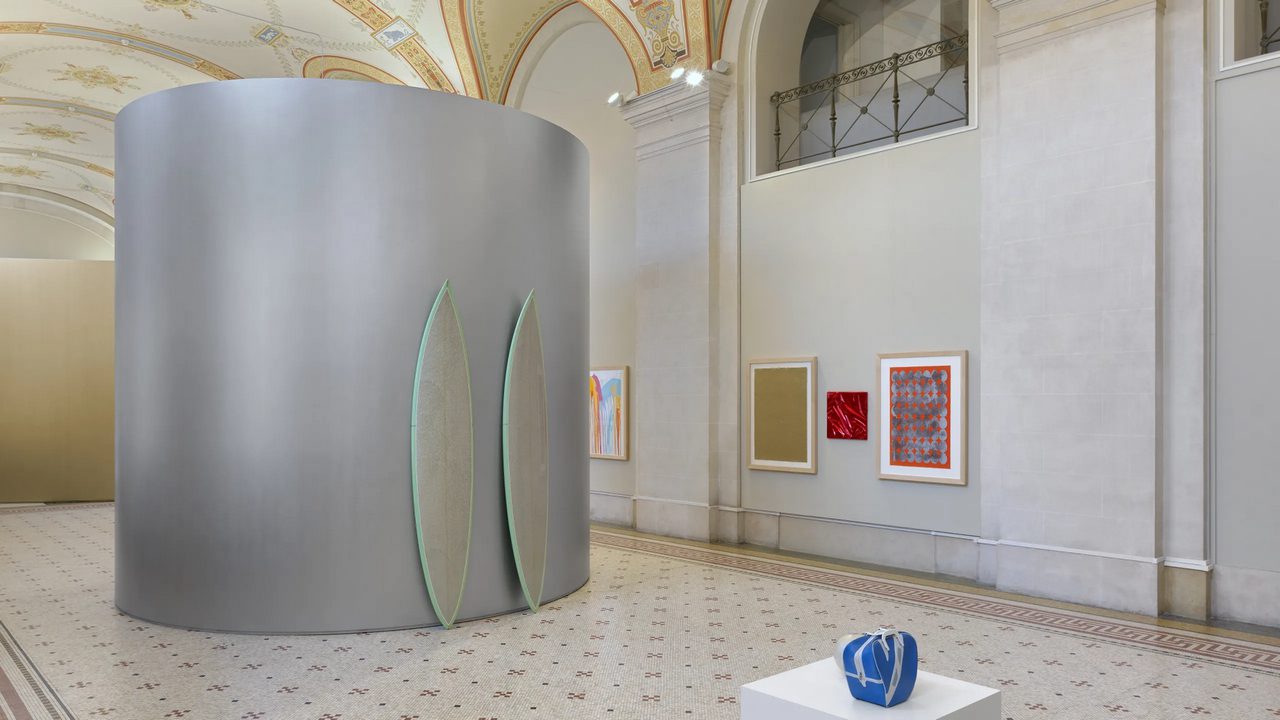
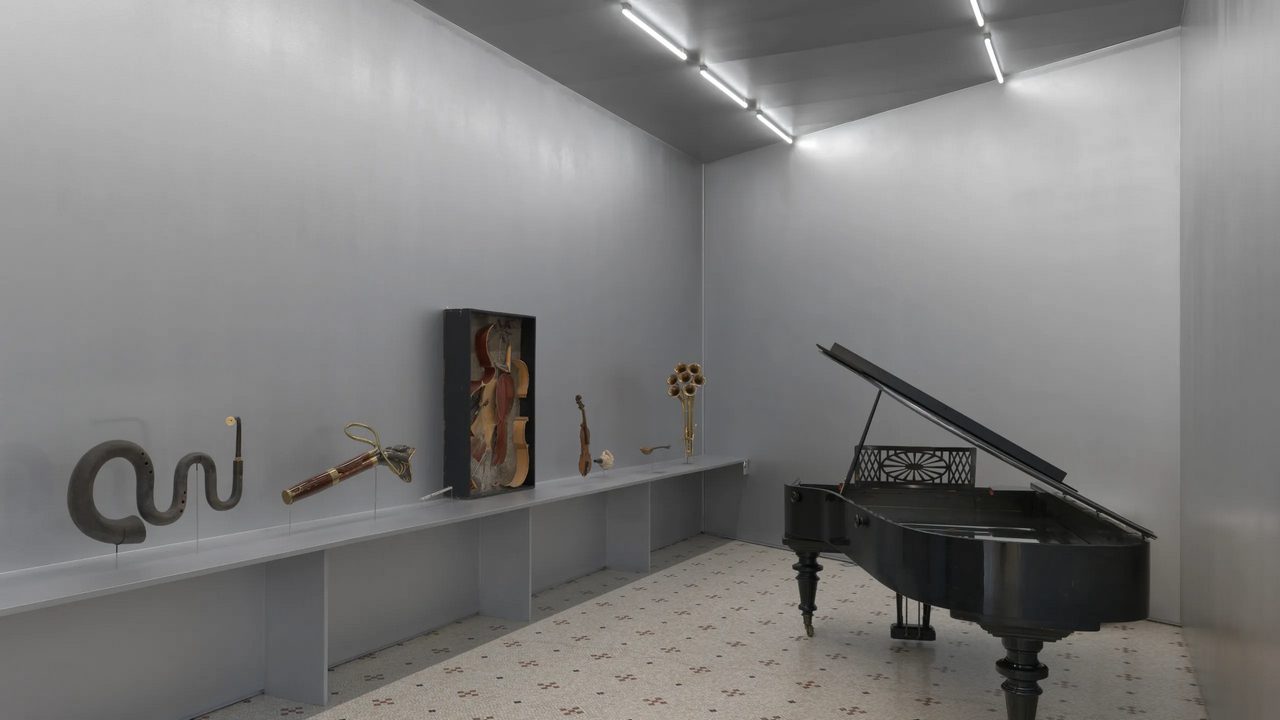
Music permeates Armleder’s work, and rooms four and five highlight this influence. In one golden structure, musical instruments from the museum’s collection are displayed alongside contemporary works such as Arman’s “Mur de la vie privée (colère de violoncelle)”, exploring destruction as a form of artistic activation. Two of Armleder’s Furniture Sculptures, combining electric guitars with geometric canvases, evoke rock culture while questioning the boundaries between utility and art. Nearby, a silver circular structure addresses the concept of the multiple—editioned objects and prints—showcasing the museum’s exceptional holdings and highlighting Armleder’s engagement with Marcel Duchamp and the Fluxus movement. Here, the readymade becomes a language, a lens through which objects both humble and monumental are recontextualized.
In room five, Armleder turns his attention to overlooked elements of the collection, presenting glass clock domes on a silver pedestal. These modest objects, typically unnoticed, become the centerpiece of a striking installation, demonstrating the artist’s capacity to transform the banal into the poetic. Themes of transparency, emptiness, and light recur throughout, linking materiality to perception and memory.
Rooms six through eight explore Armleder’s signature Furniture Sculptures, begun in the late 1970s. These hybrid assemblages combine furniture, clothing, skateboards, and monochrome canvases to create “already-there” scenarios—scenes drawn from everyday life, recontextualized within the museum. The works evoke Erik Satie’s “furniture music”, background compositions meant to accompany everyday life, and invite visitors to reflect on the relationship between spatial arrangement, object, and artistic value. Each Furniture Sculpture becomes a stage in which aesthetic meaning emerges from context and collective experience, rather than purely individual creativity.
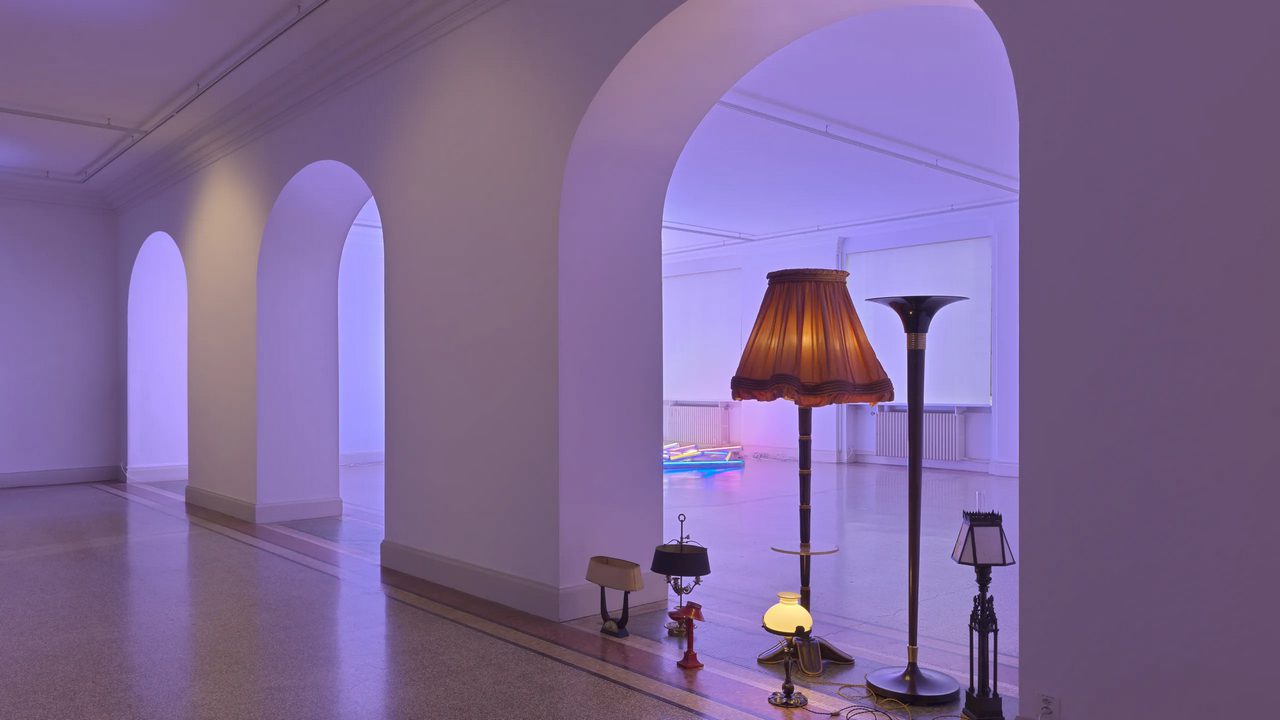
Light installations dominate room nine, where fluorescent tubes and museum lighting fixtures are arranged in mirrored, chaotic formations. These accumulations blur distinctions between modernism, kitsch, and historical objects, echoing the mirrored ball from the entrance hall while engaging the museum’s collection in playful dialogue.
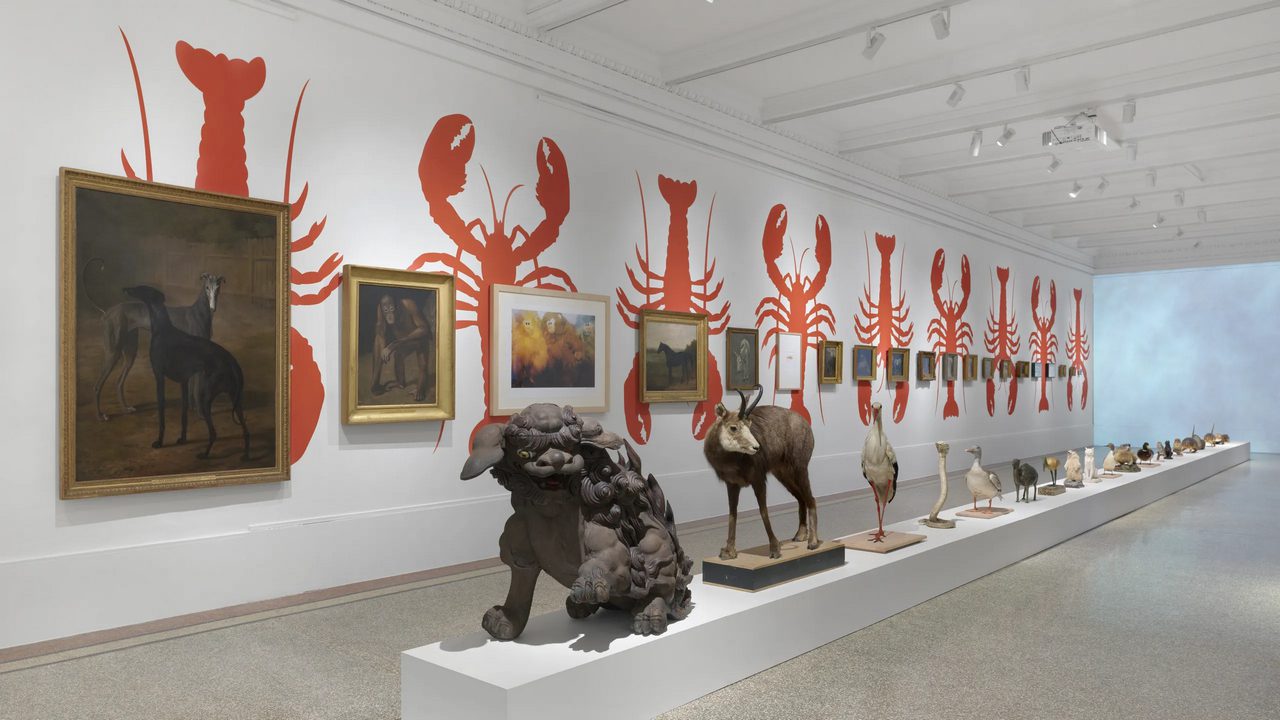
Rooms ten and eleven transform the museum into a bestiary. Objects, sculptures, paintings, and real animals on loan from the Natural History Museum converge in an exuberant display, accompanied by Camille Saint-Saëns’s “Carnival of the Animals”. Armleder has long explored the motif of animals, whether through taxidermy, enlarged cat-tree sculptures, or wall paintings, creating installations that bridge natural history, art history, and whimsical invention.
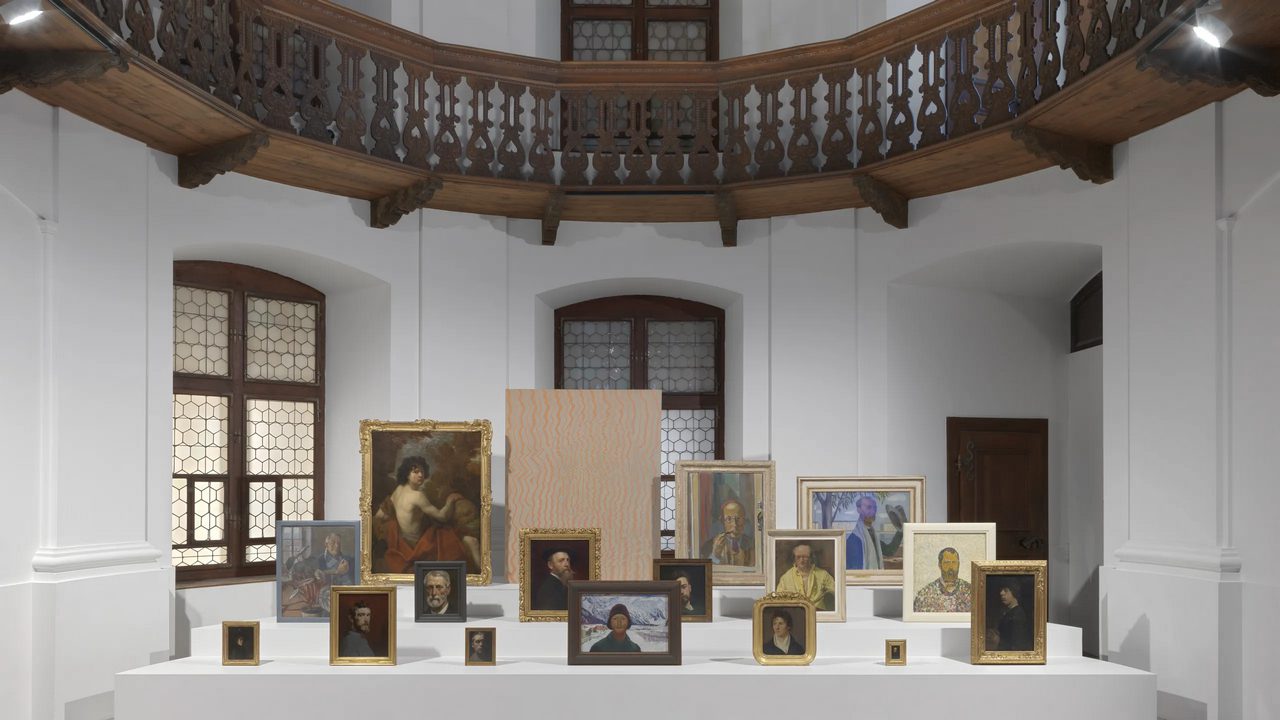
In room twelve, self-portraits from the collection—including works by Giovanni Giacometti, Ferdinand Hodler, and Elisabeth de Stoutz—are arranged on tiered seating, confronting visitors with a visual entanglement of gazes. Armleder complements these historical works with his own early piece, Pièce nocturne, a spiral of twelve of his shoes beneath black-and-white photographs of his face. This interplay of self-portraits fosters a dialogue between historical and personal narratives, between the visible and the partially concealed.
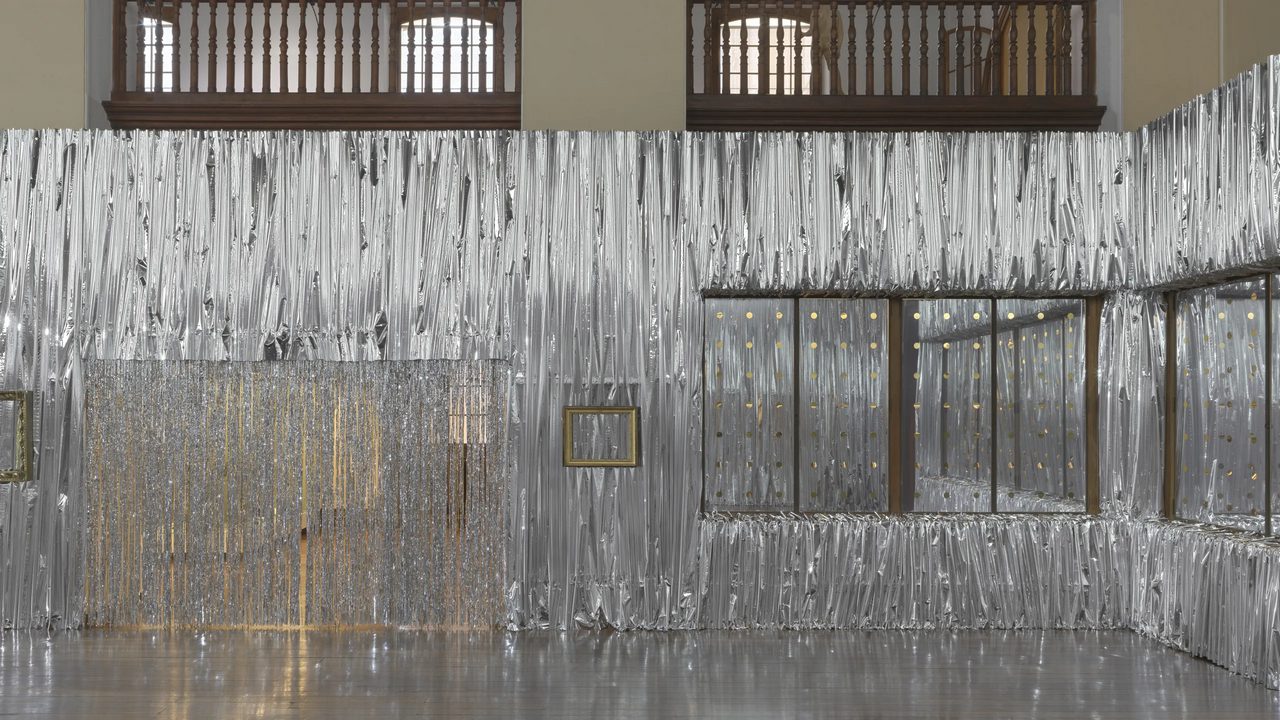
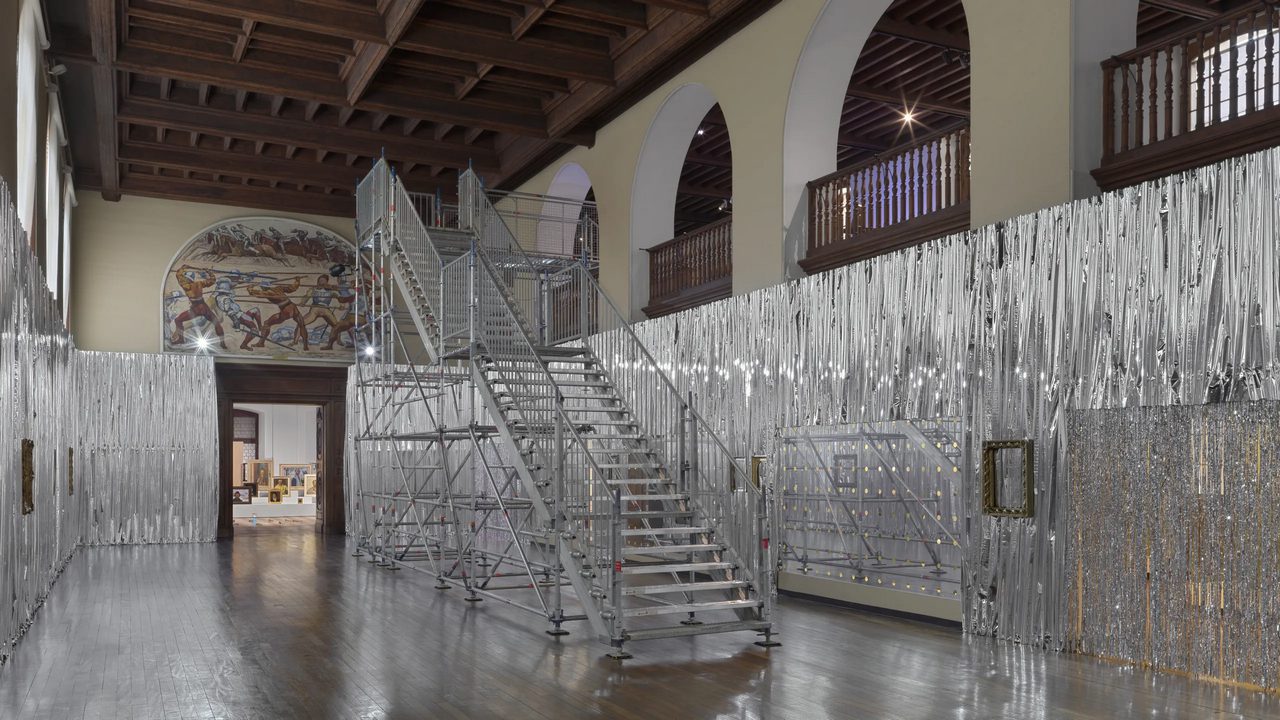
The Armory Room, room thirteen, is wholly transformed. Reflective metallic coverings obscure historical weapons and armor, creating a conceptual meditation on emptiness and antimilitarism. Frames from the collection, stripped of their contents, become objects in their own right, highlighting absence as presence and inviting reflection on the interplay between concealment and revelation.
The exhibition culminates with a meditation on history, architecture, and fragility. On a scaffold overlooking the Armory Room, Armleder presents models, prints, and sketches documenting the museum’s architectural past, including the observatories of 1772 and 1830. Rooms fifteen and sixteen focus on books, stamps, and publications, emphasizing Armleder’s engagement with artist books and ephemera as a medium of creation and curation. Finally, in room seventeen, damaged works from the collection are paired with broken or discarded elements from Armleder’s own oeuvre. A decomposing loaf of bread under a glass dome marks the passage of time and underscores the ephemeral nature of art itself.
Through these seventeen rooms, John M Armleder has transformed the MAH into a living dialogue between past and present. Each installation, sculpture, or juxtaposition is a lens through which the visitor can explore questions of context, perception, and memory. By weaving together ephemeral structures, everyday objects, historical artifacts, and contemporary works, Armleder offers a rare opportunity: to witness the museum as a site of continuous invention, where every visitor composes their own repertoire of ideas and associations. Observatoires is not merely an exhibition—it is a luminous, disorienting, and profoundly personal journey through the intertwined worlds of heritage and contemporary art.
Photo: John M Armleder, Observatoires: Carte blanche à John M. Armleder, Installation view, Museum of Art and History-Geneva, 2026, Photo: Annik Wetter, Courtesy the artist and Museum of Art and History
Info: Curator: John M Armleder, Museum of Art and History, Rue Charles-Galland 2, Geneva, Switzerland, Duration: 29/1-25/10/2026, Days & Hours: Tue-Wed & Fri-Sun 12:00-18:00, Thu 12:00-21:00, www.mahmah.ch/