
PRESENTATION: Titus Kaphar-The Fire This Time
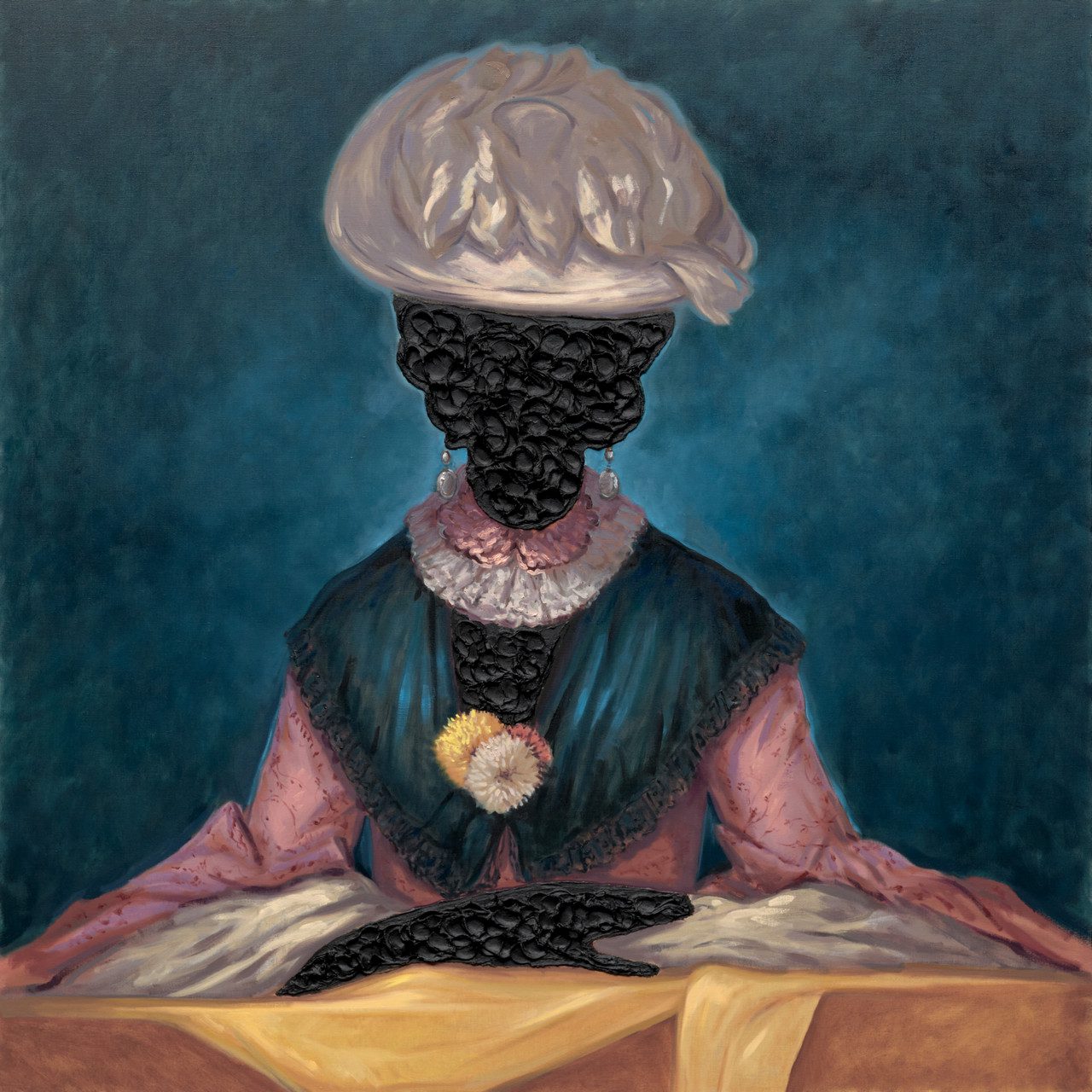
Painter, sculptor, filmmaker, and installation artist Titus Kaphar confronts history by dismantling classical structures and styles of visual representation in Western art, which, in turn, subverts centuries of art historical traditions. Dislodging entrenched narratives from their status as “past” to comprehend their impact on the present, he exposes the conceptual underpinnings of contested nationalist histories and colonialist legacies and reveals how they have served to manipulate both cultural and personal identity.
By Efi Michalarou
Photo: Gagosian Archive
Titus Kaphar’s solo exhibition “The Fire This Time” at Gagosian, Paris presents a compelling new body of work—spanning paintings and hand-carved wood sculptures—that deepens the artist’s longstanding inquiry into how history, power, and representation shape collective memory. In this show, Kaphar revisits and expands the visual and conceptual strategies that have defined his practice, foregrounding figures and narratives historically marginalized or omitted from dominant American histories.
The exhibition’s title intentionally evokes James Baldwin’s 1963 civil-rights classic “The Fire Next Time”, a searing meditation on race in America and an indictment of the nation’s racial politics. Baldwin’s move to Paris placed him in dialogue with a community of expatriate Black artists and thinkers—including Miles Davis, Nina Simone, and Richard Wright—who collectively resisted what he termed “the American madness.” More recently, Jesmyn Ward’s anthology “The Fire This Time” (2017) reasserts these concerns within 21st-century America, tracing enduring racial inequities more than five decades on. The exhibition harnesses this lineage to reflect on contemporary cultural and political tensions.
Kaphar’s new works interrogate the symbolic role of the American presidency and foundational myths at a moment when debates over national identity are especially fractious. With the United States approaching the 250th anniversary of the Declaration of Independence and amid renewed critiques of centralized power (such as “No Kings” protests), Kaphar reframes the visual language of power by bringing into focus the faces and stories of those who historically stood in the shadows of official narratives.
In several recent canvases, the artist extends the visual logic of his acclaimed “Tar” (2012–) and “Whitewash” (2013–) series, advancing the formal dialogue that anchors his work. These paintings depict individuals connected to the founding era of the United States—people who lived in the orbit of early presidents but were systematically erased from the historical record. Many are enslaved people linked to George Washington—household staff, Revolutionary War participants, and women whose stories are only now emerging through renewed scholarship. By asserting their presence on canvas, Kaphar restores agency and dignity to figures once relegated to absence.
A striking feature of the exhibition is the “Drawer” paintings (2025–), a formal innovation inspired in part by Kaphar’s recent work in narrative film. These works incorporate hidden, inset panels behind the main canvas that can be opened by viewers, thereby revealing suppressed or unrecorded narratives. In “Celia: Embers, Bone, and Ash” (2025), for example, the hidden component gradually unveils the subject’s journey from oppression toward empowerment, making the act of revelation itself a metaphor for historical recovery.
Parallel to the canvases, “The Fire This Time “debuts a major series of hand-hewn wood sculptures portraying friends and family members—figures Kaphar refers to as “saints” who have sustained him personally and creatively. Drawing on influences from Byzantine and Renaissance Italian art and the impact of a transformative visit to Florence, each sculpture is charred to both seal the wood and ornament its surface. This blackened finish resonates with Kaphar’s use of tar in earlier paintings, forging a material continuity across media while infusing the sculptures with a tactile sense of endurance and sanctity.
Through these interwoven strategies—historic reframing, formal innovation, and material symbolism—Kaphar’s “The Fire This Time” offers a powerful meditation on how we remember and who gets remembered, insisting that seeing and acknowledging these stories is a necessary act of cultural redress.
Photo: Titus Kaphar, Kinfolk, Breath Is My Precious Inheritance (Sarah Johnson), 2025, Tar and oil on linen, 60 x 60 inches (152.4 x 152.4 cm), © Titus Kaphar, Photo: Owen Conway, Courtesy Gagosian
Info: Gagosian, 4 rue de Ponthieu, Paris, France, Duration: 29/1-9/3/2026, Days & Hours: Tue-Sat 10:30-18:30, https://gagosian.com/
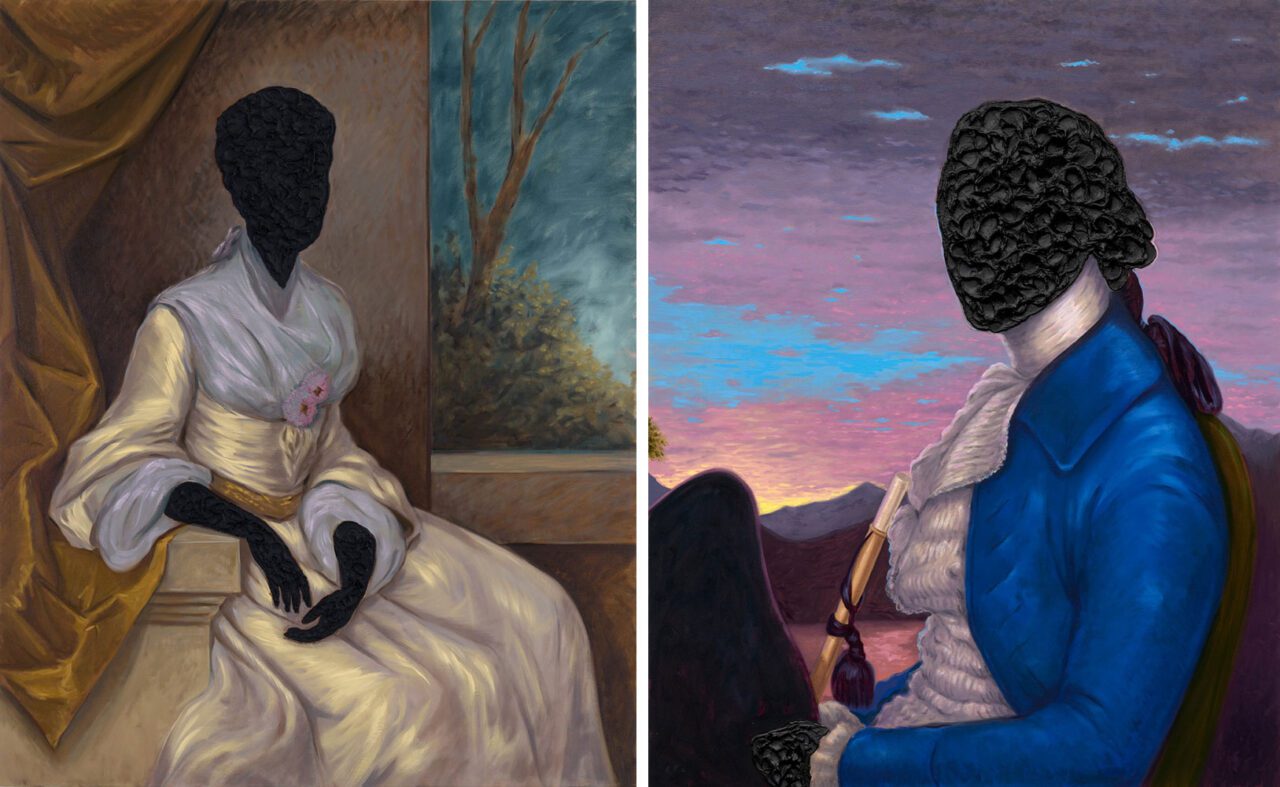
Right: Titus Kaphar, Kinfolk, Breath Is My Precious Inheritance (Harry Washington), 2025, Tar and oil on linen, 60 x 48 inches (152.4 x 121.9 cm), © Titus Kaphar, Photo: Owen Conway, Courtesy Gagosian
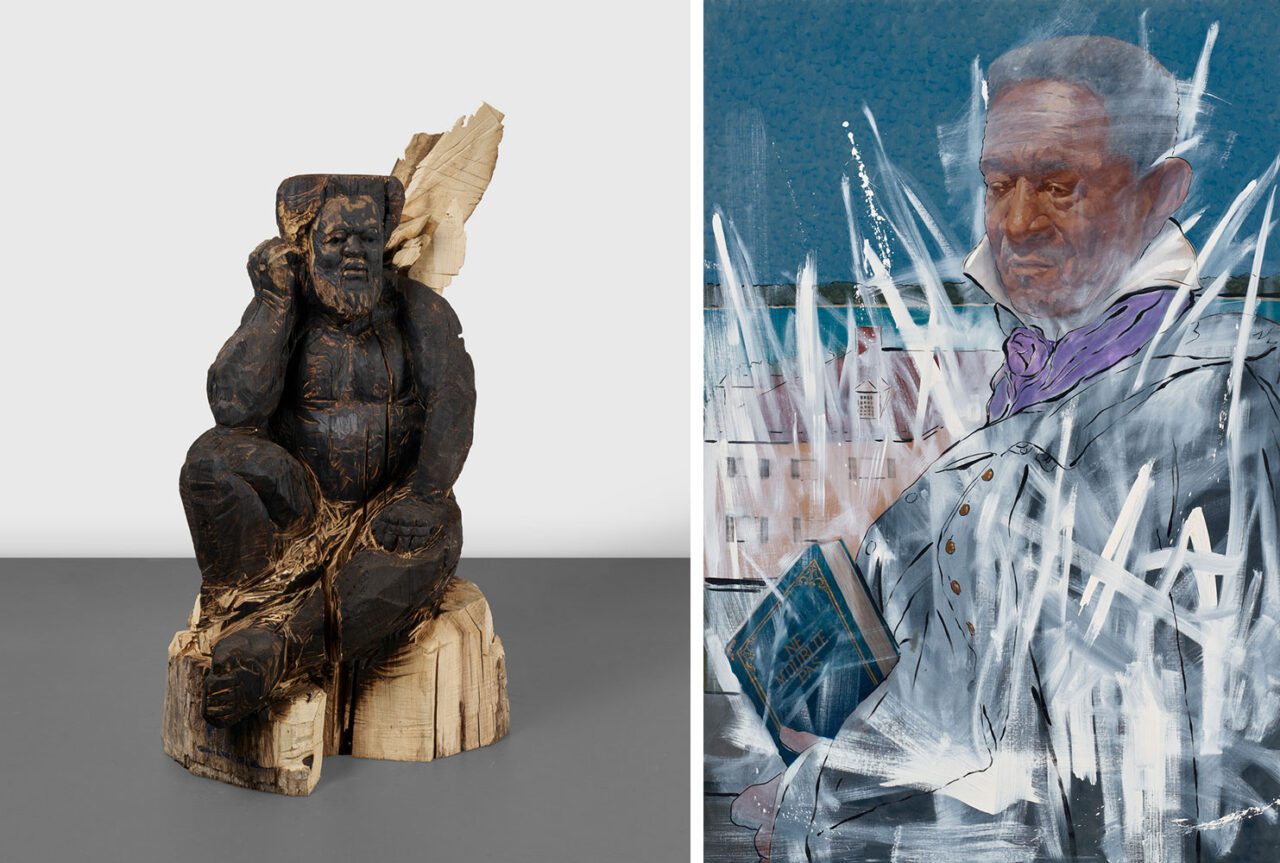
Right: Titus Kaphar, Forget Me Not (James Armistead Lafayette), 2025, Oil on linen, 84 x 56 inches (213.4 x 142.2 cm), © Titus Kaphar, Photo: Chris Gardner, Courtesy the artist and Gagosian
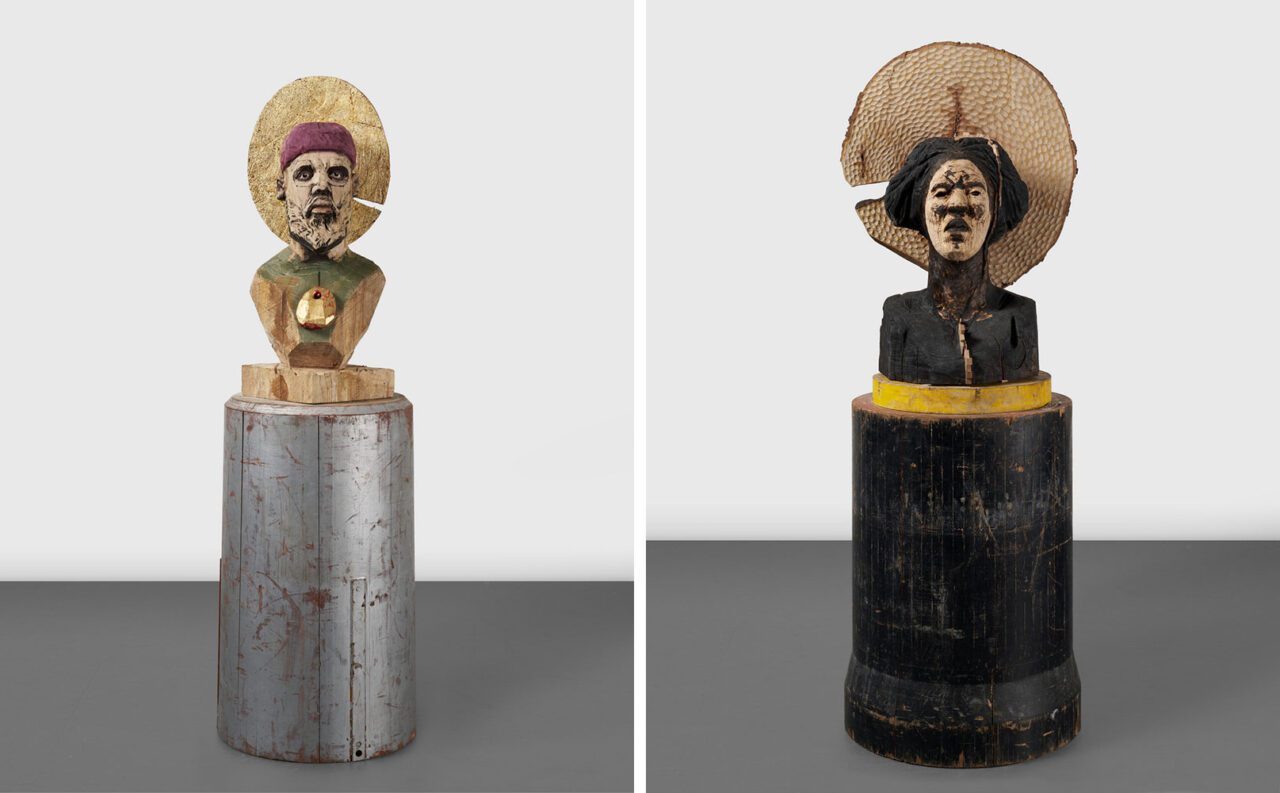
Right: Titus Kaphar, While You Rest . . . (Sentinel 1), 2025, Charred wood and found industrial object, 60 x 38 3/4 x 38 3/4 inches (152.4 x 98.4 x 98.4 cm), © Titus Kaphar, Photo: Chris Gardner, Courtesy the artist and Gagosian