ART CITIES: Milan-Sheila Hicks & Paolo Icaro
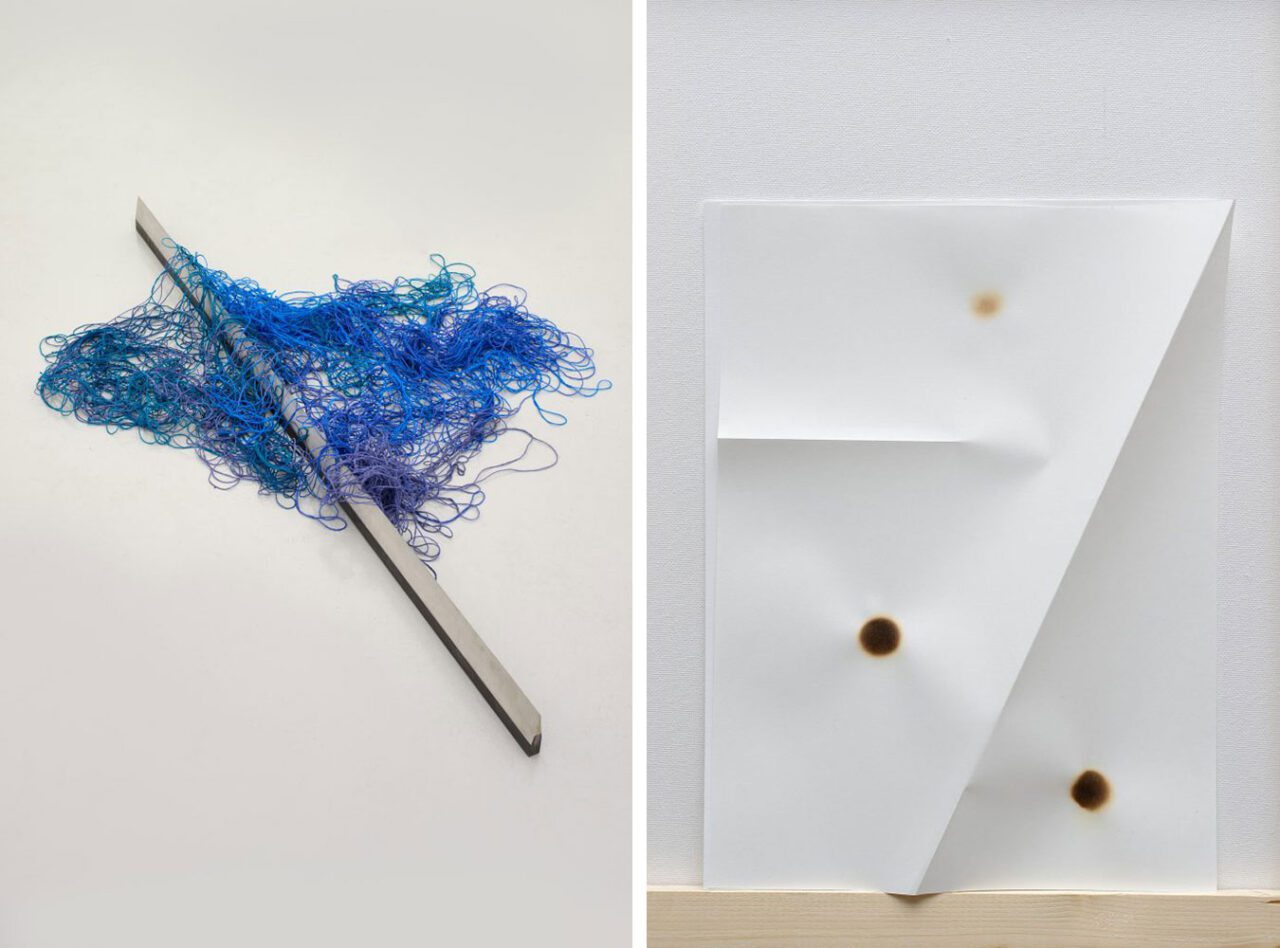
The exhibition “Live Wires” originates from an encounter that was, in itself, already performative. On 19 December, connected remotely from Paris, Pesaro, and Brescia—the vertices of a conceptual triangle—Sheila Hicks, Paolo Icaro, and Massimo Minini met online to discuss a project that, at that point, existed only as an intuition. All that was shared in advance was the exhibition title and an image: a steel blade wrapped in a bundle of colored threads. This visual cue encapsulated Minini’s original idea—bringing together Icaro’s “Luogo della linea” (1969) and a chromatic tangle unmistakably evocative of Hicks’s practice.
By Efi Michalarou
Photo: Galleria Massimo Minini Archive
The duration of that first conversation is difficult to quantify; what remains vivid is the intensity of the exchange. Framed within the grid of a video call, the three interlocutors—born in 1934, 1936, and 1944—engaged with the enthusiasm of curious adolescents. Ideas circulated freely, mediated through English as a shared language, punctuated by gestures, digressions, wordplay, and sudden intuitions. What unfolded was not a planning session in the conventional sense, but the live emergence of an exhibition—an event defined by openness, reciprocity, and intellectual play.
From the outset, “Live Wires” took shape as a form of game. The artists’ proposals bounced back and forth like a ping-pong match, or like two players from different sports improvising together in a public park, each wielding their own tools and techniques. Hicks and Icaro operate through markedly distinct material vocabularies: Hicks gravitates toward soft matter, saturated colour, and a visceral relationship to form; Icaro works with sculptural density, restrained chromatic fields, and materials that suggest solidity and structural rigor. Yet to frame their dialogue as a simple opposition—still less along gendered lines—would be reductive.
What the exhibition reveals is that, beneath these differences, Hicks and Icaro share a set of fundamental principles. Foremost among them is an understanding of the artwork as ductile and mutable. Neither artist conceives of form as fixed or definitive; works are allowed to evolve, adapt, and even hybridise across time and contexts. This openness is evident in the freedom granted to Minini to devise the exhibition’s invitation image, and more broadly in both artists’ willingness to let the exhibition space act as an active agent rather than a neutral container.
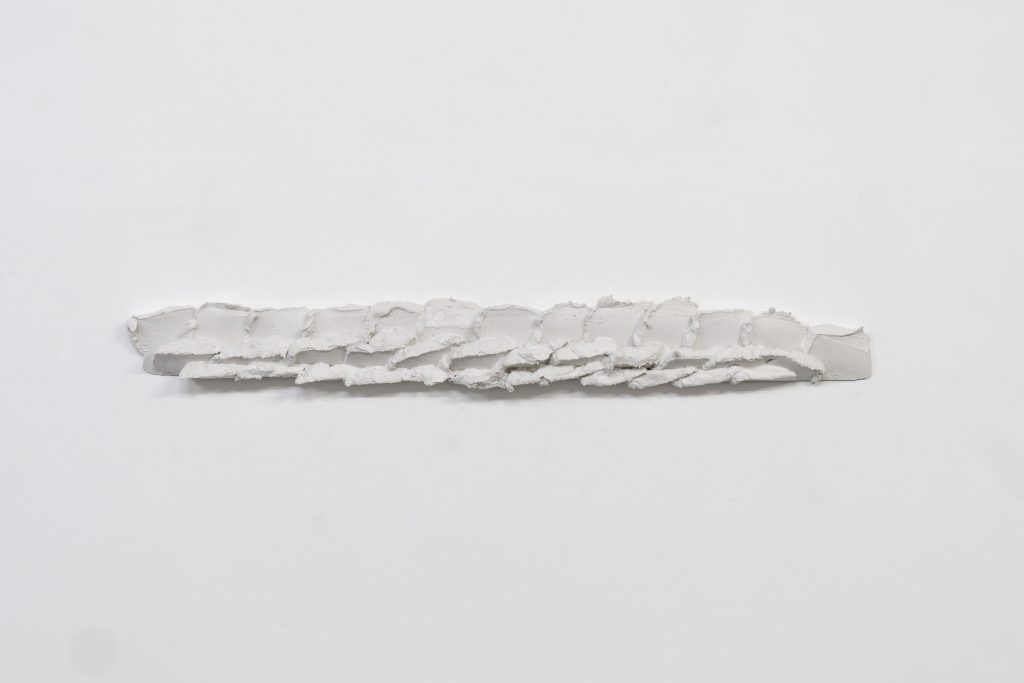
Another shared affinity lies in their attraction to accumulative forms—masses that tangle, coil, or intertwine through processes that feel organic rather than predetermined. Although their materials differ radically in terms of compactness—textiles and fibres on one side, plaster, lead, and architectural elements on the other—both artists privilege substances that are resolutely non-precious. What matters is not nobility of origin, but responsiveness: how matter behaves, resists, yields, and occupies space.
The installation makes these affinities tangible. The exhibition unfolds through a sequence of rooms conceived as sites of tension and resonance. At the entrance, two small-scale works—one on paper, one in fabric—establish a chromatic kinship through muted brown tones. Around them, suspended works suggest a collective moment of levitation, as if all forms were poised mid-leap. In the second room, Hicks’s “The Captured Comrades” (2026) enters into a direct confrontation with Icaro’s “Cumulo Rete” (1968): two nets, materially and structurally distinct, facing each other across the space.
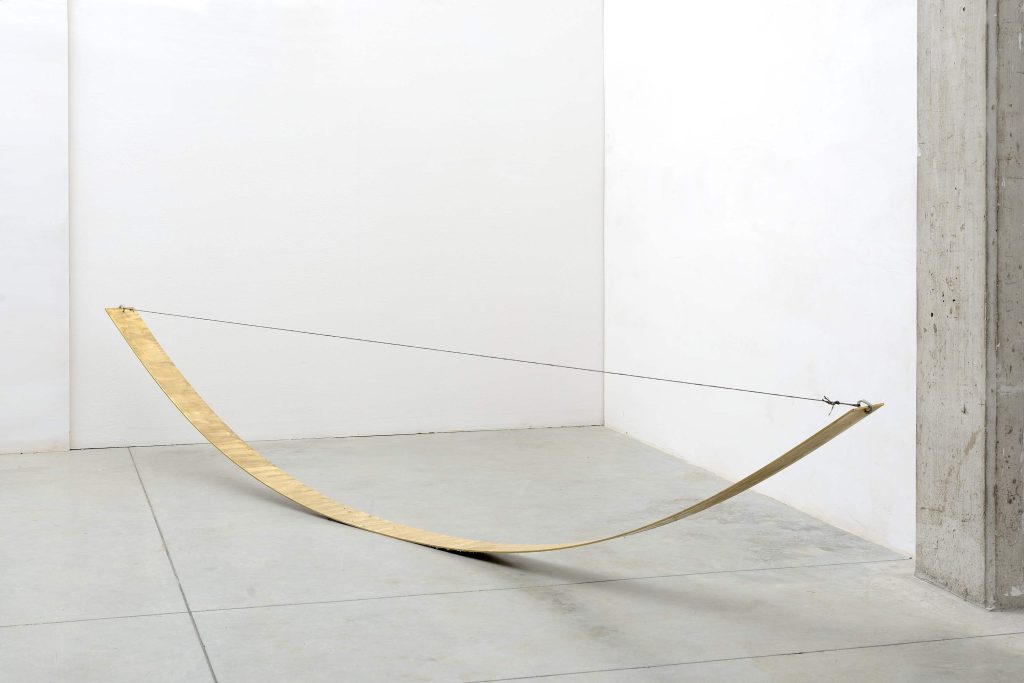
Elsewhere, parallels emerge through physical tension and torsion. “Attempt en Escape” (2025) and “Torciglione” (1963) articulate twisting forces, while “My Echo Surrounds You” (2025) and “Cubical Molecular” (1978) share an accumulative logic grounded in whiteness—one expanding across the wall, the other aggregating on the floor. That same chromatic wave seems to flow into “Linea tesa” (2018), carried onward toward “Radiating Speech” (2025), both traversed by concentrated vectors of force. In the final room, Hicks’s “Impertinence en Vacances” (2025) and Icaro’s “Percorso neuronale” (2011) confront one another as dense, entangled organisms—less a dialogue than a debate, tracing illegible calligraphies through space.
Throughout the exhibition, moments arise in which the works appear to mirror each other unexpectedly, like faces that do not resemble one another yet share a common expression. The most compelling analogies surface precisely where distance seems greatest. “Live Wire”s thrives on this productive dissonance.
Crucially, this exhibition does not present itself as a definitive statement. The selection and installation of works remain open to adjustment, even at the last moment—a gesture entirely consistent with the project’s genesis. Live Wires is conceived as a living system: a weave of threads and tensions, connections and risks, playful yet charged. Its title speaks not only to material entanglement, but to the latent danger and vitality of genuine exchange.
Underlying this approach is a shared, almost childlike faith in process. Hicks recalls travelling across the United States during the Great Depression, improvising games, collecting objects, and learning through play and bricolage. A similar sense of wonder permeates Icaro’s brief text La favola della favola (1974), where the artist narrates his own coming into being as a cascade of sensations, gestures, and domestic sounds—culminating in the simple assertion: “Everything is a fairy tale.”
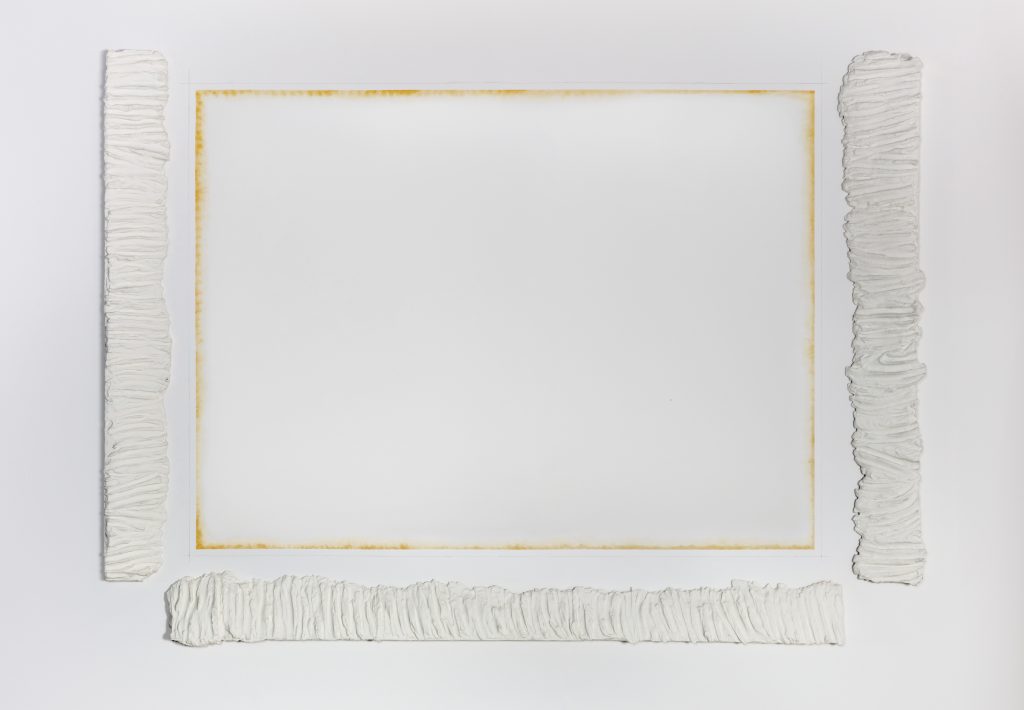
Photo left: Sheila Hicks, © Sheila Hicks, Courtesy the artist and Galleria Massimo Minini. Photo right: Paolo Icaro, St., 2019, Fabriano paper, 33 × 48 cm, © Paolo Icaro, Courtesy the artist and Galleria Massimo Minini
Info: Galleria Massimo Minini, Via Apollonio 68, Brescia, Italy, Duration: 31/1-28/3/2026, Days & Hours: Tue-Fri 10:00-19:00, Sat 15:00-19:00, www.galleriaminini.it/
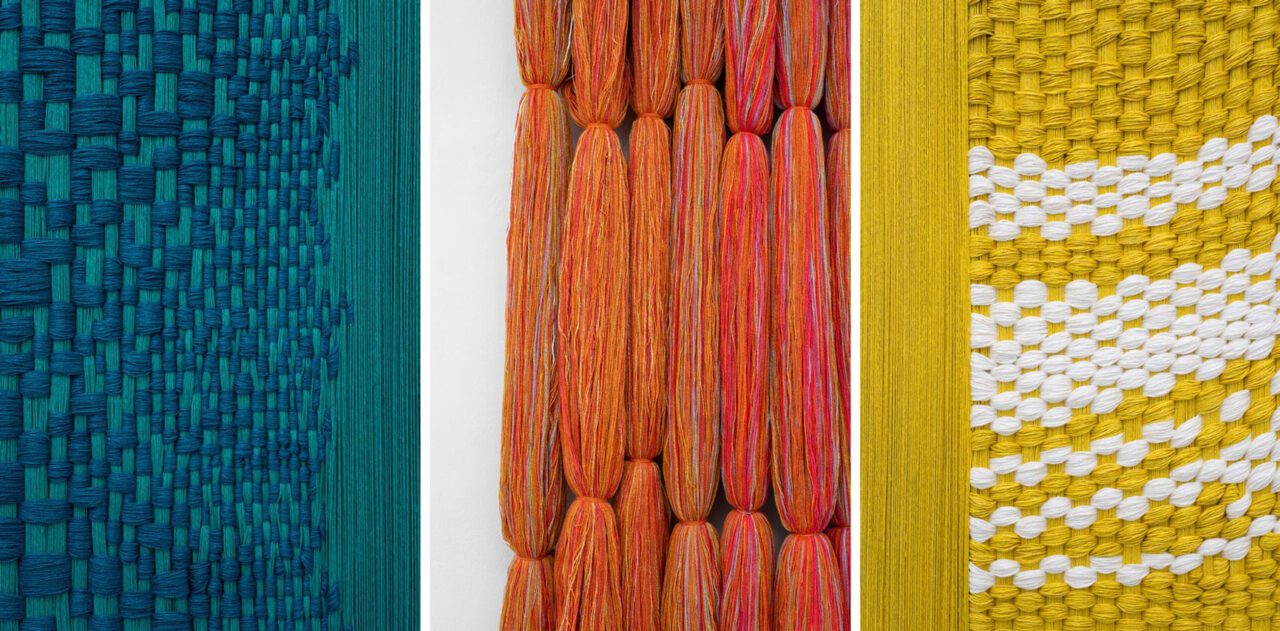
Center: Sheila Hicks, Reckless Cashmere Escalation (detail), 2025, Cashmere, linen, 120 × 120 cm, 18 elements, © Sheila Hicks, Courtesy the artist and Galleria Massimo Minini
Right: Sheila Hicks, My Echo Surrounds You (detail), 2025, linen, wooden frame, 120 × 120 cm, © Sheila Hicks, Courtesy the artist and Galleria Massimo Minini
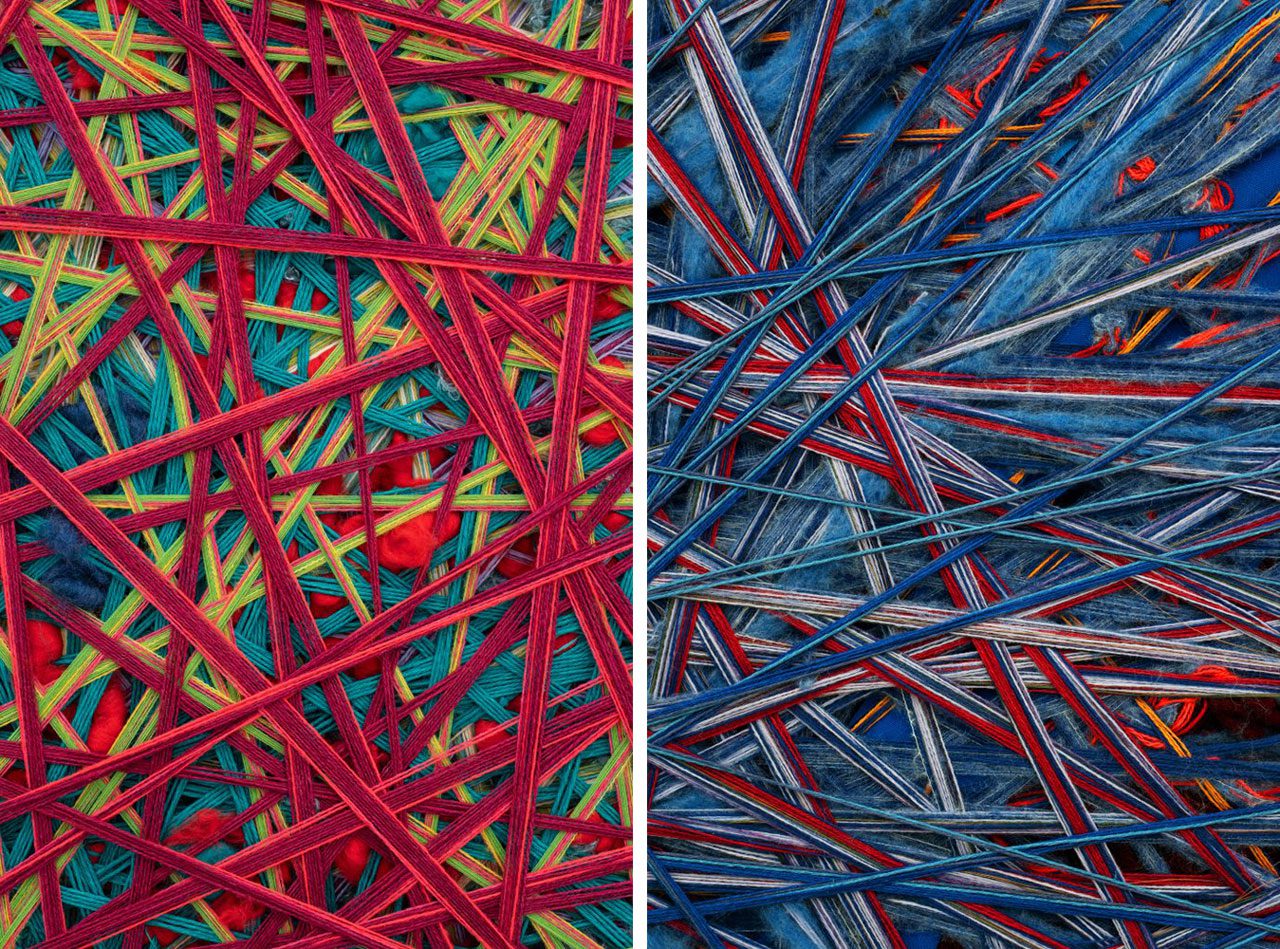
Right: Sheila Hicks, Indigo Vertigo (detail), 2025, linen, cotton, cachemire, synthetic fibers, 120 × 120 × 7 cm, © Sheila Hicks, Courtesy the artist and Galleria Massimo Minini
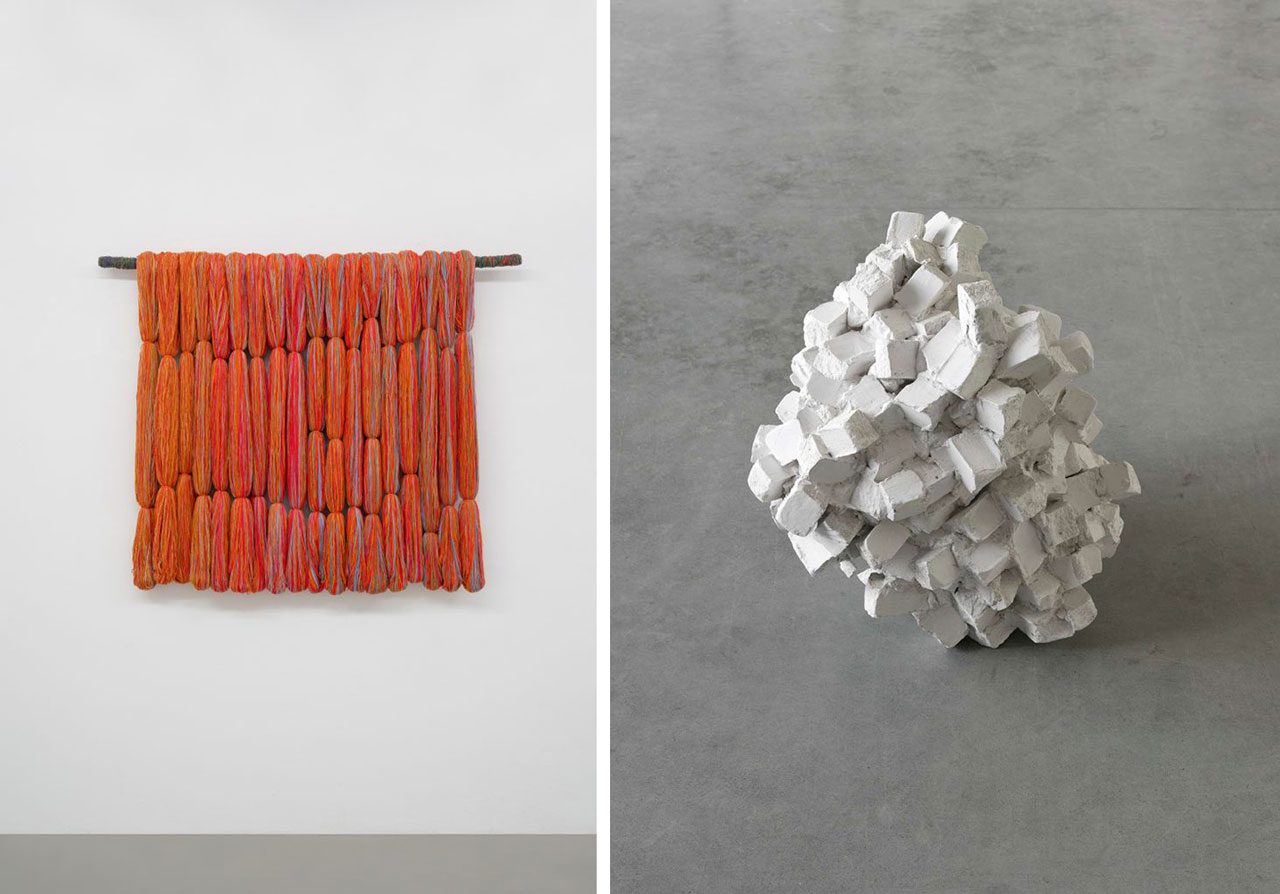
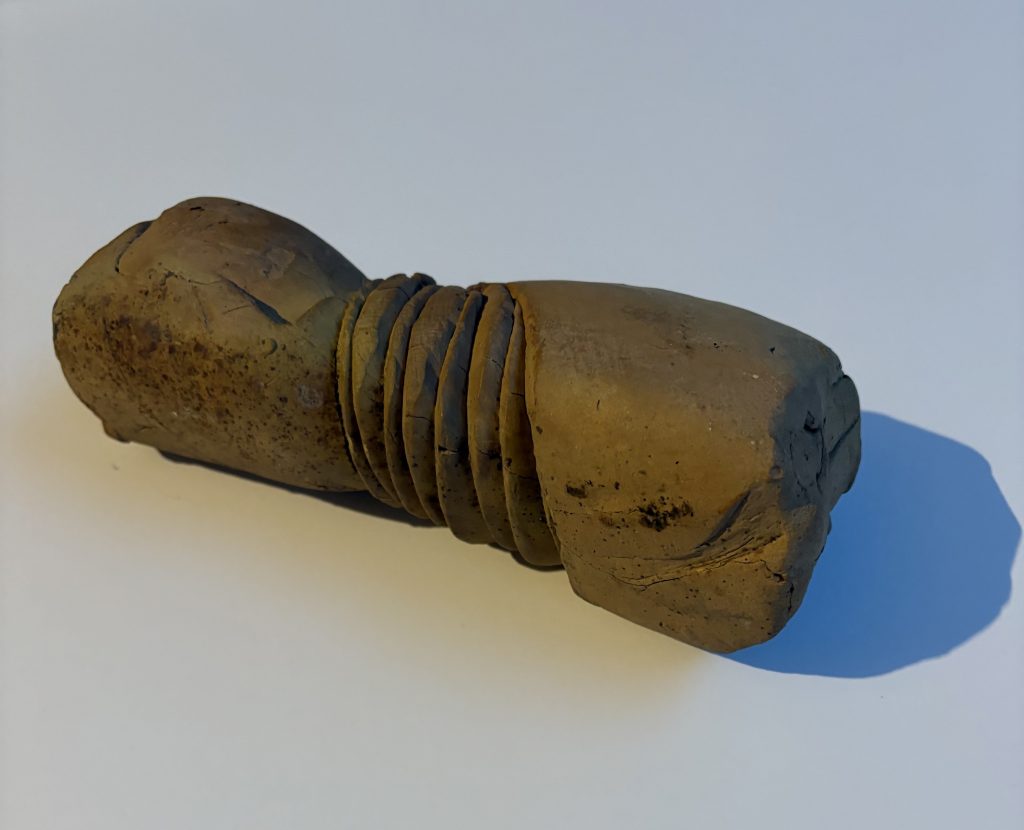
Right: Paolo Icaro, Cubical molecular, 1978, Painted bronze, 53 × 40 × 45 cm, © Paolo Icaro, Courtesy the artist and Galleria Massimo Minini