PREVIEW: Marianna Simnett-Headless

Marianna Simnett is a British-Croatian artist with a multidisciplinary approach who lives and works between Berlin and New York. Her immersive narratives centre around the overlapping and at times incongruous themes of vulnerability, autonomy, control, pain, metamorphosis, and care. Surrealism has long been a prominent influence in Simnett’s practice, recently highlighted by her participation in the 59th Venice Biennale, “The Milk of Dreams” (2022).
By Dimitris Lempesis
Photo: Max Ernst Museum Brühl des LVR Archive
When the British-Croatian artist Marianna Simnett (b. 1986) unfolds her expansive solo exhibition “Headless” at the Max Ernst Museum Brühl des LVR, she offers viewers not just a retrospective but a radical reimagining of what contemporary art can be: a dreamscape sprawling across media, a labyrinth of uncanny encounters, and a confrontation with the thresholds of body, identity, and psyche.
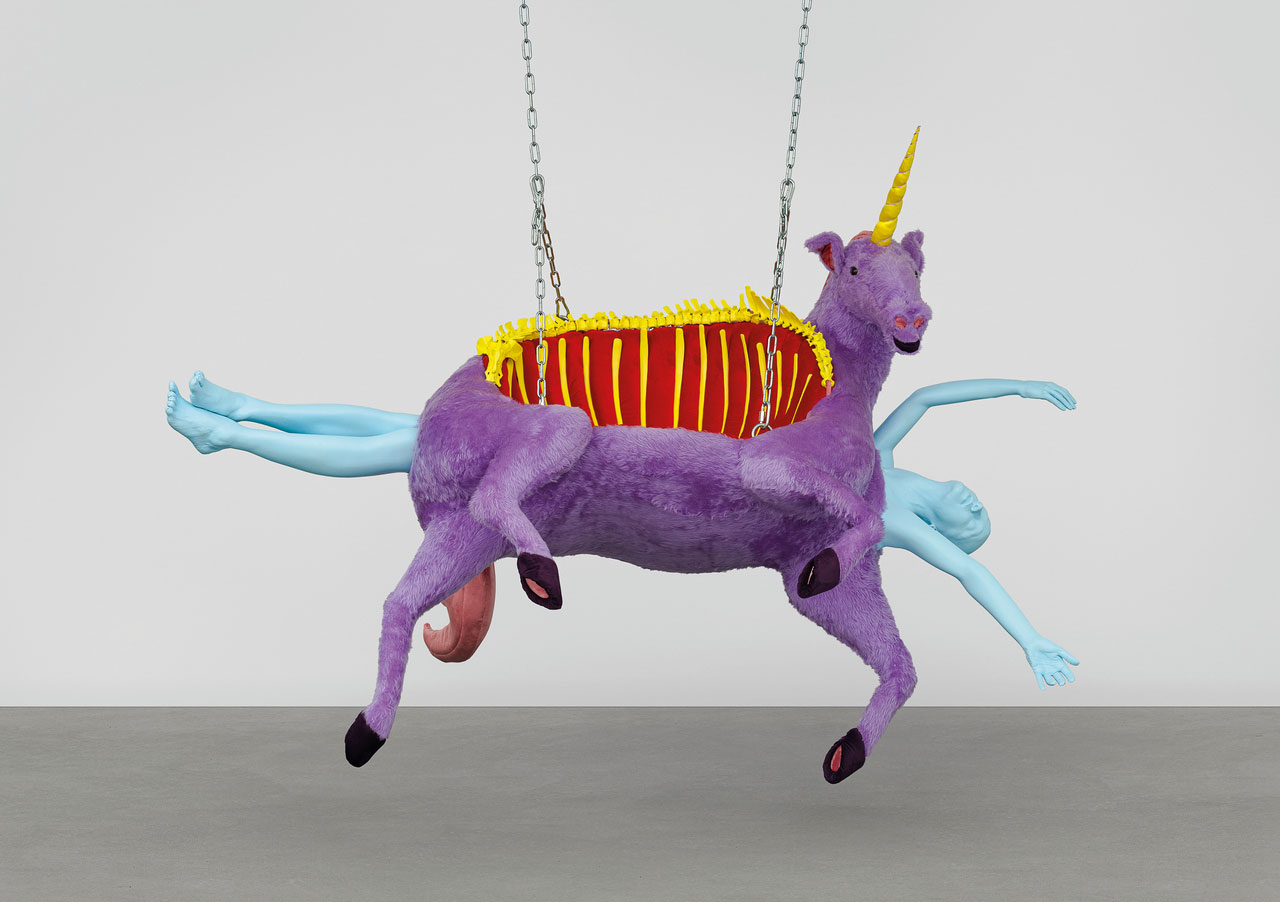
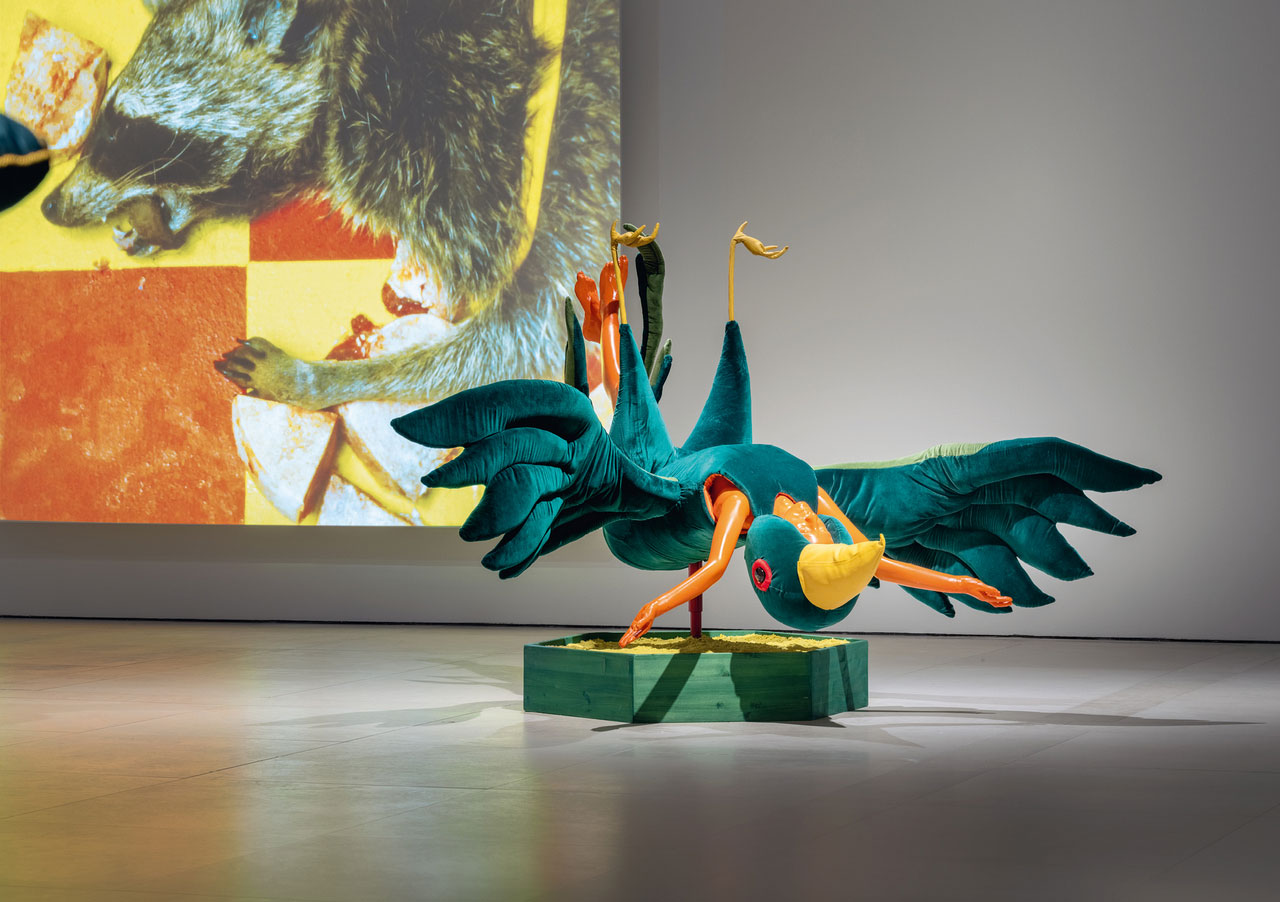
Simnett’s practice has long challenged conventional frameworks of representation. Working across video, AI-based works, sculpture, painting, sound, and performance, she creates visual universes where the familiar dissolves into hybrid forms and the rational gives way to the dreamlike. Viewers who enter Headless do not merely observe works — they are drawn into immersive experiential fields that echo, distort, and expand the legacies of Surrealism and feminist artistic inquiry.
The title “Headless” deliberately invokes Max Ernst’s 1929 collage novel “La femme 100 têtes” (The Hundred Headless Woman), a seminal Surrealist work that subverted narrative logic and fractured visual coherence. Simnett’s appropriation of Ernst’s imagery and linguistic play (“cent” vs. “sans”) does more than pay homage; it reframes the iconic title for a post-digital age — where identity itself is unmoored from traditional anchors such as gender, body, and cognition, and where machines and algorithms participate in the formation of meaning.
Throughout the exhibition, the motif of headlessness — both literal and metaphorical — threads through the works like a leitmotif. It resonates in scenes where forms fragment, merge, or disappear entirely into digital processes, where logic collapses into affect, and where the boundaries of sense and nonsense blur. It is an apt metaphor for the contemporary condition, one where certainty has dissolved into flux and where identities are enacted rather than fixed.
Simnett’s iconography draws deeply from Greek mythology and a global constellation of fairy tales and folkloric traditions — yet she does not simply retell ancient narratives. Instead, she transfigures them. Goddesses, demons, witches, and female-coded figures are unraveled and knit together into hybrid bodies and identities that defy simple categorization. These figures inhabit states of transformation — caught between pleasure and pain, power and vulnerability, life and death. While myth provides the structural grammar, Simnett superimposes her own contemporary lexicon: AI-generated forms, mechanized gestures, and reflections on algorithmic perception that foreground a post-human sensibility.
Her new painting series, created specifically for Headless, engages directly with Ernst’s collages but inverts their mechanics: where Ernst created surreal narratives from cut fragments of printed matter, Simnett employs digital processes and AI as both tool and collaborator, constructing scenes that are at once poetic and disquieting. In this practice, the collage is not a technique but an epistemological stance — a way of thinking assembled from fractured fragments of contemporary experience.
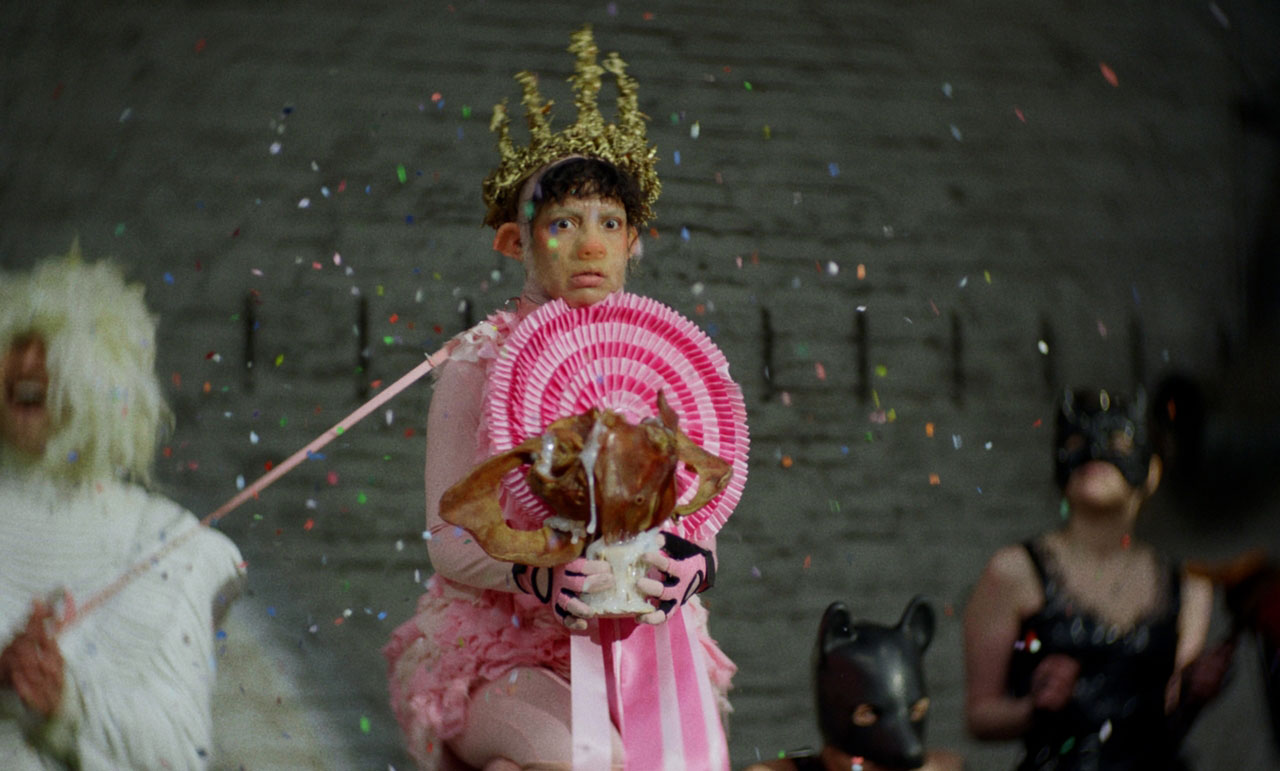
Simnett’s work often positions the body at the center of her explorations — not as a stable locus of identity, but as the site of possibility, transformation, and transgression. This focus on corporeality has been central throughout her career: early works such as “The Needle and the Larynx” (2016), which documented the artist having Botox injected into her voice box, force viewers to confront cultural anxieties around body modification, gendered perception, and autonomy. Likewise, the installation “Faint with Light” (2016) — now considered one of her most powerful works — records Simnett inducing fainting through hyperventilation, its sound and light structure mirroring the fragile boundary between life and collapse.
Within “Headless”, this tradition continues. The works oscillate between violence and pleasure, dream and trauma. Simnett’s narratives refuse the simplistic binaries that Western art history has so often imposed: innocence is bound with cruelty, control with vulnerability, body with machine. Her videos and installations often enact these tensions unflinchingly, generating spaces where spectators are drawn into the unfolding drama rather than positioned as detached observers.
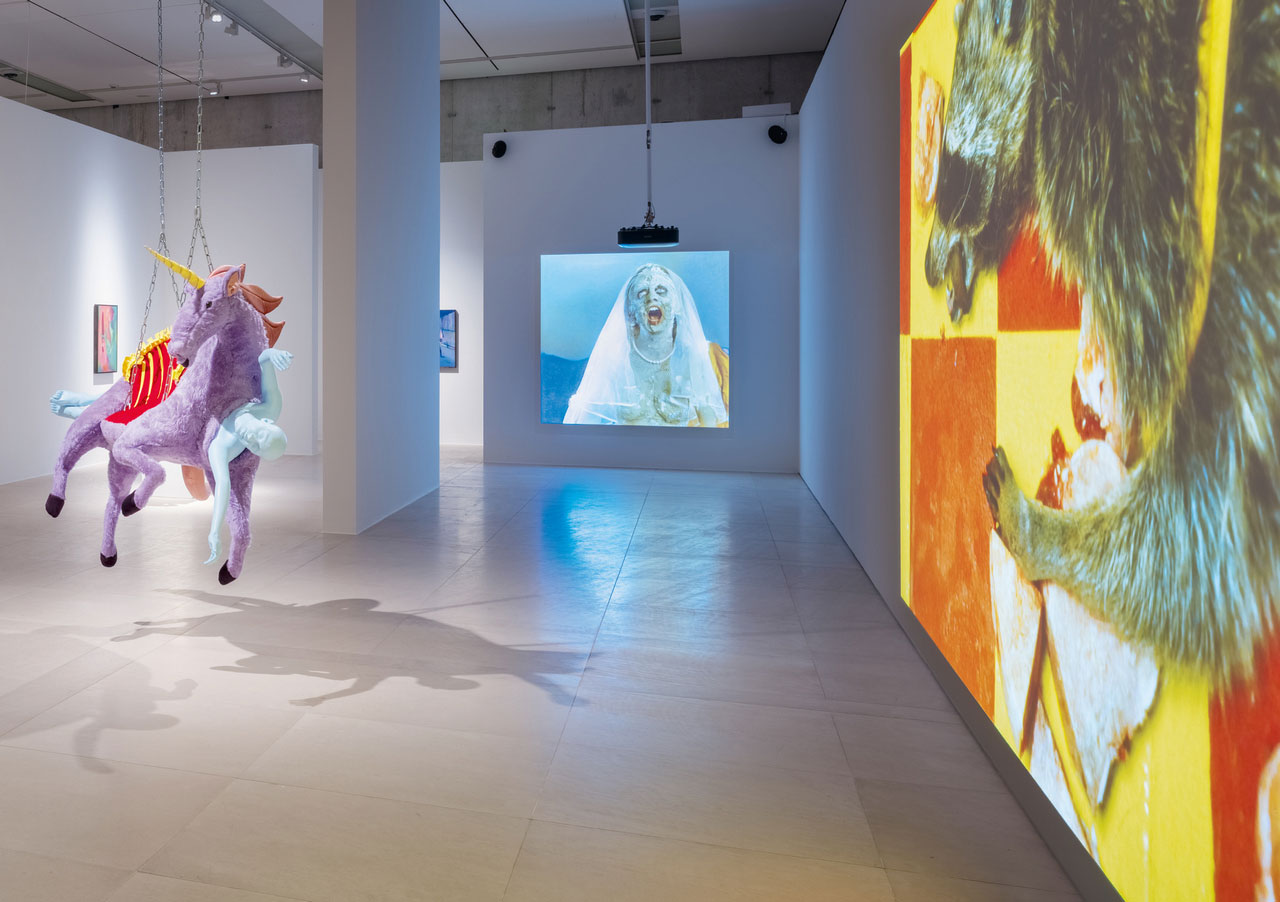
The exhibition’s spatial logic furthers this narrative complexity. Rather than a linear chronological progression, “Headless” is staged as an experiential labyrinth — a network of sensory dislocations that mirrors the fractured condition of perception itself. Video projections flicker across walls, sculptures loom like hybrid entities at the cusp of becoming, paintings pulse with surreal signal patterns, and AI-generated sequences animate forms that oscillate between familiar and unrecognizable. Sound and movement stitch these elements into a living, breathing ecosystem of the unconscious.
There is a deliberate strategy in this construction: to unsettle and provoke, to move audiences beyond habitual modes of looking into spaces where meaning must be felt rather than read. Social conventions — about gender, about the body, about human agency — are dissolved in these immersive fields, and the visitor becomes a participant in the fracturing and recomposing of experience.
Simnett’s engagement with Surrealism is neither nostalgic nor derivative. Instead, she extends its radical potential into twenty-first-century anxieties and aspirations — from biotech to AI, from gender politics to ecological precarity. Her references to classic Surrealist tropes are strategic: they provide a historical anchor while allowing her to interrogate the legacy of art movements that sought to subvert rationality and unlock the unconscious. Headless amplifies this legacy, suggesting that the surreal is not a historical style but an enduring mode of critical engagement with the ambiguities of existence.
Simnett’s work — which has appeared in institutions ranging from the Venice Biennale to the New Museum, MMK Frankfurt, and Kunsthalle Zürich — consistently foregrounds the body and psyche as arenas of contestation and transformation.
In “Headless”, this focus reaches a summative intensity. It is an exhibition that both reflects on the past century of avant-garde practice and points toward new frontiers of artistic inquiry — where the boundaries between human and machine, dream and trauma, control and dissolution are forever permeable.
“Headless” is not just an exhibition: it is an encounter with the aberrant beauty of the unconscious. It invites, unsettles, and transforms. In its fractured narratives and hybrid forms, it gestures toward the fractured and polarized condition of the world itself — where identity is fluid, logic is provisional, and the act of seeing is always already an act of becoming. For viewers willing to venture into its depths, Headless offers not answers, but a profound reimagining of how art can map the psychogeography of our times.
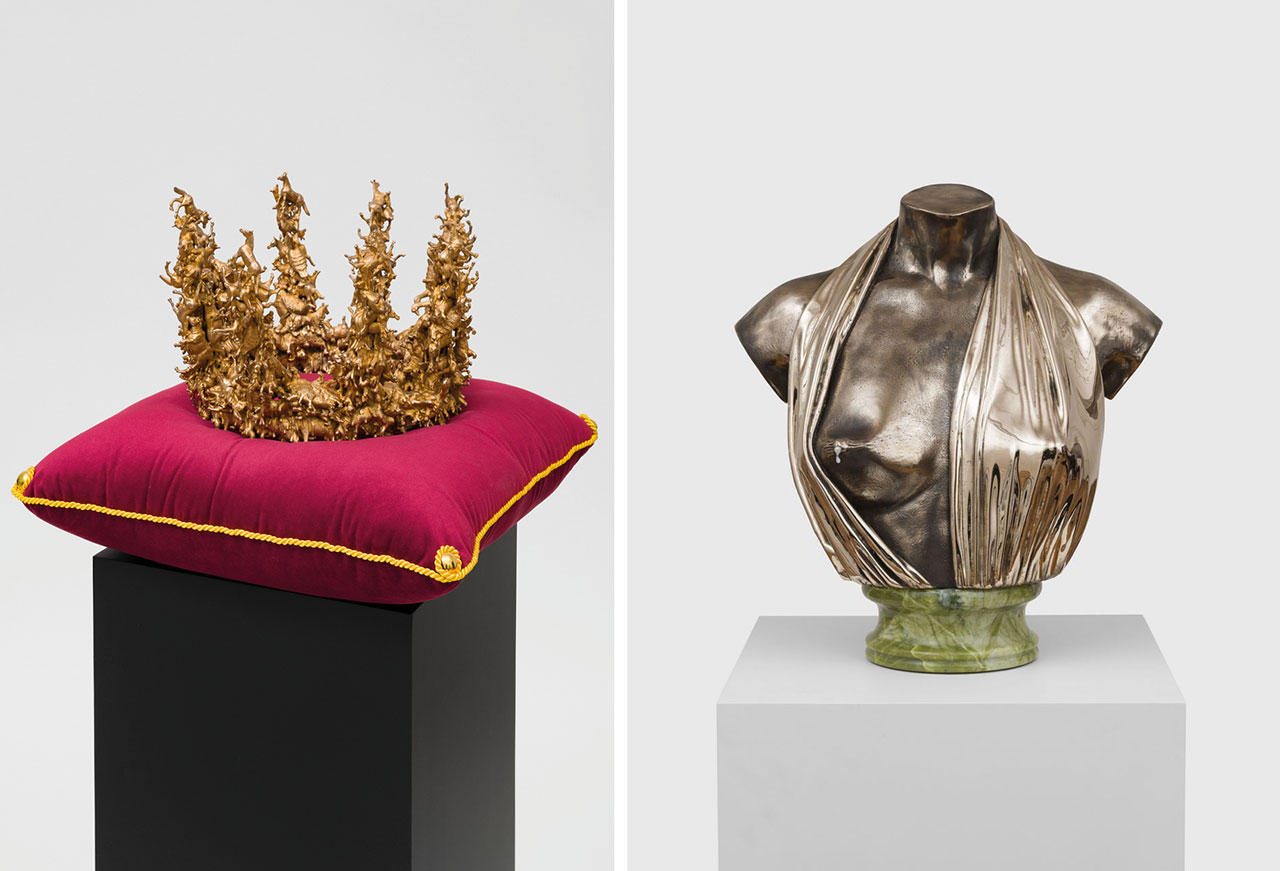
Photo left: Marianna Simnett, Headless #1, 2025, © Courtesy the artist and Société, Berlin, Photo: Thomas Müller. Photo right: Marianna Simnett, Headless #2, 2025, detail, © Courtesy the artist and Société, Berlin, Photo: Jürgen Vogel for the Max Ernst Museum Brühl of the LVR
Info: Curators: Madeleine Frey and Sarah Louisa Henn, Max Ernst Museum Brühl des LVR, Comesstraße 42 / Max-Ernst-Allee 1, 50321 Brühl (Rhineland), Germany, Duration: 31/1-5/7/2026, Days & Hours: Tue-Sun 11:00-18:00, www.lvr.de/max-ernst-museum-bruehl/
Right: Marianna Simnett, The Producer, 2025, © Courtesy the artist and Société, Berlin, Photo: Trevor Good