ART CITIES: Lisbon-Carlos Bunga
Carlos Bunga’s practice spans sculpture, installation, painting, and photography, with a central focus on architecture, impermanence, and the notion of dwelling. In the exhibition “Carlos Bunga. Inhabit the Contradiction,” presented at CAM , Carlos Bunga occupies both the interior spaces and the museum’s outdoor garden, conceiving and presenting one of the most complex and personal exhibitions of his career.
By Vasiliki Trochidou
Photo: Vasiliki Trochidou’s Archive
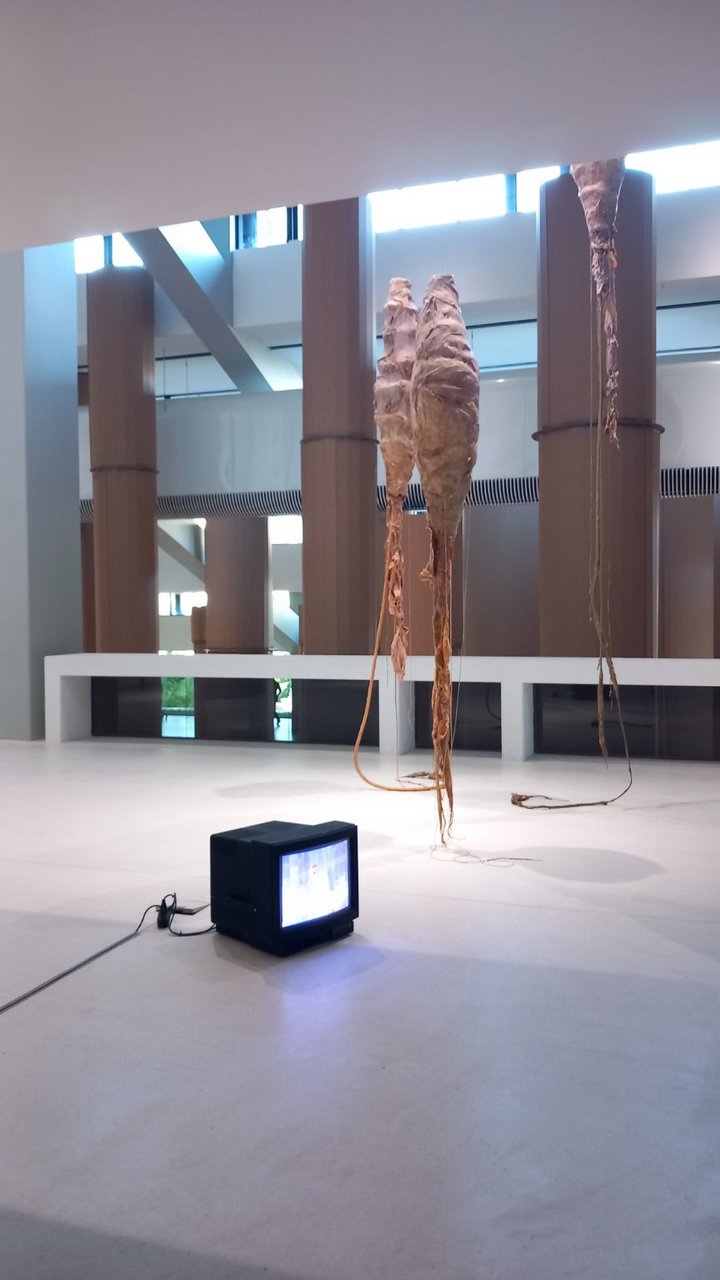
The exhibition “Carlos Bunga. Inhabit the Contradiction” starts with the work “A Minha Primeira Casa Foi Uma Mulher” (1975) [My First Home Was a Woman, 1975], a direct reference to the maternal body as the first place of dwelling. For Bunga, this body is not merely a biological shelter, but the first symbolic way in which the human subject is inscribed in the world.
The materials he uses—fragile, temporary, vulnerable—do not function metaphorically, but literally. They are the materials of a life shaped by displacement, precarious living conditions, and constant renegotiations of what “home” means. Intimacy is consistently fractured. Home is never presented as a stable point of reference, but as a provisional construction, a memory in decay, a body subject to wear and erosion. Objects, structures, and models do not operate as representations, but as carriers of experience. Absence is as active as presence, and dwelling is proposed as a temporary condition, always open to negotiation.
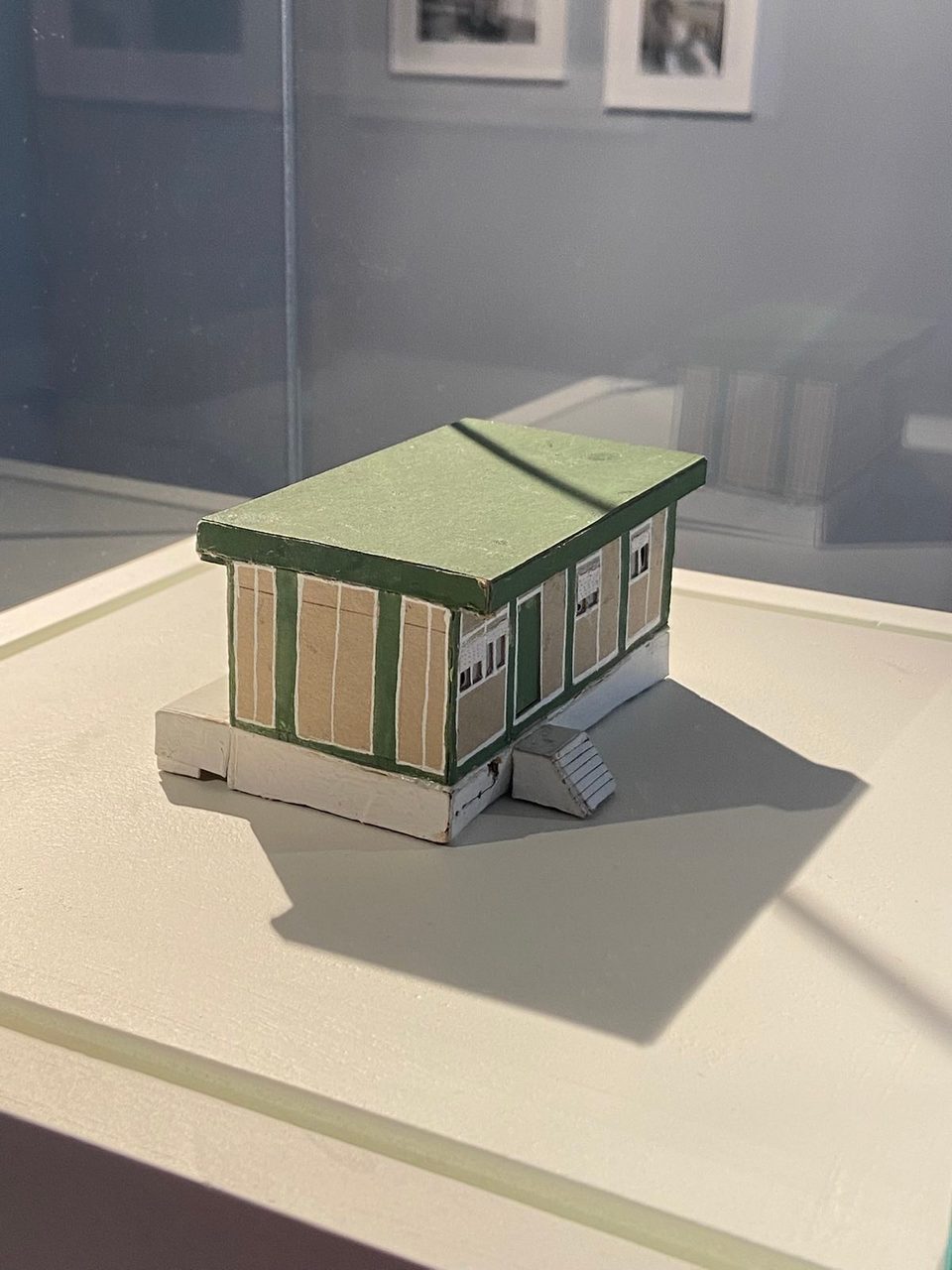
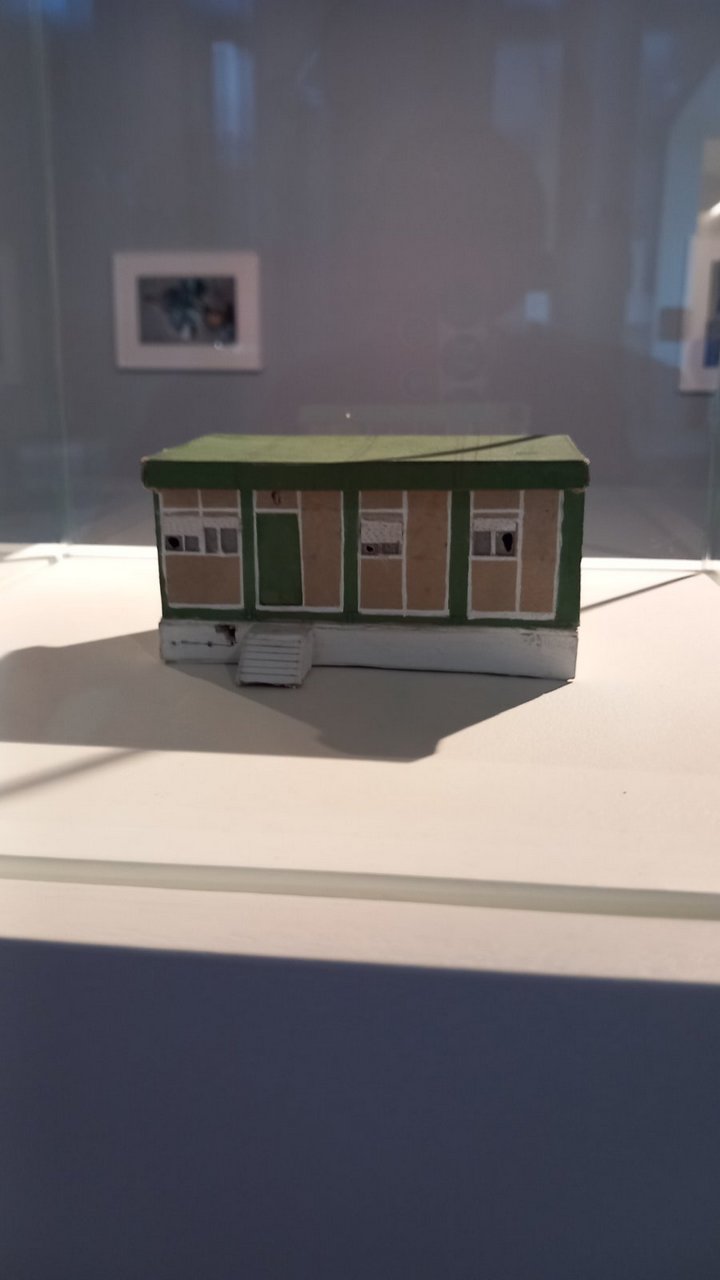
In a more personal register, the exhibition includes a small cardboard model of a house (House No.17), based on one of the first homes where the artist lived with his family. Combined with photographs documenting the demolition of that space, this section functions as a multilayered memory, connecting lived experience, the material traces of place, and the social conditions of the time.
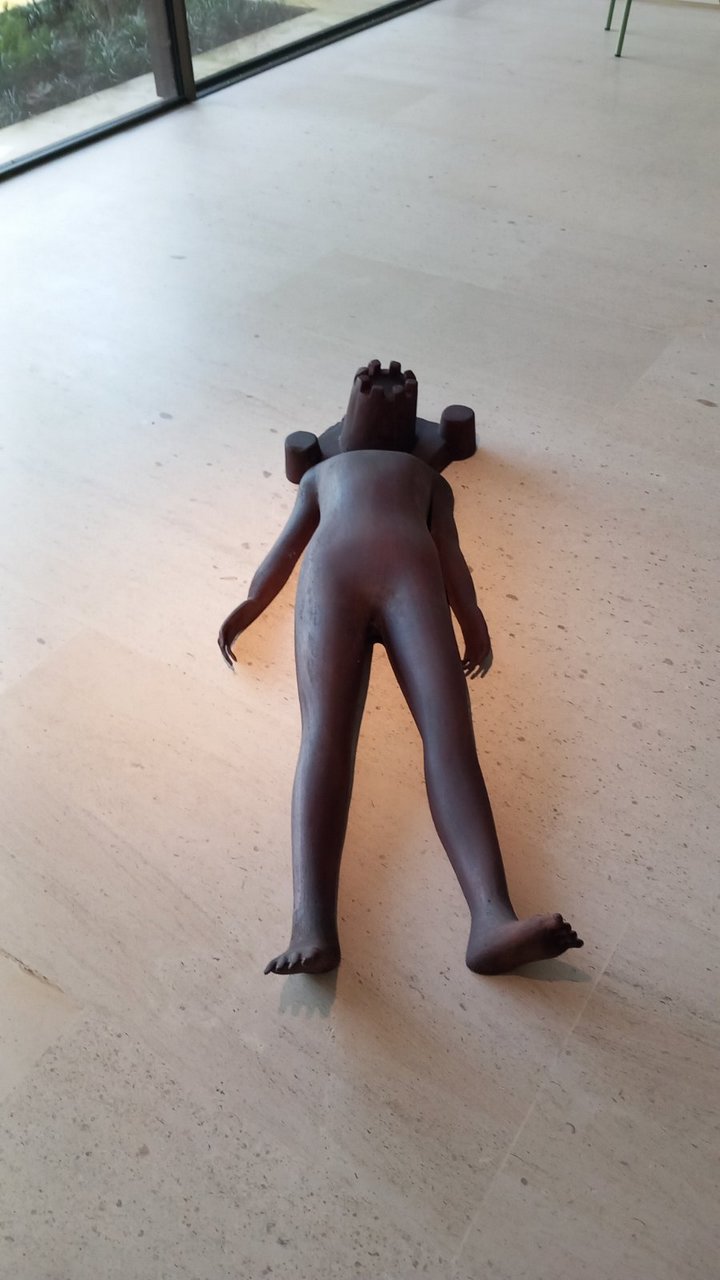
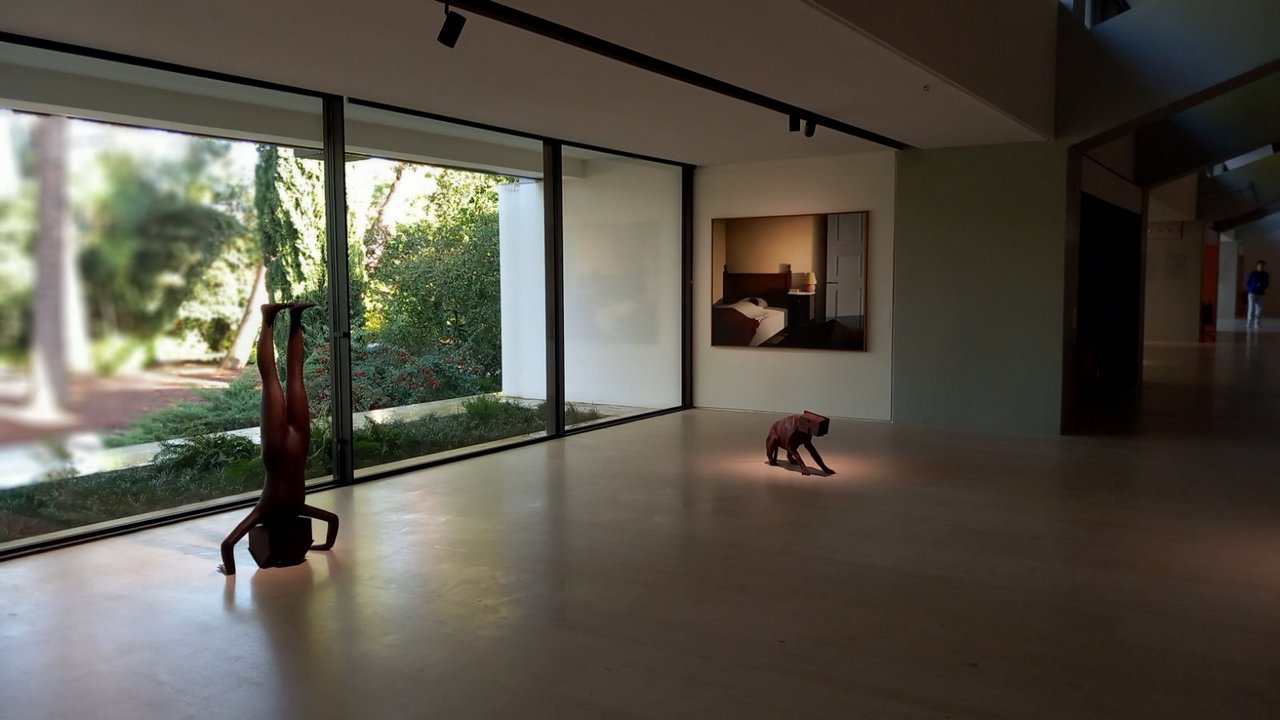
The “Nomad” figures that move through the exhibition—genderless and open to multiple readings—do not form identities, but states of being. On their heads they carry constructions that act simultaneously as burden and shelter, material condensations of memory and movement. The childlike proportions of the bodies point to a space of fluidity and potential transformation, prior to the fixation of roles, gender, and belonging. Bunga himself identifies as a nomad, precisely because he does not possess a permanent or definitive home.
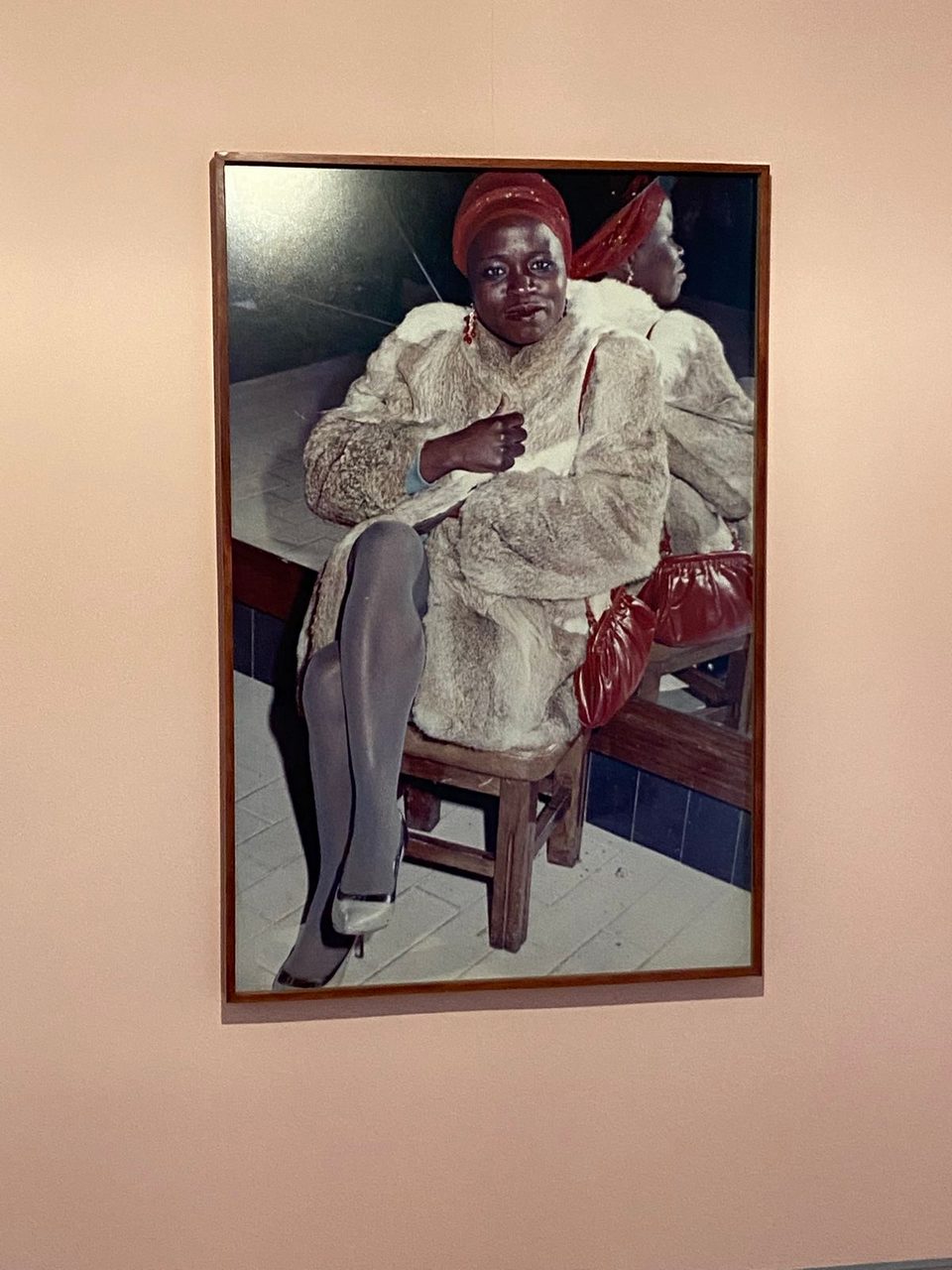
The presence of the artist’s mother in the “Motherhood” section, through photographs that balance moments of brightness with the harshness of everyday survival, introduces a quiet yet undeniable intensity. This is not a narrative of heroism; rather, the body becomes a testimony of endurance in the face of racism, class inequality, and precarity.
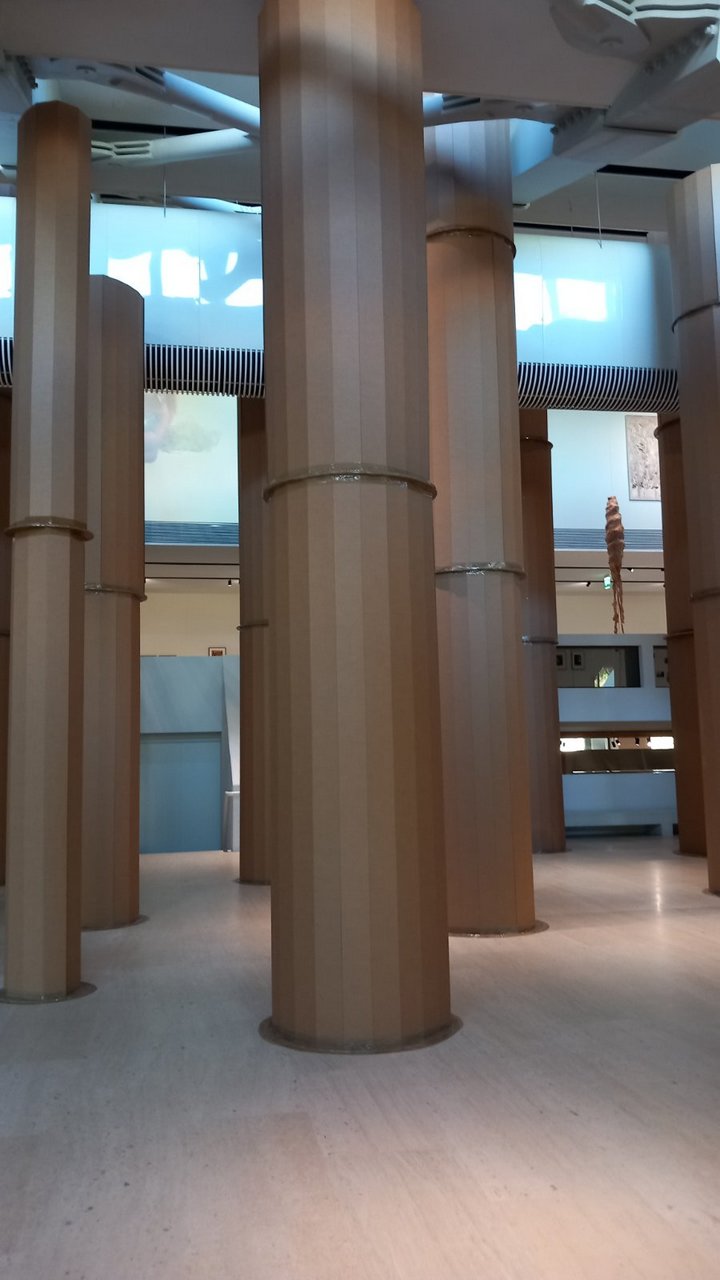
The field of cylindrical cardboard structures (Forest) evokes both architectural columns and tree trunks. These constructions create paths, dead ends, and moments of pause, placing the viewer’s body within the same condition of uncertainty that runs throughout the exhibition. For the artist, the forest functions as a living network of contradictions: human and non-human, visible and invisible. Movement through the space is not neutral, but an integral part of the narrative and the experience.
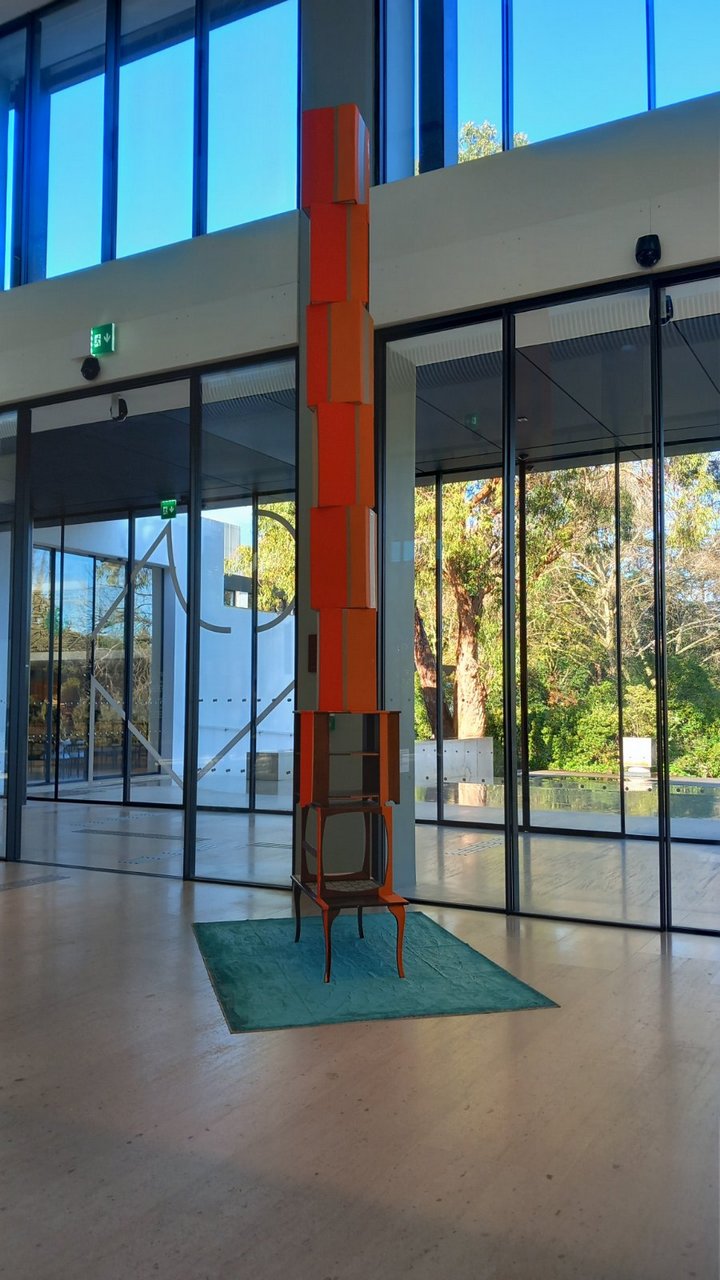
A key role is played by the curatorial gesture of the Invitation section. Here, Bunga turns to the museum’s permanent collection, selecting works by contemporary and historical artists that share an ambiguous, transitional, or difficult-to-classify nature. The juxtaposition of these works with his own practice does not aim to affirm affinities, but to open cracks in the institutional narrative of permanence and timelessness. The collection is not used as a backdrop, but as an active material, shifting the exhibition from an individual experience toward a collective reading of art history. Curating thus becomes an extension of the artist’s own practice.
Overall, “Carlos Bunga. Inhabit the Contradiction” unfolds as a unified proposition that connects memory and materiality, personal history and space, the body and absence. Rather than seeking a closed or stable unity, the exhibition foregrounds fracture and instability as central elements of the experience. The space functions like a body in constant transformation, where the viewer is not merely an observer, but becomes—if only temporarily—part of an ongoing reflection on home and memory.
Carlos Bunga – CV
Carlos Bunga was born in 1976 in Porto and lives and works in Barcelona, Spain. His practice spans sculpture, installation, painting, and photography, with a central focus on architecture, impermanence, and the notion of dwelling. He frequently employs humble and fragile materials such as cardboard, tape, and paint, creating constructions that exist in a constant state of transition. He has presented solo exhibitions at major museums and institutions internationally, and his work is included in public and private collections worldwide.
Photo: Carlos Bunga – Inhabit the Contradiction, Exhibition view, Centro de Arte Moderna Gulbenkian (CAM) – Lisbon, 2025-26, Photo: © & Courtesy Vasiliki Trochidou
Info: Curators: Rui Mateus Amaral & Carlos Bunga, Centro de Arte Moderna Gulbenkian (CAM), Rua Marquês de Fronteira 2, Lisbon, Portugal, Duration: 8/11/2025-30/3/2026, Days & Hours: Mon & Wed-Sun 10:00-18:00, https://gulbenkian.pt/cam/