PRESENTATION: Jasper Johns-Between the Clock and the Bed

Jasper Johns is an artist that came onto the scene in the 1950s. Much of the work that he created led the American public away from the expressionism form, and towards an art movement or form known as the concrete. He would depict many flags and maps, and this created a more distinct style with the work that was being done during this period in American art history. He is also one of the leading forces to the pop form known as minimalism; even to this day, many of the pieces that are sold at auction, bring in extremely high price tags, and sell for record amounts.
By Efi Michalarou
Photo: Gagosian Archive
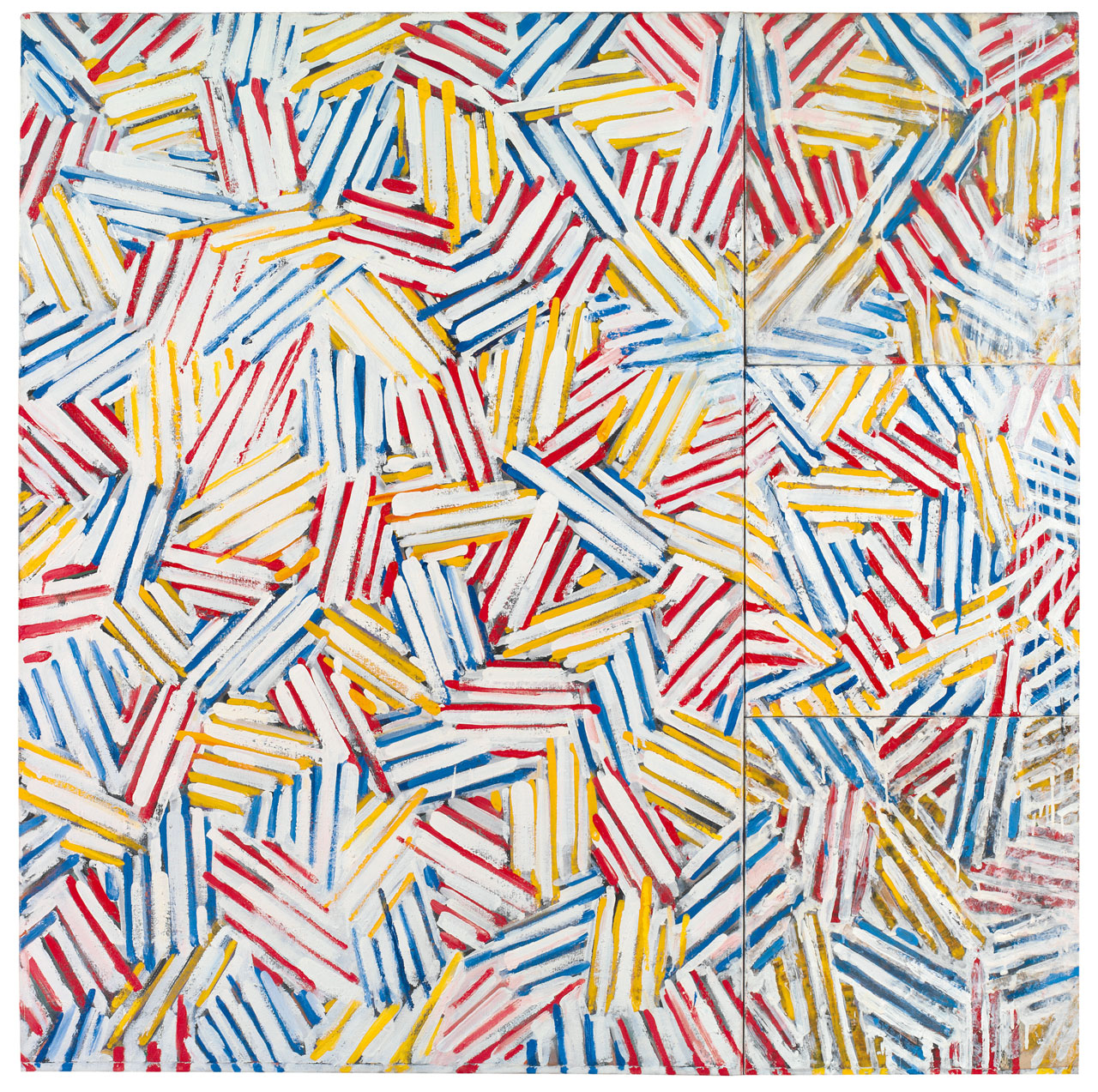
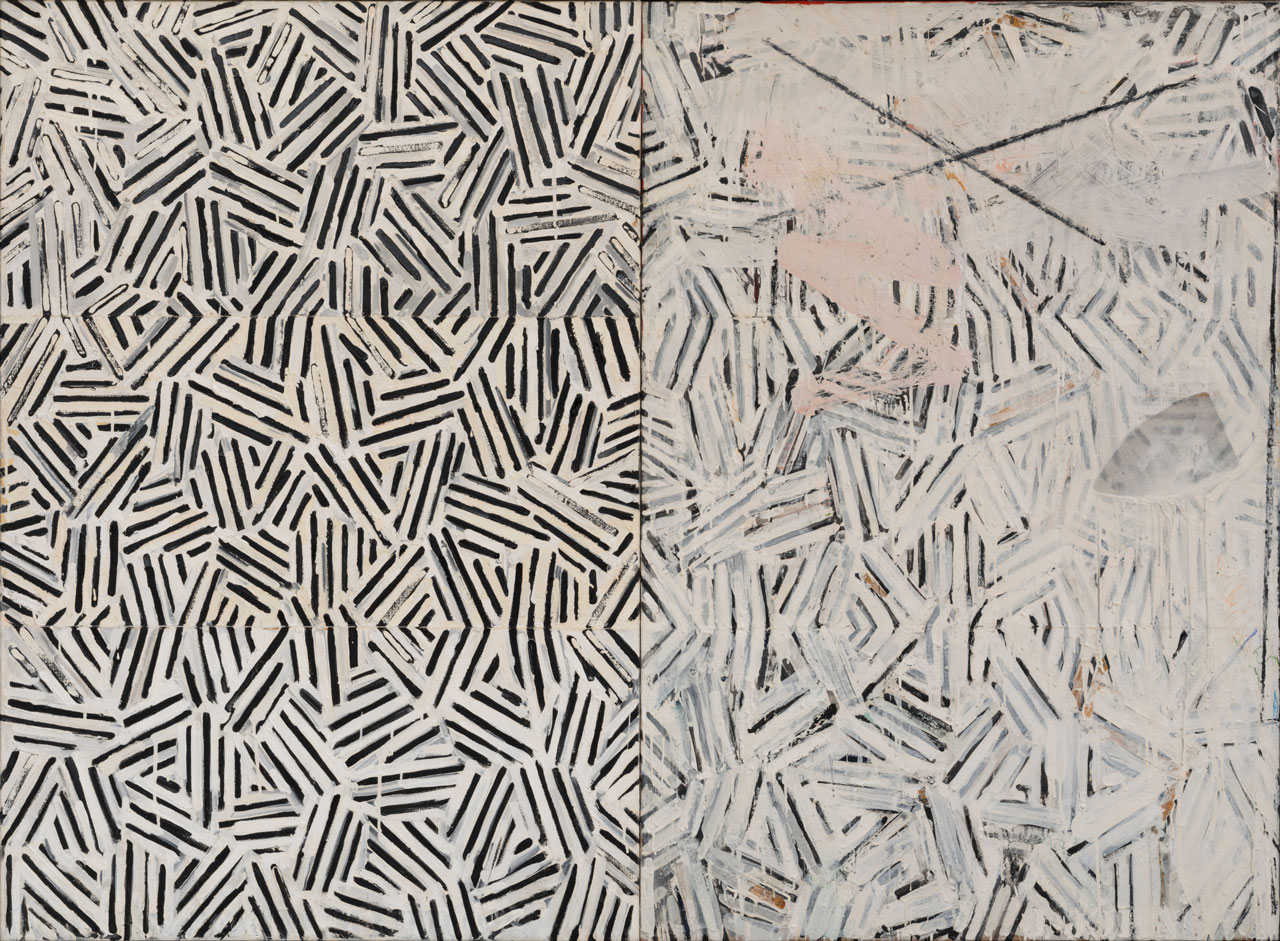
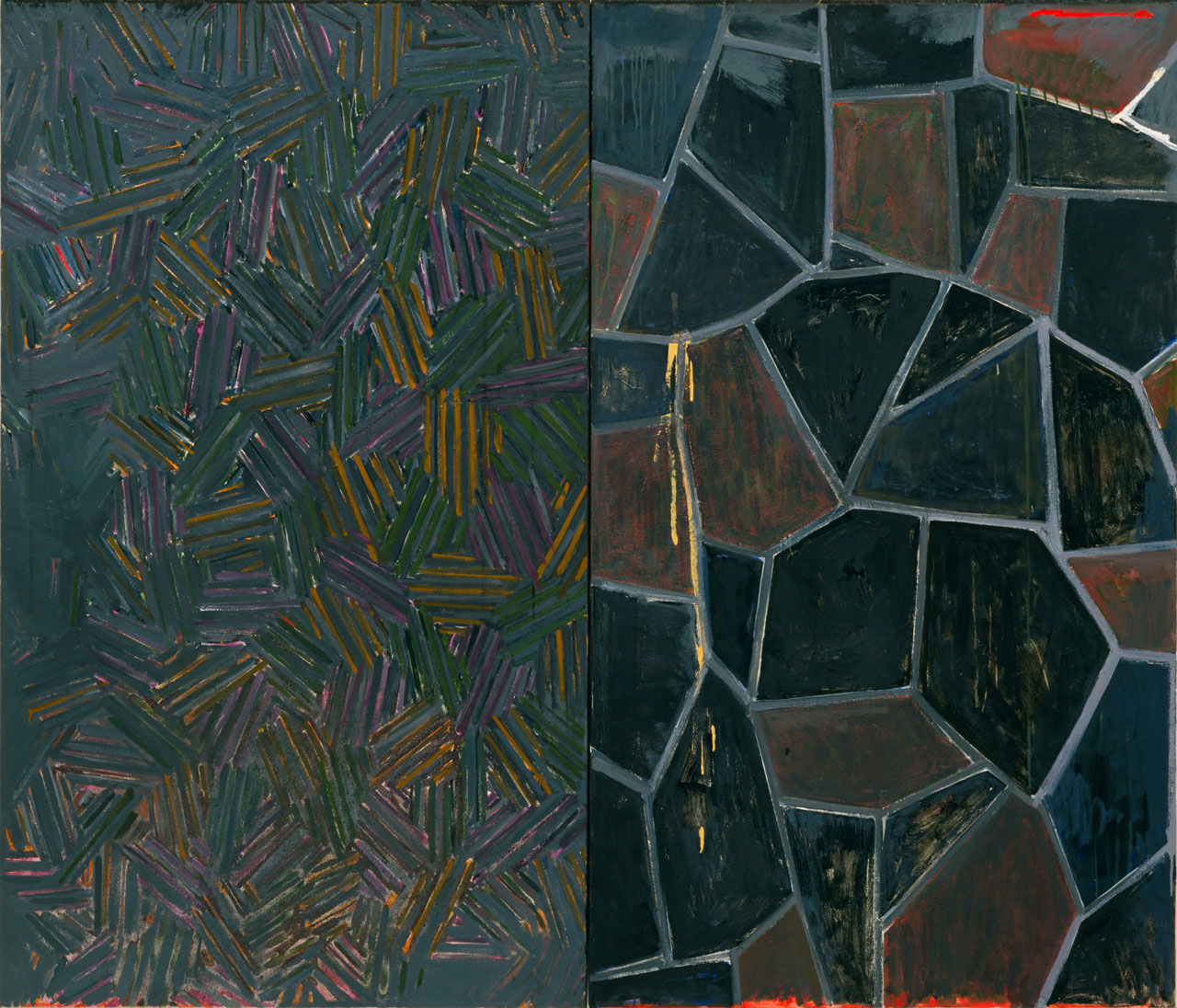
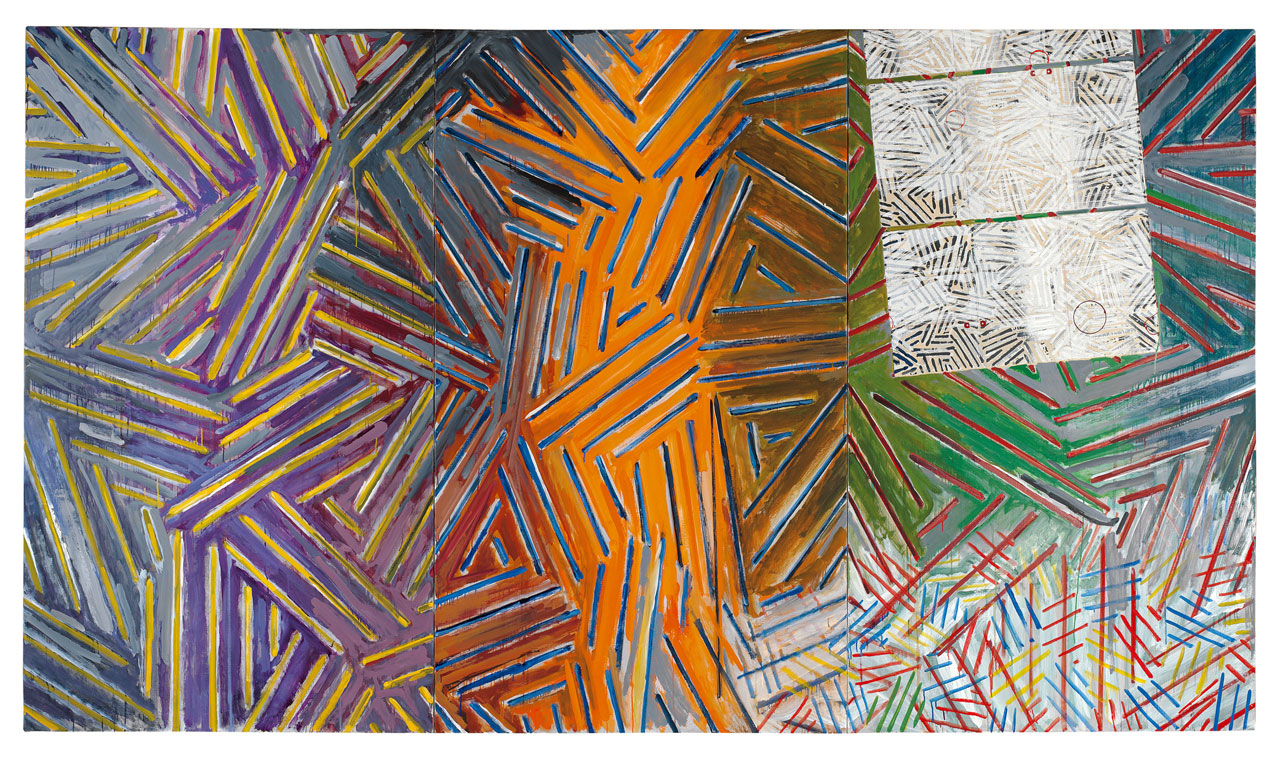
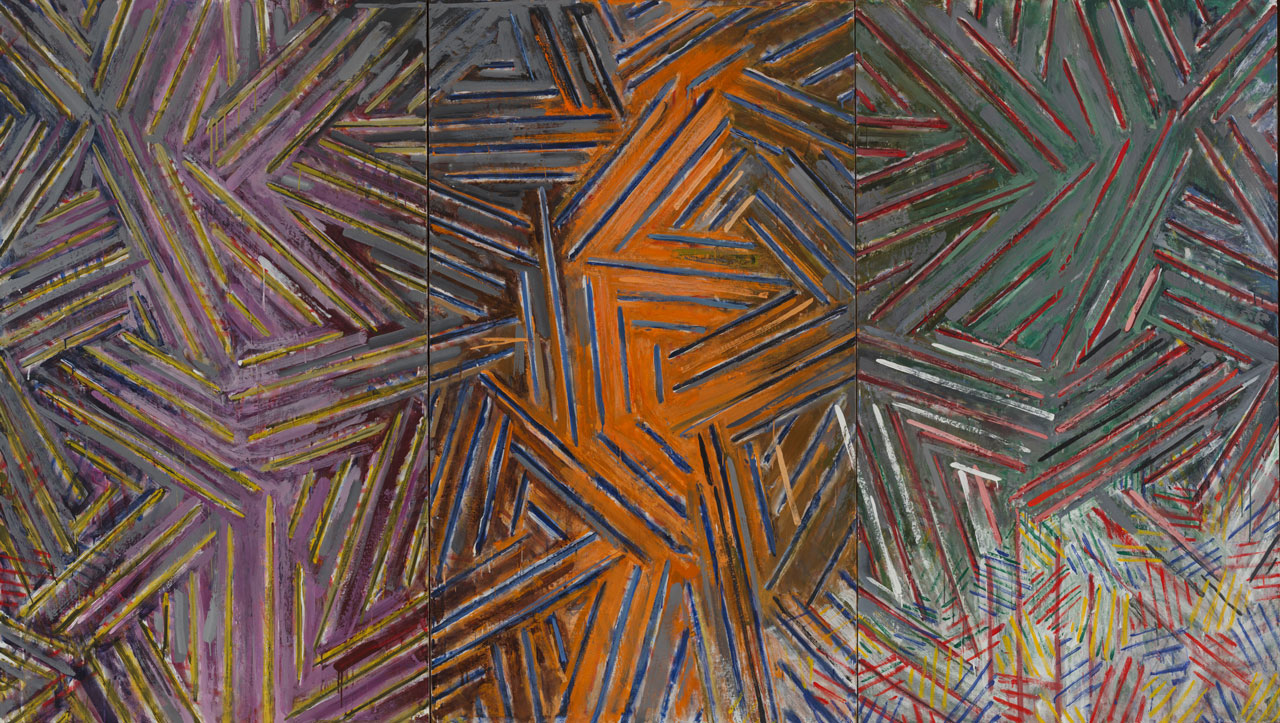
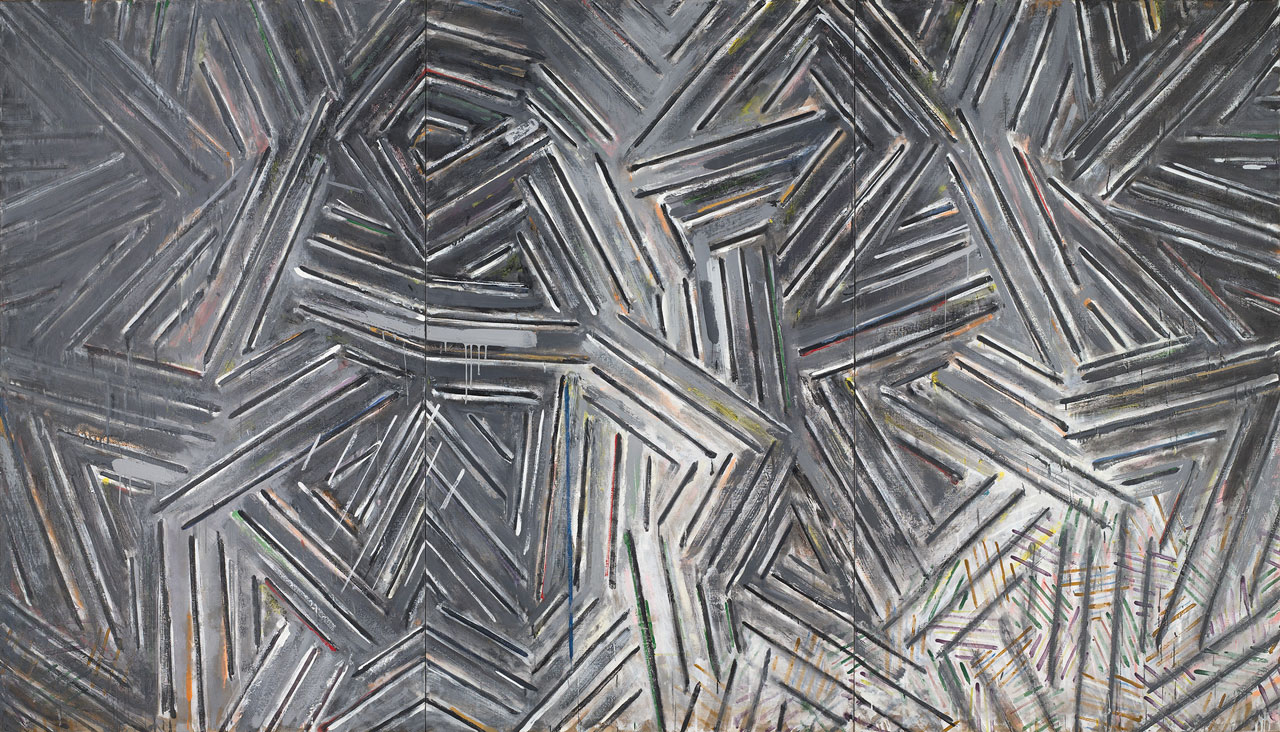
The exhibition “Between the Clock and the Bed” is a partnership of Gagosian, with Castelli Gallery, and presents historic works by Jasper Johns. This exhibition surveys the crosshatch paintings and drawings that dominated his practice from 1973 to 1983 and have reverberated across his subsequent production. It unites works that have rarely been seen with loans from sources including distinguished American museums.
Johns is lending major works from his own collection to the exhibition, including paintings on long- term loan to the Art Institute of Chicago; National Gallery of Art, Washington, DC; and Philadelphia Art Museum. Other notable lenders include The Broad, Los Angeles; Museum of Modern Art, New York; and Virginia Museum of Fine Arts, Richmond; with additional works from private collectors.
Johns has redirected the course of contemporary art many times over a lengthy career. His introduction of the crosshatch in 1972 was an unforeseen development, representing a departure from his images of everyday objects, signs, and linguistic fragments—subjects he described as “things the mind already knows.” These allover compositions, characterized by parallel lines arrayed in interlocking configurations, and composed in encaustic, collage, acrylic and oil paint, watercolor, ink, and even sand, are admired for both their visual, material, and conceptual intricacy and their intuitively striking beauty.
Major works on view include definitive paintings from the “Corpse and Mirror” series (1974–84); the seminal “Weeping Women” (1975), with its allusions to Picasso’s oeuvre; and “Dancers on a Plane” (1980–81), a tribute to choreographer Merce Cunningham. The exhibition also brings together all six “Between the Clock and the Bed” paintings (1981–83)—improvisations on Edvard Munch’s self- portrait from 1940–43 that are an inspired example of the artist’s perpetual engagement with his predecessors.
Jasper Johns was born in Augusta, GA, and raised in Adelade, SC. From an early age, he grew up wanting to be an artist. Before moving to New York in the early 1950s, he studied for a brief period at the University of South Carolina. Upon moving to New York, Jasper Johns met artists, which led him down the road of wanting to work in this career field even more. John Cage (composer) and Merce Cunningham (choreographer), and Robert Rauschenburg (painter), were some of the early influences he met in New York. A visit to Pennsylvania, to view “The Large Glass” (by Marcel Dunchamp), created an intrigue in his work for Johns. Dunchamp had changed the art world with the “readymades. His distinct work and style played a role in Jasper Johns’s interest in art, and the style he would eventually follow.
As the art world was searching for new ideas, outside the purely abstract style, the early paintings of maps and flags which Jasper Johns created, took in both praise and ridicule by certain critics in the art world. The early works he created, had a sense of craft work, and a small expression of the extra-ordinary and absurd. The process to create the images, were the meanings were found. Much of the work Jasper Johns created, was extremely new to the museum goers and art lovers, as the simple form of designing flags, and large numbers in print, was something which was never seen before. The distinct style, and the simplicity behind it, eventually captured the interest of museum goers.
In 1958, Leo Castelli visited the museum of Rauscenburg, and this was the first time he had seen any of the work created by Jasper Johns. He was impressed with the creativity, and simplicity behind the work, and offered the 28 year old, a spot for his own exhibit, upon first viewing the pieces which Jasper Johns had created. During the first exhibition, the Museum of Modern Art purchased three of the pieces that were on display, which proved that the simple format, and style, were going to make Jasper Johns a force in the art world. Nearly 30 years after this date, some of the pieces that Johns had created, were sold for a higher price tag than ever, for a living artist’s work.
Due to the fact that he focused more on the process (which he believed to be the actual art), Jasper Johns made a transition over to print making; he would often make counterparts to the art pieces he had created, in a print form. Working in print making, Johns had the ability to experiment, and it also gave him the ability to delve into new endeavors, and to work with the different art forms which he admired so much. The innovations which he found in screen printing, lithography, and etching, would completely revolutionize this field of art, and would create a career that would hold a number of pieces which the art world admired.
ollaboration was also something that Jasper Johns engaged in during this period of time, and it would serve to help further his career, and the pieces that he created at a later time in his career. He would collaborate with a number of artists, and big names in the art world. Some of the people Jasper Johns regularly collaborated with included: Andy Warhol, Robert Morris, and Bruce Naumann. In 1967, he met Frank O’Hara (author), and was invited to do the illustrations and art work for the book (In Memory of My Feelings).
In the 1970s, Jasper Johns met with another author, Samuel Beckett, who requested that he would design the art work for his written piece, Fizzles. This was the beginning of a change in the work that Johns would create during this time period, which showcased a more monotone, and simple art form that he was working on.
During this decade, the work which Jasper Johns would create, would take another turn, and transition over to a new style. Autobiographical paintings were some that Johns created during this period; this went against the statement he had made earlier on in his career, which he described he did not paint with emotion. For those who had followed his career, the work created during this period, seemed to be a betrayal of his earlier works, and the style which his fans had come to adore for so long.
Photo: Jasper Johns, Weeping Woman, 1975, Encaustic, charcoal, and collage on canvas, in 3 parts (joined), 50 1/8 x 102 3/8 inches (127.3 x 260 cm), © 2026 Jasper Johns/Licensed by VAGA at Artists Rights Society (ARS), New York, Photo: Jamie Stukenberg, Professional Graphics, Rockford, Ill. © The Wildenstein Plattner Institute, Inc., New York, 2025, Courtesy Gagosian
Info: Gagosian, 980 Madison Avenue, New York, NY, USA, Duration: 22/1-14/3/2026, Days & Hours: Tue-Sat 10:00-18:00, https://gagosian.com/