
ART NEWS: Jan 02
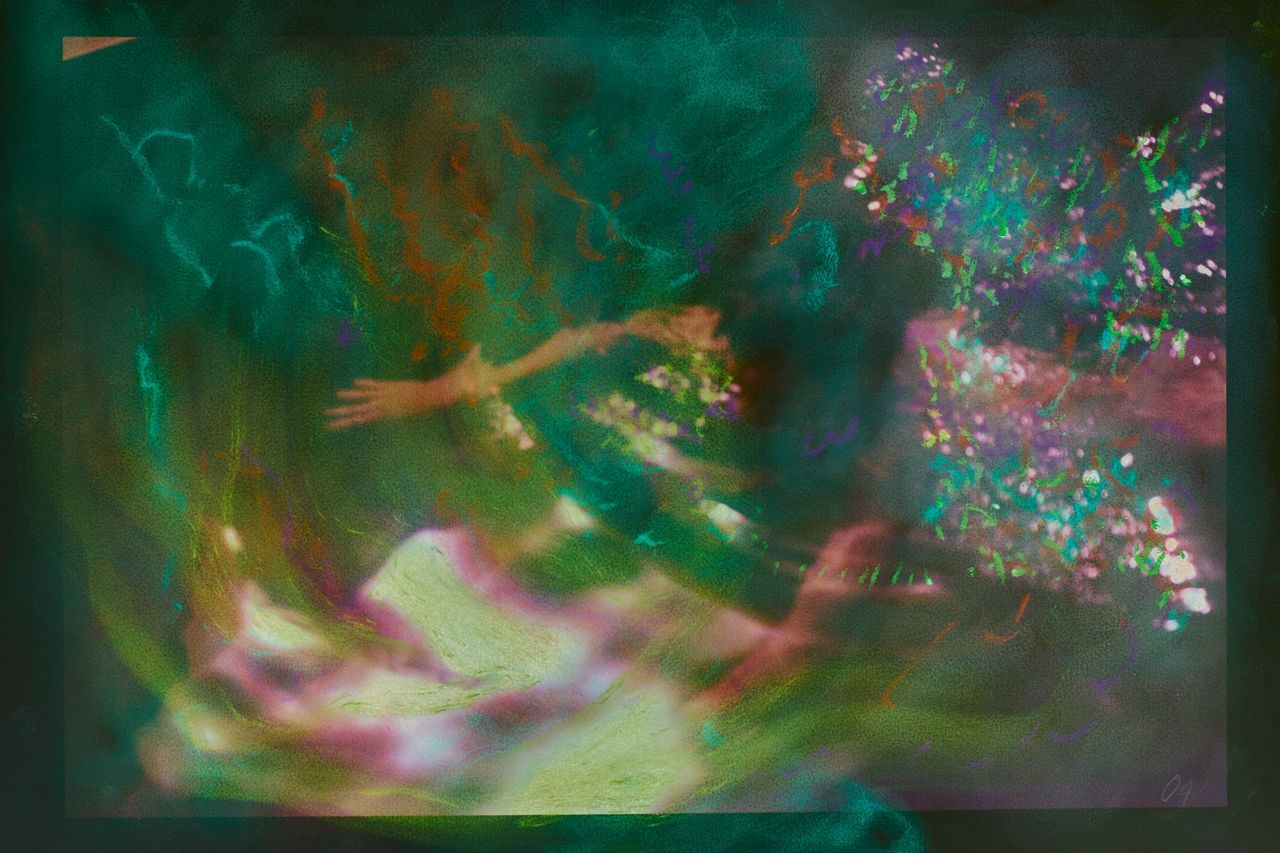 In January 2026, YDP launches “Living, Rehearsing…”, an evolving, genre-bending performance programme taking place throughout the building. “Living, Rehearsing…” is conceived as a collaborative framework to test the possibilities of what YDP can be home to and how we might collectively reflect on the concept of rehearsal as a strategy for organising, reconfiguring and reimagining our lives as we venture into the unknown each day. Over the course of three months, the programme will invite an ensemble of artists from the fields of visual art, performance art, stand-up comedy, dance and sound to convene across four day-to-night events, where improvisation meets choreography. The opening chapter Soundings sets up an atmosphere where doubt and uncertainty become prompts for unpredictable interactions amongst artists and audiences. It is a collective probing of a void, a testing of things that elude our immediate perception, a tracing of the limits and a way to frame contrasting concepts of rehearsing and performing to examine possibilities before any firm direction is taken. The artists included in appear both as distinct presences and as interdependent elements of a shifting ensemble. All of their actions evolve over six hours, encouraging audiences to wander through the rooms and corridors of YDP as active explorers. The result is an experience akin to a non-linear play. The sound of a cello reaches visitors as they turn a corner. A wax sculpture slowly melts in the conservatory. Moisture gathers and clears on the windowpanes. Bursts of laughter cut across the space. Info: Curators: Zhuo Mengting, Erin Li and Billy Tang, YDP, 19 Bedford Square, London, United Kingdom, Duration: 17/1-4/2/2026, Days & Hours: Tue-Sat 10:00-18:00, www.ydp.co/
 Tracing the effects of financialisation and austerity, the collaborative project “The Broken Pitcher” attends to a concrete case: a crucial meeting at a bank, negotiating the foreclosure of a family home in Larnaca, Cyprus in 2019. Foreclosures are one of the austerity measures that were imposed on the Cypriot government by the Troika (the EU Commission, the European Central Bank and the International Monetary Fund) after the financial crisis in 2012. “The Broken Pitcher” looks at the banking system and the potentials for changing the script of interacting with it. The project consists of a one-to-one scale model of the bank room, which functions both as an exhibition space and as a set which features in a 70-minute film that reconstructs the bank meeting. Inspired by Abbas Kiarostami’s film “First Case – Second Case” (1979, Iran), the reenactment of the meeting is then shown to people from various backgrounds who are asked to respond to the question: “In your opinion what should the bank employees do?” The filmed responses encompass perspectives of people from different interest groups in Cyprus and beyond, including housing rights activists in Barcelona, Berlin and Beirut, people who are similarly affected by these policies, public figures, lawyers, economists and artists. A project by: Natascha Sadr Haghighian, Marina Christodoulidou, Peter Eramian, with: Raissa Angeli, Dimitris Chimonas, Stelios Kallinikou, Athina Kassiou, Orestis Lambrou, Orestis Lazouras, Olga Micińska, Panagiotis Mina (Pyrgatory Studios), Faysal Mroueh, Keti Papadema, Nayia Savva, Nikos Stephou, Maria Toumazou, Rumen Tropchev, Emiddio Vasquez. Info: De Appel Amsterdam, Tolstraat 160, Amsterdam, Netherlands , Duration: 17/1-20/3/2026, Days & Hours: Wed-Sun 14:00-20:00, www.deappel.nl/en/
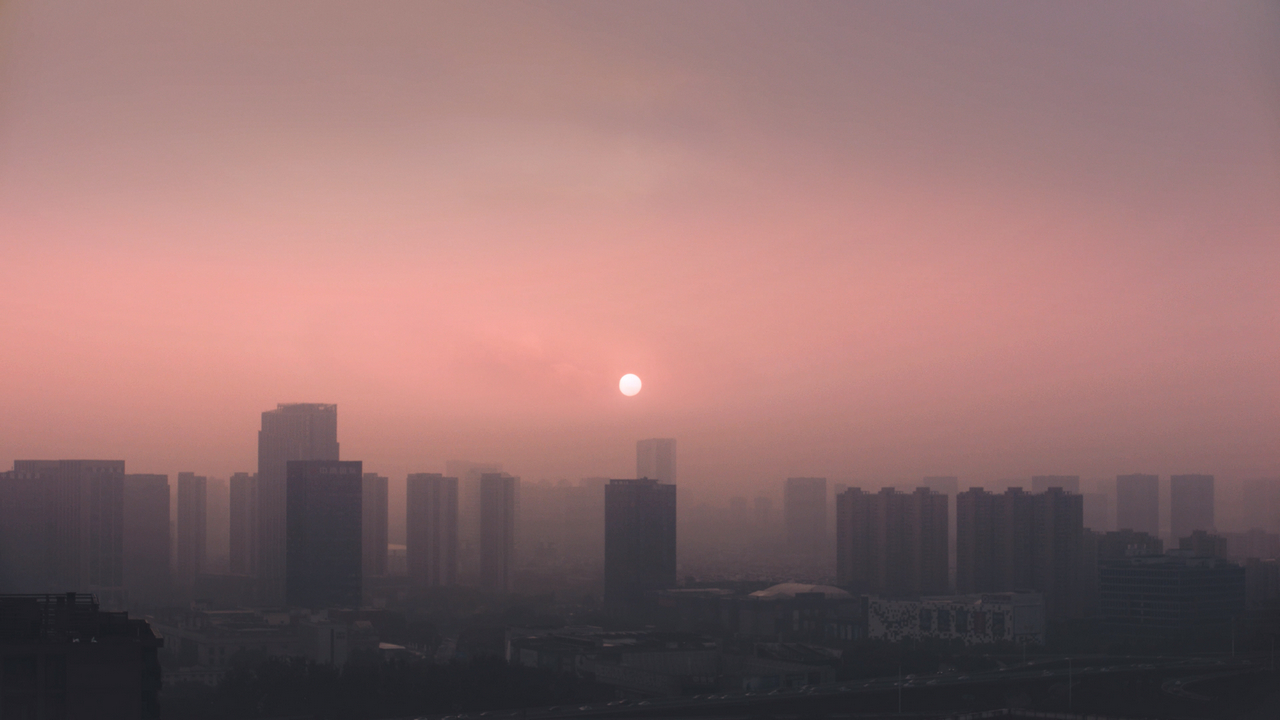 Zhang Peili’s solo exhibition “A Day” features a newly commissioned eight-channel video installation that explores notions of temporality, illness, and the body. This exhibition creates a new experience of reality through different media technologies, guiding viewers through everyday public and private spaces that reveal an interwoven yet alienated sense of time and space. In this exhibition, the newly commissioned installation “A Day” emphasizes subjective visual experiences and consists of real-life footage captured from a first-person perspective, along with videos from news sources and surveillance cameras, medical imagery, and data-generated images. Interspersed are scenes of skin peeling, obstructed movements, and everyday observations, which repeatedly appear as flashbacks, giving an impression of futility and aimlessness. They play at constantly changing speeds and camera angles, then lose momentum, and ultimately the camera is dropped—which metaphorically reflects the deviations in psychological states and social norms experienced during an illness. Using the dual dimensions of vision and cognition to understand the concept of deviation, this work explores the passage of time, the limits of the body, and the social metaphors that the mind and body may aspire to reach. “In A Day”, Zhang mixes footage of everyday life with AI-generated images to create an alternative sense of reality, which resonates with the universal experience of navigating an era of uncertainty. Info: Curator Shuman Wang, Tai Kwun, 10 Hollywood Road, Central, Hong Kong, Duration: 21/1-20/2/2026, Days & Hours: Daily 8:00-23:00, www.taikwun.hk/
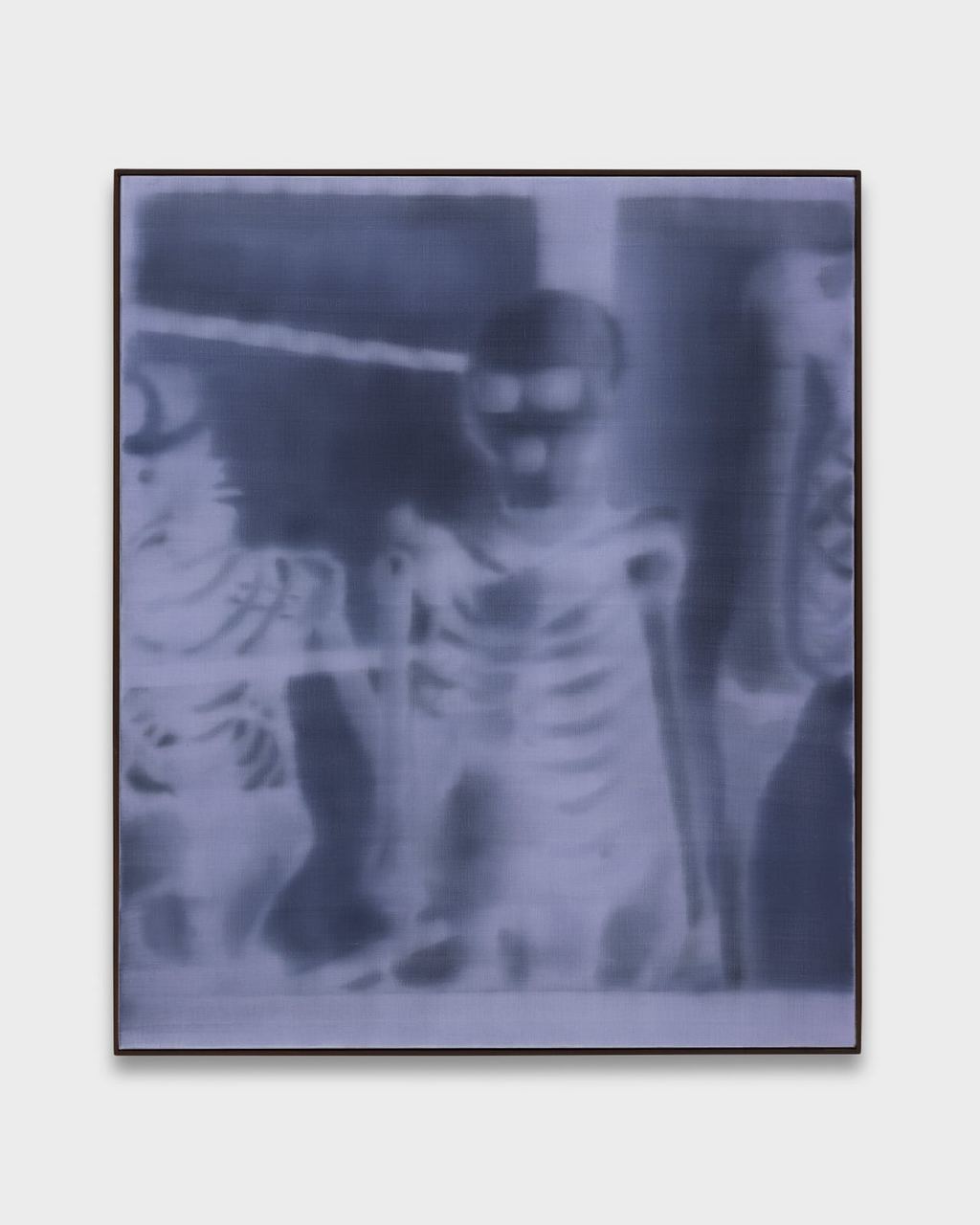 Ciarán Murphy presents his solo exhibition “hollow daze”, his paintings exist in fields of tension and opposition. They draw from a vast archive of found images in which hierarchies have been collapsed, and motifs with different referents are spliced together, dissolving distinct subject matter into complex compositions. In much of Murphy’s work, there is a sense of word play, both within the images themselves, their titles, and indeed the title of the exhibition itself. As a mutation of the word ‘holiday’, the title alludes to the feeling within some works of a travelogue, a diary of fleeting events that have met the artist’s gaze, while the idea of a ‘hollow daze’ suggests a feeling of disorientation, the dizzying effect of a world saturated with images. Stone heads, rendered mute through their very medium, sit uneasily with jumbled letters, as if frozen before they can coalesce in a recognisable form of sense-making. The eyes of these statues are also glazed over, devoid of irises and pupils, the dead-eyed stare of an immortalised Roman emperor. Indeed, throughout the exhibition, different forms of gaze are examined. Besides, these sightless alabaster eyes are real eyes, either closed or struggling to see, shielded by the hand that blocks out the sun, or encouraged to rest by the nursing hand that sits on the forehead. Info: GRIMM Gallery, 43a Duke Street, St. James’s, London, United Kingdom, Duration: 22/1-28/2/2026, Days & Hours: Wed-Sat 11:00-18:00, https://grimmgallery.com/
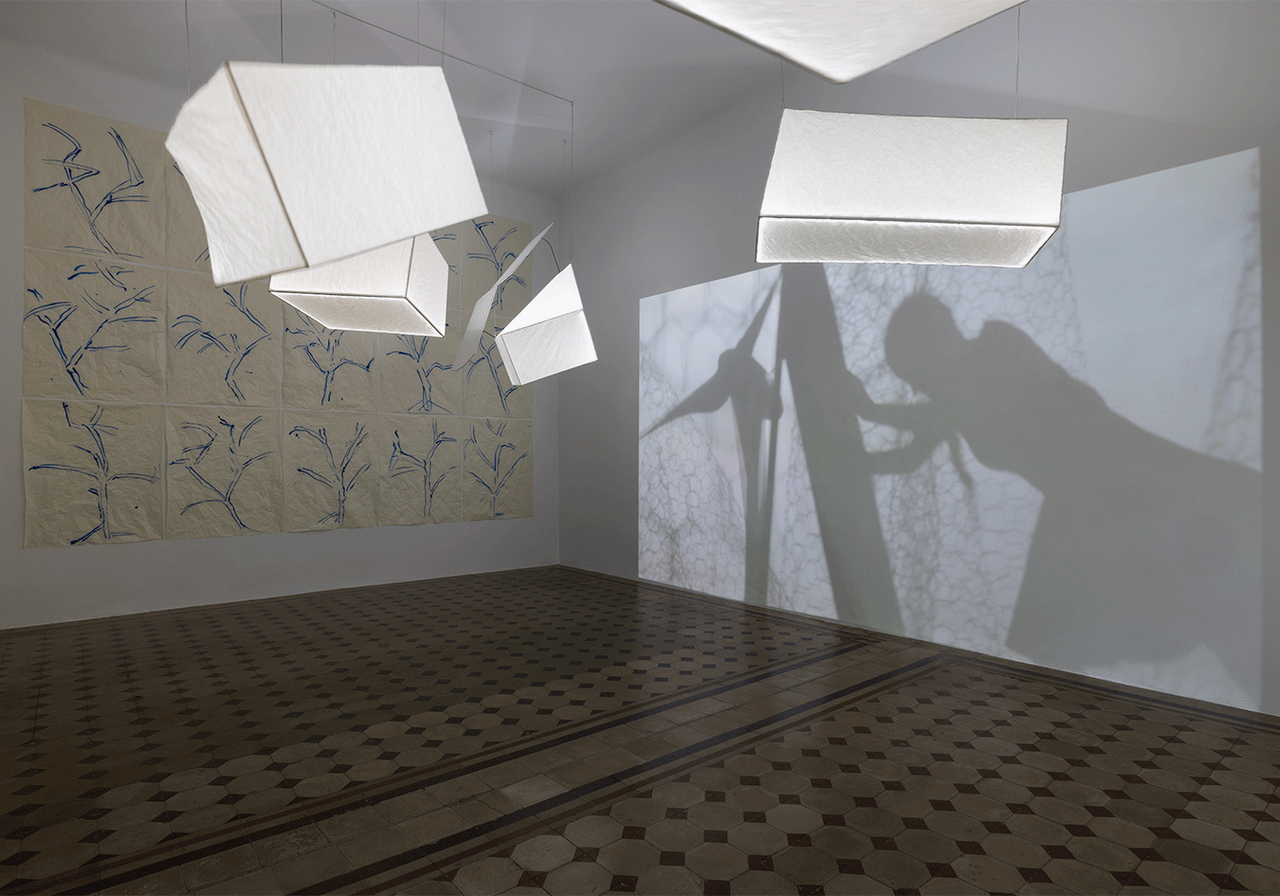 Joan Jonas presents the installation “Empty Rooms II”. The second iteration of this project, also presented at Nam June Paik Art Center, South Korea in 2025, belongs to a new chapter in Jonas’ latest research: an invitation to the public to contemplate the connections between familiarity and loss through an interpretative work, rather than an explanatory one. Through her decades–long practice, pioneering performance and video art, Jonas revisits and reshapes videos, sounds, sculptures and installation, in an act of continuous and lively re- reading, archiving and interpreting. In “Empty Rooms II”, six sculptures made of Japanese Torinoko paper mounted on organic steel structures are hanging from the ceiling, drifting in the gallery space as fleeting, luminous and mysterious shapes. As seemingly flying ghosts, they incarnate the idea of “empty rooms” and float above the visitors as abstent presences. On the central wall, a video projection taken from “They Come to Us without a Word”, presented at the US Pavillion of the 56th Venice Biennale in 2015, where some silhouettes interact with structures and forms from Joan’s performative imagery. The sequence is mostly inspired by the ghosts stories of Cape Breton, Nova Scotia, which is where the artist has been working and living since the seventies, giving shape to new ecological stories rooted in myth and literature. Info: Galleria Raffaella Cortese, via A. Stradella 4, Milan, Italy, Duration: 22/1-4/4/2026, Days & Hours: Tue-Sat 10:00-13:00 & 14:30-19:00, https://raffaellacortese.com/
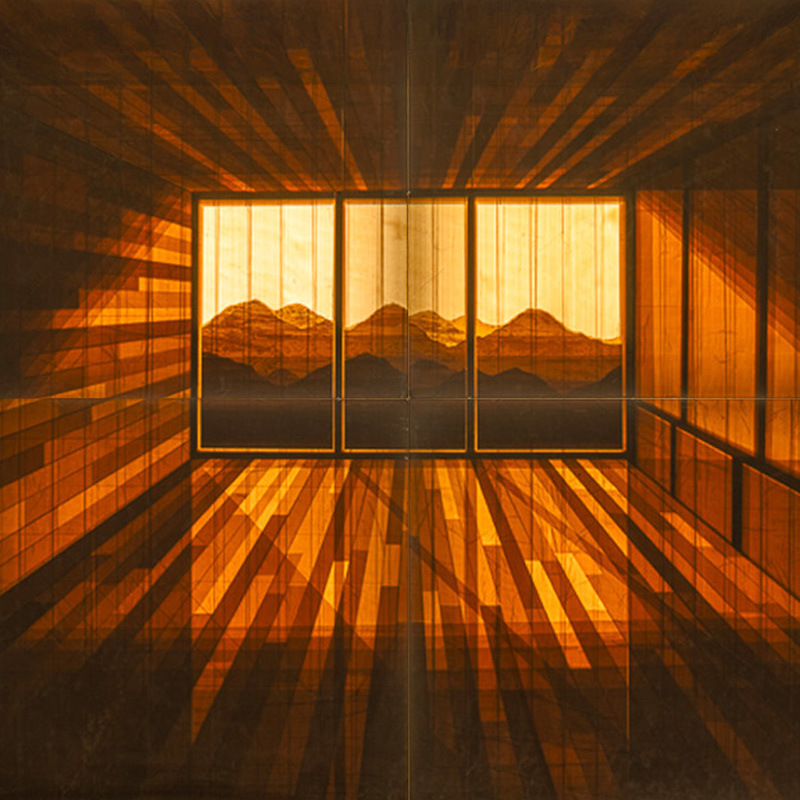 The group exhibition “Fragments de ville” (Fragments of the city), a group exhibition bringins together major artists whose practices each, in their own way, examine the city as a space of memory, social transformation, and individual projection. The exhibition explores the intimate relationship these artists maintain with urbanity, in which the city appears both as a reflection of social mutations and conflicts, and as an object of silent contemplation. Far from offering a unified vision, Fragments de ville proposes a plural reading of the city as a dynamic place, shaped by movement and change. The creative environments specific to each artist shape this collective reflection. Cuba, with its unique political and architectural history, deeply influences the works of Alejandro Campins and Osvaldo González. Ukraine, marked by Russian imperialist aggression and the devastation of war, lies at the heart of Zhanna Kadyrova’s inquiries. Moataz Nasr, originally from Egypt, explores pan-Arab cultural identity and its relationship to the complex history of North Africa. Interior spaces, such as theaters, cinemas, and historic buildings, form the primary terrain of Hiroshi Sugimoto’s global exploration. Carlos Garaicoa, for his part, questions urban architecture as a reflection of the fragility of social and political systems. Finally, Michelangelo Pistoletto, through his mirror paintings, sometimes intact, sometimes shattered, introduces the spatiotemporal dimension of the present into the artwork, making the viewer a central actor in the artistic experience. Participating Artists: Alejandro Campins, Carlos Garaicoa, Osvaldo González, Zhanna Kadyrova, Moataz Nasr, Michelangelo Pistoletto, Hiroshi Sugimoto. Info: Galleria Continua, 108 rue du Faubourg Saint-Honoré, Paris, France, Duration: 22/1-10/3/2026, Days & Hours: Tue-Sat 11:00-19:00, www.galleriacontinua.com/
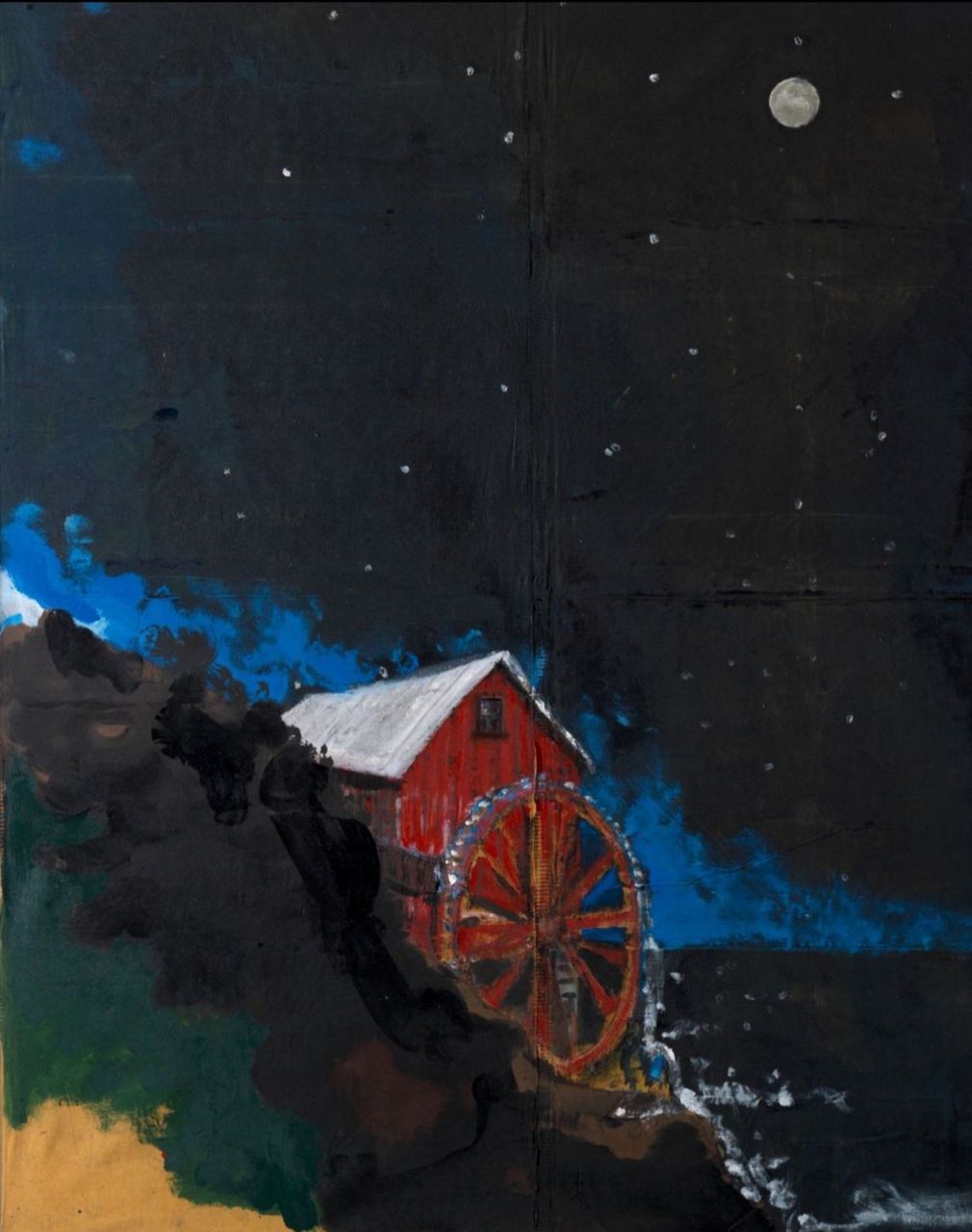 Verne Dawson’s solo exhibition “Hamlet’s Mill” refers to Giorgio de Santillana’s 1969 book of the same name, in which he argues that worldwide myths are actually veiled descriptions of celestial mechanics, particularly the precession of the equinoxes; the glacially slow rotation of Earth’s axis, which draws a circle in space every 26,000 years. Central to de Santillana’s thesis is the idea that we underestimate our ancestor’s intelligence; that what survives in their folklore is not superstition, but encoded knowledge. Dawson is similarly interested in this idea of lost literacy. His paintings illustrate a time when myth and science were not separate disciplines, and stories functioned as repositories of sophisticated cosmic observation. While works like “Saluda Crystal Springs” (2025) and “View From Milk Glass Cottage” (2025) appear to exist outside of time, Dawson is in fact obsessed with time. His paintings operate as both cosmological charts and acts of cultural preservation, fusing myth, anthropology, and the pastoral into a visual language that reclaims premodern modes of understanding the universe, and our place in it. Humanity’s endless pursuit of technological advancement have led us to our current state, where there are epidemics of poor health, unhappiness, loneliness, and anxiety. While it’s true that we can all tap an icon on our phones and have food delivered to our homes almost instantly, it’s also true that our detachment from nature and the cosmos has resulted in a populace desperate for meaning. Paranoid politics and sleazy conspiracies stepped up to fill the void, to everyone’s detriment. Dawson, echoing de Santillana, suggests that by looking backwards—rather than blindly rushing forwards—we might find relief from our contemporary ailments, and rediscover a sense of purpose by reengaging with traditions we’ve long considered ourselves evolved from. Info: Galerie Eva Presenhuber, Waldmannstrasse 6, Zurich, Switzerland, Duration: 23/1-14/3/2026, Days & Hours: Tue-Fri 11:00-18:00, Sat 11:00-17:000, www.presenhuber.com/
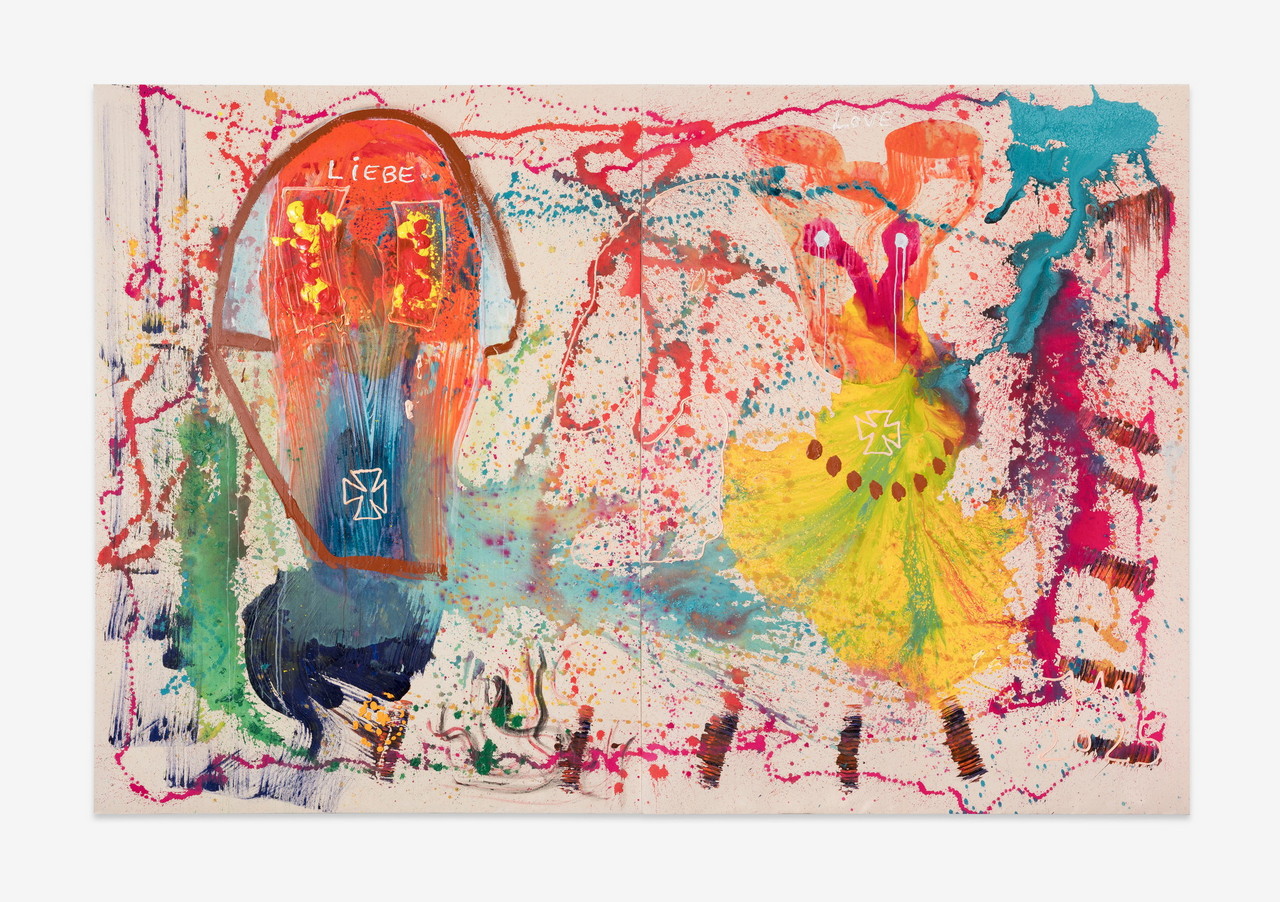 In his solo exhibition “P.O.P.² (POWERPLAY – OVERKILL – PING|PONG) (DR. NO’S MOTHER(Z)) (THEY LIVE)”, Jonathan Meese presents a series of new paintings, alongside several sculptures and an installation. Together, these works reveal a more sensitive, more introspective side of the Meese-universe. Themes such as the mother, life and death, hope and dance take centre stage and bring an emotional layering that balances between vulnerability and play, seriousness and ecstasy. The energy remains unmistakably Meese, but here it is infused with a more existential and human resonance. Jonathan Meese is known for his multifaceted oeuvre, consisting of exuberant paintings, extravagant installations and ecstatic performances, manifestos, as well as a powerful body of sculptural work across various media. With his rich and personal mythology, full of symbols, neologisms and metaphors, the artist’s versatile oeuvre arouses fascination. Seemingly effortlessly, Meese manages to distinguish himself in every genre with an independent and unique vocabulary that gives his works a visual energy and quality which, according to curator Robert Fleck, has been unparalleled since Picasso. A crucial figure within this mythology is Meese’s mother, Brigitte Meese, who is both a personal, but also an artistic focal point in his life and work. Their exceptionally close bond has often been publicly discussed and constitutes a fundamental emotional catalyst behind his practice. His mother appears in his work and performances as muse, protector, archetype and source of life. For Meese, she embodies an unconditional form of love, devotion and continuity, which he sets against the destructive forces of power, ideology and death. In this exhibition, the mother figure is presented not merely as a biographical element, but as a cosmic principle: origin of life, bearer of hope and counterweight to transience and decay. Info: Tim Van Laere Gallery, Jos Smolderenstraat 50 , Antwerp, Belgium, Duration: 23/1-7/3/2026, Days & Hours: Tue-Sat 13:00-18:00, www.timvanlaeregallery.com/
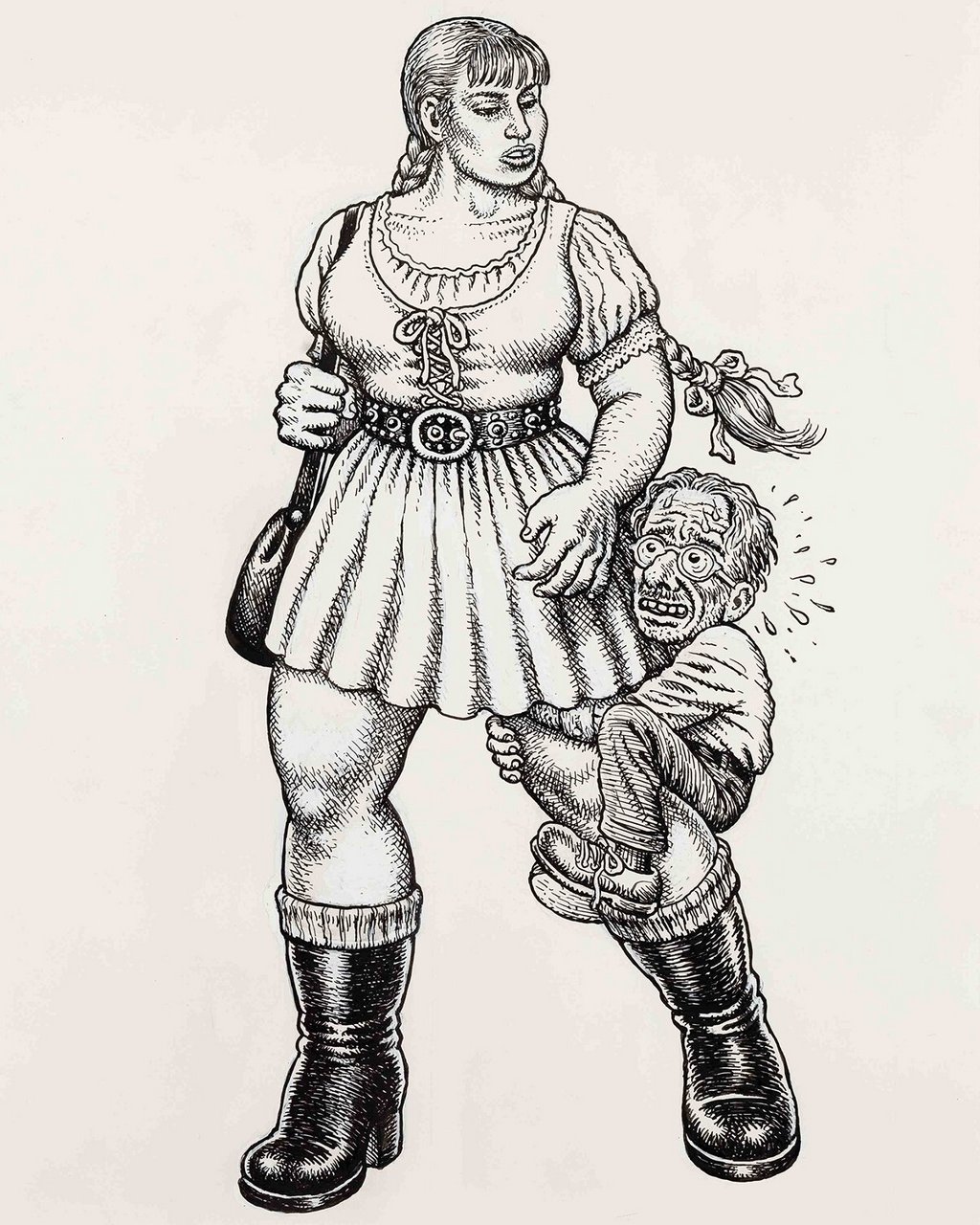 The exhibition “There’s No End to the Nonsense” is an intimately scaled survey of Robert Crumb’s work that spans across the adventurous and expansive arc of his storied sixty-year career. One of today’s most celebrated illustrators, Crumb helped define the cartoon subcultures of the 1960s and 1970s with comic strips like “Fritz the Cat”, “Mr. Natural”, and “Keep on Truckin’”. Instrumental in the formation of the underground comics scene, Crumb challenged and expanded the boundaries of the graphic arts, redefining comics and cartoons as countercultural art forms. The overt eroticism of his work paired with frequent self-deprecation and a free, almost stream-of-consciousness style have solidified his position as a renowned and influential artist whose work addresses the absurdity of social conventions and political disillusionment. The exhibition title is taken from a page in Crumb’s 1998–1999 sketchbook, in which a nervous-looking character—the punning ‘little master baiter’ dressed in children’s clothing—converses with an anthropomorphic bird in front of a nondescript city space. Slurping a lollipop, the figure is surrounded by speech bubbles sharing internal dialogue that contradicts his discussion with the bird, framing a preposterous situation while speaking to the artist’s internal anxieties. Mapping the progression of Crumb’s trajectory, There’s No End to the Nonsense features beloved characters as well as his own personal memories—as they manifested then and as they are now, looking back. Info: David Zwirner Gallery, 24 Grafton Street, London, United Kingdom, Duration: 29/1-24/3/2026, Days & Hours: Tue-Sat 10:00-18:00, www.davidzwirner.com/