PRESENTATION: Yoan Capote-Ruido Blanco

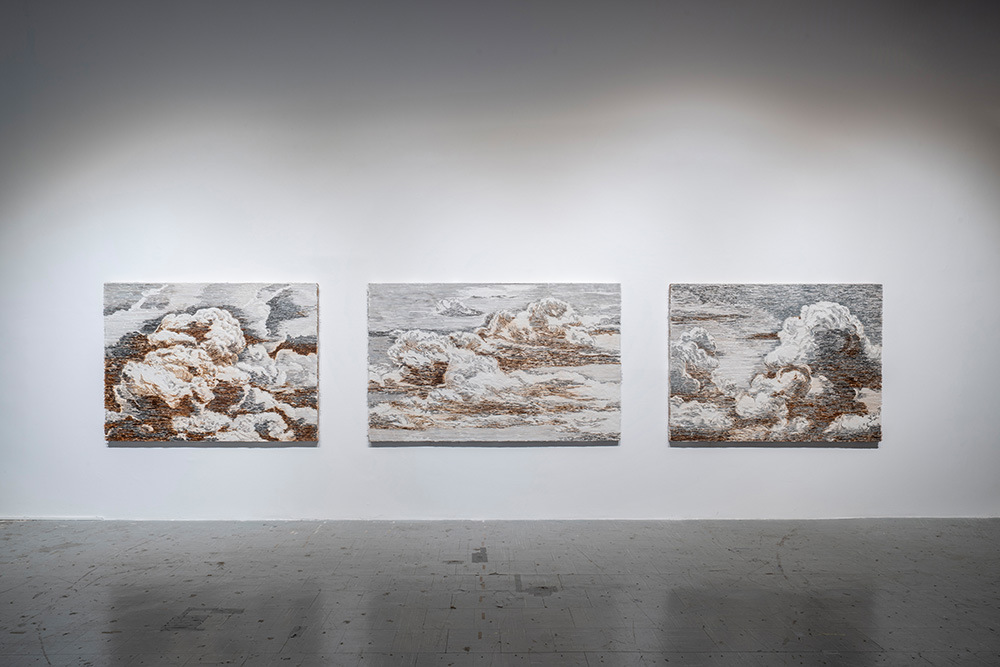
Yoan Capote uses sculpture, painting, installation, photography, and video to create analogies between the symbolic meaning of inanimate objects and the human psyche. He utilizes both traditional and unconventional materials, such as human blood and repurposed mundane objects, while also exploring multisensory possibilities within new media. The found objects he selects are chosen with purpose, such as his “Isla” and “Palangre” series which he fabricated from thousands of hand-wrought fishhooks. Viewed from a distance, the works read as a classic painting of sea meeting sky. It is only upon close examination that the perilous materials become clear, and the oceanic feeling resonating from the idyllic tableaux shifts to something more sinister.
By Dimitris Lempesis
Photo: Galleria Continua Archive
Yoan Capote’s solo exhibition “Ruido Blanco” invites us to reflect on the alienation and resignation experienced by individuals in contemporary society. The title, which refers to a constant, unvarying sound that blocks our connection to the outside world, serves as a metaphor for the social isolation, political stagnation, and collective introspection currently felt in Cuba.
In contrast, the works in this exhibition aim to awaken our deepest sensibilities and stir our emotions, making us aware of the dullness, demotivation, apathy, and emotional numbness that may be ingrained in our behavior.
Each piece represents a silenced cry, a lament drowned out by the white noise surrounding us, a constant drone that keeps us submerged in emotional lethargy. Using highly symbolic materials and collaborative creative processes, these works invite us to explore the complexity of our own emotions, memories, and thoughts, reminding us of the importance of confronting the alienation and estrangement that threaten our humanity.
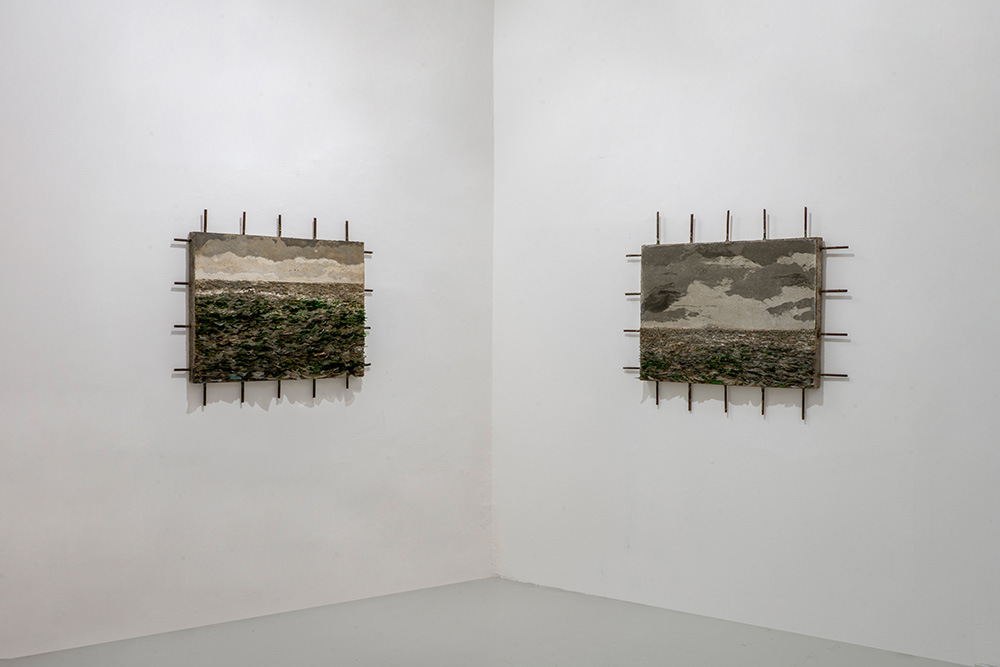
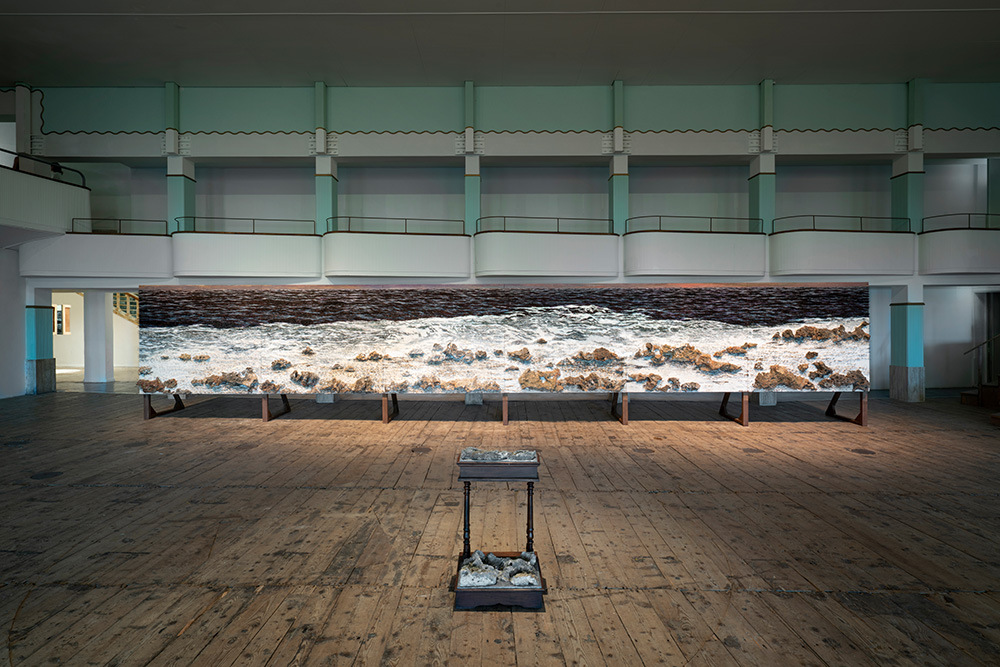
For the first time, this exhibition presents works from the series “Litoral” (2025) landscapes where the horizon almost disappears at the top edge of the painting, and where the artist incorporates sharp reef stones (dogtooth crystals) collected from the Cuban coast. In these seascapes, Capote recreates the perspective of those who have stopped looking toward the horizon, accepting its reef-ridden shore; those who have lost hope for the future and resigned themselves to the present; those who merely wander or try to escape while facing the endless water fading between sharp rocks.
Formally, these works, with their diminished horizon, visually reference Monet’s iconic water lilies. But symbolically, no flowers appear here; where Monet painted delicate water lilies floating on water, Capote affixes heavy, sharp reef stones alongside sea imagery. This ironic artistic choice contrasts Monet’s idyllic scenes with Capote’s portrayal of the drama, hardship, and pain experienced by those confronting their reality and geography.
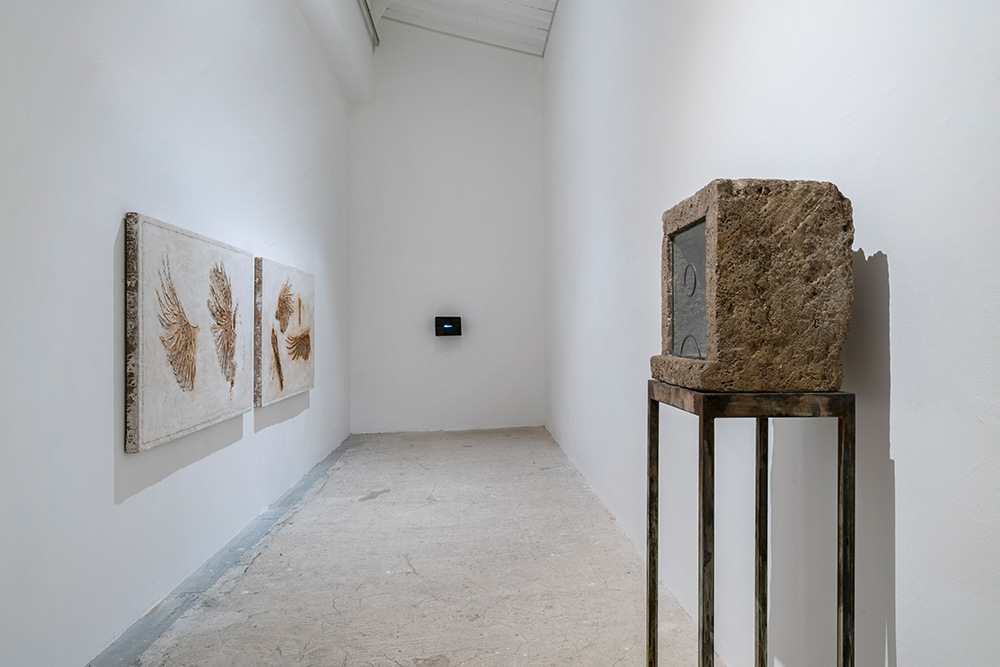
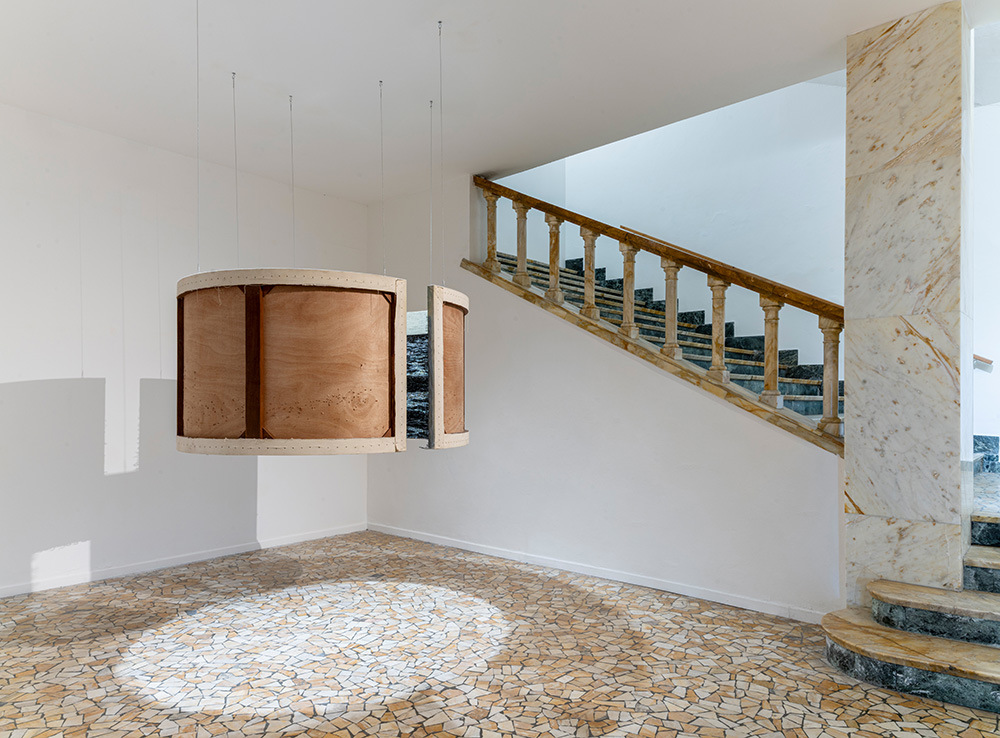
“Ruido Blanco” also features works from the well-known series “Islas” and “Purificación”. “Islas” recreates seascapes using oil paint and fishhooks, while “Purificación” repurposes chains, barbed wire, handcuffs, and other metal debris into new forms that express deconstruction, tension, aggression, and control. The creative process behind these works is documented in a video shown at the gallery, offering powerful insight into their meaning. Additionally, the show includes recent and earlier installations and sculptures, as well as drawings from the series “Sentimientos encontrados”, based on electrocardiograms collected by the artist from various Cubans, expressing the fragmentation of Cuban society caused by grief and frustration.
Photo: Yoan Capote – Ruido Blanco 2025, exhibition view Galleria Continua, San Gimignano. Photo: Ela Bialkowska, OKNO Studio, Courtesy the artist and Galleria Continua
Info: Galleria Continua, Via del Castello 11, San Gimignano, Italy, Duration: 20/9/2025-12/4/2026, Days & Hours: Mon-Fri 10:00-13:00 & 14:00-18:00, Sat-Sun 10:00-13:00 & 14:00-14:00, www.galleriacontinua.com/
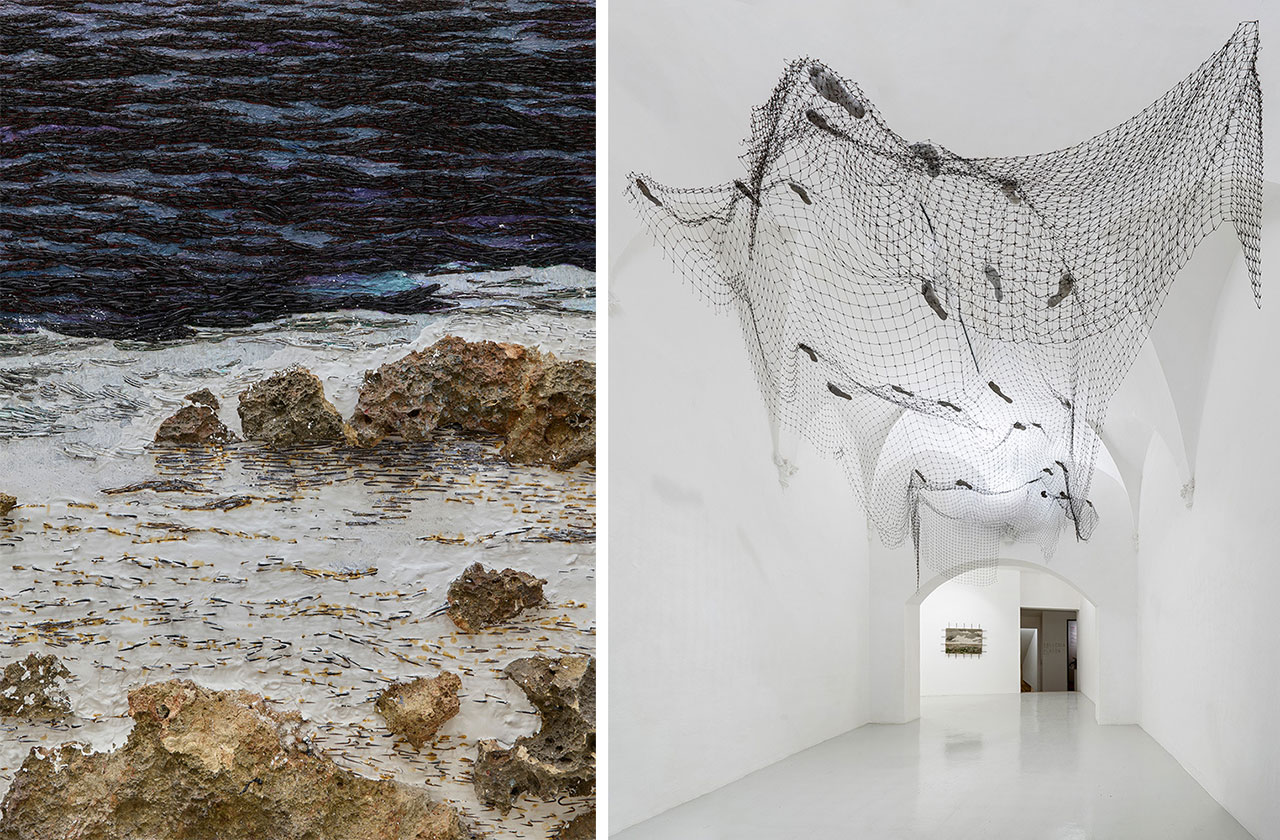
Right: Yoan Capote – Ruido Blanco 2025, exhibition view Galleria Continua, San Gimignano. Photo: Ela Bialkowska, OKNO Studio, Courtesy the artist and Galleria Continua