PRESENTATION: Josef Albers-Duets

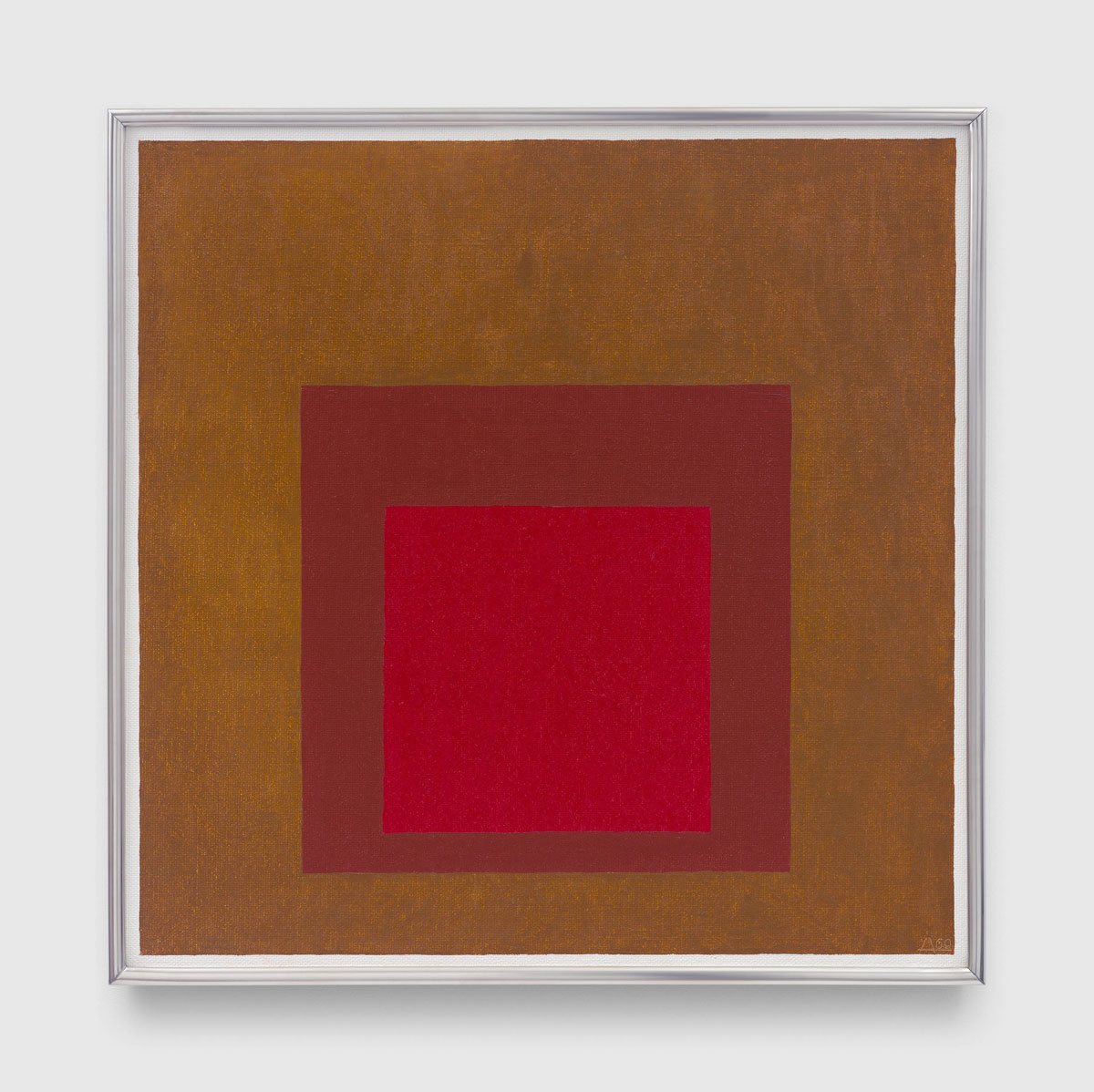
Josef Albers was one of the most influential abstract painters and art teachers of the twentieth century. Albers’s artistic career, which bridged European and American Modernism, consisted mainly of a tightly focused investigation into the perceptual properties of color and spatial relationships. Working with simple geometric forms, Albers sought to produce the effects of chromatic interaction, in which the visual perception of a color is affected by the hues adjacent to it. Albers’s precise application of color also created plays of space and depth, as the planar colored shapes that make up the majority of his works appear to either recede into or protrude out of the picture plane.
By Efi Michalarou
Photo: David Zwirner Gallery Archive
At David Zwirner’s Paris gallery, the exhibition “Josef Albers: Duets” offers an experience that is both quietly rigorous and unexpectedly poetic. Organized in collaboration with the Josef & Anni Albers Foundation, the exhibition marks Albers’s first solo presentation in Paris since the landmark exhibition “Josef and Anni Albers: Art and Life” at the Musée d’Art Moderne de Paris in 2021–2022. Rather than revisiting the full arc of the artist’s career, Duets narrows its focus to a single, deceptively simple idea: the relationship between two forms—and how that relationship shapes perception.
Josef Albers spent much of his life teaching people how to see. Born in Germany in 1888, trained at the Bauhaus, and later a key figure in American art education after emigrating to the United States, Albers believed that perception was not passive. Seeing, for him, was an active process—one shaped by context, comparison, and attention. Duets makes this philosophy tangible. Throughout the exhibition, viewers encounter works that appear similar at first glance, only to reveal striking differences the longer one looks.
The exhibition brings together paintings and works on paper from the 1930s through the 1970s, spanning several of Albers’s most important series. What unites them is a consistent play between sameness and difference. Sometimes this takes the form of two separate works placed in dialogue; elsewhere, it unfolds within a single composition, where two elements echo, challenge, or subtly undermine one another.
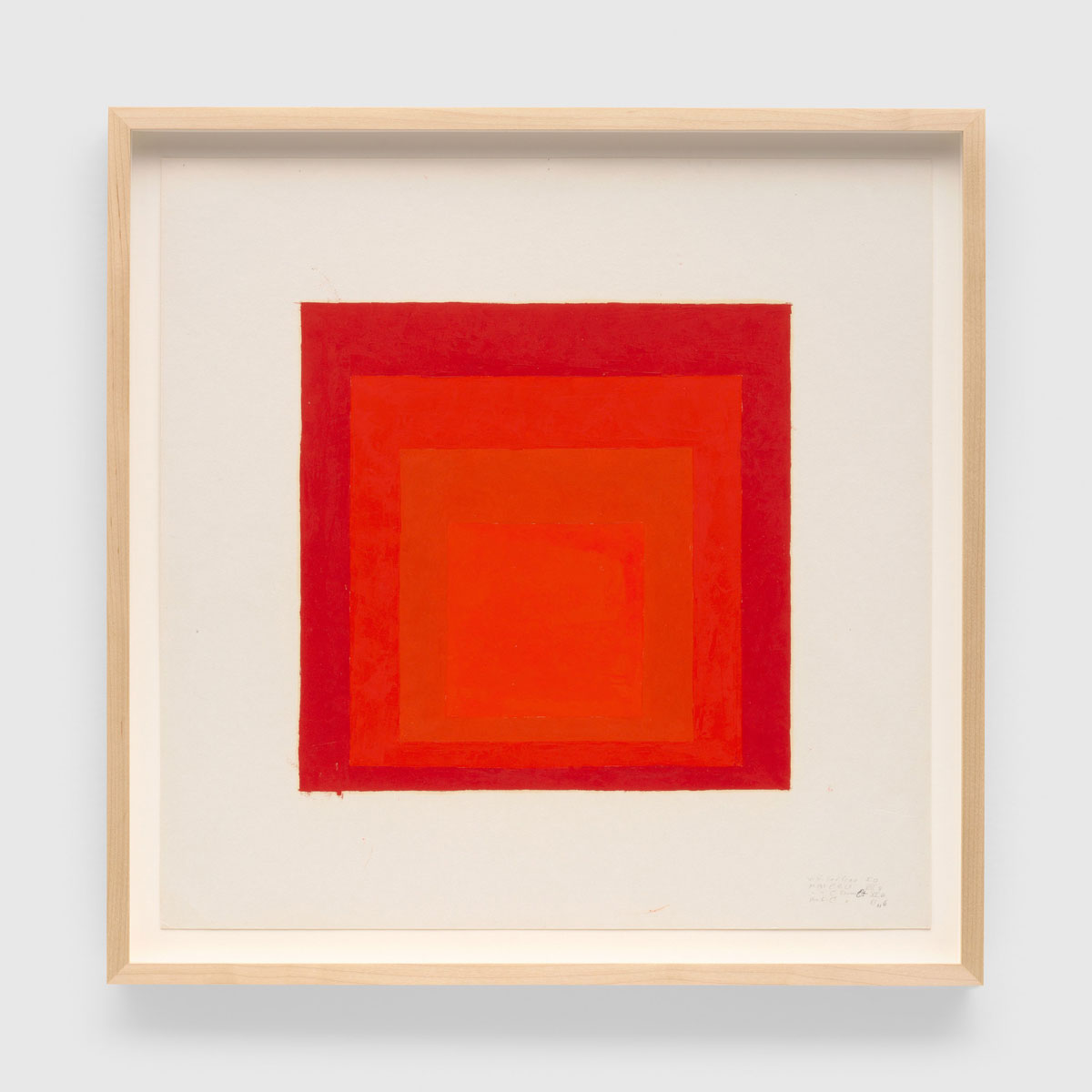
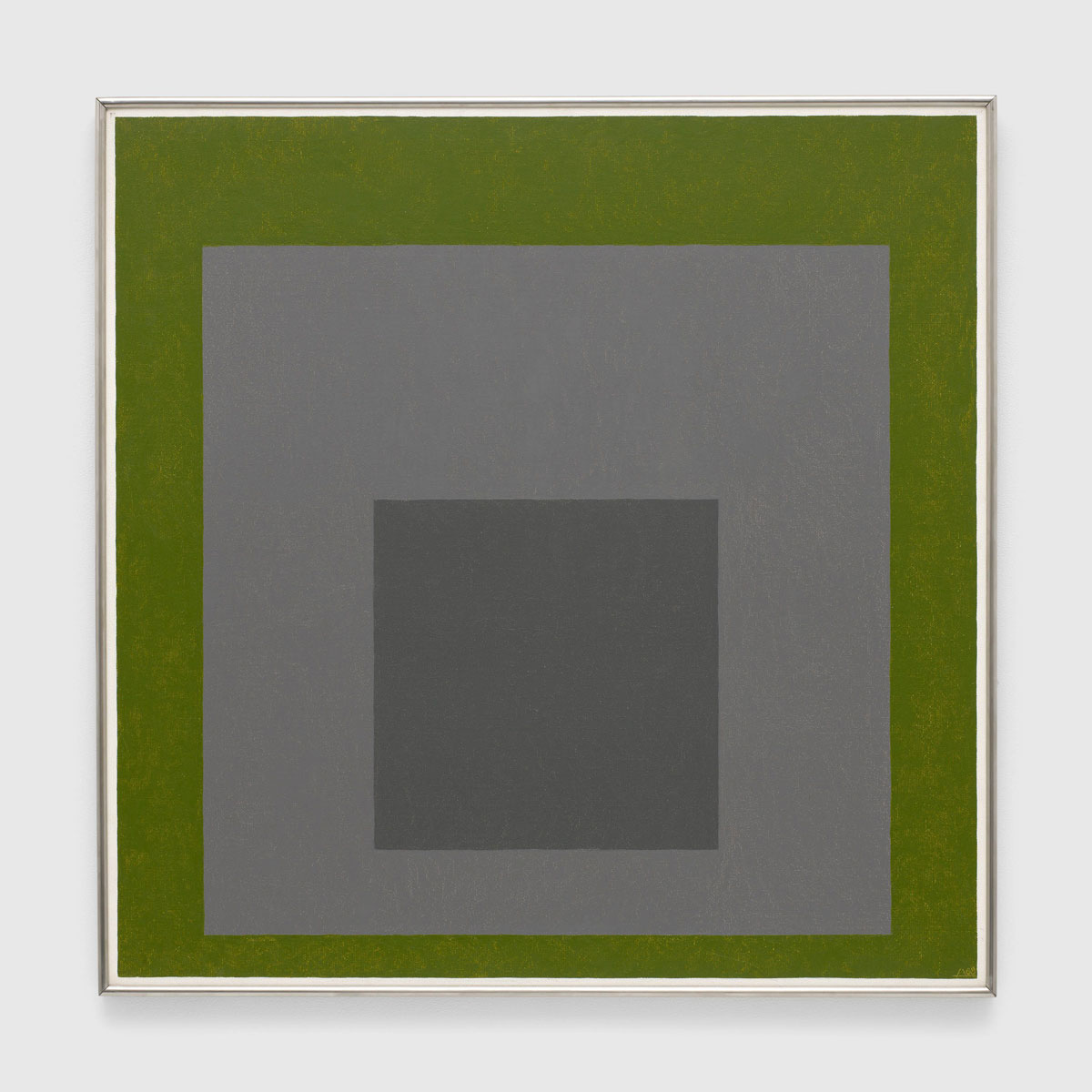
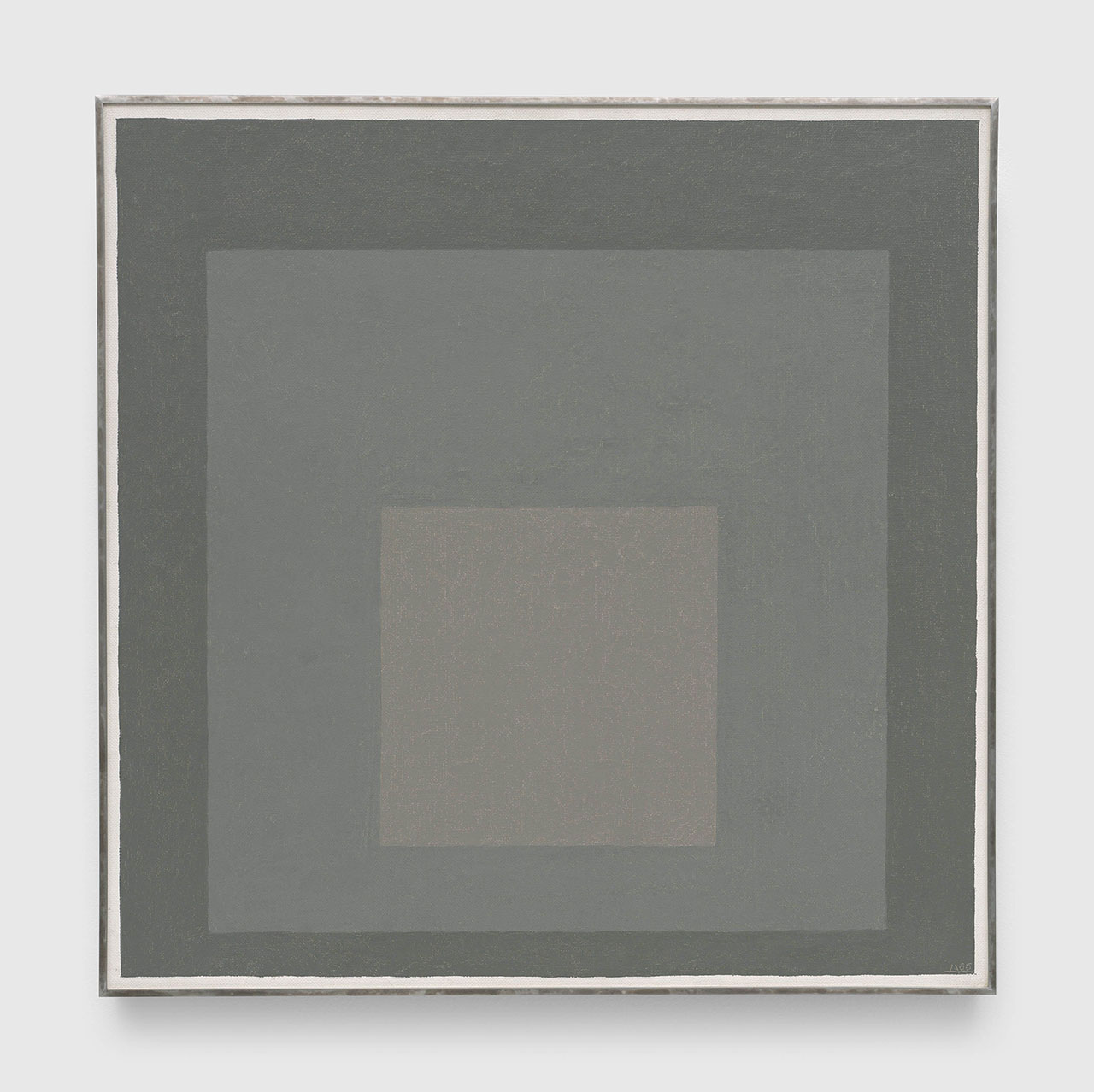
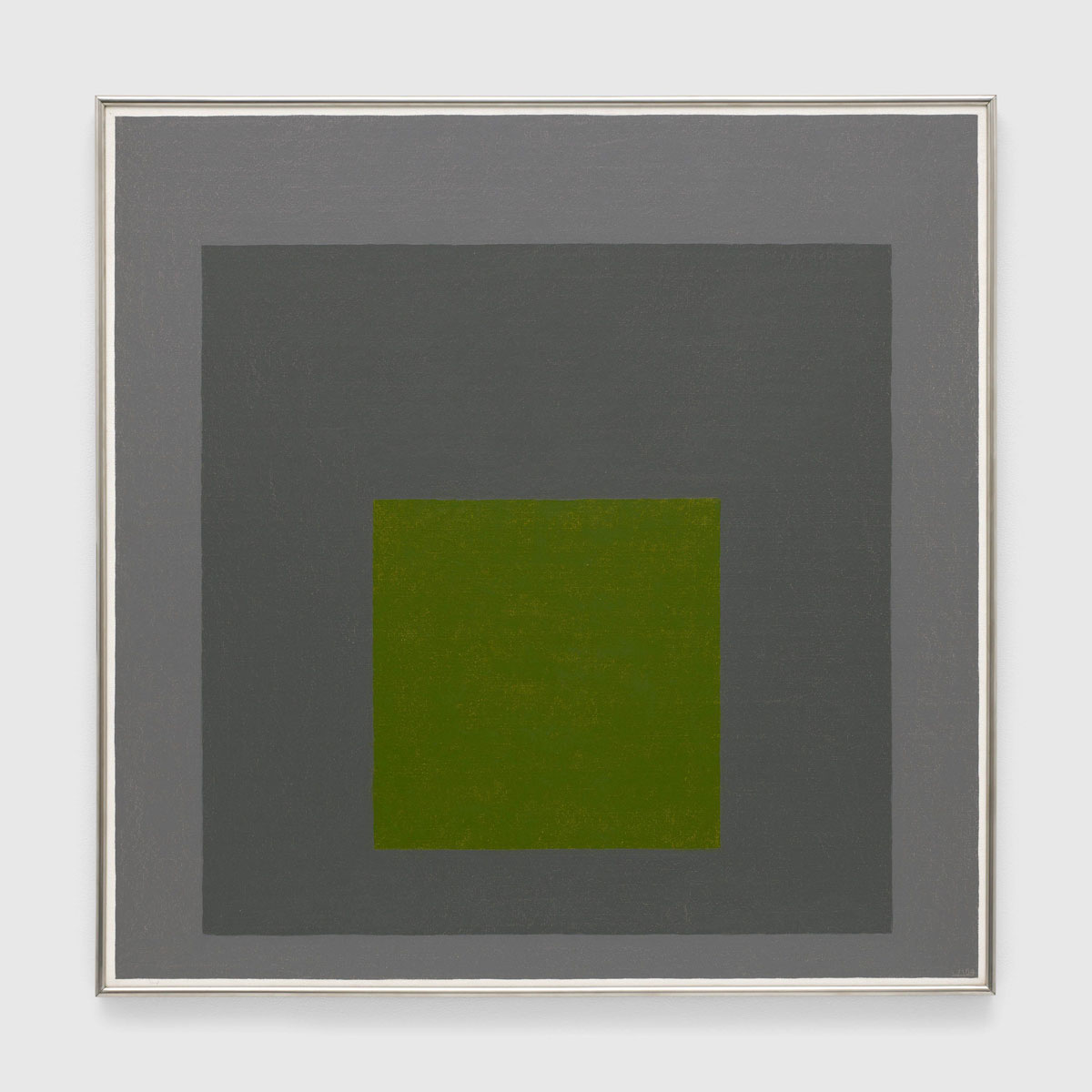
At the heart of the exhibition are works from Albers’s most famous body of work, “Homage to the Square” (1950–1976). At first, these paintings can seem almost austere: concentric squares, precisely arranged, often in muted or closely related colors. But the longer one stands before them, the more they begin to vibrate. Albers famously avoided expressive brushwork, preferring flat applications of paint that would not distract from color itself. In this strict framework, color becomes the main actor.
In “Study for Homage to the Square: Starting Anew” (1964) and “Study for Homage to the Square” (1968), both large-scale works measuring forty inches square, Albers returns to a similar palette of greens and grays. Yet the emotional and spatial effects differ noticeably. One color seems to advance, another to recede; a gray may appear warm in one context and cool in another. These subtle shifts reveal Albers’s lifelong obsession with how color behaves—not in theory, but in lived experience.
Nearby, “Study to Homage to the Square: Budding” (1958) and “Study for Homage to the Square: Spring Out” (1962) introduce earthier tones—greens, browns, and muted yellows that gently suggest growth, nature, and seasonal change. Though entirely abstract, these works feel grounded in the natural world, reminding viewers that Albers’s investigations were never purely intellectual. They were rooted in how color is encountered in everyday life.
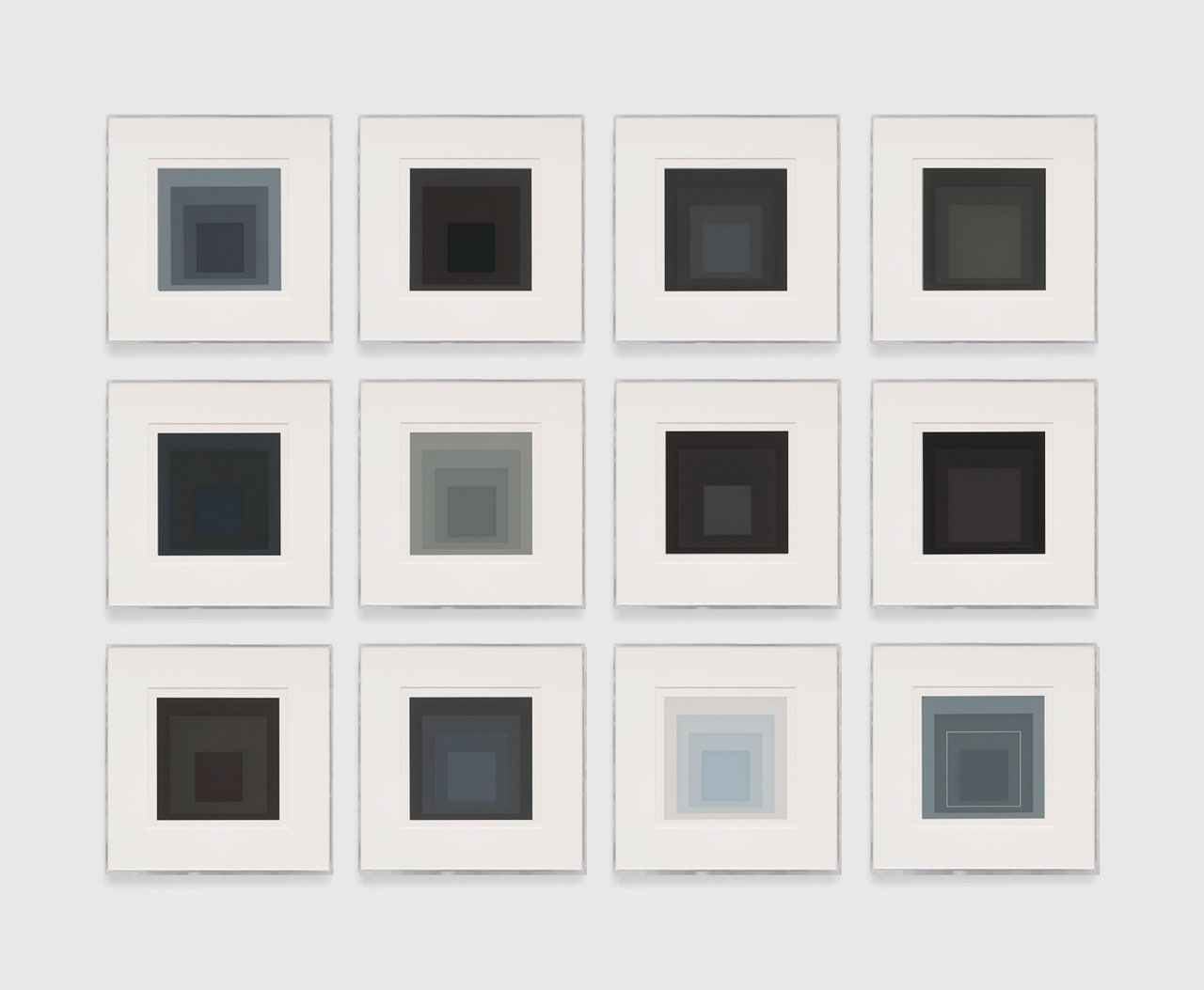
The exhibition also draws attention to the importance of placement and structure in shaping perception. Two grayscale oil studies from 1950, created for Albers’s very first “Homage to the Square”, demonstrate how identical colors can appear radically different depending on where they sit within a composition. In these works, color is not altered; perception is.
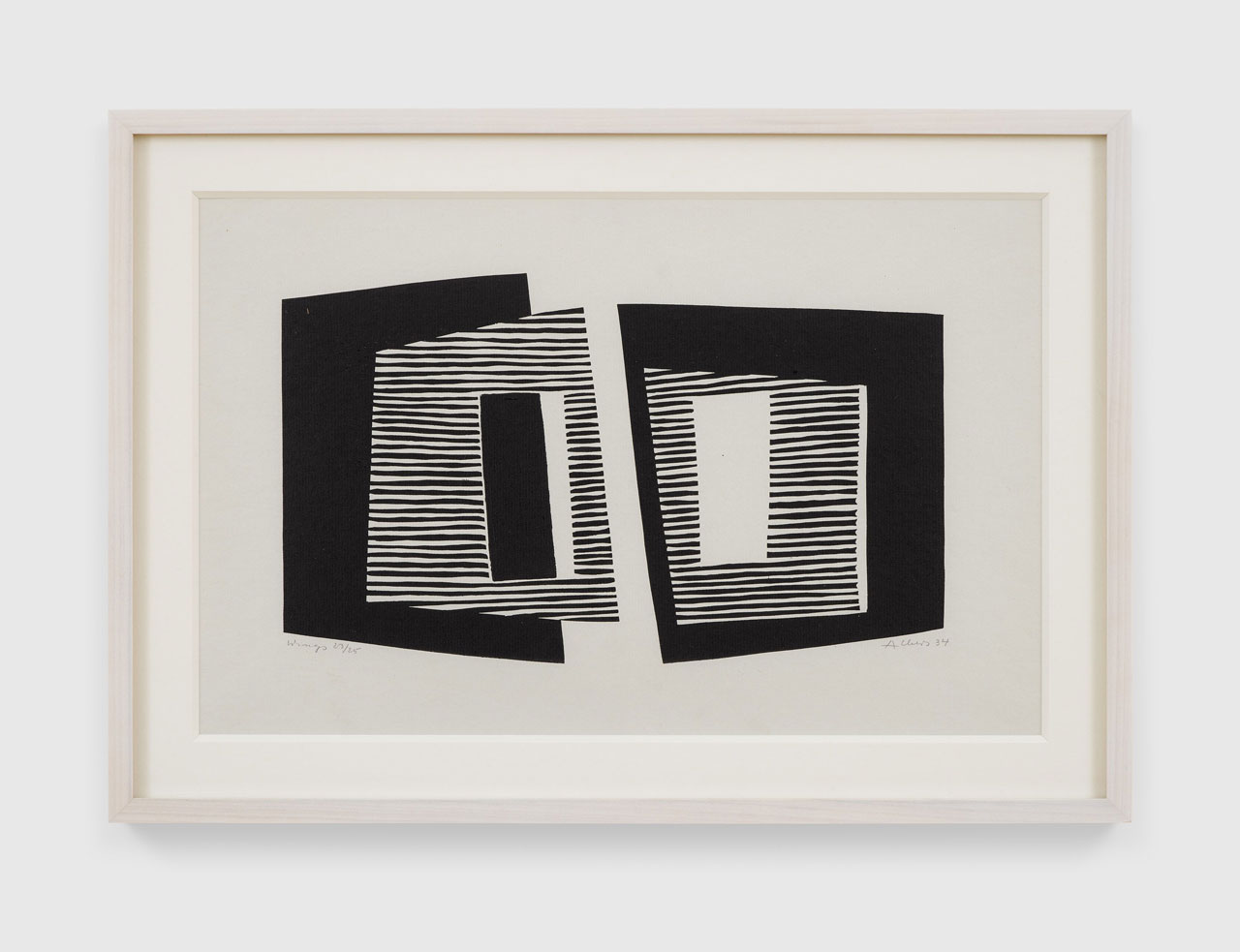
“Duets” broadens the story by including works beyond the “Homage” series, revealing how Albers’s interest in duality began much earlier. A striking glass work from the “Treble Clefs” series (1932–1935) stands out for both its material and its subject. Rendered in black, white, and gray, the piece translates musical notation into a visual language. Albers, a lifelong admirer of Johann Sebastian Bach, often spoke of music as a model for structure, harmony, and variation. These works, created during the transitional period between his Bauhaus years and his move to the United States, suggest that rhythm and repetition were already central to his thinking.
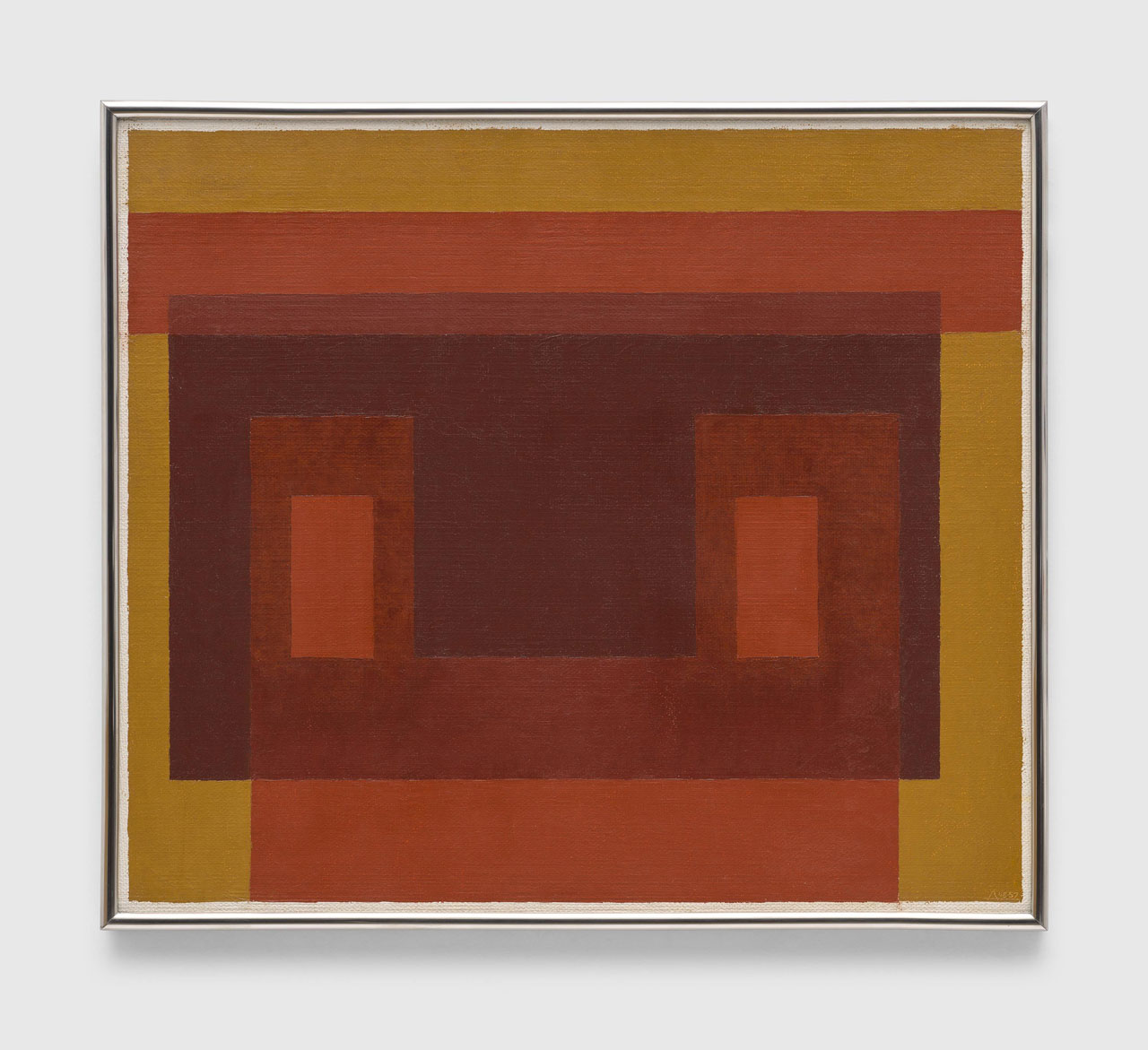
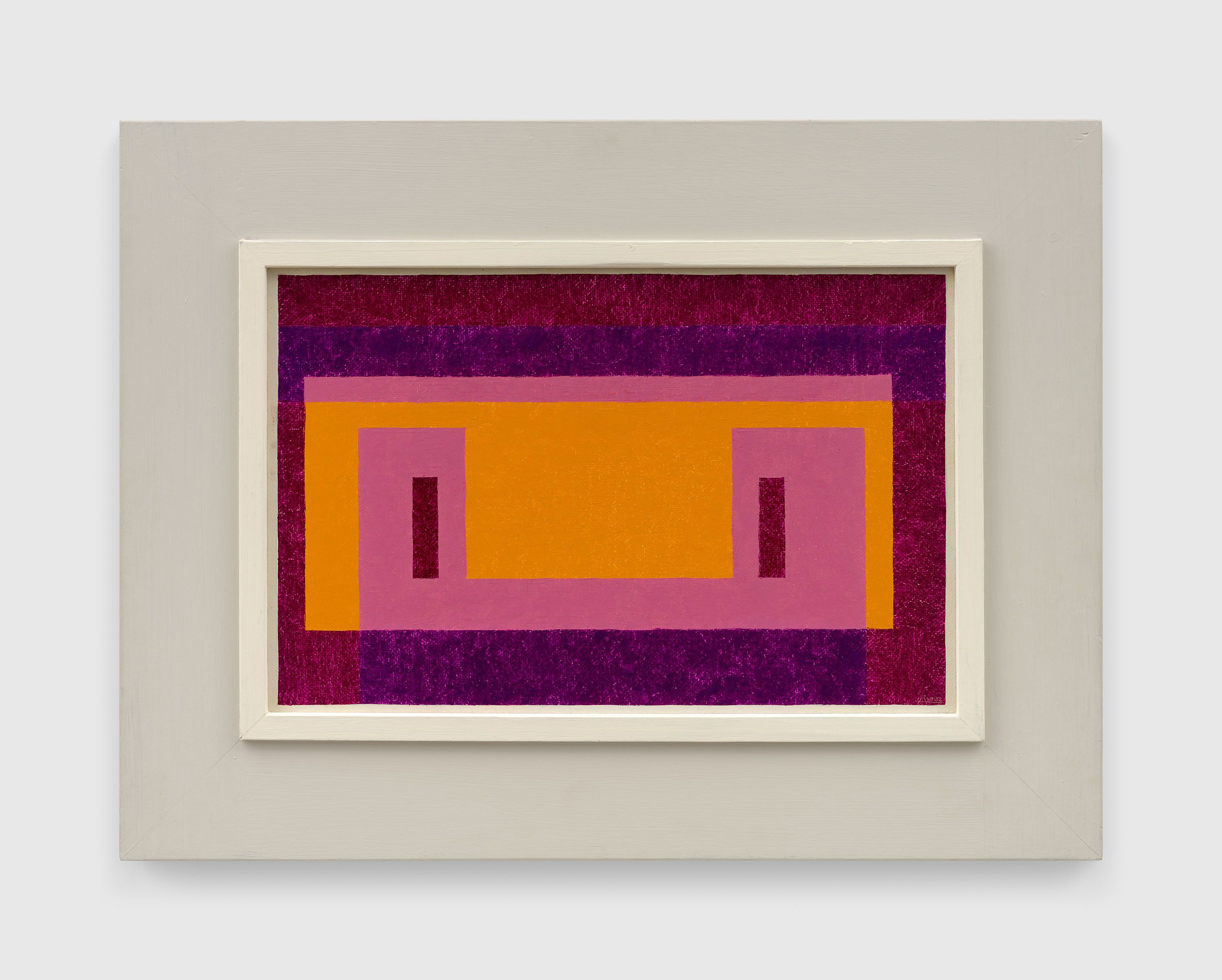
This musical sensibility carries into the exhibition’s presentation of Albers’s “Variants” series, also known as the “Adobes.” Begun in the late 1940s, these paintings were inspired by the architecture Albers encountered in Mexico and the American Southwest—buildings constructed from adobe, with thick walls, layered planes, and multiple entryways. Many of these works feature two openings, an architectural “duet” that invites the eye to move through the composition along more than one path.
For Albers, this was more than an architectural reference. He saw these alternate routes as metaphors for life itself. There is rarely a single correct way to see, think, or act. Meaning emerges through comparison, through choosing one path over another, or through holding multiple possibilities at once.
An early painting, “Variant of “Related”” (1943), offers a glimpse of this evolving approach. Created during Albers’s influential years teaching at Black Mountain College, the work features overlapping planes of color and unusual nested rectangles beneath the main forms. It feels transitional—less rigid than later works, yet already deeply invested in the idea of visual relationships. Black Mountain College would become a crucible for American modernism, and Albers’s teaching there shaped artists who would go on to define postwar art.
What makes the exhibition particularly resonant today is its refusal to overwhelm. In an era of rapid images and instant consumption, the exhibition asks visitors to slow down. It rewards patience. The more time one spends with the works, the more they seem to change. Colors shift, forms breathe, and relationships emerge that were not immediately apparent.
Rather than presenting Albers as a distant modernist icon, Duets reveals him as an artist deeply concerned with everyday perception—with how we experience the world, make choices, and understand difference. The exhibition reminds us that looking is not a passive act, but a skill that can be learned, practiced, and refined.
In pairing works, repeating motifs, and foregrounding subtle variation, “Josef Albers: Duets” makes a compelling case for Albers’s enduring relevance. His art does not offer easy answers or dramatic narratives. Instead, it offers something quieter and perhaps more radical: an invitation to look again, and then look once more.
Photo: Josef Albers, Study for a Homage to the Square, c. 1970-1973, Oil and graphite on blotting paper, 19 x 19 inches (48.3 x 48.3 cm), Framed: 21 3/8 x 21 3/8 inches (54.3 x 54.3 cm), Inscribed lower right recto, ©Josef & Anni Albers Foundation, Courtesy Josef & Anni Albers Foundation and David Zwirner Gallery
Info; David Zwirner Gallery, 108 rue Vieille du Temple, Paris, France, Duration: 15/1-21/3/2026, Days & Hours: Tue-Sat 11:00-19:00, www.davidzwirner.com/
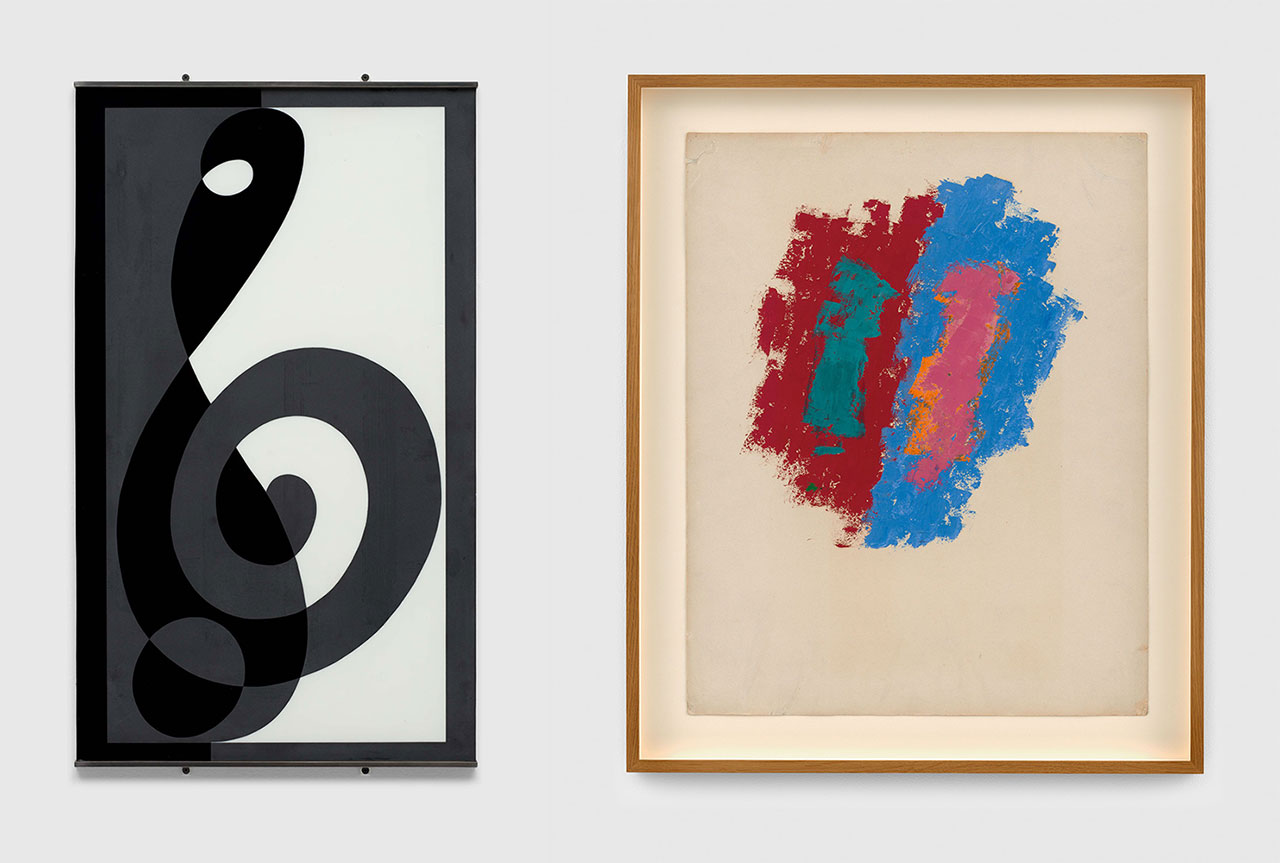
Right: Josef Albers, Study for painting on a Victrola gramophone cover, c. 1940, Oil on blotting paper, 24 x 19 inches (61 x 48.3 cm), Framed: 25 3/4 x 20 5/8 inches (65.4 x 52.4 cm), Initialed recto, ©Josef & Anni Albers Foundation, Courtesy Josef & Anni Albers Foundation and David Zwirner Gallery
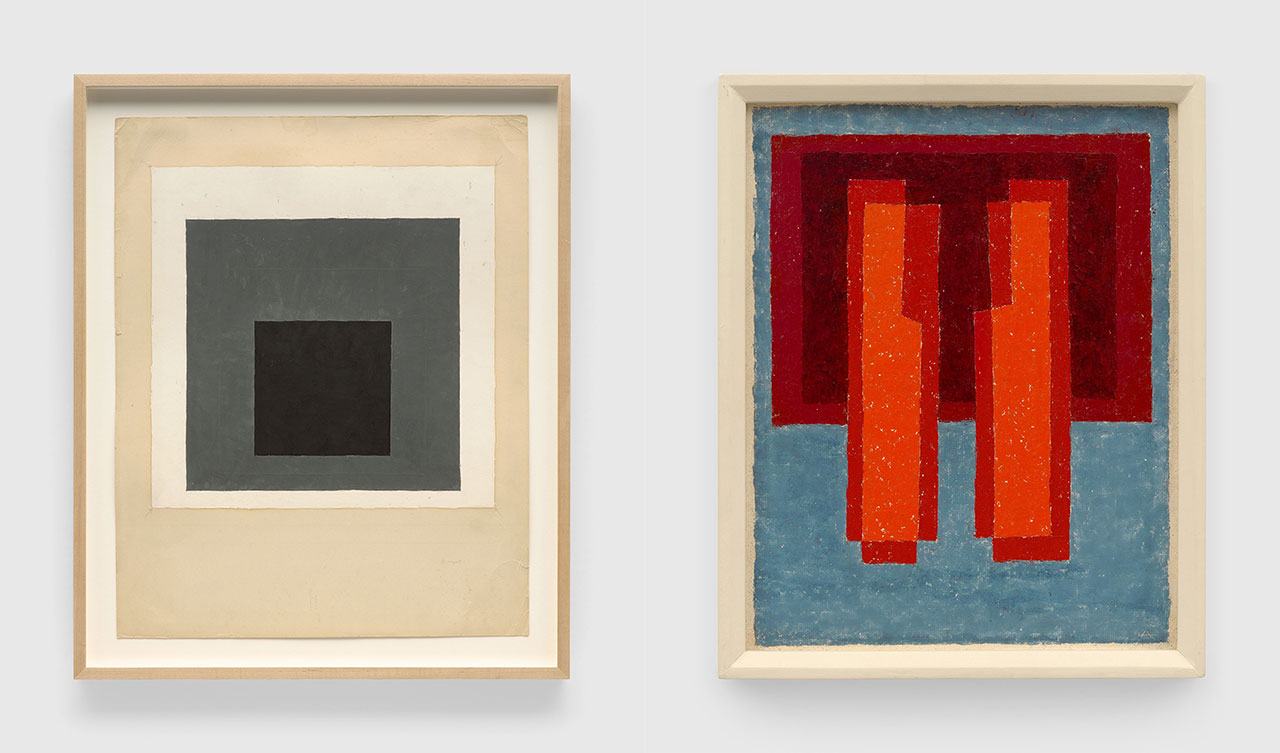
Right: Josef Albers, Variant of “Related”, c. 1938-1943, Oil on wood composition board in artist’s frame, 17 3/8 x 14 inches (44.1 x 35.6 cm), Initialed lower right recto; signed, titled, dated, and inscribed verso, ©Josef & Anni Albers Foundation, Courtesy Josef & Anni Albers Foundation and David Zwirner Gallery