
PRESENTATION: Asta Gröting

Asta Gröting creates works that are driven by her interest in making the hidden visible and exploring the complex relationships between people, animals, and things. Through the mediums of video and sculpture, Gröting draws our attention to the social and psychological spaces that define these often profound aspects of human existence.
By Efi Michalarou
Photo: carlier | gebauer Gallery Archive
In her latest solo exhibition “Herz” at carlier | gebauer in Berlin, Asta Gröting continues her rigorously conceptual sculptural inquiry into absence, intimacy, and the unseen. Paradoxically, the pervasive sense of emptiness in Herz becomes its animating force, a silent echo that alludes to what remains when seemingly nothing remains. This exhibition refracts minimal gestures into complex reflections on relational space, memory, and political subjectivity.
Gröting’s process is marked by transformation: everyday references and forms are distilled into succinct sculptural propositions that demand active engagement from the viewer. The exhibition’s minimal interventions—slightly curved rectangles on the floor that suggest a bed, a gently moving pedestal that evokes a washing machine—are at once familiar and destabilized. These works, “Doppelbett” (2025) and “Waschmaschine” (2024), conjure the domestic sphere not as nostalgic refuge but as a site of labor, bodily life, and unspoken social histories. The floating polystyrene blocks of the “bed” hover with an uncanny lightness, the negative space between them as resonant as the material itself; the kinetic minimalism of the washing appliance reduces an indispensable machine to a barely perceptible performance.
This careful minimalism aligns with Gröting’s broader oeuvre, which has long centered on the invisible forces that shape human experience. Since the 1980s, her sculptural practice has expanded into video and performance, exploring corporeality and absence as both material and conceptual conditions. Her work consistently renders the unseen visible—whether that be the interiority of bodily processes, emotional relationships, or the quiet tensions of everyday life.
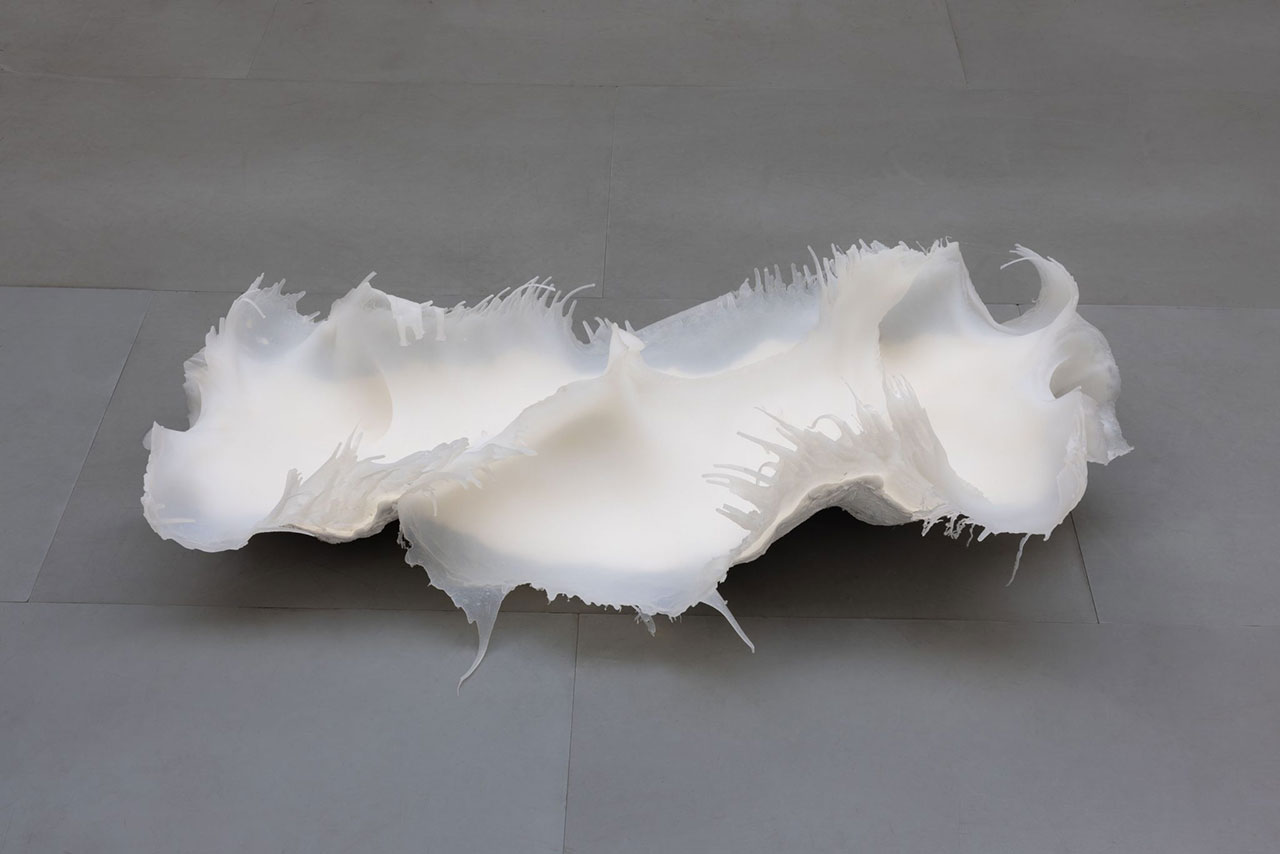
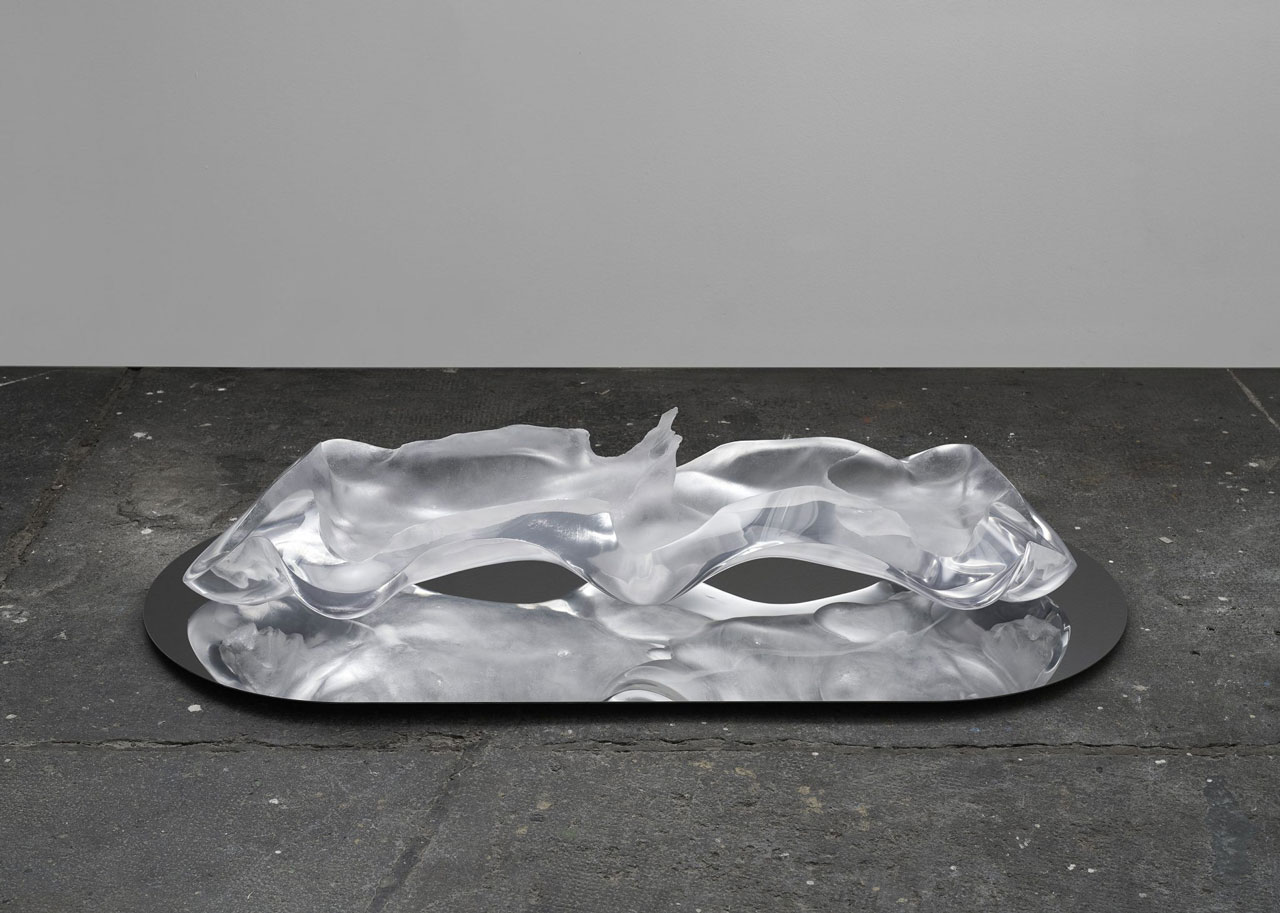
In “Space Between Two Women Having Sex” (2024), Gröting literalizes this preoccupation with the invisible. By taking a direct silicone impression during the sexual act between two women, she produces an object that is simultaneously presence and absence. The negative space—between bodies, between self and other—is externalized and inverted. This “sculptural autopsy” confronts the viewer with what typically escapes articulation: the unspoken, the secret, the hidden underside of intimacy.
A similar strategy operates in “Atemkurve” (2025), a laser light installation that captures the rhythm of breath—the unconscious exchange of oxygen and carbon dioxide that sustains life. Here, oxygen becomes metaphor: a shared, invisible resource that is as essential as it is unnoticed. Through laser and light, Gröting makes corporeal process visible, prompting reflection on what we take for granted and how art can reframe the implicit as essential.
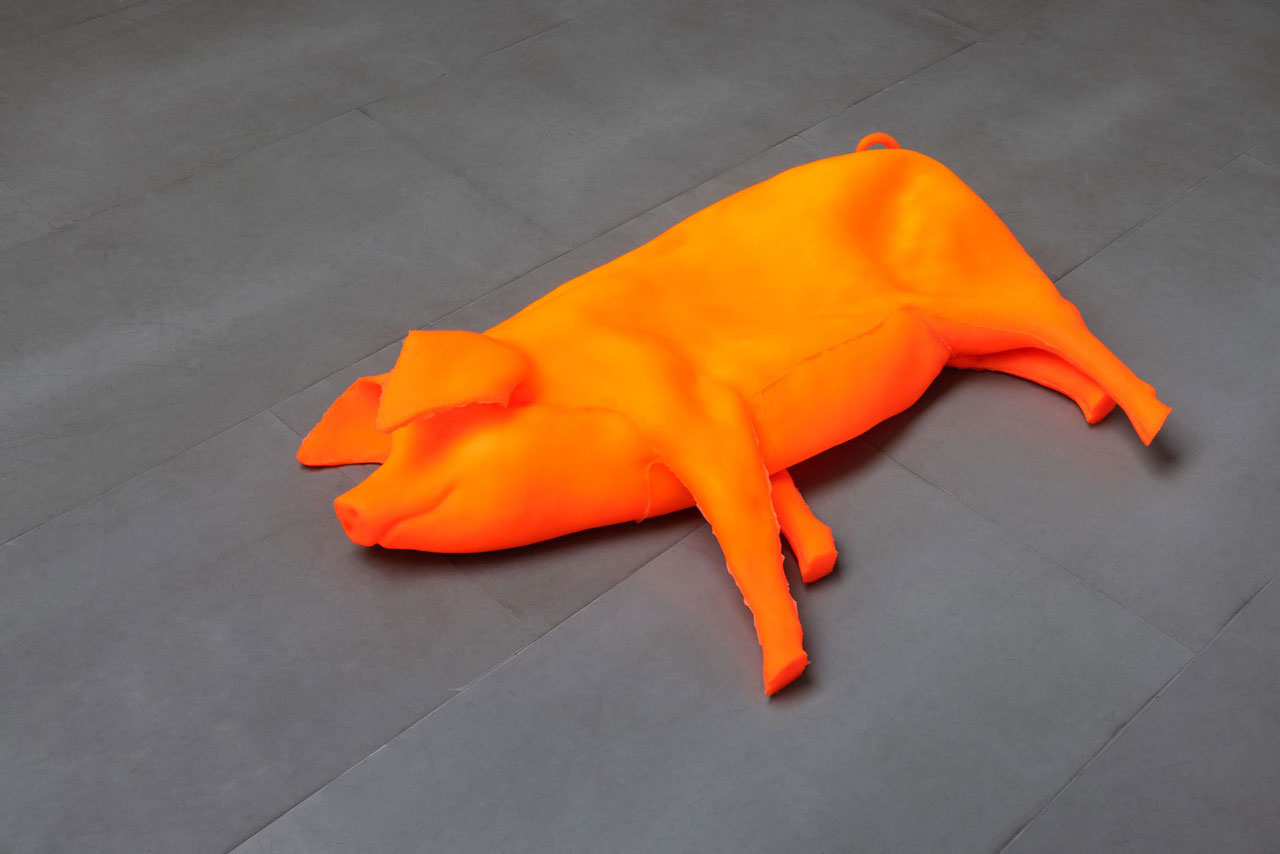
This motif of visibility versus invisibility resonates deeply in Dancing Queen (2024), a deflated pig laid flat on its side. The pig carries complex cultural freight: its domestication, its genetic and physiological proximity to humans, and its exploitation in biomedical research. In allowing this form to sag and deflate, Gröting collapses sentiment and critique, prompting a meditation on human relationships with other species, industrialization, and ethical responsibility. A cold, chrome-colored “heart” adorned with German national colors introduces further ambivalence—evoking belonging and heritage on the one hand, and the painful legacies of history and injustice on the other. In this way, Herz stakes a claim on the political dimension of intimacy—both personal and collective.
Gröting’s broader practice, as seen in other recent exhibitions such as at the Städel Museum, similarly foregrounds the fluid boundaries between bodies, species, and emotional states. There, video and laser projection extend her sculptural language into time-based media, creating contemplative spaces that interrogate everyday gestures and overlooked relationships.
Taken together, “Herz” and Gröting’s recent body of work insist on a patient mode of looking. Her objects and installations do not shout for attention; rather, they invite slow, sustained perception, encouraging viewers to inhabit the space between form and idea. In making visible what is typically overlooked—breath, void, relational tension—Gröting composes a poetics of absence that is as profoundly human as it is formally rigorous.
Photo: Asta Gröting, Courtesy the artist and carlier | gebauer Gallery
Info: carlier | gebauer Gallery, Markgrafenstraße 67, Berlin, Germany, Duration: 17/1-5/3/2026, Days & Hours: Tue-Sat 11:00-18:00, www.carliergebauer.com/
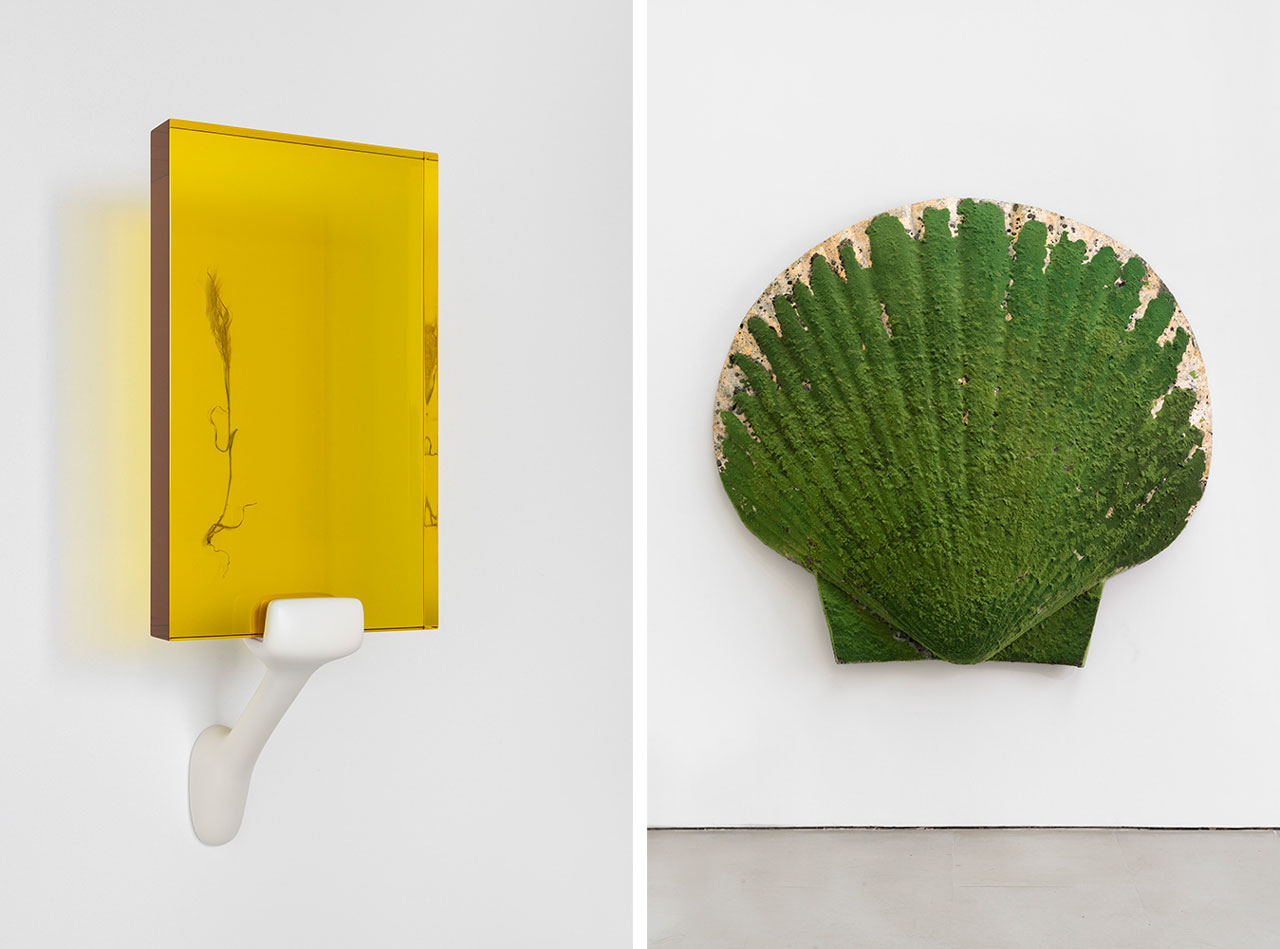
Right: Asta Gröting, Deep Sea Odyssey, 2024, epoxy resin, sawdust, polyamide flock, 180 × 190 × 35 cm, © Asta Gröting, , Courtesy the artist and carlier | gebauer Gallery