
ART CITIES: Paris-Erwin Wurm

Over the course of his career, Erwin Wurm has radically expanded conceptions of sculpture, space and the human form. His sculptures straddle abstraction and representation, presenting familiar objects in a surprising and inventive way that prompts viewers to consider them in a new light. He often explores mundane, everyday decisions as well as existential questions in his works, focusing on the objects that help us cope with daily life and through which we ultimately define ourselves. These include the material objects that surround us – the clothes we wear, the cars we drive, the food we eat and the homes we live in.
By Dimitris Lempesis
Photo: Thaddeus Ropac Gallery
Erwin Wurm has long been known for bending the rules of sculpture—literally and conceptually. With “Tomorrow: Yes”, his first solo exhibition to occupy the entirety of Thaddaeus Ropac’s vast Paris Pantin space, Wurm stages a sweeping investigation into how ideas, beliefs, and social structures can be given sculptural form. The show unfolds around two monumental installations: “School” (2024), a compressed 19th‑century schoolhouse, and “Star” (2025), a six‑metre‑tall sailing boat bent in its middle, designed to sail in circles. Together, they anchor an exhibition that oscillates between absurdity and profundity, challenging the very parameters of sculpture.
Visitors are invited to step inside “School”, whose claustrophobic interior—lined with vintage French educational posters and compacted furniture—mimics the restrictiveness of outdated teachings. The work is both architectural and psychological, a “negative cast” of received knowledge. By contrast, “Star” epitomises futility: a fully functional boat curved to sail endlessly in circles, inspired by Austria’s Salzkammergut lakes. As Metropolitan Museum director Max Hollein has noted, Wurm conveys “the tragedy of social condition” with biting humor, exposing the absurdities of modern life.
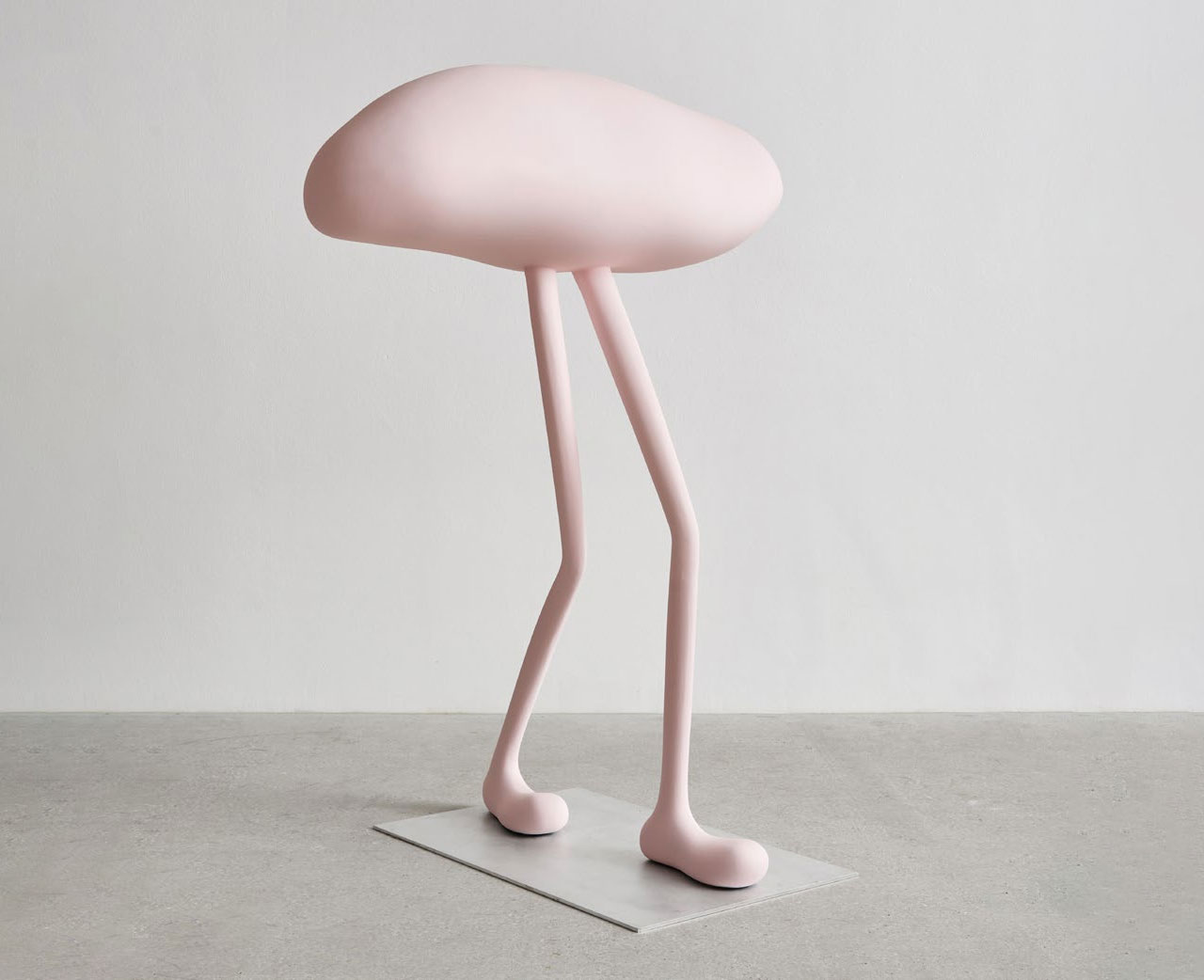
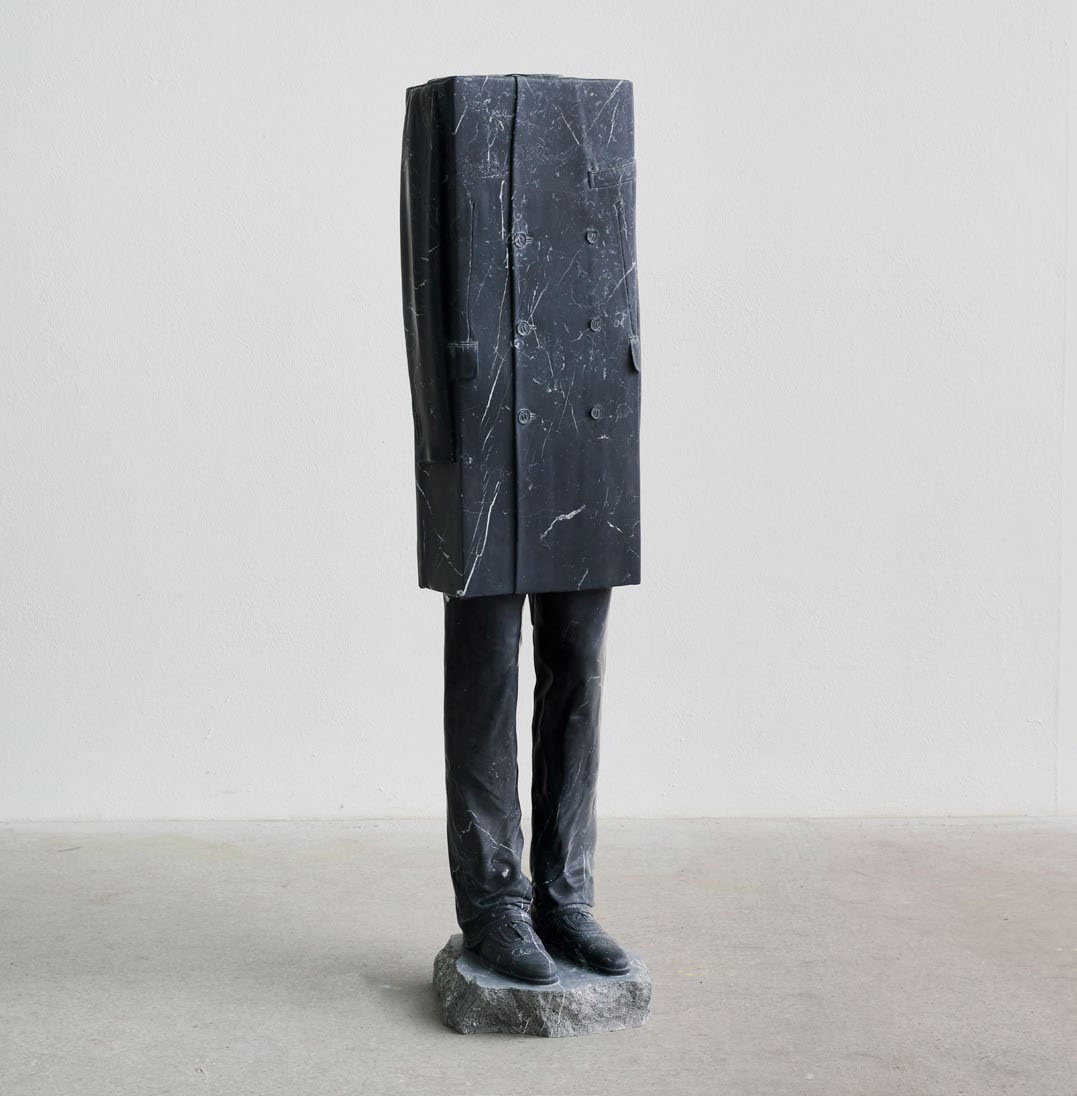
Wurm’s sculptural vocabulary extends to the immaterial. His “Blurred Memories” and “Mind Bubbles” anthropomorphise childhood recollections and thought processes, balancing spindly legs with bulbous forms in a play of proportion between body and mind. The “Box People” (2009–present), cubic figures in formal attire but without heads, interrogate the individual’s role in contemporary society. Clothing, a recurring theme in Wurm’s practice, resurfaces in the “Substitutes” series (2022–present): empty shells of garments cast in aluminium, bronze, or marble. These deflated outfits—collars gaping, stockings pooling—become sculptural skins, echoing classical bronzes and questioning the boundary between body and world.
Wurm’s “Balza0”c (2023) directly engages with Auguste Rodin’s canonical monument to the novelist, reimagining the figure as a pile of draped clothing. This dialogue with art history underscores Wurm’s interest in sculpture as surface and shell. Works like “Shadow” (2024), with its verdigris patina, further connect his practice to the lineage of bronze statuary, while simultaneously destabilising its solidity.
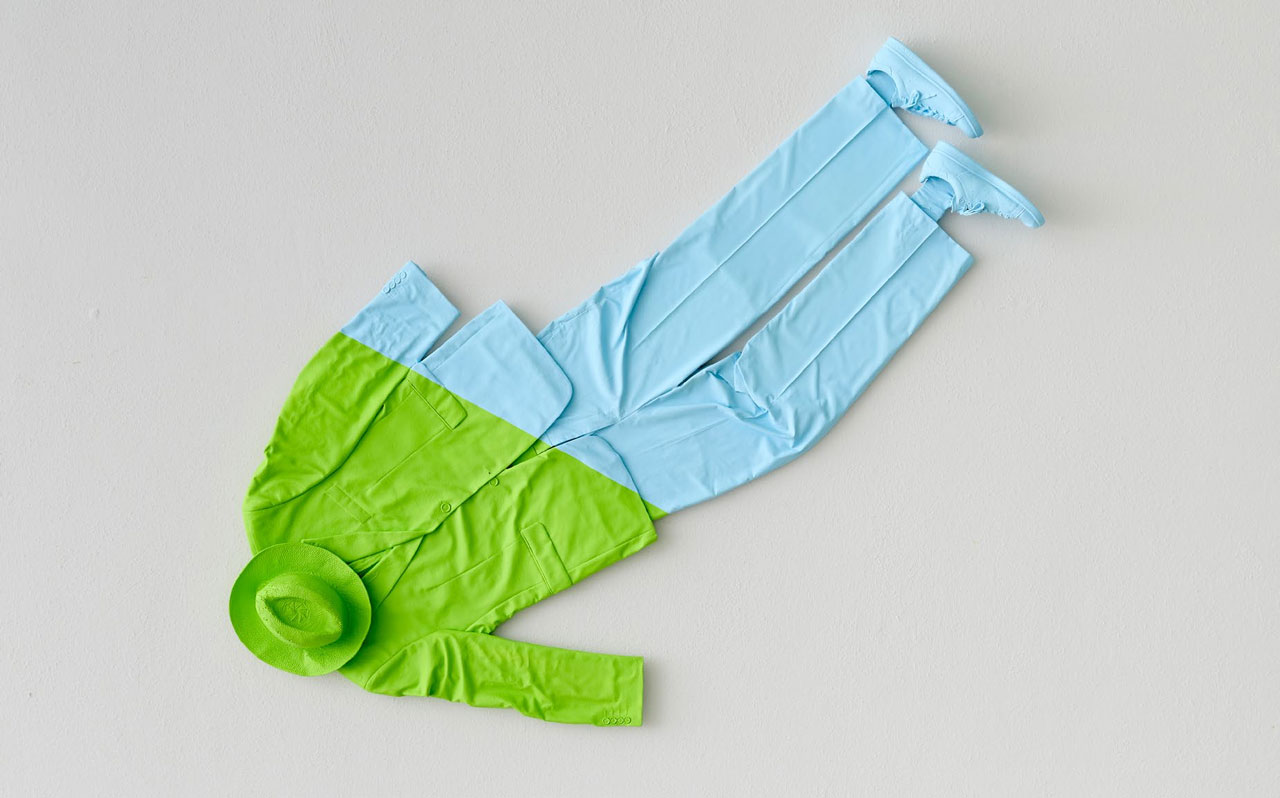
No survey of Wurm’s work would be complete without his iconic “One Minute Sculptures”. Begun in 1996, these participatory works invite visitors to activate everyday objects—hats, bottles, or even fashion garments—transforming spectators into temporary sculptures. Recently featured in Issey Miyake’s Autumn/Winter 2025–26 collection, they inherit Joseph Beuys’s notion of “social sculpture,” collapsing the boundary between art and life.
With “Tomorrow: Yes”, Wurm demonstrates that sculpture is not merely about material form but about the ideas, beliefs, and absurdities that shape human existence. His compressed schoolhouse, bent boat, and deflated garments are not paradoxes of art but mirrors of reality itself. As philosopher Konrad Paul Liessmann has written of Wurm’s practice: “It is not the work that is paradoxical, but the reality that it consistently takes at its word.” In Paris Pantin, Wurm invites us to inhabit that paradox—and to question the structures we take for granted.
Photo: Erwin Wurm, Tomorrow Yes (Dreamer), 2025, Acrystal, polyester, paint. 67 × 142 × 150 cm (26.3 × 56 × 59 in), © Erwin Wurm, Courtesy the artist and Thaddaeus Ropac Gallery
Info: Thaddaeus Ropac Gallery, 69 Avenue du Général Leclerc, Pantin, Paris, France, Duration: 17/1-11/4/2026, Days & Hours: Tue-Sat 10:00-19:00, https://ropac.net/
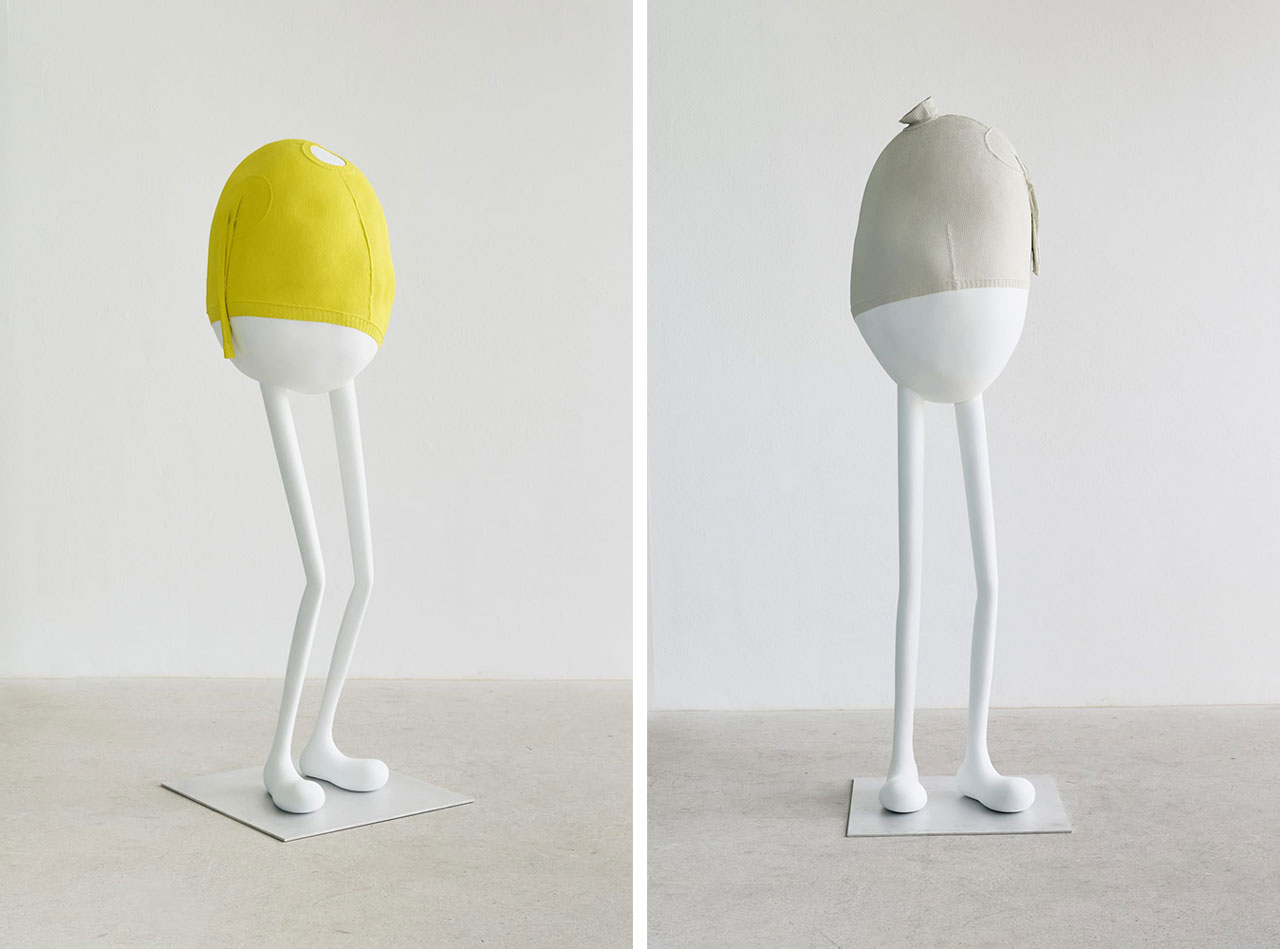
Right: Erwin Wurm, Tall Grey (Mind Bubbles), 2024, Aluminium, paint, 300 × 82 × 78 cm (118.11 × 32.28 × 30.71 in), © Erwin Wurm, Courtesy the artist and Thaddaeus Ropac Gallery
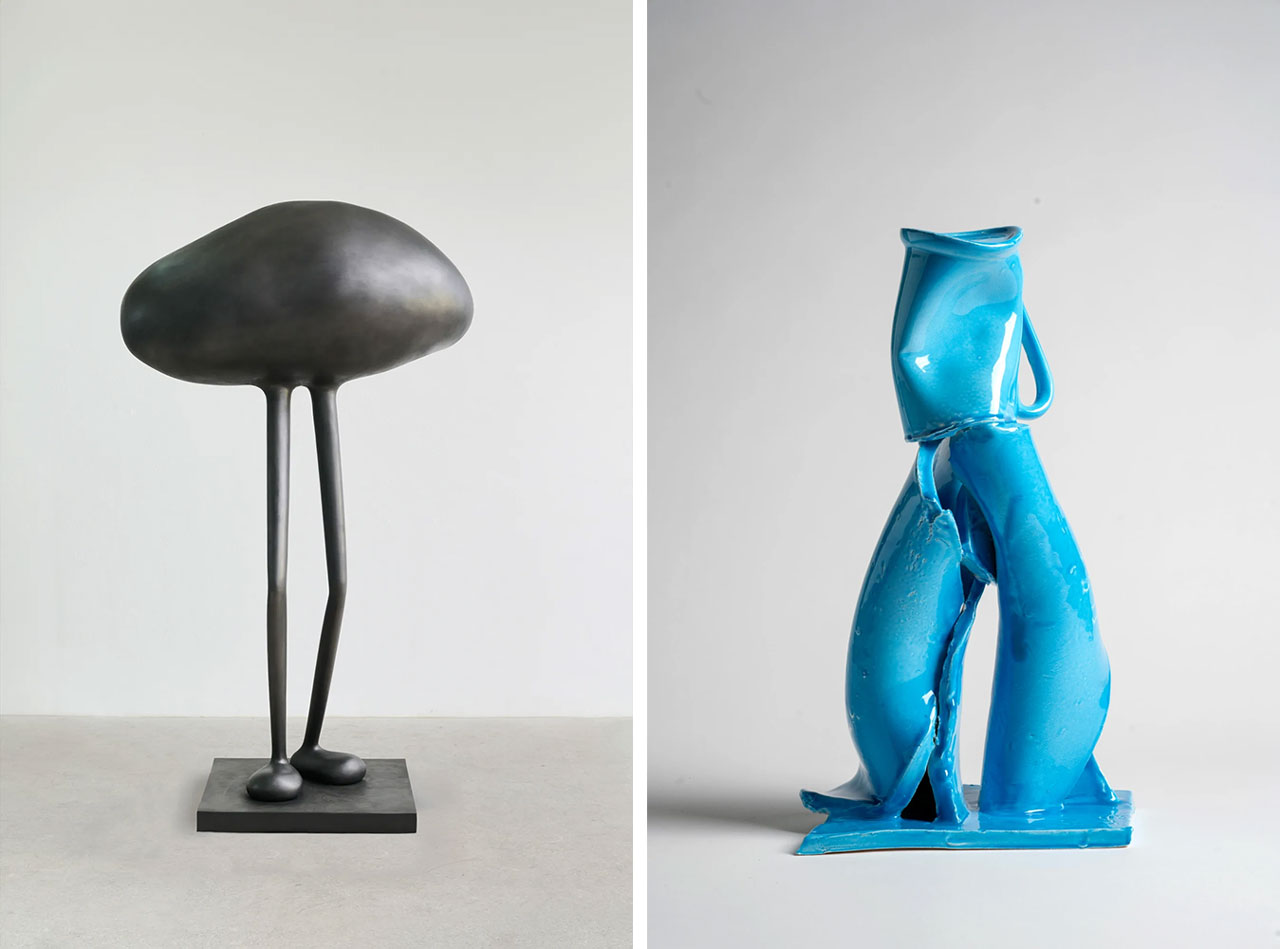
Right: Erwin Wurm, Idol, Looking Back, 2025, Ceramic, glaze, 42 × 24 × 17 cm (16.54 × 9.45 × 6.69 in), © Erwin Wurm, Courtesy the artist and Thaddaeus Ropac Gallery
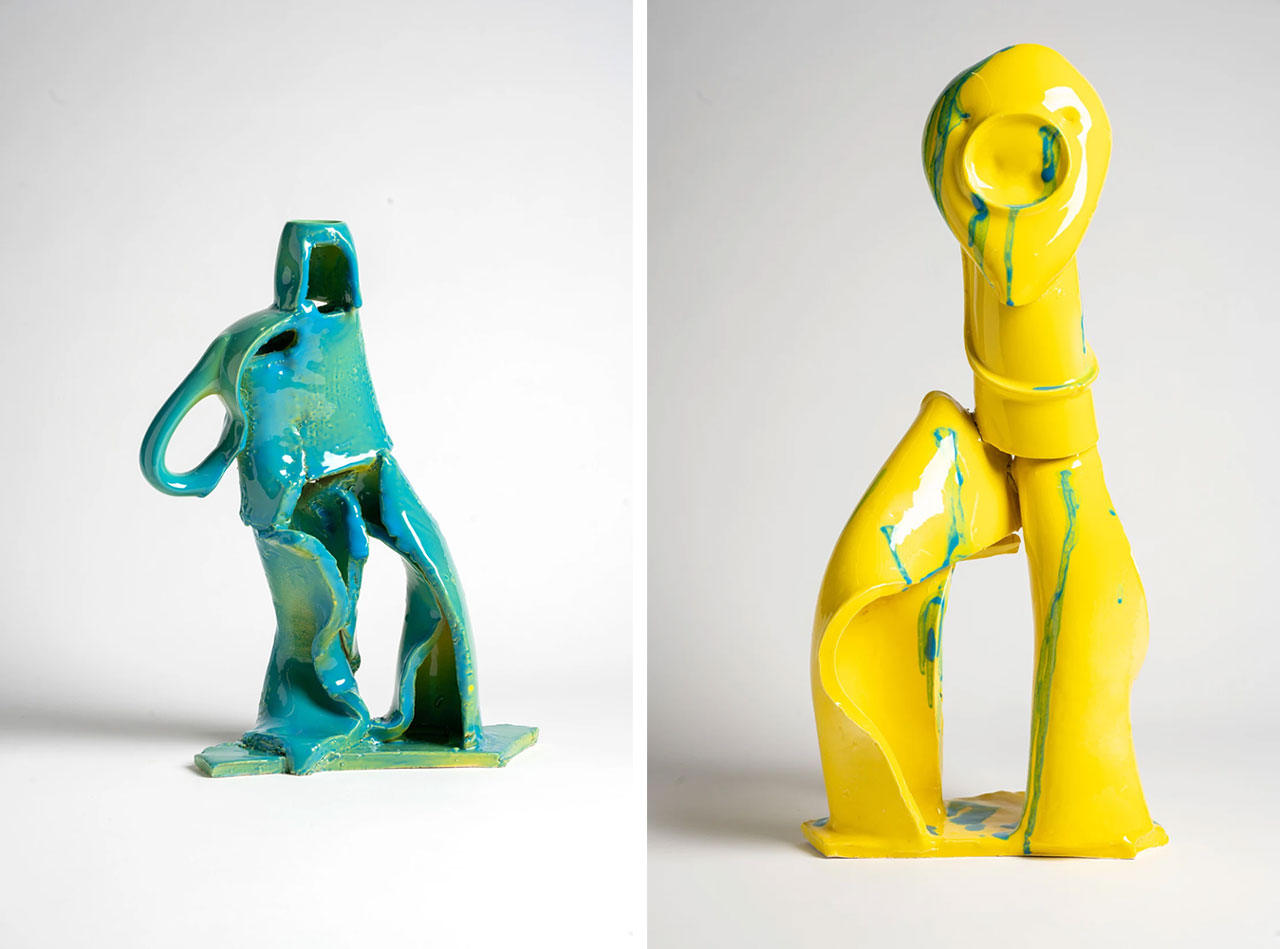
Right: Erwin Wurm, Statue, Open Mouth, 2025, Ceramic, glaze, 57 × 27 × 21 cm (22.44 × 10.63 × 8.27 in), © Erwin Wurm, Courtesy the artist and Thaddaeus Ropac Gallery