PRESENTATION: Pier Paolo Calzolari-Saudades

A leading figure in the postwar Arte Povera movement, Pier Paolo Calzolari is renowned for the material inventiveness and formal originality of his expansive, genre-defying practice. Working with equal fluency in painting, sculpture, installation, and performance, Calzolari’s work embraces a fascination with the alchemical while examining the potential of light, the essence of memory, and the poetic character of the natural world and the urban environment.
By Dimitris Lempesis
Photo: Marianne Boesky Gallery Archive
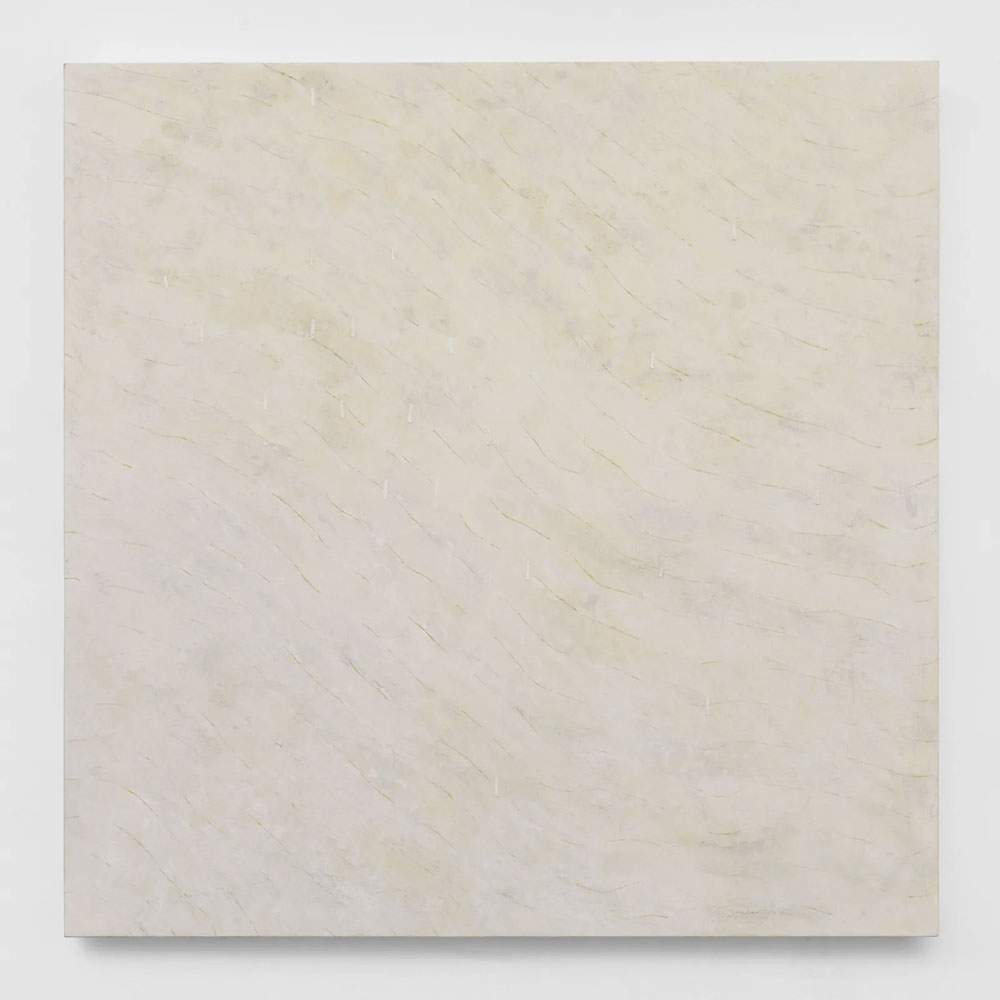
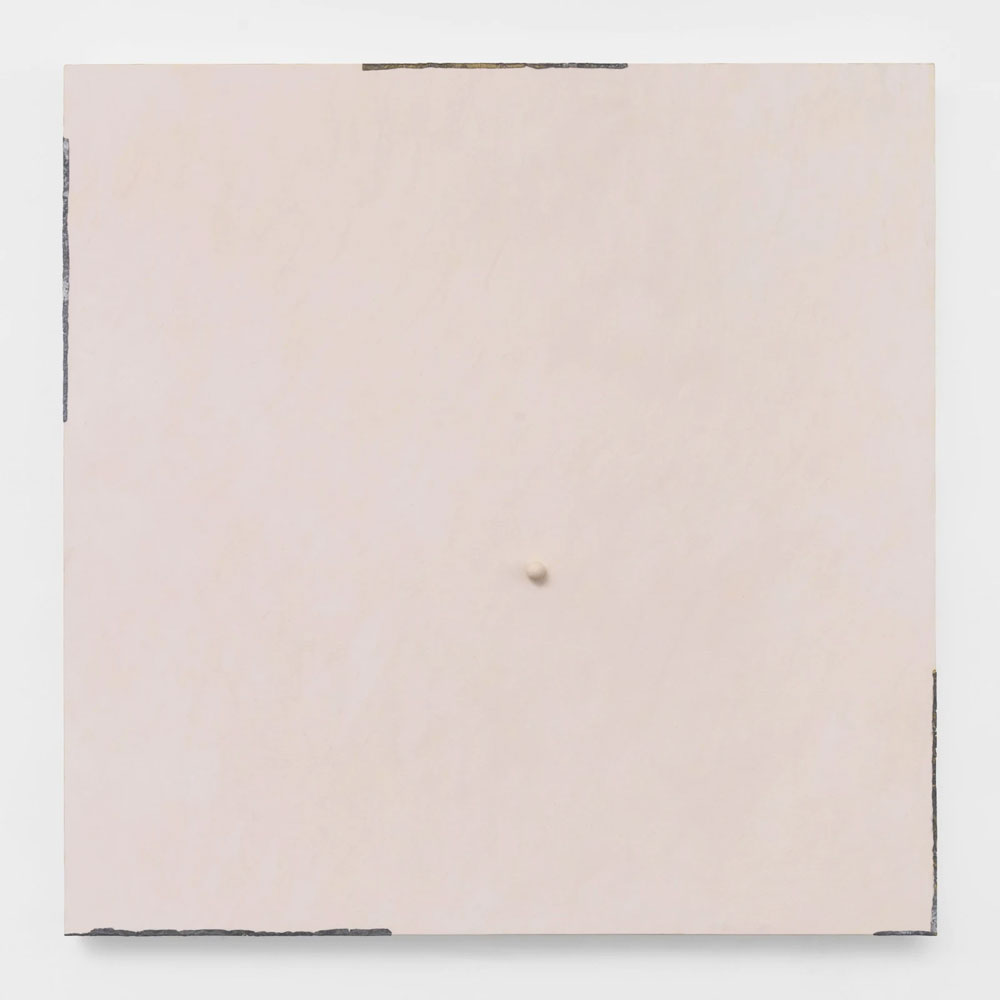
When Pier Paolo Calzolari relocated to Lisbon in 2016, the city’s luminous atmosphere profoundly influenced his artistic sensibility. The exhibition “Saudades”, comprising twelve paintings made shortly after that move, reveals how the artist’s enduring engagement with the ethos of Arte Povera intersects with a deeply personal response to the particular quality of Iberian light and the sense of peace he found upon his arrival.
A pivotal figure in the Arte Povera movement since the mid-1960s, Calzolari has built a career around the poetic potential of humble materials and elemental forces. His work spans painting, sculpture, installation, and performance, and consistently reflects an alchemical sensibility that seeks to unveil the transient and the ineffable.
Central to “Saudades” is the role of light — both as a physical phenomenon and as a metaphor for memory and feeling. Calzolari’s fascination with light dates back to his youth in Venice, where the shifting reflections on the lagoon, the white Istrian stone façades, and the dramatic waterfront deeply impressed him. This early experience would shape a lifetime of experimentation with materials that could evoke luminosity and ephemerality.
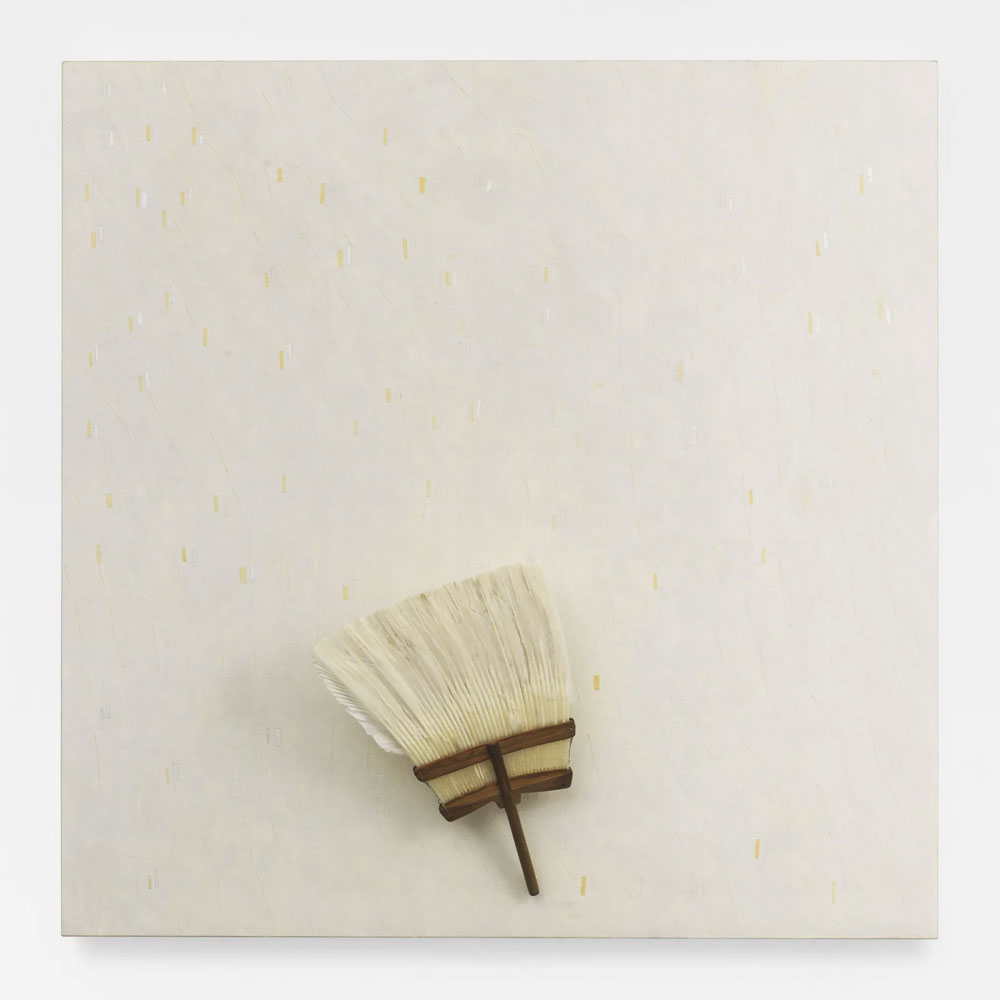
In the Lisbon works, Calzolari deploys casein-tempera surfaces at a uniform scale, integrating a range of found and industrial objects — from gauze and copper wire to gold-leaf plated brass and humble feathered brooms sourced from Lisbon’s street markets. These elements generate subtle textures and points of contemplation, inviting the viewer into a nuanced interplay between material presence and atmospheric suggestion.
In “Untitled #8”, a delicate horizon line emerges through gauze and copper wire, while thumbtacks sparkle like distant stars; in “Untitled #7”, rippled oil striations evoke sunlight dancing on water, intensified by shadows cast from a scrap of brass. In works such as “Untitled #16, #17, and #21”, brooms — emblematic “poor” objects — are affixed to the surface, transforming the quotidian into a vehicle for visual poetry.
These material choices are not incidental. They recall Calzolari’s longstanding commitment to Arte Povera’s practice of re-examining everyday substances — flannel, buttons, gauze, wood — while also expressing his fascination with metals and alchemical transformation. In Saudades, this alchemy articulates the warmth and freedom of Lisbon’s light where the Rio Tejo meets the Atlantic.
The exhibition’s title, “Saudades”, encapsulates the affective core of the work. A Portuguese and Galician term without a direct English equivalent, saudade evokes a bittersweet longing — not simply nostalgia, but a yearning for something undefined or unattainable. Poet Edward Hirsch describes saudade as “a yearning for something that might have been,” a feeling that resonates deeply with Calzolari’s artistic pursuit of the fleeting and transitory.
Viewed together, the “Saudades” paintings articulate an art of subtle resonance: fleeting glints of light, casts of shadow, the remembered warmth of an afternoon sun, or the reflective shimmer of water. Through them, Calzolari not only conjures the distinctive atmosphere of place but also invites a contemplation of memory, loss, and the ephemeral conditions that shape human experience.
“Saudades” thus stands as a testament to Calzolari’s lifelong inquiry into matter, light, and meaning — an inquiry that, while grounded in the ethos of Arte Povera, transcends its historical moment to propose a quietly profound visual language for the present.
Photo: Pier Paolo Calzolari, Untitled #17, 2016, Milk tempera, broom, on canvas, 47 1/4 x 47 1/4 x 8 1/4 inches, 120 x 120 x 21 cm, © Pier Paolo Calzolari, Courtesy the artist and Marianne Boesky Gallery
Info: Marianne Boesky Gallery, 507 West 24th Street, New York, NY, USA, Duration: 15/1-28/2/2026, Days & Hours: Tue-Sat 10:00-18:00, https://marianneboeskygallery.com/