ART CITIES: N.York-Odili Donald Odita

Odili Donald Odita brings heightened awareness to color and space in paintings where abstraction is an optically, physically, and culturally-felt phenomenon. Though they are rooted in a broad range of historical lineages—Africanist approaches to pattern; modernist painting and design; and contemporary conceptual positions, to name a few—his compositions make immediate appeals to the senses in the here and now. Odita’s take on non-objective art is suffused with connectivity to the world around him, and arises from memories, philosophical reflections, and meditations on the ways in which political forces shape relationships between perception and form.
By Efi Michalarou
Photo: David Kordansky Gallery Archive
In “Shadowland”, Nigerian-American painter Odili Donald Odita presents an ambitious, generative exhibition that interweaves three discrete yet interdependent bodies of work—his recent paintings, earlier photo-based explorations, and inherited works by his late father, Dr. Emmanuel Okechukwu Odita—to form a richly layered artistic statement about power, identity, and creative possibility. The exhibition reveals the depth of Odita’s engagement with pressing sociopolitical questions while foregrounding abstraction as a dynamic, connective force within and across cultural experience.
At the core of the exhibition is a sustained inquiry into the nature of “shadowland” as both metaphor and lived terrain: a space cast into darkness, a site of erasure but also of covert power. The concept functions on multiple registers, registering histories and contemporaneous struggles over visibility, agency, and narrative control. Rather than presenting darkness solely as absence, Odita’s work proposes shadows as zones of potential—akin to underground networks of resistance and experimentation—where creative freedom can ferment out of sight of hegemonic structures.
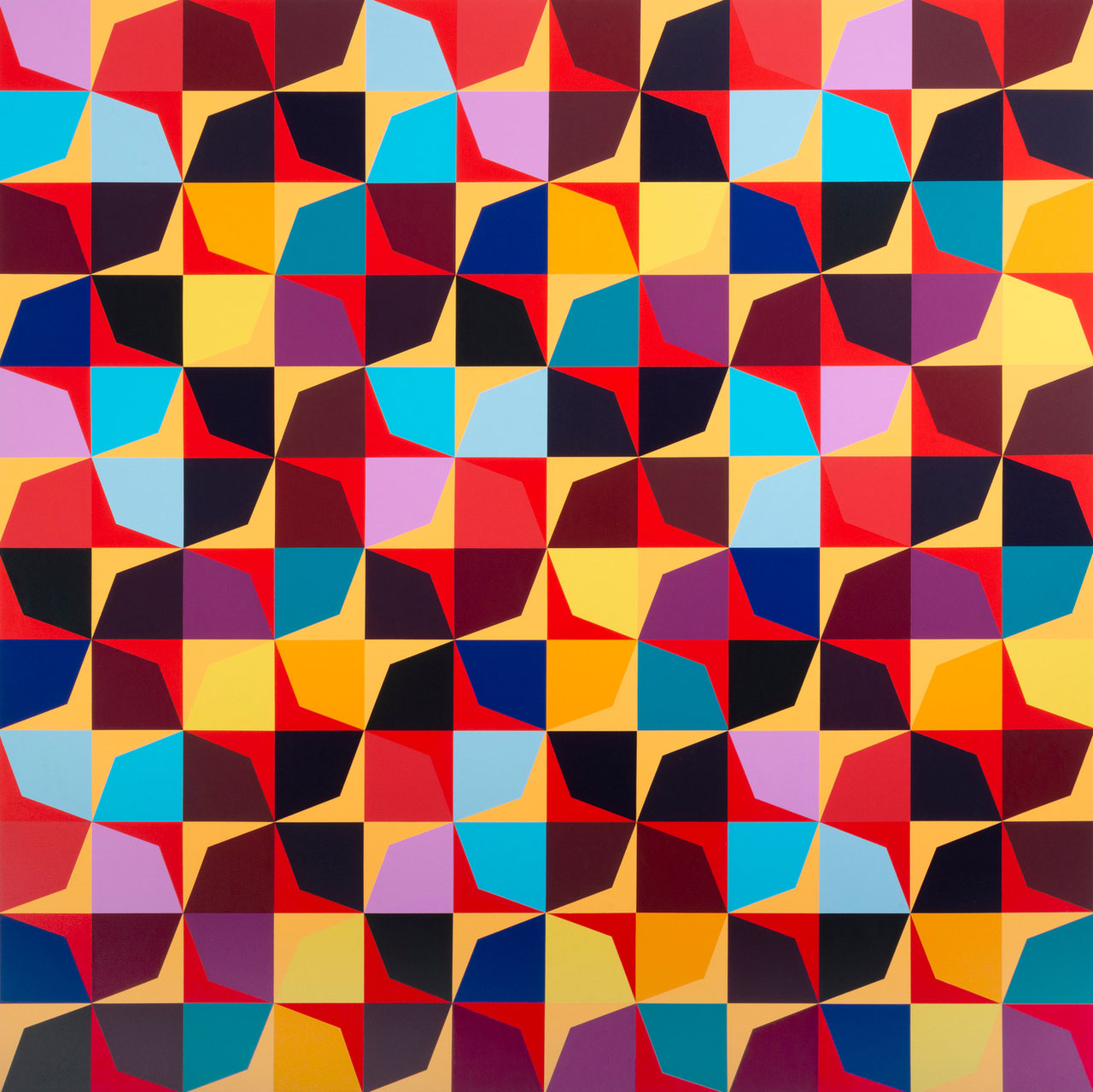
Odita’s recent abstract paintings articulate these themes through rigorous formal strategies. He deploys bold fields of color and interlocking tessellations that subvert traditional hierarchies of composition and centrality, drawing the viewer’s eye across, within, and out toward the periphery. The interplay of singular hues and nuanced values generates spatial tensions in which shadows emerge at points of meeting and divergence, prompting reflection on both collision and cohesion. These compositions, often implied through an X or central seam, yield mirror-like fields whose subtle asymmetries amplify both similarity and difference. In this way, the works map not only perceptual experience but also complex sociopolitical terrains in which power, identity, and belonging are contested and negotiated.
Complementing Odita’s abstractions is “The Black Album”, a lesser-known but incisively critical body of photo-based works drawn from found magazine images and advertisements. Here, Odita turns to mass media artifacts from the late 1990s, isolating and enlarging them to painterly scale in order to expose the subtle mechanics of racial stereotype production in everyday American visual culture. Pairing and manipulating covers from Vogue (1997), for example, the series lays bare how images of beauty and normativity are constructed and disseminated, while works such as “Black as a Negative” Space (1997–1999) invert conventional figuration to underscore how absence and presence are spatialized in visual discourse. (
Anchoring the exhibition historically are four paintings by Odita’s father, Emmanuel Okechukwu Odita (1936–2025), a painter, art historian, and one of the first Black Africanists to teach African art history in the United States. His works establish a lineage of political abstraction that directly informs his son’s practice. Emmanuel Odita was part of a cohort of Nigerian artists in the late 1950s who challenged the Eurocentric curricula of colonial art education, advocating for the integration of indigenous art forms, techniques, and concerns. His abstract compositions, with their vibrant interplay of color and form, articulate a modernism rooted in African visual logics and resistance to reductive Western interpretations of African art.
For Odili Donald Odita, this inheritance is not a relic but a living point of departure. He has described how his father’s work opened a conceptual portal into abstraction: how representational space can be transformed into form and how a shape can “move a color.” This dialogue culminates in a monumental immersive mural at the back of the gallery, where Odita extends his father’s conception of the human figure into an expansive field of color that implicates the viewer as active agent within the pictorial space.
Across “Shadowland”, abstraction becomes more than formal experiment; it functions as a site of geopolitical and familial resonance. Odita’s work, informed by a wide range of influences—from the geometries of traditional Mbuti barkcloth and the rhythmic pulse of music to cinematic space and graphic design—asserts painting as a domain of infinite possibility where stories of power, memory, and identity converge. In bringing together inherited and contemporary voices, Shadowland underscores not only the enduring potency of abstraction in the twenty-first century but also its capacity to cultivate connection and coexistence across borders, generations, and lived realities.
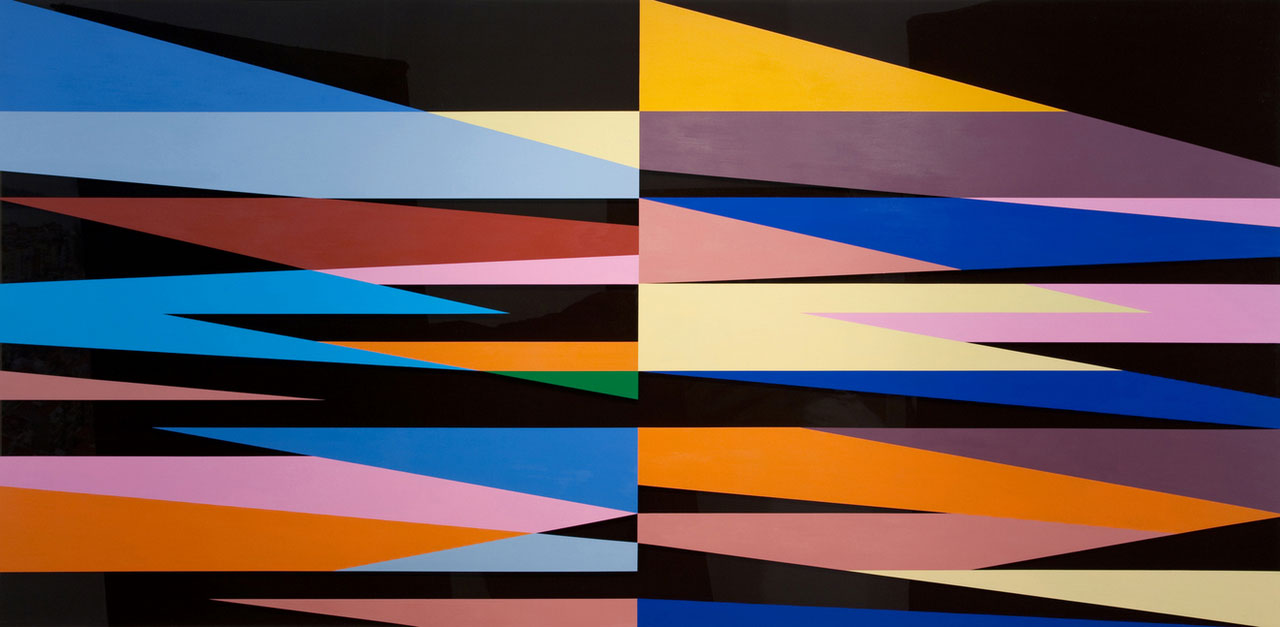
Photo: Odili Donald Odita, Chasm, 2015, acrylic on canvas, 60 x 120 inches (152.4 x 304.8 cm), © Odili Donald Odita, Courtesy the artist and David Kordansky Gallery
Info: David Kordansky Gallery, 520 West 20th St., New York, NY, USA, Duration: 15/1-28/2/202, Days & Hours: Tue-Sat 10:00-18:00, www.davidkordanskygallery.com/
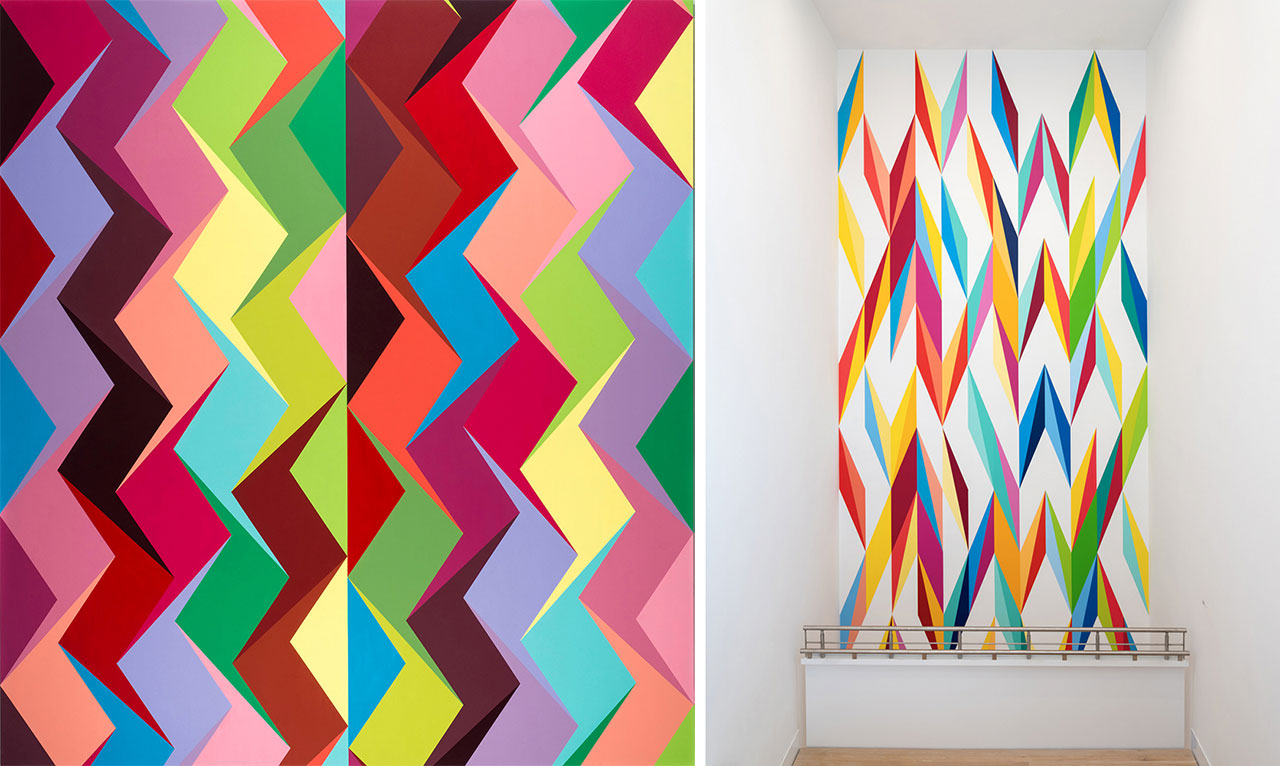
Right: Odili Donald Odita, Mamba Negra, 2019, Installation view, Institute of Contemporary Art (ICA), Miami, © Odili Donald Odita, Courtesy the artist and David Kordansky Gallery
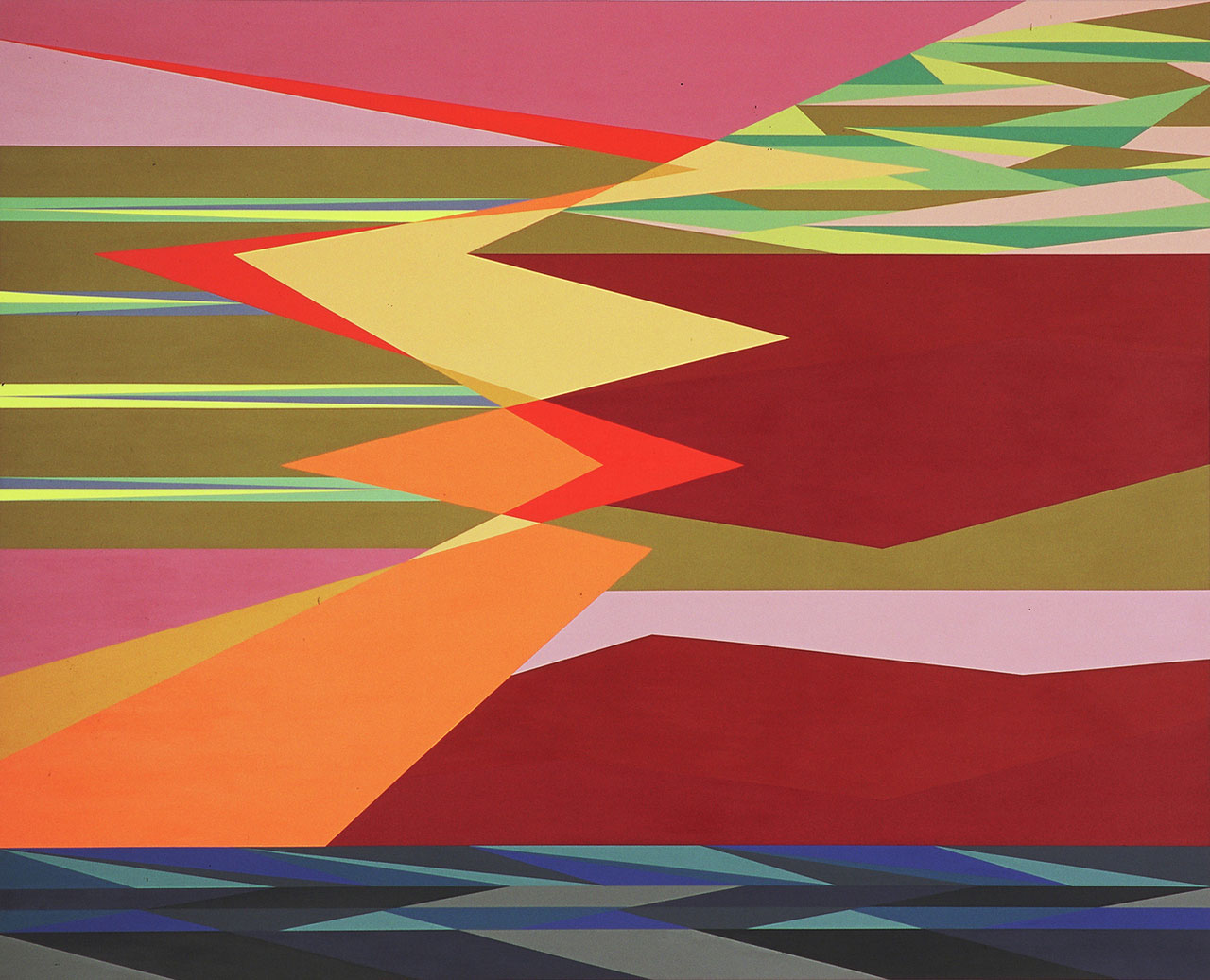
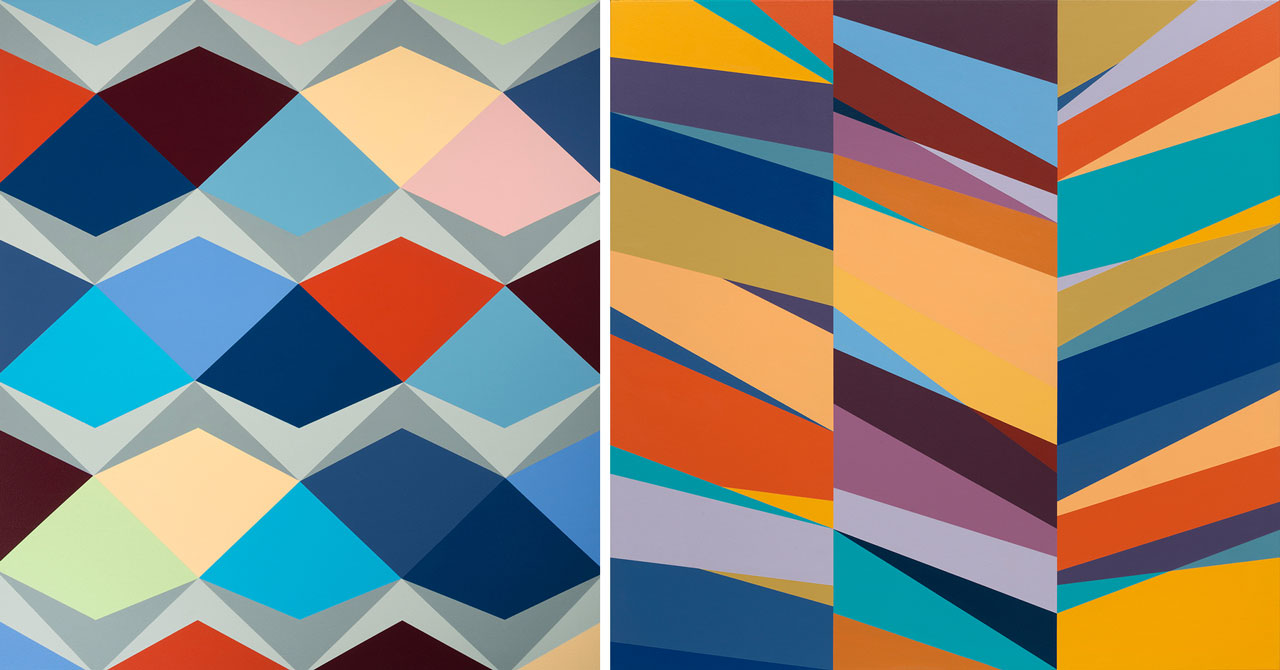
Right: Odili Donald Odita, Tempest, 2024, acrylic on canvas, 60 1/4 x 60 1/8 x 1 5/8 inches (153 x 152.7 x 4.1 cm), framed: 61 x 60 7/8 x 2 inches (154.9 x 154.6 x 5.1 cm), © Odili Donald Odita, Courtesy the artist and David Kordansky Gallery