
ART NEWS: Jan.01
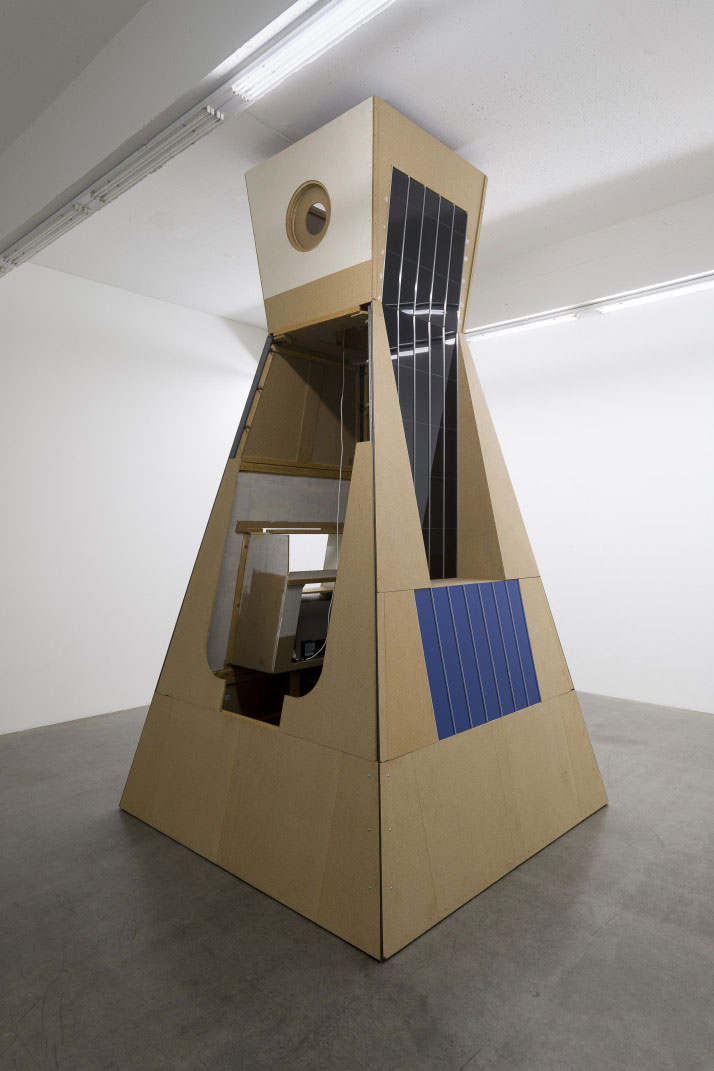 “estrel-docx” is a solo presentation by Manfred Pernice at Galerie Neu, taking this year’s milestone anniversary of the documenta as its occasion. The work ESTREL; quattro stagioni from 2002 was conceived for documenta 11 in Kassel and was later shown at the Kunstmuseum Wolfsburg. The frontal side of the construction – which initially appears monolithic – appositely reflects the title as a form of the standardised international hotel architecture of turn-of-the- millennium globalization. In contrast, the four seasons also invoked in the title are understood as an “emerging + fading”, as a process of gradual decay, and as a “glimpse behind the scenes”. The sculpture is made up of nested truncated pyramids which are conceived as solid structures, yet in their sequence they remain porous, brittle, and seemingly incomplete. The “Estrel Berlin” is Europe’s largest hotel, entertainment and convention complex, and thus a significant example of the event architecture and consumption-oriented urbanity of the aughts. The geometry of the construction (as well as a video fragment of the original version) simultaneously references “Die Pyramide” in Berlin-Marzahn (a district that, during the GDR era, was regarded as an archetype of socialist urban planning). Financed through early post- unification investment funds, this nineties office building, with its distinctly illuminated facade, was once celebrated as Europe’s largest digital clock. Through this interplay of industrial and postmodern references, Pernice reflects on the carefully orchestrated systems that shape our patterns of consumption. Info: Galerie Neu GmbH & Co. KG, Linienstraße 119 abc, Berlin, Germany, Duration: 22/11/2025-24/1/2026, Days & Hours: Tuye-Sat 11:00-18:00, https://galerieneu.net/
 For his first exhibition at the Galerie Templon in Paris, Léonard Martin is presenting works created during his residency in New Orleans, as part of the Villa Albertine, the prestigious artist residency program of the French Institute.The exhibition brings together some fifteen new paintings and a sculpture, recounting the artist’s American experience. “Chef Menteur” a title borrowed from a highway crossing New Orleans, evokes the uncertain boundary between appearance and truth. Plunged into the heart of a Louisiana marked by social and racial tensions, climate change, and ecological disasters, the artist chose to explore carnival, that paradoxical space where burlesque rubs shoulders with tragedy, where madness responds to the rigors of an overwhelmed world. A place of crossroads and contrasts, the New Orleans carnival brings together Catholics and Protestants, Creoles and Caribbean people, blacks and whites, women and men, rich and poor. A true social microcosm, it exposes the human comedy in the open air: pride is displayed, inequalities are replayed. In this festive turmoil, where floats pour out streams of plastic objects, Léonard Martin collected these ephemeral fragments to reinvest them in his pictorial practice. Plastic waste becomes the raw material for a reflection that is both political and ecological, a symbol of a saturated world where plastic invades the streets, the water, and ultimately even our blood. Info: Galerie Templon, 30 rue Beaubourg, Paris, France, Duration: 10/1-14/3/2026, Days & Hours: Tue-Sat 11:00-19:00, www.templon.com/
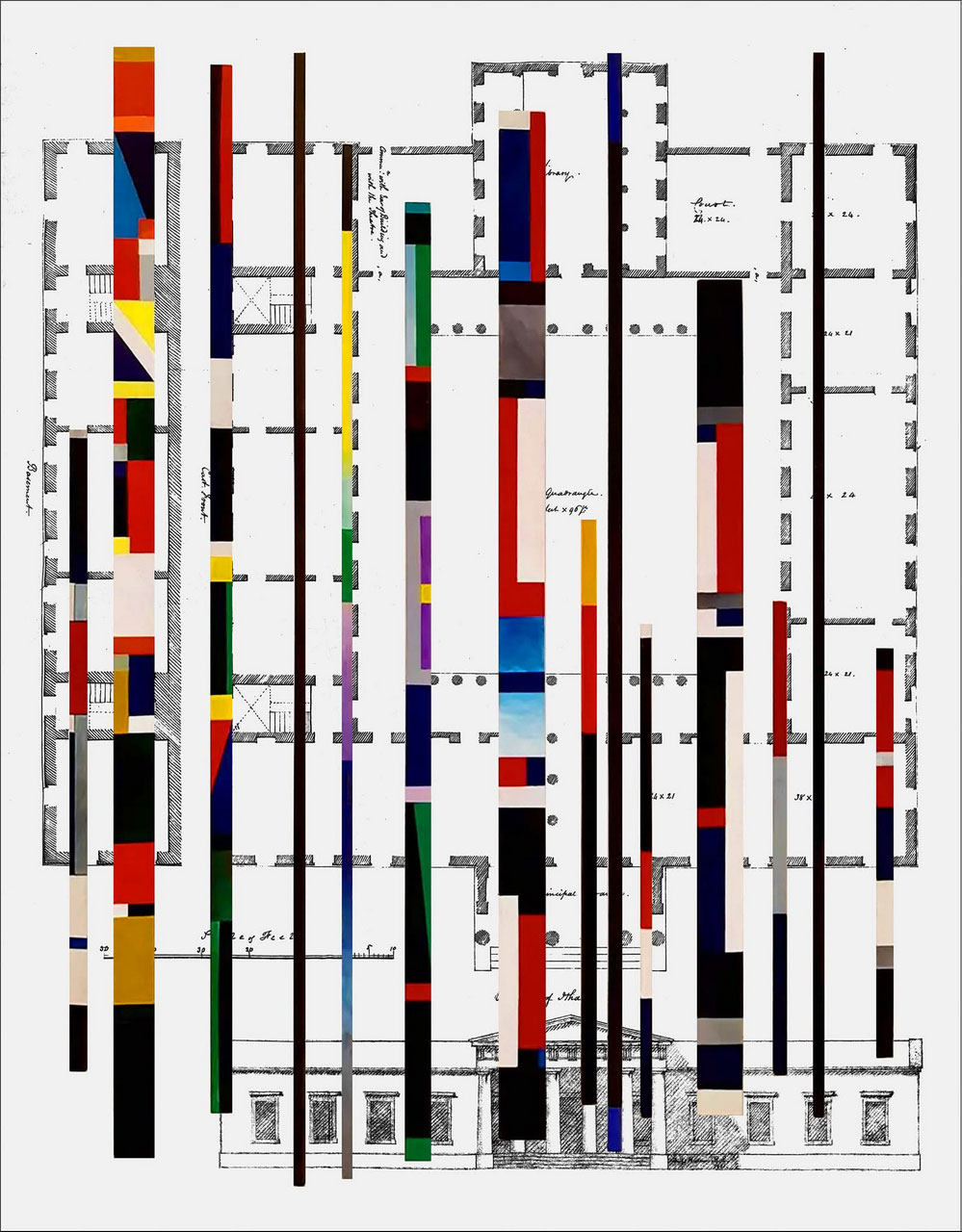 In his body of work “The Poetry Of Memory”, Angelos Skourtis presents a series of works which, although each one retains its independence and distinct identity, collectively abolish the notion and opposition of terms and boundaries (Full – Empty, Artwork – Space), transforming the exhibition space into a single, unified plane. Through his works, Skourtis makes an intimate reference to the journey of the gaze along the paths of labyrinthine modern art and to the memories these paths have left in his soul. He hopes that these visual and plastic references will activate and move the viewer, while at the same time leaving them free to see whatever they themselves wish, without the burden of excessive theoretical remarks and explanations that could constrain the imagination on the personal and solitary journey of viewing. In this way, the viewer, as an integral part of the space, is invited to let go, to be carried along, to retrieve memories of their own path, and to create their own references, images, and thoughts, which will bring to the surface their individual “mental poetry” in every unexpected and powerful form it may take. Info: Ekfrasi – Yianna Grammatopoulou Gallery, Valaoritou 9A str., Athens, Greece, Duration: 13/1-7/2/2025, Days & Hours: Tue & Thu-Fri 12:00-20:00, Wed 12:00-18:00, Sat 12:00-15:00, https://ekfrasi-art.com/
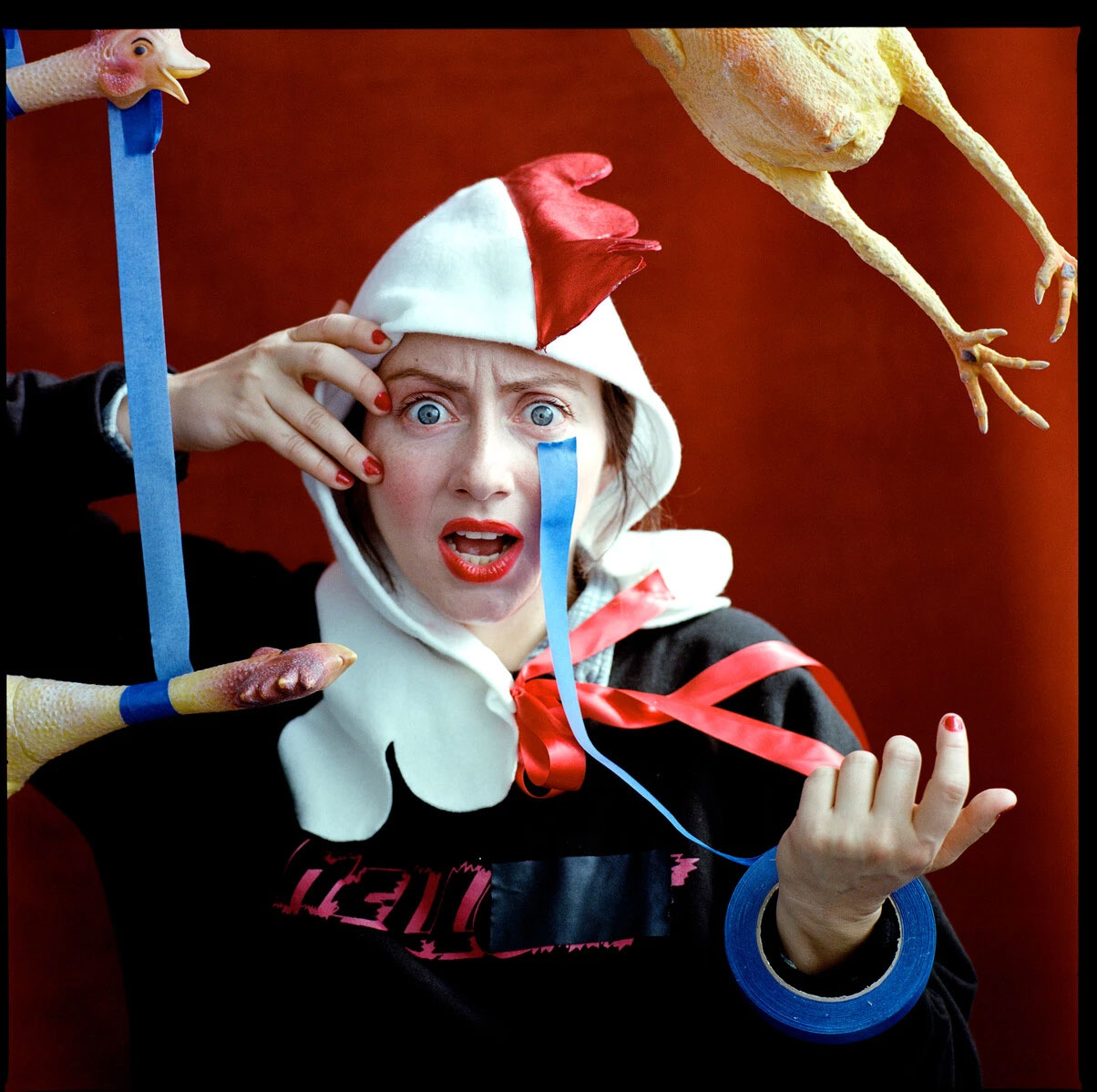 On the precipice of its 60th anniversary, and with a newly established endowment to support the commissioning, collection, archiving, and expansion of performance programs within the Edlis Neeson Theater and throughout the museum’s galleries, the MCA is reaffirming its commitment to live performance as an important part of its institutional identity. The 2026 “On Stage” series presents a collection of works that present opportunities to examine the elements of live performance itself. The four artists in this series express urgency by creating intimacy with audiences, either by addressing audiences directly, drawing them in as co-participants in collective experiences or rituals, or bringing them into close physical proximity: Alex Tatarsky, Nacera Belaza, Leslie Cuyjet, and Kimberly Bartosik. In a political moment of continued division, audiences are invited to embrace opportunities to come close to live performance, get intimate, and break down the boundaries of separation across difference. Info: Curators: Moira Brennan, and Laura Paige Kyber, Museum of Contemporary Art, 220 E Chicago Ave, Chicago, IL, USA, Duration: 15/1-16/3/2026, Days & Hours: Tue 10:00-21:00, Wed-Sun 10:00-17:00, https://mcachicago.org/
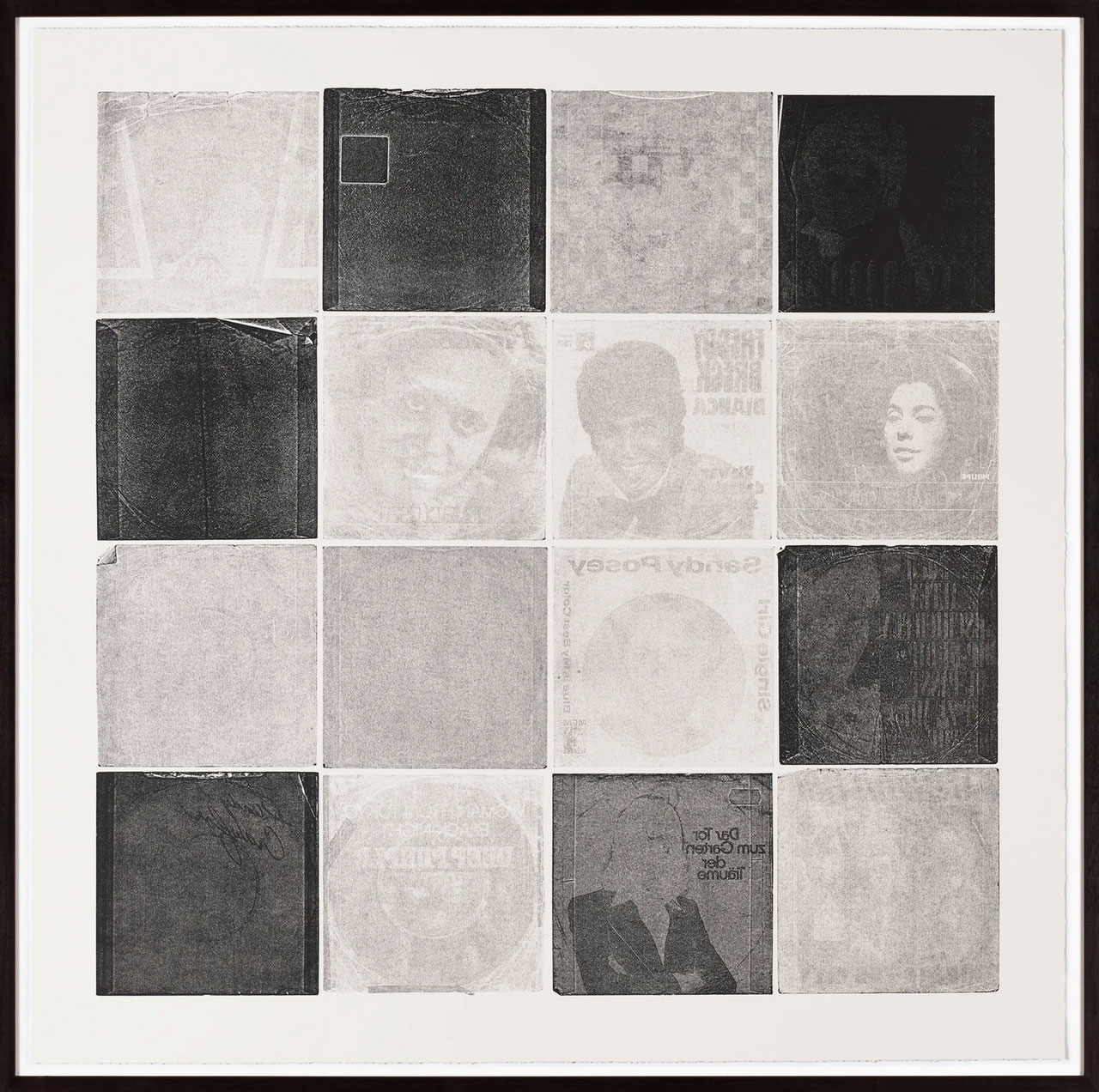 Christian Marclay in his solo exhibition presents new monoprints and collages, and the 2015 video “Bildspiel (after Dieter Roth’s “Kugelbild”, 1960)”. Fascination with vinyl records has long informed Marclay’s artistic practice. In this exhibition, the artist focuses on the recurring motifs found within the familiar square format of LP covers, exploring how music is packaged, distributed, and consumed. In eleven new works on paper, Marclay inks the sleeves and covers from 7”, 10”, and 12” vinyl records, printing them as monotypes. Unlike etchings or lithographs, the monotype process creates a single unique impression, capturing the folds, creases, and surface wear of these objects and revealing their tactile histories as carriers of both sound and memory. Each work comprises a grid made up of nine or sixteen printed elements, varying in tone from pale gray to deep black. In some, the printing technique reproduces a faint transfer of the album art on the original cover. In others, a round void at the center of the sleeve leaves a white circle where the record’s label would have been visible through the cutout—a feature designed to reveal the label without removing the vinyl. “Oculi”, a new collage series, also focuses on vintage record sleeves with circular cutouts. Using the circular opening of sleeves to frame LP covers, Marclay turns the functional detail into a compositional device, providing only a glimpse into the full photographic artwork while concealing most of it. The opening acts as a framing device, revealing details such as hands, eyes, or mouths. Through this subtle gesture, Marclay reimagines the record sleeve as both object and image, where absence becomes part of the composition. Marclay’s single-channel video Bildspiel (after Dieter Roth’s Kugelbild, 1960) features Kugelbild (Bead Picture), a 1960 work by Swiss-German artist Dieter Roth held in the Sohm Archive at the Staatsgalerie Stuttgart, Germany. Found in the museum’s storage and never heard, the simple mechanical piece sends wooden beads through a matrix of nails arranged on a rotating disk, following a path determined by chance and gravity. Info: Fraenkel Gallery, 49 Geary Street, San Francisco, CA, USA, Duration: 15/1-28/2/2026, Days & Hours: Tue-Fri 10:30-17:30, Sat 11:00-17:00, https://fraenkelgallery.com/
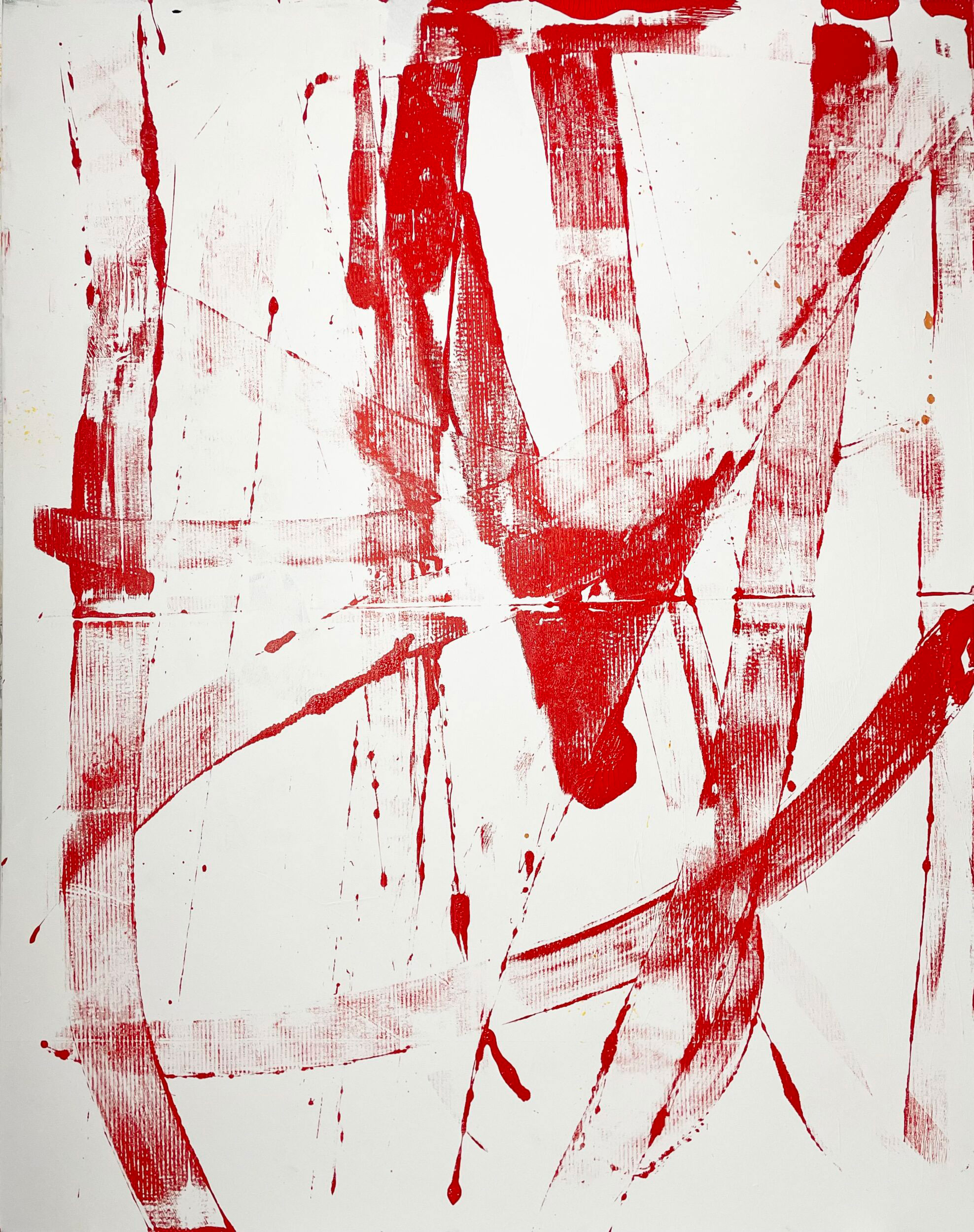 Philip A. Zimmermann presents a solo exhibition in Brussels, his practice encompasses painting, works on paper, collage, and photography, engaging with notions of layering, fragmentation, and transformation. Rooted in an early involvement with illegal graffiti in the border region between Germany and France, his work continuously questions the relationship between surface, intervention, and the traces left by repeated acts of appropriation and overwriting. His works on paper and collages engage with social and socio-political fragments. Through processes of deconstruction and reassembly, these elements are critically examined, introducing subtle shifts in meaning. Despite the often serious subject matter, the works are infused with a restrained humor and a cynical undertone, revealing a tension between earnestness and irony. Zimmermann’s photographic works, predominantly realized in black and white on 35mm film, depict motifs from his immediate surroundings. Architecture, landscapes, and incidental or overlooked places are captured in a spontaneous and intuitive manner. The raw, fragmentary quality of these images, often enhanced by the use of fisheye lenses, recalls American skateboard videos of the 1990s and early 2000s, establishing a connection between movement, subculture, and perception. Info: Bernier/Eliades Gallery, 46 Rue du Châtelain, Brussels, Belgium, Duration: 15/1-2/4/2026, Days & Hours: Tue-Sat 12:00-18:00, https://bernier-eliades.com/
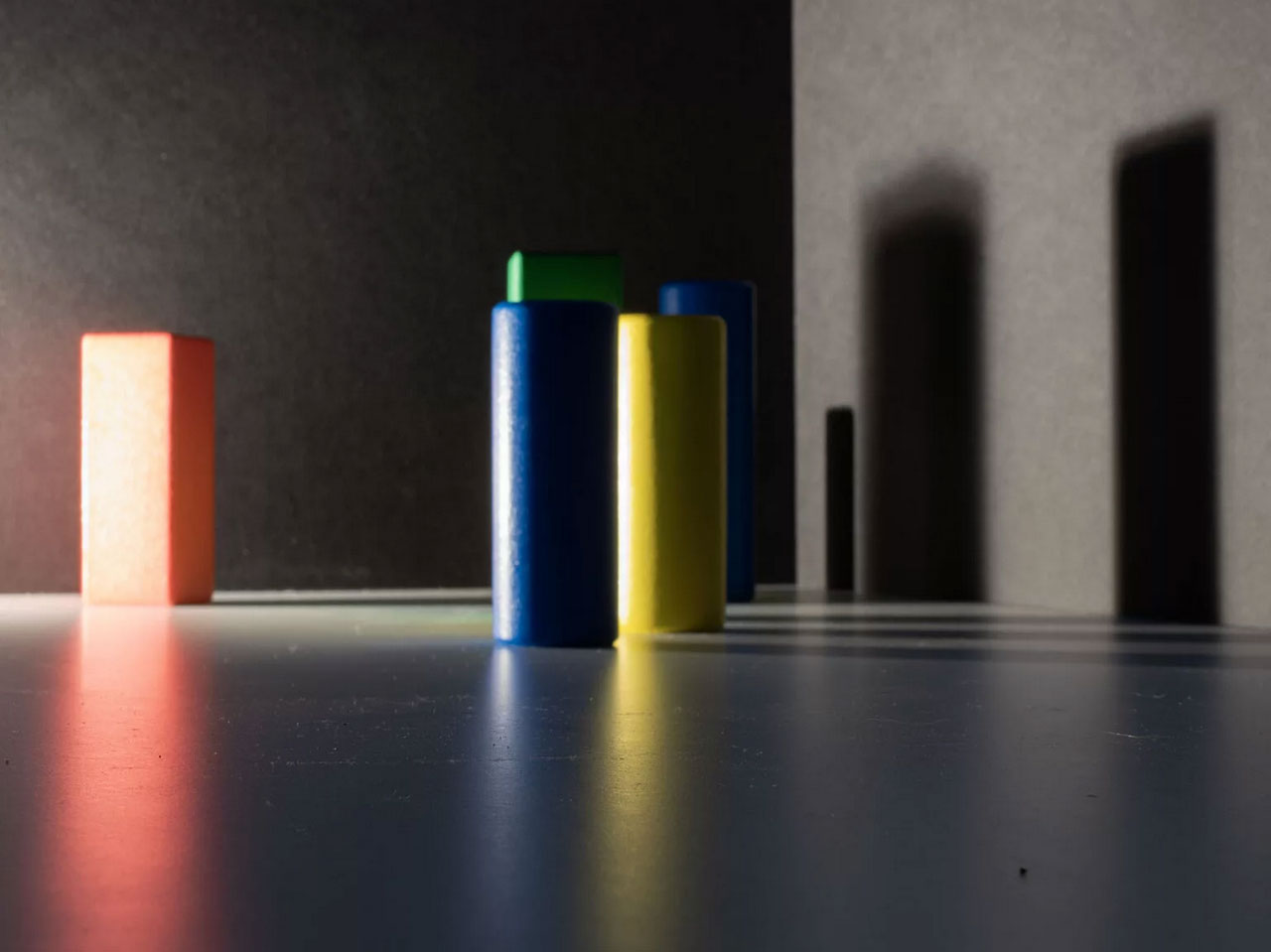 In “Dream State”, Lucie Stahl presents a photographic series depicting colorful, geometric figures originally used in systemic constellation therapy. In model-like settings they are staged as blurred, dreamlike scenarios evoking modernist abstraction. These contemplative images obscure personal and collective narratives, allowing the figures to be read both as individuals and as societies or larger political systems, opening up to interpretation and analysis of a world that seems to become increasingly unstable. Simple figures, represented by geometric shapes like cuboids and cylinders, covered in primary colors + green, with basic signifiers for eyes (two dots) are mapped out on an unspecified field, and seen as if through a filter, in motion, substance-induced, blurred or stuck. They are staged in surreal, dreamlike scenarios – noncoherent, a draft of a script with unintelligible content. In single images or series of varying lengths resembling slides or filmstrips, the figures (per)form exhibits, not unlike the evidence formally introduced in legal proceedings. Are they individuals, members of a group (gang), representatives of a society, or rather city scapes, nation states, systems, instrumental bodies of failing democracies? Info: Dependance Gallery, Varkensmarkt 4, 4 Rue du Marché aux porcs, Brussels, Belgium, Duration: 16/1-28/2/2026, Days & Hours: Wed-Fri 14:00-18:00, Sat 12:00-18:00, https://dependance.be/
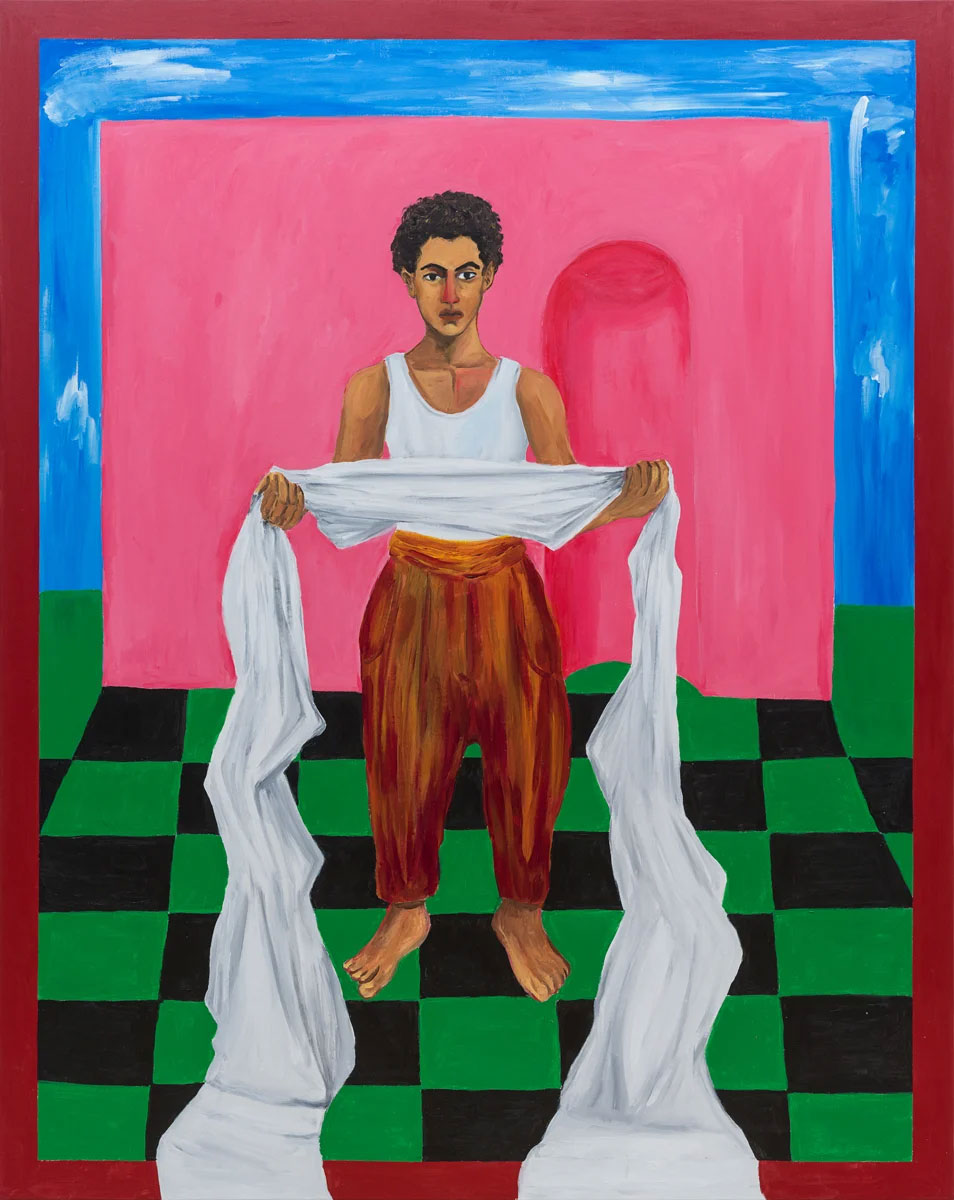 “Remember the Future” is the third solo exhibition by Spanish-Moroccan artist Anuar Khalifi at the Third Line Gallery. Bringing together a new body of large-scale paintings and works on paper, the exhibition constructs the complexities of the contemporary moment. The works move between reality and imagination and across different tenses in time, inviting viewers to partake in meaning-making with curiosity and childlike wonder. Marking an evolution in Khalifi’s practice, the works feature increasingly intricate and carefully composed settings expanding the pictorial field. Shaped by Khalifi’s sustained engagement with magical realism, art history, and poetry, the works in “Remember the Future” position painting as a space untethered from fixed boundaries; some paintings originate from scenes the artist has witnessed, while others are born from internal reflection. Rather than treating reality as something fixed or outside the self, Khalifi approaches it as mutable and participatory, formed through bodily presence and imagination. Replete with recurring symbols—such as chairs, vessels, and flora—his painterly surfaces invite associative readings that privilege intuition and attentiveness. Info: The Third Line Gallery, Alserkal Avenue, Warehouse 78, Street 8, Al Quoz 1, Exit 43 off Sheikh Zayed Road, Dubai, UAE, Duration: 17/1-1/3/2026, Days & Hours: Daily 11:00-19:00, https://thethirdline.com/
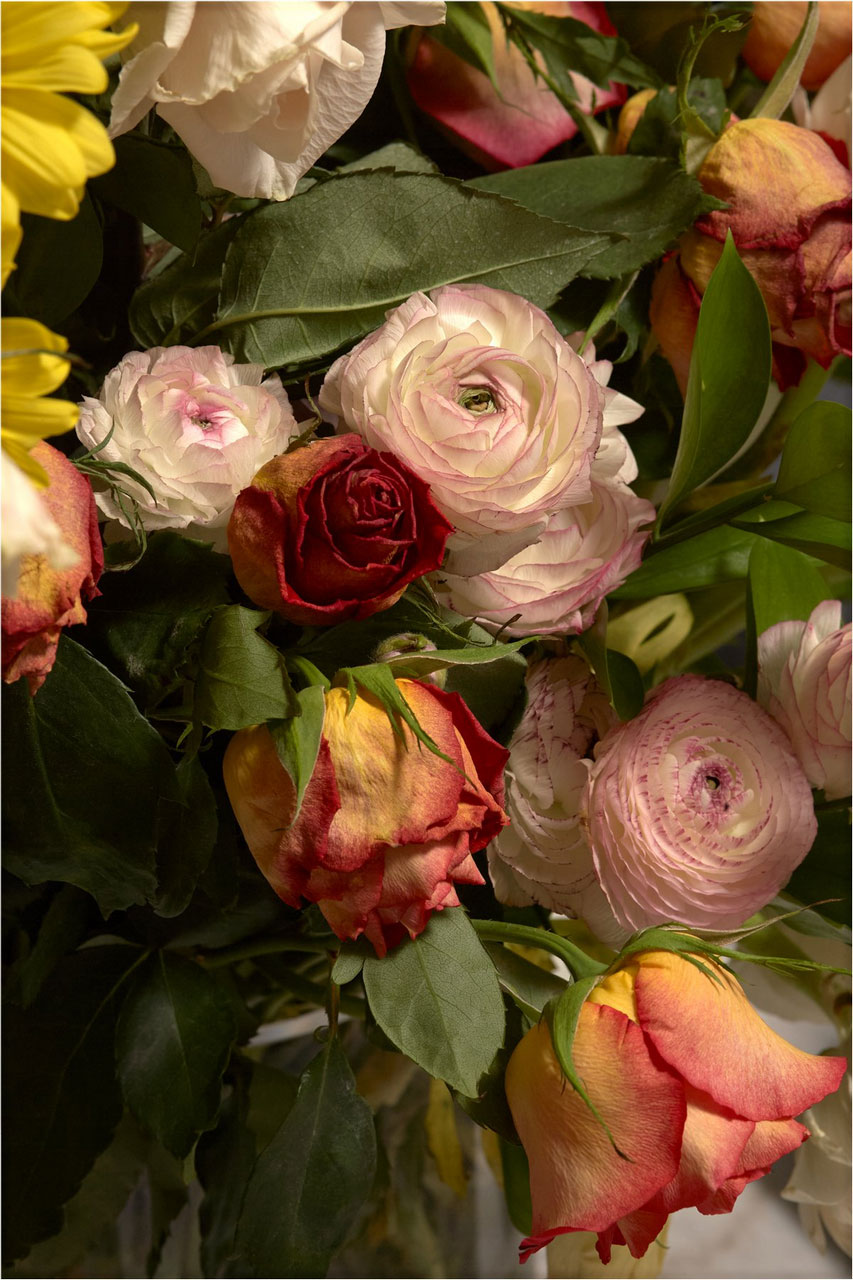 The exhibition “Rude in the Good Way” represents a return to Athens for Roe Ethridge, who in a previous project there found parallels between the hybrid character of his work and the blended symbolism of the Erechtheion, a temple dedicated to Athena on the Acropolis. Exploring a space between commercial, editorial, and studio photography, Ethridge encourages the collision and comingling of form and genre. In Rude in the Good Way, he establishes visual and conceptual links between images, both through their juxtaposition in the gallery, and by their inclusion in a book of the same title published to coincide with the exhibition. “Rude in the Good Way” represents a confluence of fashion shoots, portraits, still-life arrangements, and interior scenes, embodying disparate modes. “Chanel No 5 from 1924 on Tray of Pearls and Mirror Checkerboard” (2025) originated with an invitation to mine Chanel’s archive, from which Ethridge selected a vintage perfume bottle that evoked childhood memories of his mother. The ubiquitous brand reappears in “Double Red Chanel” (2025), which builds on the artist’s recent cover shoot of Lila Moss for the November 25 issue of Vogue Japan. By layering two differently sized versions of the same image atop one another, he sets the model’s doubled figure against a doubled sunset, establishing a formal echo that reverberates throughout the installation. Info: Gagosian, 22 Anapiron Polemou Street, Athens, Greece, Duration: 22/1-7/3/2026, Days & Hours: Tue-Wed & Fri-Sat 11:00-19:00, Thu 11:00-20:00, https://gagosian.com/