PRESENTATION: Léon Wuidar

Léon Wuidar’s abstracted representations of the world around him are masterfully conceived; harmonised in their balance of shapes and colours, distinguished by a formal precision and animated by a subtle humour. Dedicating over six decades to this artistic practice and maintaining a steadfast commitment as a student and educator of his exacting process, Wuidar has emerged as a virtuoso of geometric abstraction.
By Dimitris Lempesis
Photo: white Cube Gallery Archive
White Cube Paris presents an exhibition dedicated to Léon Wuidar, a singular figure of abstraction whose painting practice is a discovery of the architecture of memory. A focused selection of works from the 1960s and ’70s, this exhibition traces the evolution of Wuidar’s practice at a critical moment in time through ideas of balance, restraint and attentive construction. Appearing as intimate architectures – composed not of monumental gestures but of measured ones – Wuidar’s paintings harbour a subtle humour and silence. In his hands, geometry becomes a vessel for emotion, form becomes a site of contemplation, and simplicity reveals the complexity of being.
Born in Liège, Belgium, in 1938, Wuidar grew up amid the postwar rebuilding of Europe, a landscape of façades and buildings razed to their foundations. As many sought a means of responding to the trauma and disorientation left in the wake of the Second World War, artists such as Victor Vasarely, François Morellet, Jesús Rafael Soto and Julio Le Parc reimagined abstraction through modular systems, optical rhythm and serial construction – rational strategies that resisted chaos and subjectivity in favour of order and stability. Postwar sentiments such as these would have a profound influence upon Wuidar’s approach to painting as a practice of reconstruction and reflection, one carrying the promise of renewal. Wuidar would, in the late-1980s, return to Liège upon the invitation of architect Charles Vandenhove, to contribute to a university hospital project alongside artists Daniel Buren and Sol LeWitt.
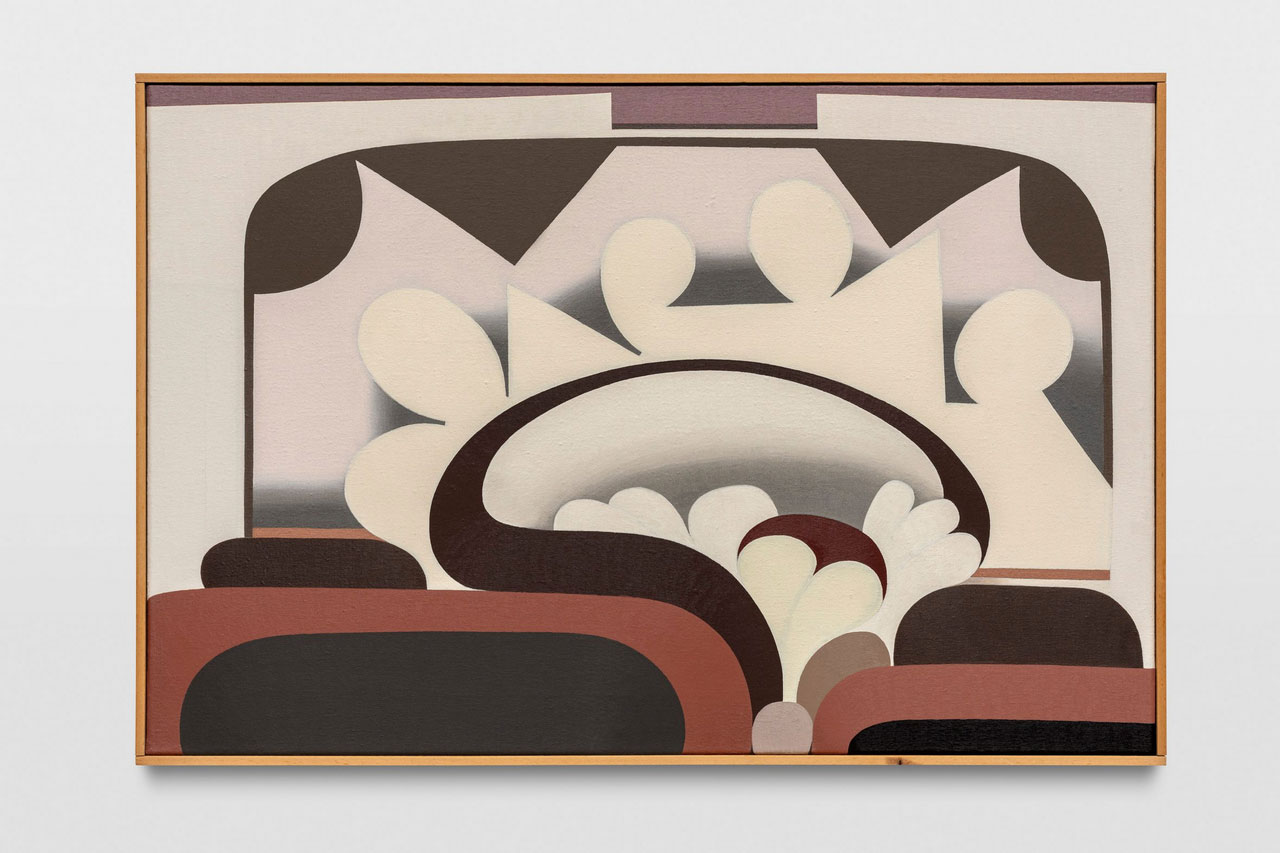
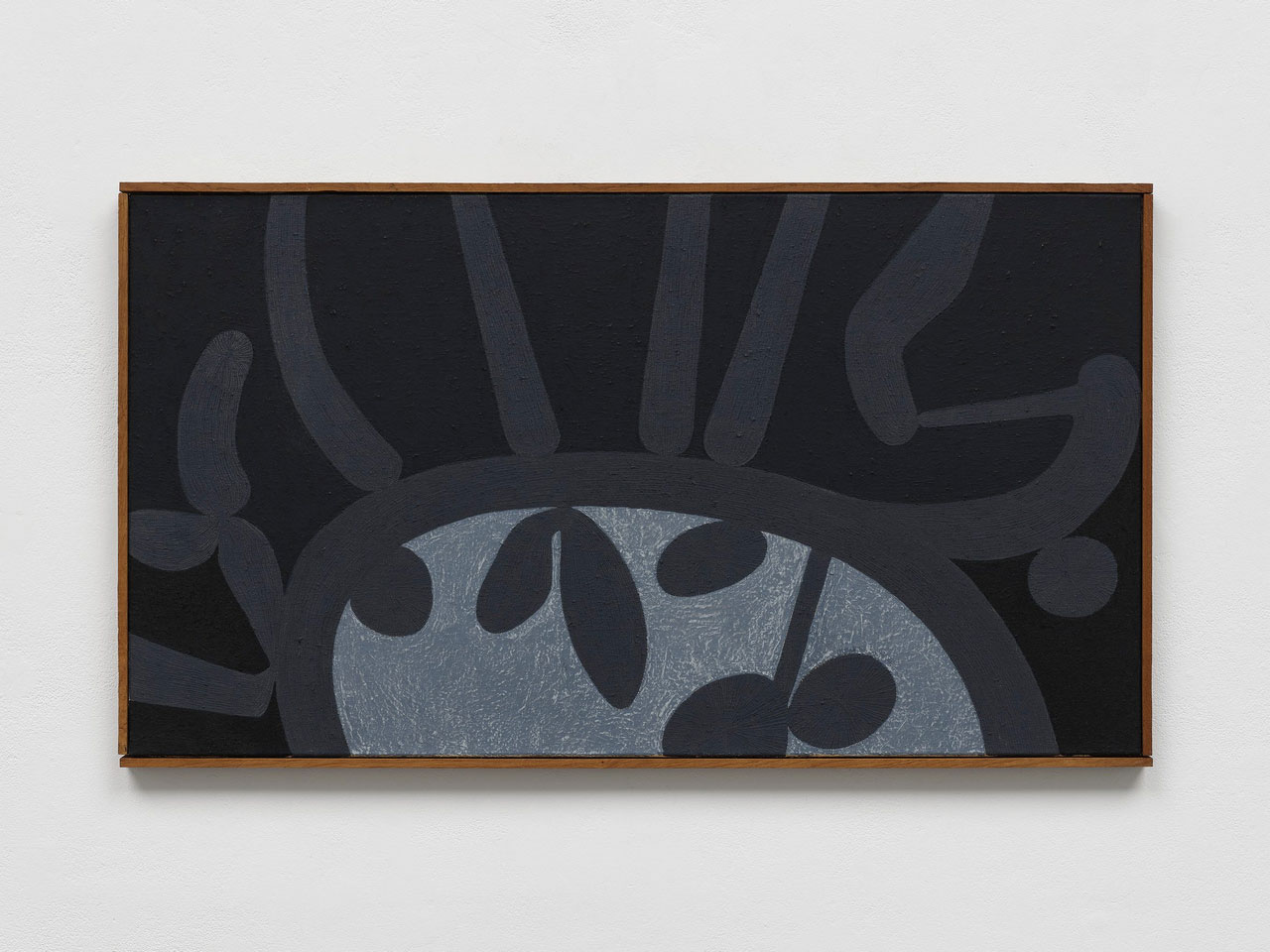
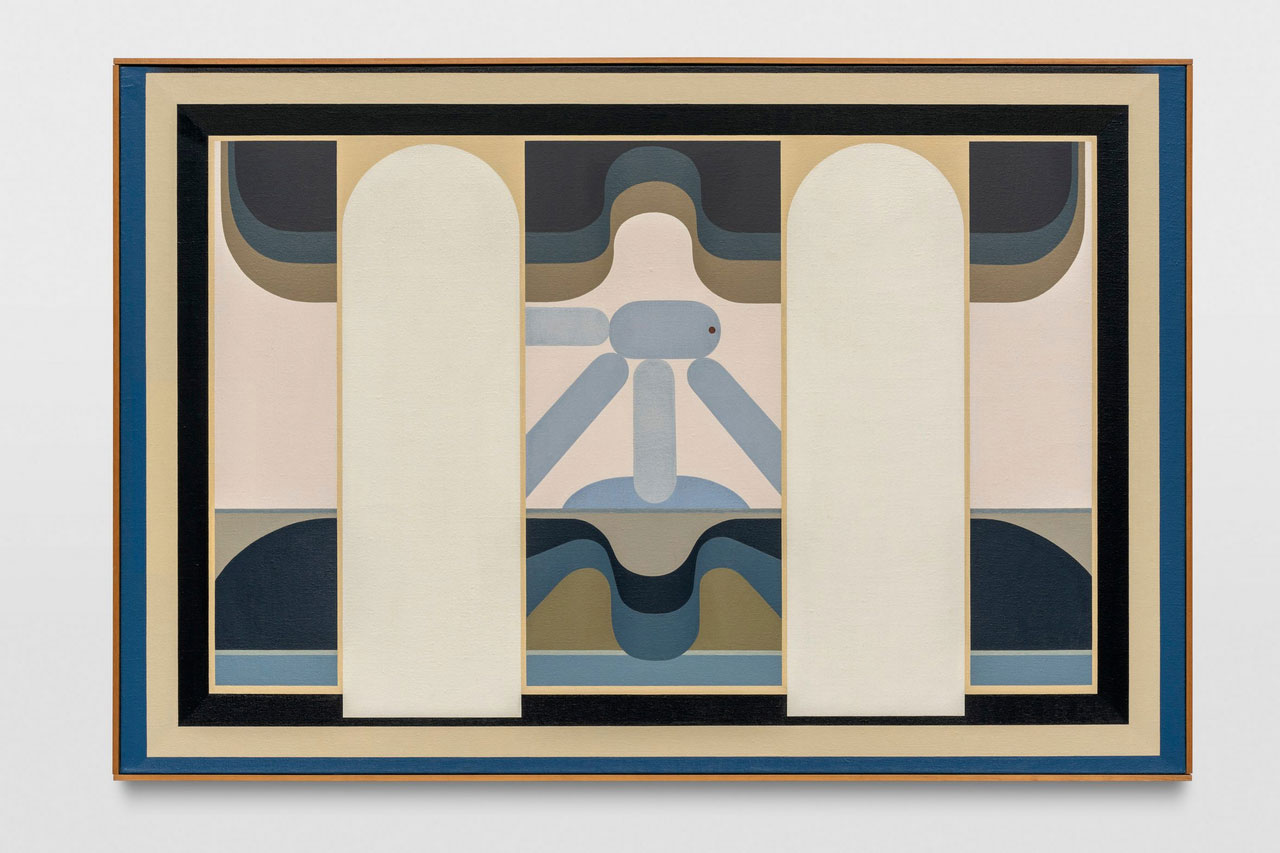
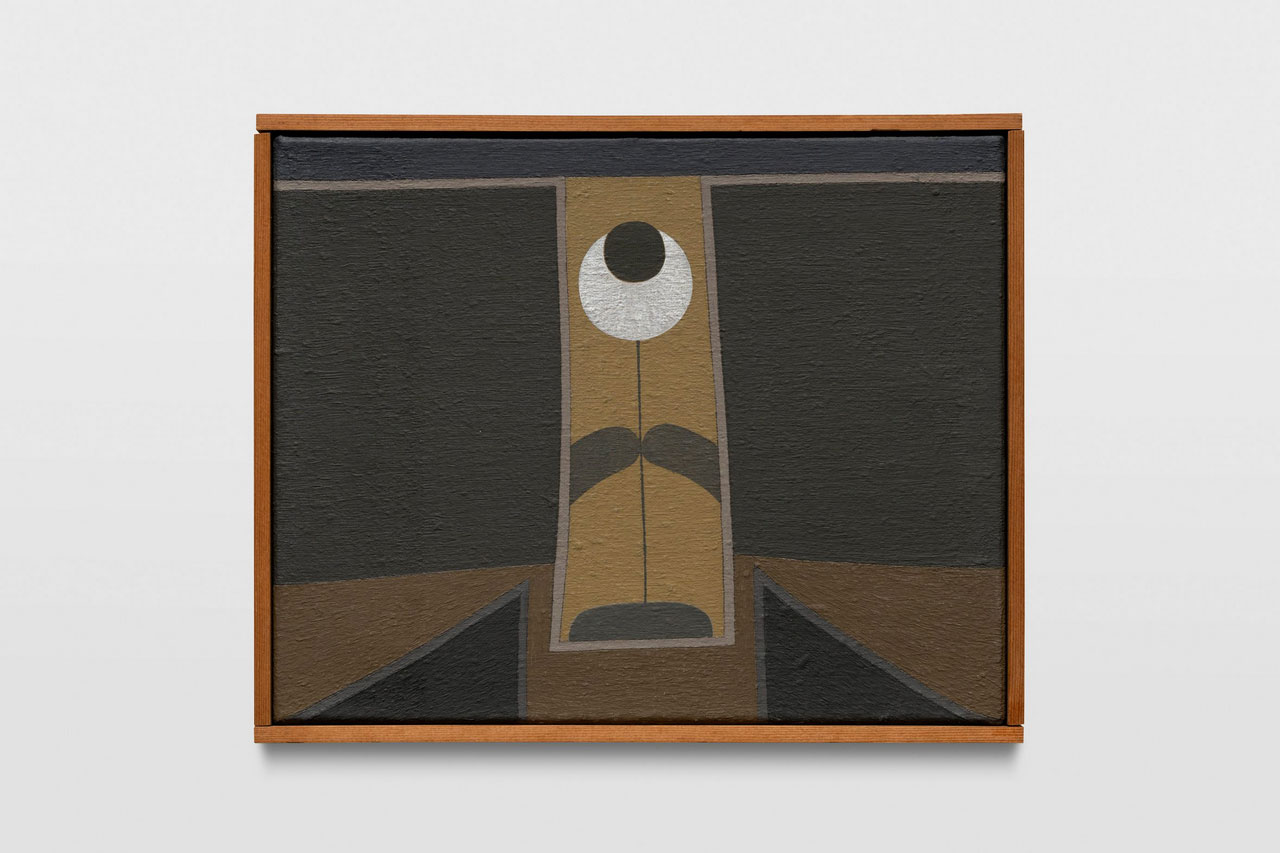
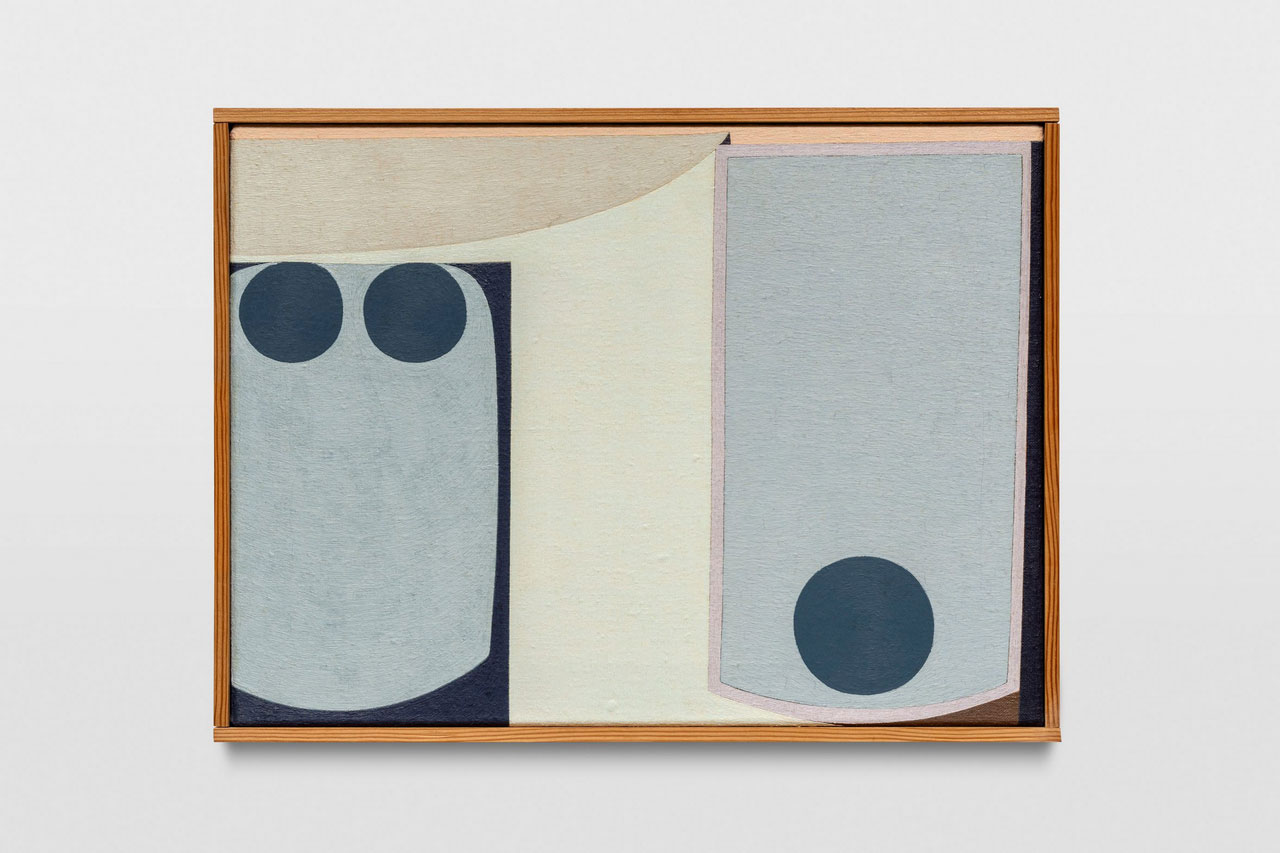
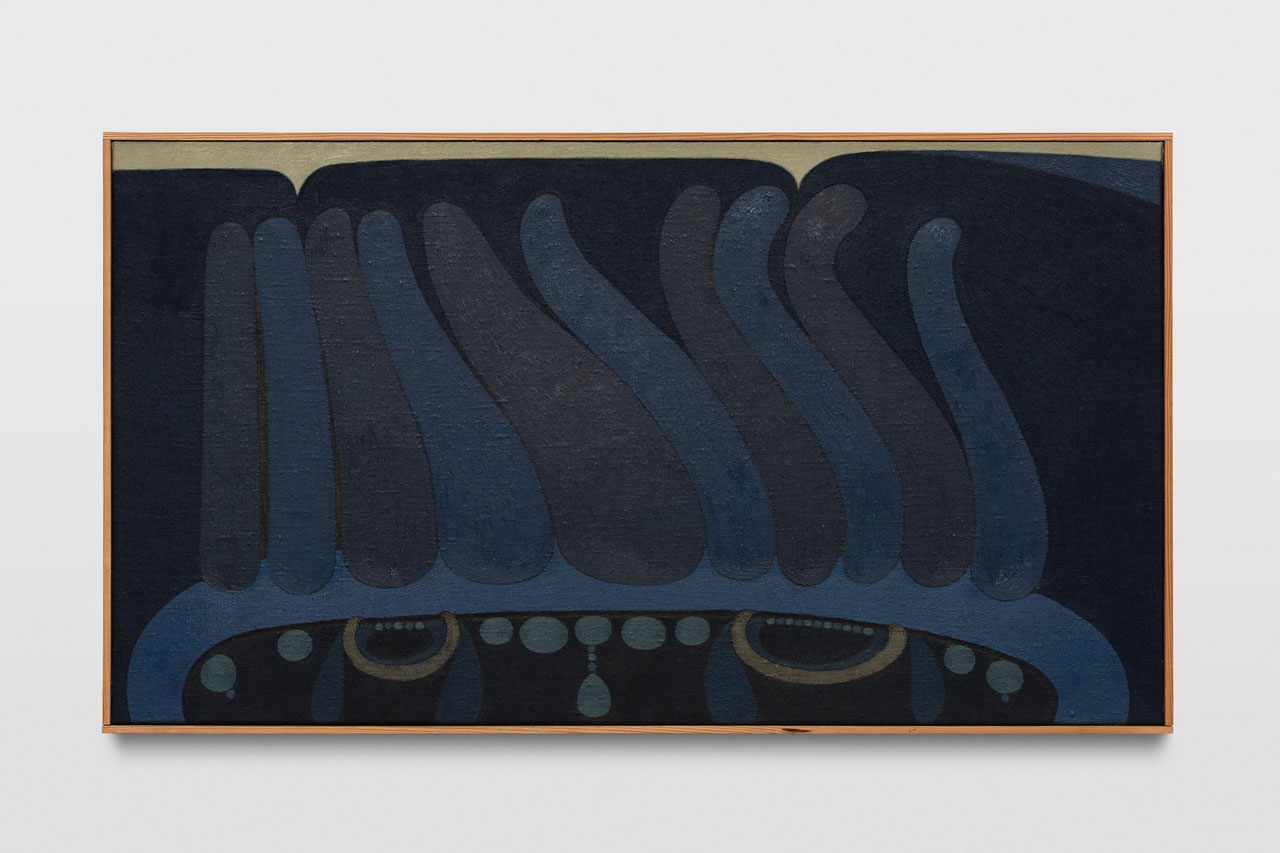
Early paintings such as “La naissance de Vénus, 13 juin 1966” (1966), “Dentier” (1965) and “Le Pittoresque, 18 juin 1968” (1968) show the artist negotiating abstraction through surrealist visions as well as memories of his childhood, wherein muted greys, ochres and tender, pale pinks evoke dust-filled air and an atmosphere of stillness. These works from the 1960s articulate a world reassembled from fragments, as the artist puts it, from ‘certainties and hesitations’. Hovering someplace between figuration and sign, dentures, a shell, a façade are distilled into endlessly reconfigurable lines and curves, what Wuidar speaks of as ‘a game I cannot stop playing.’ For him, the painted sign and the act of writing share an underlying structure: both are governed by rhythm, proportion and an indubitable silence. In the 1970s, this understanding takes shape through his notebooks, which are maintained with unerring discipline. Filled with daily drawings, architectural studies and compositional sketches, they comprise an archive of thought and feeling, with each diagram rehearsing a new spatial logic. These repeated gestures, while modest, give rise to the calm and fortitude that pervade Wuidar’s paintings, as a work like L’appel de la sirène (1970) attests. What appears on canvas is not spontaneous invention but the evidence of an internal process, where observation, memory and form coalesce.
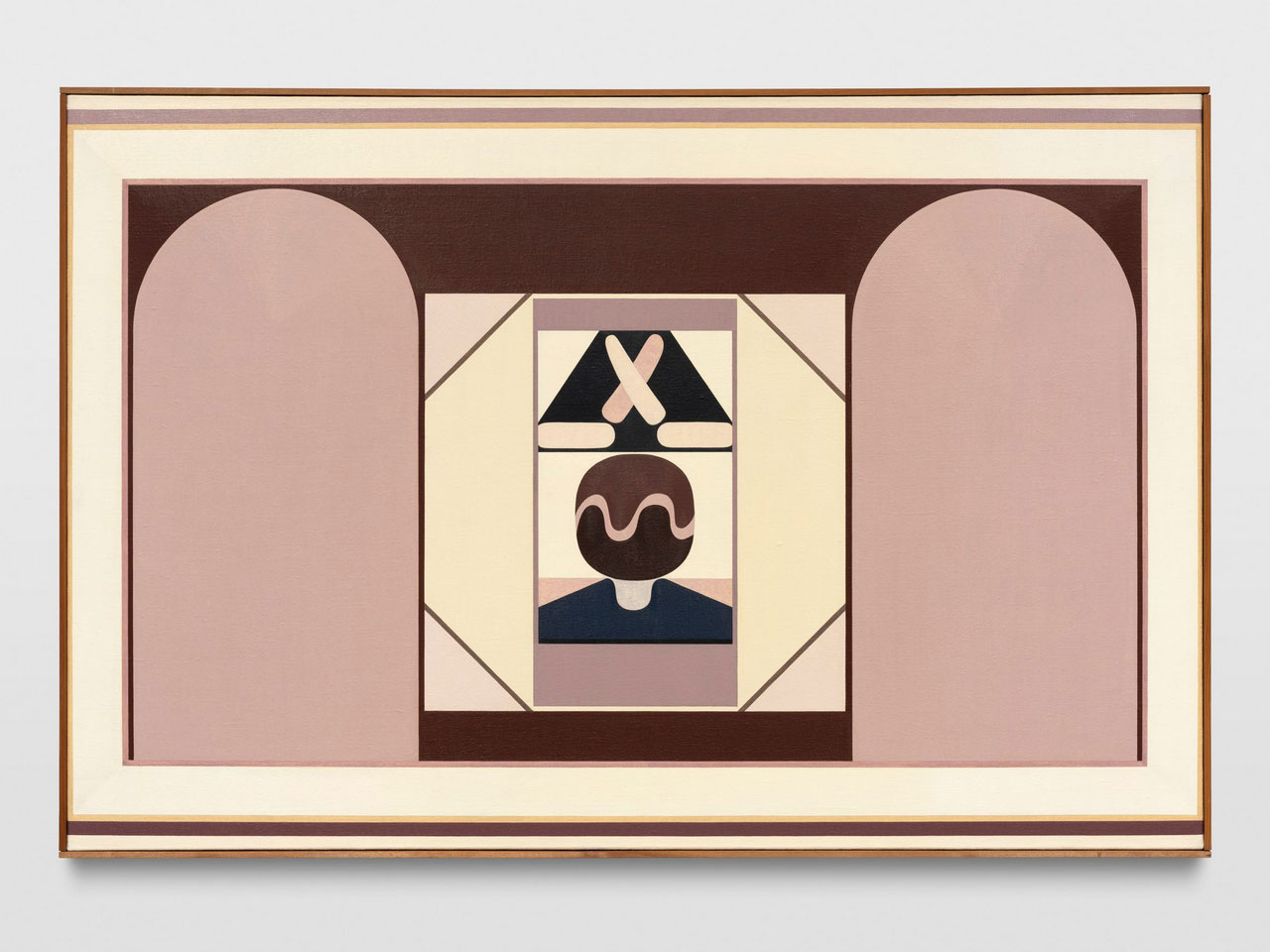
It is as such that Wuidar’s work possesses a remarkable coherence across the decades. As his work develops, the artist’s structural sensitivity can be seen to deepen – a ‘radical simplicity and extreme subtlety’ takes hold, as curator Hans Ulrich Obrist notes. Borders, thresholds and inner frames become part of Wuidar’s vocabulary, subtle devices that create spaces that appear to open inward rather than outward. Their modest scale draws the viewer close, inviting contemplation rather than spectacle. The compositions of paintings such as Apparition, août 1970 (1970) or Carré au Bord Noir, 18 juillet 1977 (1977) evoke architecture, however these are psychological rather than physical – they behave as refuges for reflection. ‘My paintings are like an interior,’ Wuidar has said, ‘they radiate a sense of intimacy.’
Over time, Wuidar’s relationship to language and memory shifts, as the artist’s discreet gesture of titling his artworks may suggest. The enigmatic, single-word titles of the early years – prompts to read the composition’s objects and sensations – gradually give way to dates and inscriptions that are almost diaristic in nature. The introduction of dated titles from the 1960s onwards invokes the daily practice of drawing, while proposing each painting as both remembrance and trace: a visual event anchored in time. These inscriptions do not seek narrative or commentary but rather function as signs, with painting as a means of marking a precise, lived moment and capable of capturing a provisional structure. In more recent works, the principles Wuidar discovers in the 1960s and ’70s reaches a condition of refinement and clarity. His use of geometry remains but the compositions are stripped to their essentials, deliberate yet effortless. Colour, once muted, becomes more luminous but no less precise. The paintings of the artist’s later years no longer simply explore construction; they embody and internalise it.
While the artistic movements of his time looked out to a modernity characterised by serialisation and repetition, Wuidar’s practice represents a lifelong correspondence between memory and structure, one cultivated by an idea of interiority. Across six decades, Wuidar has built a body of work that transforms abstraction into a language of experience. In being rooms for thought and light, his work demonstrates that painting is a space not only to see, but a place one can inhabit.
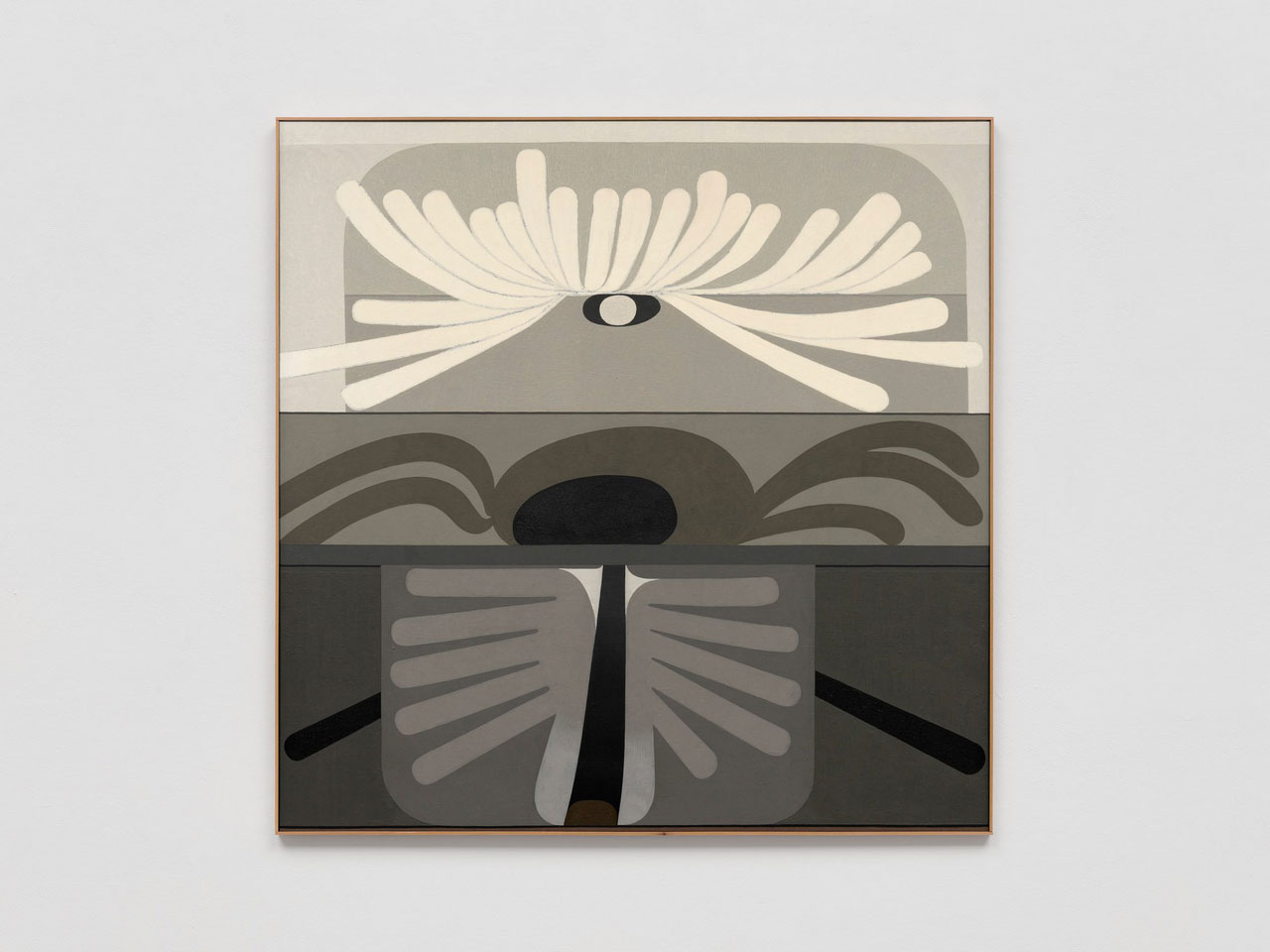
Photo: Léon Wuidar, Tige, 20 Juillet 77, 1977, Oil on canvas, 122 x 122 cm | 48 1/16 x 48 1/16 in., 123.5 x 123.5 x 2.2 cm | 48 5/8 x 48 5/8 x 0 7/8 in. (framed), © Léon Wuidar, Courtesy the artist and White Cube Gallery
Info: White Cube Gallery, 10 avenue Matignon, Paris, France, Duration: 14/1-21/2/2026, Days & Hours: Tue-Sat 10:00-12:30 & 13:30-18:00, www.whitecube.com/
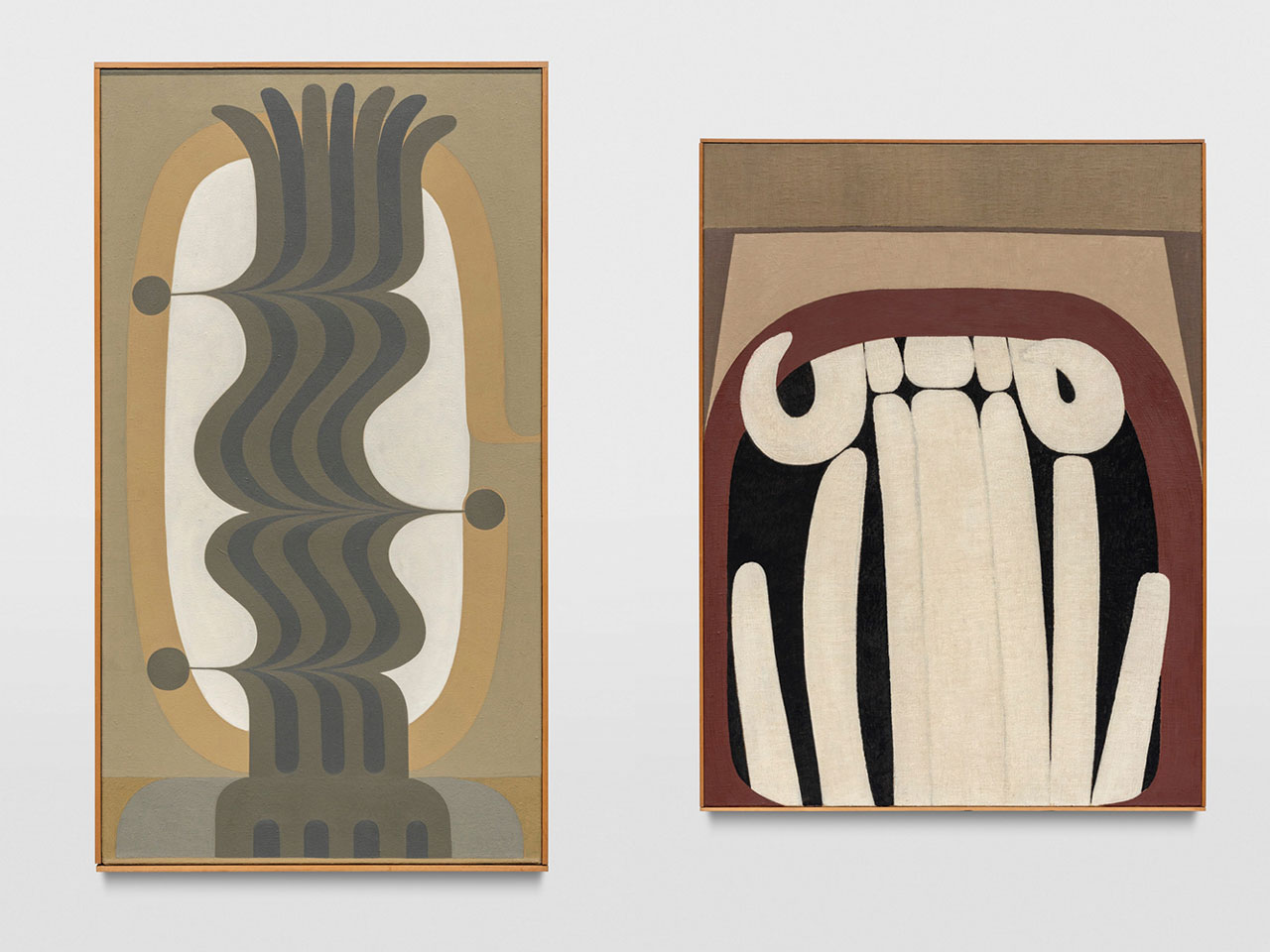
Right: Léon Wuidar, Dentier, 1965, Oil on canvas, 120 x 90 cm | 47 1/4 x 35 7/16 in., 121.7 x 91.8 x 2.2 cm | 47 15/16 x 36 1/8 x 0 7/8 in. (framed), © Léon Wuidar, Courtesy the artist and White Cube Gallery