ART CITIES: London-Joseph Beuys
Joseph Beuys’s artistic project stands as one of the most ambitious attempts in twentieth-century art to redefine not only sculpture, but the very function of art within society. Rooted in humanism, social philosophy and anthroposophy, his practice culminated in an “extended definition of art” that positioned creativity as a universal human capacity and society itself as a Gesamtkunstwerk. In this expanded field, art was no longer limited to objects or images; it became an active force capable of shaping political consciousness, social relations and ecological responsibility. Beuys emerged as an artist in post-war Germany—a context marked by material devastation, moral collapse and ideological repression—and claimed for art a unique role in the spiritual and social renewal of society.
By Efi Michalarou
Photo: Thaddaeus Ropac Gallery Archive
The exhibition “Bathtub for a Heroine” offers the first comprehensive examination in the United Kingdom of Beuys’s decades-long engagement with the motif of the bathtub, culminating in the monumental “Bathtub” (1961–87). By assembling key precursors such as “Bathtub for a Heroine” (1961–84), “Mammoth Tooth, Framed” (1961), “Lead Woman” (1949), and related sculptures and drawings, the exhibition illuminates how this work operates as a nexus for Beuys’s ideas about energy, materiality, gender and social transformation. Far from a single autonomous artwork, the bathtub emerges as a sculptural process unfolding over time—an embodiment of Beuys’s belief that art is inseparable from life itself.
Beuys’s formative years were indelibly shaped by the Second World War. His experience as a Luftwaffe radio operator and the subsequent collapse of Nazi ideology left him deeply sceptical of rationalist systems divorced from ethical and spiritual grounding. In the post-war period, German society was engaged in rapid reconstruction, but Beuys perceived this process as largely materialistic and technocratic, suppressing rather than addressing the deeper psychological and cultural wounds of the past. Against this backdrop, he attributed to art a healing function: a means of reactivating individual responsibility, imagination and ethical agency.
This conviction underpinned his development of social sculpture, a concept that dissolves the boundary between artistic practice and social action. For Beuys, every human being possesses creative potential, and the collective exercise of this potential could reshape political and social structures. His pedagogical activities—most notably his tenure at the Kunstakademie Düsseldorf, his open lectures, and his founding role in the Free International University—were not ancillary to his art but integral to it. Teaching, discussion and debate were themselves sculptural acts, shaping the social body through dialogue rather than form alone.
Central to Beuys’s practice is his use of highly symbolic materials—felt, fat, honey, copper and lead—chosen not for their aesthetic qualities but for their capacity to store, transmit and transform energy. These materials are inseparable from the shamanic dimension of his work, which includes performances, rituals and lectures that frame the artist as mediator between physical and immaterial forces. Rather than passive substances, materials function as active agents within a dynamic system, capable of influencing perception, thought and social relations.
The bathtub sculptures exemplify this approach. Warmth, in particular, occupies a central role. Beuys coined the term “evolutionary warmth” (often used interchangeably with “revolutionary warmth”) to describe a principle that operates across physical, psychological and social registers. Warmth, for Beuys, counteracts rigidity; it softens hardened structures, enabling circulation, exchange and transformation. He described temperature as the most fundamental sculptural medium—an immaterial force that activates matter and consciousness alike.
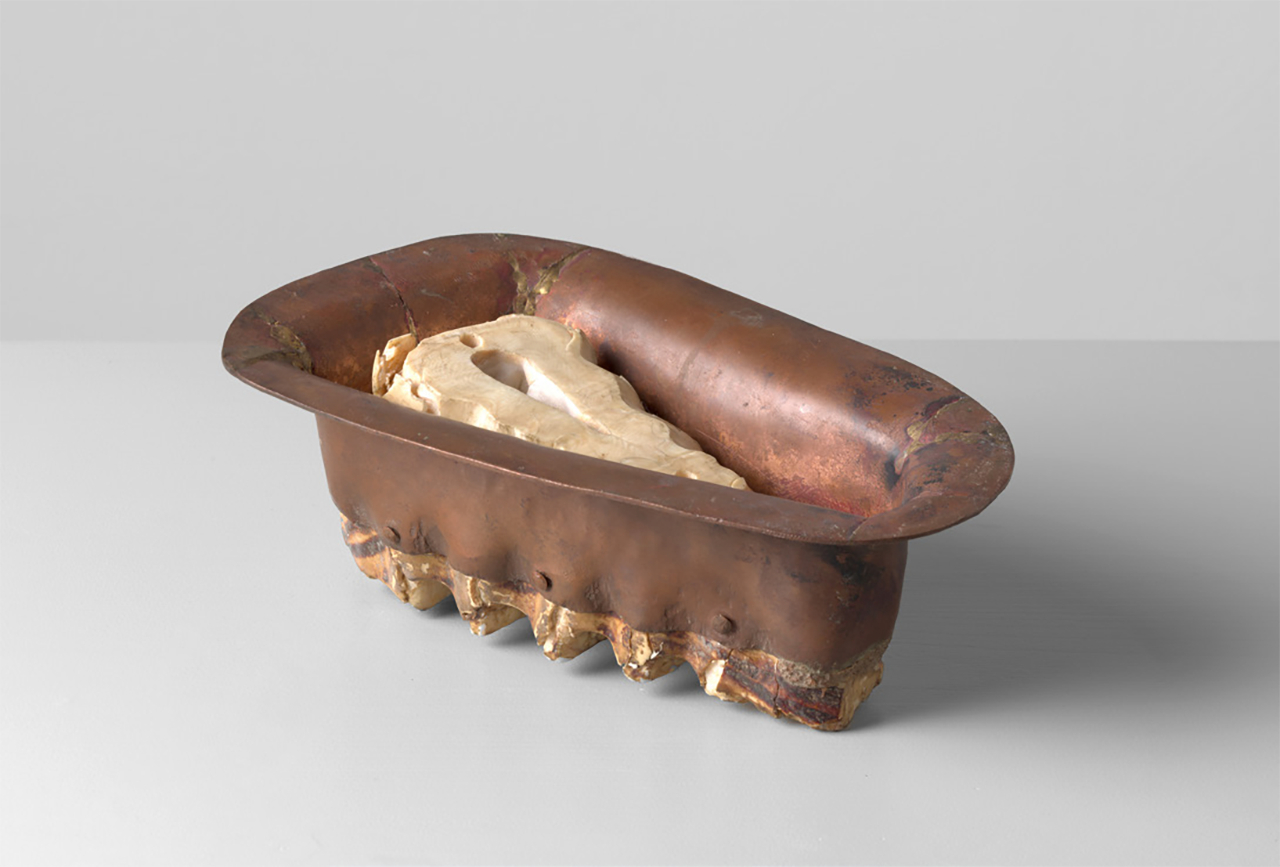
The earliest iteration of the bathtub motif appears in the small bronze sculpture “Mammoth Tooth, Framed” (1961), later incorporated into “Bathtub for a Heroine”. Measuring just 28 centimetres, the mammoth tooth anchors the work in deep evolutionary time, invoking prehistoric survival, memory and adaptation. When combined with an electric immersion heater and protruding cables, the sculpture stages a dialogue between archaic relic and modern technology. The heater’s cords extend into space, evoking networks of connection and dependence, while the vertical heroine figure—part human, part chimney—suggests a conduit through which energy circulates.
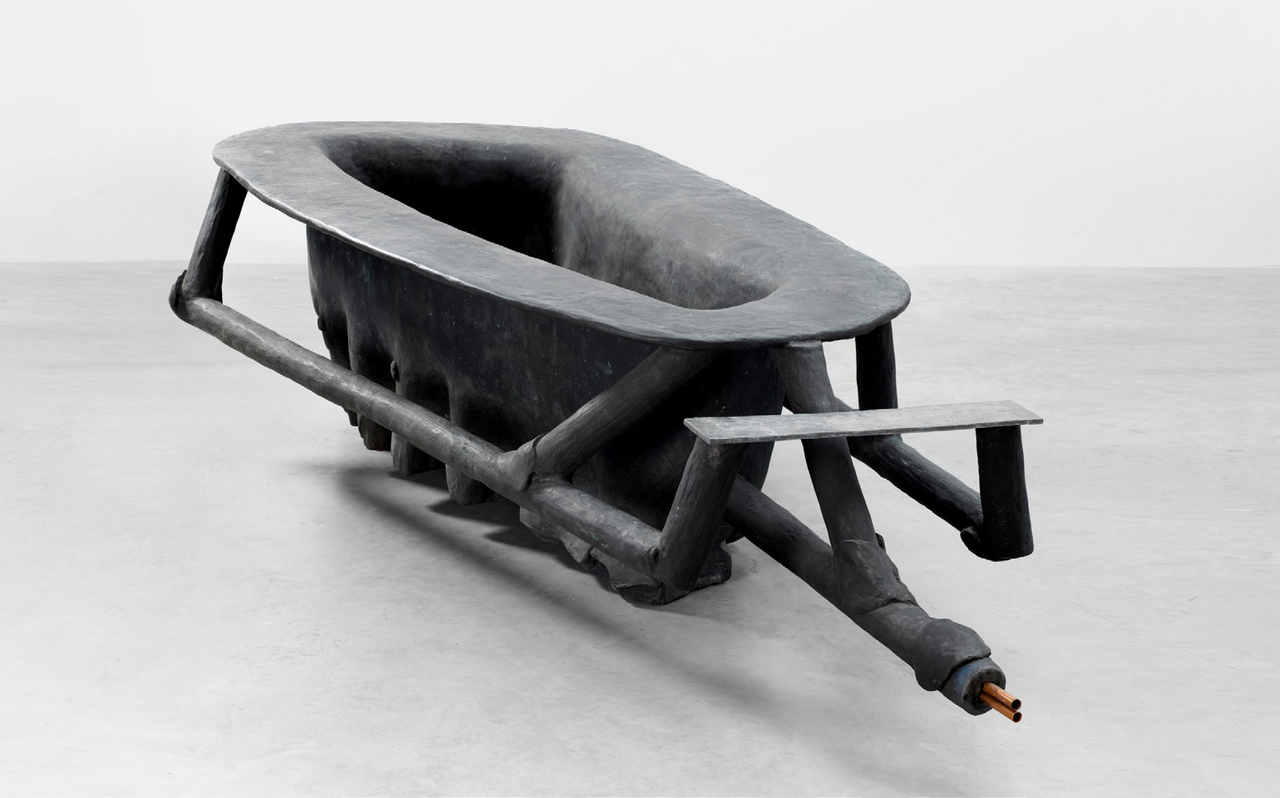
In the later monumental “Bathtub” (1961–87), Beuys radically expands both scale and ambition. Cast in bronze and weighing approximately one tonne, the bathtub conceals an internal heating circuit within its double walls, designed to be connected to a conventional household heating system. Beuys even considered patenting the object, underscoring its ambiguous status between sculpture, design and functional apparatus. The omission of the heroine figure shifts emphasis from representation to use: the bathtub becomes a potential source of warmth not only for water but for the surrounding space, suggesting domestic, communal and social applications. Its imposing, almost mammoth-like physicality lends it an anthropomorphic presence, while its function gestures toward communication and collective experience.
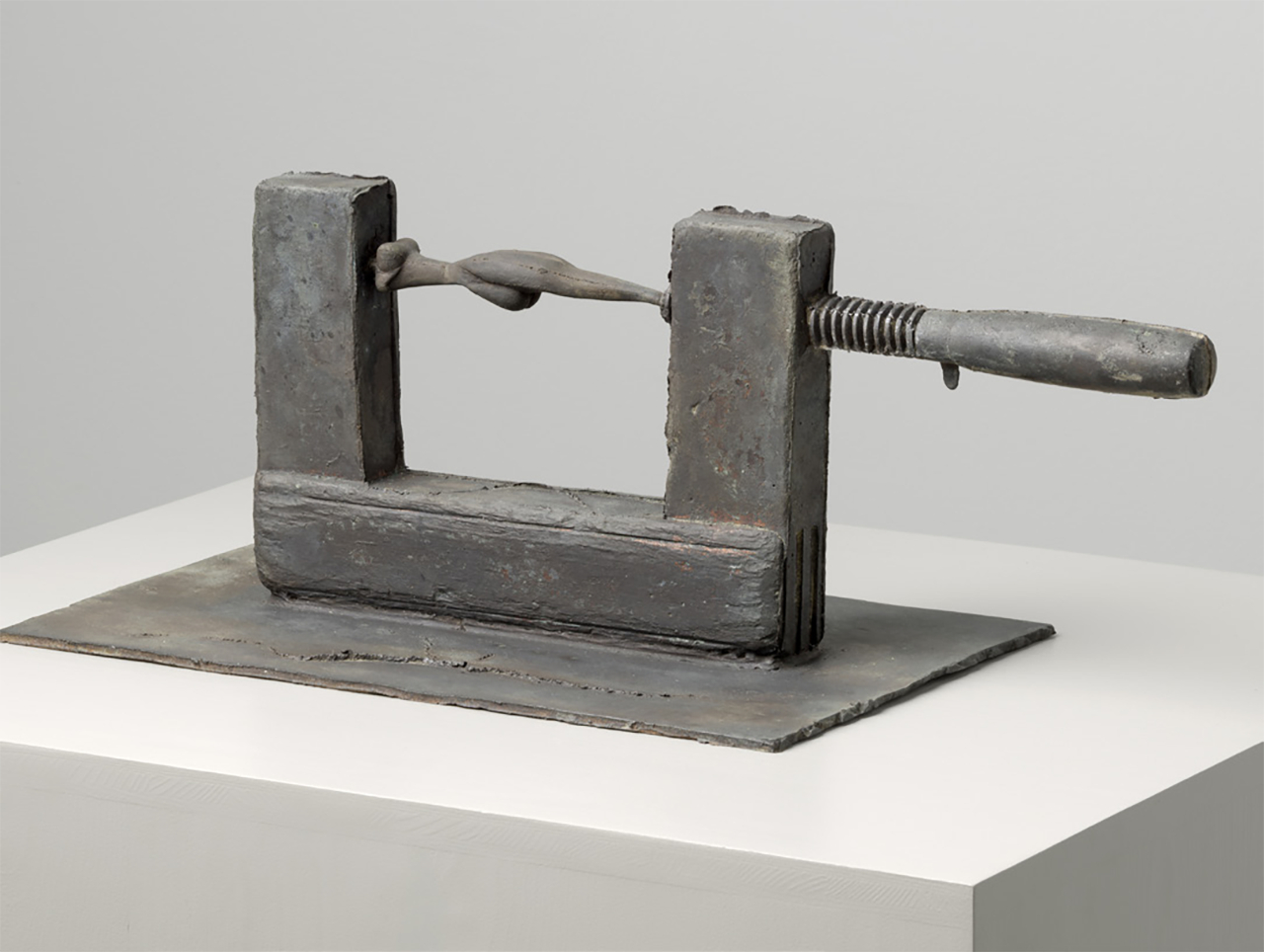
Beuys frequently described such works as “organic machines”—hybrid entities that merge mechanical systems with organic processes. This tension is also evident in the early sculpture “Bed” (1950), included in the exhibition. Here, a female torso closely resembling the heroine is suspended within a mechanical screw clamp. Rather than depicting victimhood or suffering, Beuys emphasised the work’s levitational quality: the figure exists within a field of energetic polarity, resisting and reconciling opposing forces. The body becomes a conductive medium, capable of absorbing pressure and transforming it into spatial and psychic tension.
The motif of the heroine recurs throughout Beuys’s oeuvre, particularly in his drawings, where the female figure functions as a carrier of intuitive knowledge, transformation and threshold-crossing. For Beuys, femininity embodied capacities marginalised by Western rationalism: intuition, care, adaptability and imaginative projection. His heroines are not static icons but dynamic agents—divers, amazons, fools and animal-women—who traverse geological, social and psychic realms.
Paper itself becomes a sculptural space in these works. Beuys treated the margin as a literal threshold, a site of transition rather than containment. Gestures of suspension, flight and descent replace narrative illustration, conveying an energetic sensibility rather than representational clarity. As Beuys famously stated, “The heroic position in my works is generally the female one,” contrasting it with what he described as the “cold, hard, crystallised” male intellect that he held responsible for much of modern society’s suffering.
Beuys’s commitment to social sculpture found explicit expression in his political and activist engagements. He brought politics into the traditional spaces of art by transforming his installations at documenta in 1972 and 1977 into forums for debate, addressing issues ranging from direct democracy and human rights to environmental protection. These spaces were not symbolic gestures but functional arenas for discussion, aligning with his belief that democratic participation itself is a sculptural process.
“Bathtub for a Heroine” can thus be read not only as a sculptural investigation of warmth and materiality but as a proposition for social connectivity. Warmth becomes a model for political and social interaction—an energy that circulates, binds and transforms. In an era marked by ecological crisis, social fragmentation and renewed ideological rigidity, Beuys’s insistence on warmth as a counter-force to cold systems of control resonates with renewed urgency.
Ultimately, the exhibition underscores Beuys’s conviction that sculpture is not a finished object but a process oriented toward “possible future forms.” By collapsing distinctions between art, science, social theory and everyday life, Beuys expanded the sculptural field to encompass human action itself. “Bathtub for a Heroine” reveals how a single motif can operate simultaneously as object, metaphor and social proposition—an invitation to imagine art not as representation, but as a living system of transformation.
Photo: Joseph Beuys, Badewanne (Bathtub), 1961-87. Bronze, lead, copper, double-walled casting, 1000 kg., 90 x 165 x 340 cm (35.43 x 64.96 x 133.86 in). Ed. 2 of 3 + 1 AP., © Joseph Beuys Estate, Courtesy Joseph Beuys Estate and Thaddaeus Ropac Gallery
Info: Thaddaeus Ropac Gallery, Ely House, 37 Dover Street, London, United Kingdom, Duration: 13/1-21/3/2026, Days & Hours: Tue-Sat 10:00-18:00, https://ropac.net/
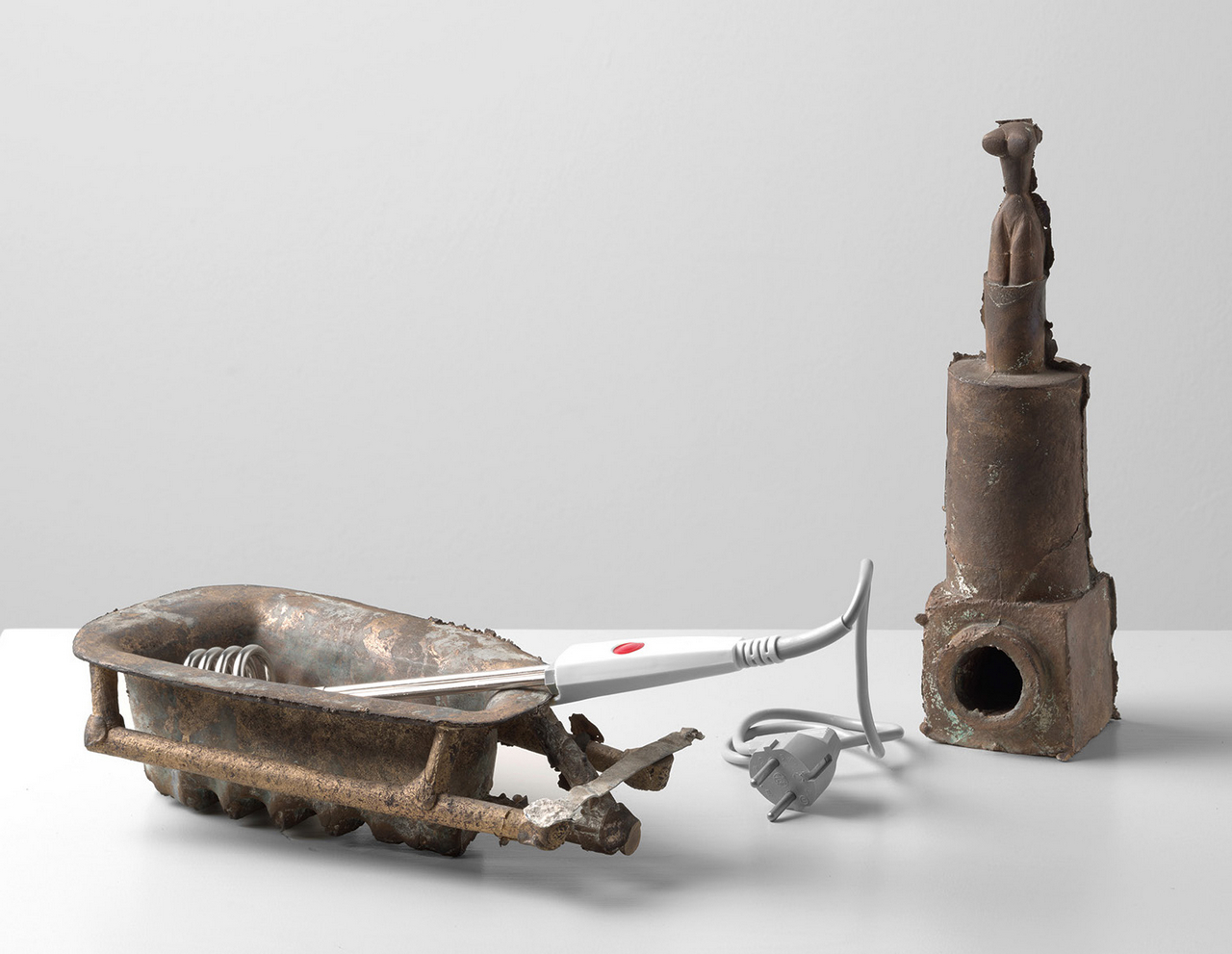
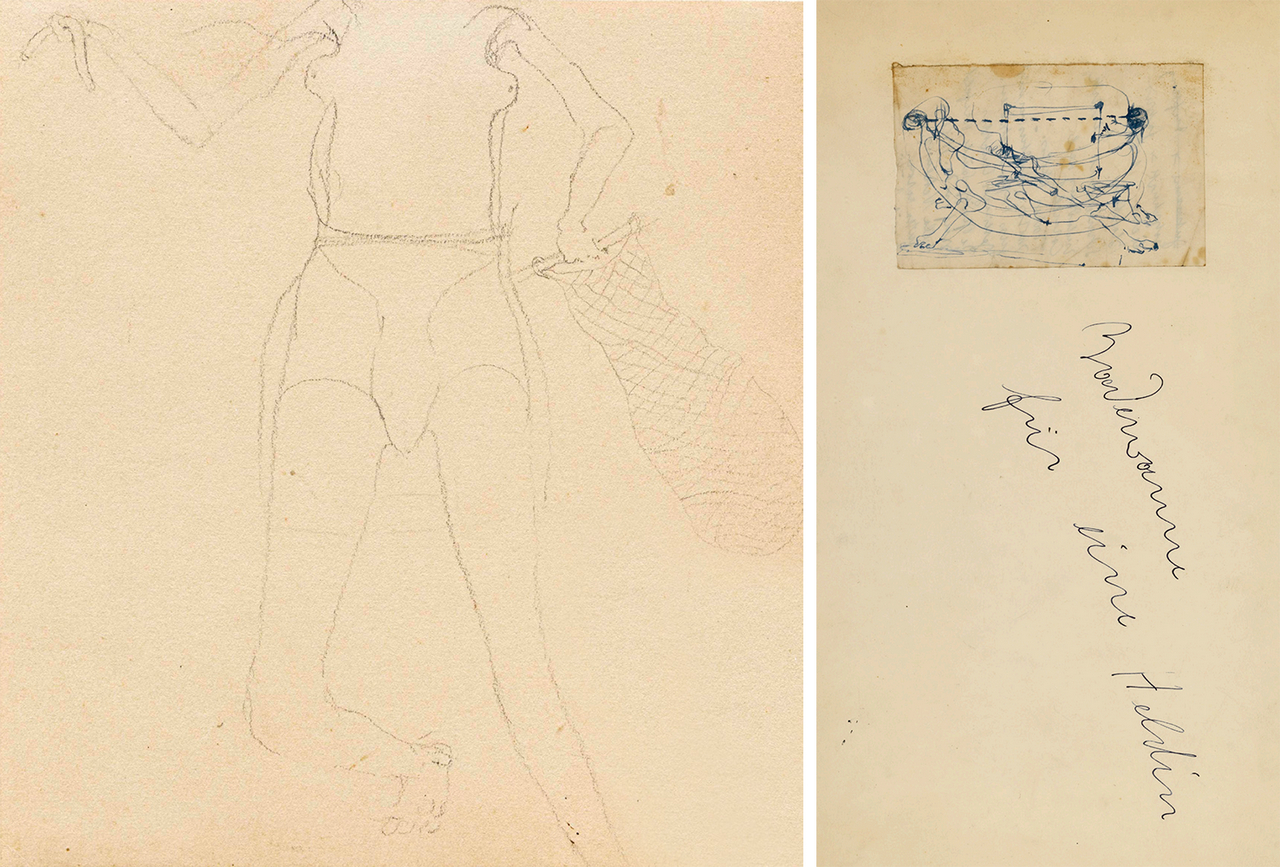
Right: Joseph Beuys, Badewanne für eine Heldin (Bathtub for a Heroine), 1961. Blue ink on paper, collage on paper. 51 x 23 cm (20.08 x 9.06 in)., © Joseph Beuys Estate, Courtesy Joseph Beuys Estate and Thaddaeus Ropac Gallery