PRESENTATION: Helmut Lang-Séance De Travail 1986–2005

Helmut Lang is an Austrian artist and former fashion designer and mentor. Working across Vienna, Paris, and New York, Lang rewrote the codes of the international fashion landscape, establishing a distinctive aesthetic vocabulary that shaped not only the way we present ourselves, but also the way identity is conceived and communicated. Through campaigns, flagship stores, and collaborations with artists working in various mediums, he redefined the boundaries between creative disciplines, prioritizing emotional resonance over mere consumption.
By Efi Michalarou
Photo: MAK Archive
MAK – Museum of Applied Arts has unveiled “Helmut Lang. Séance De Travail 1986–2005 / Excerpts from the MAK Helmut Lang Archive”, the first comprehensive presentation of Helmut Lang’s oeuvre, offering an unprecedented examination of his creative ethos and design philosophy. Drawing on the largest and only official public archive of his work—donated by the designer in 2011 and comprising more than 10,000 items—the exhibition reframes Lang not merely as a fashion designer, but as a visionary whose interdisciplinary practice reshaped the cultural contours of fashion, identity, and visual communication.
Conceived as a mixed-media experience that transcends the conventional fashion exhibition, Séance de Travail embeds Lang’s radical thinking in an immersive spatial narrative. Large-scale, site-specific installations dissolve the institutional distance between object and viewer, while thematic sections—Identity, Space, Séance de Travail, Media & Cultural Presence, Artist Collaborations, and Backstage—trace his evolution as a thinker who persistently interrogated the role of design in shaping individual and collective presence.
At the heart of the exhibition is Lang’s notion of séance de travail—a “work session” in which experimentation, refinement, and renewal merge. This concept served as a generative force throughout his career and, in its exhibition format, offers visitors a structural lens through which to see the interconnections among garments, communication, space, and cultural practice. Rather than a chronological survey, the exhibition presents his work as an integrated system, revealing how his ideas anticipated broader shifts in contemporary culture.
Lang first rose to international prominence with his 1986 debut “L’Apocalypse Joyeuse” at the Centre Pompidou in Paris, where his austere, gender-spanning designs articulated a minimalist yet potent aesthetic vocabulary. Rejecting the spectacle of traditional runway shows, from 1988 he introduced “séance de travail”—performative presentations in raw industrial spaces such as Paris’s Espace Commines and New York’s Dia Center for the Arts. Here menswear and womenswear were united in unpredictable, lived encounters between models, friends, and audiences—an immersive approach that blurred the boundaries between fashion, architecture, sound, and social space.
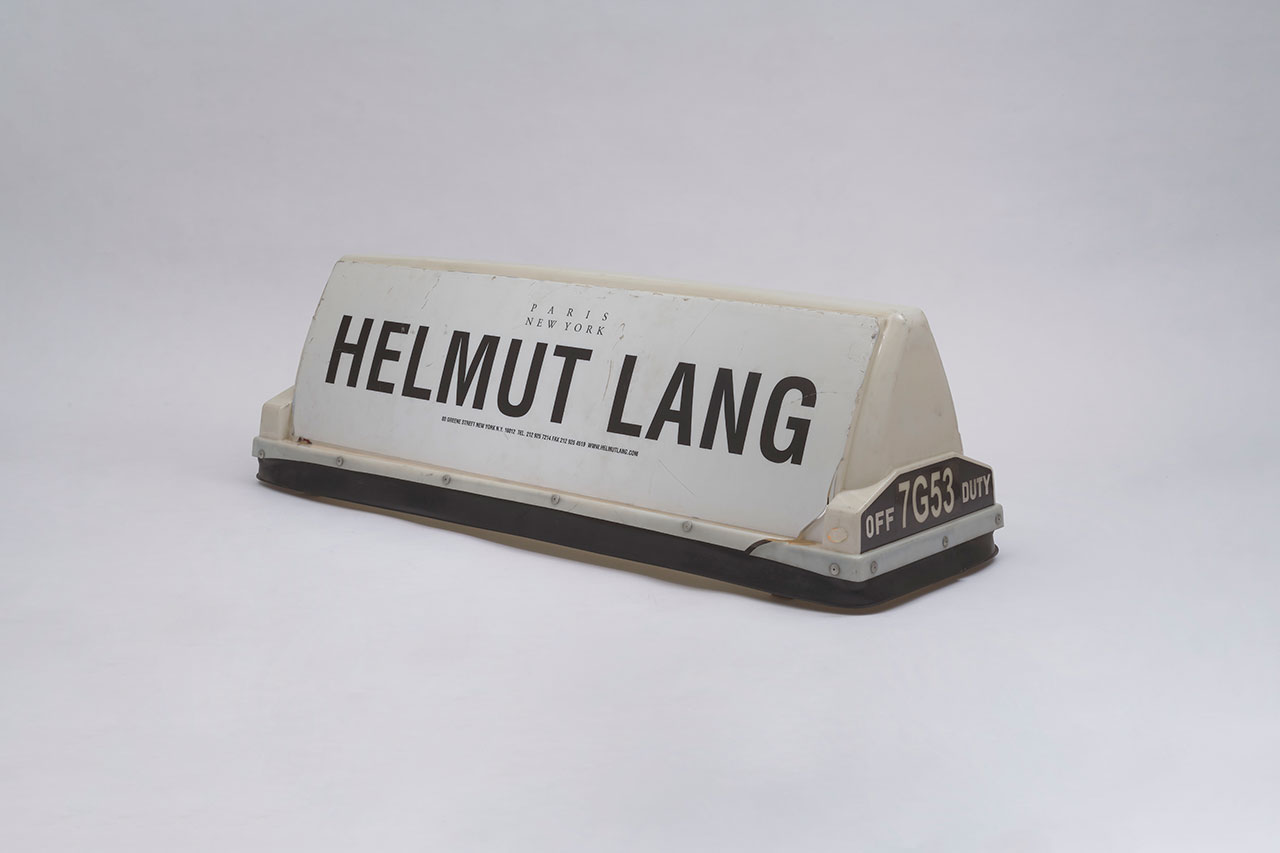
In 1998 Lang relocated his fashion house to New York and became the first designer to present a runway show online (A/W 1998/99), harnessing the democratizing potential of the early internet. Replacing traditional invitations with CD-ROMs and promoting his new web presence on over 1,000 taxi-top advertisements, Lang’s campaign became an unmistakable feature of Manhattan’s visual landscape. These taxi tops, preserved in the MAK archive—including one featuring his iconic campaign with photographer Robert Mapplethorpe—symbolize Lang’s prescient engagement with media and branding.
Architectural collaboration was also central to Lang’s practice. With Richard Gluckman he devised a stark aesthetic for his flagship stores on Greene Street in New York and Rue Saint-Honoré in Paris, where installations by artists such as Jenny Holzer and Louise Bourgeois transformed retail space into immersive environments. These principles are recreated at the MAK as dual-function objects that operate both as sculptural forms and exhibition frameworks, underlining Lang’s belief in the integration of design disciplines. (
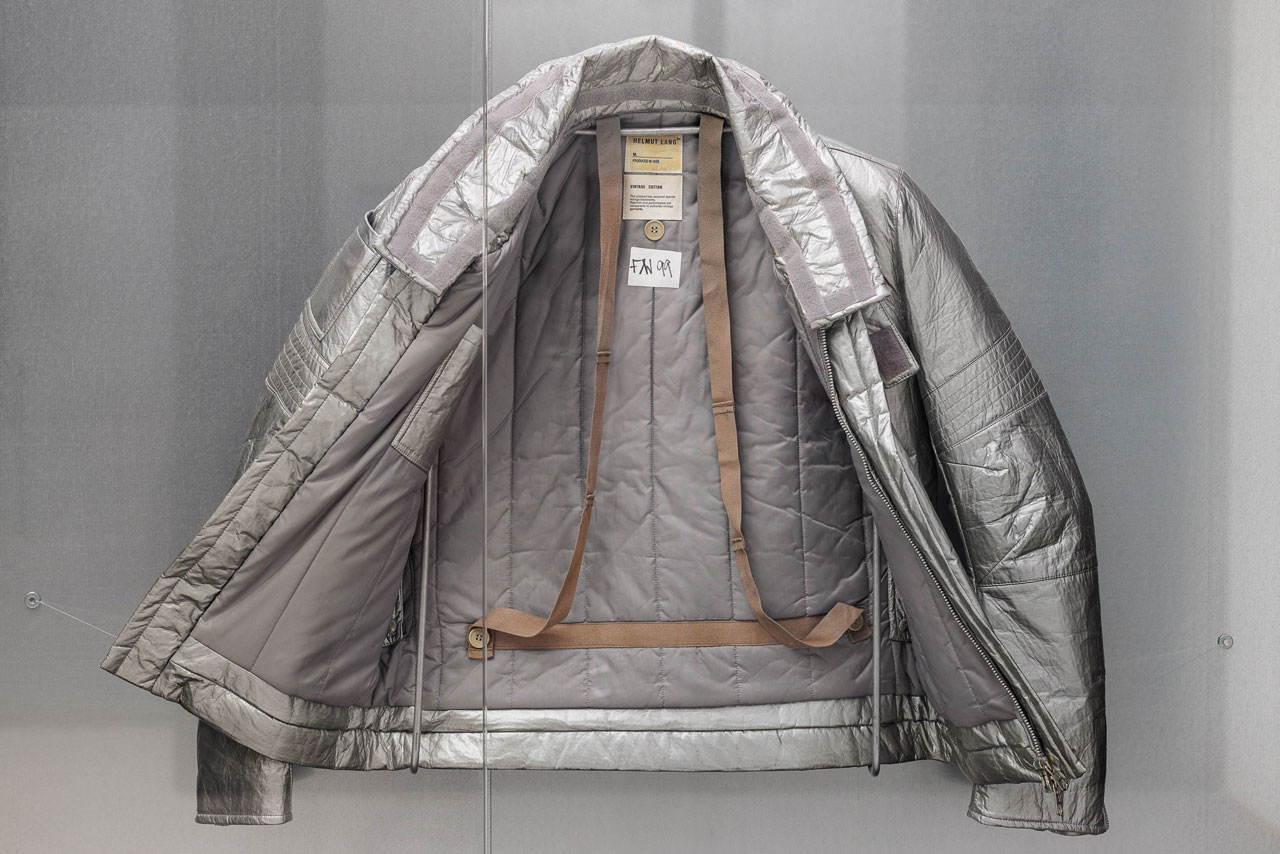
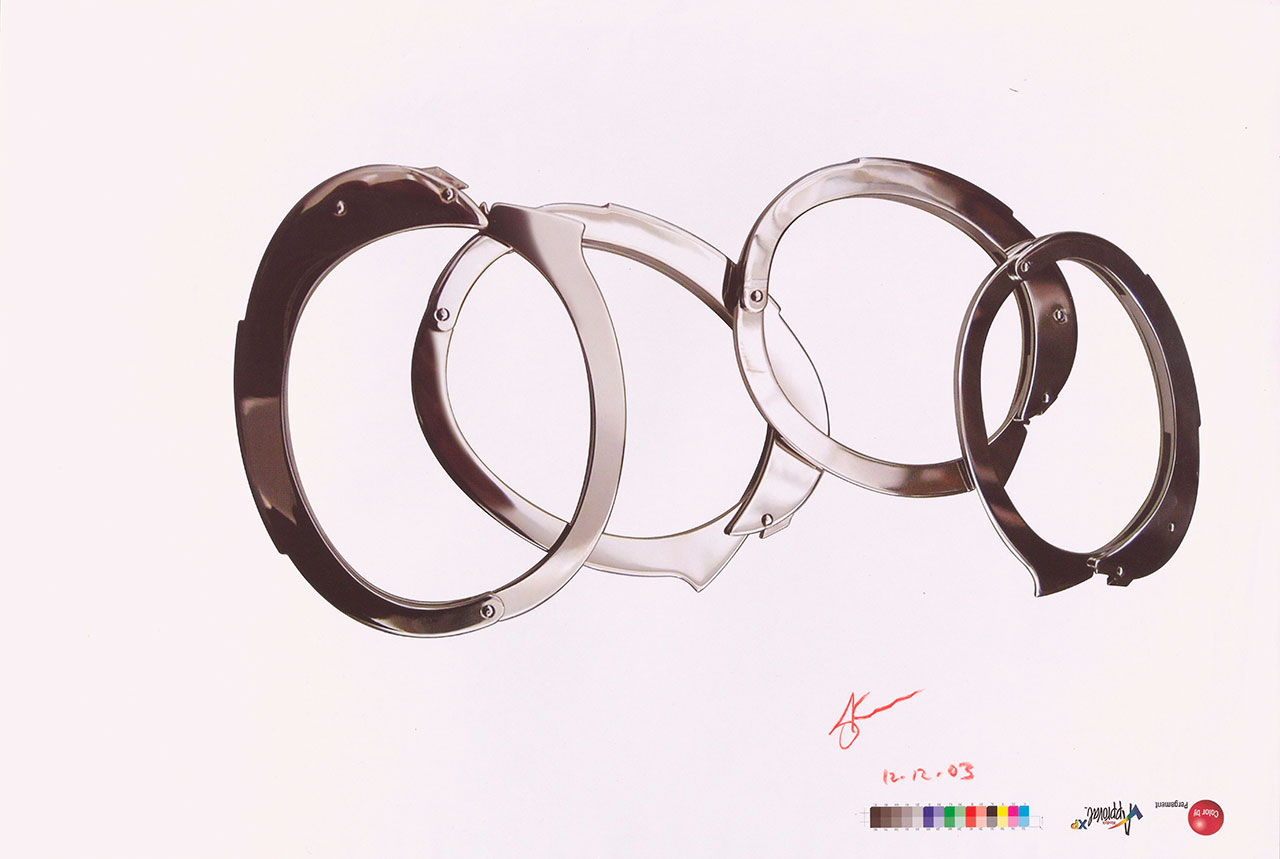
The exhibition showcases archival video in its entirety for the first time, presenting full-length color documentation of séance de travail shows with original music. Life-size installations bring their performative energy into the gallery, reminding us that Lang’s work was less about staged spectacle than about presence—the experiential interplay of clothes, bodies, and space. Hybrid objects known as “accessoires vêtements”, which blur the line between garment and accessory, foreground his ongoing exploration of modularity and function.
Lang’s collaborations with Holzer and Bourgeois further exemplify the breadth of his interdisciplinary practice. From a scent created with Holzer for the 1996 Florence Biennale to text-based campaigns and LED installations in his stores, these dialogues reveal a creative exchange that extended beyond fashion into conceptual art, reinforcing his legacy as a cultural interlocutor.
Perhaps most striking is how “Séance de Travail 1986–2005” recasts Lang’s minimalist “essentialism” not as an aesthetic relic but as a living methodology. By integrating streetwear references, bespoke tailoring, and subcultural cues, Lang forged an aesthetic that articulated identity through restraint and presence—an ethos that resonates in contemporary design discourse. Original analog and digital lookbooks, backstage Polaroids, and intimate documentation bring the atmosphere of the 1990s and 2000s into the present, revealing the depth and nuance of a practice that reimagined fashion not as commodity but as cultural proposition.
The exhibition offers a rare opportunity to engage with the intellectual architecture of one of fashion’s most provocative voices—cementing his enduring relevance as a catalyst of creative thought and a bridge between fashion, art, and cultural theory.
Photo: MAK Exhibition View, 2025 / Chapter SÉANCE DE TRAVAIL, HELMUT LANG. SÉANCE DE TRAVAIL 1986–2005 / Excerpts from the MAK Helmut Lang Archive MAK Exhibition Hall, © kunst-dokumentation.com/MAK
Info: Curator: Marlies Wirth, MAK – Museum of Applied Arts, Stubenring 5, Vienna, Austria, Duration: 10/12/2025-3/5/2026, Days & Hours: Tue 10:00-21:00, Wed-Sun 10:00-18:00, www.mak.at/
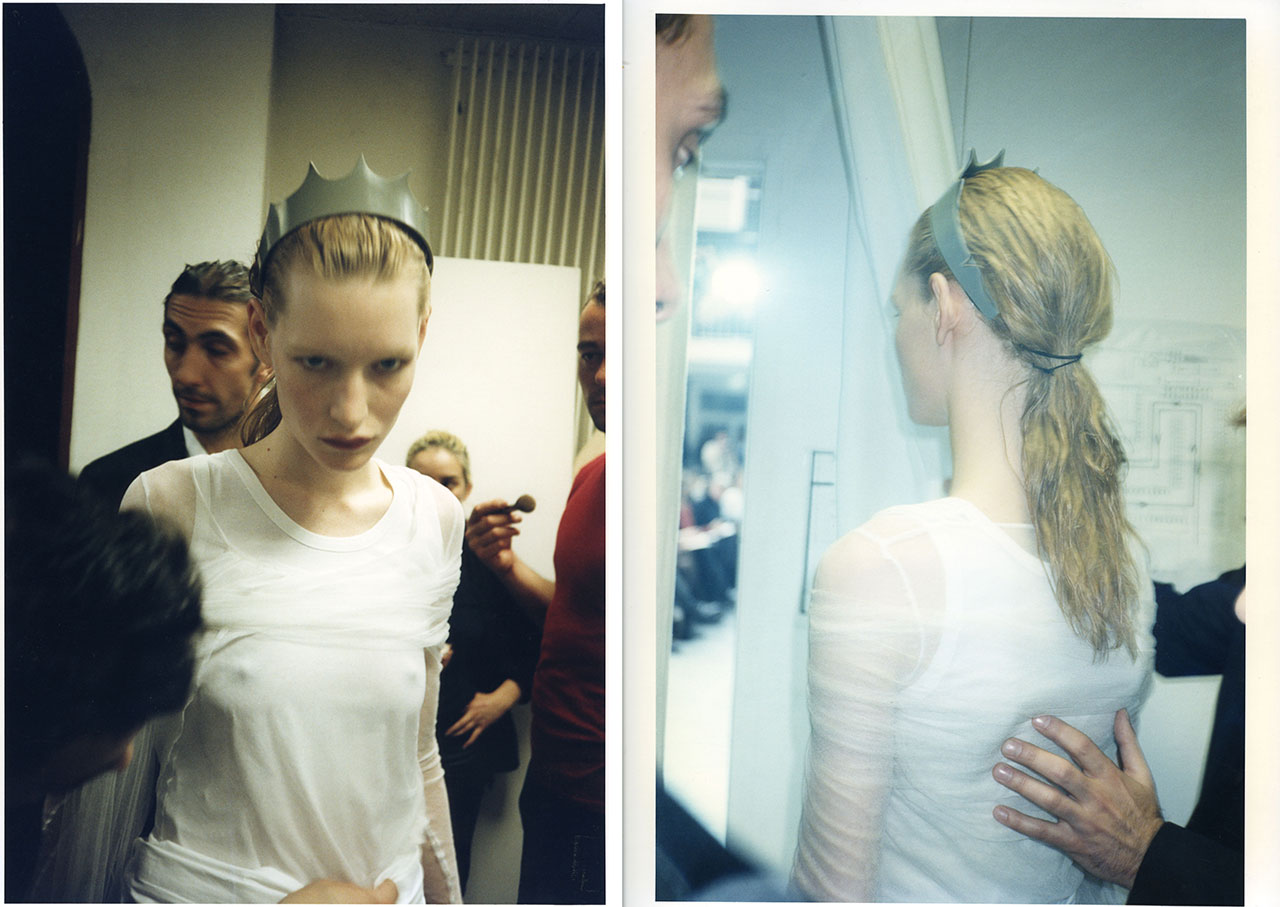
Right: Backstage Photograph by Juergen Teller. Helmut Lang Collection Hommes Femmes Seance De Travail Defile # Hiver 97/98, Paris, Photographer: Juergen Teller, Paris, 1997 Depicted person: Kirsten Owen, Paris, 1997 Courtesy of hl-art
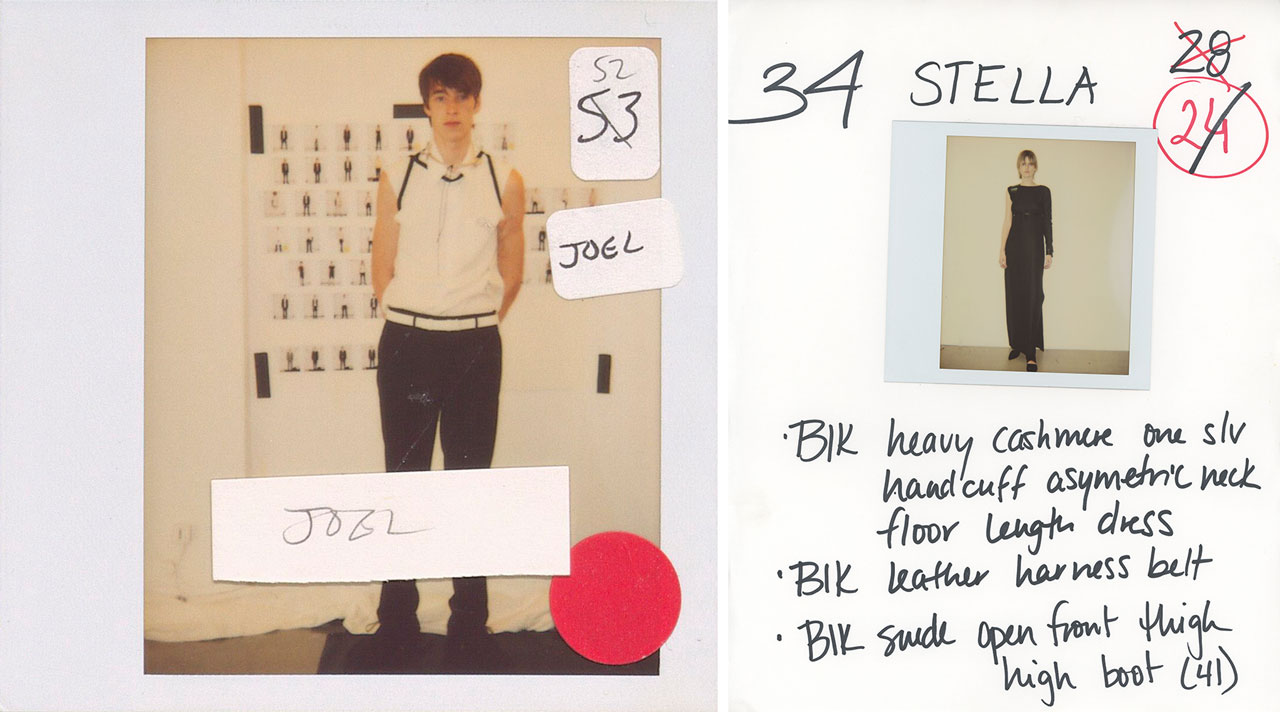
Right: Helmut Lang, Show Fitting Polaroid on paper with handwritten look descriptions, Helmut Lang Collection Hommes Femmes Séance de Travail Défilé # Hiver 01/02 (2001). Depicted person: Stella Tennant, MAK Helmut Lang Archive. Courtesy of hl-art

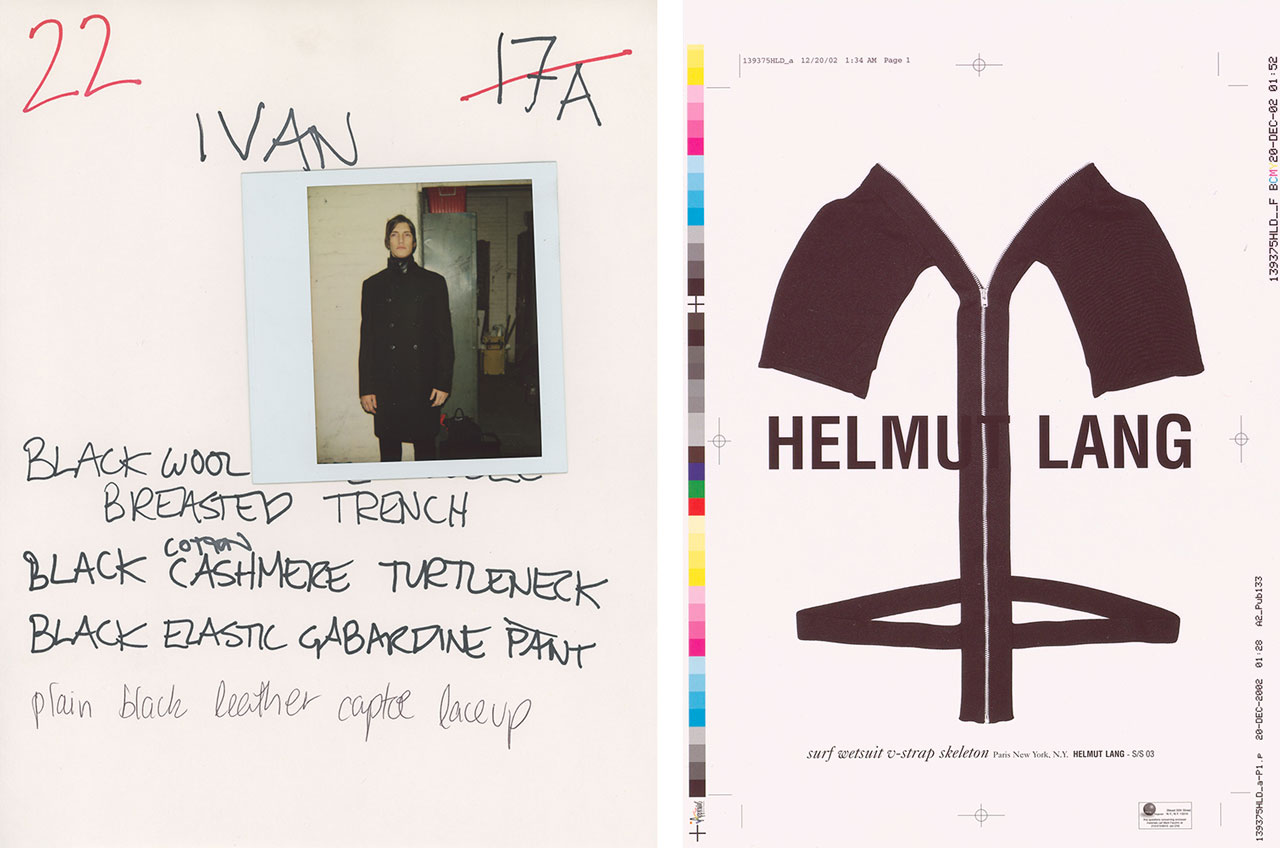
Right: CAMPAIGNS & ADVERTISEMENTS, Helmut Lang, test print of an advertisement, Helmut Lang Collection Hommes Femmes Séance de Travail # Été 03 (2002). MAK Helmut Lang Archive, LNI 566-10-1. Courtesy of hl-art


Right: CAMPAIGNS & ADVERTISEMENTS, Helmut Lang, test print of an advertisement, Helmut Lang Collection Hommes Femmes Séance de Travail # Été 02, photograph of a “stingray purse” by Anthony Ward (2001). MAK Helmut Lang Archive, LNI 566-10-7. Courtesy of hl-art

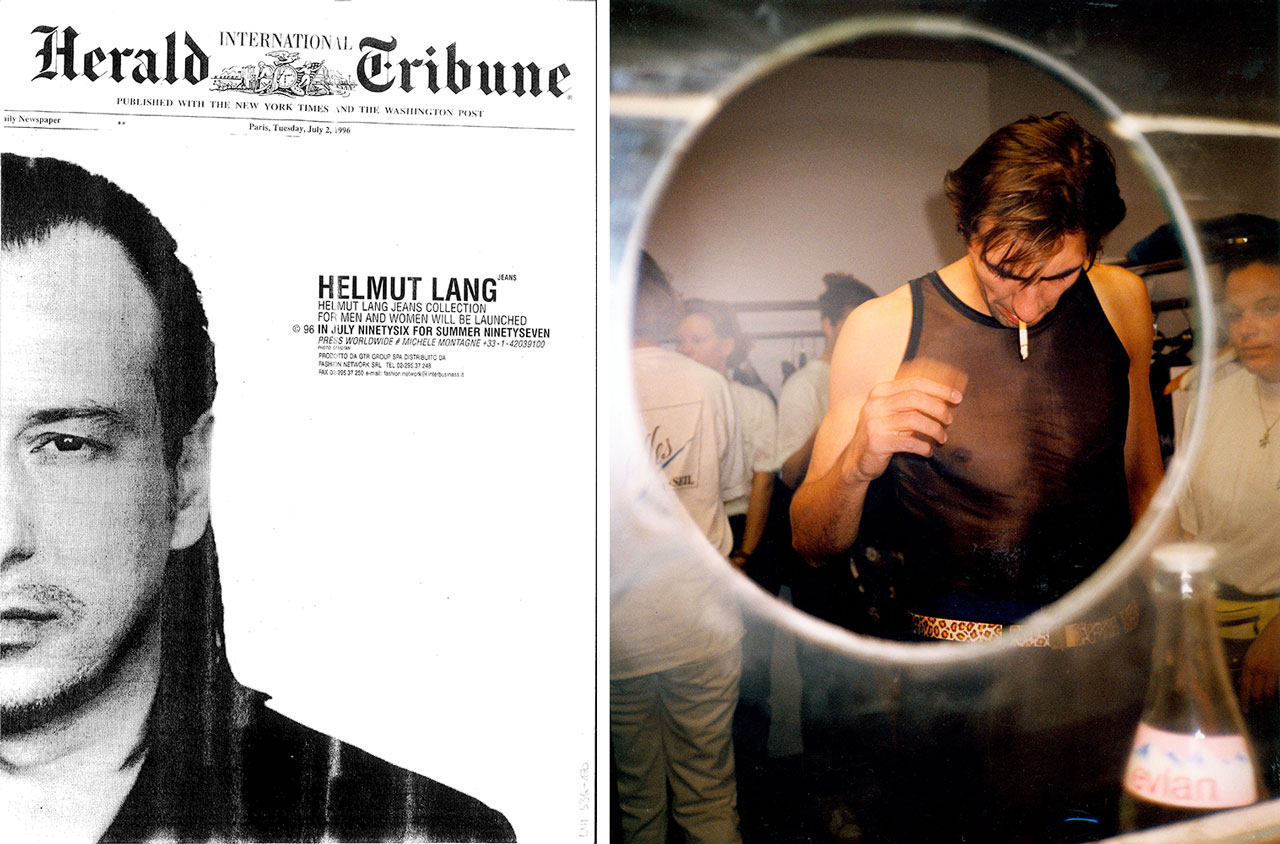
Right: Backstage Photograph by Juergen Teller, Helmut Lang Collection Hommes Femmes Séance De Travail Défilé # Été 94, Photographer: Juergen Teller, Paris, 1993, Depicted person: Thomas Braun, Paris, 1993, Courtesy of hl-art