PRESENTATION: Matthew Barney-Redoubt
Matthew Barney is renowned for provocative explorations of the body and ritual across sculpture, installation, film, performance, and drawing. Since the early 1990s, Barney’s epic projects have addressed the complex spectacle of violence in American culture, merging references to classical mythology, modern history, sports, human anatomy, and popular culture. His films and ritualistic performances feature elaborate costumes, objects often coated in viscous substances, and sets evoking military training camps, sports arenas, or medical facilities.
By Dimitris Lempesis
Photo: Tinworks At Rialto Archive
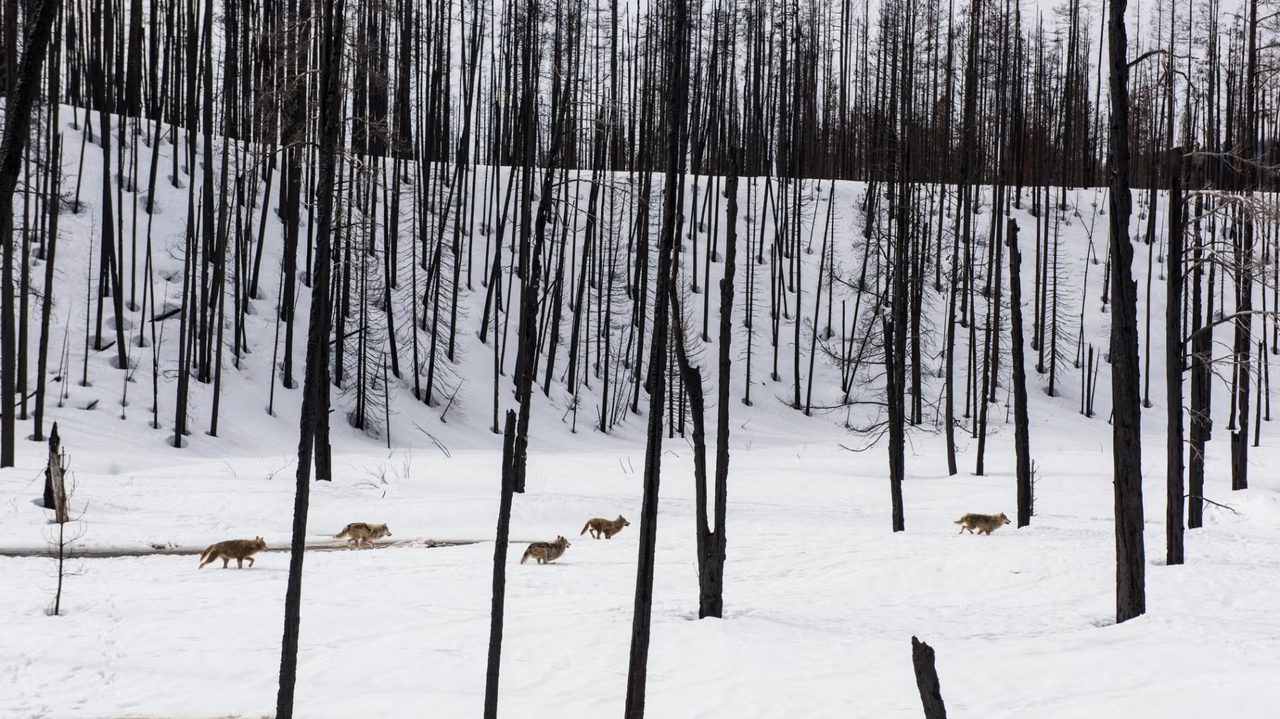
Matthew Barney’s “Redoubt” (2018) stands as one of the most ambitious intersections of cinematic art, landscape, and myth in contemporary practice. Filmed in the winter terrain of Idaho’s Sawtooth Mountains, this work unfolds as an immersive, durational meditation on hunting, ecology, and the human imprint on place. It is neither conventional narrative film nor static artwork but a hybrid, cinematic ecosystem in which classical mythologies converge with the lived realities and mythic resonances of the American West. Redoubt exemplifies Barney’s deeply interdisciplinary approach—uniting performance, choreography, metalwork, wildlife imagery, and sound into a unified aesthetic and conceptual field.
The film’s structure is deceptively simple: six “hunts” traverse the snowy Sawtooth landscape over seven days and nights, each sequence presenting a tableau of bodies, animals, and topography in contrapuntal relationship. Rather than rely on dialogue, Barney’s narrative unfolds through gesture, movement, sound, and choreography, which together function as an alternate language. The absence of spoken words intensifies the viewer’s attention to gesture and sound, making every movement, pause, and score cue a vital narrative vector. The soundtrack—composed and performed by Jonathan Bepler—serves not as background but as a structural force, rhythmically animating the rhythms of the hunt, the wind, and the forest.
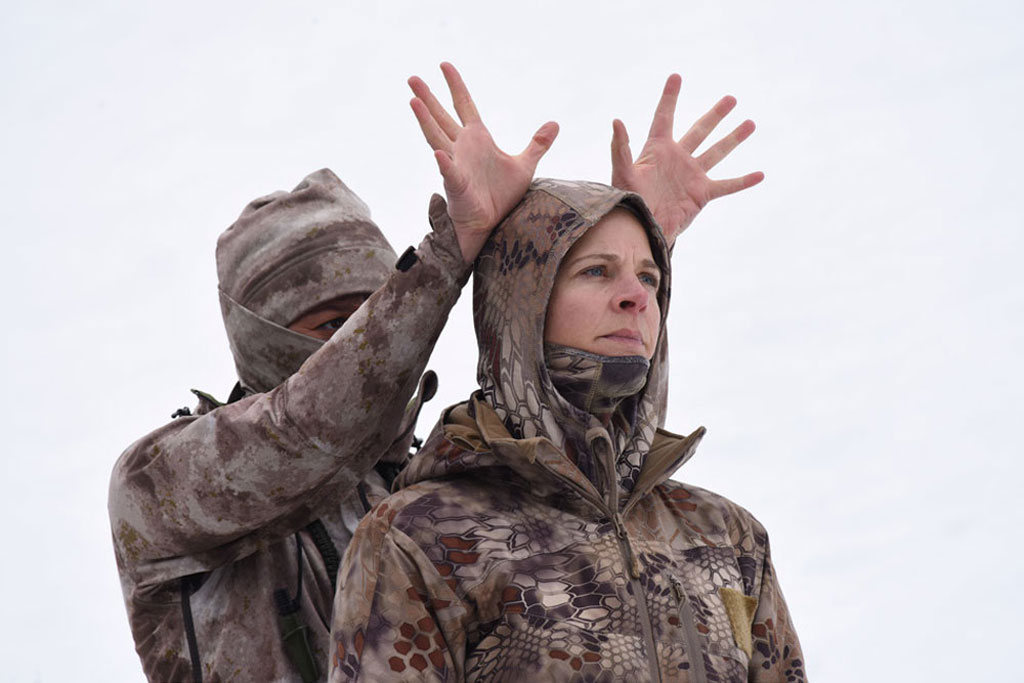
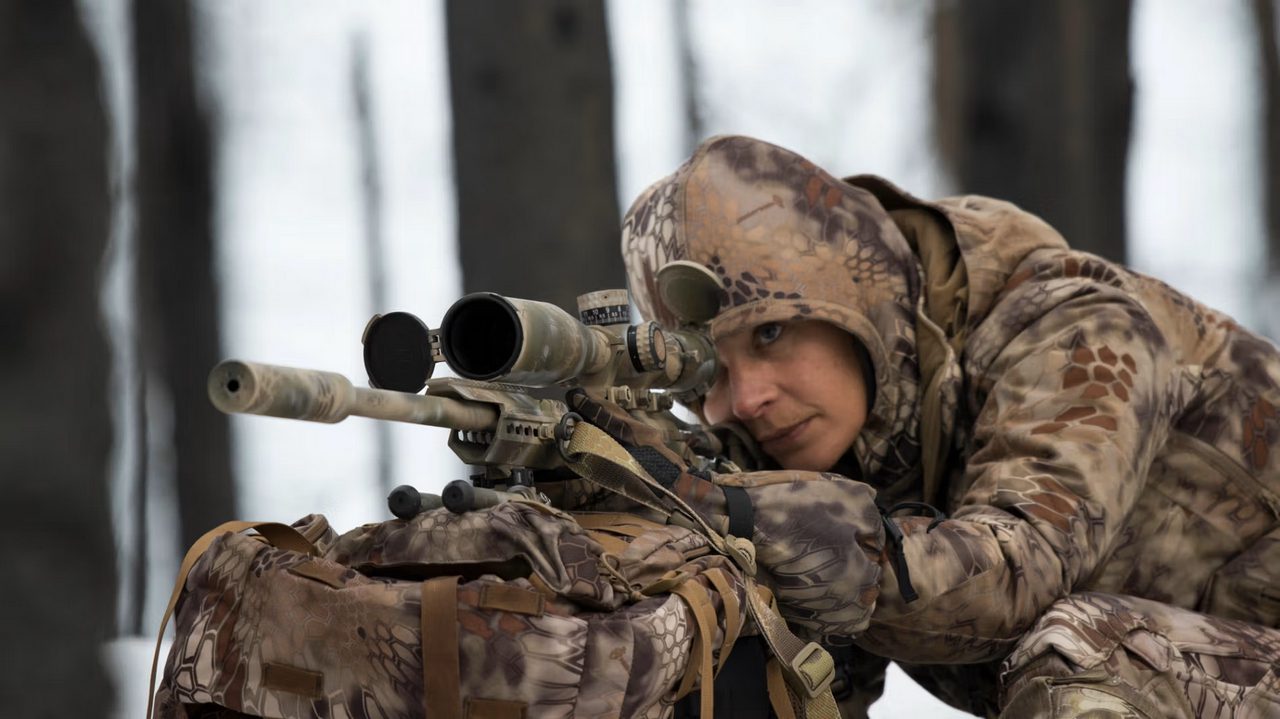
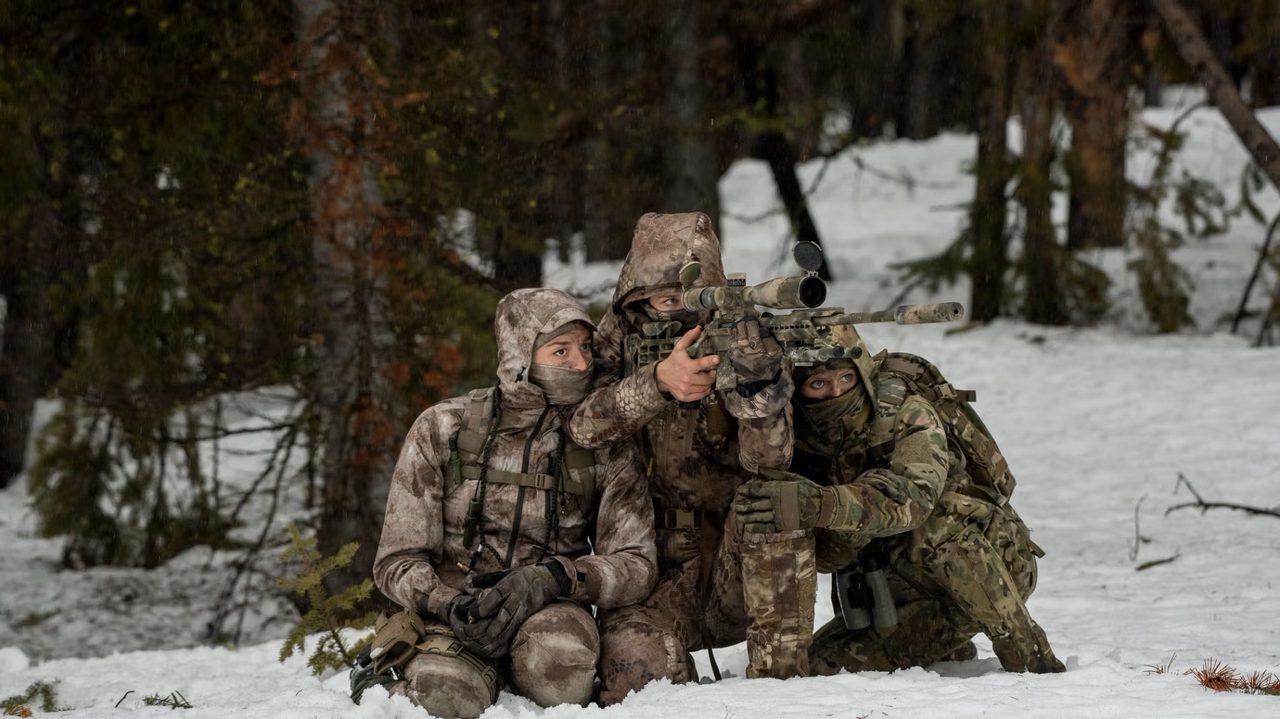
At the centre of this narrative web is Diana, goddess of the hunt, embodied by Anette Wachter—a world champion sharpshooter whose physicality and marksmanship anchor the film’s thematic questions about mastery, violence, and wilderness. In “Redoubt”, Diana is not a mythological relic but a contemporary marksman, whose intimate familiarity with her firearm and the land reframes the hunt as ritual rather than sport. Accompanying her are two companions—often referred to as the Calling Virgin and the Tracking Virgin—whose presence and choreographed movements echo and refract the film’s central themes of pursuit, communion with nature, and embodied attunement to environment.
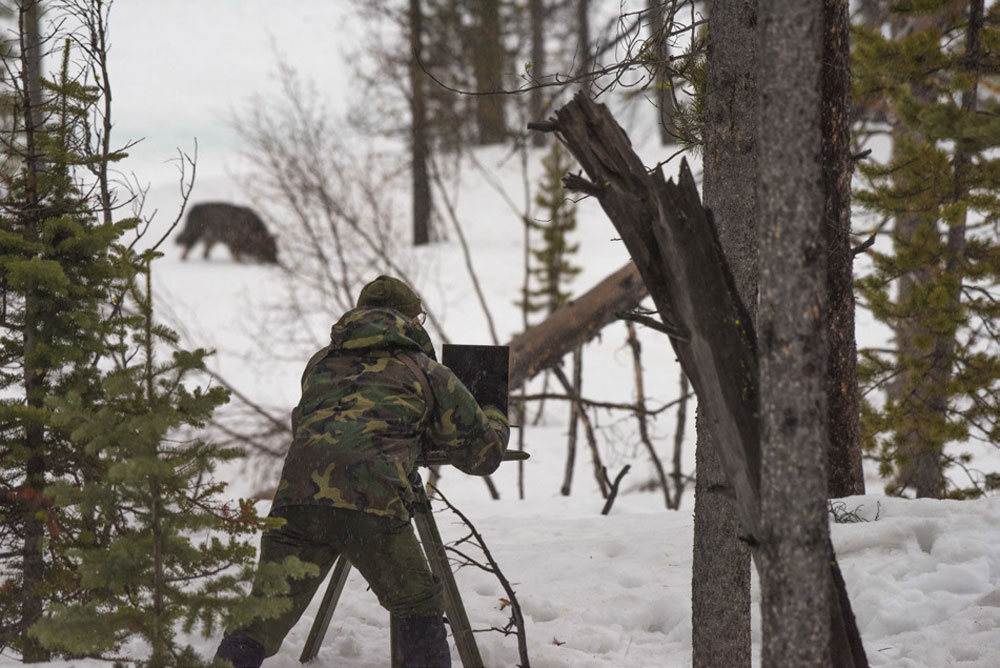
Interwoven among the hunts is the figure of the Engraver, played by Barney himself. This character, a Forest Service ranger, documents his encounters through copper plate etchings produced directly in the environment. These etchings serve as both narrative artifacts and metaphors for the act of observation, marking the tension between human interpretation and the ineffable world of wilderness. The plates are then brought to the trailer of the Electroplater—performed by dancer K.J. Holmes—who enacts an electrochemical transformation that alters and abstracts the original engravings. These transformations embody one of Redoubt’s central concerns: the alchemical interaction between human intention and material force.
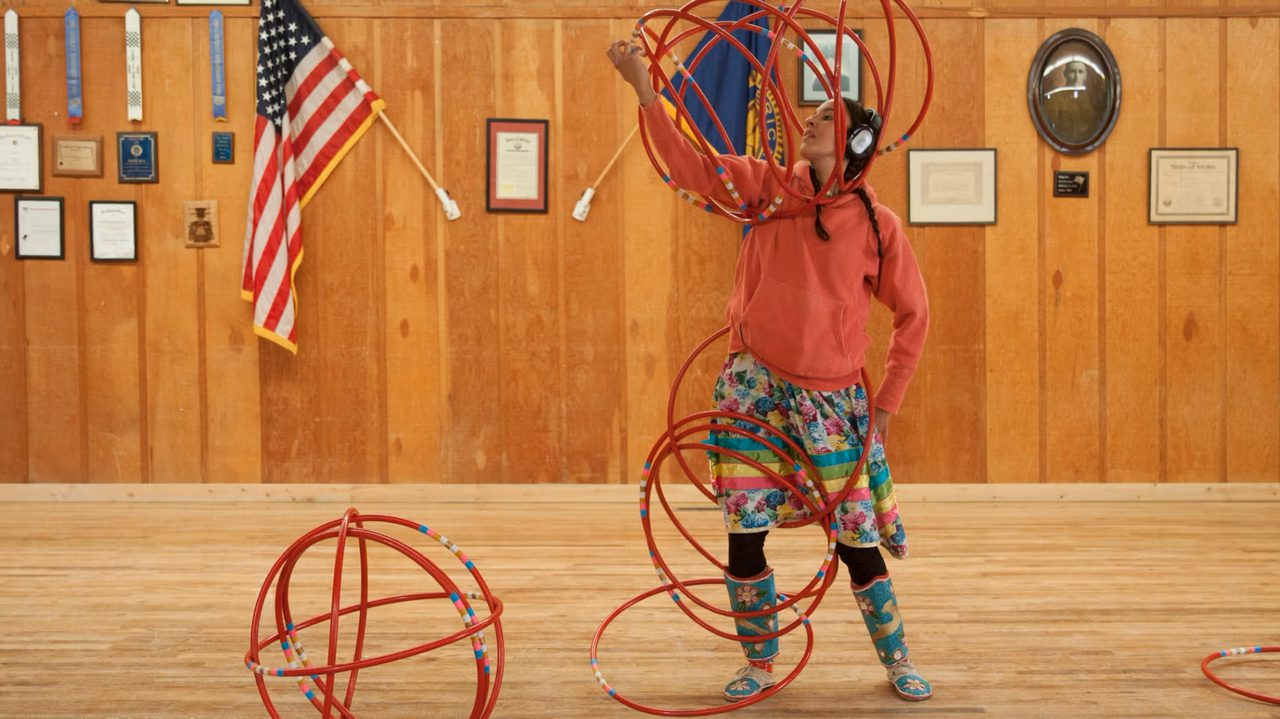
Perhaps the most vivid expression of the film’s choreography emerges when the Engraver leaves the wilderness and encounters the Hoop Dancer—Sandra Lamouche of the Bigstone Cree Nation—performing inside an American Legion hall. Her presence introduces a cultural and historical dimension that expands the work beyond its mythological frame, gesturing toward Indigenous embodied traditions and their coexistence (and often friction) with settler narratives of land and wilderness.
Barney’s reimagining of the Actaeon myth is central to Redoubt’s poetic logic. In Ovid’s Metamorphoses, Actaeon incurs Diana’s wrath by trespassing on the goddess in her moment of vulnerability, and is punished by transformation into a stag only to be torn apart by his own hounds. In Redoubt, the mythic core remains, but the resolution diverges—inviting reflection on how the roles of hunter and hunted can be transposed, interwoven, and reconsidered. This shift resonates with contemporary ecological concerns, especially debates over predator reintroduction and species management in the American West—a subject that partly inspired the work and frames its political contour.
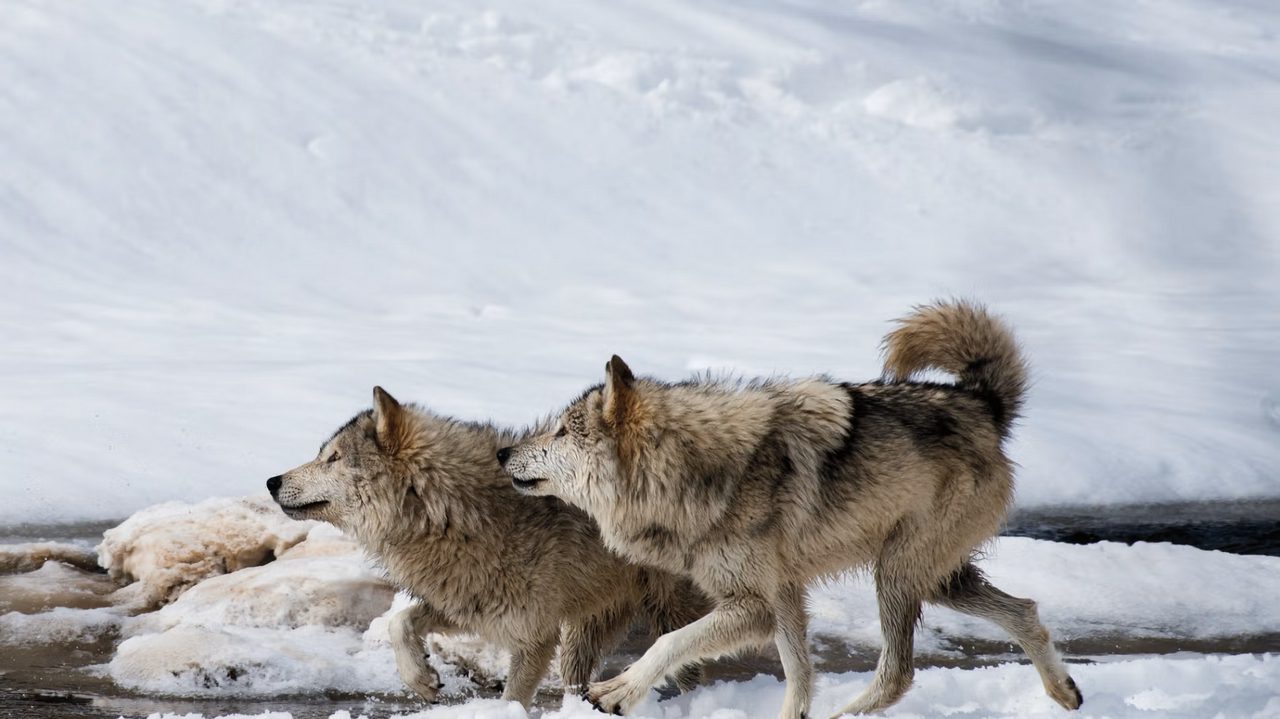
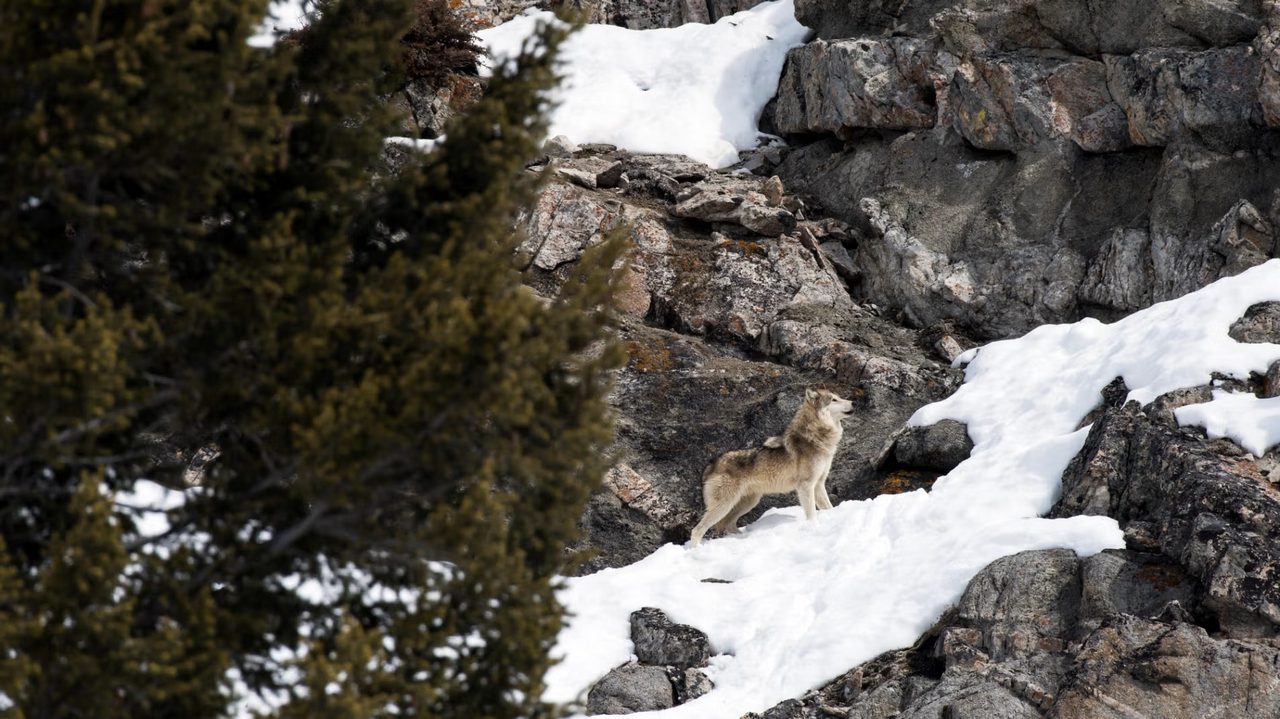
Indeed, “Redoubt” was created in dialogue with the contentious history of wolf reintroduction in the western United States. The 30th anniversary of gray wolves returning to Yellowstone National Park—a landmark conservation achievement—coincided with a major presentation of the film at Tinworks at Rialto in Bozeman, Montana. This temporal alignment underscores the work’s ecological urgency and invites audiences to ponder the cultural and environmental stakes of predator restoration versus the valorization of the hunt.
The interplay of organic terrain and metallurgical transformation typifies Barney’s artistic strategy: to dissolve boundaries between disciplines, media, and modes of perception. Through choreography, sculpture, and film, Redoubt reconstructs the act of making art as a ritual aligned with both mythic and ecological cycles. Movement becomes language, the forest becomes script, and material processes become narrative. The silent expanse of snow and the visceral sound of Bepler’s score together foreground a kind of sensory literacy that rewards patient viewing and deep immersion.
What makes “Redoubt” especially compelling in the context of contemporary art is its refusal to anchor meaning in singular interpretation. Instead, it orchestrates a field of resonances: classical myth refigured within American frontier mythology, ecological debate transposed into ritualized movement, and artistic practice embedded in the very landscape that it contemplates. As such, Redoubt resists straightforward categorization. It is a film, a performance, a sculpture, and a mythic journey—a work that demands to be experienced on its own temporal and sensory terms.
Film Credits: Written and directed by Matthew Barney, Produced by Matthew Barney, Sadie Coles, and Barbara Gladstone, Director of Photography: Peter Strietmann, Music composed by Jonathan Bepler, Editor: Katharine McQuerrey, Producer: Mike Bellon, Production Design: Kanoa Baysa, Art Direction: Jade Archuleta-Gans, Diana: Anette Wachter, Calling Virgin: Eleanor Bauer, Tracking Virgin: Laura Stokes, Electroplater: K.J. Holmes, Engraver: Matthew Barney, Hoop Dancer: Sandra Lamouche, Choreographer: Eleanor Bauer, Additional choreography by Laura Stokes, K.J. Holmes and Sandra Lamouche.
Photo: Matthew Barney, Redoubt, 2018. © Matthew Barney. Courtesy the artist; Gladstone, New York, Brussels, and Seoul; and Sadie Coles HQ, London. Photo: Hugo Glendinning
Info: Tinworks At Rialto, 10 W Main St, Bozeman, MT, USA, Duration: 21/11/2025-2/2/2026, Tue-Sun 12:00-17:00, https://www.tinworksart.org/