PRESENTATION: Proximities

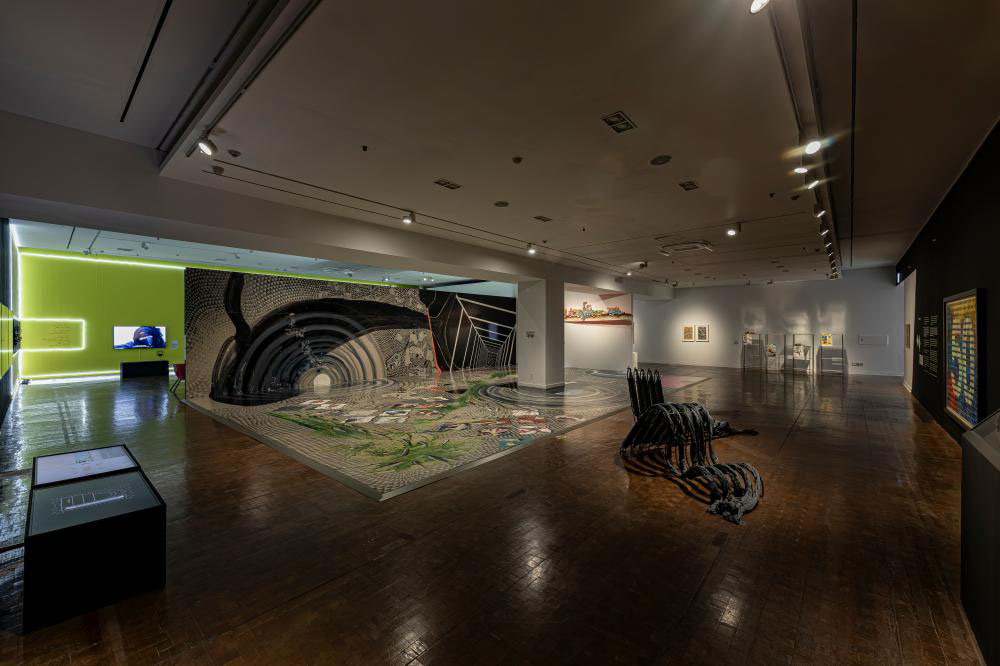
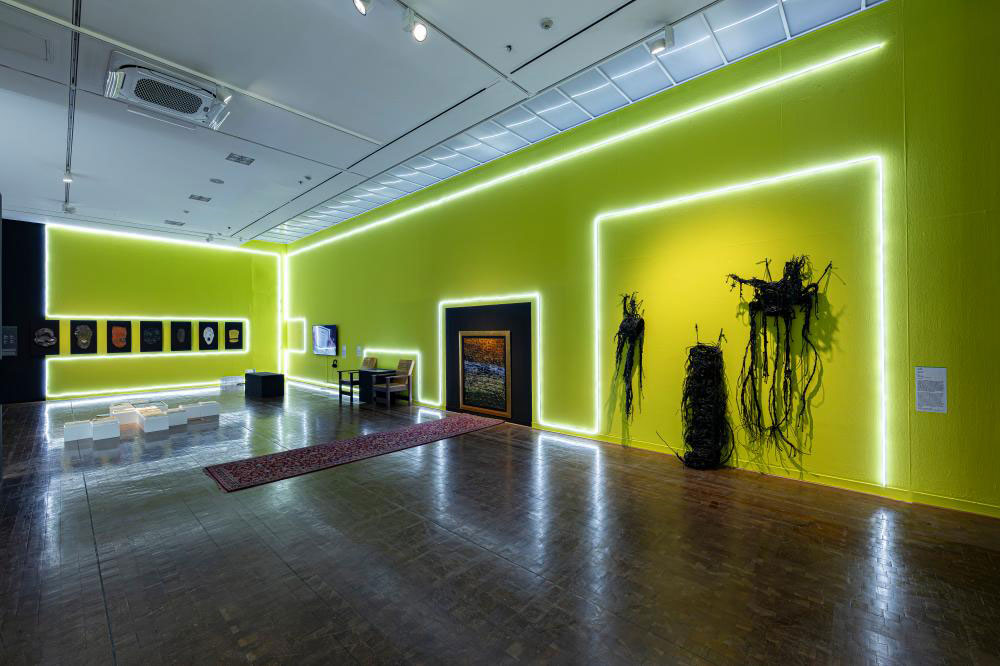
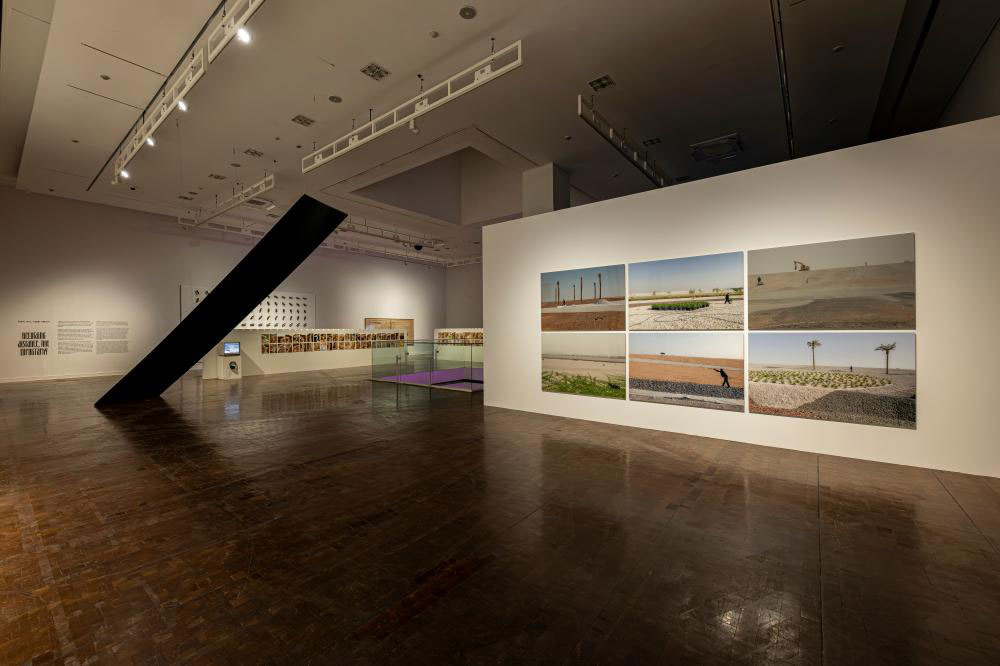
The group exhibition “Proximities” features more than forty UAE-based artists, including 33 Emiratis, across three generations—a Gulf nation shaped by the convergences of migration, natural abundance, and rapid urban transformation since its foundation half a century ago. Through three sections, the exhibition explores what happens when unstable and subjective worlds—personal, social, urban—come into contact. Scaling from the domestic and imaginary to the geopolitical and the elemental.
By Efi Michalarou
Photo: SeMA Archive
In today’s interconnected world, we are configured into proximities that exceed what geography can map. In the immediacy and closeness offered by globalisation, artists work with inherited forms and circulating materials. Between the regionally specific and the internationally legible, this tripartite exhibition considers how ideas evolve through movement and translation – colliding and synthesising views. The three sections propose distinct ways of encountering and seeing: the artist-curators were invited to respond to themes that resonate with their practice; collaborating with the curators of the exhjbition, they gathered peers together to develop positions that articulate ways of encountering the world.
The first section, “A Place for Turning”, is proposed by photographer Farah Al Qasimi. It focuses on domestic and interior spaces as sites where imagination and lived experience intersect. Behind walls and within private environments, multiple realities coexist, often unseen. This section explores how interior worlds foster new affinities and modes of being that quietly respond to broader social change.
Moving outward, “Recording Distance, Not Topography”, conceived by Mohammed Kazem and Cristiana de Marchi, examines spatial relations under conditions of flux. Maps, borders, coordinates, and measurement systems are treated not as stable markers of power but as mutable tools that can be reimagined. Artists in this section interrogate how space is sensed, recorded, and redefined when conventional cartographies fail to capture lived complexity.
The final section, “That Thing, Amphibian”, organised by Ramin Haerizadeh, Rokni Haerizadeh, and Hesam Rahmanian, returns to the elemental. Drawing on the structure of a Chinese and Korean character composed of a square within a square, the section evokes containment, return, and the relationship between inside and outside. Here, artists are described as amphibians of meaning, existing across multiple environments at once. Hybridity becomes a mode of survival and creativity, allowing practices to operate simultaneously within different cultural and conceptual systems.
In “Conversation” (2023), Farah Al Qasimi frames an intimate domestic scene that oscillates between comfort and subtle tension. Two girls, both clad in casual floral dresses, take up the photographic space in complementary postures: one leans against a floral couch, attentive and somewhat stiff, while the other reclines on it, her folded hands placed on her stomach. The almost theatrical floral pattern, coupled with the obscured identity of the reclining figure, introduces ambiguity, prompting viewers to question the nature of their relationship and the unspoken dynamics at play.
In “Between Daydreams and Nightmares” (2020), Maitha Abdallah explores the complex transition from adolescence to adulthood, a phase marked by shifting appearances, social inhibitions and emerging identity. Drawing from regional folktales and mythologies, the staged scenes use animals-such as birds and pigs-to symbolise purity, sin and the duality of growing up. Inspired by theatre, fantasy and ritual, the artist situates these narratives in intimate indoor settings like bathrooms, where personal dreams and transformations feel exposed. Pastel pink tones introduce layers of kitsch, nostalgia and gendered associations, while the intense color palette and performative poses invite viewers into a space of self-reflection during this unstable, transformative period.
In “May It Be Remembered” (2023), Rand Abdul Jabbar traces a cyclical, layered relationship to land and remembrance, weaving together archival family footage from a visit to the ancient ruined city of Hatra in Iraq, “the City of the Sun God,” with a dialogue between three agents: earth, salt and the sun. These elements act both as witnesses to history and actors within it, their voices unfolding through texts written by the artist and translated from English by Deema Alghunaim. Sculptures shown both in the installation and within the film anchor this narrative, responding through form and gesture to a material engagement with earth.
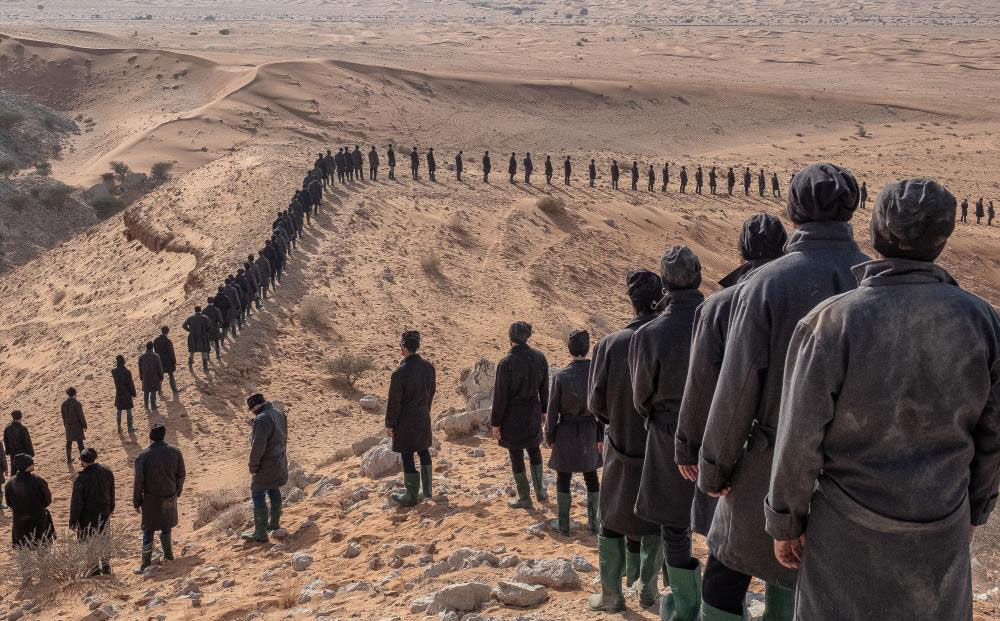
Mohammed Kazem in “Directions (Merging)” (2022), visualises an early-morning shoreline in an otherwise unidentified landscape through moving image and sound. Coordinates imprinted in the sand are progressively erased by waves arriving from a distant and inherently fluid elsewhere, as the firmly and neatly impressed numbers are slowly worn away. In this simple, repeated sequence, the apparently negative gesture of effacing the writing becomes a form of potentiality, as the “engraved” coordinates merge
In “The Atlas of the Impossible” (2025), Cristiana de Marchi explores how physical distance between people and places transforms emotion and time. Movement and repetition in the choreography trace themes of individual life, migration and loss, while opening up the possibility of new relationships and beginnings. Filmed in a former market, a public garden and a traditional domestic space, the work is structured by the material context of each site; rather than mapping topography, it records “distance,” making bodily movement and the traces of memory visible. The choreography shifts according to the history and atmosphere of each location, while the sound responds to breath, pauses and stillness, inviting the audience to sense how far, and in what ways, bodies have travelled. Ultimately, the work proposes not a closed territory but an “atlas of routes,” suggesting forms of belonging that remain in motion amid displacement and change.
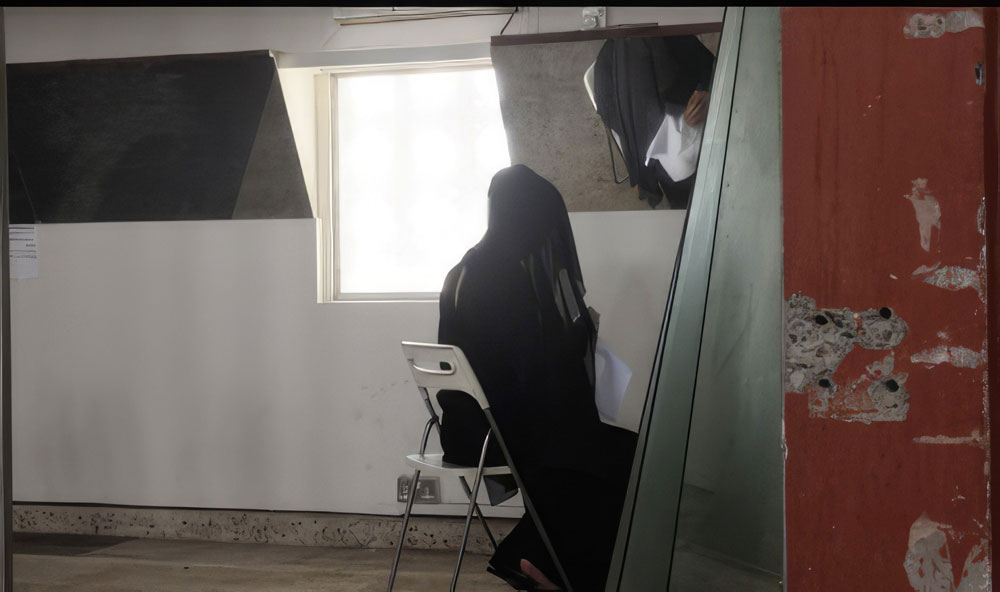
In Passage (2019), produced for the UAE National Pavilion at the Venice Biennale, Nujoom Alghanem extends an ongoing experimentation with contemporary Arabic poetry through the medium of film. Based on the poem “The Passerby Collects the Moonlight” (2009), the work explores displacement through two interwoven narratives, one “real” and one “fictional”, projected on opposite sides of a wall-sized screen that bisects the exhibition space. The “real” narrative follows the artist and Amal, a Syrian actress living in the UAE, as they collaborate to create a film for the Pavilion. The “fictional” narrative presents a symbolic depiction of a refugee, known as Falak and played by Amal, undertaking an arduous journey. In the climactic scene, Falak arrives at the Venice Pavilion, bringing the two narratives together and underscoring how political and artistic displacement, as well as the act of journey-making itself, are inseparably intertwined.
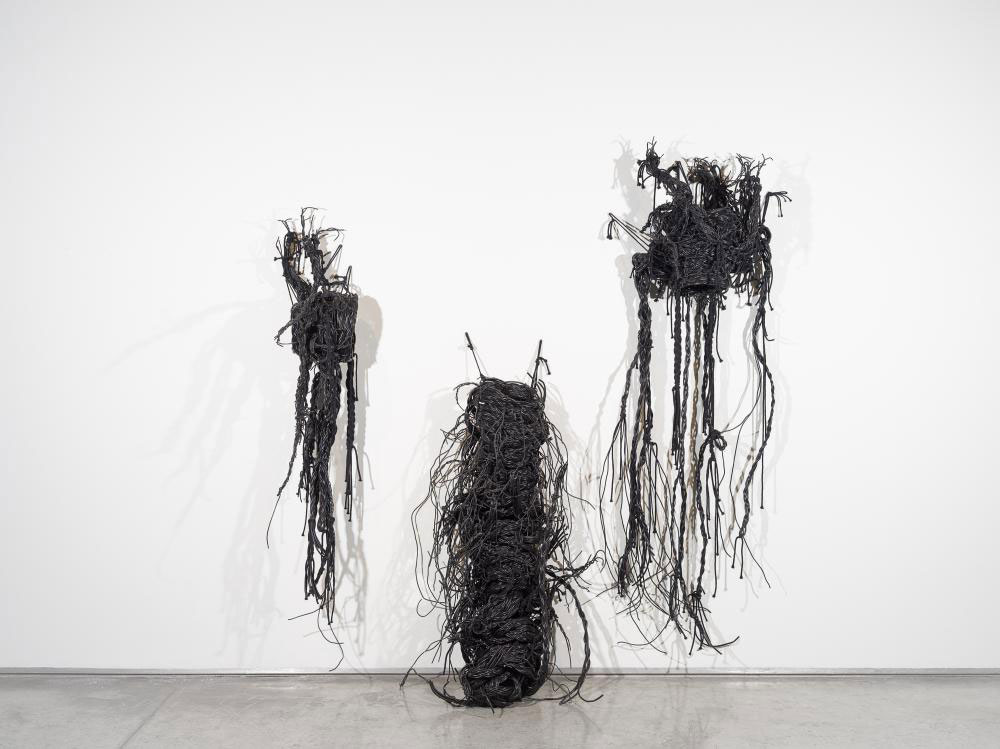
Hassan Sharif’s “Cable No. 2” (2015) is made entirely from densely bound black cable ties, through which the artist lends a simple industrial material an unexpected poetic and physical weight. Originally used to bundle and organise electrical wires, the cable ties are stripped of their function and, through the repeated hand gesture of tying and twisting, are reborn as both a woven surface and a solid sculptural mass. The artist understands this act of “binding” as a contemporary form of weaving, allowing cheap, mass-produced plastic to stand in for the material culture that has shaped today’s urban and everyday landscapes. Rather than directly criticising or celebrating these transformations, “Cable No. 2” makes a familiar object strange, prompting viewers to reconsider the ordinary things that surround them and the realities that lie behind them.
Participating artists: Farah Al Qasimi, Mohammed Kazem, Cristiana de Marchi, the Artist trio Ramin Haerizadeh, Rokni Haerizadeh, and Hesam Rahmanian, Layan Attari, Sara Al Haddad, Moza Al Matrooshi, Rashed Qurwash, Almaha Jaralla, Shaikha Al Ketbi, Aliyah Al Awadhi, Maitha Ali, Maitha Abdallah, Jumairy, Rand Abdul Jabbar, Afra Al Dhaheri, Ebtisam Abdulaziz, Alaa Edris, Ammar Al Attar, Mohamed Al Mazrouei, Raja’a Khalid, Tarek Elkassouf, Hazem Harb, Abdullah Al Saadi, Mohamed Ahmed Ibrahim, Hussain Sharif, Vikram Divecha, Hassan Sharif, Vivek Vilasini, Shaikha Al Mazrou, Tarek Al-Ghoussein, Ala Younis, Nujoom Alghanem, Ayman Zedani, Kholoud Sarafi, Shamma Al Bastaki, Rawdha Al Ketbi, Shamma Al Amri, Abdul Qader Al Rais, Fatma Al Ali, Najat Makki, Ayesha Hadhir, Maitha Al Omaira, Rayan AL Jneibi, Khalid Seddiq
Photo: Mohammed Kazem, Directions (Merging), 2022, © Mohammed Kazem, Courtesy the artist and Seoul Museum of Art (SeMA)
Info: Curators: Maya El Khalil and Eunju Kim, Assistant Curators: Hee-on Sim and Yebin Woo, Seoul Museum of Art (SeMA), 61 Deoksugung-gil, Jung-gu, Seoul, South Korea, Duration: 16/12/202-29/3/2026, Days & Hours: Tue-Thi 10:00-20:00, Fri 10:00-11:00, Sat-Sun 10:00-18:00, https://sema.seoul.go.kr/
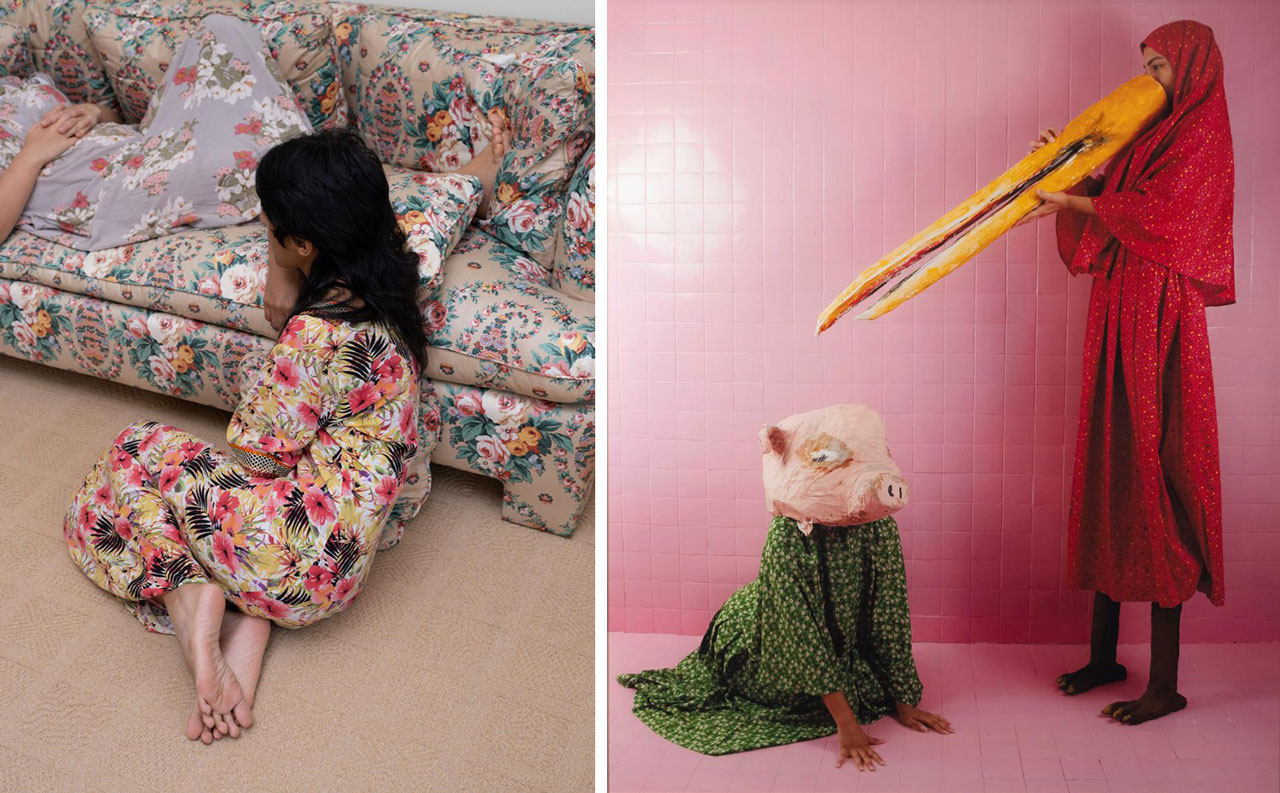
Right: Maitha Abdalla, Between Daydreams and Nightmares, 2020, © Maitha Abdalla, Courtesy the artist and Seoul Museum of Art (SeMA)