PRESENTATION: Zao Wou Ki-Master Printmaker, Part II

Zao Wou-Ki was a leading twentieth-century abstract painter who fused Chinese artistic traditions with Western modernism. Trained in Hangzhou under progressive masters, he moved to Paris in 1948, where he developed a lyrical abstract style combining calligraphy, oil painting, and printmaking techniques. In the 1970s he returned to ink painting and maintained strong ties to China through teaching and major commissions.
By Dimitris Lempesis
Photo M+ Museum Archive
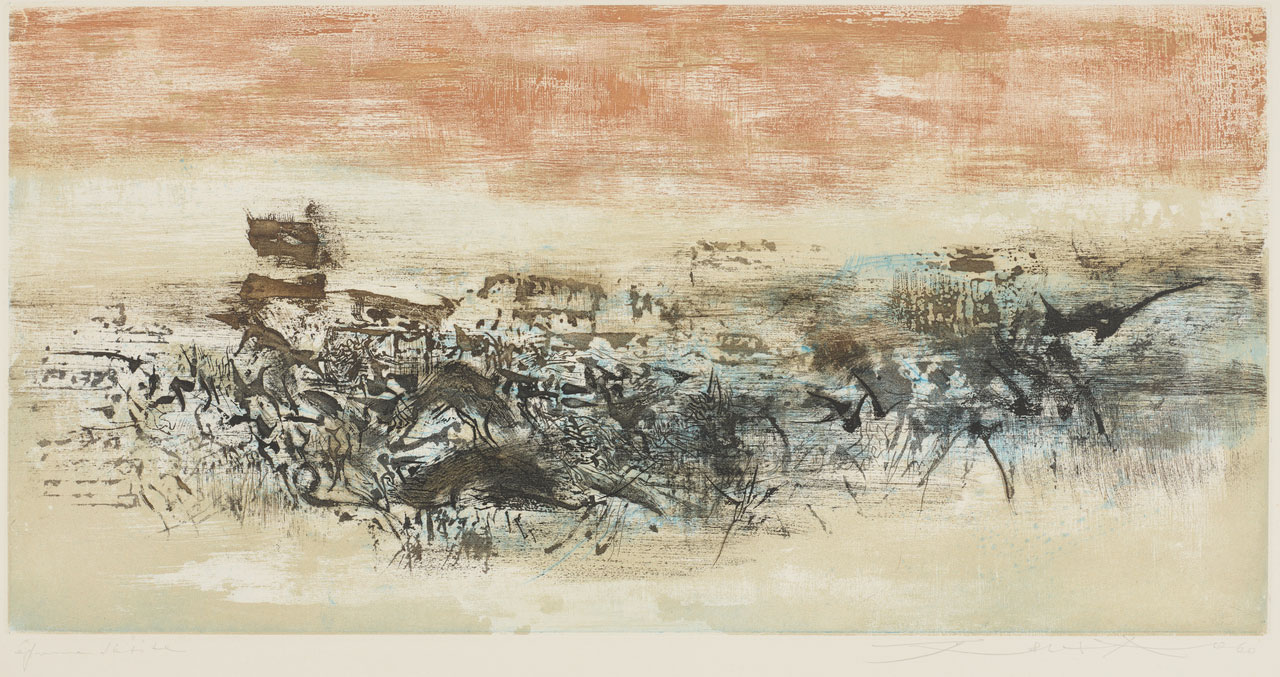
The Special Exhibition “Zao Wou-Ki: Master Printmaker” at Hong Kong’s M+ museum marks the first major retrospective in Asia dedicated to the graphic works of Zao Wou-Ki (1920–2013), celebrating a facet of his practice that has often been overshadowed by his renown as a painter of lyrical abstraction. The exhibition traces five decades of printmaking from 1949 to 2000, demonstrating how this medium was central to Zao’s creative evolution and global artistic voice. It underscores prints not merely as complementary to his canvases but as a vital and experimental terrain where his cross-cultural aesthetic took shape.
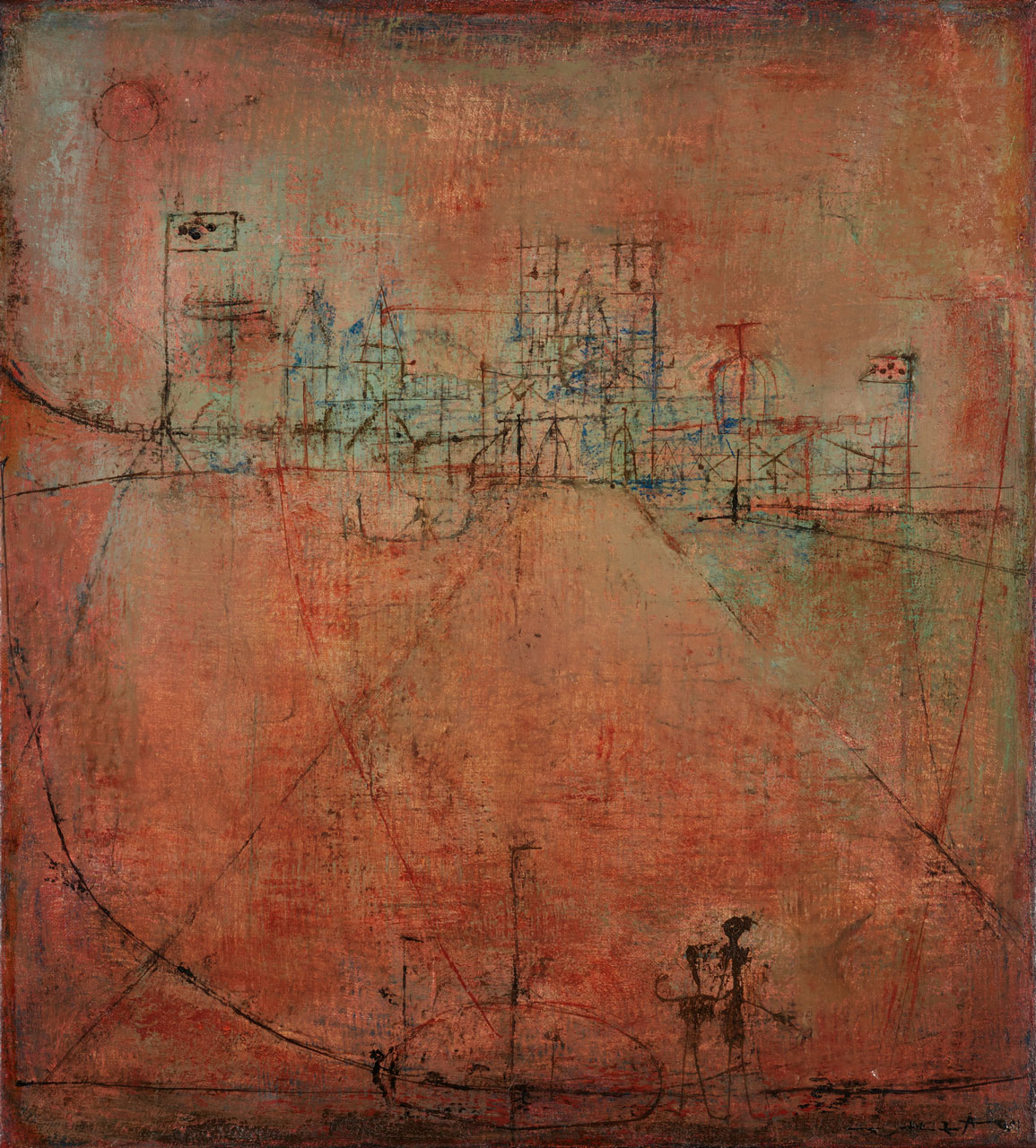
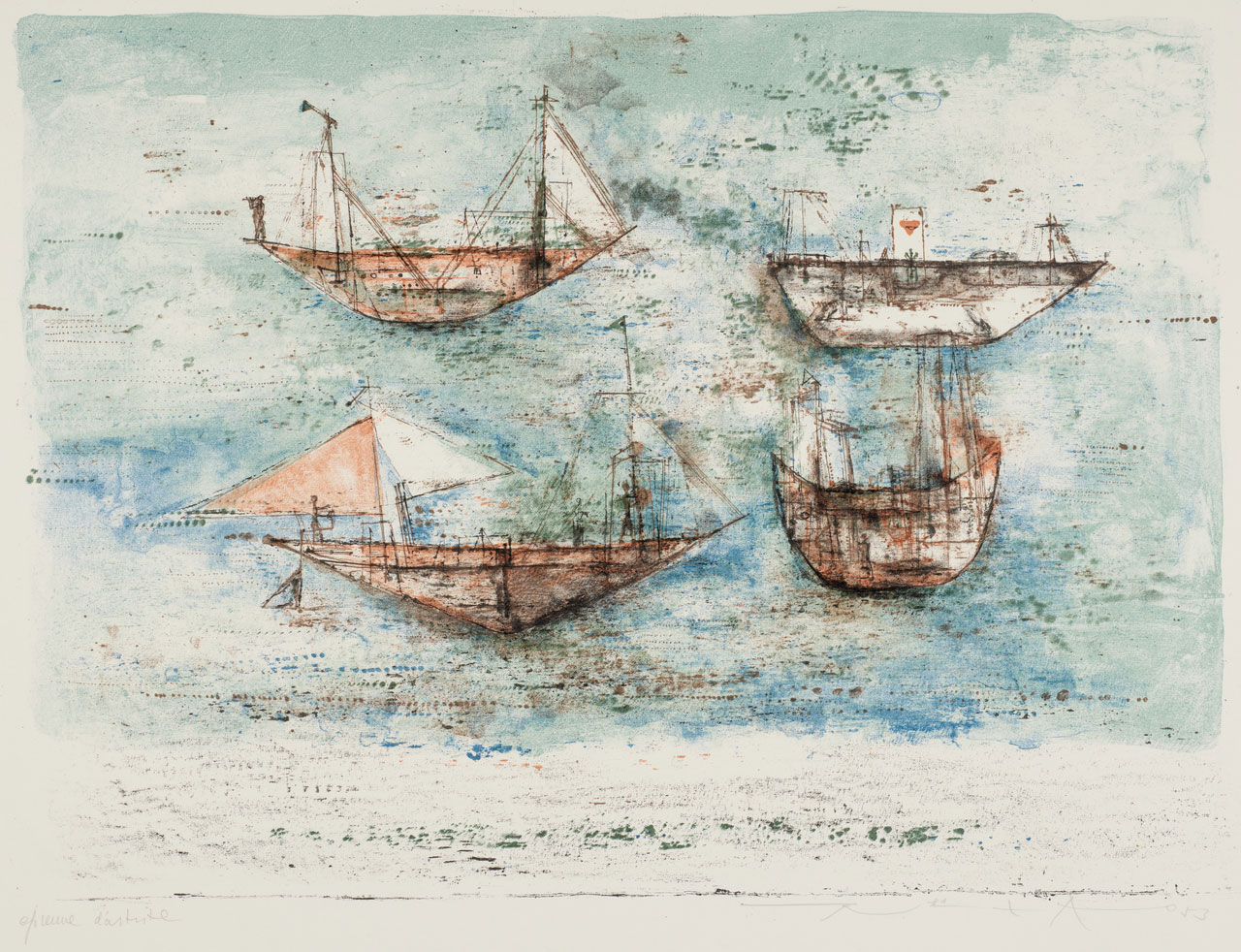
Born in Beijing and trained in Hangzhou, Zao arrived in post-war Paris in 1948 with a solid foundation in Chinese calligraphy and woodblock techniques. There he encountered a vibrant modernist scene and quickly absorbed European print practices—lithography, etching, drypoint, and aquatint—through dialogue with artists and literary figures. Zao described printmaking as “almost a game,” a space of play and unpredict that informed the gestural and compositional freedom characteristic of his later work.
Organised both chronologically and thematically, the exhibition at M+ reveals Zao’s trajectory from early figurative works and calligraphic explorations to increasingly abstract compositions that engage elemental concepts of wind, water, and space. Seminal works such as “Lecture par Henri Michaux de huit lithographies de Zao Wou-Ki (1950) and “Piazza Siena” (1951) testify to his early mastery and intellectual engagements with poets and cultural circles in France, while later prints such as “À la gloire de l’image et art poétique” (1977) reflect a mature synthesis of Eastern and Western sensibilities.
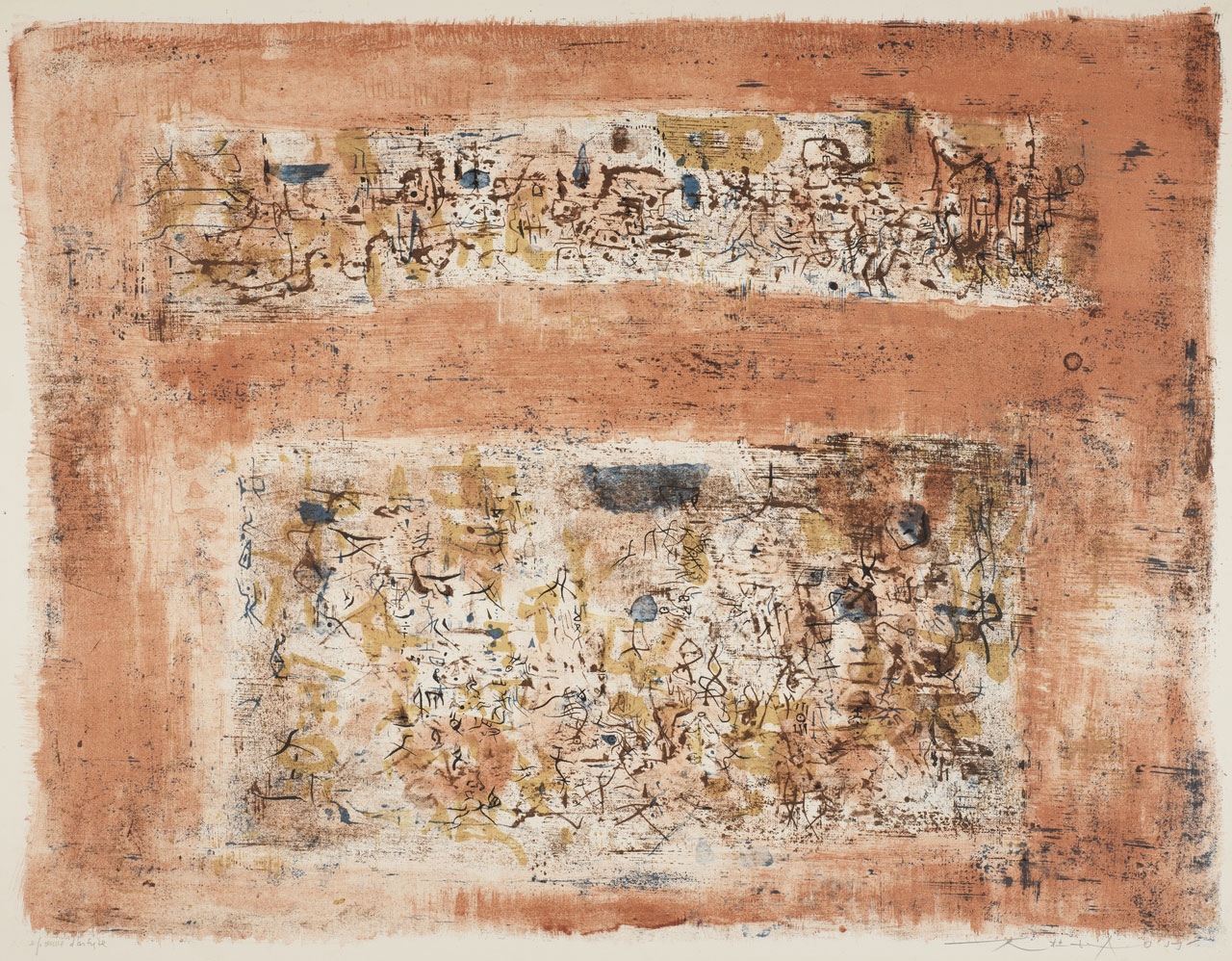
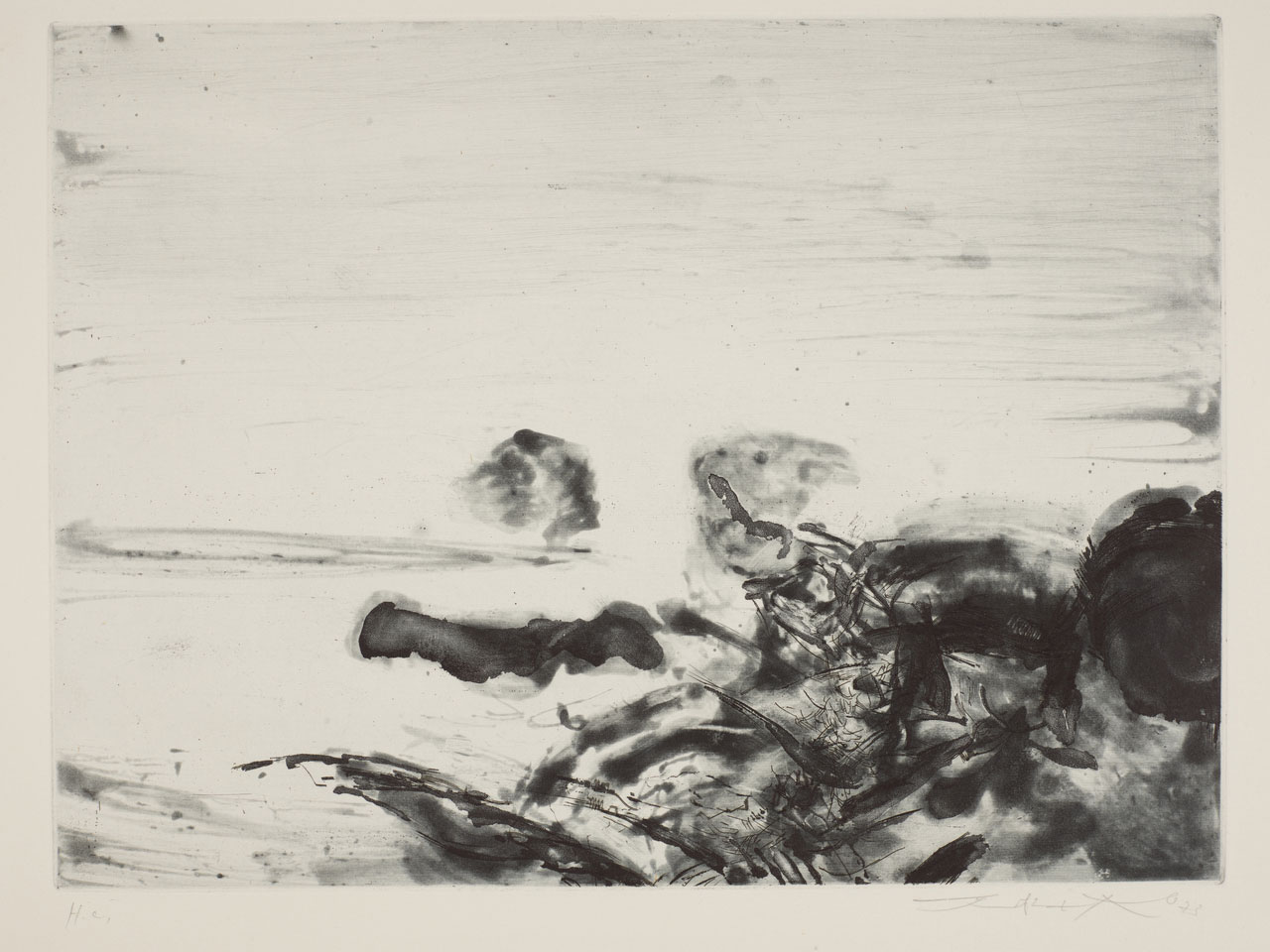
Crucially, printmaking catalysed Zao’s breakthrough toward abstraction, shaping his visual language as he increasingly foregrounded gesture, line, and chromatic atmosphere over representation. Many print techniques he embraced—such as sugar lift and aquatint—echo the spontaneity of Chinese ink traditions learned in his youth, yet are radically reconfigured within a modernist framework aligned with European avant-garde currents. This duality anchors Zao’s significance in the post-war art world, where he occupied a unique position at the intersection of cultures, contributing to artistic dialogues across Europe, Asia, and the United States.
The exhibition’s three main sections: “Encountering Printmaking”, “Towards Abstraction”, and “No Boundaries”, chart this evolution, from his initial technical fluency to the bold, expressive prints of the late 1950s and the vibrant, liberated works of his later years. Complementary side features elucidate the tools and processes Zao employed, his extensive network of collaborators, and the interplay between poetry and visual art that enriched his practice.
Encountering Printmaking: This section introduces Zao Wou-Ki’s early forays into printmaking, beginning with his arrival in Paris in 1948 and immersion into the city’s art scene. Though already familiar with woodblock printing from his training in China, Zao learned new techniques such as lithography and etching from his peers in France. He described printmaking as ‘almost a game’, a more playful and less predictable process than oil painting. As his mastery of the medium grew, his prints began to attract the attention of art galleries and institutions.
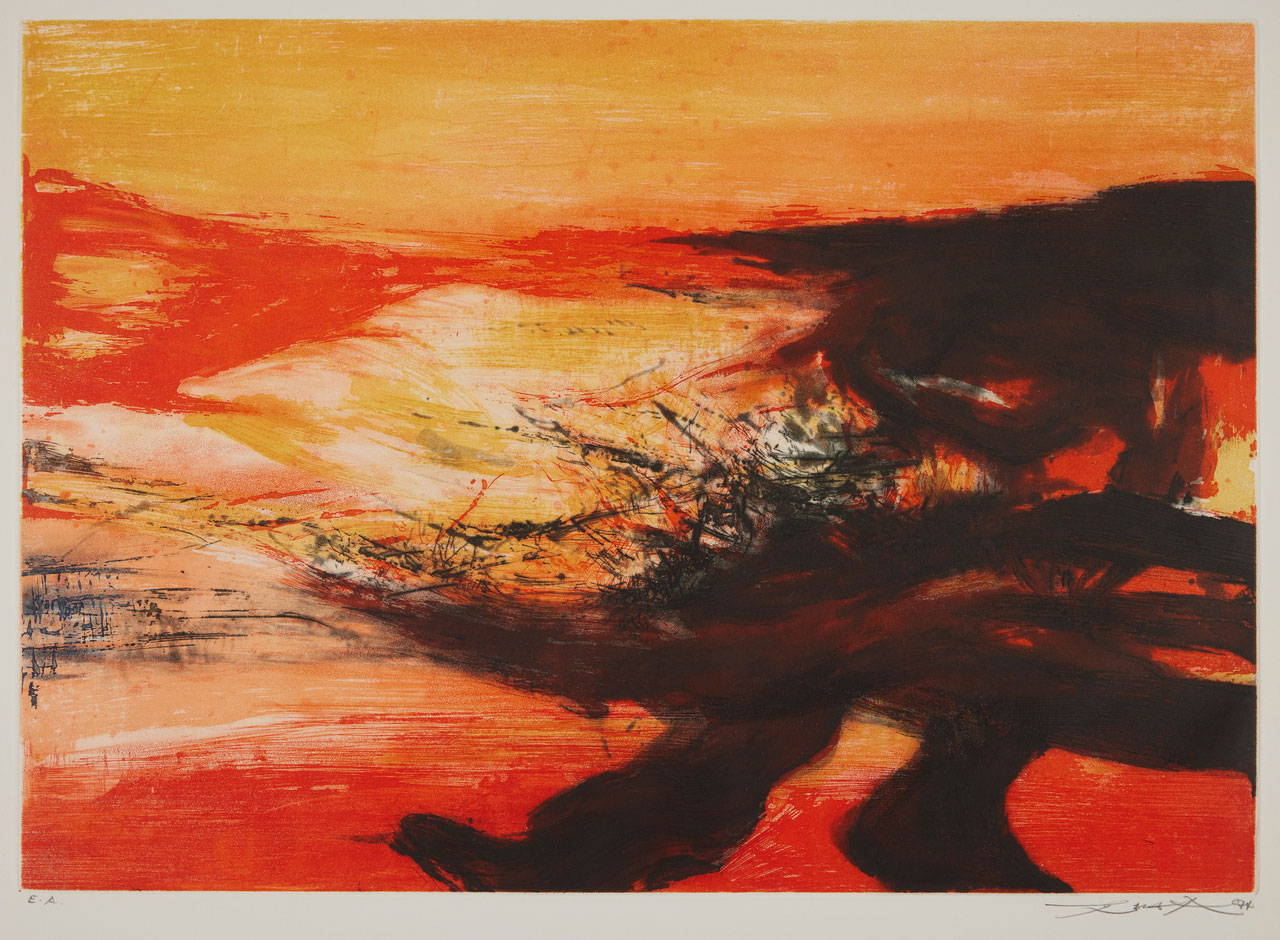
Towards Abstraction: As Zao continued to experiment with printmaking, he began visualising elemental forces and the imaginary landscapes of his inner world. This shift unlocked new poetic and philosophical potentials for his art, marked by a decisive move towards abstraction. By this point, Zao was a highly experienced printmaker, embracing new techniques such as drypoint, sugar lift, and aquatint. His compositions from the late 1950s are characterised by dynamic gestural lines and bold colours, filling the surface with expressive energy. Many of these techniques and styles echo the ink painting and calligraphy he studied in China in his youth.
No Boundaries: The section presents Zao’s late graphic works, which embody a mature synthesis of Eastern and Western artistic traditions. From the late 1970s onwards, Zao approached both painting and printmaking with renewed versatility and freedom. He blended techniques from Chinese and European artistic traditions to express ideas of harmony, balance, and nature inspired by Taoist philosophy. Over time, Zao’s poetic compositions became more varied and his colour palettes grew brighter as he pushed the boundaries of printmaking.
By foregrounding printmaking as an equally significant dimension of Zao Wou-Ki’s oeuvre, “Master Printmaker” invites audiences to reconsider his legacy not only as a painter of monumental canvases but as a generative force in graphic art whose experimentation helped redefine abstraction in the twentieth century.
Photo: Zao Wou-Ki , Untitled, 1967, etching and aquatint, M+, Hong Kong. Gift of Françoise Marquet-Zao, 2024, Zao Wou-Ki © ProLitteris, Zurich, 2025, Image courtesy of M+, Hong Kong
Info: Curators: Dr Wu Mo and Yann Hendgen, M+ Museum, West Kowloon Cultural District, 38 Museum Drive, Kowloon, Hong Kong, Duration: 13/12/2025-15/8/2026, Days & Hours: tue-Thu & Sat-Sun 10:00–18:00, Fri 10:00–22:00, www.mplus.org.hk/
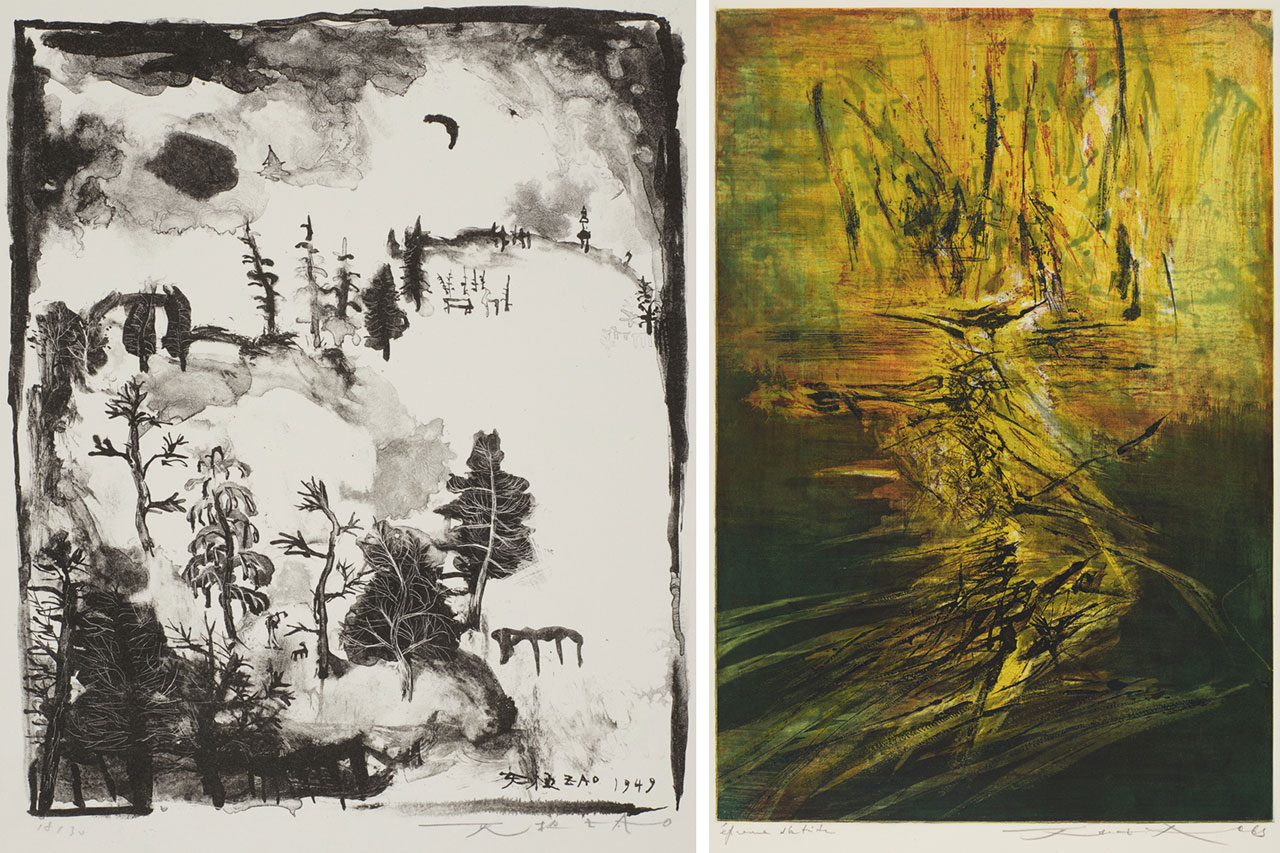
Right: Zao Wou-Ki, Untitled, 1963, etching and aquatint, M+, Hong Kong. Gift of Françoise Marquet-Zao, 2024, Zao Wou-Ki © ProLitteris, Zurich, 2025, Image courtesy of M+, Hong Kong