
PRESENTATION: The Omnipotence of Dreams

The exhibition “The Omnipotence of Dreams”, boldly pairs fine art with artist-designed jewelry. This curatorial experiment highlights the disciplinary crossover between adornment and visual art, revealing how jewelry—often relegated to the realm of ornament—can embody radical aesthetic and conceptual possibilities. The exhibition situates jewelry within the avant-garde tradition, particularly the Surrealist movement, which transformed accessories into objects of desire, provocation, and psychological depth.
By Dimitris Lempesis
Photo: Gagosian Archive
By juxtaposing historic pieces with newly commissioned works, “The Omnipotence of Dreams “underscores jewelry’s enduring role as both intimate ornament and conceptual artwork. Surrealist jewelry emerged in the mid-20th century as a rebellion against Art Nouveau’s organic curves and Art Deco’s geometric elegance. Salvador Dalí, Man Ray, and others sought to destabilize conventions, turning jewelry into miniature sculptures that embodied dreams, subconscious impulses, and erotic symbolism.
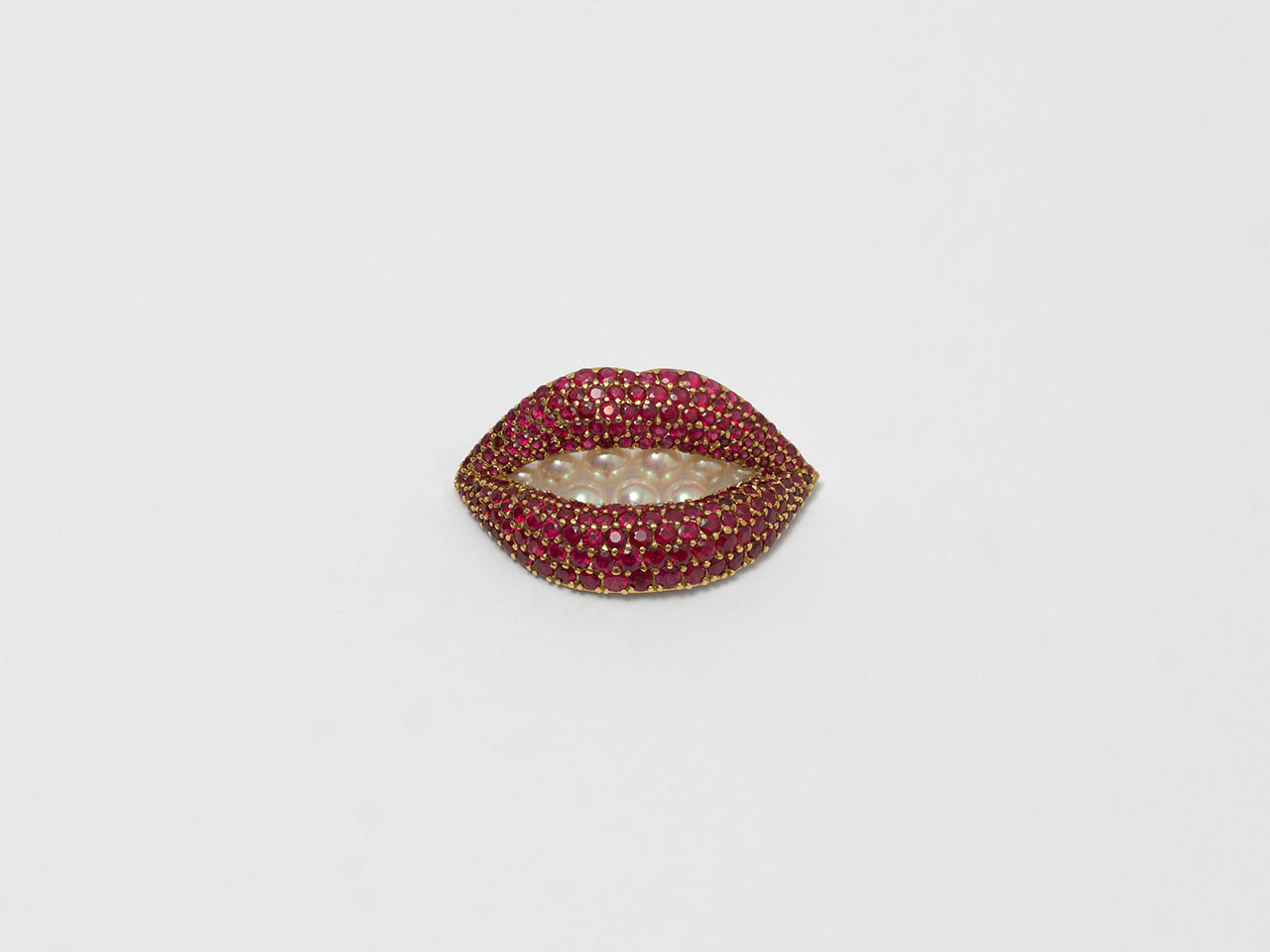
This legacy is vividly evoked in the exhibition through Tom Wesselmann’s “Study for Mouth #10” (1966), a Pop-inflected painting of parted lips that resonates with Dalí’s “Ruby Lips brooch” (1949), designed with jeweler Henryk Kaston. Both works recall Dalí’s “Mae West Lips Sofa” (1937–38), collapsing distinctions between painting, sculpture, and ornament. Together, they demonstrate how Surrealism transformed the mouth—a site of speech, desire, and consumption—into a recurring motif of uncanny allure.
Floral imagery forms another thematic thread, linking jewelry to painting across generations. Claude Lalanne’s botanical brooches and chokers provide a historical anchor, while contemporary artists reinterpret blossoms as symbols of identity, romance, and impermanence.
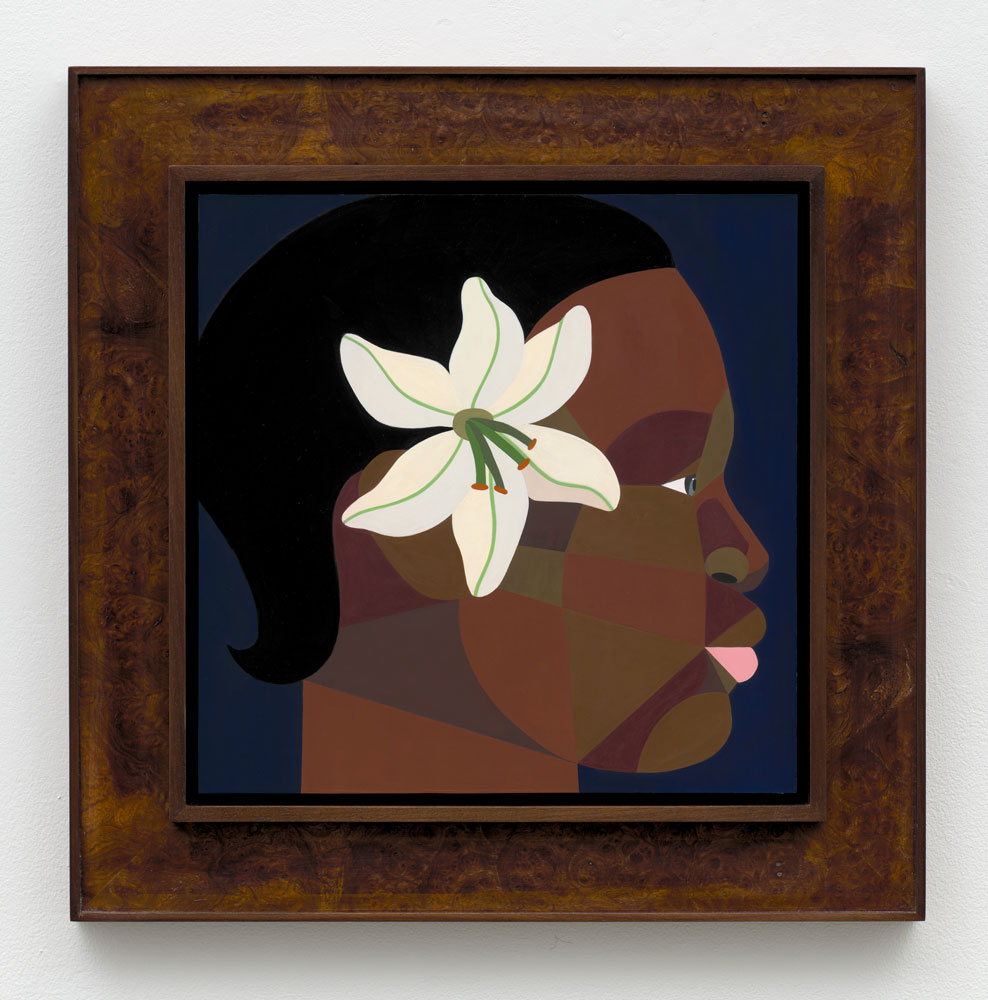
Urs Fischer’s “Looking Up” (2025) overlays Veronica Lake’s portrait with a silkscreened flower, suggesting fame’s fleeting nature and the erasure of individuality. Derrick Adams’s “Untitled (Woman with Orchid) (2024)” portrays a Black figure adorned with a white blossom, reclaiming beauty and cultural affirmation within portraiture. Takashi Murakami’s smiling flowers, adapted from anime and kawaii culture, transform the motif into a pop-cultural emblem of joy, repetition, and consumer aesthetics. Ewa Juszkiewicz’s “Portrait with Cordyline” (2025) replaces the sitter’s face with jewel-like folds of fabric, critiquing the Western canon’s suppression of feminine individuality. Here, flowers oscillate between romantic ornament and conceptual device, embodying both fragility and resilience.
The exhibition is not merely retrospective. Newly commissioned works by Ewa Juszkiewicz, Takashi Murakami, and Nathaniel Mary Quinn extend the dialogue into the present. Juszkiewicz continues her feminist reimaginings of portraiture, dismantling patriarchal traditions by obscuring faces with fabric and ornament. Murakami bridges high art and pop culture, his smiling flowers functioning as both playful motifs and critiques of consumerism. Quinn contributes psychologically charged compositions, layering fragmented identities that resonate with jewelry’s intimate relationship to the body. Together, these artists demonstrate how jewelry and painting alike can destabilize conventions of portraiture, identity, and ornamentation.
By pairing jewelry with painting, sculpture, and mixed media, ¨The Omnipotence of Dreams” reframes adornment as conceptual object rather than mere accessory. Jewelry here becomes a site of transformation—capable of reframing the body, identity, and memory. The exhibition situates Surrealist pioneers alongside contemporary figures, affirming jewelry’s enduring role in the avant-garde. It challenges viewers to consider how adornment can embody dreams, desires, and cultural codes, collapsing boundaries between disciplines.
Set against the alpine backdrop of Gstaad, the exhibition acquires a dreamlike resonance. The snowy landscape mirrors the Surrealist fascination with transformation and the uncanny. Within this setting, lips become brooches, flowers become masks, and garments become portraits. “The Omnipotence of Dreams” invites viewers to inhabit a world where jewelry and art converge, where dreams reshape both ornament and image. It is a testament to the omnipotent power of imagination, reminding us that adornment is not peripheral but central to the history of modern and contemporary art.
This exhibition is more than a showcase of beautiful objects—it is a philosophical meditation on the nature of art and ornament. By collapsing disciplinary boundaries, “The Omnipotence of Dreams” reveals jewelry as a radical medium of expression, capable of embodying desire, critique, and transformation. In pairing Surrealist icons with contemporary voices, Gagosian Gstaad offers a vision of art as adornment, adornment as art—a dreamscape where the boundaries between disciplines dissolve, and where the omnipotence of dreams reigns supreme.
Artists: Derrick Adams, Glenn Brown, Alexander Calder, Leonora Carrington, Maurizio Cattelan, John Currin, Salvador Dalí, Max Ernst, Urs Fischer, Lucio Fontana, Thomas Houseago, Ewa Juszkiewicz, Jeff Koons, Claude Lalanne, Man Ray, Takashi Murakami, Nathaniel Mary Quinn, Tom Wesselmann
Photo: Tom Wesselmann, Study for Mouth #10, 1966, Liquitex on gesso panel, two sections, 7 x 6 5/8 inches (17.8 x 16.8 cm), © The Estate of Tom Wesselmann/Licensed by ARS/VAGA, New York, Photo: Maris Hutchinson, Courtesy Gagosian
Info: Gagosian, Promenade 79, Gstaad, Switzerland, Duration: 19/12/22025-25/1/2026, Days & Hours: Fri-Wed 11:00-13:00 & 14:30-18:00, https://gagosian.com/
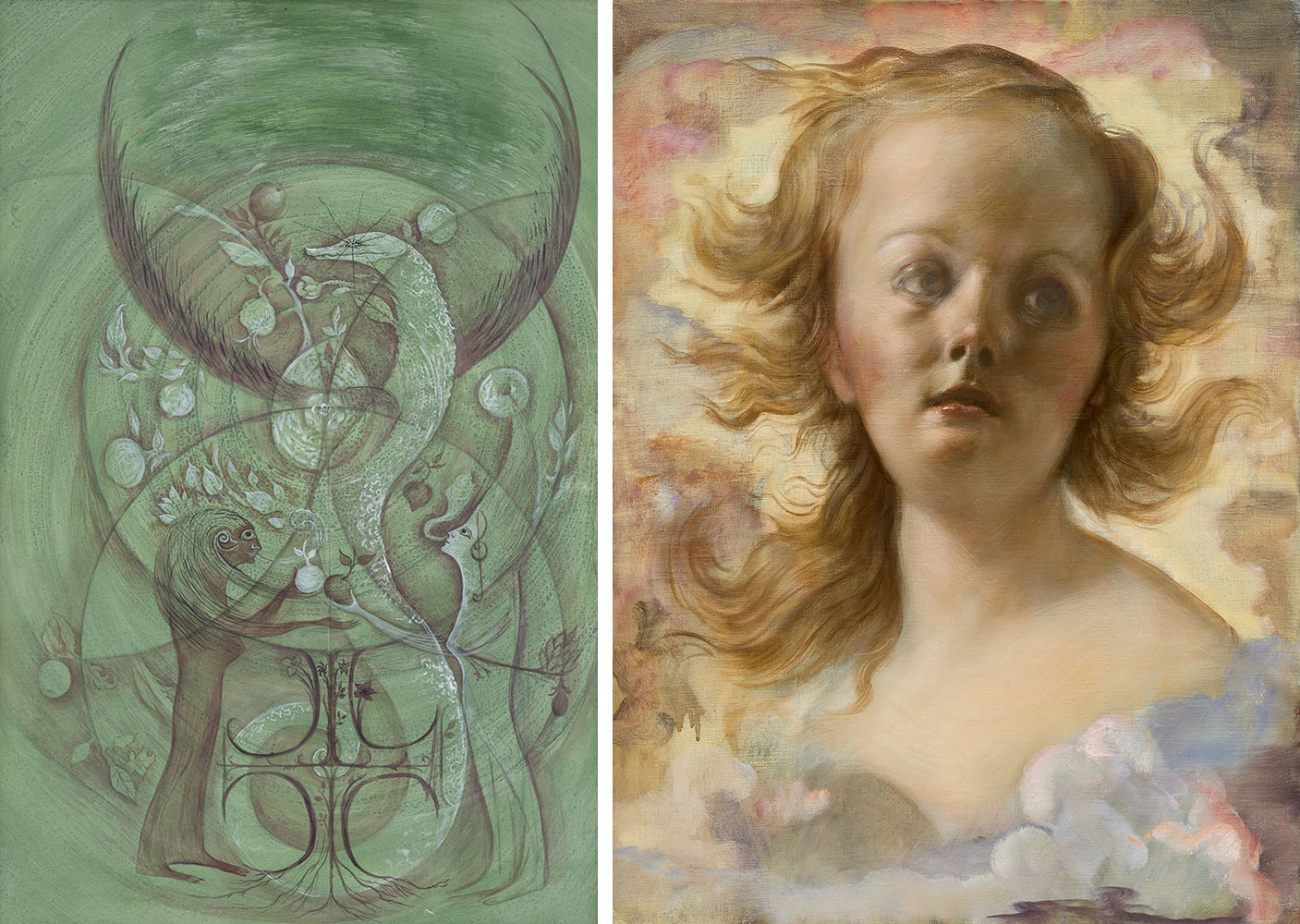
Right: John Currin, Face in Clouds, 2025, Oil on canvas, 32 x 24 inches (81.3 x 61 cm), © John Currin, Photo: Owen Conway, Courtesy Gagosian