
PRESENTATION: Heinz Mack-The Purity Of Light And Space, Part II

Few artists have reshaped the sensorial language of postwar art as decisively as Heinz Mack. For more than seventy years, the German artist has explored the unstable boundaries between light, color, structure, and space—an exploration that has not only shaped his own prolific output but has also transformed the landscape of contemporary art. Best known as the co-founder of the ZERO movement, Mack stands today as one of the most influential figures in the history of kinetic and light art.
By Efi Michalarou
Photo: Almine Rech Gallery Archive
The exhibition “The Purity Of Light And Space” with works by Heinz Mack’s at Maison La Roche—the iconic 1920s residence designed by Le Corbusier and Pierre Jeanneret—offers an especially immersive setting for this inquiry. The house is not a neutral backdrop; it is a masterwork of modernist architecture, conceived as a choreography of luminous volumes and geometric clarity. Within this environment, Mack’s works from 1995 to 2021 unfold with heightened intensity. They seem to breathe with the shifting daylight, dissolve into the architectural planes, or thrust outward into space with sharp chromatic force.
Light in Maison La Roche is not incidental; it is structural. Thus, as Mack’s radiant surfaces interact with the building’s long horizontal windows, curved ramps, and softened corners, the exhibition becomes a dynamic encounter between two artistic languages. Both Mack and Le Corbusier share an unwavering commitment to essentiality—reducing forms to their vital elements, allowing space and light to speak with clarity, and trusting that purity can generate emotion.
To understand the full resonance of Mack’s recent work, one must return to the rebellious atmosphere of Düsseldorf in the late 1950s. Together with Otto Piene, Mack founded the ZERO movement in 1957 as a radical departure from postwar Expressionism and its burden of psychological density. ZERO proposed nothing less than a reset—a “zero hour” from which a new visual language could emerge, rooted in clarity, luminosity, and the energy of pure experience.
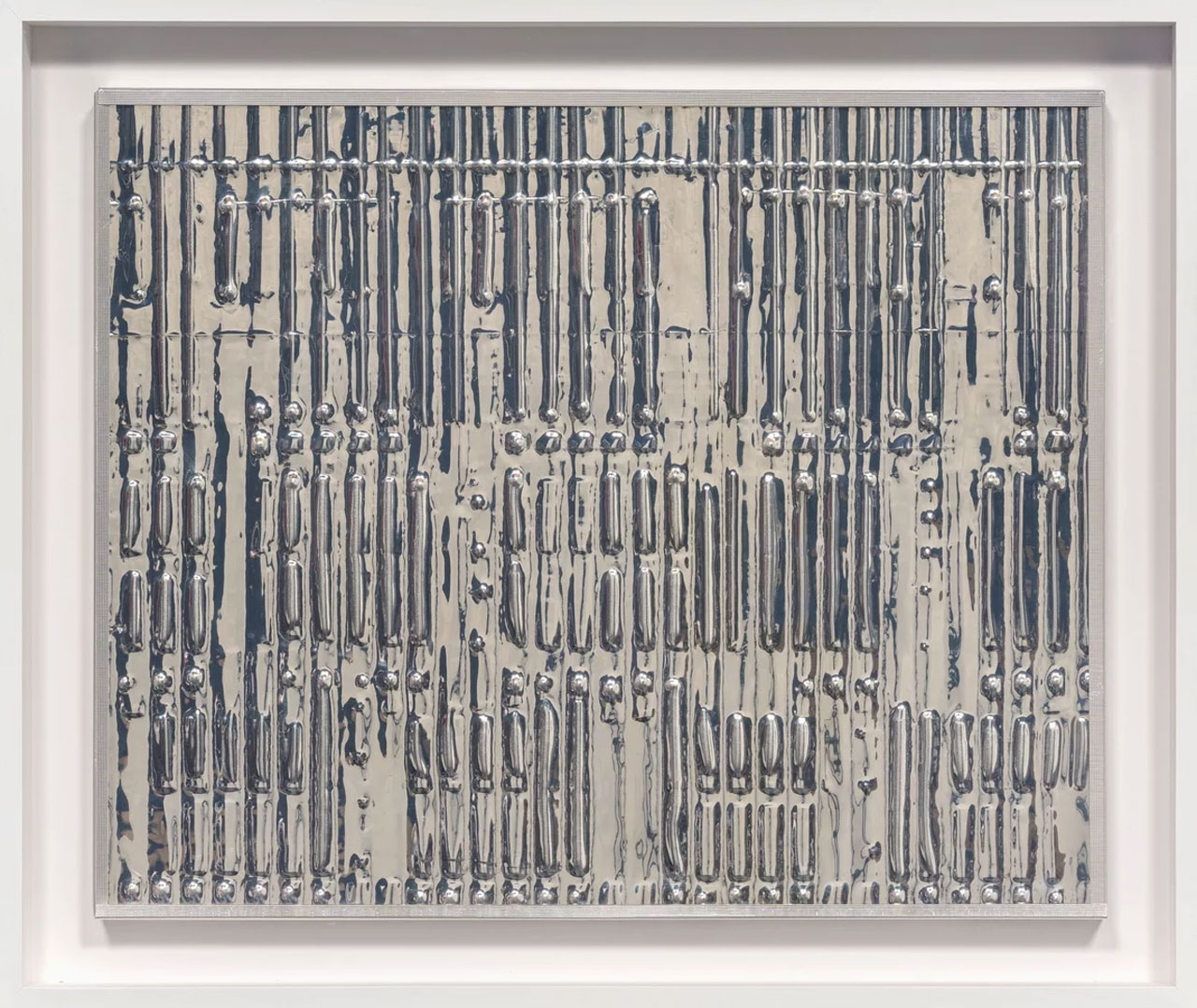
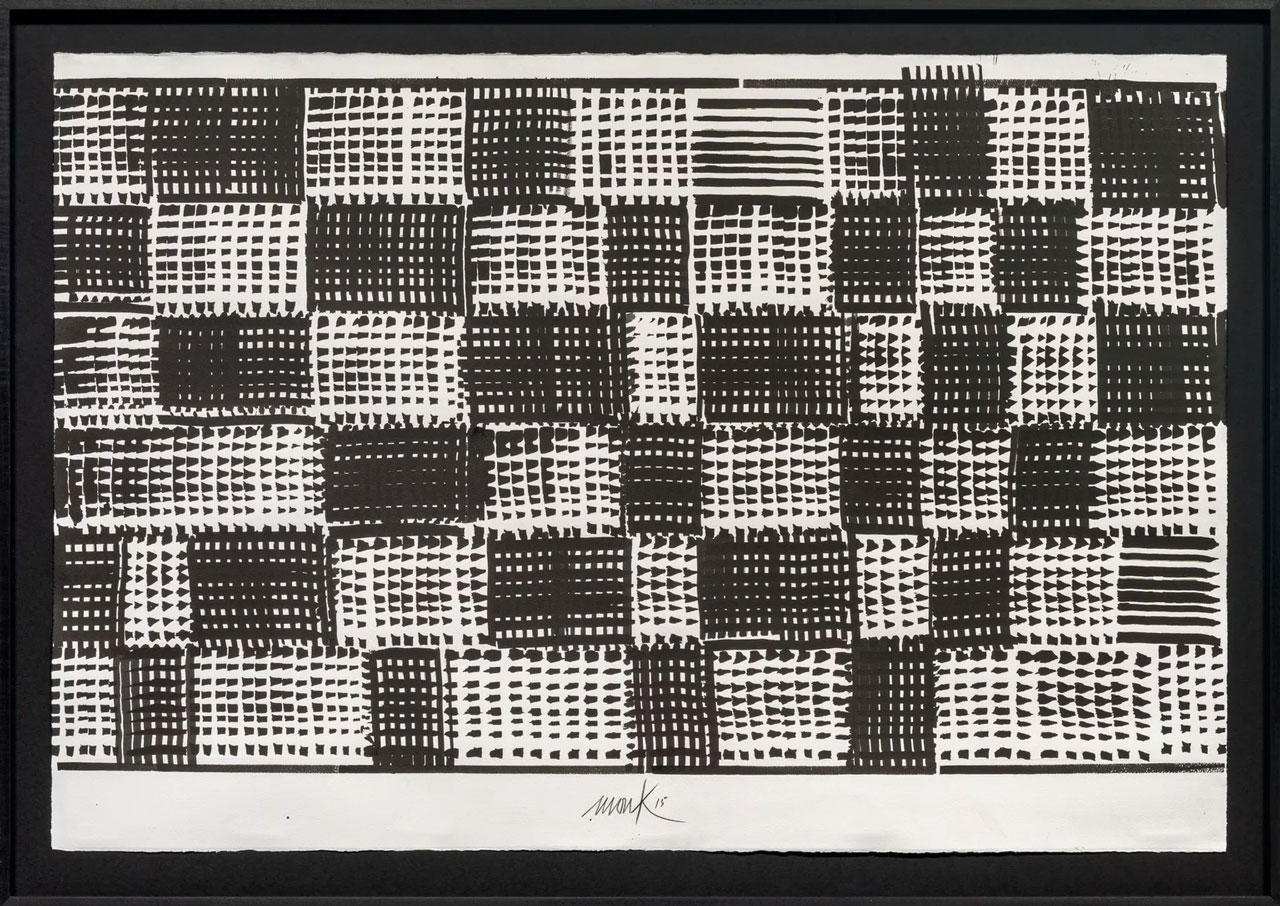
For Mack, ZERO was not an art style but a mindset. It opened the door to experimentation with materials that could reflect, refract, or channel light: metals, mirrors, pigments, sand, glass, and industrial surfaces. In the decades that followed, the artist expanded his scope to include monumental sculptures for public spaces, light-reliefs, luminous rotors, shimmering stelae, and kinetic installations. His artistic vocabulary became vast, yet always anchored in a non-representational discipline in which light remained the central protagonist.
Throughout Mack’s practice runs a consistent philosophical proposition: the artwork is not an image but an event. The painted or sculpted surface is not a window onto representation; it is an autonomous arena in which light generates vibration, movement, and rhythm. By integrating optical dynamism, mechanical motion, chromatic pulsation, and spatial expansion, Mack destabilizes the idea of the artwork as static. His pieces often seem to exceed their physical boundaries—visually, conceptually, and phenomenologically.
In this way, Mack challenges the viewer to participate in a perceptual transformation. His works do not reveal themselves at once; they shift over time, responding to changing light conditions and to the movement of the observer. Viewing becomes an active process, a form of co-creation in which perception is continuously renewed.
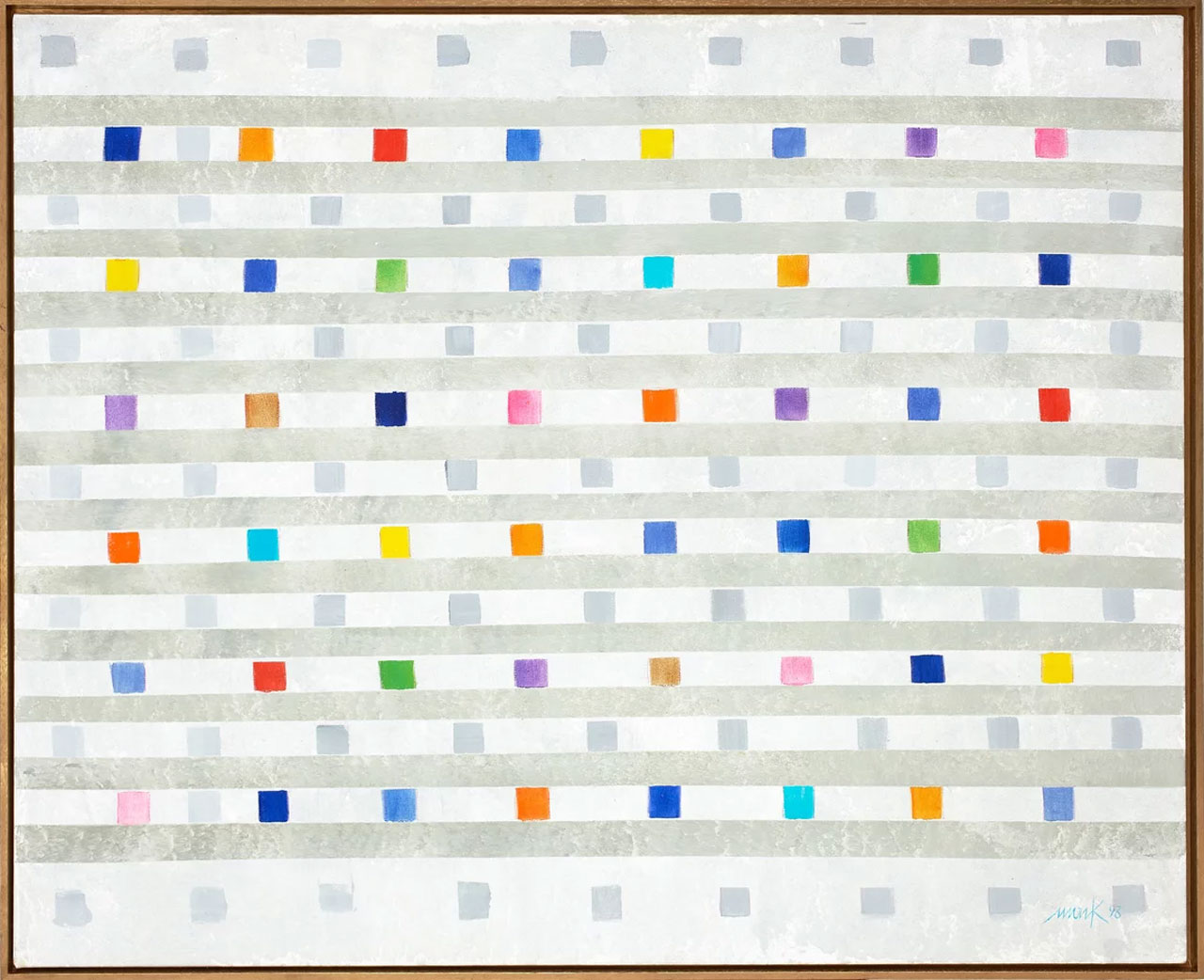
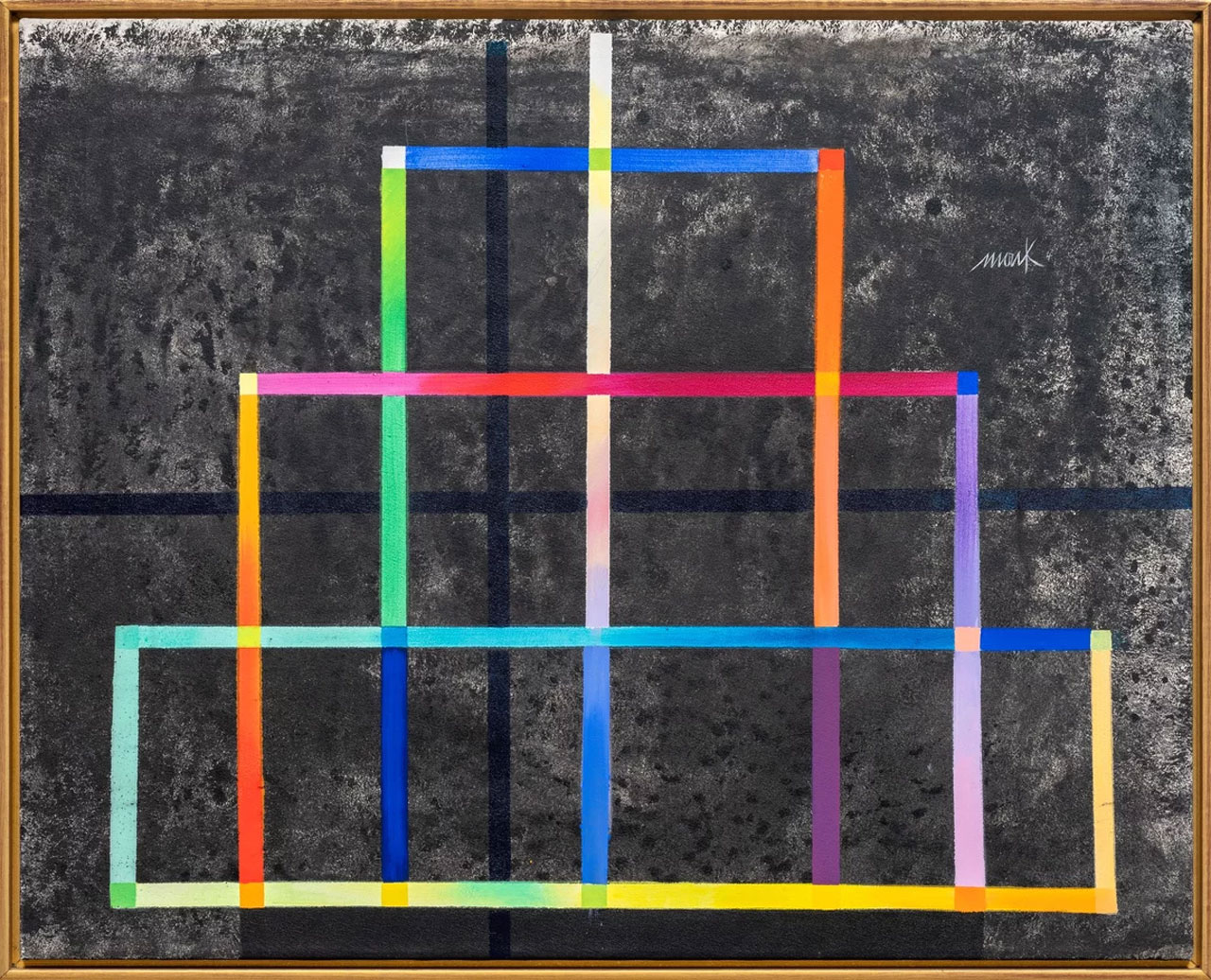
A key focus of the current exhibition is Mack’s “Chromatische Konstellationen” (Chromatic Constellations), a body of work that crystallizes the artist’s return to color in 1991 after decades primarily dominated by white, silver, black, and metallic surfaces. For Mack, color is not a symbolic or emotional code but a phenomenological event—a way of structuring space through vibratory fields.
In these works, color operates with architectural precision. Transparent layers overlap, creating atmospheric densities; thin linear gradations dissolve into radiant fields; juxtaposed chromatic blocks generate pulsating spatial tensions. The result is a visual experience that feels at once musical and luminous. Mack often speaks of the “sound” of color, and indeed the Constellations unfold like visual compositions—oscillating, resonating, modulating in continuous chromatic rhythms.
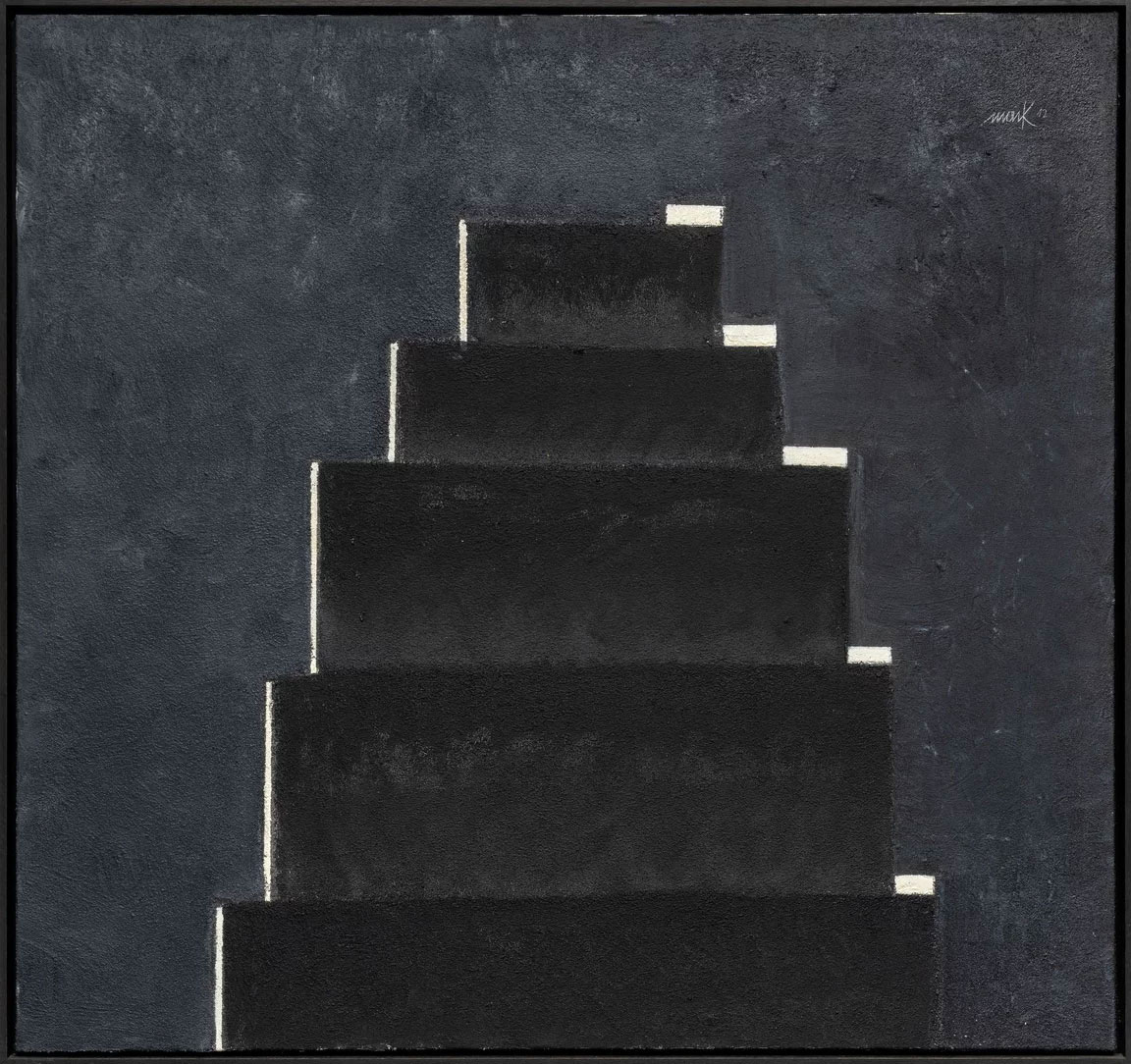
There is a sense that each painting is not merely an object but a threshold: a liminal zone where light and dark meet, where color emerges from the primordial conditions of vision. In these works, pictorial space becomes a living field, expanding beyond the canvas and into the ambient space of Maison La Roche.
What binds Mack’s work so naturally to Le Corbusier’s architecture is a shared belief in the expressive potential of purity. Both artist and architect reject ornamentation in favor of essential form. Both treat light as a structural element rather than a decorative one. Both seek to generate emotional resonance through clarity, proportion, rhythm, and chromatic precision.
Mack’s Chromatic Constellations and Le Corbusier’s architecture meet in their commitment to the dynamic interplay of color and light. The canvases modulate space through chromatic vibration; the architecture absorbs and redirects sunlight through carefully calibrated surfaces. Together, they form a dialogue not of objects, but of energies.
At 93, Heinz Mack’s artistic vision remains remarkably expansive. His practice—restless, luminous, forward-looking—continues to evolve, reaffirming his belief in the transformative power of perception. His works do not merely reflect light; they stage it, activate it, allow it to sculpt the space around them.
In an age saturated with visual overload and rapid digital stimuli, Mack’s art performs a rare gesture: it slows perception down. It demands attentiveness. It invites viewers to engage with light and color as phenomena that shape thought, emotion, and space. His works demonstrate that clarity—not noise—can be the most radical artistic gesture of all.
Heinz Mack has often described his work as a “celebration of light.” Seen within the luminous architecture of Maison La Roche, this celebration becomes an immersive, vital experience—one that reminds us that the simplest elements, when treated with precision and imagination, can open the door to entirely new ways of seeing.
Photo: Heinz Mack, Pallet-Picture (Chromatic Constellation), 2006, Acrylic on canvas, 130 x 160 cm, 51 x 63 in, © Heinz Mack, Courtesy the artist and Almine Rech Gallery
Info: Fondation Le Corbusier – Maison La Roche, 10 square du Docteur Blanc, Paris, France, Duration: 1/10-20/12/2025, Days & Hours: Tue-Sat 10:00-18:00, www.fondationlecorbusier.fr/
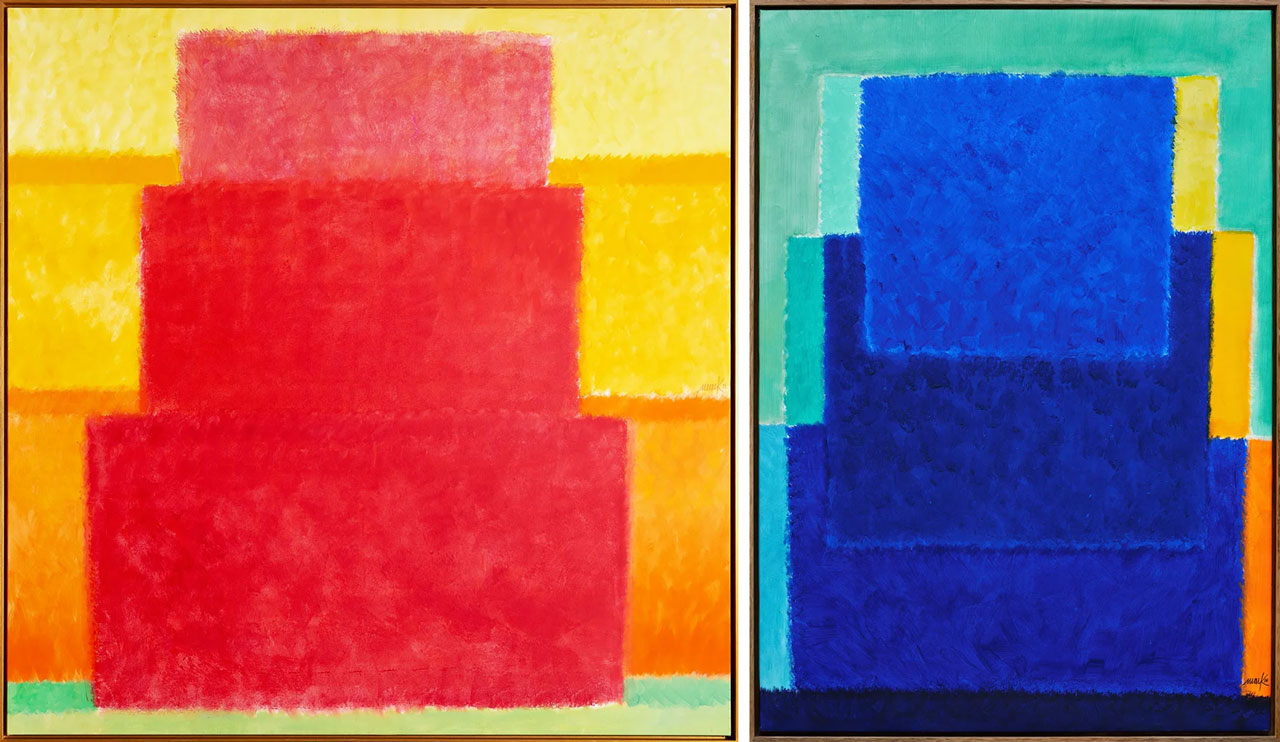
Right: Heinz Mack, Untitled (Chromatic Constellation), 2016, Acrylic on canvas, 140.5 x 100 cm, 55 1/2 x 39 1/2 in, © Heinz Mack, Courtesy the artist and Almine Rech Gallery