
ART CITIES: Paris-Joseph Cornell

From a New York basement, Joseph Cornell transformed everyday finds into some of the 20th century’s most poetic artworks. Rarely travelling, he explored the world through imagination, assembling books, ephemera, and small objects into his iconic glass-fronted shadow boxes. An exhibition invites you into a quietly wondrous universe of invented journeys.
By Dimitris Lempesis
Photo: Gagosian Archive
Conceived by curator Jasper Sharp in collaboration with American filmmaker Wes Anderson, the exhibition “The House on Utopia Parkway: Joseph Cornell’s Studio Re-Created” transports the artist’s New York workspace to the heart of Paris. The storefront gallery at 9 rue de Castiglione is transformed into a meticulously composed environment—part time capsule, part life-size shadow box—marking the first solo presentation of Cornell’s work in Paris in over forty years.
Joseph Cornell neither drew nor painted, nor did he receive formal artistic training, yet he created one of the most singular and influential bodies of work of the twentieth century. Although he never traveled beyond the United States, Paris occupied a vivid place in his inner life. He navigated its streets through postcards, guidebooks, and conversations with his close friend Marcel Duchamp, dedicating numerous works to its poets, architecture, and historical figures.
Cornell lived with his mother and brother in a modest house in Queens, New York, where he worked in a basement studio lined with shelves of whitewashed shoeboxes and tins. These containers held the fruits of his daily excursions through Manhattan’s bookstores, antique shops, and dime stores: prints, maps, feathers, marbles, toys, shells, and other fragments he affectionately called his “spare parts department.” From these materials emerged his intricate collages, assemblages, and glass-fronted shadow boxes—works that would profoundly influence artists from Yayoi Kusama and Robert Rauschenberg to Betye Saar, Carolee Schneemann, Andy Warhol, and many others.
This intimate universe is reanimated in Paris by Wes Anderson and longtime collaborators, alongside exhibition designer Cécile Degos, through more than three hundred objects and curiosities drawn from Cornell’s own collection. Within this evocative setting, key shadow boxes are presented, including “Pharmacy” (1943), once owned by Teeny and Marcel Duchamp; “Untitled (Pinturicchio Boy)” (c. 1950) from the celebrated “Medici: series; “A Dressing Room for Gille” (1939), a homage to Watteau’s “Pierrot” in the nearby Louvre; and “Blériot II” (c. 1956), honoring the pioneering French aviator. These are shown alongside loans from the Joseph Cornell Study Center at the Smithsonian American Art Museum, including unfinished boxes that offer rare insight into Cornell’s working process.
Visible through the gallery’s street-facing window, “The House on Utopia Parkway” turns the space itself into a monumental Cornell box—softly illuminated, contemplative, and reminiscent of the nocturnal hours the artist spent assembling his imagined worlds.
Photo left: Joseph Cornell, A Dressing Room for Gille, 1939, Glazed wooden box, wood panel cover, paint, mirror, cork, printed paper collage, cotton thread, textiles, ribbon tape, 15 x 8 5/8 x 6 3/4 inches (38.1 x 21.9 x 17 cm), Richard L. Feigen Collection, © 2025 The Joseph and Robert Cornell Memorial Foundation/Licensed by VAGA at Artists Rights Society (ARS), New York, Photo: Owen Conway, Courtesy Gagosian. Photo right: Joseph Cornell, Pharmacy, 1943, Glass-paned wood cabinet, marbled paper, mirror, glass shelves, and twenty glass bottles containing various paper cuttings (crêpe, tissue, printed engravings, and maps), colored sand, pigment, colored aluminum foil, feathers, paper butterfly wing, dried leaf, glass marble, fibers, driftwood, wood marbles, glass rods, beads, seashells, crystals, stone, wood shavings, sawdust, sulfate, copper, wire, fruit pits, paint, water, and cork, 15 1/4 x 12 x 3 1/8 inches (38.7 x 30.5 x 7.9 cm), © 2025 The Joseph and Robert Cornell Memorial Foundation/Licensed by VAGA at Artists Rights Society (ARS), New York, Photo: Dominique Uldry, Courtesy Gagosian
Info: Gagosian, 9 rue de Castiglione, Paris, France, Duration: 16/12/2025-14/3/2026, Days & Hours: Tue-Sat 10:30-18:30, https://gagosian.com/
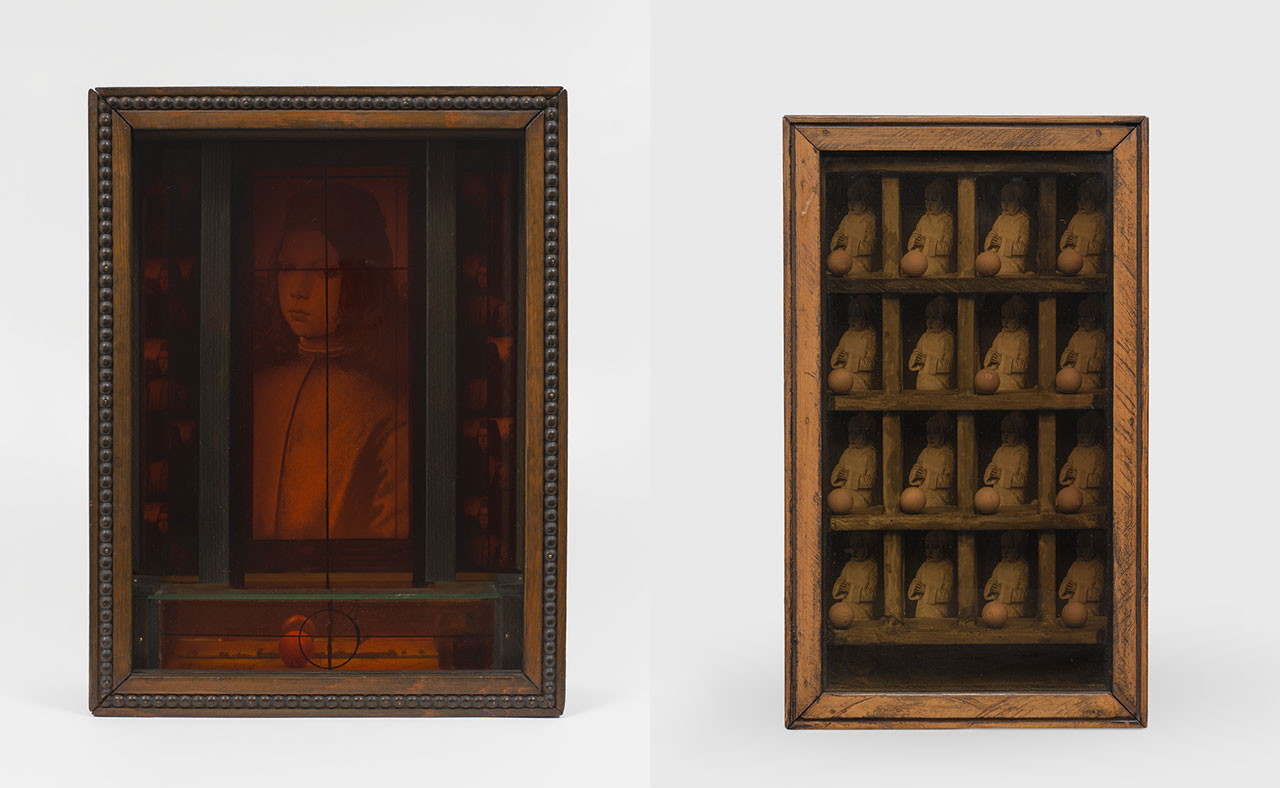
Right: Joseph Cornell, Flemish Princess, c. 1950, Wood, printed paper, wood balls, cork, and tinted glass-paned wood box construction, 17 3/8 x 10 1/4 x 2 5/8 inches (44.1 x 26 x 6.7 cm), © 2025 The Joseph and Robert Cornell Memorial Foundation/Licensed by VAGA at Artists Rights Society (ARS), New York, Courtesy Michael Rosenfeld Gallery and Gagosian
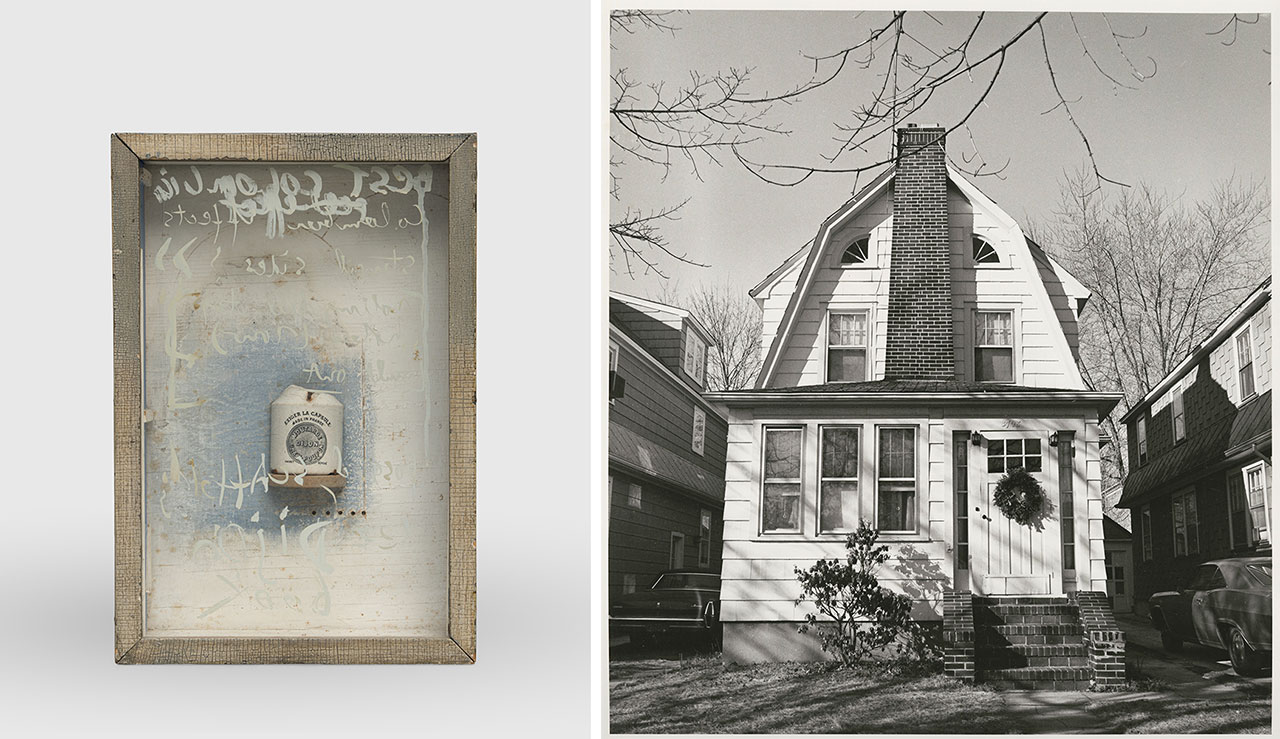
Right: Joseph Cornell’s family home at 37–08 Utopia Parkway in Queens, New York, 1969. © 1991 Hans Namuth Estate, Courtesy Center for Creative Photography, University of Arizona
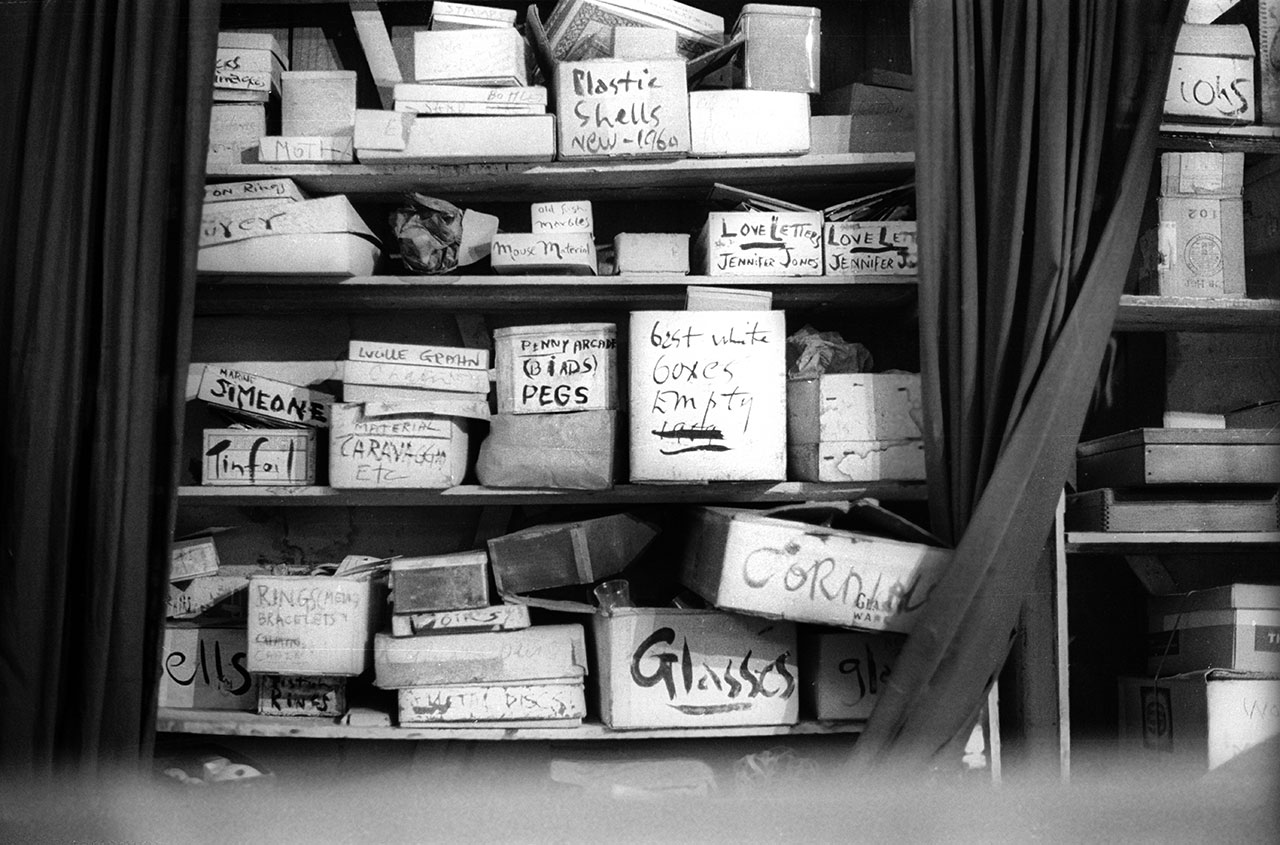
Joseph Cornell’s studio in the basement of his family home in Queens, New York, 1971.
Photo: © Harry Roseman 1971