PRESENTATION: Gabriella Boyd-I trust you would

For Gabriella Boyd, painting operates as an act of translation: a movement from the interior—felt, remembered, or intuited—into the exterior and visible. Her practice gives form to sensations that resist language, articulating memories, psychic spaces, and embodied states through a pictorial vocabulary that is at once intimate and expansive.
By Efi Michalarou
Photo: : Grimm Galley Archive
Gabriella Boyd collapses the distinction between inner and outer worlds by fusing representational imagery with symbolic and diagrammatic structures, producing paintings that function less as illustrations than as sites of encounter. In this way, painting becomes an approximation of sentiment or speech, a means by which invisible forces—desire, vulnerability, care—are allowed to circulate with sincerity and force.
This concern with fragility as a generative condition finds a philosophical analogue in Love’s Work (1995), the luminous memoir by British philosopher Gillian Rose. Writing in the shadow of terminal illness, Rose refuses to cast vulnerability as weakness. Instead, fragility emerges as intrinsic to love itself: the unavoidable consequence of openness, attachment, and risk. To love, for Rose, is to accept exposure—to inhabit desire while acknowledging the inevitability of loss. Tenderness and endurance are not opposites but coextensive states, bound together by the courage it takes to remain present.
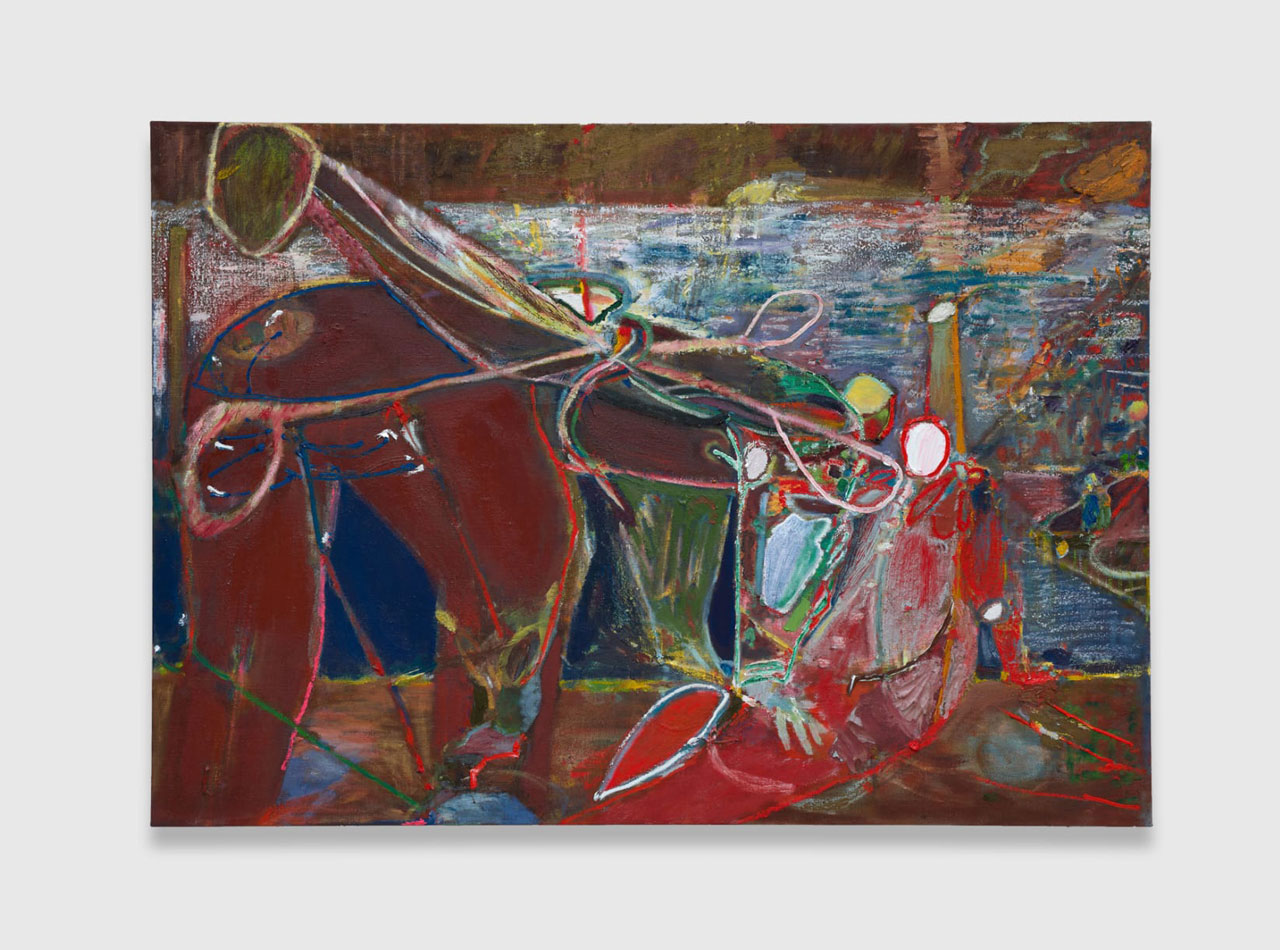
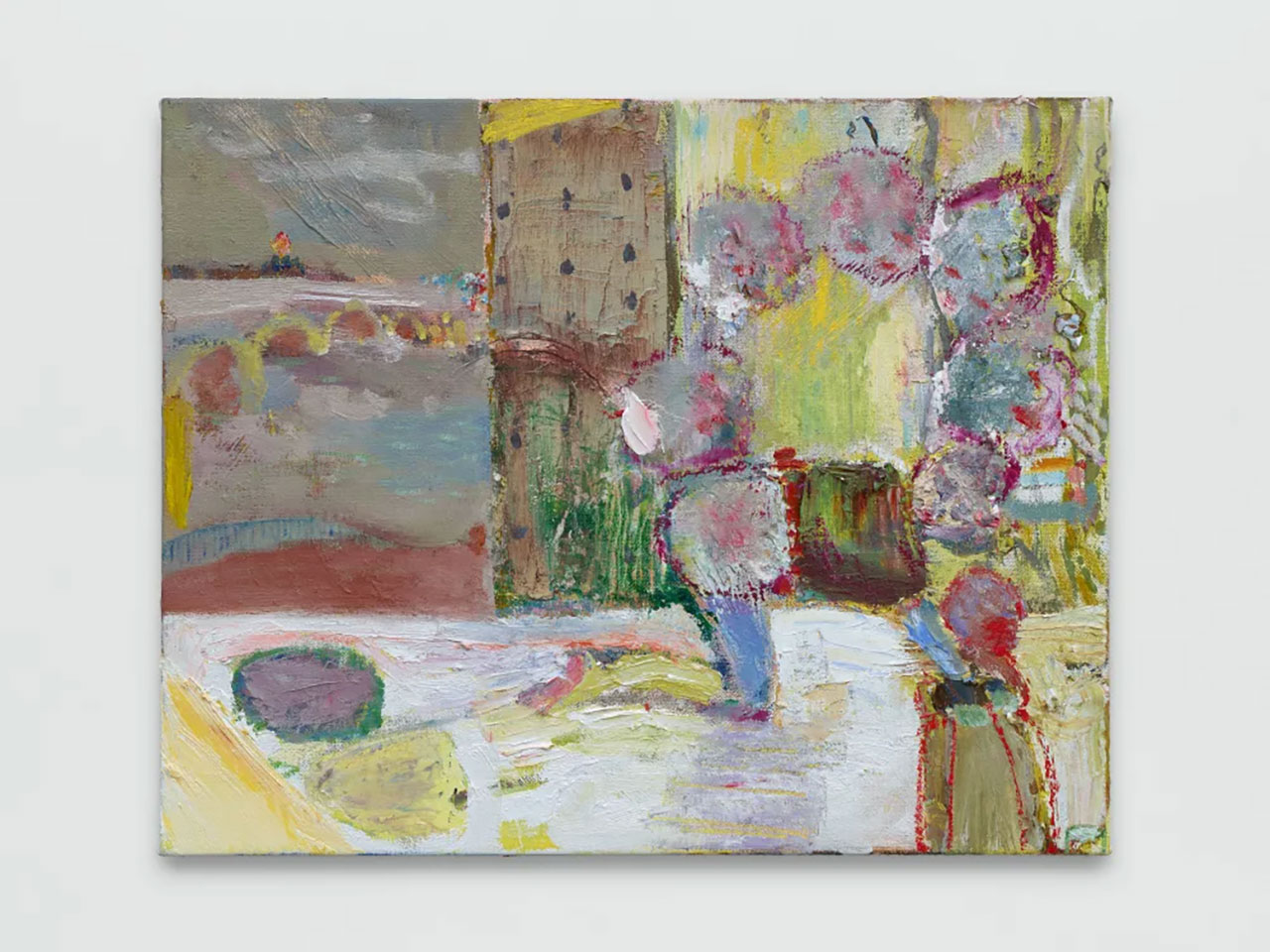
This same slippage animates Boyd’s recent solo exhibition, “I trust you would”, in which the artist explores the fragile force of connection through dreamlike, corporeal forms. Neither fully figurative nor wholly abstract, the paintings occupy a liminal zone where intimacy and resilience coexist. A porcine ambulance, its body overlaid with a rib-like structure, hurtles through a city at sunset, cradling two small figures within its interior. Elsewhere, crystalline shards of light fracture across the surface, scattering attention and destabilising spatial coherence. Pastel hues streaked with ochre mingle with deconstructed floor plans that sprawl across the background, punctuated by stipples and small crosses—a recurring motif that suggests both annotation and incision.
Though Boyd’s paintings resist linear narrative or explicit autobiography, they are deeply affective. She begins each work with intuitive marks and gestures, allowing feeling rather than representation to guide the process. Working within a lineage informed by psychoanalytic thought and Surrealist strategies, Boyd treats the unconscious as a site of knowledge. Forms emerge through associative drift, revealing themselves slowly over time. The resulting images feel organic in both genesis and appearance: soft, sinewy structures that hover on the threshold of corporeality, never fully resolving into stable bodies yet unmistakably bodily in their charge.
Rose’s writing in “Love’s Work” enacts a comparable collapse of the boundary between inner life and external circumstance. Her illness—a body under siege—provides the literal framework, but the memoir’s power lies equally in her uncompromising self-exposure. Rose presents a mind alert and incisive, a heart open to the world, even as the flesh falters. Love, in her account, is neither consolatory nor idealised. It is exacting and fallible, a “work” that demands constant reckoning with failure, endurance, and grief.
Attentive to rhythm and cadence, Rose often approaches the elliptical intensity of poetry. She writes, “Poetry’s its own agon that allows us to recognise devastation as the rift between power and powerlessness.” Yet poetry also carries an impossible demand: to make an irreducibly individual experience visible and intelligible to others. It must translate private devastation into a shared form without flattening its singularity.
Boyd enacts a similar task through painting. The constitutive tension of her work lies in maintaining the autonomy of each canvas while sustaining a sense of unity across the exhibition as a whole. That unity is not imposed but negotiated—mediated through the restless interplay of the universal, the particular, and the singular. Fragility, here, is not collapse but exposure: a deliberate opening to impermanence that functions as both risk and strength. Boyd’s paintings attend closely to this precariousness, rendering it luminous rather than resolved.
As Rose observes, “It is power to be able to attend, powerful or powerless.” Boyd’s work embodies this attentiveness, holding space for vulnerability without sentimentality. In “I trust you would”, fragility becomes a measure of courage—an insistence on staying with what is uncertain, tender, and unfinished. In doing so, Boyd affirms painting as a medium uniquely capable of bearing the weight of lived experience: provisional, embodied, and charged with the quiet force of care.
Photo: Gabriella Boyd, Guardians, 2024-2025, Oil on linen, 150 x 220 cm | 59 x 86 5/8 in, © Gabriella Boyd, Courtesy the artist and Grimm Galley
Info: Grimm Galley, Keizersgracht 241, Amsterdam, The Netherlands, Duration: 12/12/2025-7/2/2026, Days & Hours: Tue-Sat 11:00-18:00, https://grimmgallery.com/
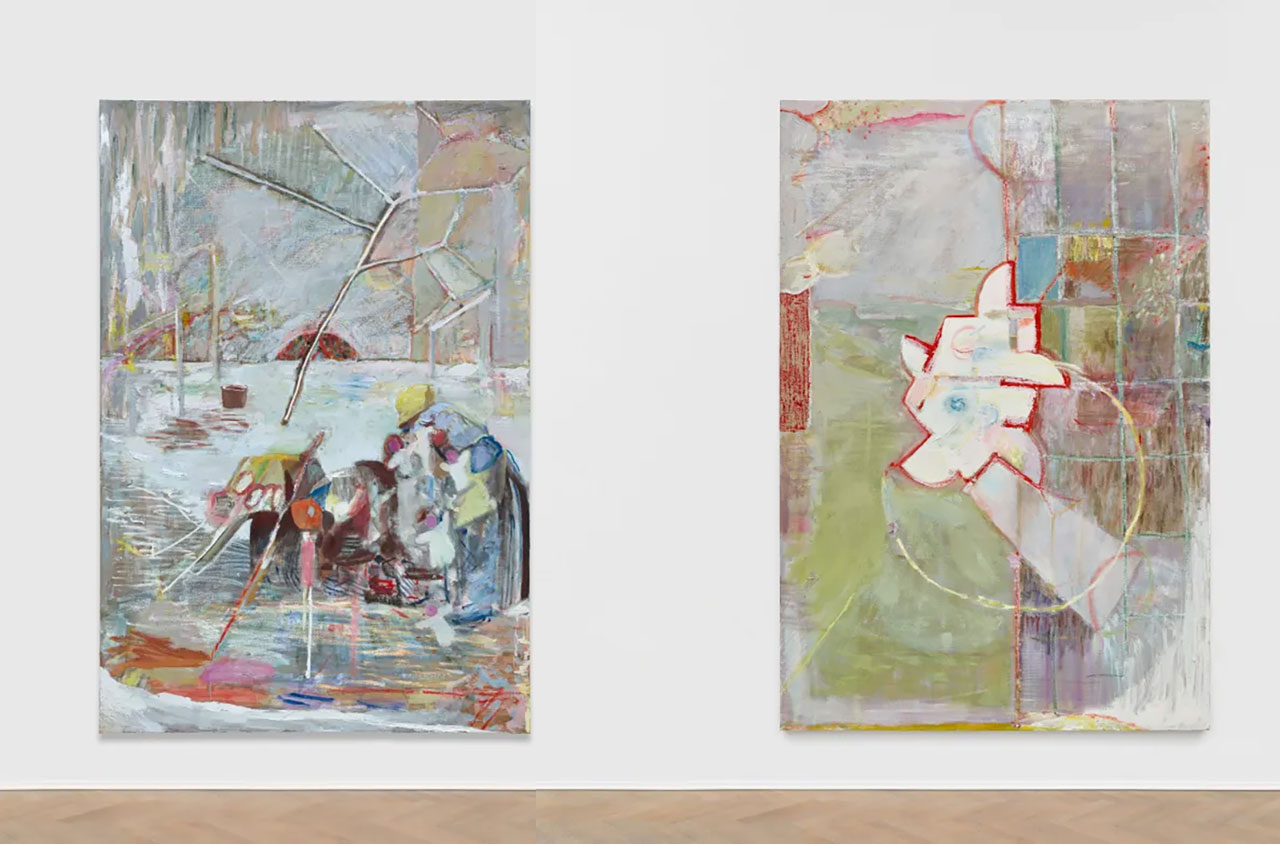
Right: Gabriella Boyd, Heart (v), 2024-2025, Oil on linen, 220 x 150 cm | 86 5/8 x 59 in, © Gabriella Boyd, Courtesy the artist and Grimm Galley
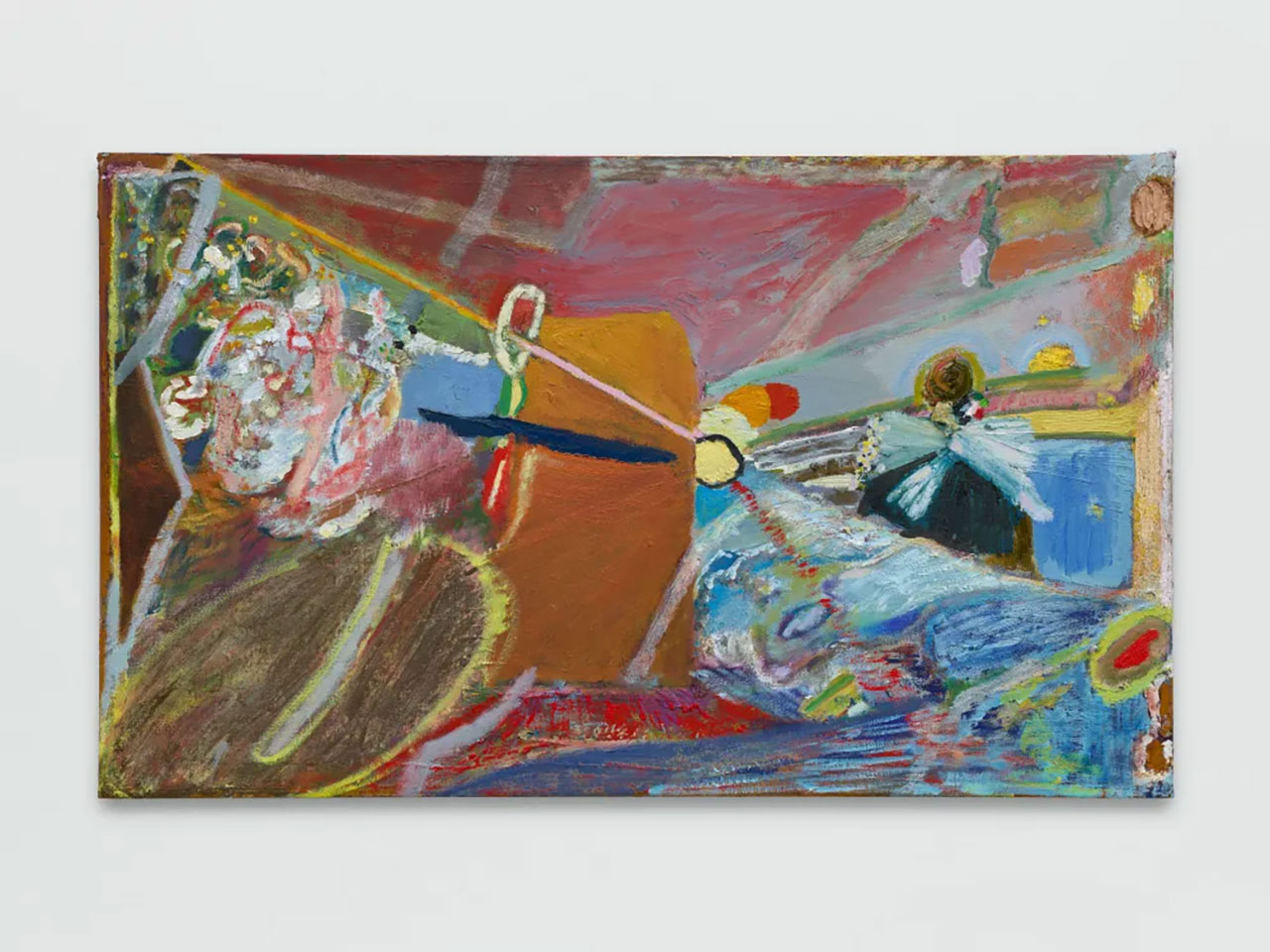
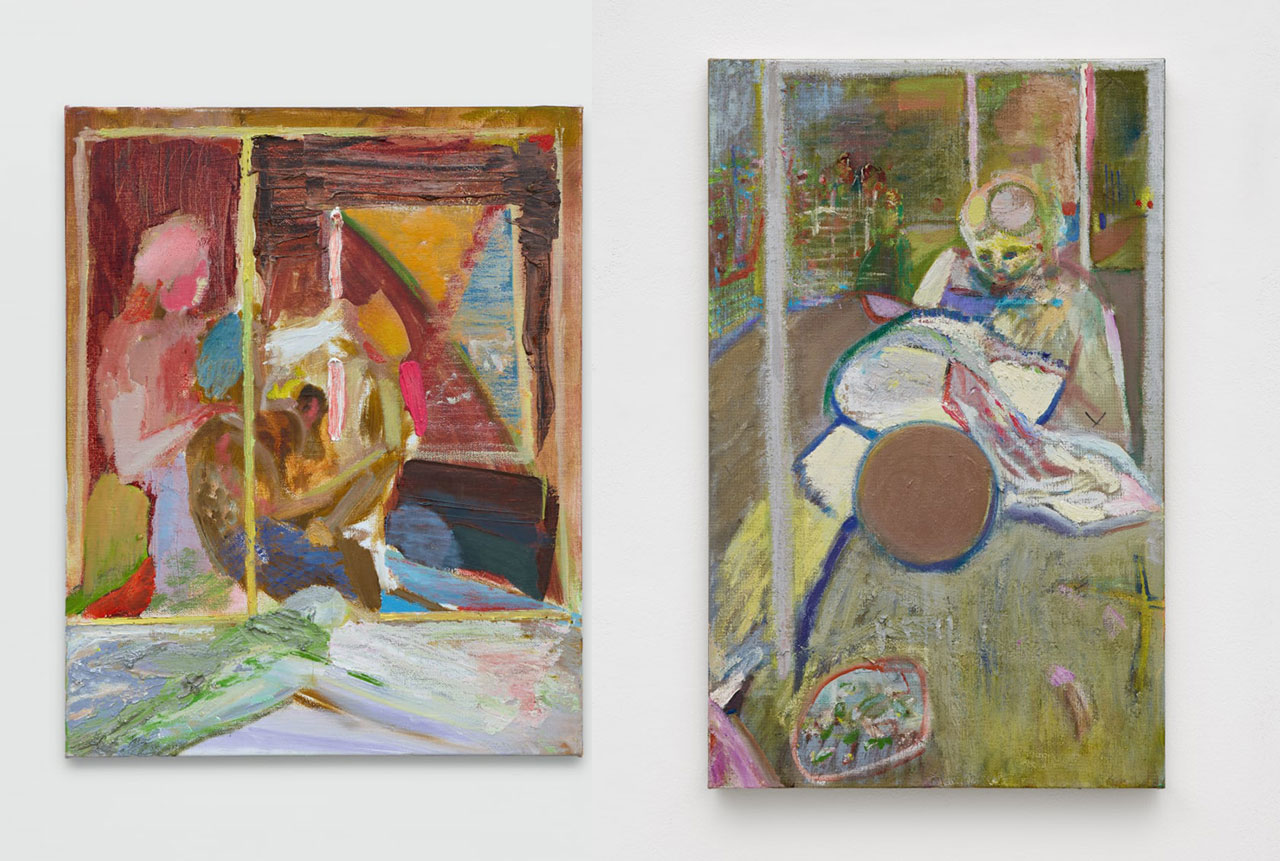
Right: Gabriella Boyd, Body Plate, 2024-2025, Oil on linen, 80 x 50 cm | 31 1/2 x 19 3/4 in, © Gabriella Boyd, Courtesy the artist and Grimm Galley