ART CITIES: Berlin-Moyra Davey

Moyra Davey is an artist known for her experimental films that take root in written monologues, her portraits, and her essays that pair photography and language. Combining autobiographical elements with a research-driven approach, Davey has developed a unique essayistic practice that interweaves image and script. Her work reflects a fondness for engaging with iconic texts and authors whose work spans the fields of memoir and psychoanalysis to art history.
By Dimitris Lempesis
Photo: n.b.k. Archive
Moyra Davey’s first institutional survey exhibition in Germany includes more than three decades of her work, and foregrounds the artist’s distinctive method of collaging and revisiting found or self-produced images and fragments of text. A central strand of this practice is her enduring strategy of mailing photographic prints which have been folded down to letter-size, and posting them directly to the galleries and institutions in which they are displayed. Unfolded for display, these color prints exhibit surface traces testifying to their postal journeys, evoking a passage across a network of people and places.
“EM Copperheads 151–210” (1990-2025) brings together macro photographs of US one-cent coins, the obverse of which has borne the profile of the 16th US President, Abraham Lincoln (1809–1865), from 1909 until mere weeks ago, when their minting was formally discontinued. Covered with countless marks of use, the scratched, tarnished, and discolored surfaces resemble rugged land- scapes and testify to their circulation through innumerable wallets, hands, and cash registers. Davey first began photographing these works in 1990 – a time when the end of the Cold War and the fall of the Berlin Wall accelerated the rise of global capitalism.
Davey’s engagement with Freud’s reflections on the complex links between money ingestion, excretion, and neurosis also provided the starting point for her early Super-8 film “Hell Notes” (1990/2017). The work not only marks the beginning of her use of moving images to address her adopted city of New York, but also introduces her own voice as a recurring motif in her video practice.
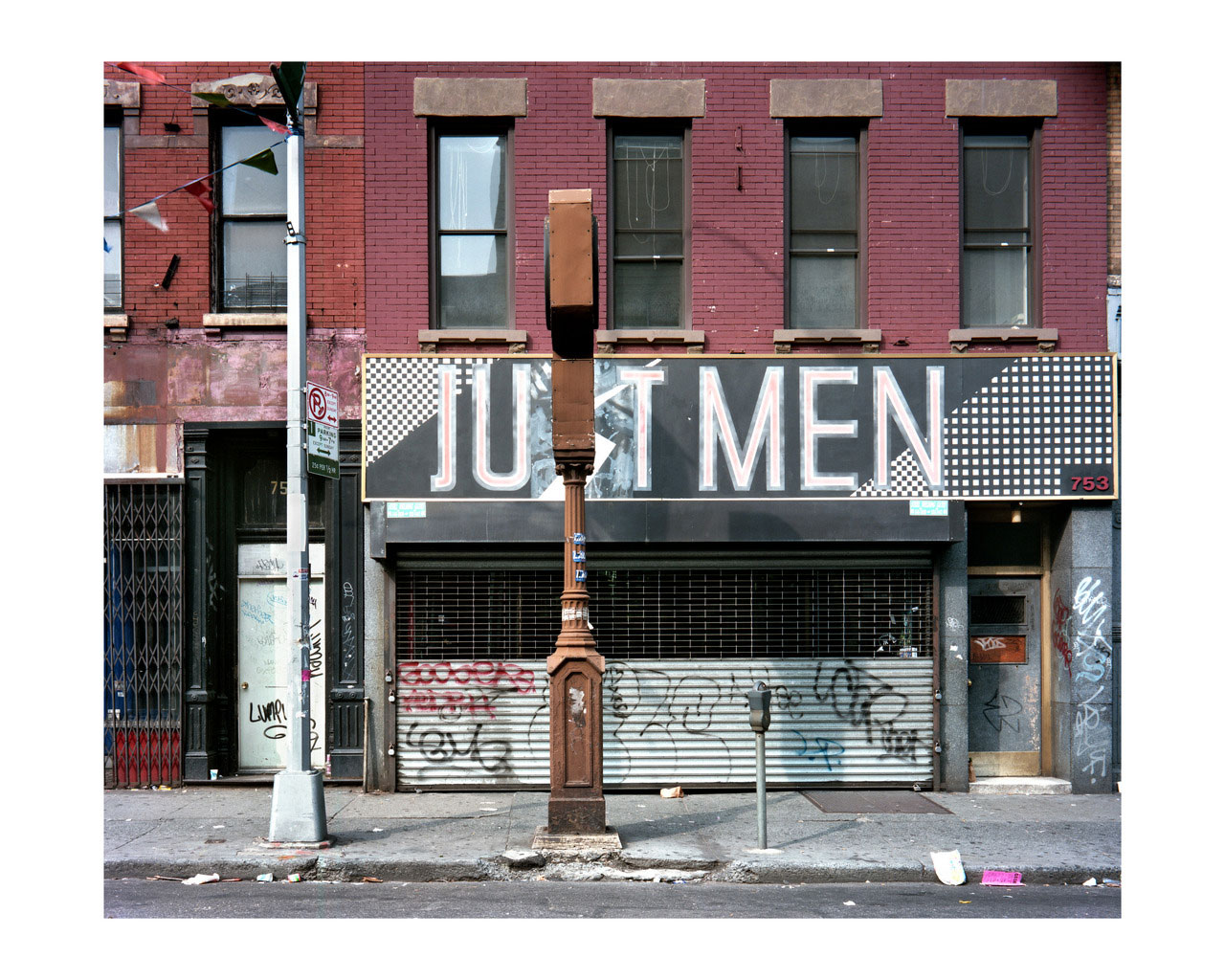
Davey’s work from the 1990s more broadly, and her revisitation of it, is a prominent strand in the exhibition. Many images that continue to preoccupy the artist return here, picturing the city of New York at a time when she was commuting in by car and train from her home in Hoboken, NJ, a converted loft where her partner collected and repaired vintage hi-fi components. Works such as “Glad”, “Long Life”, “Cool White”, and “Deoxit” (all 1999) delineate this live/work space, recently populated by a baby, wherein household items begin to pile up in an effort to keep things safe from prying, little hands.
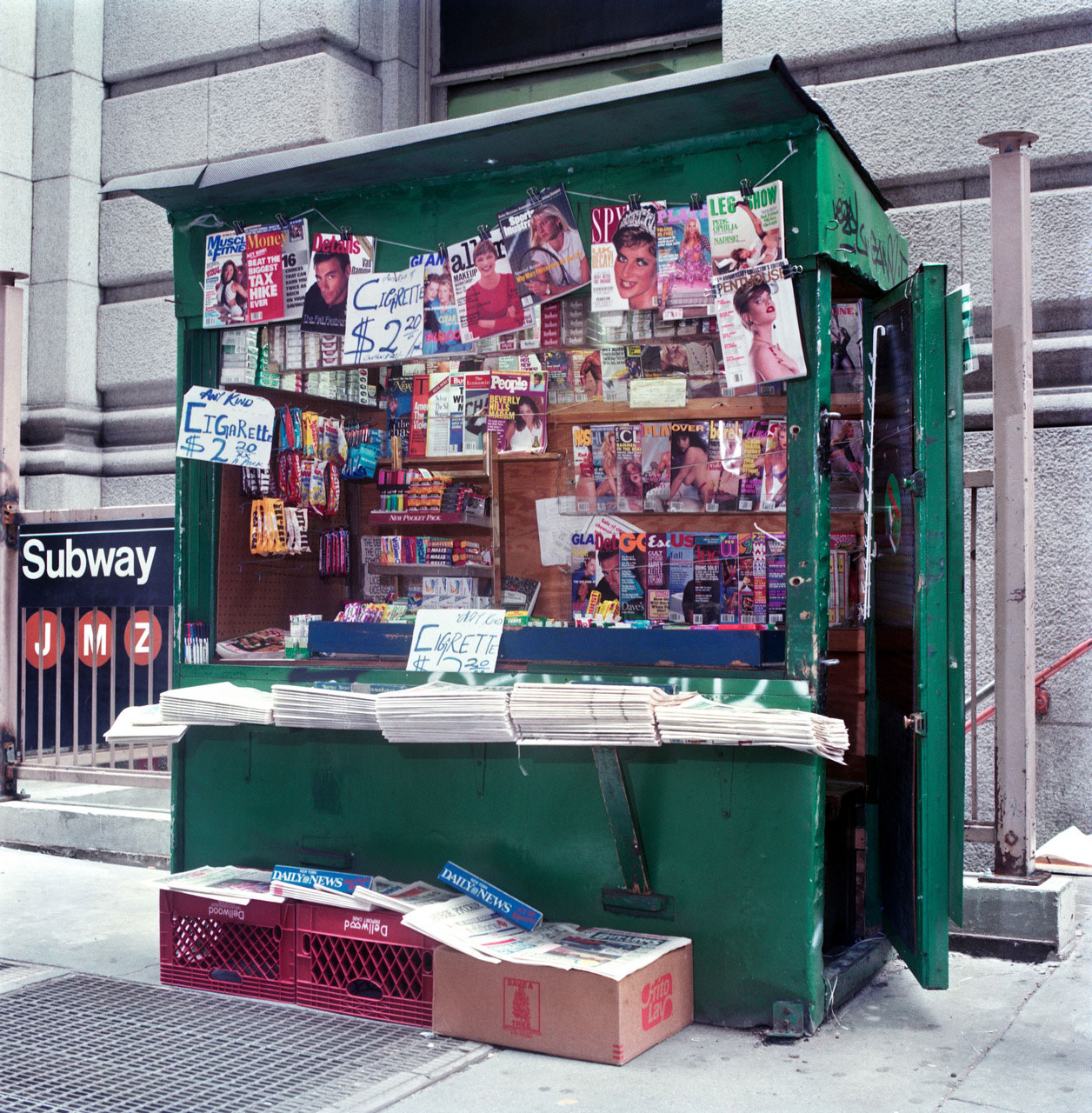
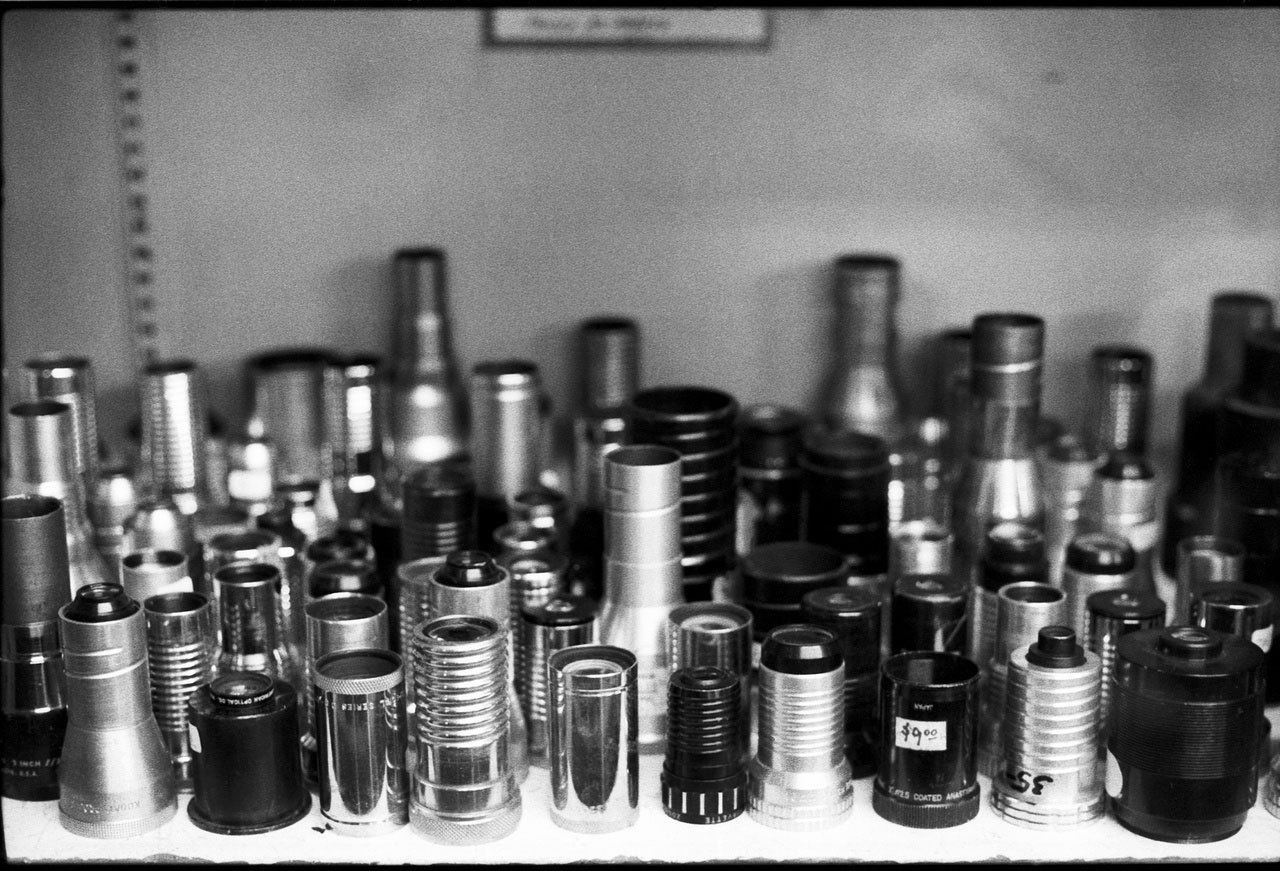
Outside the home, Davey captured what she then called the “analogue world”: a beloved camera shop on Canal Street in New York frequented by Super-8 filmmakers; stacks of disused computer parts stored in an industrial space; newsstands and bundled newsprint; a historic snowstorm making a mess of paper recycling on the streets of Soho. All of these images, many tiled in black-and-white grids, emerge from Davey’s continual reexamining of her archive and evince a subject matter on the verge of disappearance or replacement. The “News- stands” series (1994/2025) in particular is presented in its entirety for the first time.
The exhibition also presents two recent films from the artist’s experimental film practice. In the monologic essay film ‘Forks & Spoons” (2024), Davey weaves together the work of five photographers and writers from different generations, reflecting on their use of their own bodies in relation to space, light, and objects. Beginning with the work of Francesca Woodman, Davey proceeds through the photographs of Alix Cléo Roubaud, Carla Williams, Justine Kurland, and Shala Miller. What unites their approaches is that, through their (self)-portraits and performances, they challenge not only the conventions of the medium but also the representation of bodies read as female. In “Forks & Spoons”, Davey uses their photographs as templates for her own images, reflecting on aging, desire, and artistic production, as well as on the limits of her own methods.
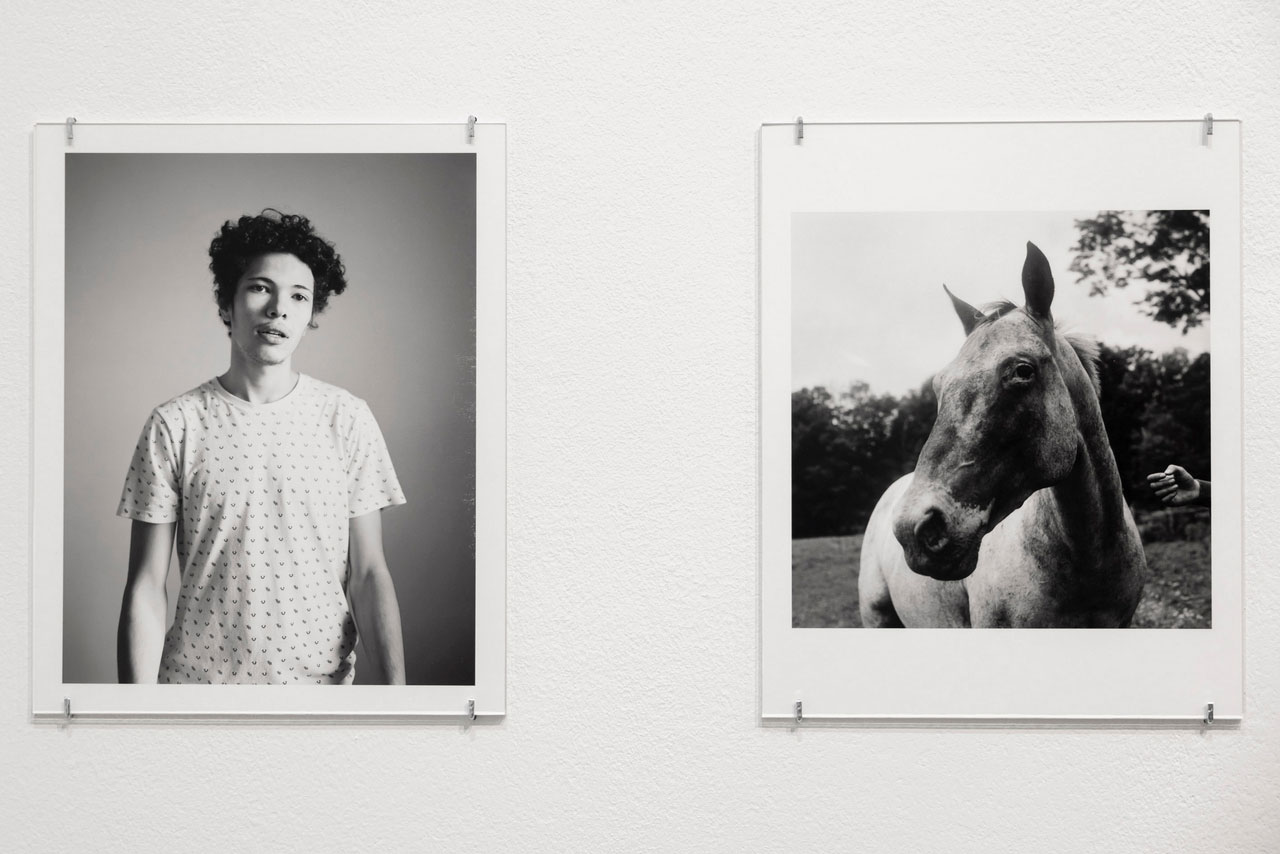
In the video “Horse Opera” (2019–2022), Davey experimented with third-person and asynchronous forms of narration, finding in them an apt expression of the shifting perception of time during the years of pandemic-induced social isolation. Screened at the Berlin International Film Festival (Berlinale) in 2023, the film juxtaposes ecstatic scenes from New York’s nightlife with images of rural solitude and wild and domesticated animals, often captured on her smartphone through the lens of a telescope. Here, Davey’s text interweaves reflections on embodied community, euphoria, and her own finitude.
Photo: Moyra Davey, Hell Notes (1990/2017), Super-8-film transferred to HD, color, sound; EM Copperheads 151–210, J.L. + R.B.G., n.b.k. (1990–2025), 60 pigment prints, tape, postage, ink, exhibition view Moyra Davey, Neuer Berliner Kunstverein (n.b.k.), 2025 © Photo: n.b.k. / Jens Ziehe
Info: Curators: Layla Burger-Lichtenstein, Krisztina Hunyain and Nicolas Linnert, Neuer Berliner Kunstverein (n.b.k.), Chausseestraße 128-129, Berlin, Germany, Duration: 6/12/2025-8/2/2026, Days & Hours: Tue-Wed & Fri-Sun 12:00-18:00. Thu 12:00-20:00, www.nbk.org/de

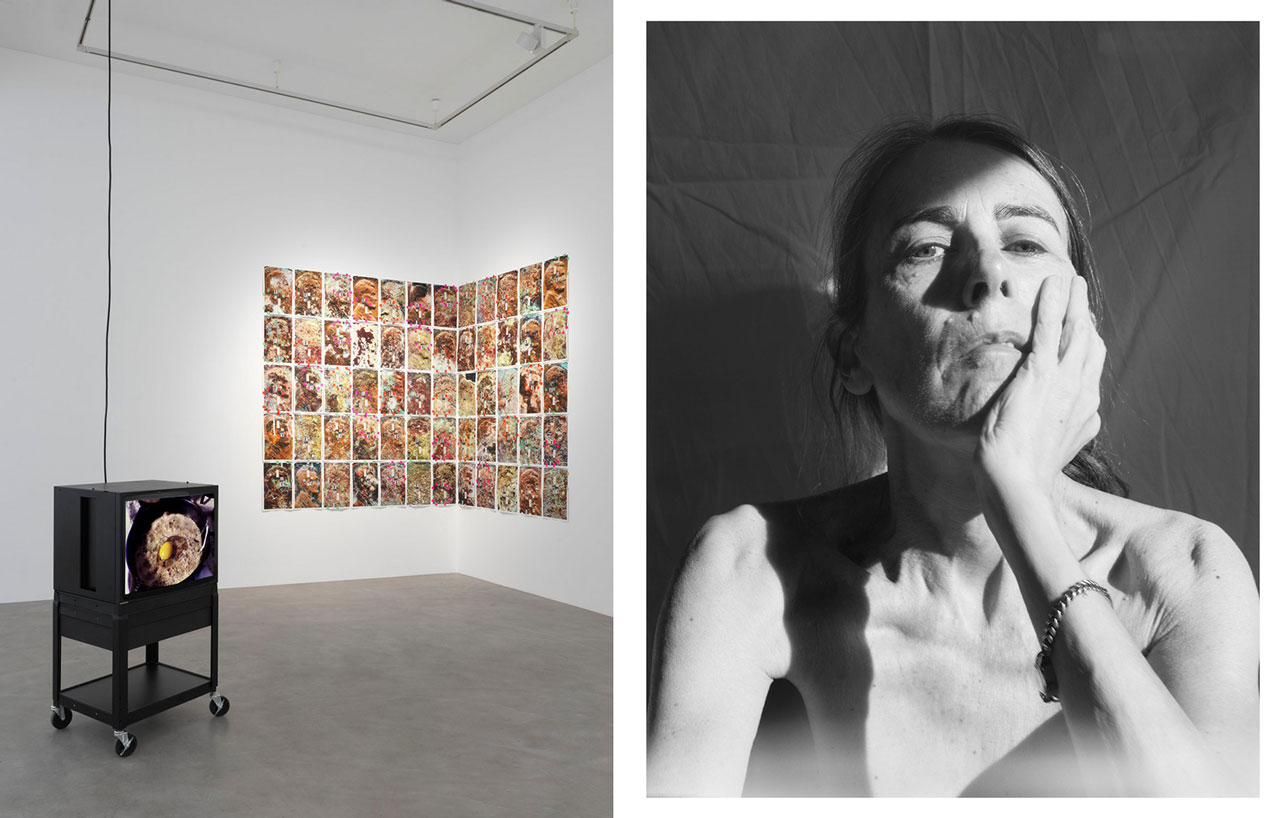
Right: Moyra Davey, Image expressed by the action of light, 2024,pigment print. Courtesy: Moyra Davey
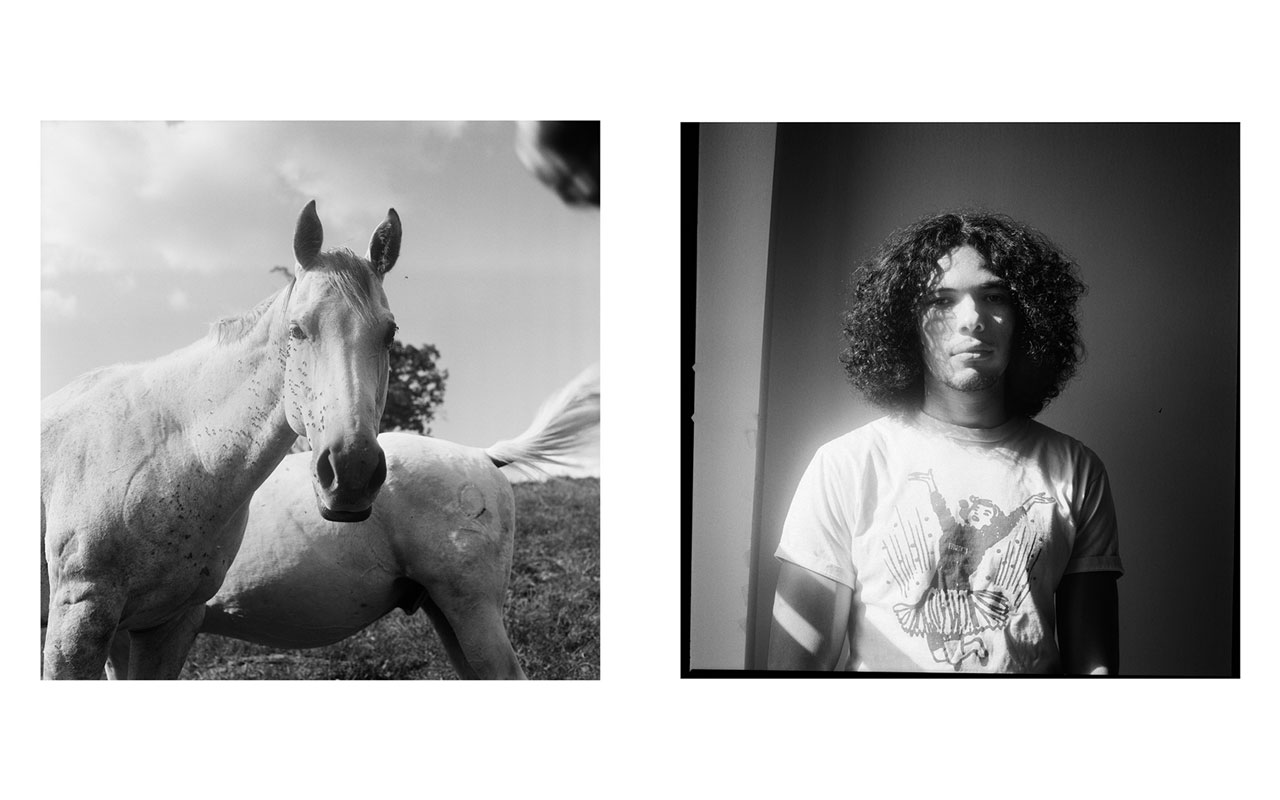
Right: Moyra Davey, Eric (Supreme), 2021, pigment print. Courtesy: Moyra Davey