PRESENTATION: Olafur Eliasson-Your curious journey
The works of Olafur Eliasson explore the relevance of art in the world at large. Olafur Eliasson uses his works, which encompass painting, photography, sculpture and large installations, to inquire into the relationships between the real and the artificial, perception and experience. His work stands out for putting viewers at the core, allowing them to delve into many of the challenges facing our society, and offering them different experiences which entail, in Eliasson’s words “taking part in the world.”
By Efi Michalarou
Photo: Museum MACAN Archive
The exhibition “Your curious journey” presents three decades of the Olafur Eliasson’s practice through a selection of works that trace his evolving explorations. The exhibition also includes newly featured works that offer new perspectives, distinguishing the Indonesian edition of this traveling exhibition from previous iterations across the Asia-Pacific region.
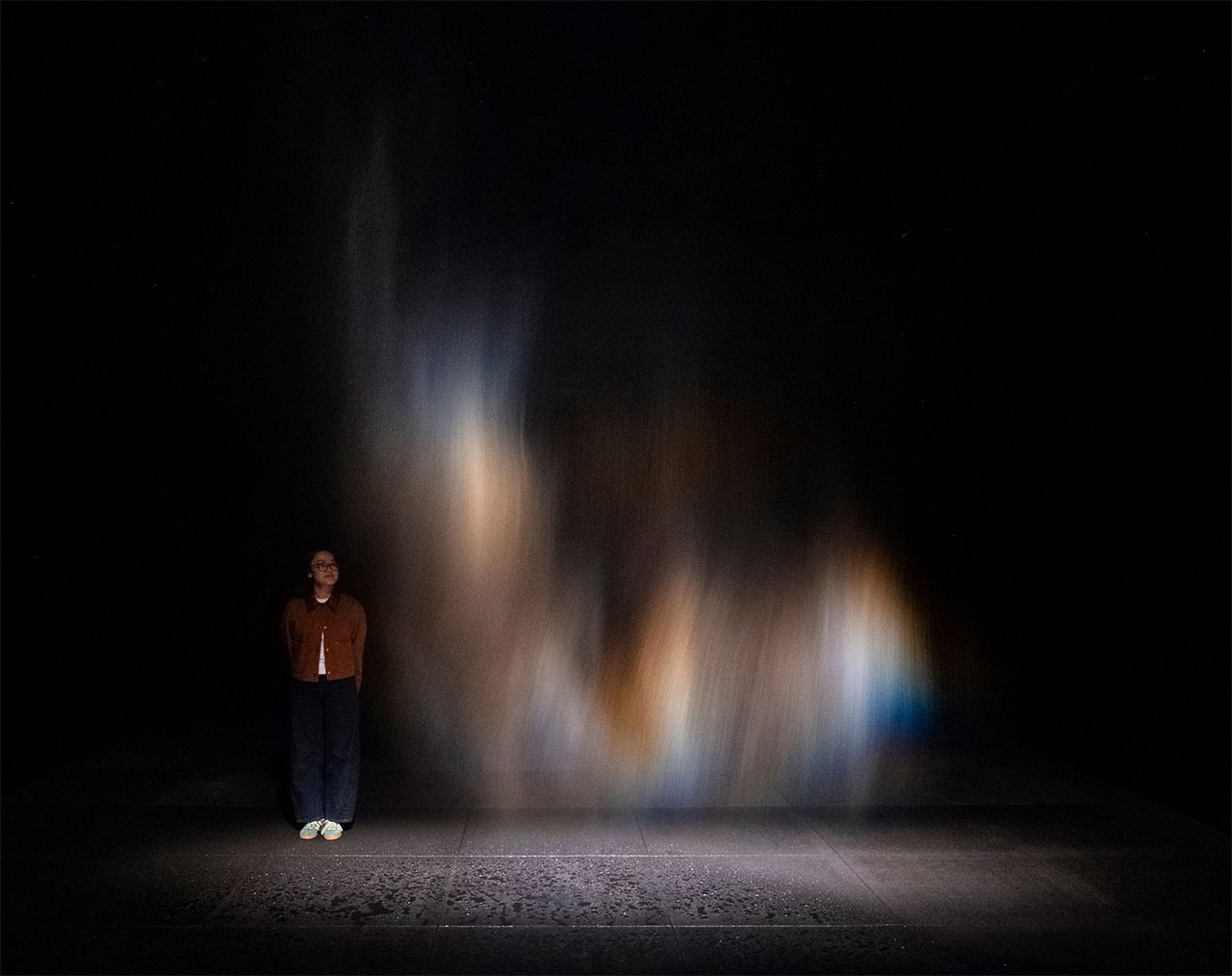
For Eliasson, the viewer’s participation is essential to the work itself. Through the interplay of light, space, and perception, he invites us to experience art with our senses. Elements such as light, air, water, fog, and even the invisible forces of magnetism act as collaborators, producing their own shifting forms, shadows, and rhythms. In doing so, the works suggest that objects and natural phenomena possess their own agency, moving beyond the passive role of being merely observed by humans.
Eliasson’s practice highlights the relationship between humans and the environment. The objects and natural processes in his work reflect time, change, and the vitality of the nonhuman world that we often overlook. By presenting nature as autonomous, Eliasson challenges anthropocentric perspectives and prompts us to reconsider humanity’s place within an interdependent ecosystem. His ecological perspective resonates with diverse systems of knowledge, faith, and non-Western traditions that have long viewed humans as small parts of a vast interconnected universe. In this view, nature speaks for itself—reminding us of our limitations and responsibilities and offering a different way of thinking beyond human-centered values.
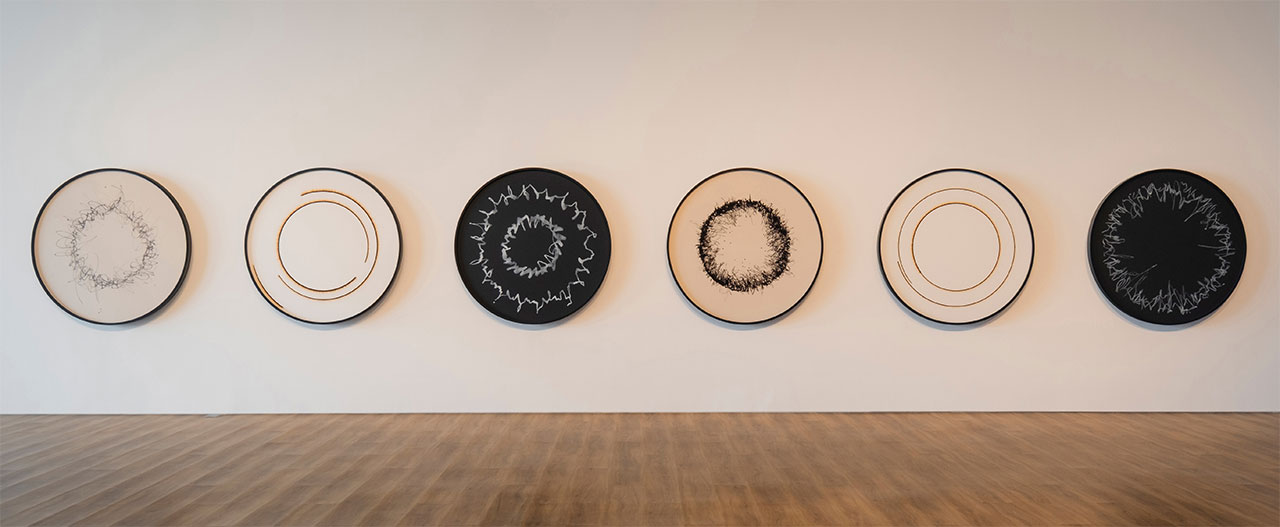
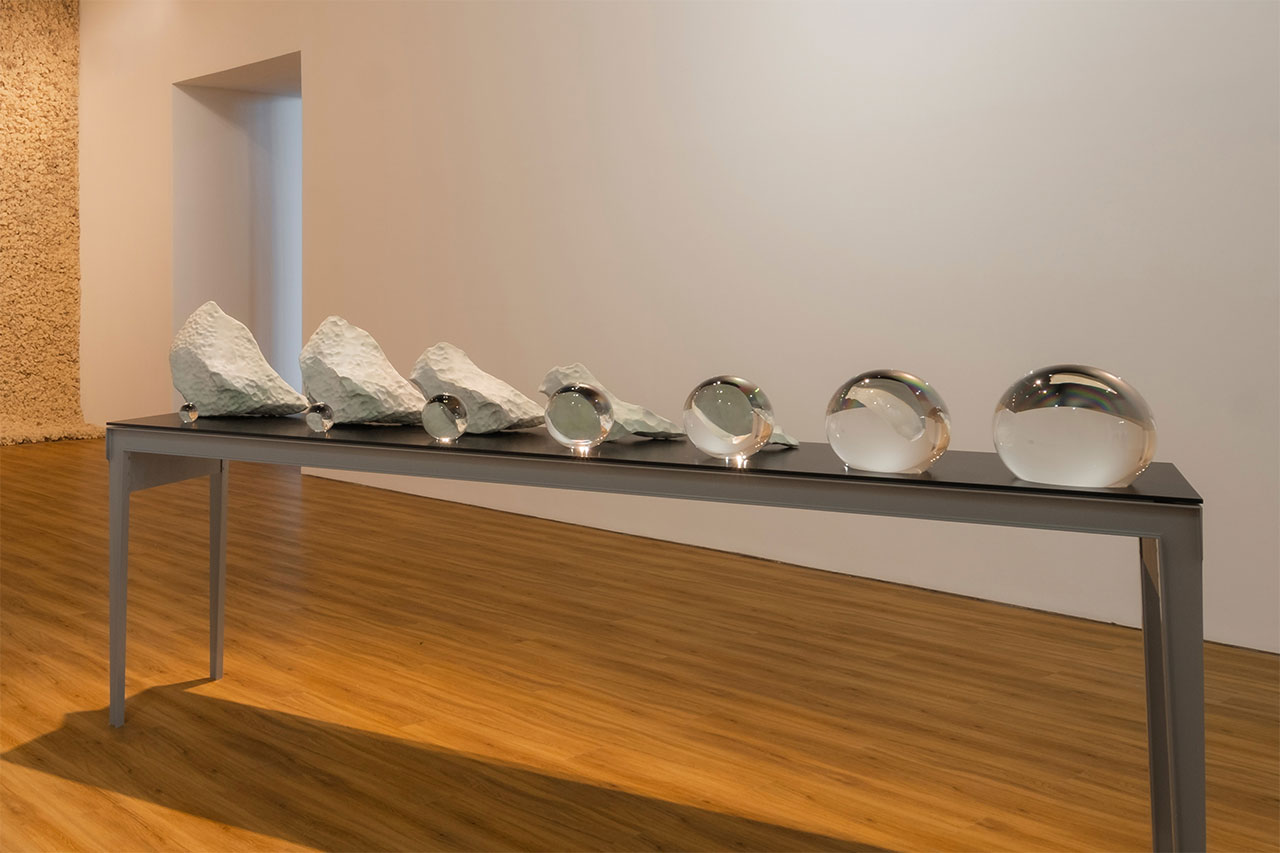
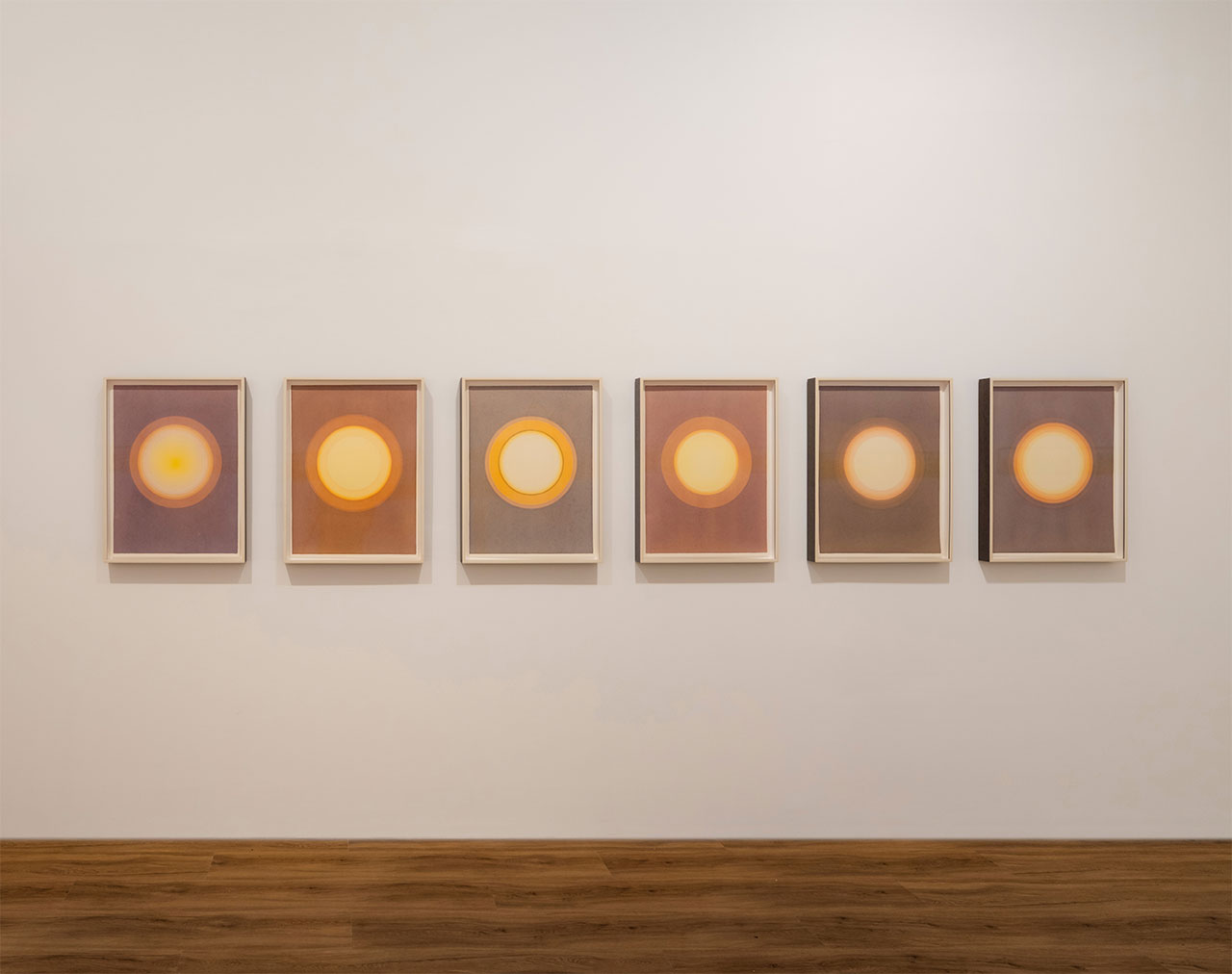
“Wind writings and Sun drawings” are site-specific works created by the artist around the National Museum of Qatar, installed respectively at the Saltwater-drawing Observatory and the Solar-drawing Observatory. In Wind writings, a wind-driven mechanism employs mechanical brushes and a rotating canvas to leave continuous marks on paper, recording local weather conditions. In Sun drawing, glass spheres act as lenses that concentrate sunlight from the nearby mangrove area, creating scorched traces on paper that likewise document atmospheric changes. Together, these works serve not only as witnesses to the passage of time but also as invitations to shift from a human-centered perspective toward one that embraces a more intimate and reciprocal relationship with nature.
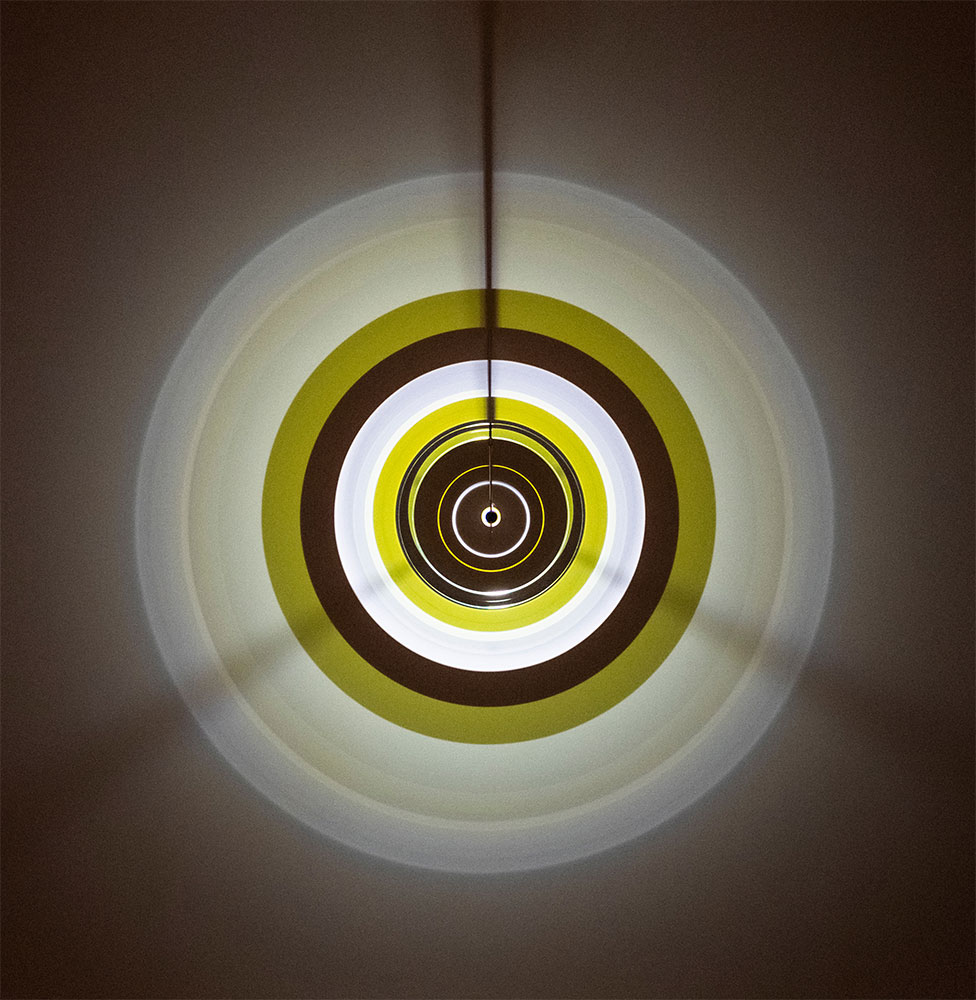
“Ventilator” features an electric fan suspended from a long cable, swinging unpredictably through the air as if “dancing” above the visitors’ heads. It is set in motion by the air currents it generates, as well as by the ambient airflow from the air conditioning system and other invisible movements within the space. In this work, the relationship between the fan and the air is reversed—it no longer functions as a device that moves air, but instead becomes an object moved by it. By subverting its original purpose, Eliasson transforms the ventilator into an unexpected kinetic object. Its erratic motion draws attention to the unseen atmosphere surrounding us and resonates with other works in Your curious journey, which trace the presence of chance, rhythm, and ephemeral forms emerging from the interaction between machines, light, and natural elements.
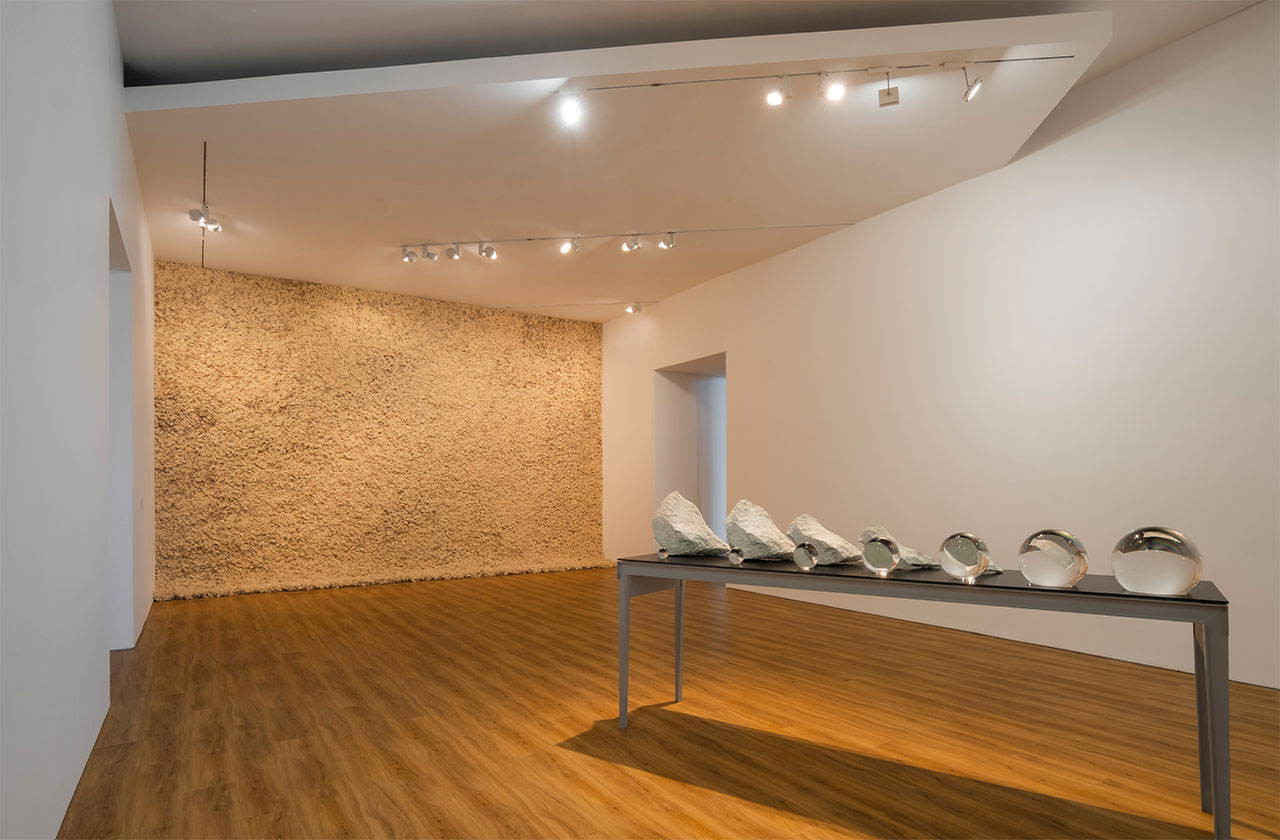
“Adrift compass” features a piece of driftwood found along the coast of Iceland, where large tree trunks often wash ashore after traveling vast distances from Siberia across the Arctic Ocean. Its bleached, weathered surface bears traces of that long journey. One end of the wood is sharpened and painted with a compass rose—the star-shaped pattern found on maps and nautical charts that indicates cardinal directions. A magnetic rod suspended beneath it keeps the piece aligned along the north–south axis, turning it into a functioning as well as symbolic compass. Through the combination of natural material and navigational mechanism, the work reveals the invisible force of the Earth’s magnetic field and reminds us of human connectedness and orientation within the larger order of nature.
“Moss wall” features an entire wall covered with reindeer moss (Cladonia rangiferina), a type of lichen that grows in high-latitude regions such as Iceland. Lichen is not a single organism but a symbiotic union of fungus and algae living in mutual dependence, forming a community that thrives through cooperation. When dry, the moss shrinks and its color fades; when watered, it expands again, revealing its natura hue and releasing a distinctive scent that enriches the sensory experience. The work is reinstalled in each location using new material, bringing a fragment of polar ecology into an interior space. Through close observation of the moss’s color, form, and fragrance, we are invited to sense the vitality of nature and the fragile interconnectedness between organisms and their environment.
In “Multiverses and futures”, four optical devices, installed separately within the exhibition space, are essentially simple kaleidoscopes made of stainless-steel panels with highly polished mirrored interiors, each oriented toward the landscape outside the building. Visitors can tilt and rotate the devices to capture details of the surrounding environment, which are then reflected and fragmented through the angled mirrors to form new visual compositions. Each kaleidoscope features a differently shaped viewing aperture—triangle, diamond, square, and hexagon—producing distinct reflection patterns that create the illusion of floating polyhedrons within the device. Their tapered forms and the steel rings framing each opening invite viewers to continuously shift their perspective, revealing ever-changing combinations of colors, shapes, and images of the landscape.
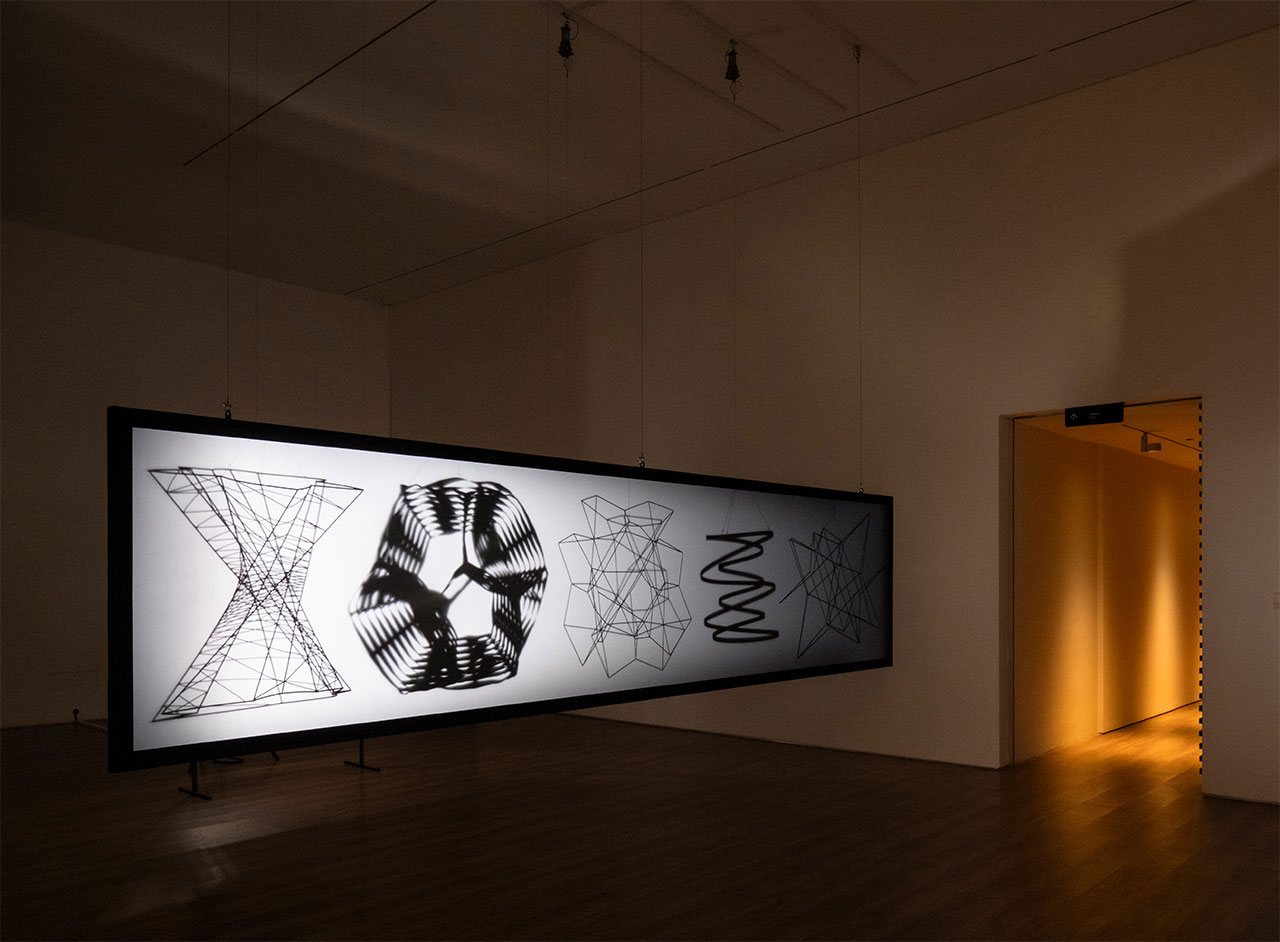
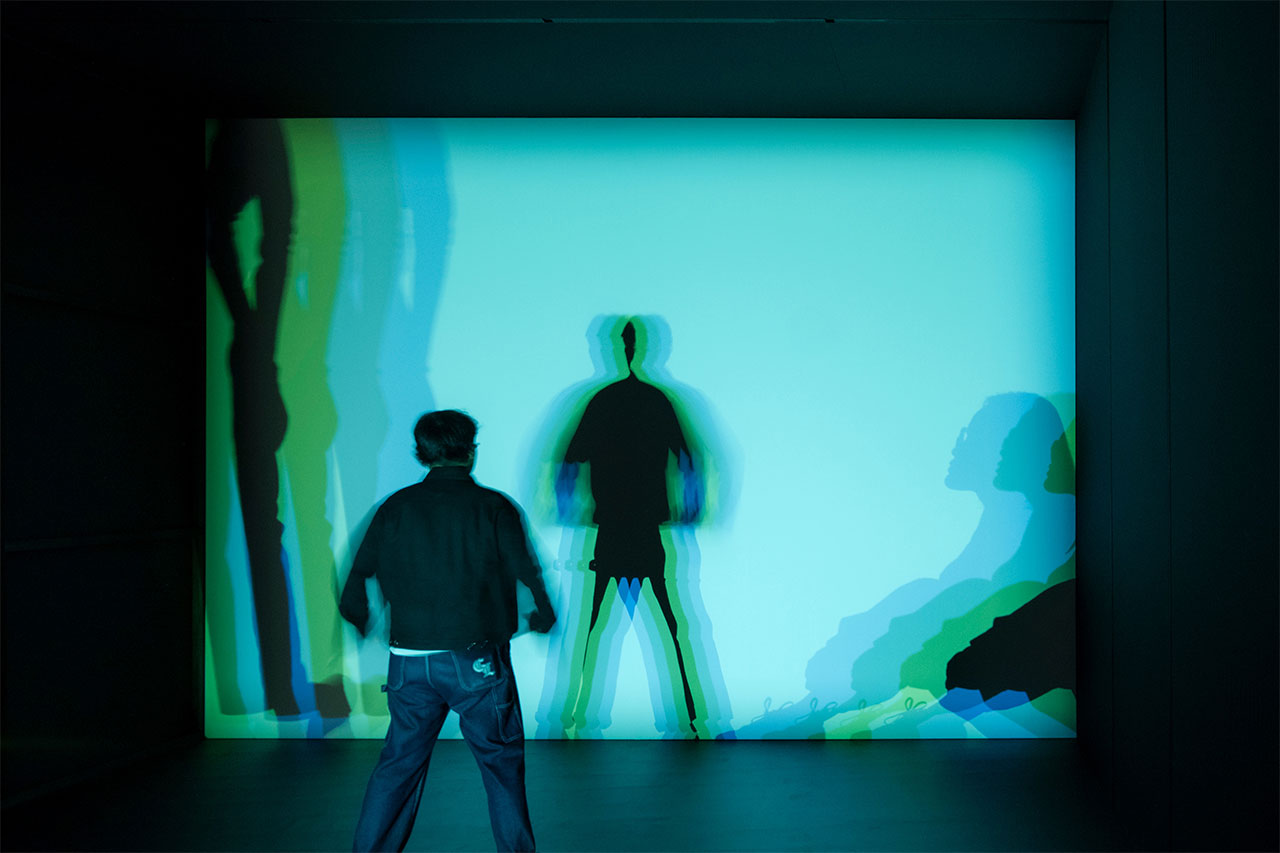
The installation “Life is lived along lines” offers a visual experience of how perception is shaped by light and movement. In a darkened space, a long screen displays five two-dimensional geometric figures that appear to rotate, intersect, and shift gradually. As visitors move to the other side of the screen, they discover that the images are in fact shadows cast by five slowly rotating sculptures illuminated by spotlights. Each form is a model developed through Eliasson and his studio’s studies, reflecting his ongoing interest in spirals, polygonal structures, and layered spatial compositions. By deliberately revealing the mechanism behind this illusion, the artist underscores how a change in perspective can transform our understanding of reality—a reflection on early twentieth-century experiments in film and photography by Constructivist and Expressionist artists such as Hans Richter and László Moholy-Nagy.
Photo: Olafur Eliasson, Wind writings and Sun drawing , 2023, Black acrylic ink on canvas, White acrylic ink on canvas, Burned white paper on composite board, Each Ø 140 cm, Courtesy of Olafur Eliasson; neugerriemschneider, Berlin; Tanya Bonakdar Gallery, New York
Info: Museum MACAN (Museum of Modern and Contemporary Art in Nusantara), AKR Tower Level M, Jalan Panjang No. 5, Kebon Jeruk, Jakarta Barat, Indonesia, Duration: 29/11/2025-12/4/2026, Days & Hours: Tue-Sun 10:00-18:00, www.museummacan.org/

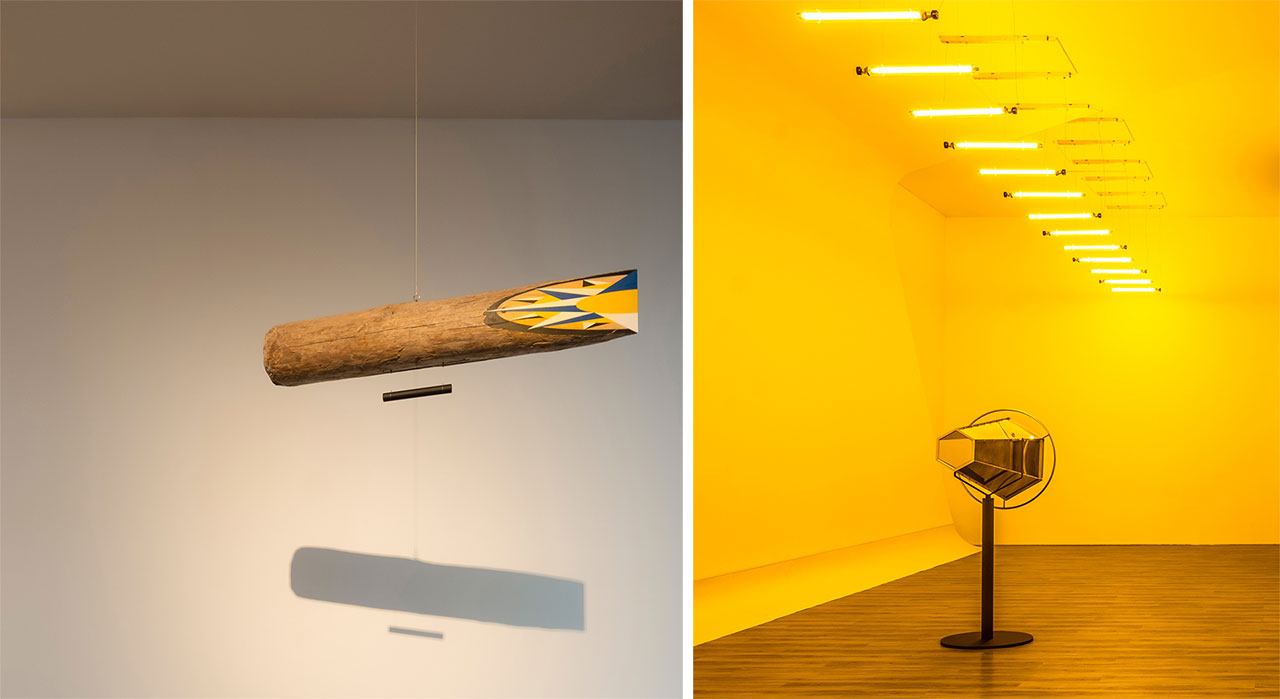
Right: Olafur Eliasson, Yellow corridor, 1997, Monofrequency lamps, Dimensions variable, Collection of The Juan & Patricia Vergez, Buenos Aires
![Olafur Eliasson, The seismographic testimony of distance (Berlin–Singapore, no. 1-6), (Singapore–Auckland, no. 1-6), (Auckland–Taipei, no. 1-6), (Taipei-Jakarta, no. 1-6) [detail], 2024-2025, Wood, paper, ink (black) , Each 57.8 x 57.8 x 3.8, Courtesy of Olafur Eliasson; neugerriemschneider, Berlin; Tanya Bonakdar Gallery, New York](http://www.dreamideamachine.com/web/wp-content/uploads/2025/12/page18_image-2.jpg)