PRESENTATION: Seagarden

“Seagarden” at EMST opens a space where nature and human presence intersect through works that explore the boundaries of landscape, matter, and the body. The title, drawn from H.D.’s poetry collection “Sea Garden”, serves, according to the curators, as a point of departure for approaching the edge, the place where land meets sea and the natural element encounters human gesture.
By Vasiliki Trochidou
Photo: Vasiliki Trochidou’s Archive
In the series “Reflections on the Sun, Water, Earth, and Wind” (1987), Margaret Raspé observes the interplay of light on water and land surfaces. The images capture moments of movement, reflection, and subtle shifts, giving the landscape an almost breathing quality. The description of the work notes that the water’s surface resembles human skin, lending corporeality to the element, yet the essence of the series lies in the perception of continuous flow, where nature appears as a living, mutable body.
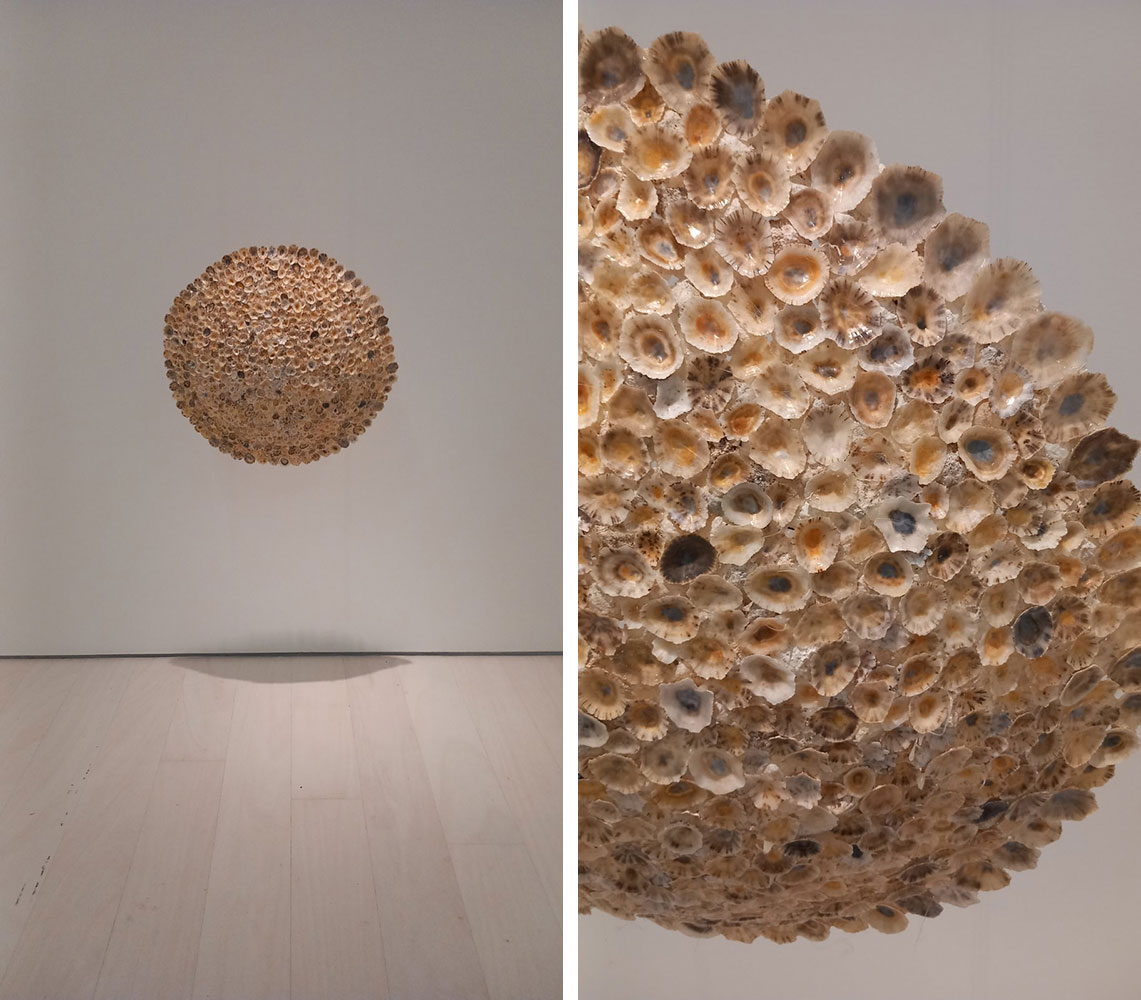
Athina Tacha combines natural materials with a strong sense of memory and protection. In the work “11 Roman Pinecones” (1988), the sculptures resemble pinecones but are constructed from pebbles, shells, glass, and seeds collected in Rome, creating hybrid forms where the natural and the artificial coexist. In “Thymari Dives” (2000), a shield covered with limpets acquires a special symbolic resonance, as the curators note, since it was created as a protective gesture for friends of the artist who were ill. Here, matter is transformed into an act of fragile care and empowerment, while the collection from a specific location embodies memories and material traces of nature.
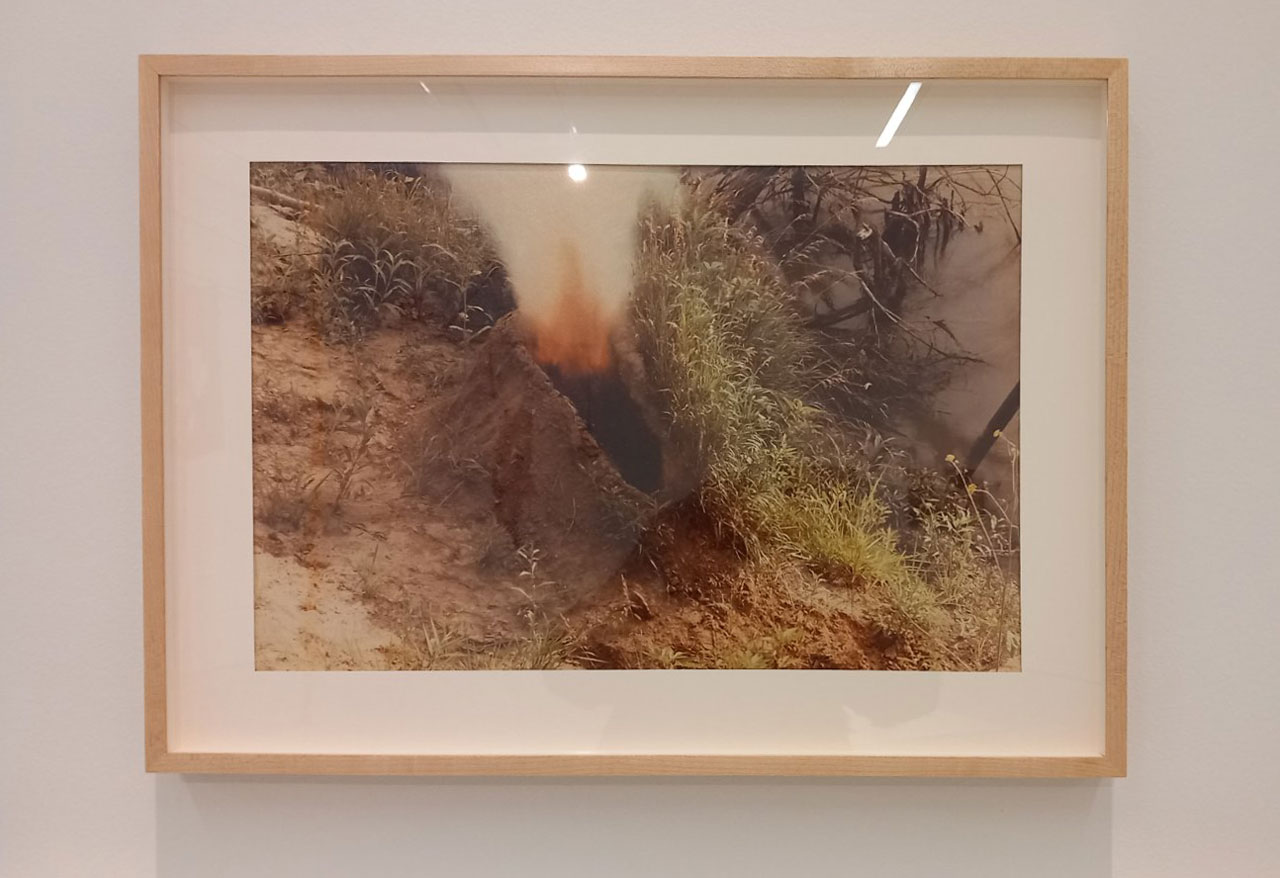
Ana Mendieta, in a photograph from the “Volcano” Series (1979), uses the body as a mold imprinted on the earth. Fire transforms the imprint into a form reminiscent of a volcanic eruption. The work documents both the fragility and the force of the relationship between body and nature, leaving space for the viewer to reflect on the presence and absence of the body within the landscape.
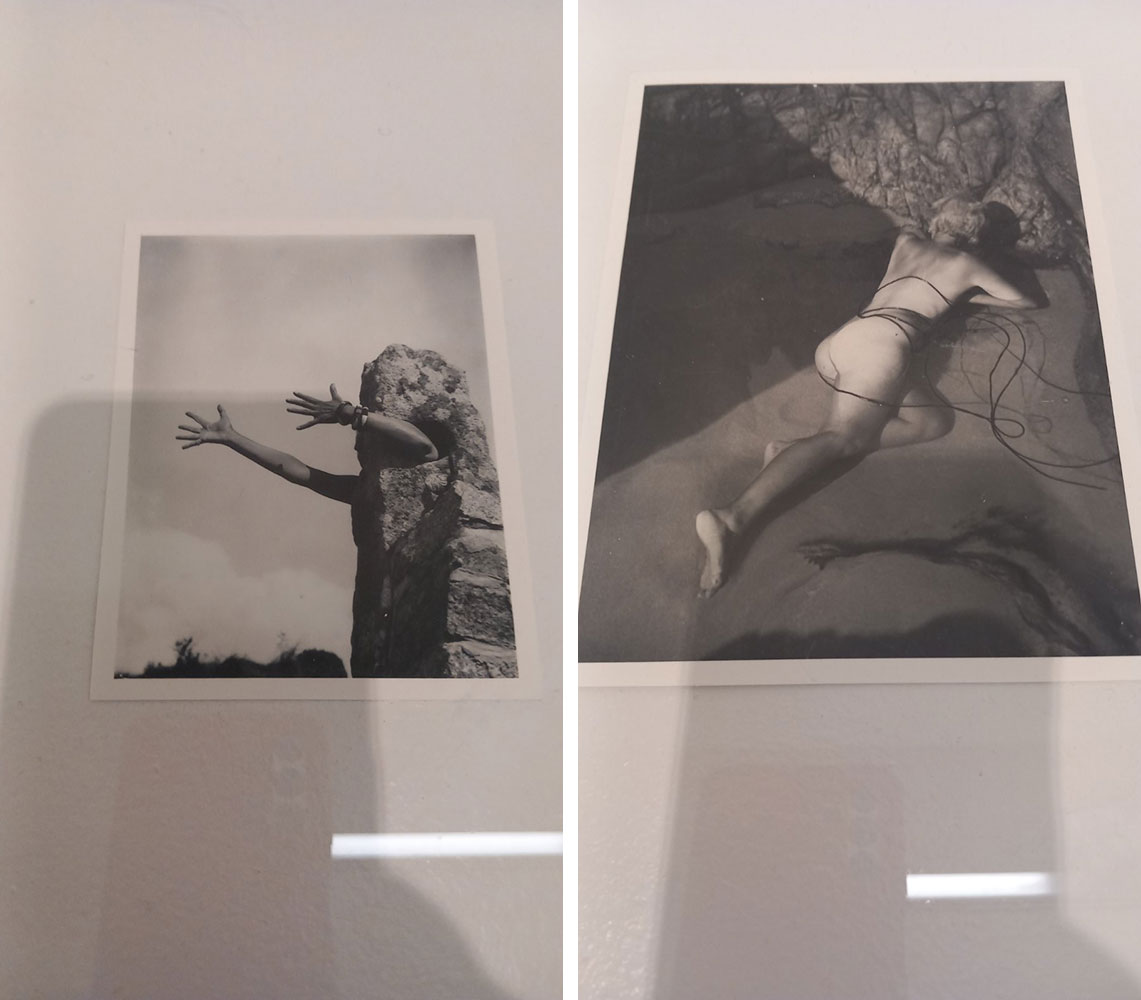
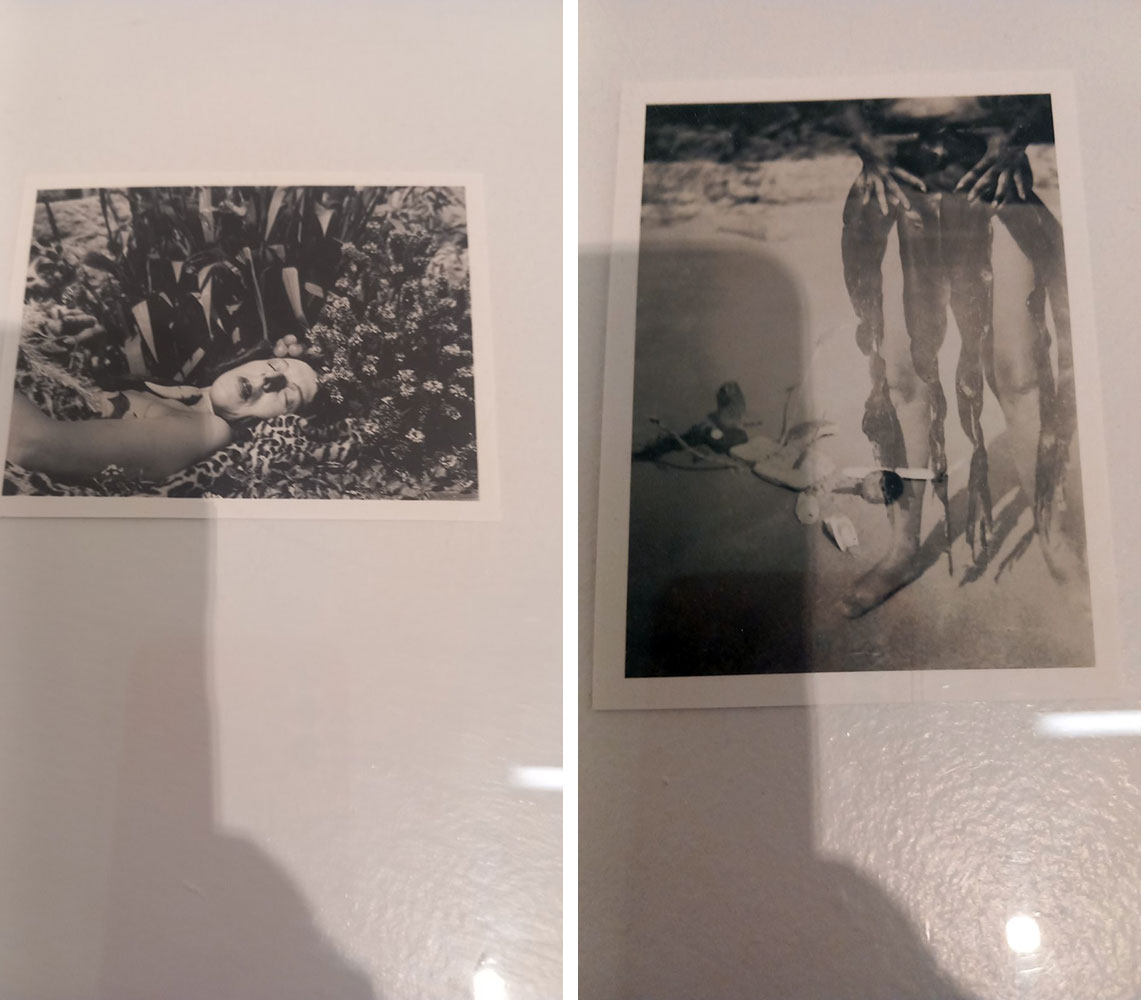
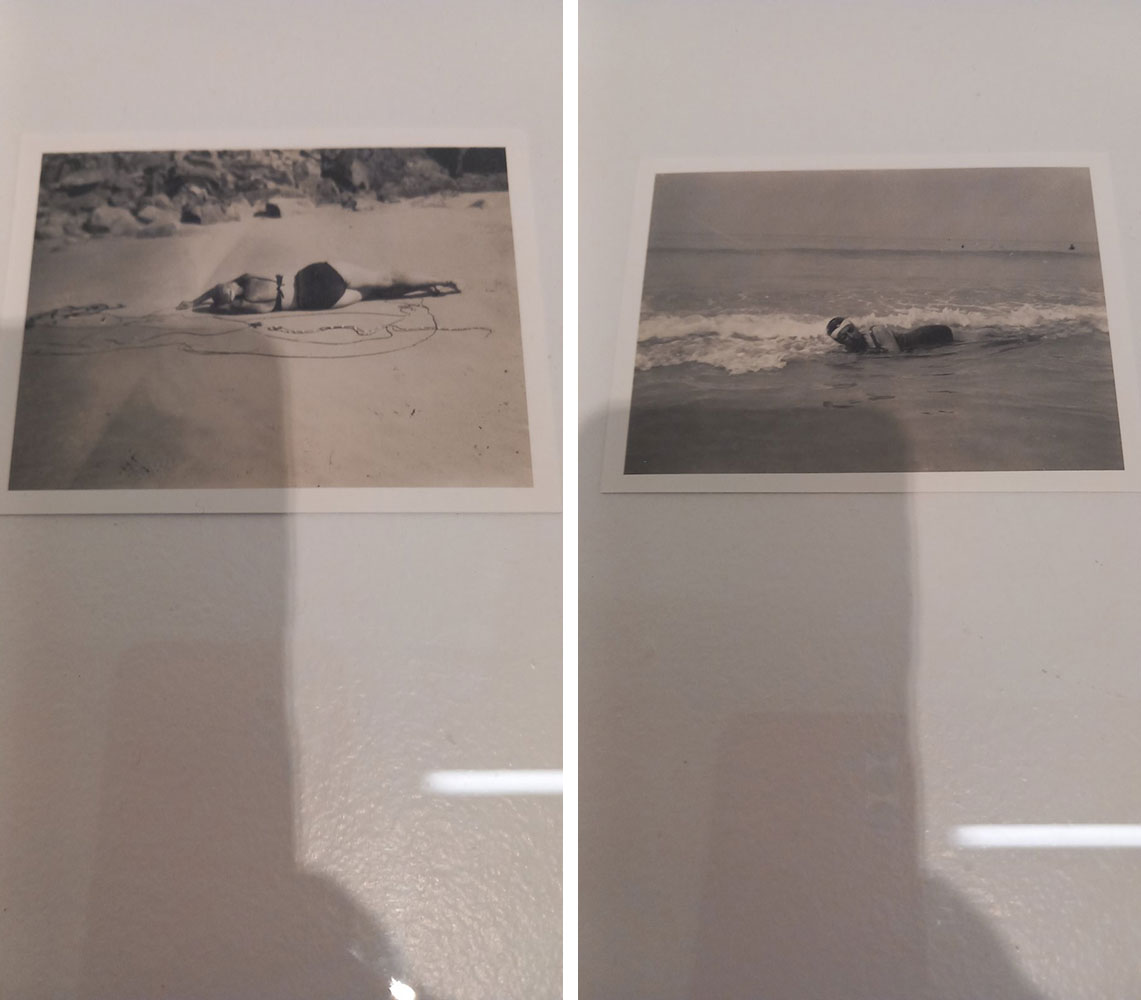
Claude Cahun appears through “Self-portraits” (1925–1939), transforming her body into marginal, almost marine forms. She uses seaweed, rocks, and organic elements to merge with the environment and to experiment with roles, identities, and the possibilities of human presence. The body is presented not as a fixed entity but as a continuously changing form, like the surrounding landscape.
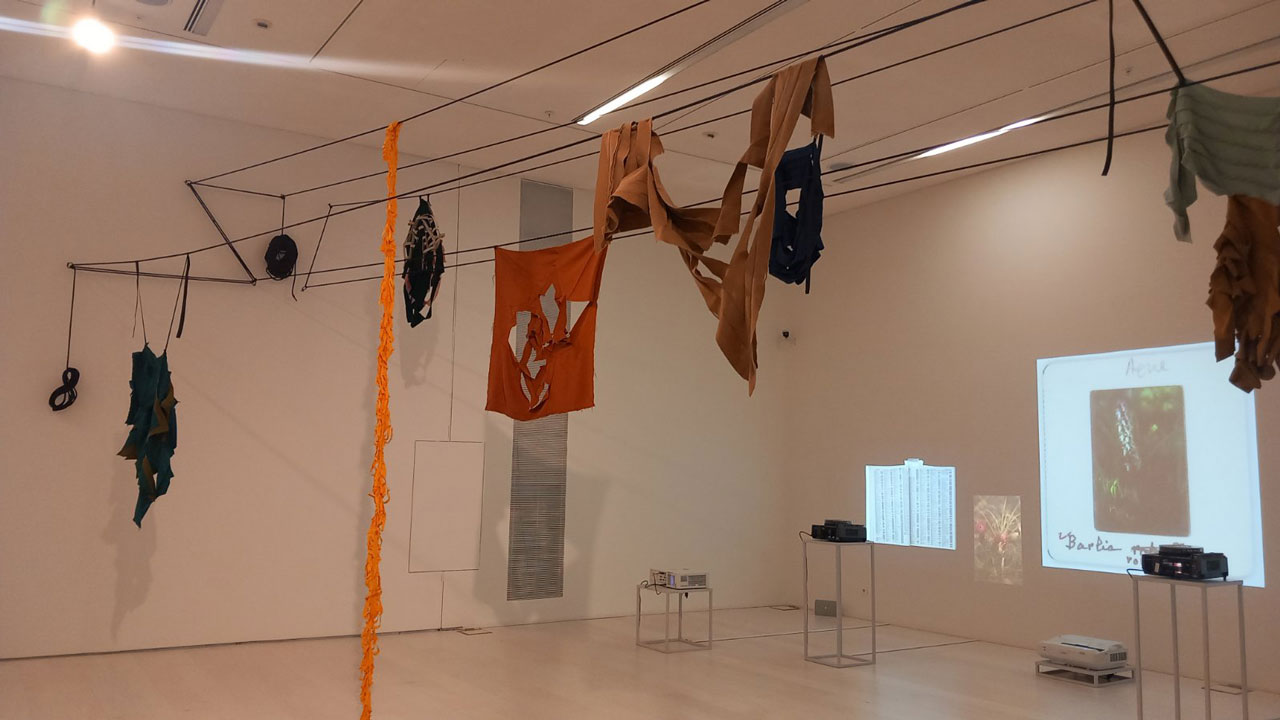
Dora Ekonomou’s installation “Hosts & Parasites” (2025) turns the exhibition space into a network of relationships and interdependencies. Ropes and hanging fabrics create organic forms reminiscent of parasites as well as interacting ecosystems, emphasizing the fragile balance of organisms and the constant transformation of matter.
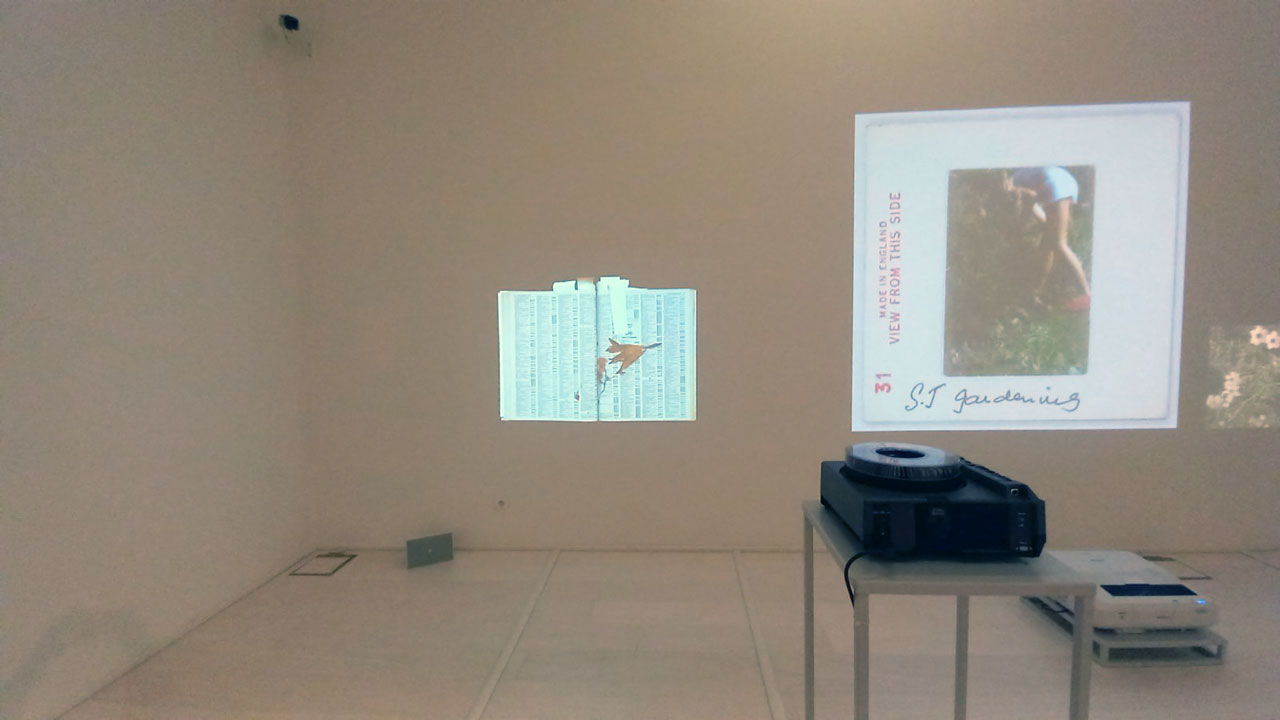
Catriona Gallagher in “Tools for Cataloguing a Dry Garden” (2025) installation, connects her work to the Sparoza garden in Paiania, using plant imprints and materials from the garden itself to produce her 16mm film. The natural environment becomes a collaborator in the work, actively shaping the image and the viewer’s experience.
The curators, Danae Giannoglou and Kyveli Mavrokordopoulou, craft a clear and cohesive narrative, enhanced by careful lighting and essential, legible information. “Seagarden” functions as an environment for contemplation on the relationship between body, nature, and care, highlighting the ongoing interplay between humans and landscape, where every form—living or material—is simultaneously autonomous and connected to the world around it.
Participating Artists: Claude Cahun, Dora Economou, Catriona Gallagher, Ana Mendieta, Margaret Raspé, Athena Tacha
Photo: Catriona Gallagher, Tools for Cataloguing a Dry Garden, 2025, Installation View “Seagarden”, EMST-Athens, 2025, Photo: Courtesy Vasikiki Trochidou
Info: Curators: Danae Giannoglou and Kyveli Mavrokordopoulou, EMST (The National Museum of Contemporary Art Athens), 3rd Floor, Project Room 2, Athens, Greece, Duration: 8/11/2025-8/2/2026, Days & Hours: Tue-Wed & Fri-Sun 11:00-19:00, Thu 11:00-22:00, www.emst.gr/