ART CITIES: Milan-Georg Baselitz & Lucio Fontana
Thaddaeus Ropac Milan opened its new branch in Palazzo Belgioioso, an iconic neoclassical landmark in Lombardy at the heart of the city, on September 20, 2025, aiming to link its international program with Milan’s major institutions and the dynamic collecting scene of Italy’s cultural fabric. The arrival of this space coincides with a broader renaissance in the city’s cultural scene, as the government slashed VAT on artistic creations from 22% to just 5% over the summer, providing major relief to Italy’s contemporary art market.
By Valia Katsimpa
Photo: Valia Katsimpa’s Archive
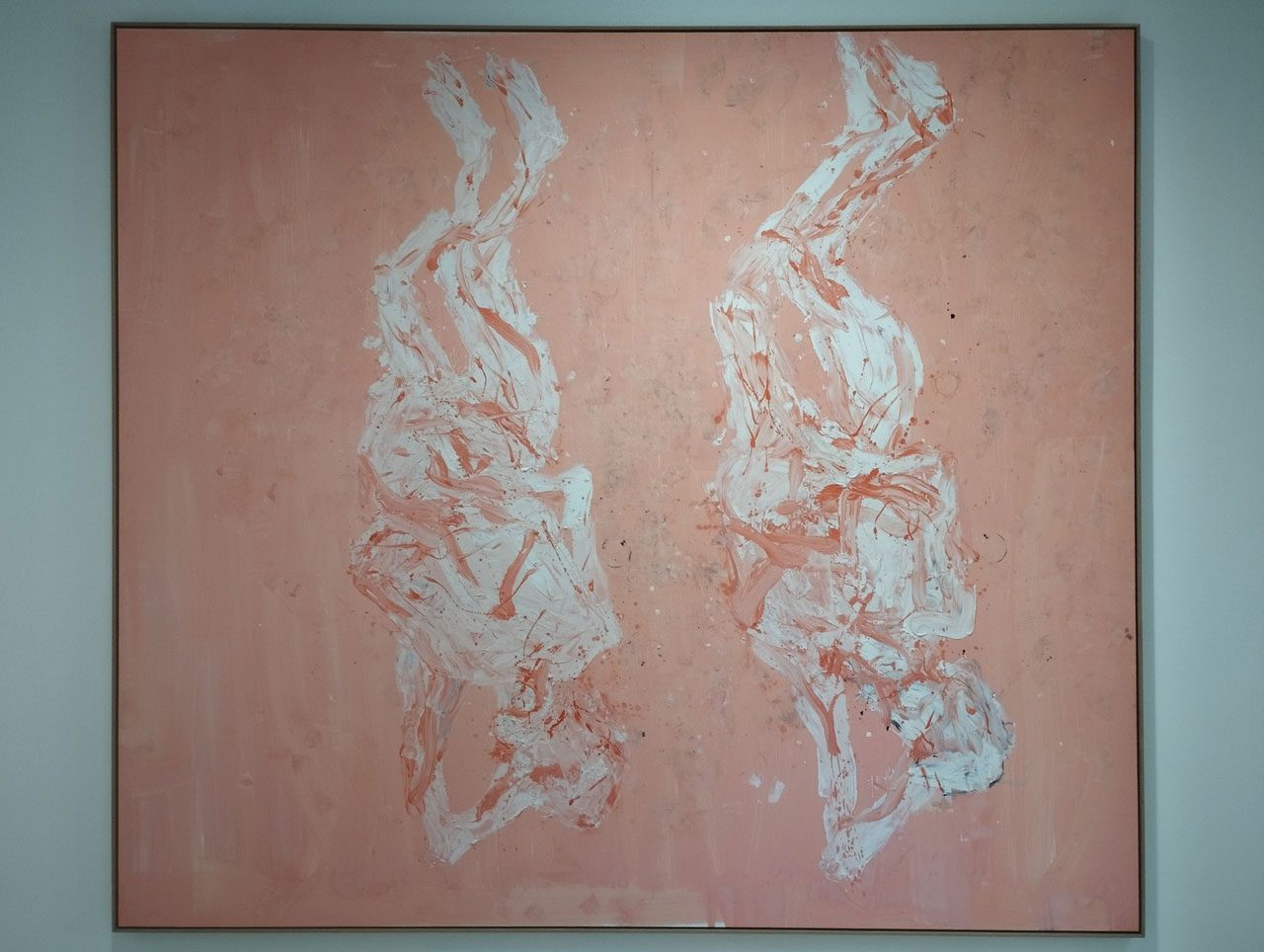
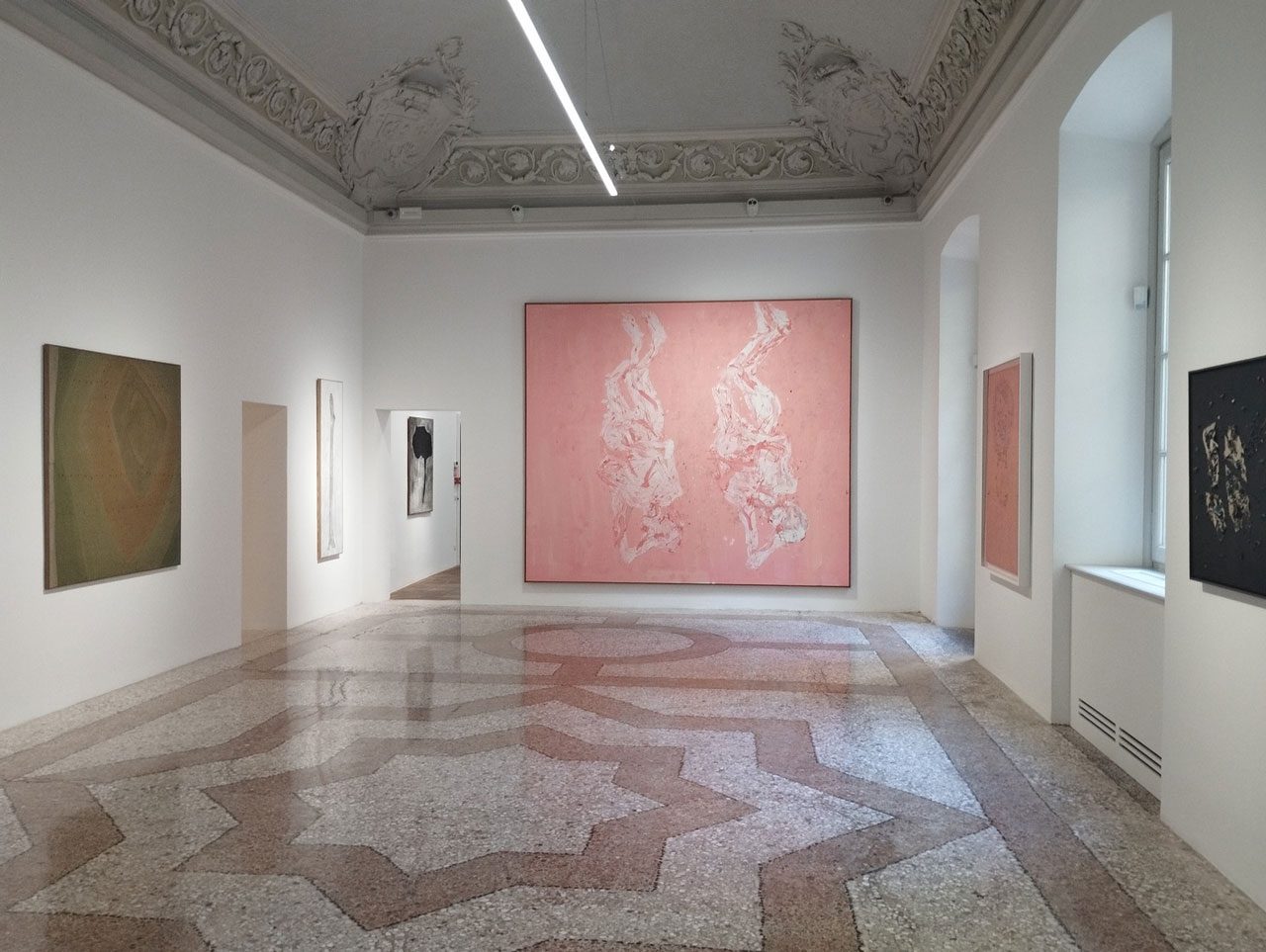
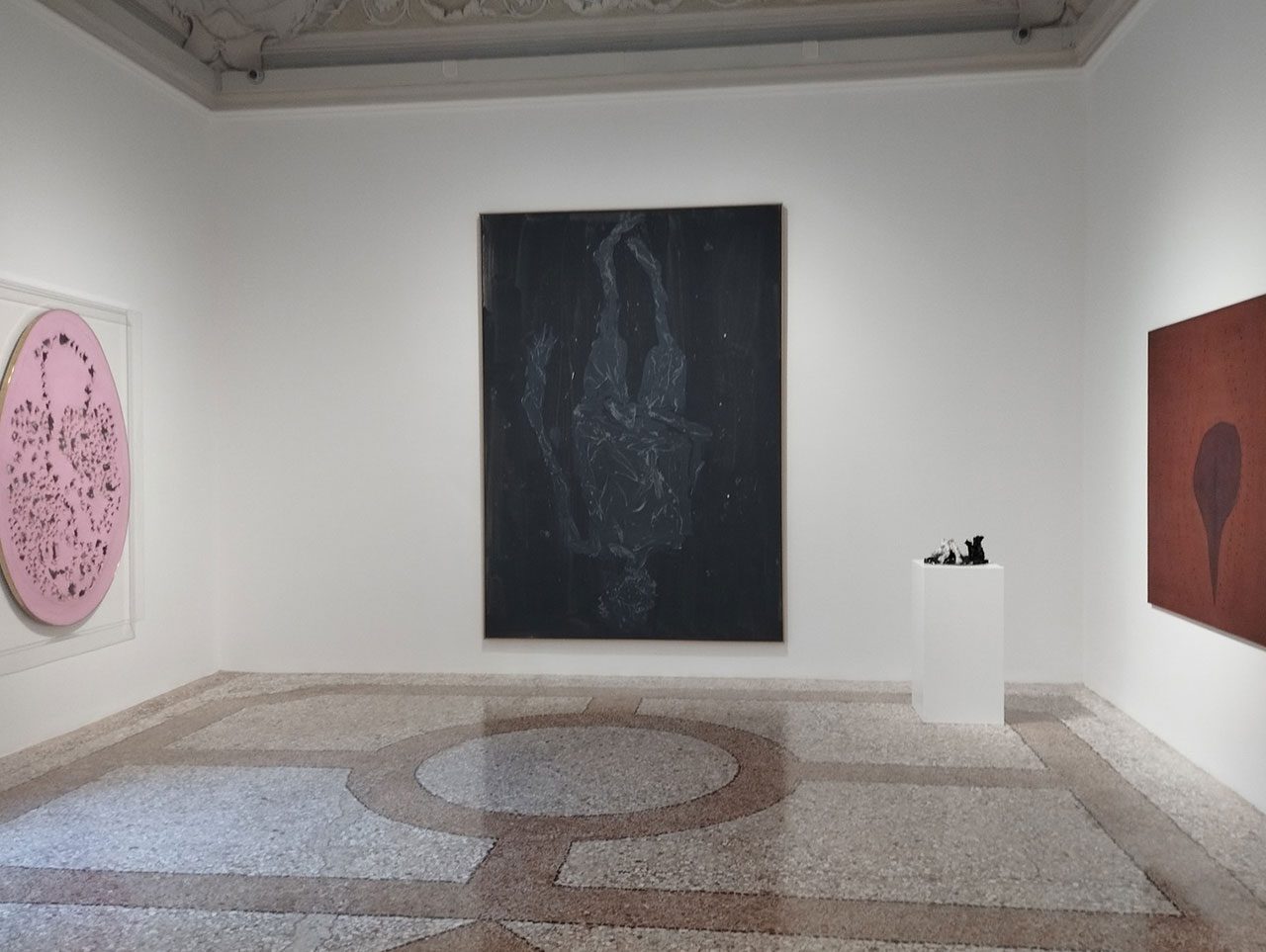
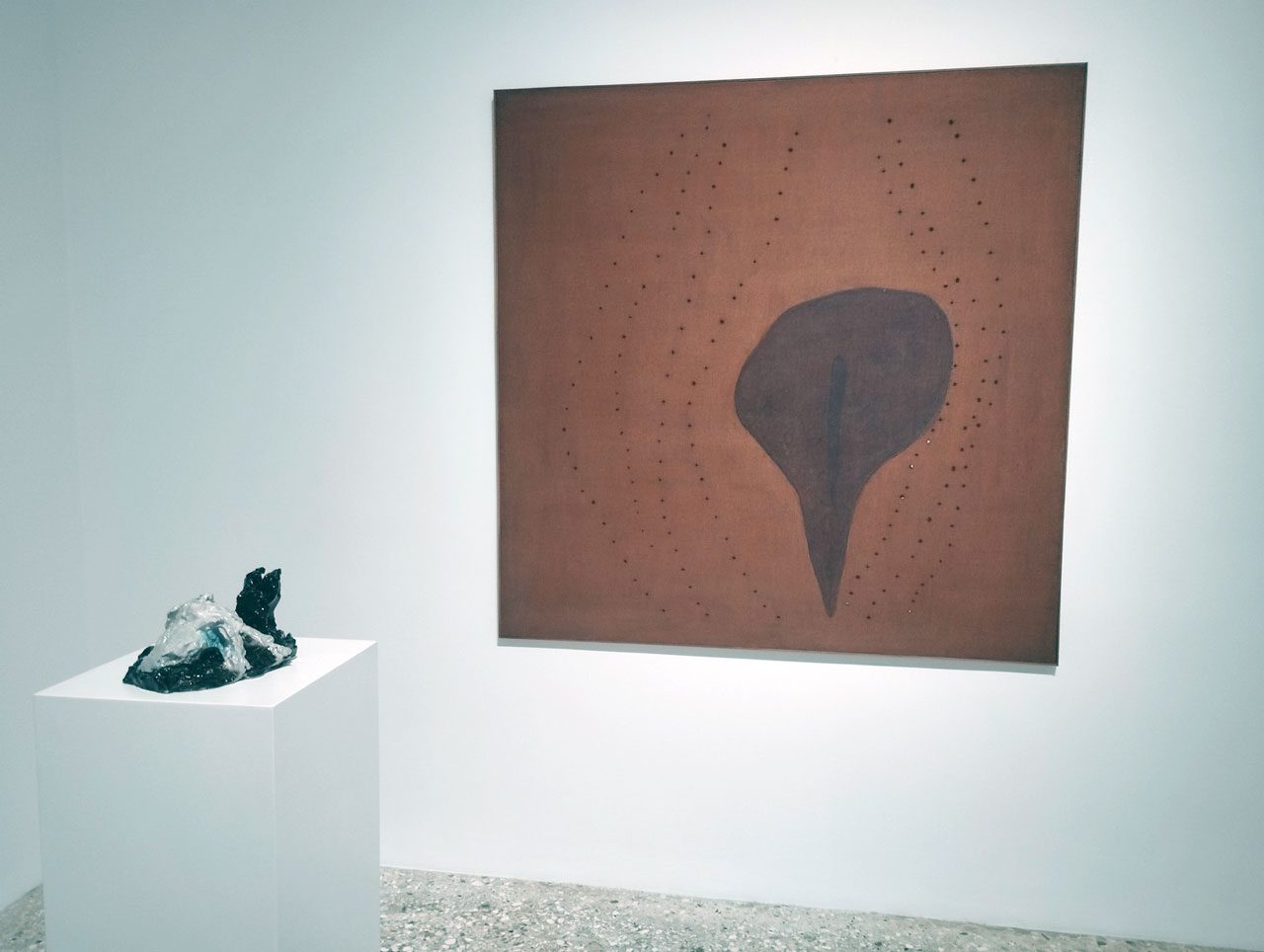
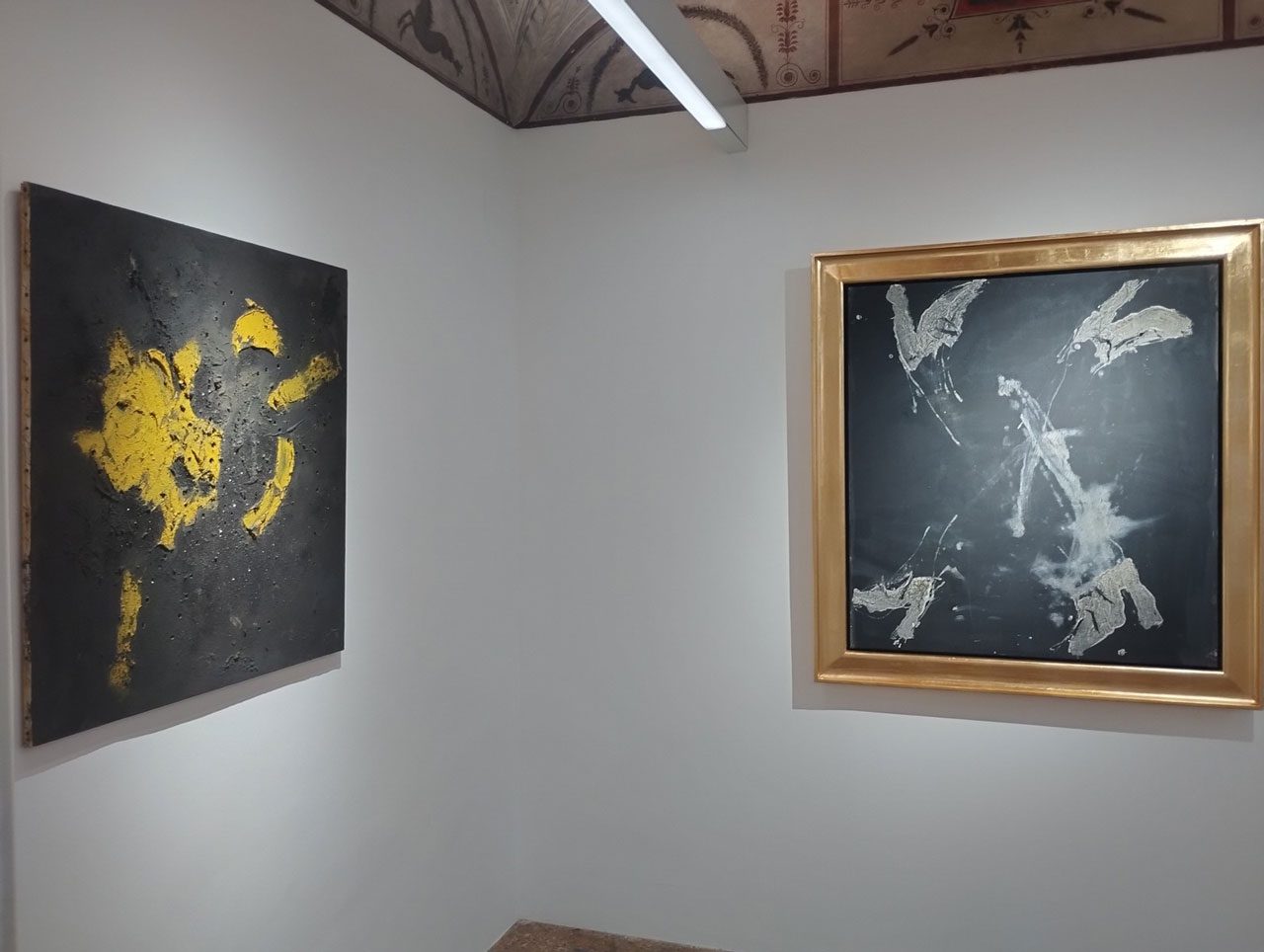
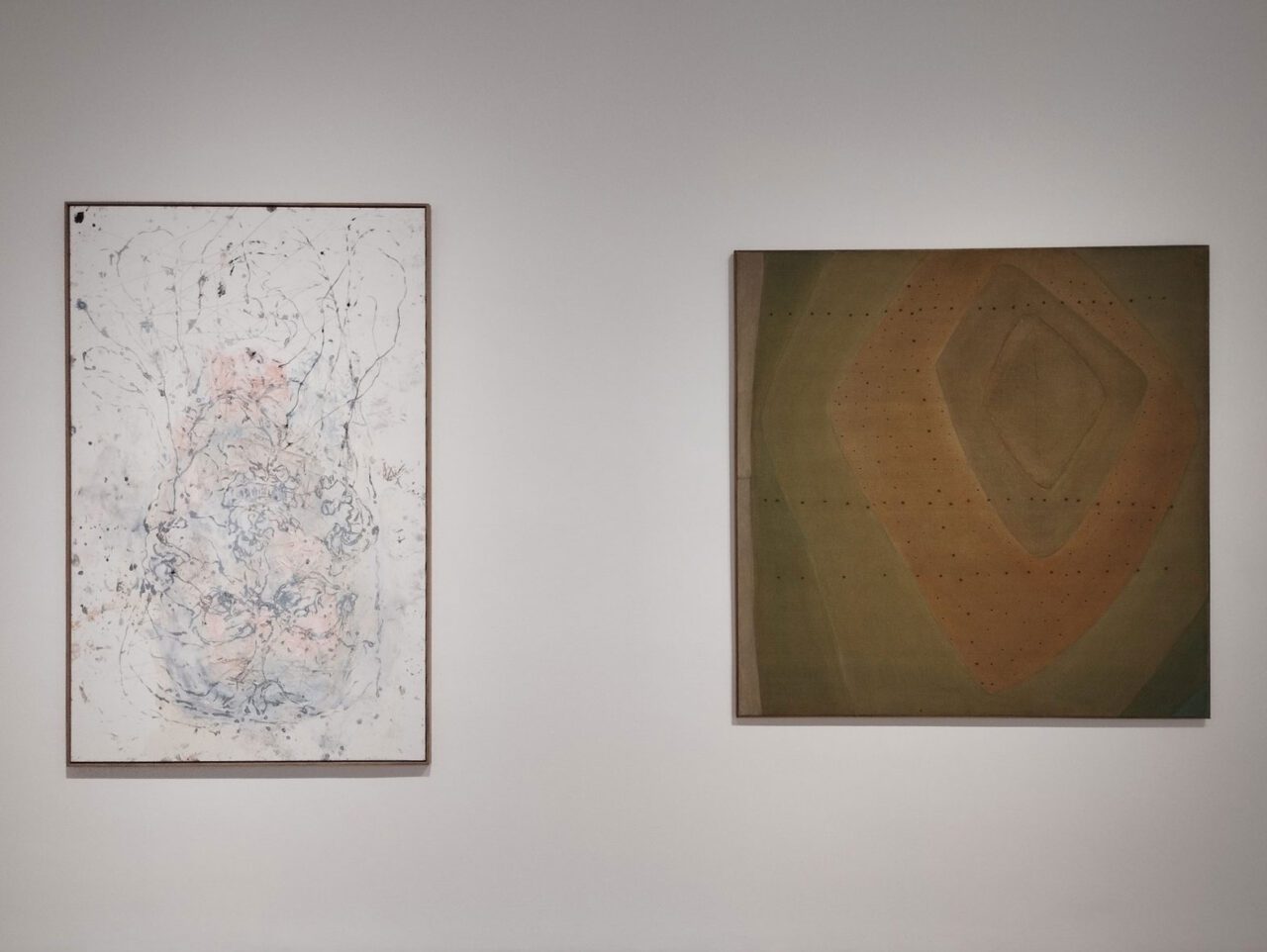
The inaugural exhibition “L’aurora viene” brings the works of Georg Baselitz and Lucio Fontana into creative dialogue for the first time, offering a rich panorama of painting and sculpture. Though the two artists never met, Fontana played a significant role in Baselitz’s oeuvre; Baselitz maintains a studio in Italy, while Fontana lived and created most of his life in Milan, where he held his first exhibition in 1931. Baselitz’s contributions include new monumental bronze sculptures and paintings with dark, inert centers or forms emerging from the canvas depths, referencing Fontana’s exploration beyond the surface.
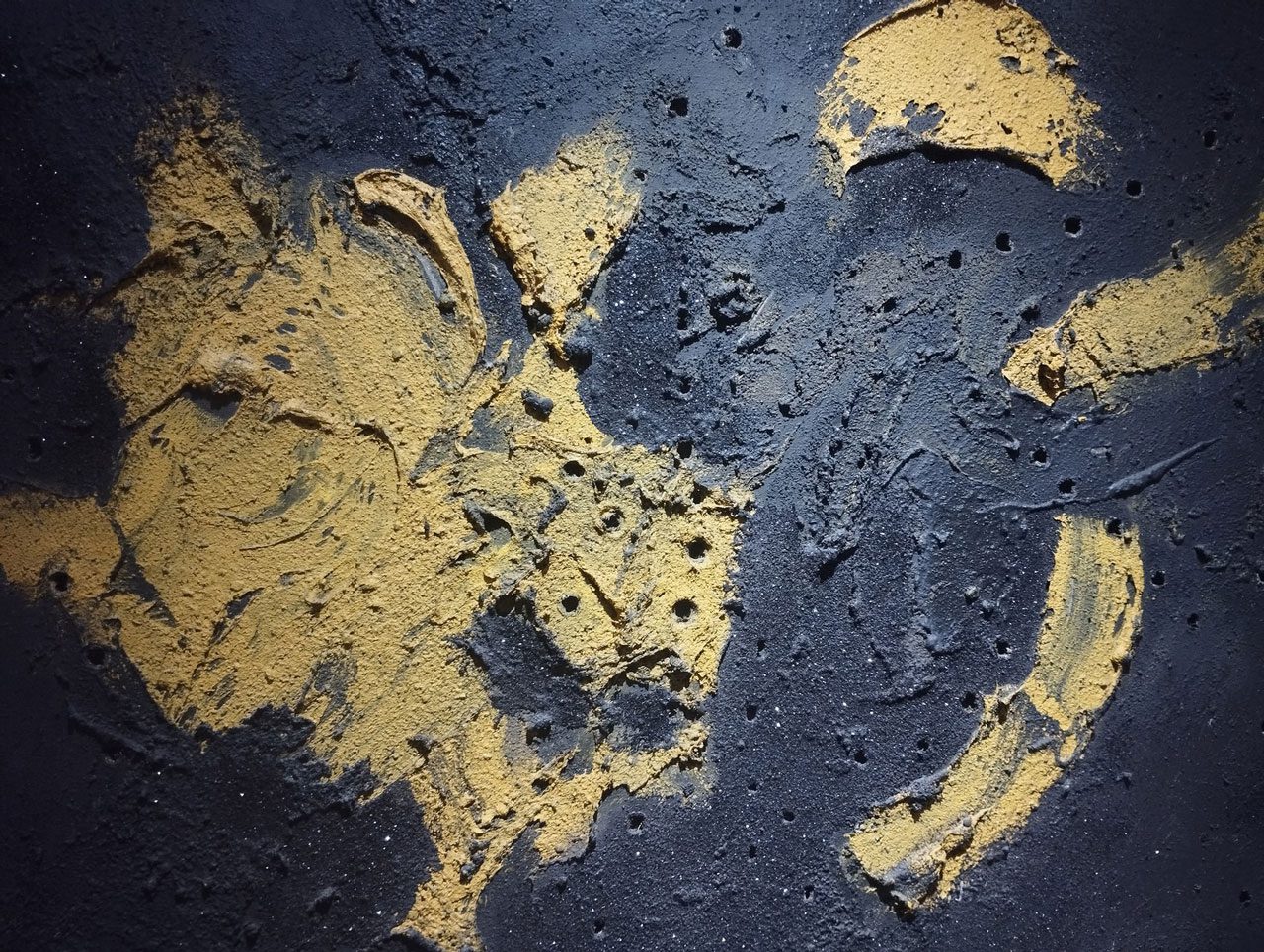
Baselitz, a pioneer of postwar German painting, presents works from the past decade alongside representative Fontana pieces spanning the 1930s to 1960s, including 1937 Baroque sculptures and signature “Concetti spaziali”—such as iconic 1960s “”Attese”, key examples from the “Gessi” (1954–58) and “Inchiostri” (1956–59) series, and the exceedingly rare Fine di Dio (1963–64). Special emphasis falls on the explosive “Concetti spaziali”, with their famed punctures and slits that marked Spatialism and a radical inquiry into artistic matter and the work’s cosmic dimension.
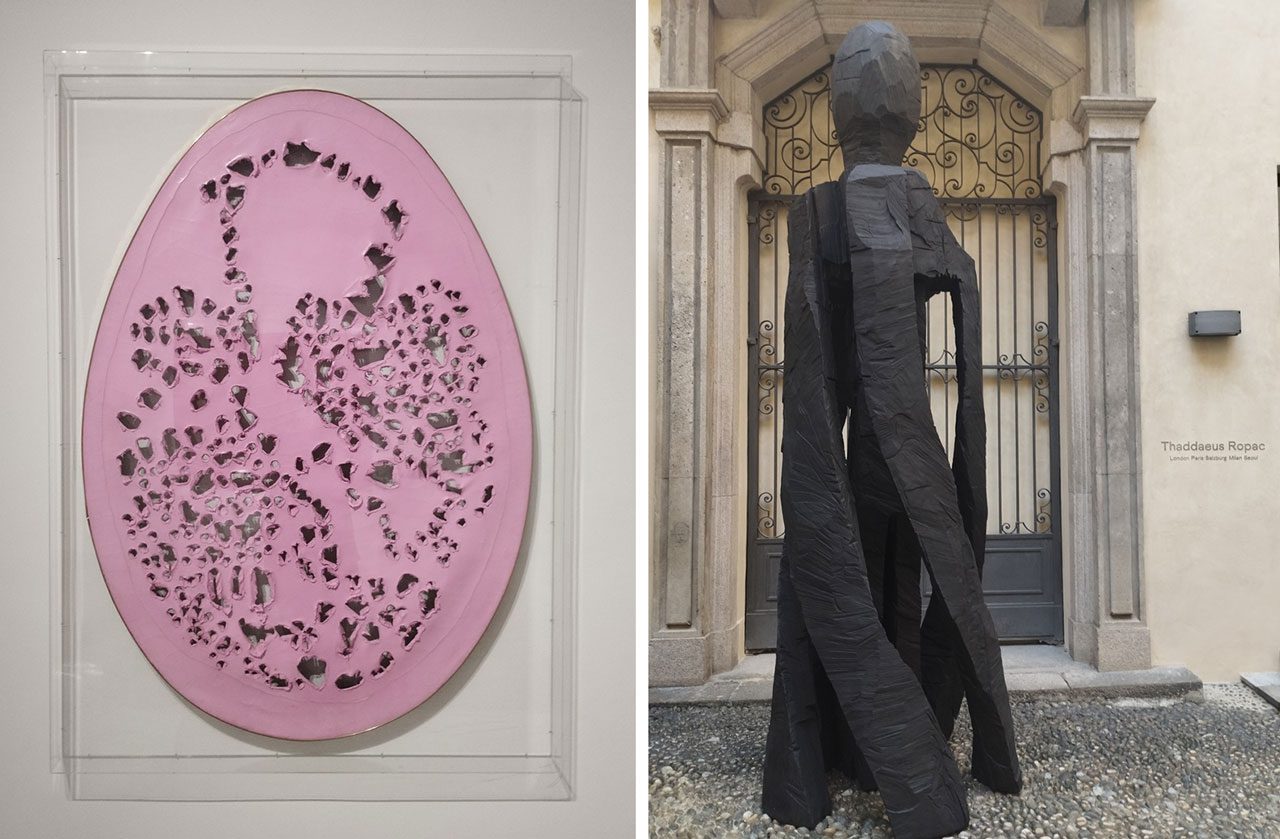
In the spirit of an imagined friendship, the show sketches real or hypothetical affinities; tracing their oeuvres through time reveals convergences and divergences—Baselitz stayed true to representation, Fontana veered toward abstraction, yet neither fully committed, preferring an ambiguous line that remained suggestive yet unbound throughout their artistic paths. Catalogue texts highlight multiple meeting points, such as the vivid pink Fine di Dio at the exhibition’s core—a rare milestone with just 38 known examples worldwide—interacting with Baselitz’s “Rosa riposa”, where the human body appears in its most vulnerable form.
Fontana’s central theme of destruction as regeneration resonates in Baselitz’s nudes, exposing bodily tension and gazes into the unknown spacetime; works like “Aurora viene” (2015), featuring pairs of heeled feet, capture Baselitz’s fixation on the foot as earth-body connector, echoing Fontana’s sculptures and their symbolism of grounding and materiality. Though they approach destruction differently—Fontana via tears and punctures, Baselitz through inverted figures—both sustain an optimistic vision: black emerging from Fontana’s cuts offers a ray of hope, while Baselitz’s upside-down works transcend formal play to elevate painting itself.
Τhe Fondazione Lucio Fontana bolsters this visual dialogue by lending works from lesser-known cycles that carry profound significance in the Italo-Argentine artist’s trajectory. The exhibition’s theoretical framework is captured in the accompanying catalogue, featuring essays by Flavia Frigeri and Luca Massimo Barbero that delve into the philosophy of “infinity and origins” through acts of puncturing and slitting, as well as Baselitz’s linguistic allegory developed via work titles and playful engagement with Fontana’s lexicon.
Thaddaeus Ropac Milan, through this exhibition, appears to make a promise: to function as a platform for dialogue between Italian history and the international avant-garde, cross-pollinating diverse visual traditions; the show spotlights Fontana’s rupture in modern art, defining the void as cosmic and existential origin point. In the “Concetti spaziali”, holes and incisions are not mere surface destructions but rifts to infinity—an emblematic moment of spiritual and material redefinition in the artistic field, shifting the work’s center from visible form to expectation, the slit, anticipation (attesa), the quest for what has yet to appear, akin to the tension permeating Baselitz’s entire corpus.
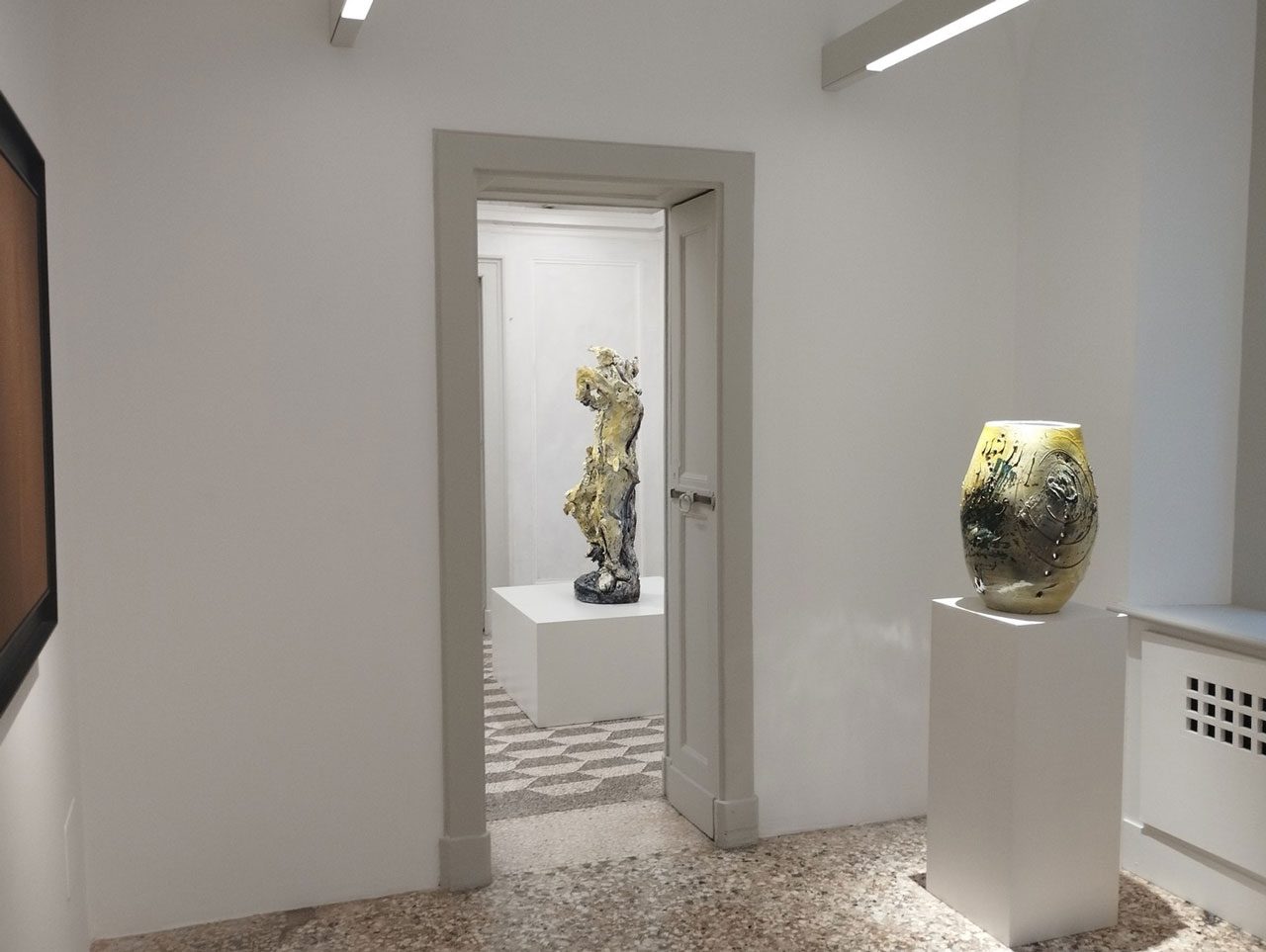
Photo left: Lucio Fontana. Concetto spaziale, La Fine di Dio (1963) Oil on canvas, 178 x 123 cm. Photo © & Courtesy Valia Katsimpa. Photo right: Georg Baselitz. Cowboy (2024). Bronze, 1480kg. 403 x 118 x 116 cm. Photo © & Courtesy Valia Katsimpa
Info: Thaddaeus Ropac Milan, Piazza Belgioioso 2, Milan, Italy, Duration: 20/9-9/12/2025, Days & Hours: Tue -Sat, 11:00 – 19:00, https://ropac.net/
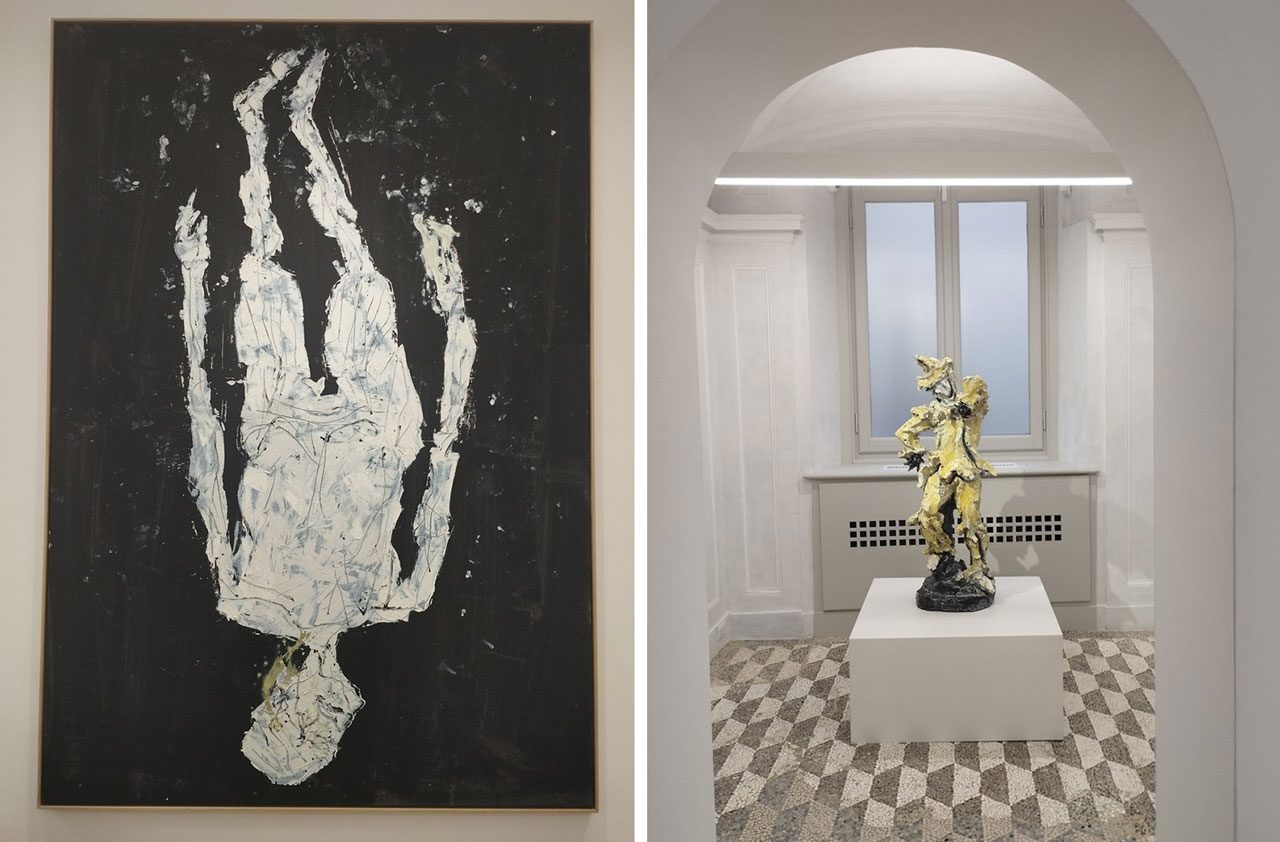
Right: Lucio Fontana. Arlecchino (1949) Glazed ceramic 120 cm x 50 cm. Photo © & Courtesy Valia Katsimpa
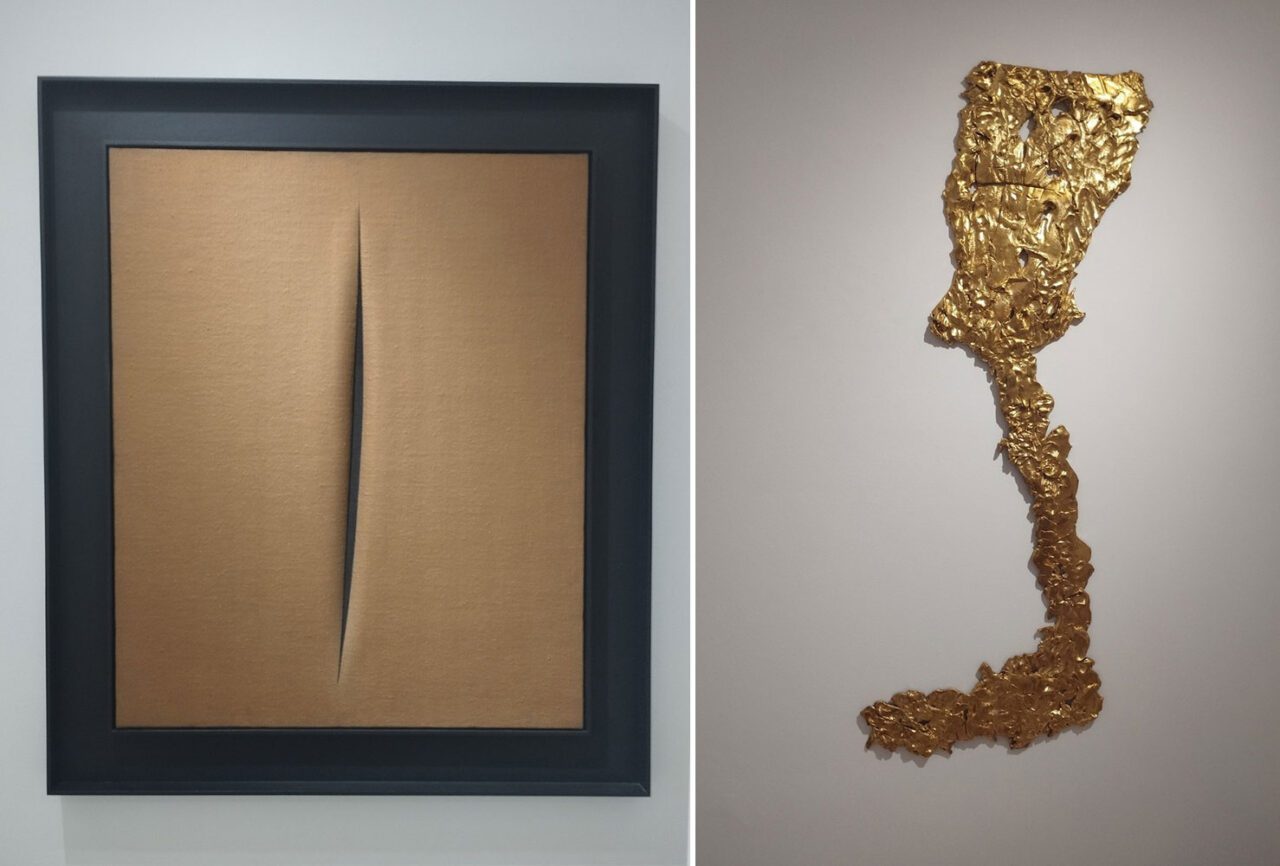
Right: Georg Baselitz. Lucios Halbinsel (2020) Bronze fire-gilded. 160.5 x 59.5 x 2.8 cm. Photo © & Courtesy Valia Katsimpa
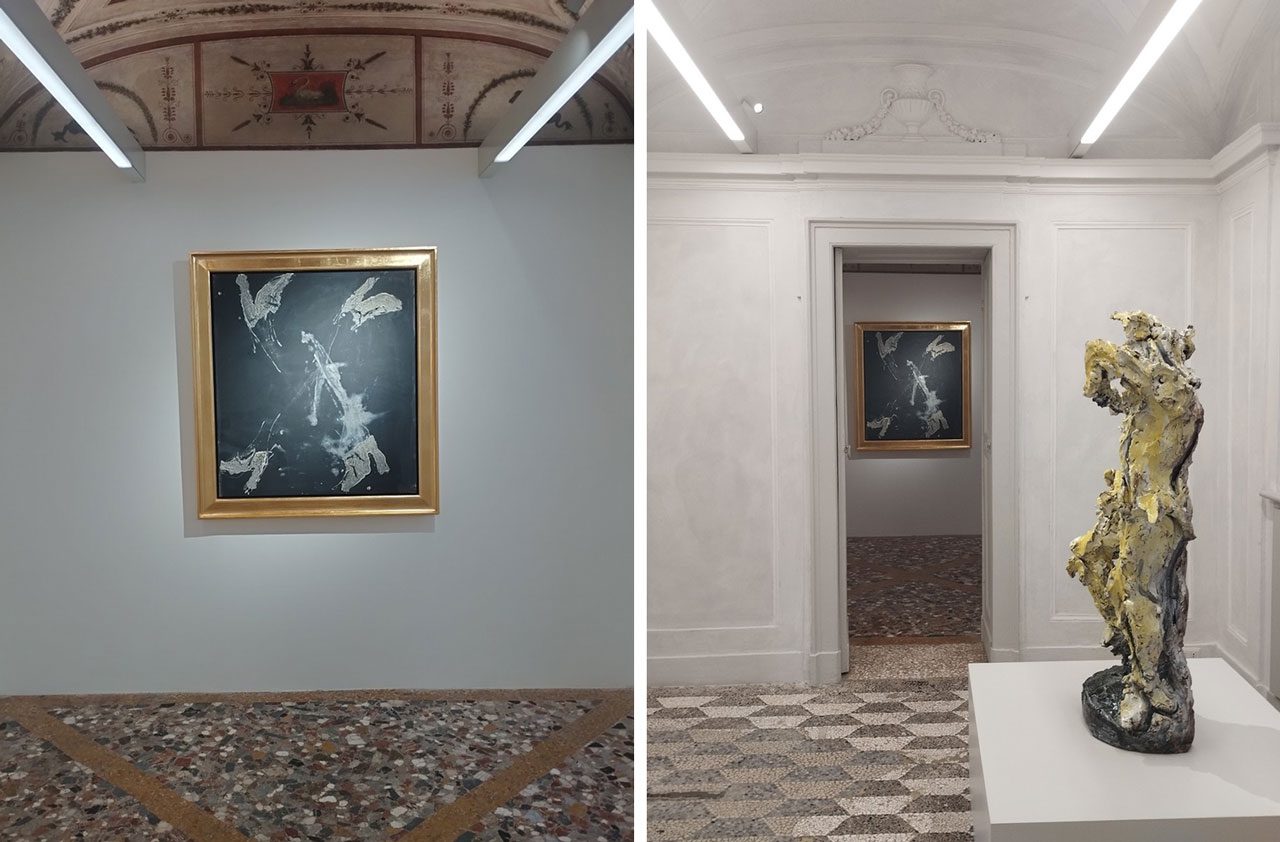
Right: Installatinon view, Georg Baselitz & Lucio Fontana: L’aurora viene, Thaddaeus Ropac Milan, 2025. Photo © & Courtesy Valia Katsimpa