PRESENTATION: Carl Cheng-Nature Never Lose
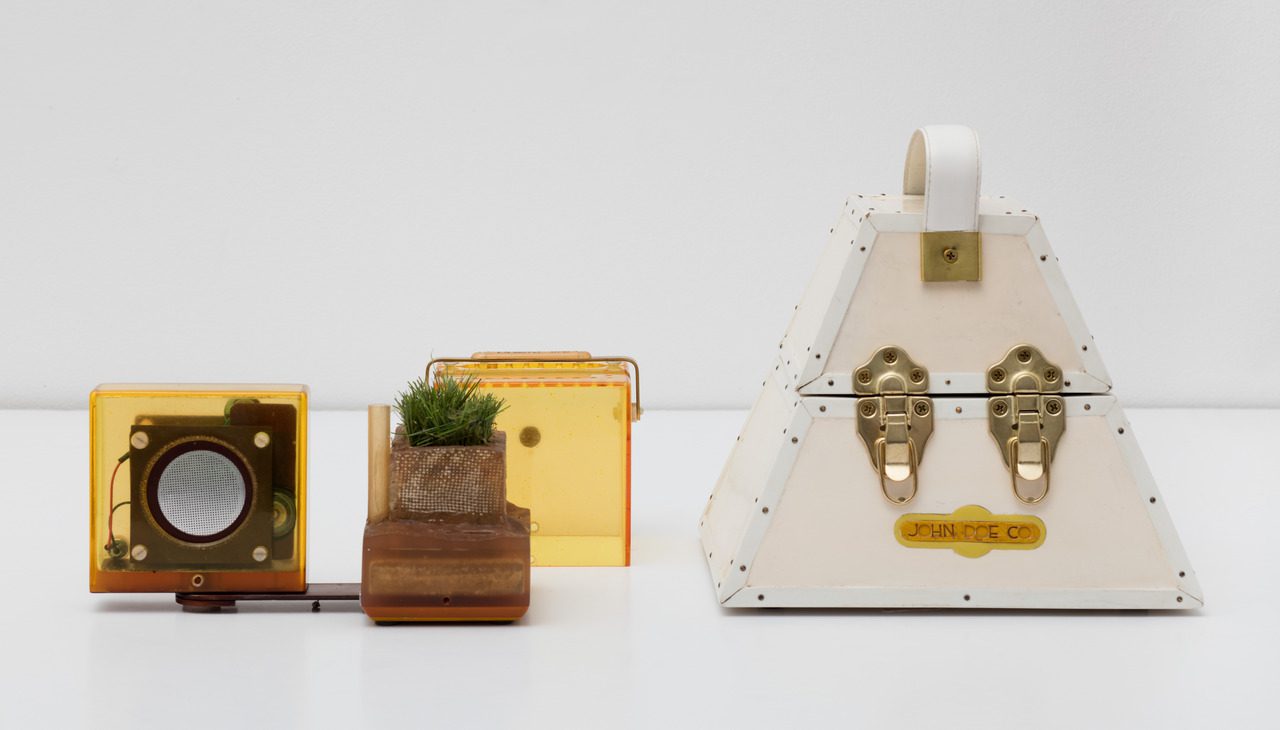
Often working under the pseudonym John Doe Co., Cheng has developed an idiosyncratic practice that merges sculpture, engineering, and environmental systems. His “nature machines” and pseudo-appliances—built from circuit boards, aquarium pumps, eroded rocks, and other found components—simulate natural processes, whirring, bubbling, and wearing down over time. Cheng first began to exhibit his work in the late 1960s, at a time when technological innovation flourished across Southern California. He was among the first artists to embrace the tools and aesthetics of aerospace, industrial design, and consumer electronics as a sculptural language.
By Dimitris Lempesis
Photo: Museum Tinguely Archive
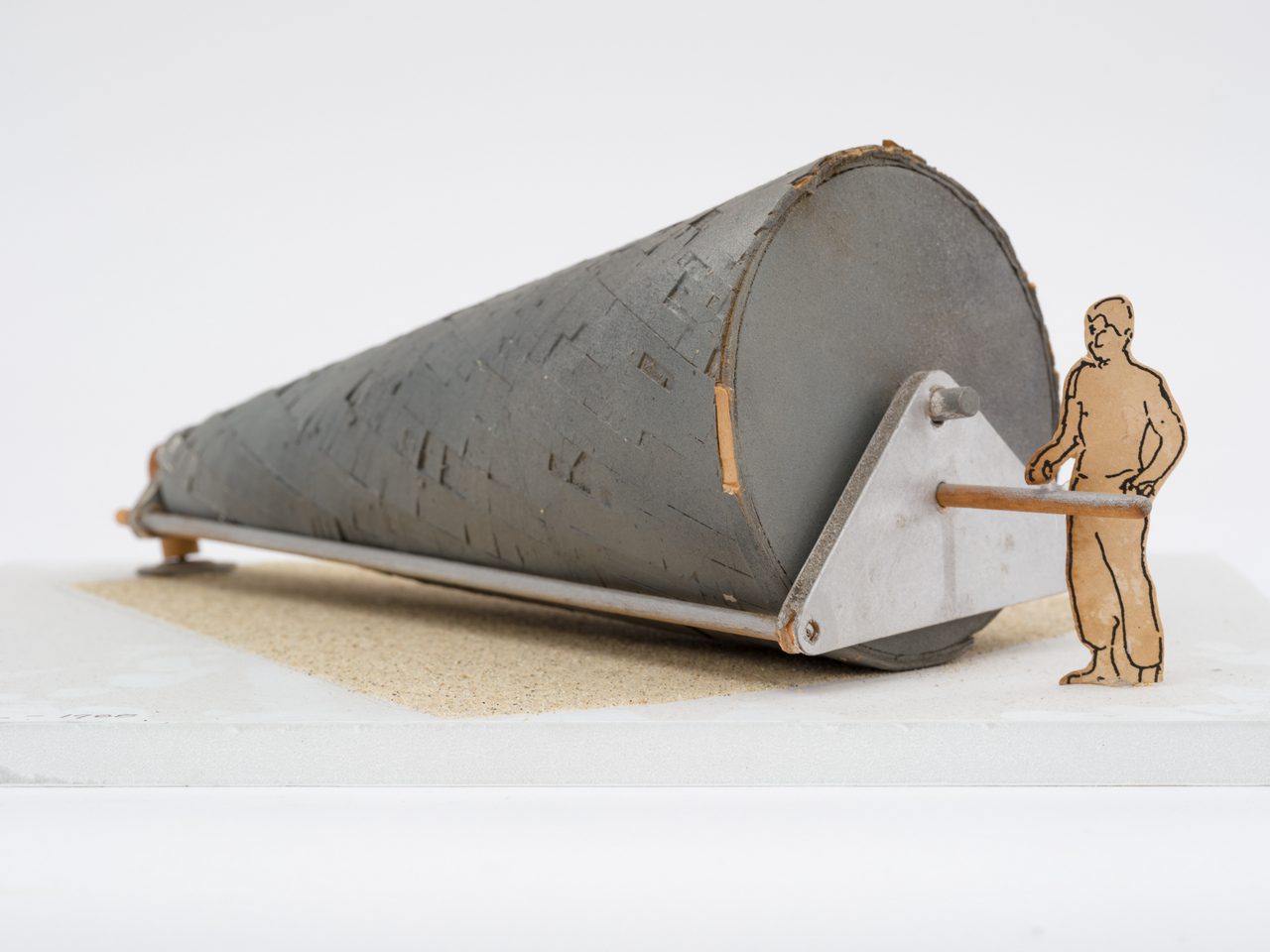
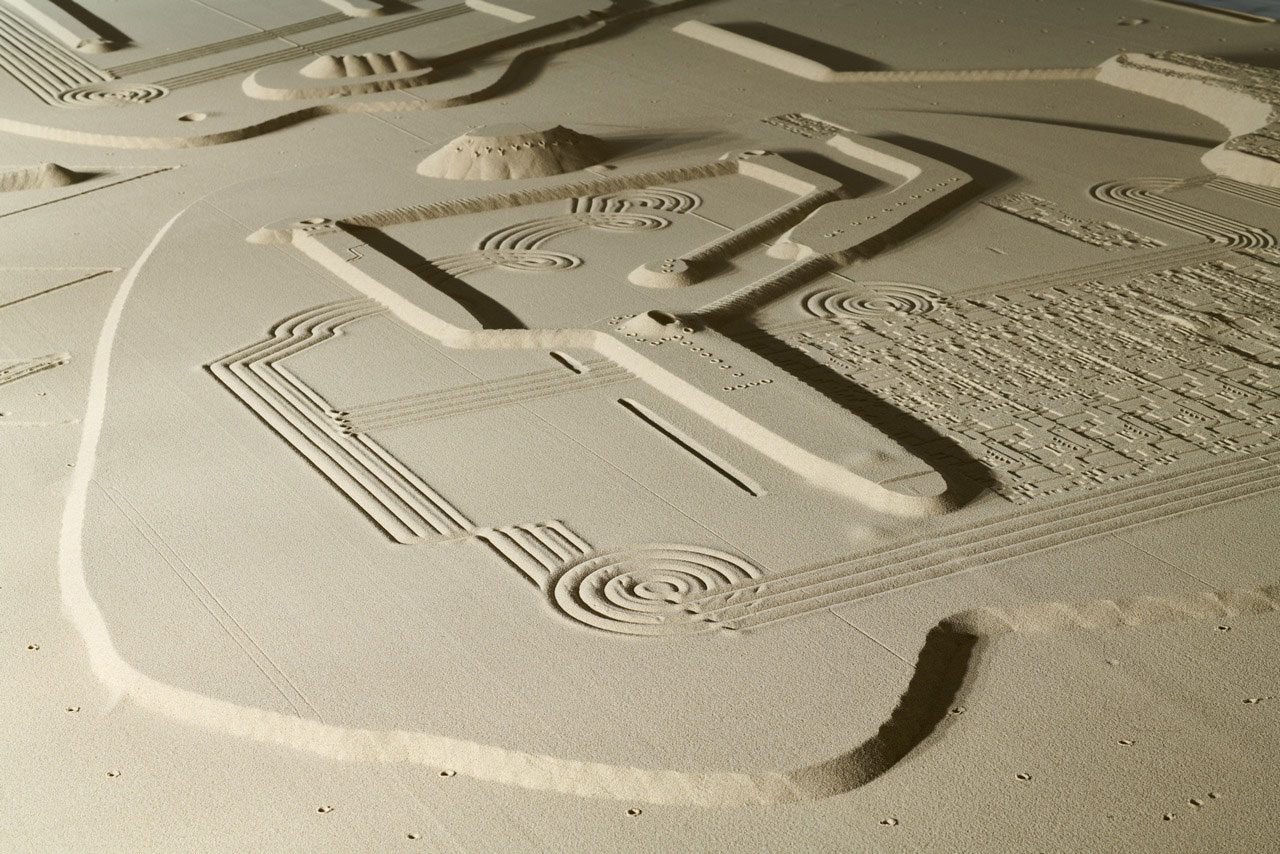
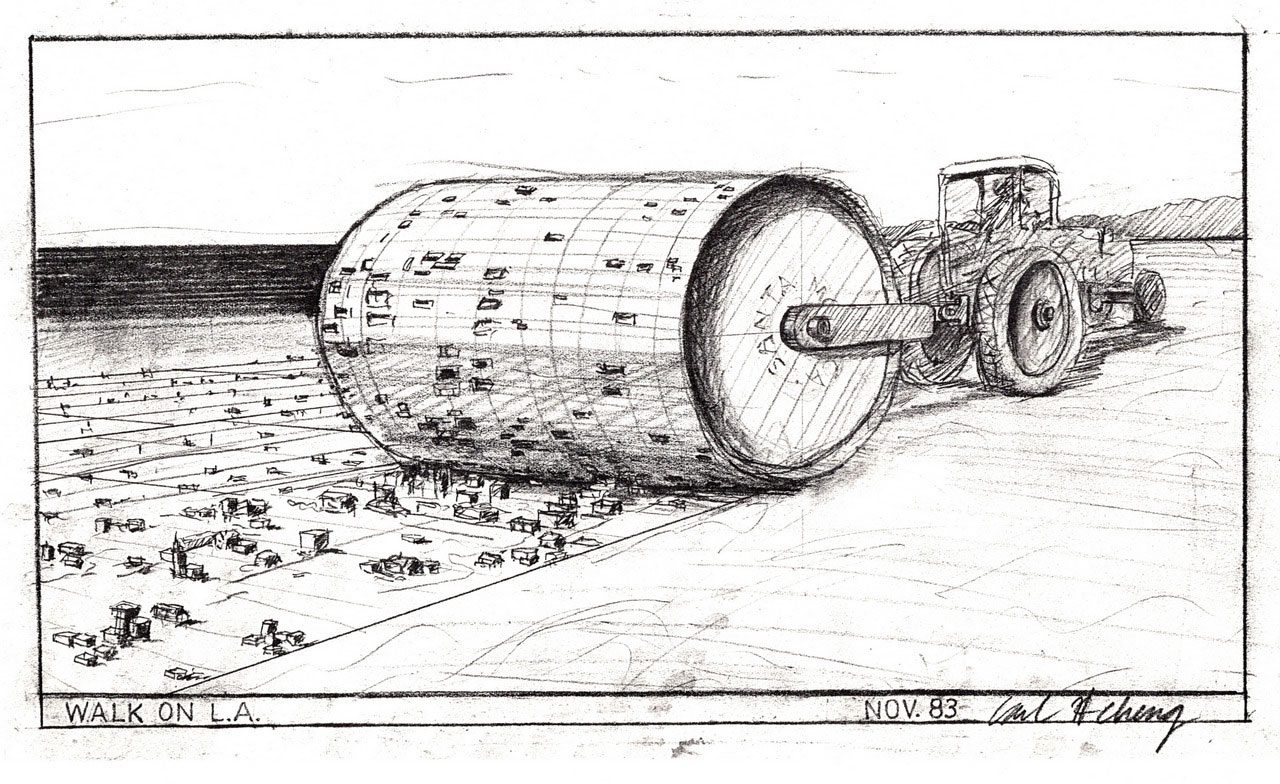
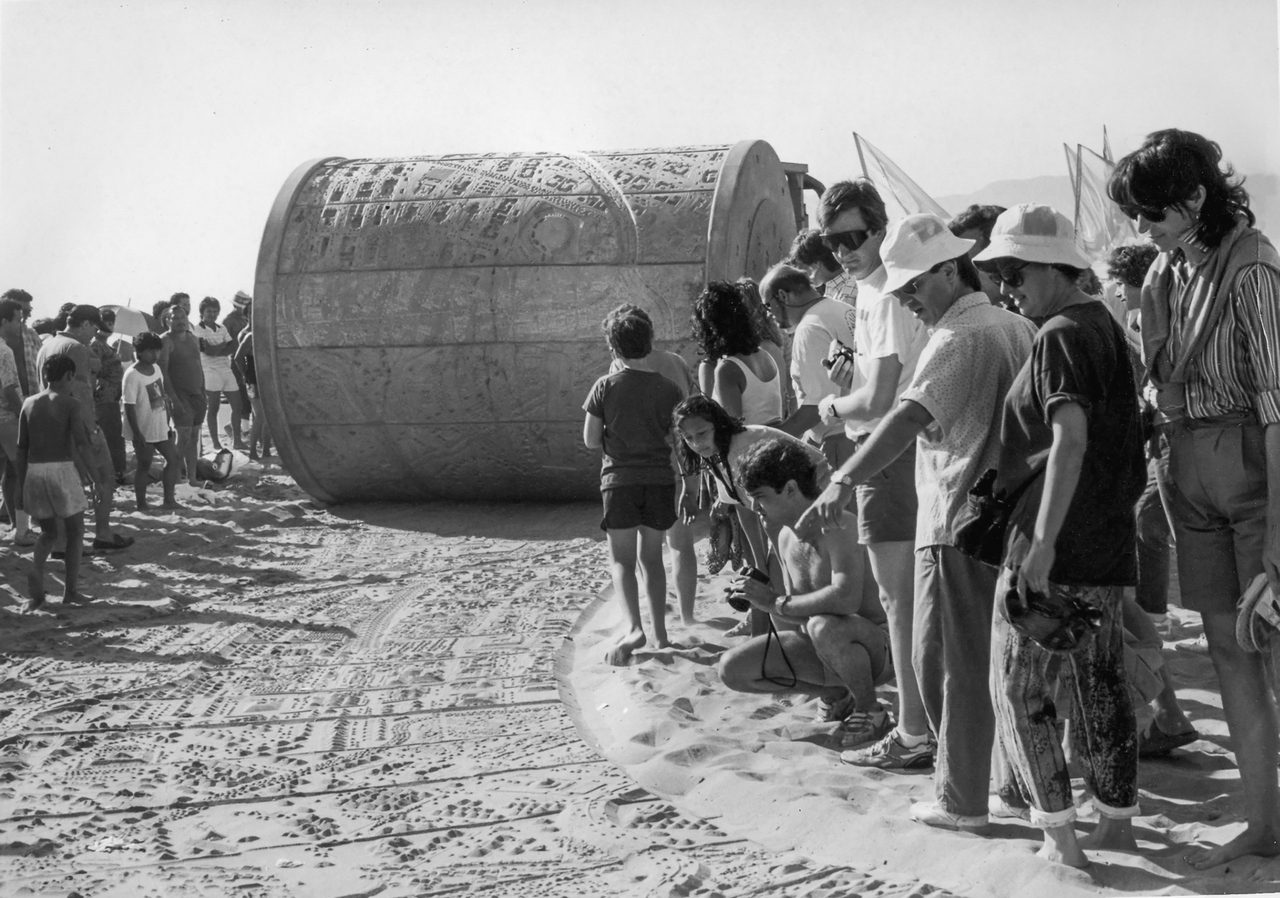
The exhibition “Nature Never Loses” surveys six decades of the prescient, genre-defying work of Carl Cheng. Having studied both fine art and industrial design, Cheng began his artistic career in the 1960s amid political unrest, an interdisciplinary art scene, a booming post-war aerospace industry, and a rapidly transforming landscape. This exhibition resents the most comprehensive view of Cheng’s work to date. On show are his early photographic sculptures, as well as the “Art Tools” he created and used to make ephemeral works, and his “Nature Machines| that anticipate an artificial, humanmade world. Extensive documentation highlights Cheng’s spectacular public interventions, including the “Santa Monica Art Tool” (1983-88), a roller drawn across the sand by a tractor to create a three-dimensional imprint of a miniature city that Cheng called “Walk on LA”. The exhibition includes a wealth of never-before-seen archival materials and artworks from Cheng’s personal collection.
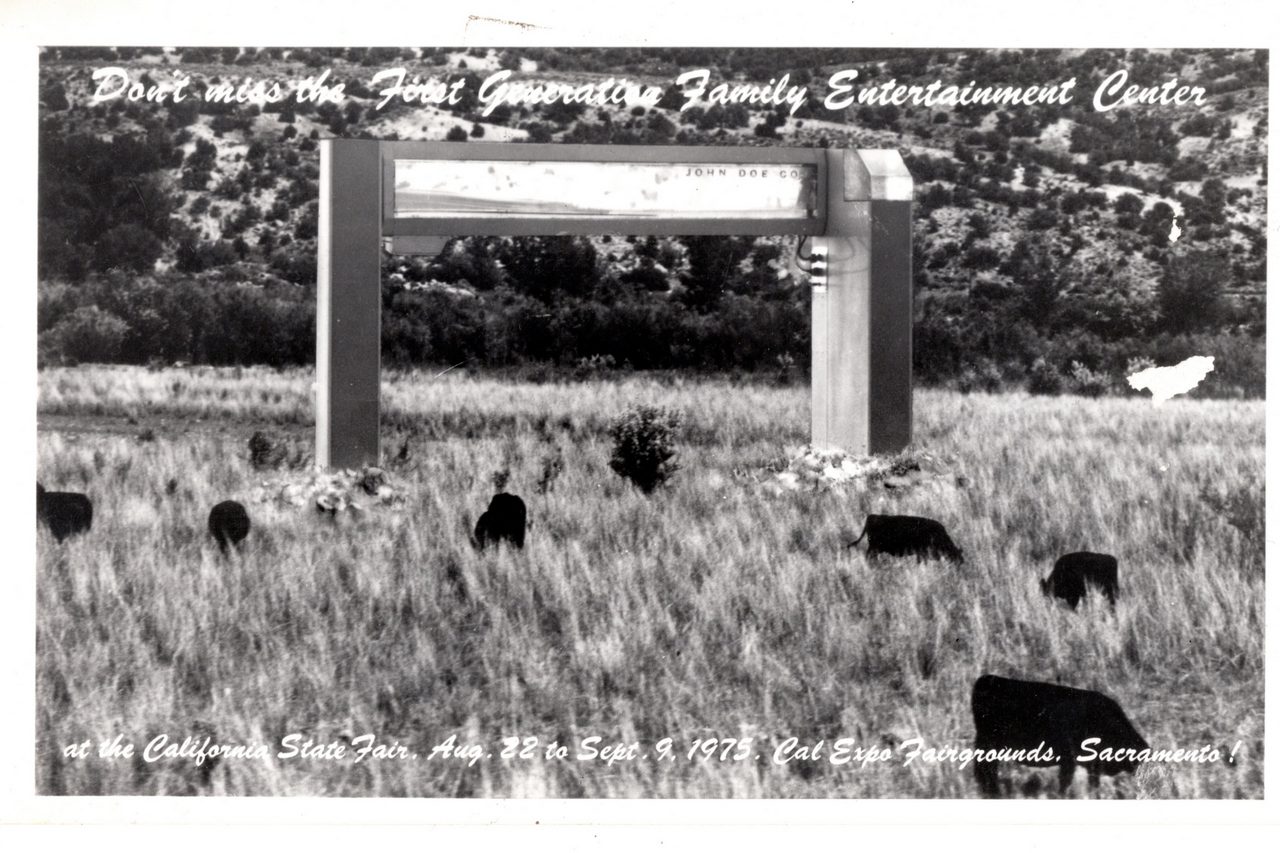
In 1966, Cheng incorporated his studio under the name John Doe Co. This move, made originally for practical reasons, poked fun at the commodification of art and the brand of the artist, while also serving as a simultaneous critique of corporate culture and the Vietnam War-era discrimination he experienced as an Asian American. In the guise of John Doe Co., he has created sculptural ‘products’ that reflect his conception of technology as an artistic tool and his skepticism of neoliberal notions of progress that have shaped both the art market and the tech industry.
The generosity, irreverence, and playfulness that infuse Cheng’s work are of a piece with his embrace of organic materials and processes and his commitment to making art in public spaces. Throughout, Cheng has consistently probed questions of nature’s agency and the extractive impact of humans on their environment, summed up in his frequent declarations, at once humorous, foreboding, and hopeful that ‘nature never loses’, ‘nature always wins’, and ‘nature is everything.’
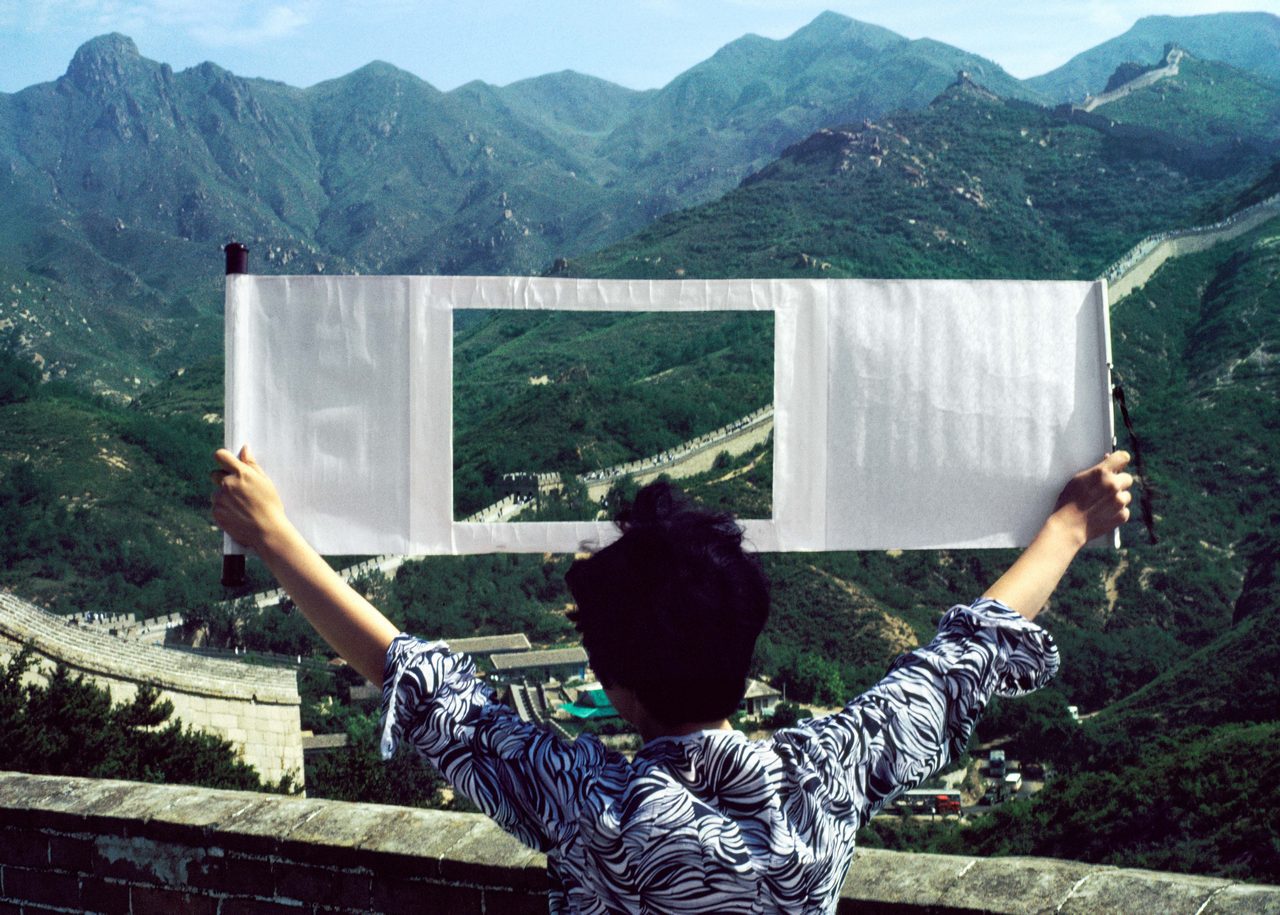
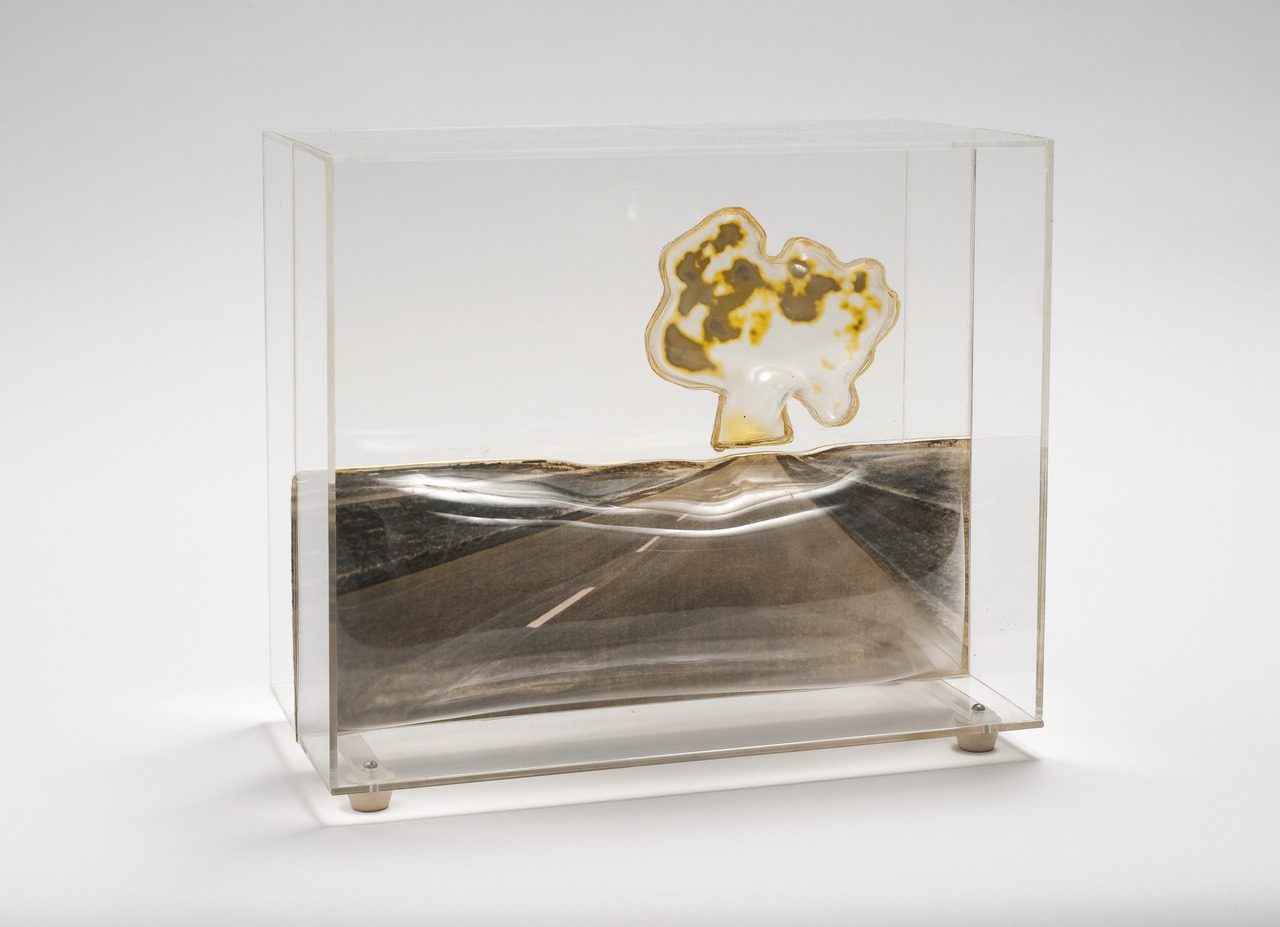
Photography as a Tool: For Carl Cheng, photography is both a framing device and an artistic tool that he uses to extract images from their contexts. He attributes this approach to his studies at the Folkwang Hochschule, Essen, Germany (1964-5) and UCLA (BA 1959-63 and MA 1965-7), where he received an interdisciplinary, Bauhaus-influenced education that wedded art and industry. At UCLA, Cheng studied with Robert Heinecken, who founded the photography program and cultivated an open-ended and experimental approach. This ethos, in conjunction with Cheng’s background in industrial design-he also briefly worked as a model maker in the office of designers Charles and Ray Eames-grounds early series such as his molded plastic photographs and continues to inform his expanded engagement with lens-based media.
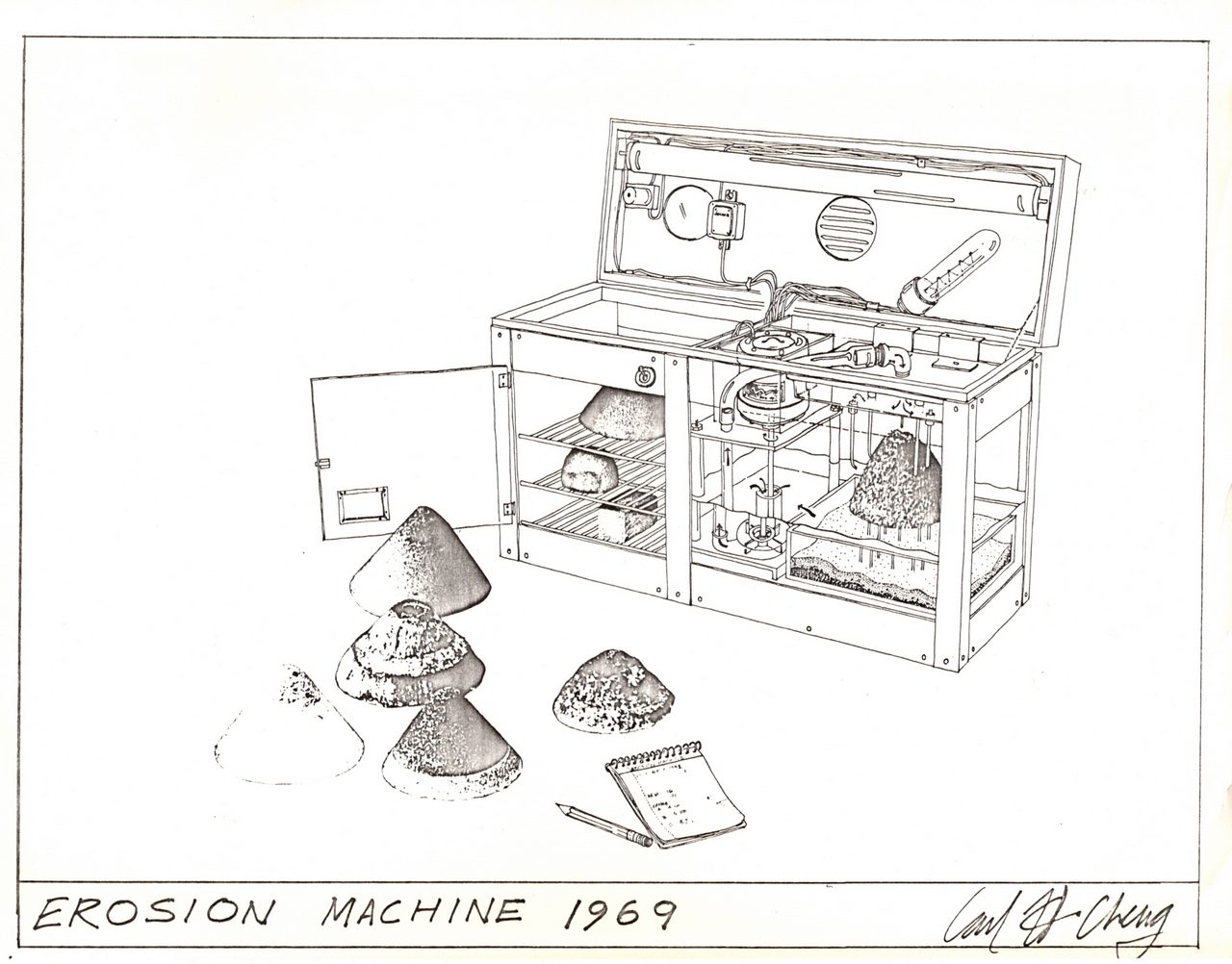
Natural Processes and Nature Machines: Cheng’s artistic concerns in the 1960s seem to anticipate the expanding awareness of environmental issues and later, in the 2000s, the concept of the Anthropocene, a term used to describe the current geologic era shaped by human impact on the atmosphere and landscape. Early in his practice Cheng began to describe human -made products that had lost their function (for example, a broken toaster) as ‘human rocks’, observing that, to the extent that they are a composite of minerals and chemicals, they are also a part of nature. Alongside experiments that subjected sculptural forms produced in his studio to environmental conditions such as weathering and erosion, he also created artworks out of organic materials like lizard skins and cacti, and pursued sometimes decades-long durational processes of growth and decay as artistic methodologies. Cheng further explored this way of making in sculptures he dubbed “Nature Machines”, new products he created to reproduce natural phenomena and overturn conventional notions of authorship and artistic agency.
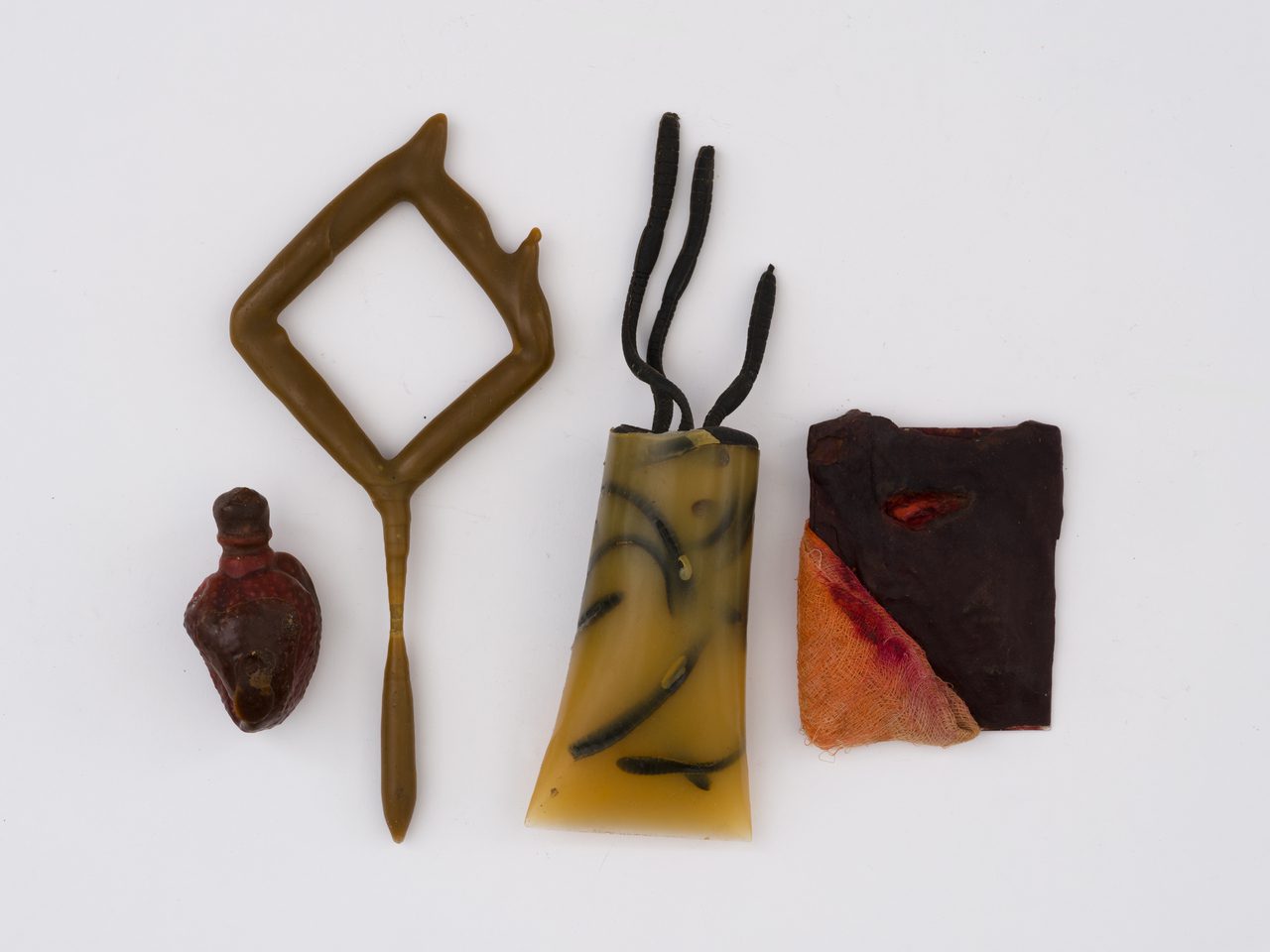
Travel and Specimens: Cheng’s travels in the early 1970s with his partner, graphic designer Felice Matan, deeply influenced his perspective as an artist. Living and travelling in Japan, Indonesia, India and other Asian countries changed his outlook on the value placed on discrete objects, Western modes of making art, authorship, and audiences. Embarking on a process of unlearning, Cheng began to question hierarchies among art, craft, and commerce as well as the insularity of art museums. This comprehensive reappraisal eventually fostered his interest in making public art. His itinerant lifestyle also led him to produce smaller scale artworks that he could ship back to himself in Los Angeles, where he later incorporated them into larger projects. These include organic ‘specimens’ featured in artworks such as the “Art Medicine Kit” and elusive, small sculptures referred to as “Emotional Tools”.
John Doe Co.: In 1966, Cheng began working under the name John Doe Co, which he registered as an LLC in 1970 not only for tax purposes, but also as a way to gain easier access to industrial materials. Eventually it also served as a commentary on the art market’s commodification of the signature style of the artist, and as a response to Vietnam War-era social unrest and the marginalization he faced as an Asian American artist. Heavily influenced by Marcel Duchamp and his alter-ego Rrose Selavy, Cheng was intrigued by anonymity and the imaginative potential it offered. As John Doe Co., Cheng creates sculptural products for a not-so-distant future of environmental collapse: “Nature Machines” that reproduce the effects of the weather; kits and optical devices that incorporate organic materials for analysis and imaginative use; and alternative entertainment devices that respond to the dominance of mass media.
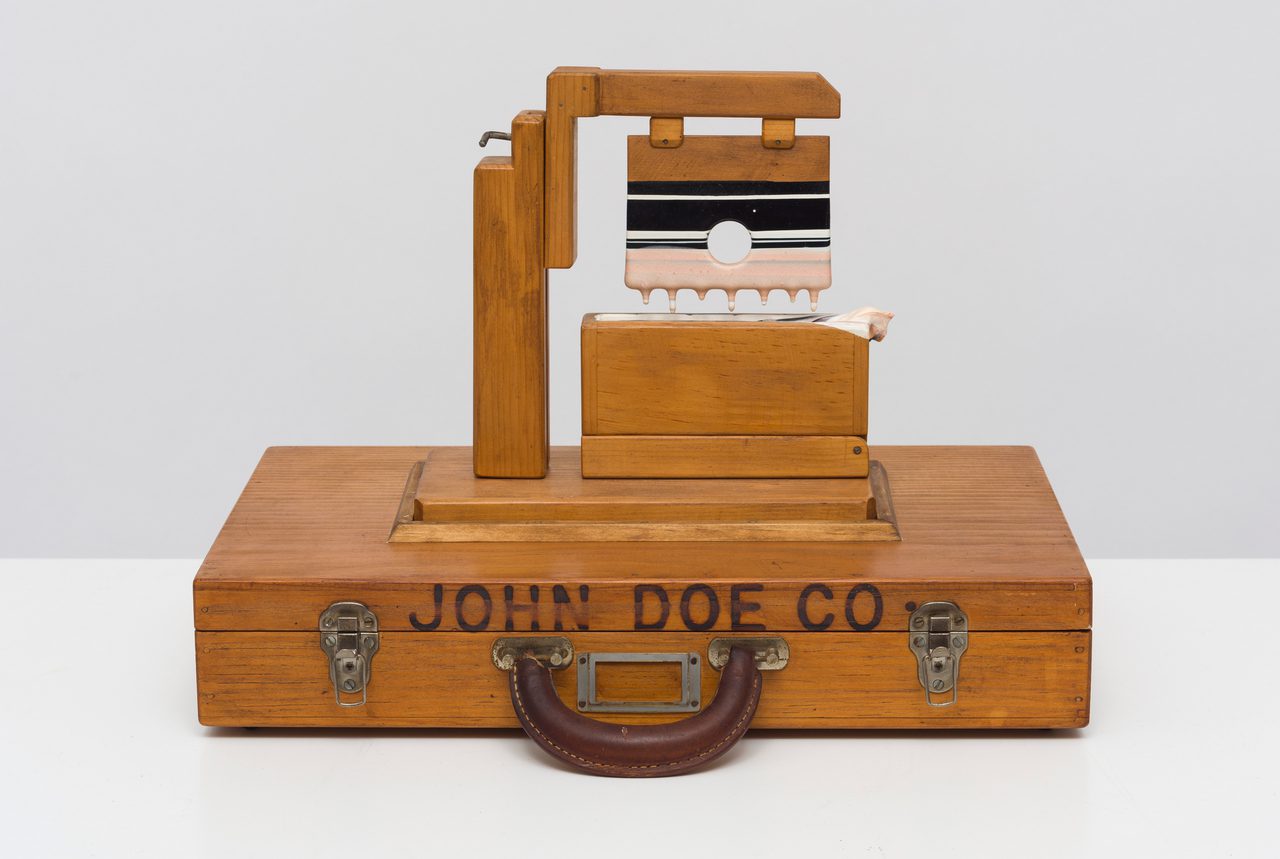
Art Tools: “Art Tools”, alternative instruments for making art, are one of the key continuing product lines of John Doe Co. Cheng uses these “tools,” which are durable mechanical devices, to create ephemeral compositions such as drips of wax or paint and drawings made with sand. Cheng was motivated to invent these new ways to make his work in response to the traditional privileging of tools such as chisel and brush over contemporary technological alternatives. While Cheng’s earliest “Art Tools” were simple and small in scale, these rudimentary prototypes eventually evolved into sophisticated, motorized apparatuses and large, room-sized installations. Although Cheng has incorporated new technology into each succeeding model of these products, he prefers to avoid more automated and computerized systems, which might undermine his ability to operate and service each machine himself. The “Art Tools” thus demonstrate Cheng’s understanding of technology as both a set of limitations and a space of creativity and his conviction that we need to develop new formal tools and technologies for futures that have yet to be imagined.
Public Art Projects and Installations: Following his travels throughout Asia in the 1970s, Cheng shifted his focus from exhibiting stand-alone objects within conventional art galleries to creating large-scale, kinetic installations and competing for Percent-for-Art public art commissions. In the 1960s, many cities across the US adopted a Percent-for-Art program where one percent of every development project’s budget was allocated towards public art projects, in effect creating a new need for and emphasis on art in public spaces across the country. In 1979, soon after Cheng staged his self-initiated Natural Museum of Modem Art, he was awarded his first official public art commission for Seattle Underwater. Cheng’s background in industrial design provided the skills he needed to create compelling and practical proposals, and his experimental approach to artmaking enhanced his ability to engage with a variety of environmental factors and materials. Cheng views his public art projects as opportunities to work on a larger scale and reach a wider audience. He also sees them as an expanded investigation into what he terms ‘human erosion’. For Cheng, the eventual deterioration of many of his public projects due to vandalism or lack of maintenance, as well as the ephemerality of artworks made from organic or natural materials, become metaphors for the precarity of a climate and landscape irrevocably changed by humans and their built environment.
Photo: Carl Cheng, Great Wall No. 2, Date of origin: 1979, Addition: reprinted 2024, Giclee Print, © Carl Cheng, Courtesy the artist and Philip Martin Gallery, Los Angeles
Info: Curators: Alex Klein, Assistant Curators: Rachel Eboh and Andres Pardey, Museum Tinguely, Paul Sacher-Anlage 1, Basel, Switzerland, Duration: 3/12/2025-10/5/2026, Days & Hours: Tue-Wed & Fri-Sun 11:00-18:00, Thu 11:00-21:00, www.tinguely.ch/
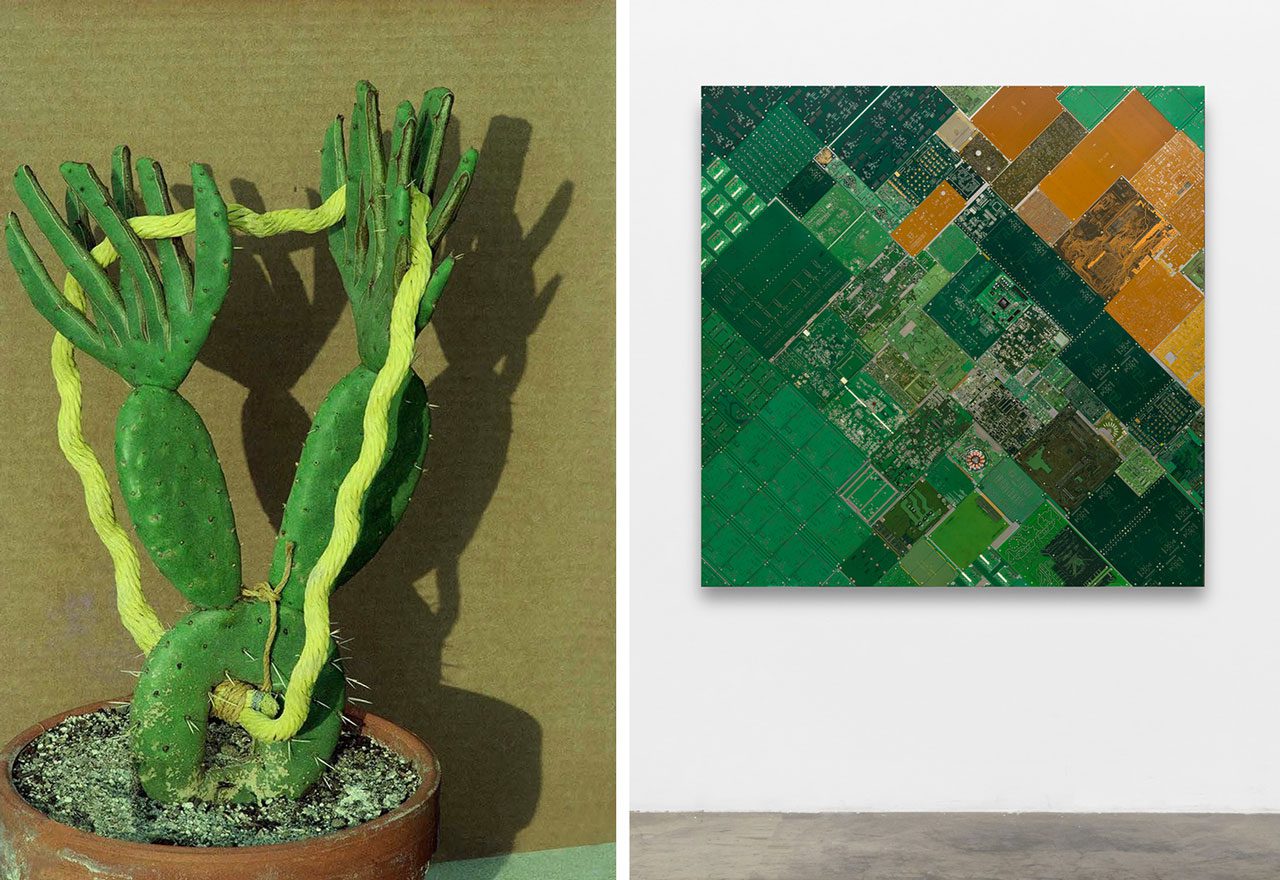
Right: Carl Cheng, Anthropocene Landscape 2, 2006. Printed circuit boards and rivets on aluminum, © Carl Cheng, Courtesy the artist and Philip Martin Gallery, Los Angeles, Photo Credit: Jeff McLane