PREVIEW: ART VITAL-12 Years of Ulay / Marina Abramović
Hailing from Serbia, Abramović’s studied at the Academy of Fine Arts in Belgrade in the mid-’60s, completing post-graduate work at its sister school in Croatia. Abramović then returned to Serbia, where she taught at the the Academy at Novi Sad while developing her first solo performances. Ulay – originally Frank Uwe Laysiepen from Solingen Germany – began his career as an artist in the early ‘70s after moving to Amsterdam, where he began creating self-portrait polaroid collages that delved into gender as a construct, which were seen as controversial at the time. Ulay and Abramović first met in 1976. They soon moved in together and began collaborating artistically.
By Efi Michalarou
Photo: Cukrarna Gallery Archive
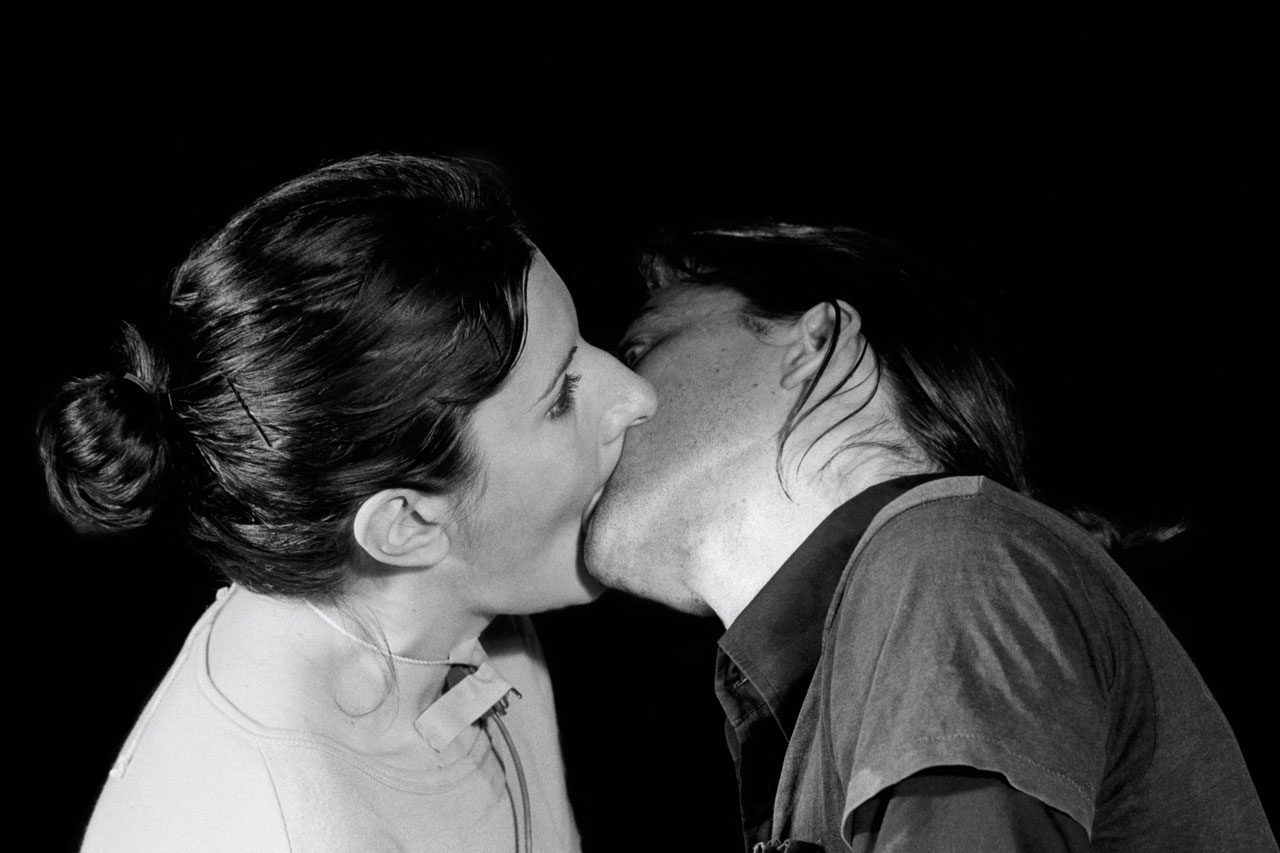
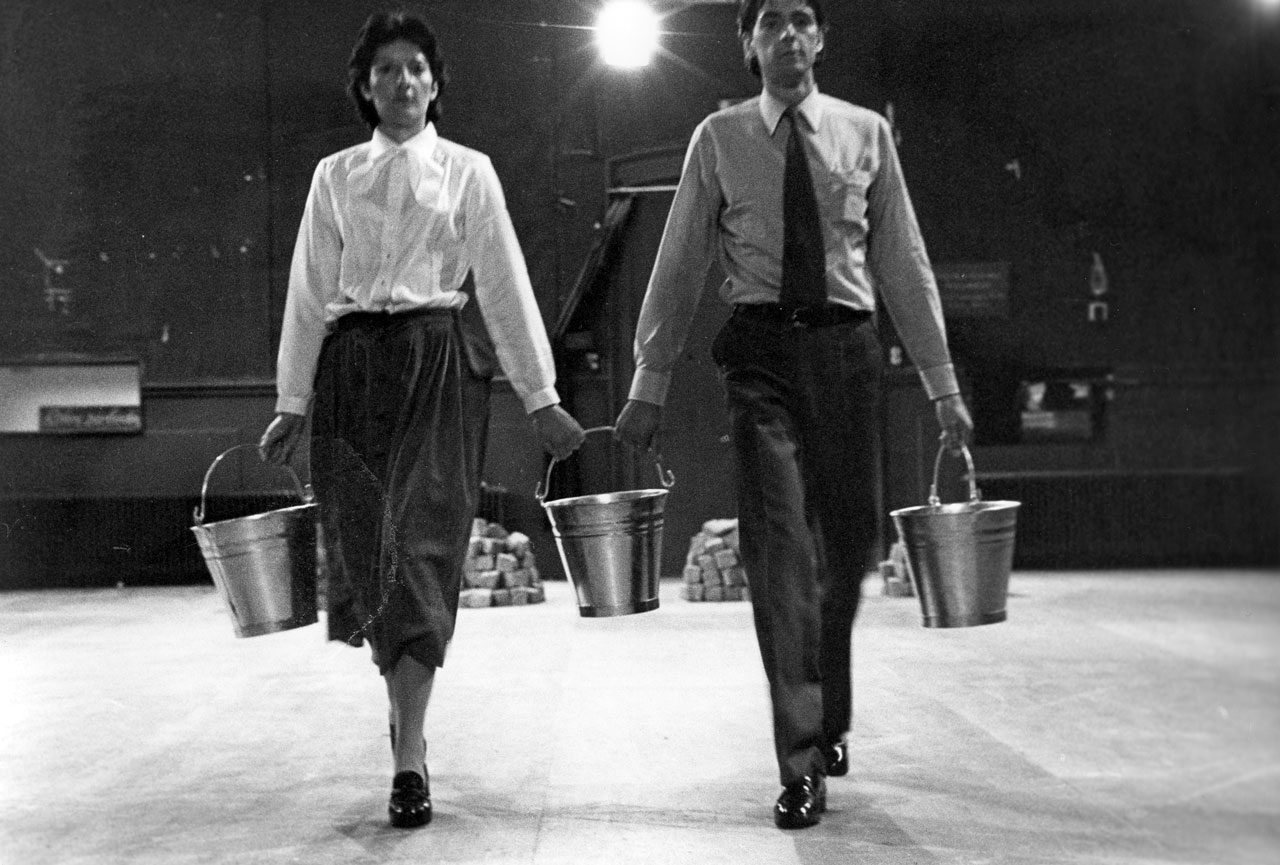
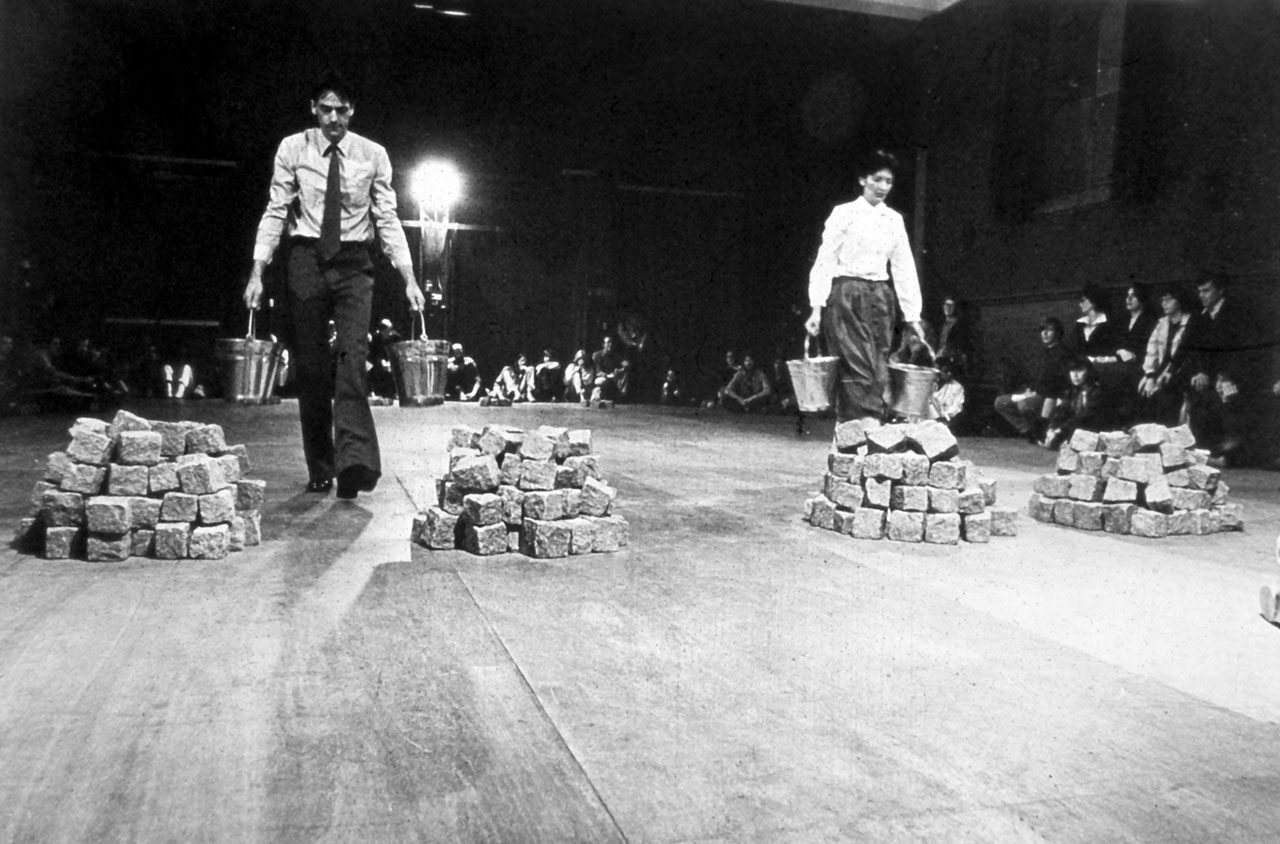
The main focuses of Ulay and Marina Abramović works were ego and identity. Their work resulted in a collective, which they refer to as “The Other.” As part of this collective they started to dress and behave alike in order to develop a completely trusting relationship. After some time, their own identity or sense of self became less and less decipherable. The following collaborations are the results of this unconventional union.
The exhibition “ART VITAL – 12 Years of Ulay / Marina Abramović” presents the iconic partnership between Marina Abramović and Ulay – Frank Uwe Laysiepen. Between 1976 and 1988, the two artists lived and worked together, seamlessly integrating artistic practice into daily life while challenging conventional notions of authorship and identity. Their groundbreaking practice probed vulnerability, resilience, and interdependence, mirroring the intensity of their shared life and creative process.
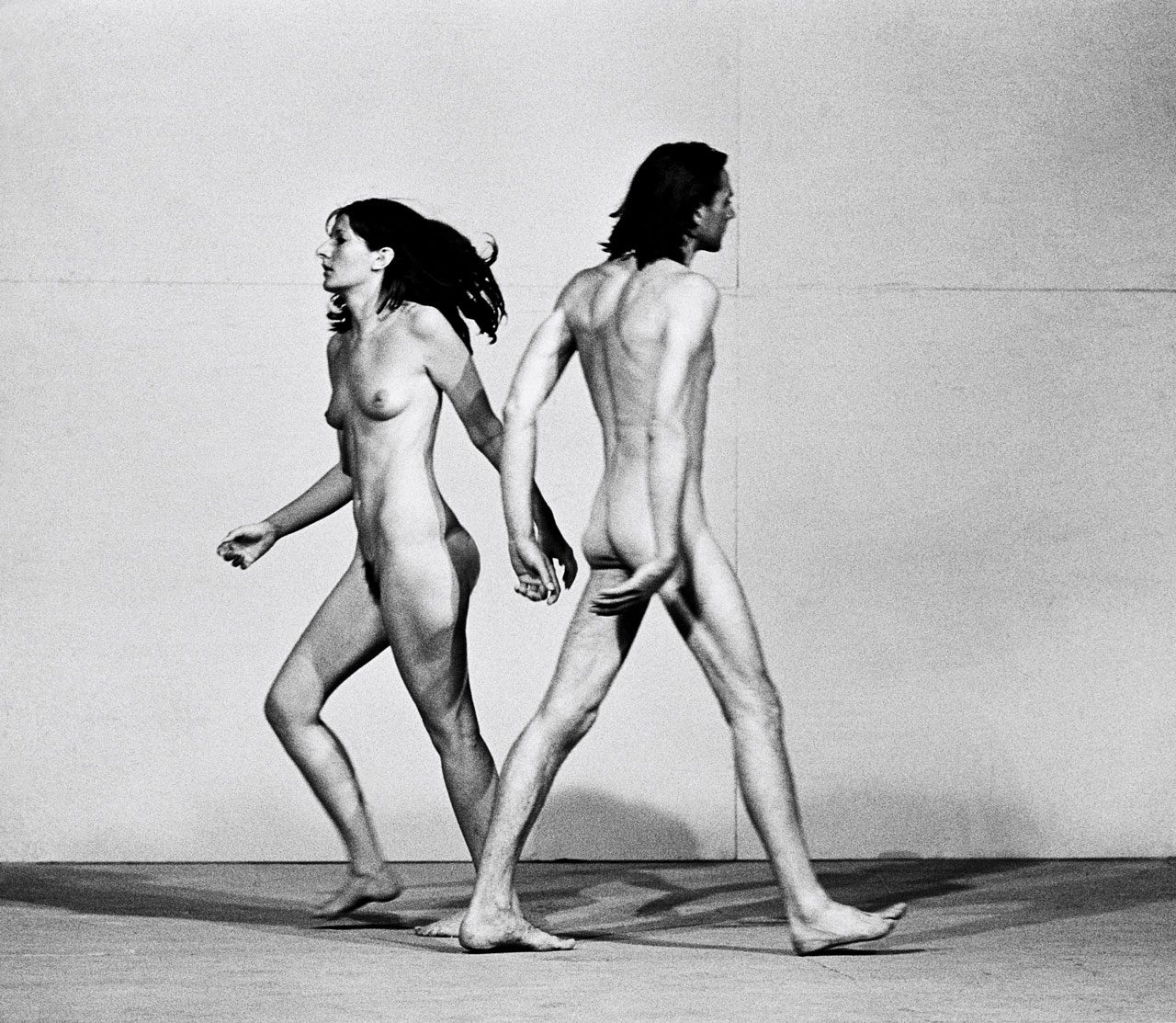
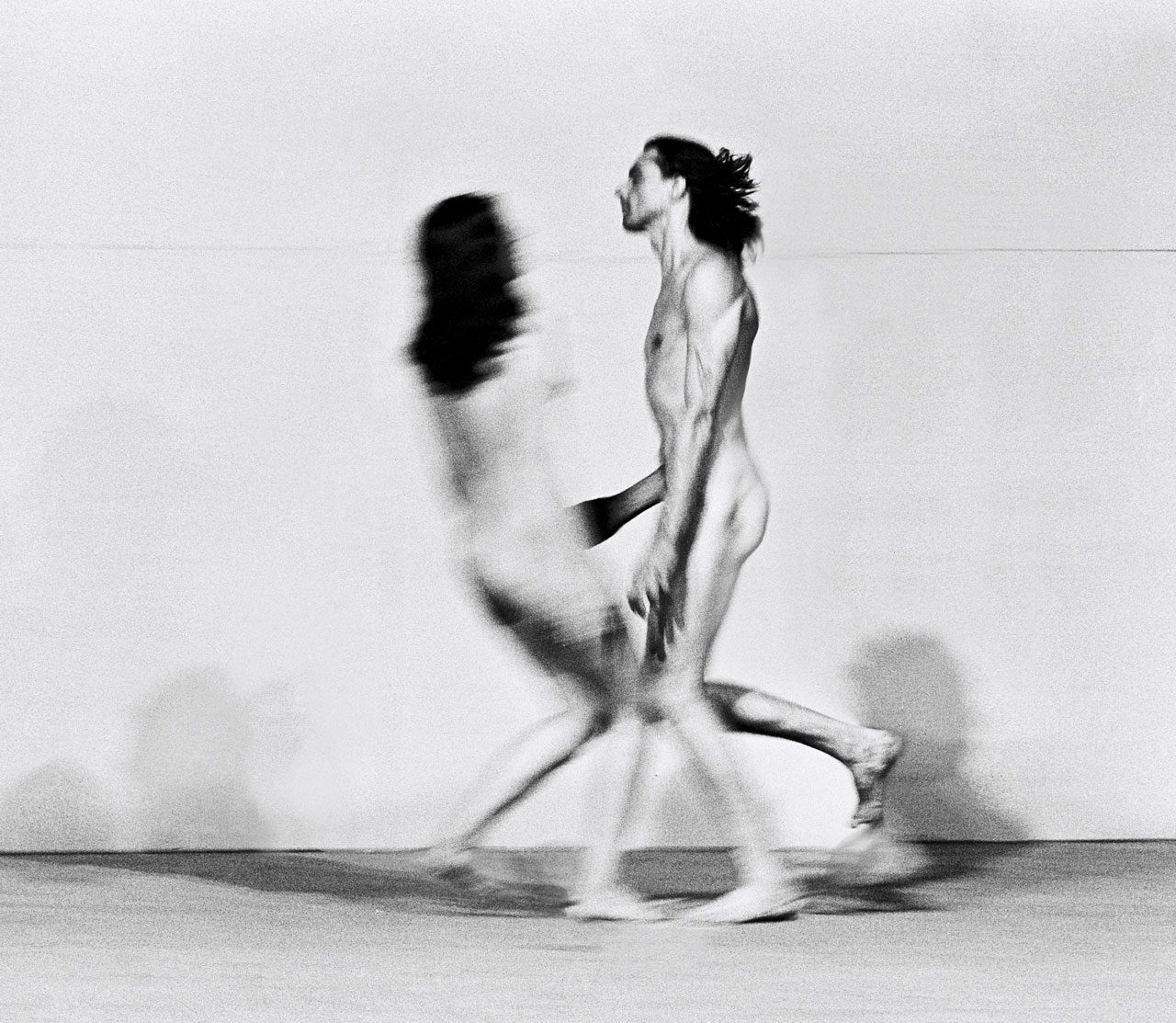
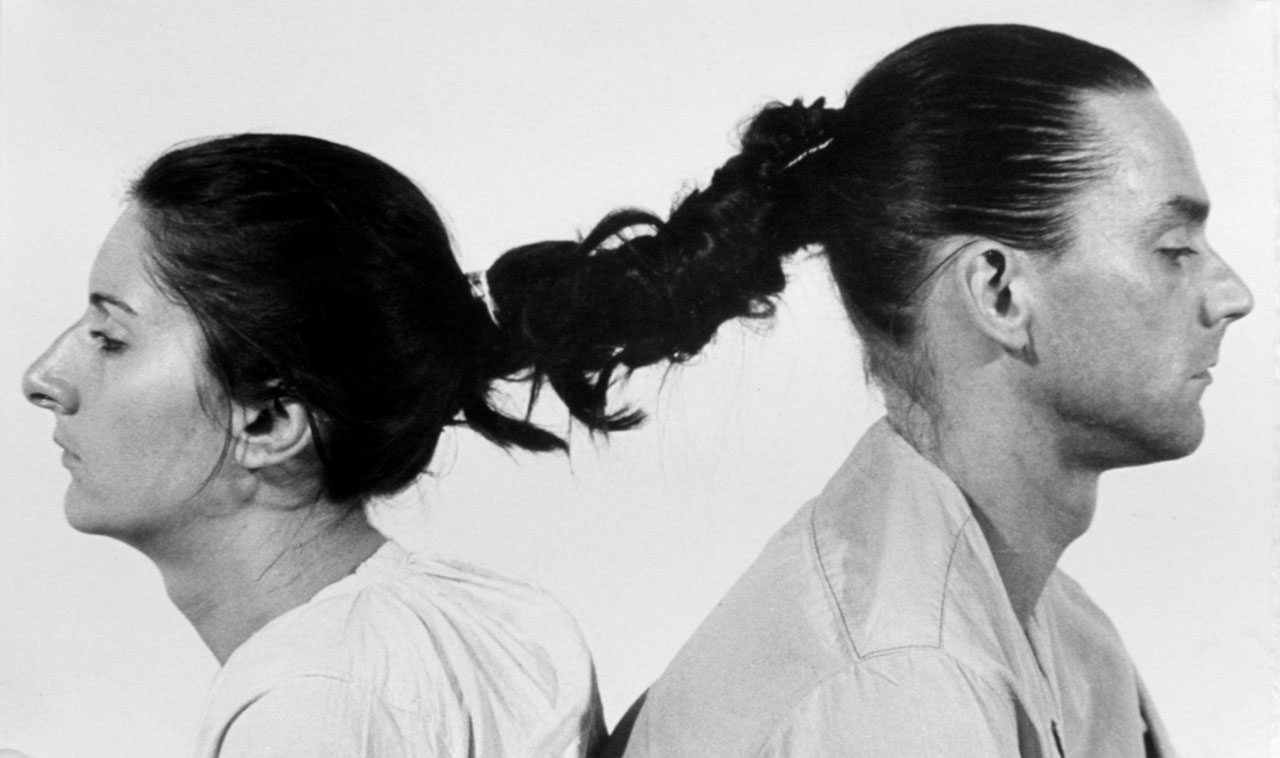
For five years, Abramović and Ulay lived and travelled in a van, without a permanent studio or home, fully immersing themselves in their artistic journey. Their collaboration began with the performance “Relation in Space” (1976), exploring endurance, trust, and intimacy, “Relation in Space” was performed for the Venice Biennale. This idea of this piece was two naked bodies running and hitting each other frontally and increasing the speed for one hour. Abramović claimed the idea was to have male and female energy put together to create something they called “That Self.” Abramović and Ulay’s relationship continued to form a subject in their art throughout their relationship: Relation in Space is a first in a series of Relation works, which also includes, for example, “Relation in Time” (1977), in which they tied their hair together and sat back to back for 16 hours.
Their collaboration culminated in the notorious three-month walk along the Great Wall of China, documented in “The Lovers: The Great Wall Walk” (1988), a physical and spiritual trek undertaken from opposite ends of China’s Great Wall. Conceived in 1983 and realised in 1988, the performance lasted three months. Abramović walked two thousand kilometres westward from Shanhaiguan, the wall’s easternmost point, in Qinhuangdao, known colloquially as the ‘dragon’s head’. Ulay walked the same distance eastward from the ‘dragon’s tail’ at Jiayuguan, the wall’s westernmost point, in Gansu Province. Upon meeting near Erlang Shan temple in Shenmu, Shaanxi Province, the couple embraced—a signal that they would not marry, but end their twelve-year professional and personal partnership instead.
The exhibition brings together videos, photographs, drawings, sketches, letters, and diary entries, revealing both the public performances and the intimate processes behind them. It offers a rare insight into how Abramović and Ulay redefined the dynamics of artistic partnership and self-representation, challenging conventional notions of authorship and the boundaries between art and life.
The exhibition unfolds across all gallery spaces and floors, where works from their collaborative years are arranged as spatially linked chapters. Ljubljana holds particular significance in this story, as Ulay spent the last decade of his life in the city. Presenting their shared legacy at Cukrarna Gallery therefore carries both symbolic and emotional weight. The exhibition unites art, memory, and lived experience, offering renewed insight into a partnership that continues to resonate as a vital and transformative chapter in contemporary art history. Visitors will encounter previously unseen documents and artworks, learn about the methods and ideas behind their practice, and experience key moments from their rich oeuvre.
Photo: Ulay / Marina Abramović, Relation in Time, Performance, 17 Hours, Studio G7, Bologna, Italy, 1977, © Ulay / Marina Abramović, Courtesy of the Marina Abramović Archives
Info: Curators: Alenka Gregorič, Felicitas Thun-Hohenstein, Cukrarna Gallery, Poljanski nasip 40, Ljubljana, Slovenia, Duration: 30/11/2025-3/5/2026, Days & Hours: Tue-Sun 10:00-19:00, https://cukrarna.art/
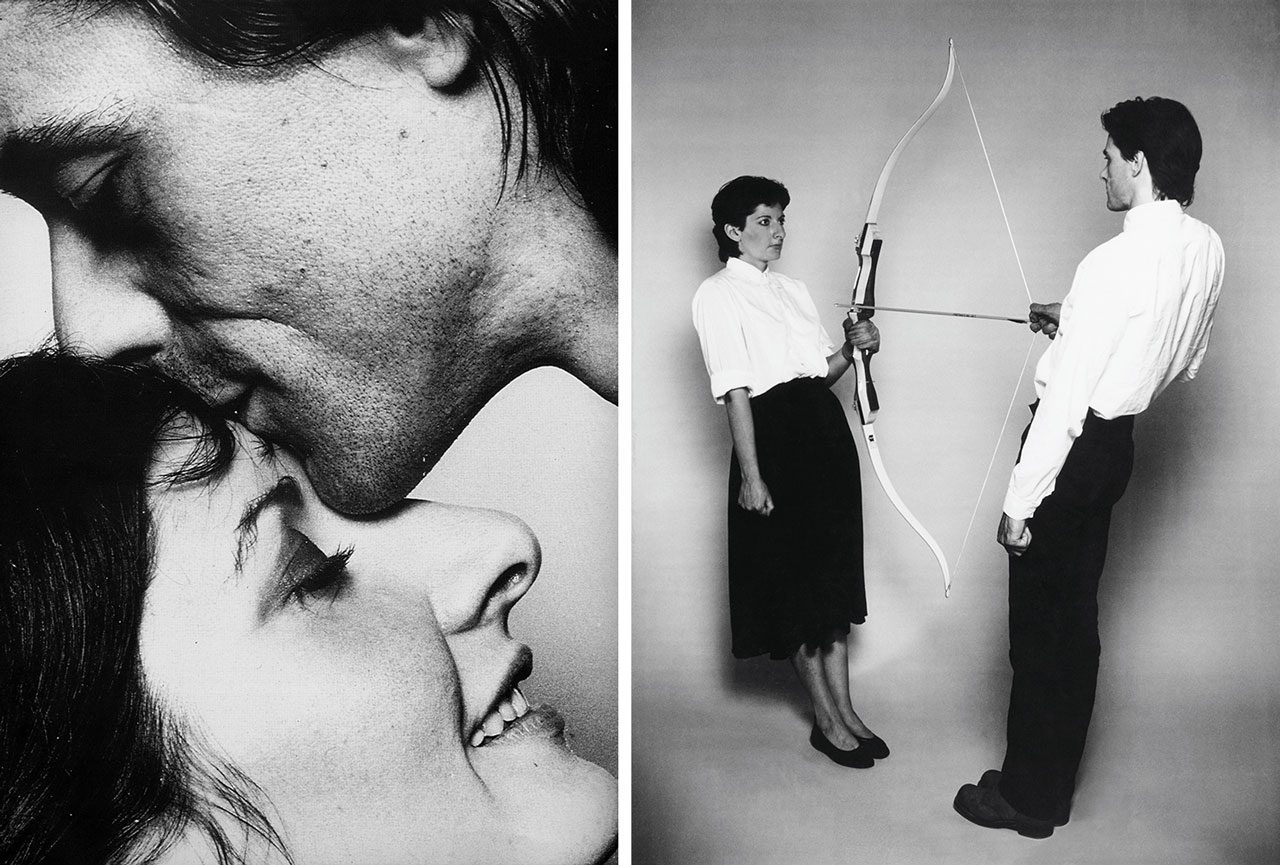
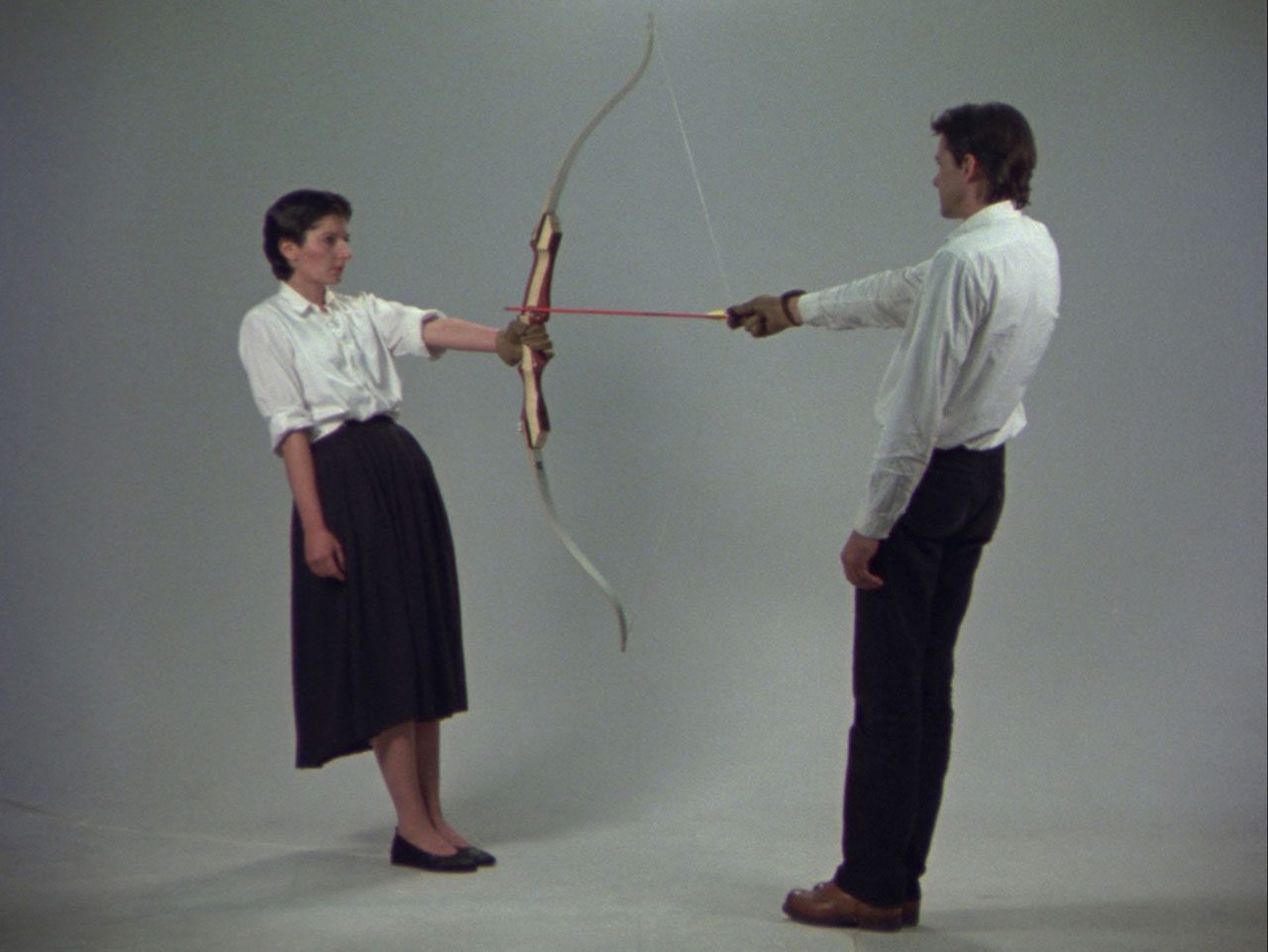
Right: Ulay / Marina Abramović, Rest Energy, Performance for Video, 4 minutes, ROSC’ 80, Dublin, 1980, © Ulay / Marina Abramović, Courtesy of the Marina Abramović Archives