ART CITIES: Athens-Nikos Kryonidis
Nikos Kryonidis is a talented and very unique visual artist with consistency in everything he creates, he is painting with his fingers and depicts pictureless actions on paper or canvas, he writes texts about art, poems and songs which he performs on stage. In all of his works the blending of colors and form results in a dialectical poetic relation, in which abstraction, silence, pause and poetry create a visual choreography.
By Dimitris Lempesis
Photo: Astrolavos-dexameni Gallery Archive
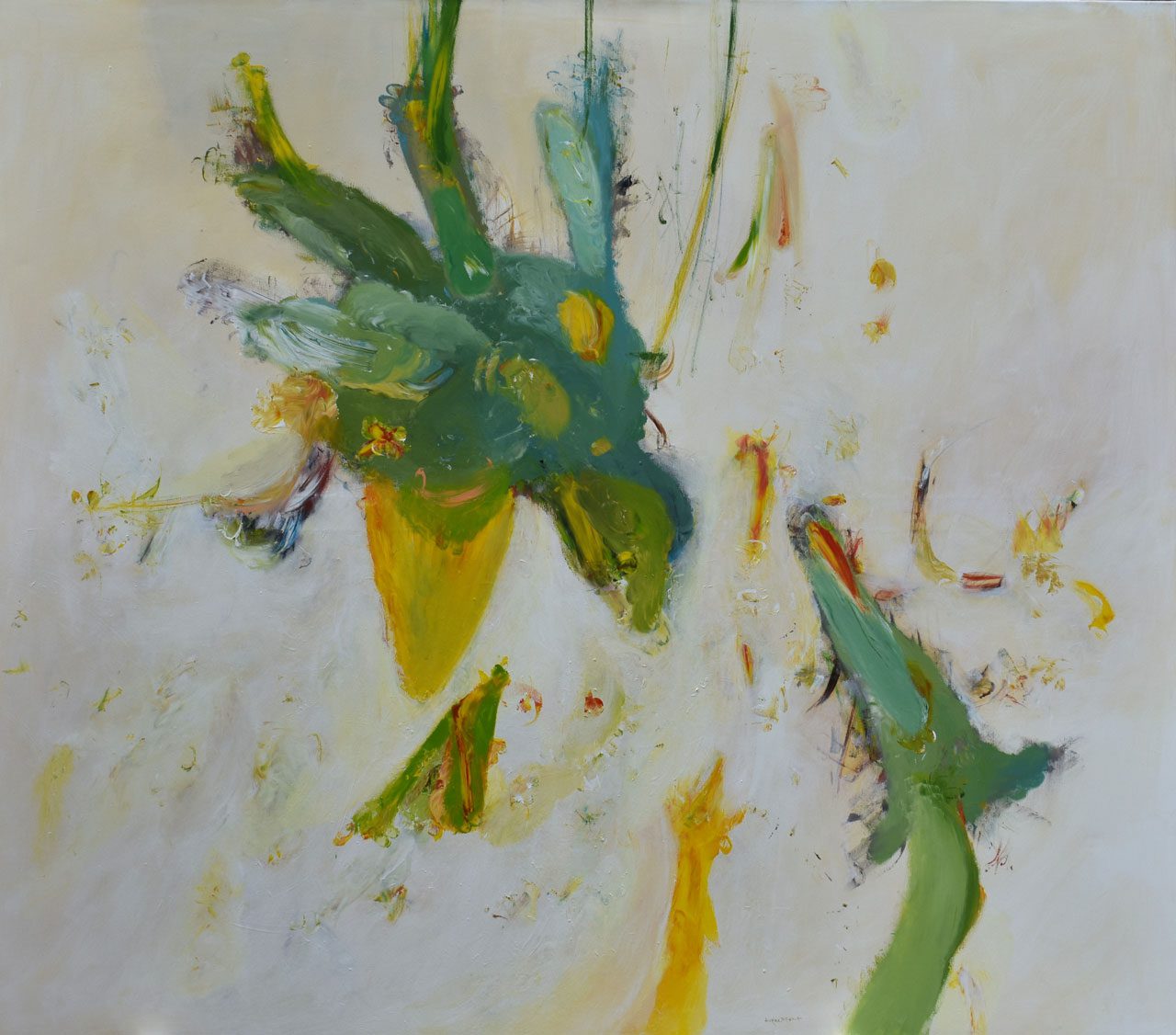
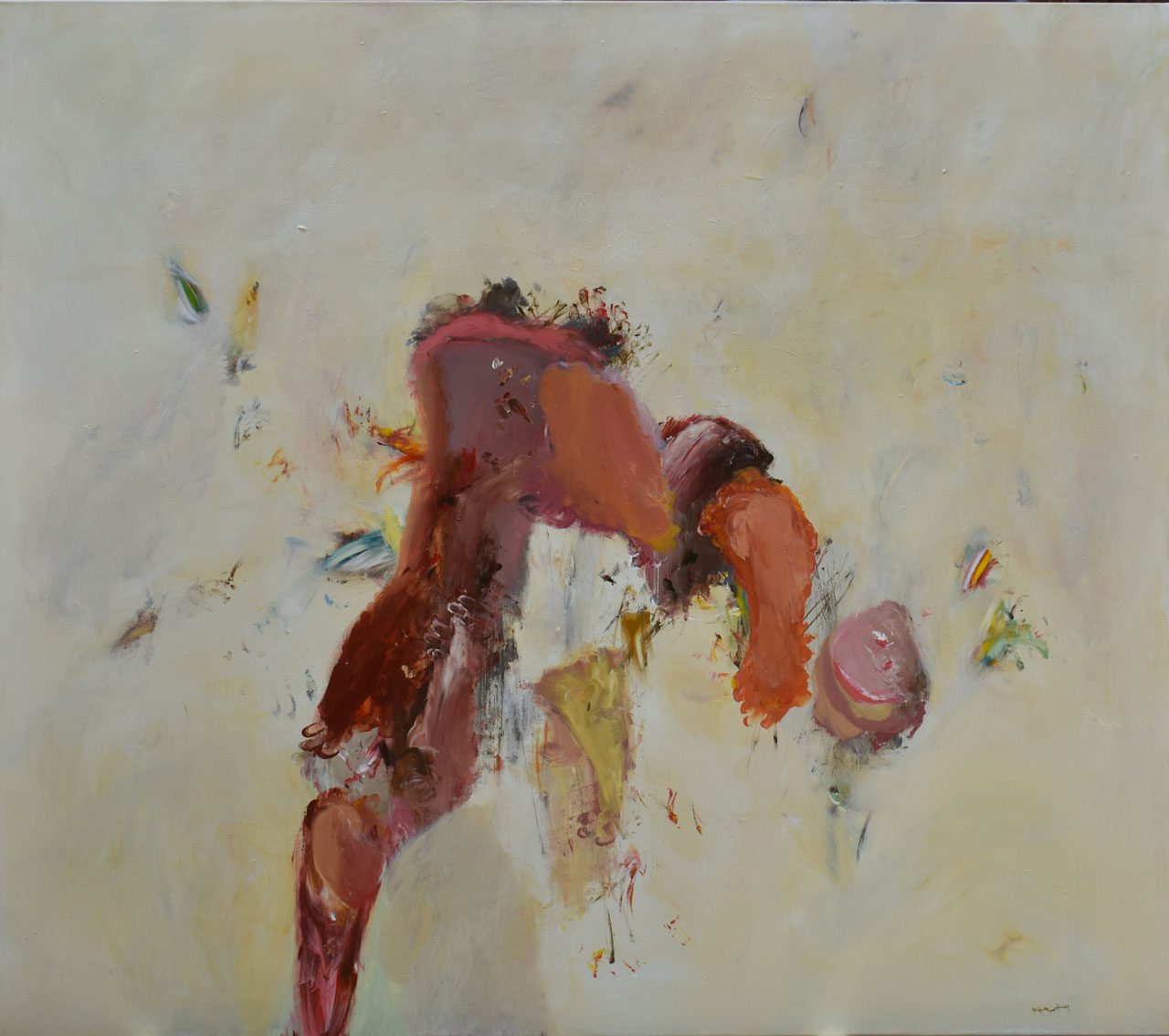
Nikos Kryonidis is a painter, poet, performer, and musician whose work resists easy categorization. His canvases are not mere surfaces but arenas of action—fields where gesture, intuition, and the raw materiality of paint converge in a dance of abstraction and silence. Kryonidis paints with his fingers, eschewing the brush for the immediacy of touch, and in so doing, he creates what he calls “pictureless actions”—traces and marks that are as much about the act of becoming as they are about being.
Nikos Kryonidis’s recent solo exhibition “It’s Just a Song” at marks a pivotal moment in his career, showcasing his instinctual, finger-painted abstractions as a visual choreography of color, silence, and poetic gesture.
Nikos Kryonidis has long been recognized as a singular figure in contemporary Greek art, blending painting, poetry, and performance into a unified practice. His latest exhibition crystallizes his artistic philosophy: that painting is not a narrative but an experience, a choreography of instinct and imagination.
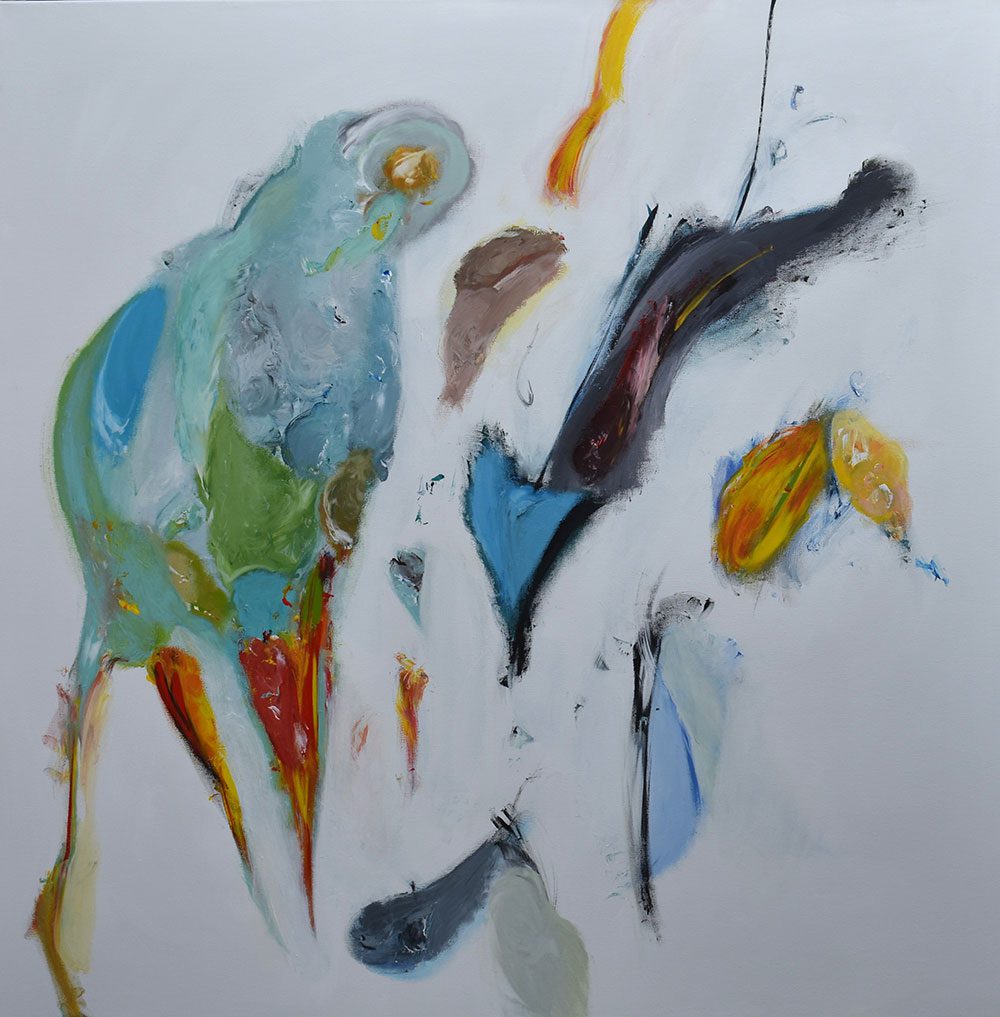
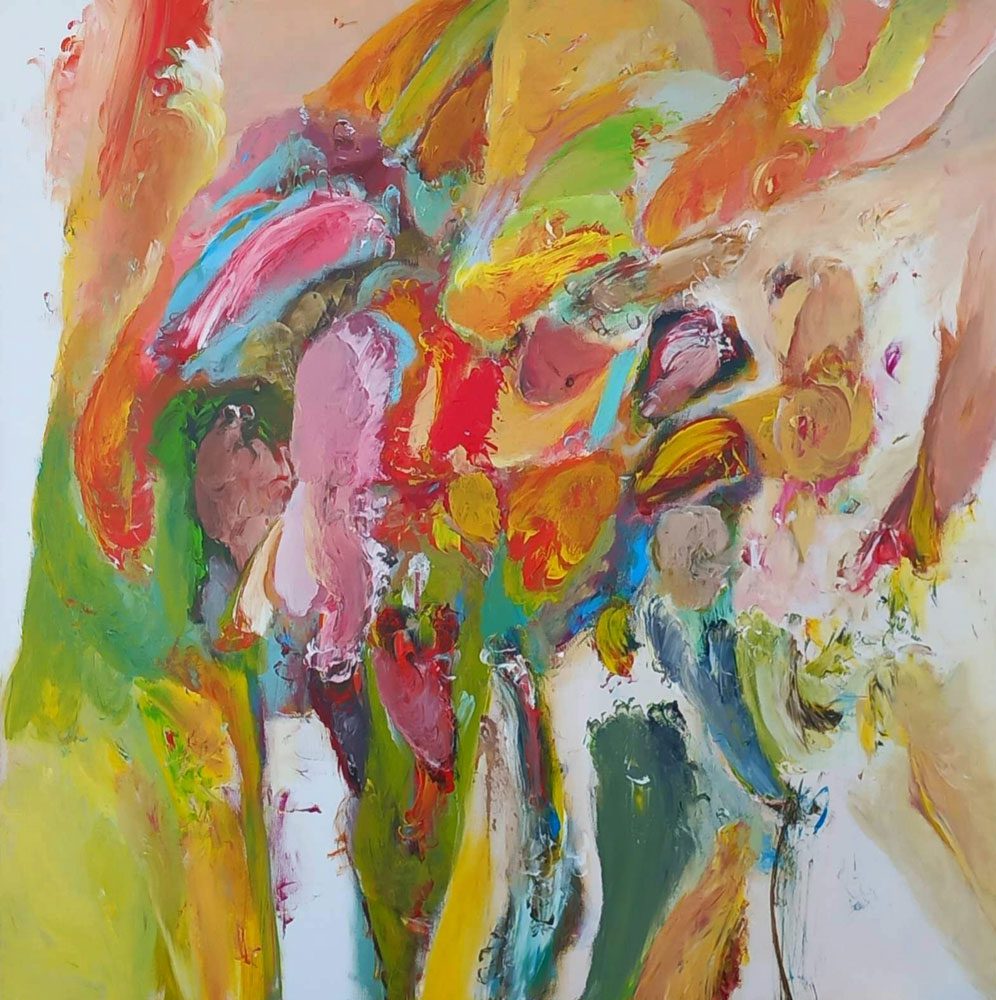
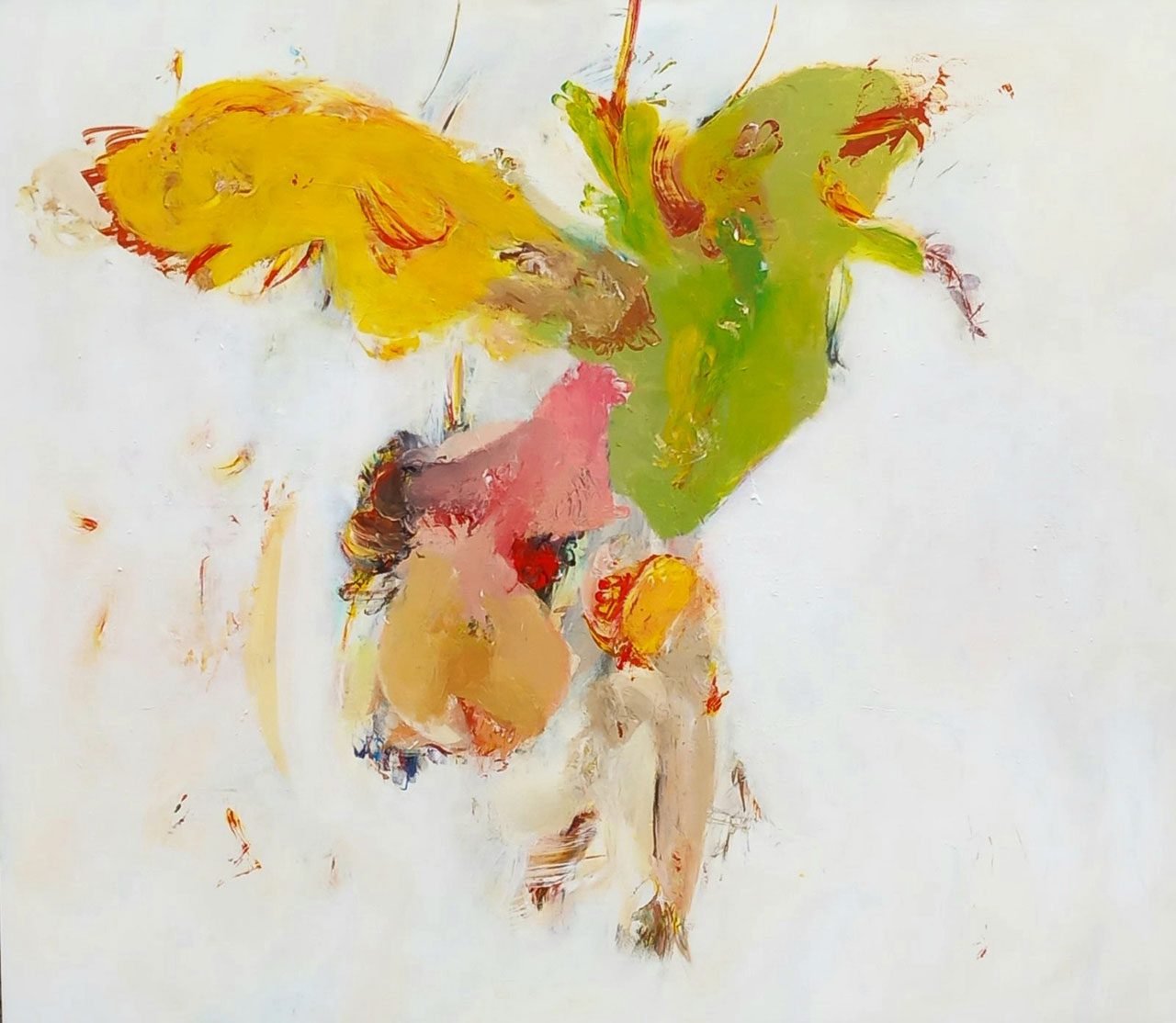
The exhibition introduces a new body of work where Kryonidis continues his exploration of abstract gestural writing. Finger-painted strokes, layered textures, and overlapping tonalities create compositions that resist strict interpretation. Instead, they invite viewers into a sensory dialogue where form dissolves into rhythm.
The canvases are populated with biomorphic figures—fragmentary hints of animals or birds—emerging from dense layers of color. These elusive presences echo the artist’s fascination with Art Brut and the raw immediacy of creators like Jean Dubuffet and Cy Twombly, who sought inspiration beyond the conventions of high culture. Kryonidis’s work similarly embraces the primal, the instinctual, and the childlike spontaneity of mark-making.
The term Art Brut was coined by Jean Dubuffet to describe works created outside the boundaries of official culture, often by self-taught artists, children, or those on the margins of society. Dubuffet championed the authenticity and spontaneity of such art, seeing in it a freedom from the constraints of academic tradition and market expectations.
Kryonidis’s embrace of instinct, play, and the rejection of strict narrativity aligns closely with the ethos of Art Brut. His use of primitive motifs, his fascination with the spontaneous and the childlike, and his resistance to the commodification of art all echo Dubuffet’s ideals. Yet, as contemporary scholarship has noted, Dubuffet’s own position was paradoxical—an insider masquerading as an outsider, his career marked by both avant-garde rebellion and commercial success.
Kryonidis, by contrast, seems less concerned with constructing an outsider persona than with cultivating a space of genuine instinctual creation, where the boundaries between art and life, artist and audience, are continually renegotiated.
Cy Twombly is another crucial reference point for Kryonidis. Twombly’s gestural marks, his use of script and line, and his engagement with Mediterranean antiquity and poetry have all left an indelible mark on the language of abstraction.
Twombly’s work, as explored in exhibitions such as “Divine Dialogues: Cy Twombly and Greek Antiquity” at the Museum of Cycladic Art in Athens, is characterized by a dialectic between painting and writing, silence and utterance, the ancient and the modern. His canvases are fields of inscription, where meaning is always deferred, always in flux.
Kryonidis’s paintings, too, are fields of gesture and trace, their lines and marks hovering between writing and drawing, utterance and silence. Like Twombly, he is interested in the mysterious power of words and images, the way that abstraction can evoke the ineffable and the unseen.
In “It’s Just a Song”, Kryonidis emphasizes the dialectical relation between color and form, where abstraction, silence, and pause become integral to the composition. His paintings are not static images but visual choreographies, unfolding like movements in a dance. The blending of hues and textures results in a poetic rhythm that mirrors his broader artistic practice, which also includes writing and performing songs and poems.
The exhibition underscores his commitment to abolishing strict narrativity. Instead of telling stories, his works generate atmospheres—spaces where viewers can project their own sensations and memories. This playful innocence, coupled with expressive intensity, situates Kryonidis firmly within the lineage of avant-garde artists who challenge established cultural values.
“It’s Just a Song” is more than a showcase of new paintings; it is a statement of Kryonidis’s evolving vision. By merging expressionist rawness with primitivist motifs, he creates works that resonate on both sensory and imaginative levels. The exhibition highlights his ability to transform instinct into structure, chaos into rhythm, and silence into poetry.
For Athens’s art scene, this exhibition reaffirms Kryonidis as a voice of contemporary experimentation, one who bridges painting, performance, and philosophy. His canvases are not merely visual artifacts but microcosms and macrocosms, inviting audiences to experience art as a living, breathing force.
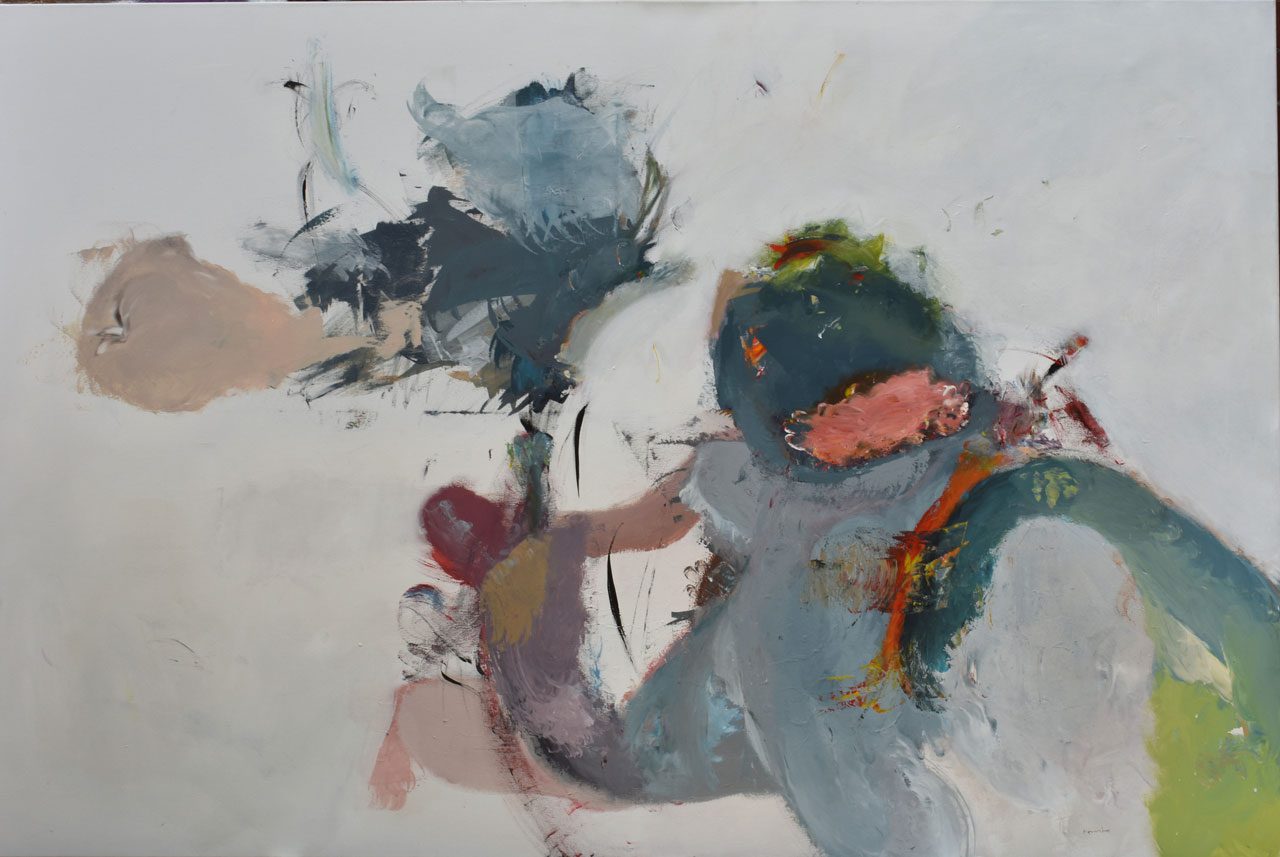
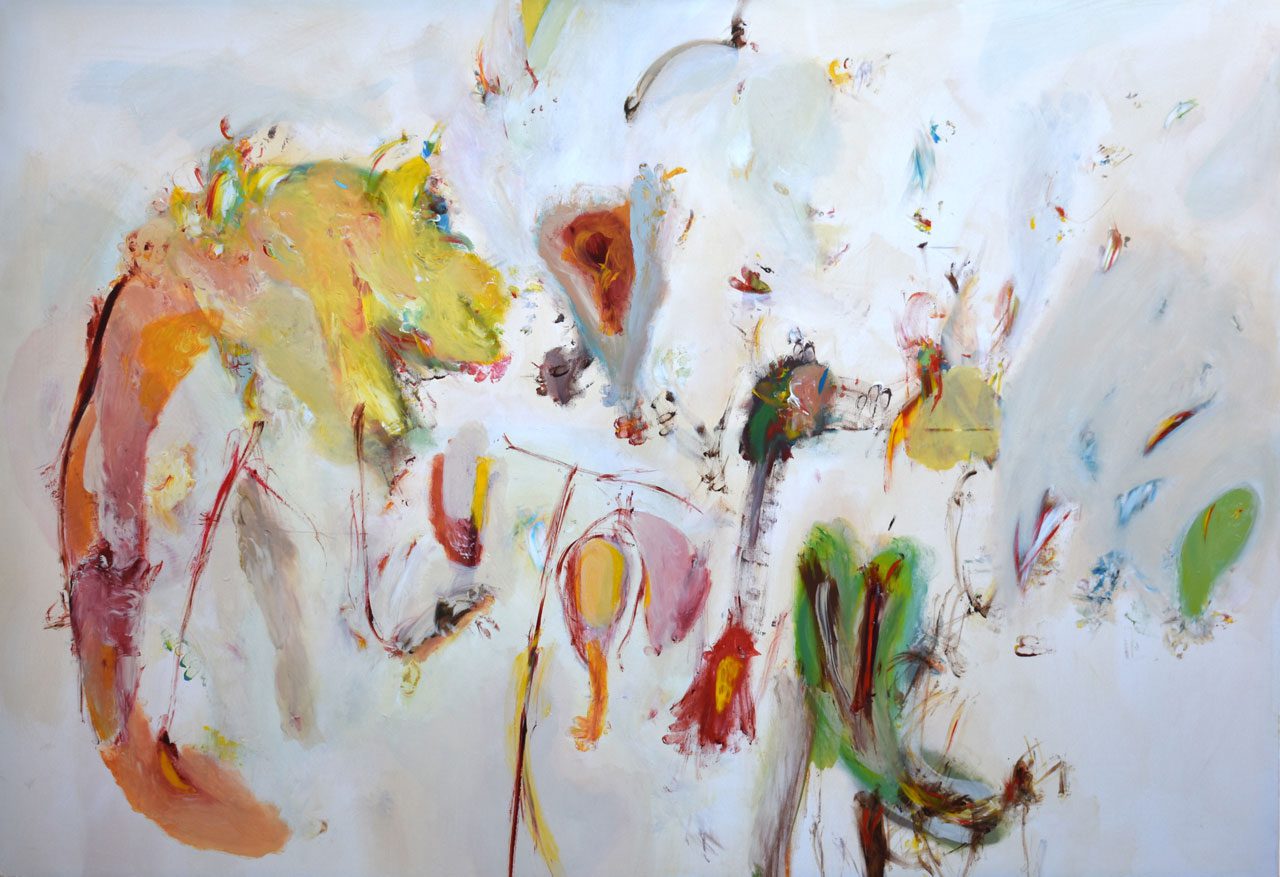
Photo: Nikos Kryonidis, UNTITLED, 2025, acrylics on canvas, 140 X 200 cm, © Nikos Kryonidis, Courtesy the artist and Astrolavos – dexameni Gallery
Info: Astrolavos – dexameni Gallery, 11 Xanthippou str., Kolonaki, Athens, Greece, Duration: 24/10-6/12/2025, Days & Hours: Tue-/fri 12:00-16:00 & 17:00-29:00, Sat 11:00-15:00, www.astrolavos.gr/