
PRESENTATION: Monument to the Unimportant
The overlooked object has always lived quietly in the background of human experience—present, familiar, and rarely granted a moment of consideration. Yet within these unassuming forms lies a world of possibility. When observed with intention, the everyday becomes extraordinary, revealing textures of meaning that evade the hurried eye. A simple tool, a forgotten trinket, a fragment of routine can open into a landscape of questions, memories, and unexpected delight. In exploring these modest elements, artists uncover the profound within the ordinary, transforming what is easily dismissed into something worth seeing anew.
By Efi Michalarou
Photo: Pace Gallery Archive
In a world saturated with spectacle, it is often the most ordinary objects that escape our notice. The group exhibition “Monument to the Unimportant”, invites viewers to reconsider that oversight. Bringing together sculptures, paintings, works on paper, and an installation, the project explores the persistent artistic impulse to draw value, humor, strangeness, and poignancy from the mundane. These works begin with everyday objects—sometimes lifted directly, sometimes abstracted or transformed—and reveal just how radically the unimportant can shift under the pressure of attention.
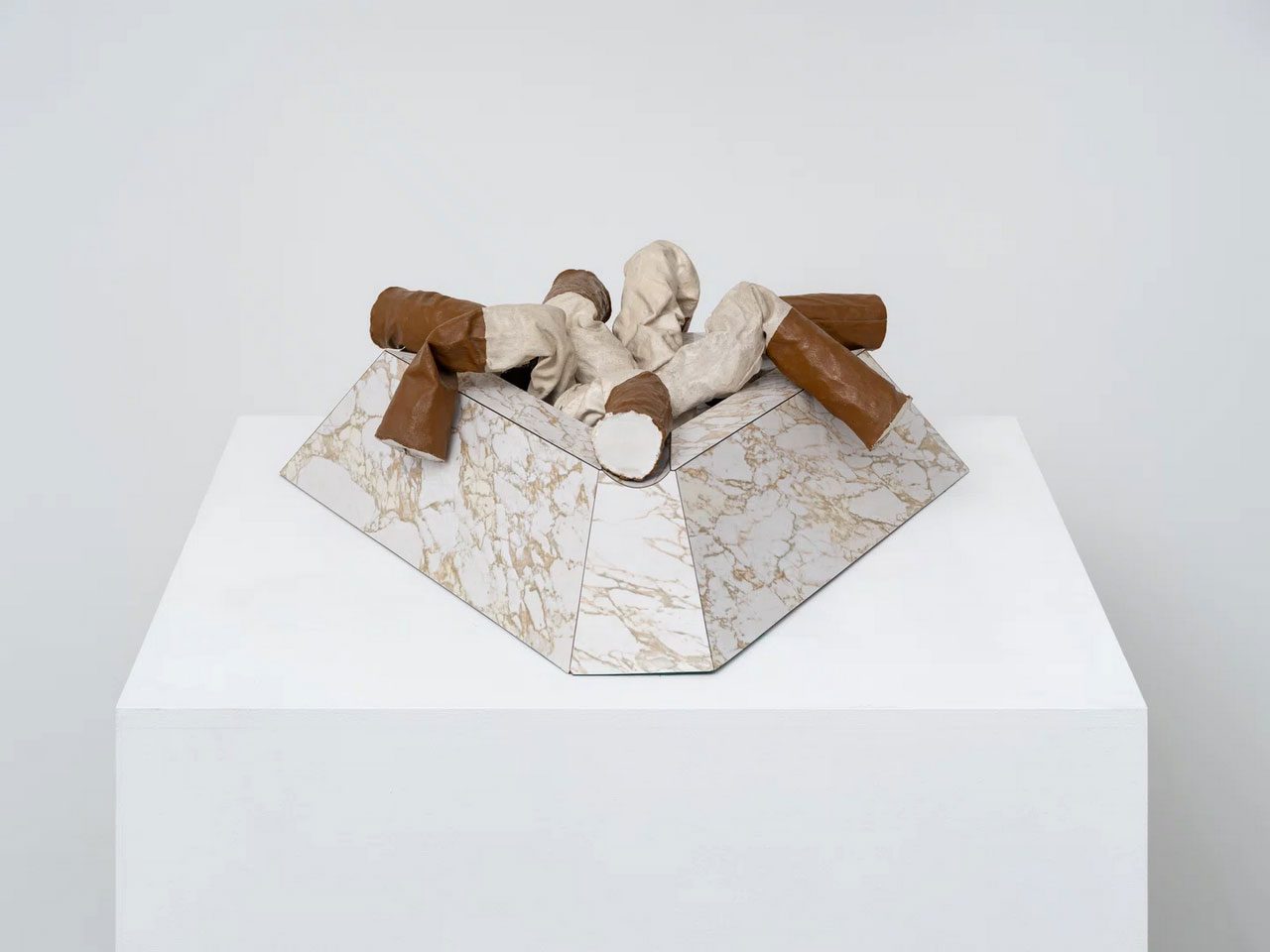
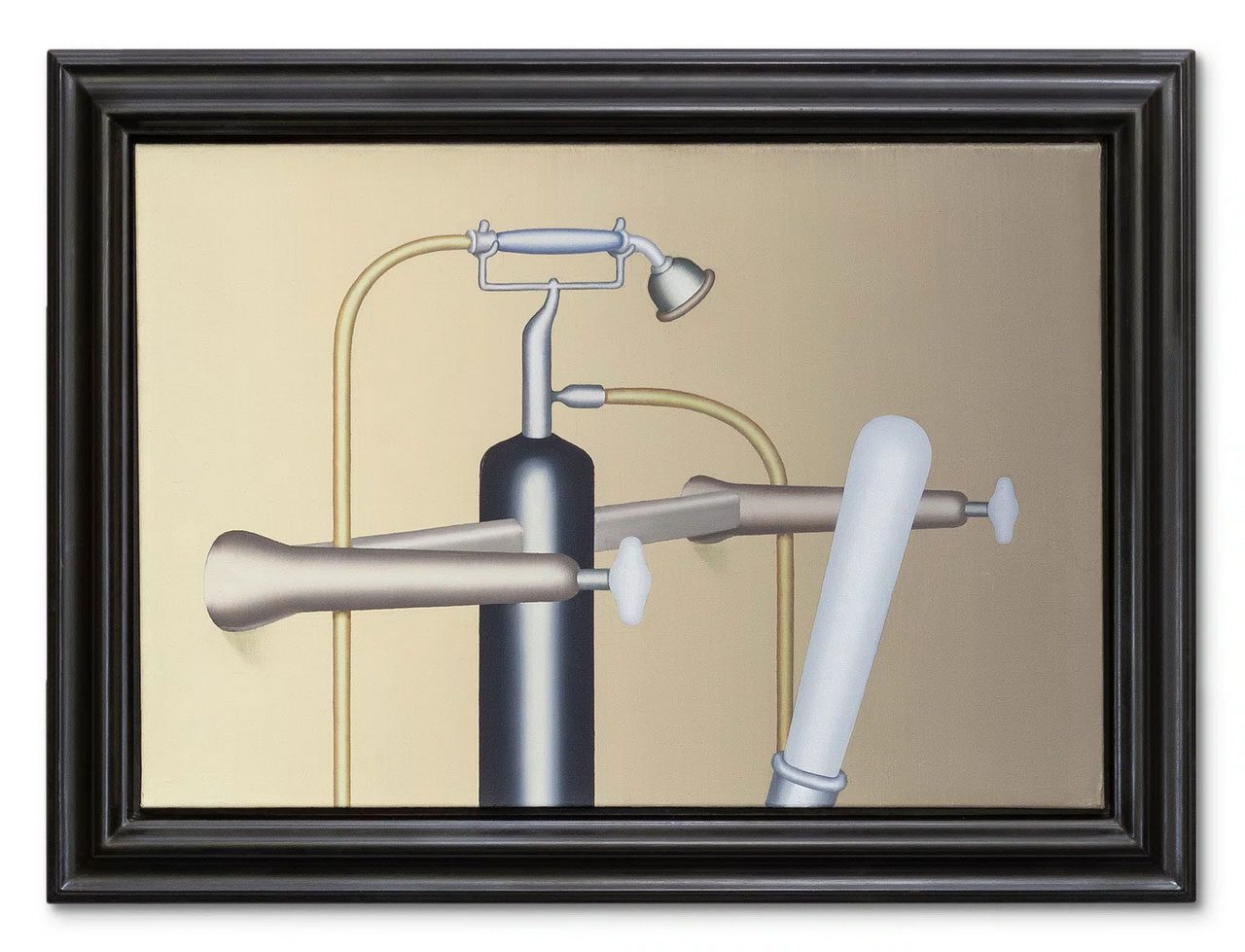
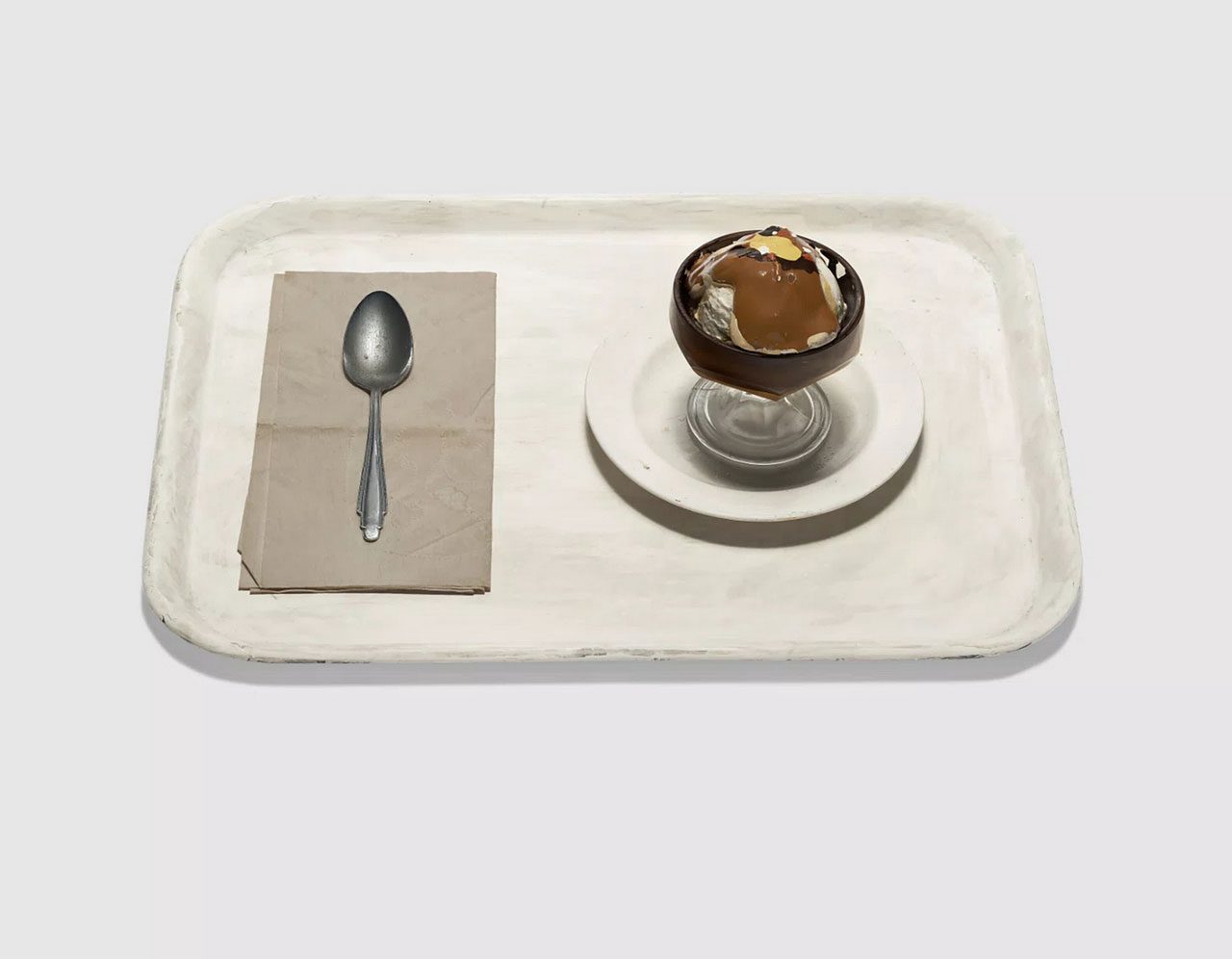
Spanning more than six decades of artistic production, the pieces assembled here demonstrate remarkable continuity in the subjects that have fascinated artists across cultures and generations. Cakes recur repeatedly in the hands of Claes Oldenburg and Wayne Thiebaud, their sugary surfaces offering rich terrain for exploring desire, excess, and consumer fantasy. The domestic sphere inspires Erwin Wurm and Sam Belanger, whose sculptural forms echo the architecture of the home—walls, appliances, vessels—reworked into humorous or uncanny shapes. Elsewhere, Konrad Klapheck and David Hockney spotlight the hidden systems that underpin daily existence: the wiring, cabling, and plumbing that structure modern life but rarely receive aesthetic consideration. Taken together, these resonances reveal that notions of the “unimportant” often circle the same gravitational fields—what we eat, how we live, what our bodies do and require.
The artists represented here employ a wide array of techniques to elevate these seemingly modest subjects. There are alchemical gestures, such as Tony Matelli’s painstakingly painted bronze weeds that mimic fragile organic growth yet carry the heft and permanence of metal. There are compositional strategies—enlargement, cropping, repetition—that recast the ordinary as monumental, as in Thiebaud’s “Various Cakes” (1981). In this iconic work, rows of pastel pastries float against a luminous backdrop, radiating the abundance and exuberance of twentieth-century American consumerism.
Oldenburg’s “N.Y.C. Pretzel” (1994) and “Profiterole” (1989–90) similarly blur the line between object and artwork. Produced in editions, these sculptures mirror the mass production of the foods they depict, teasing the viewer with the tension between mechanical replication and artistic singularity. Familiar yet slightly estranged, they provoke an uncanny sense of recognition.
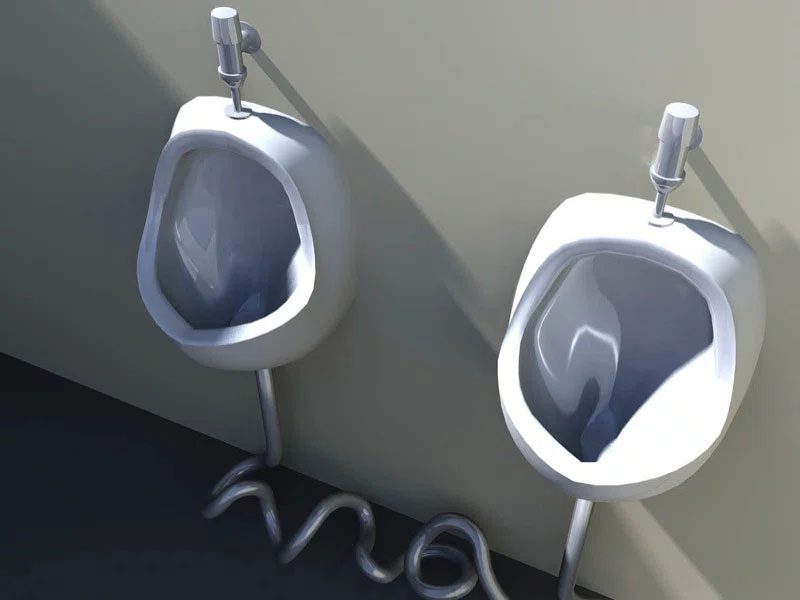
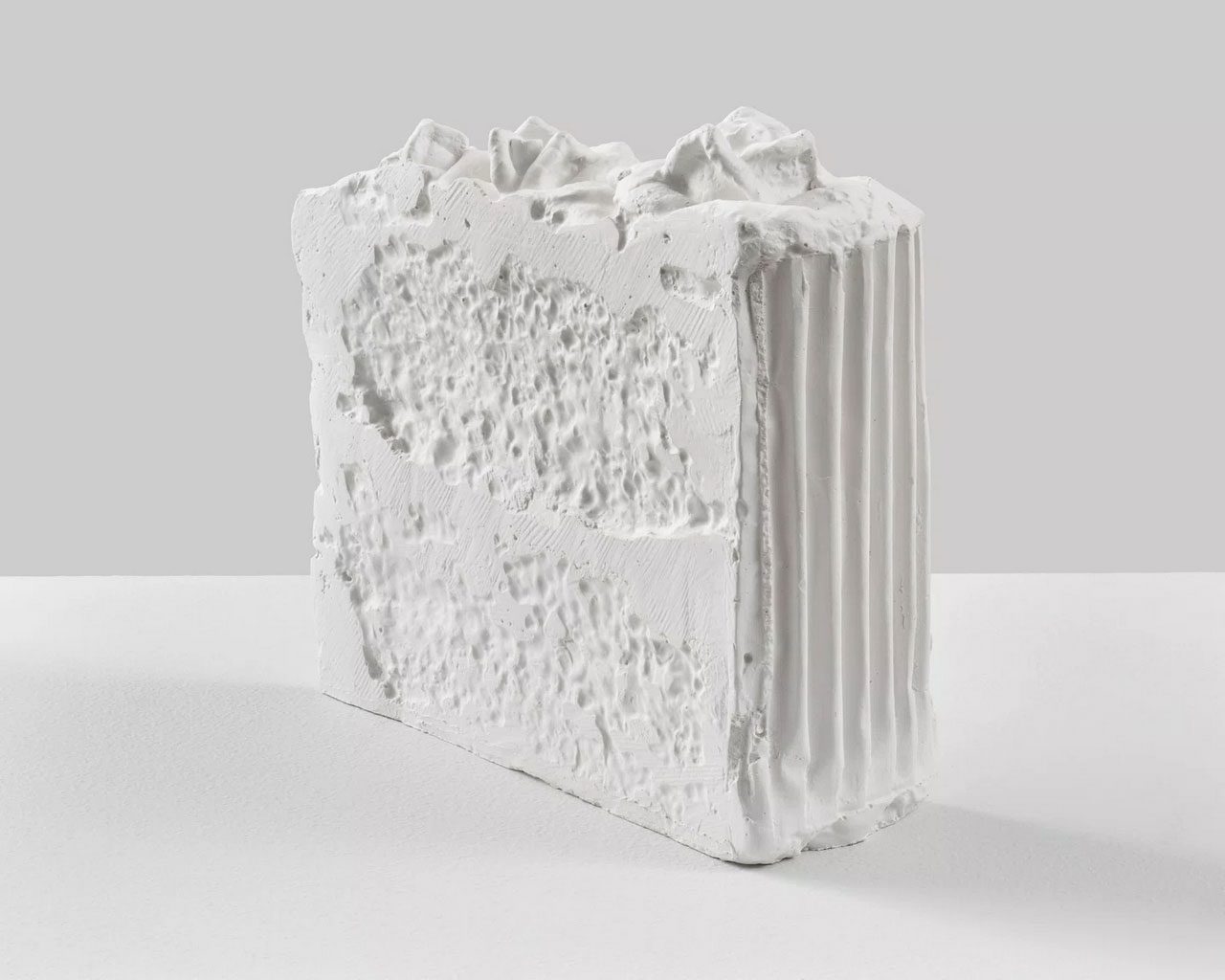
Many of the works gesture toward the human body not through direct representation but through implication and absence. Belanger’s sculptures often morph domestic objects into surrogate forms of the figure—curved, hollowed shapes that feel animated even in stillness. Elmgreen & Dragset’s “Gay Marriage” (2010) pairs two urinals side-by-side, their immaculate surfaces interrupted by the intertwined loop of shared piping. The work is at once tender and absurd, making visible the intimacy embedded in objects designed for private use. Rachel Whiteread’s “Untitled (Plaster Torso)” (1993), a cast taken from the interior of an overfilled hot-water bottle, pushes this logic further. Its scratched and pitted plaster surface evokes the vulnerability of human skin, rendering the body as a fragile, enclosed space.
Ambiguity is a persistent presence. Meaning in the exhibition is slippery, shifting with perspective and context. In B. Wurtz’s “Untitled (Steamer)” and “Untitled (Silver Lampshade)” (1987), large monochrome photographs loom above their modest source objects. Without their physical counterparts below, these foreshortened images could easily be mistaken for futuristic machinery. Scale—and the lack of it—plays tricks on perception, challenging viewers’ assumptions about what they think they see.
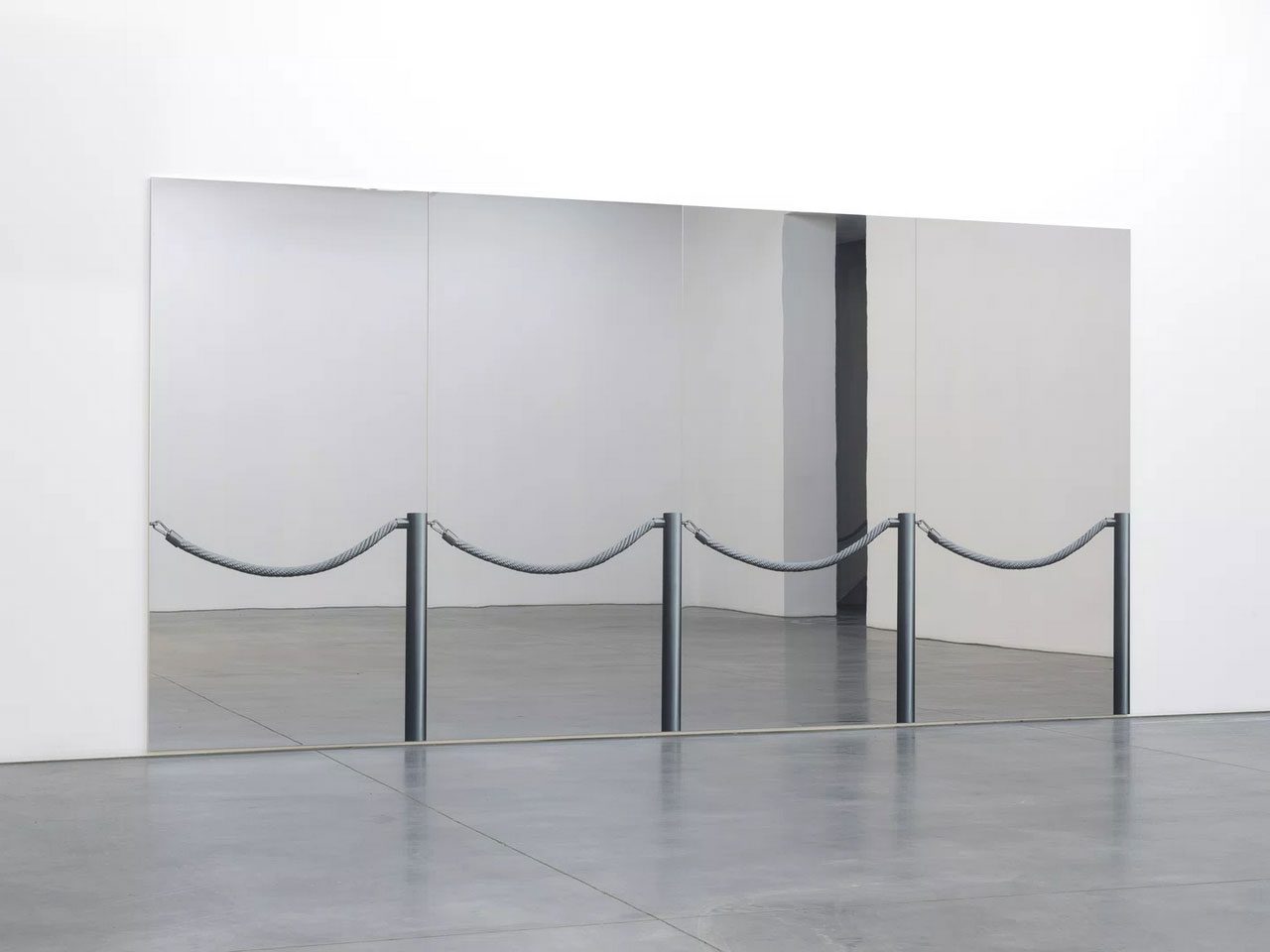
Urs Fischer’s “Mr. E & Spotzy” (2012) heightens this perceptual tension. Two mirror-polished steel boxes are wrapped in photographic images of an ironing board and iron, the objects suspended like apparitions within the reflective surfaces. The sculpture merges domestic tools with the sleek language of Minimalism and high-tech design, throwing the viewer’s reflection into the mix. The result is a collapsing of categories—function and form, labor and art, familiarity and estrangement—leaving viewers to confront their own shifting role in the act of looking.
“Monument to the Unimportant” ultimately proposes that meaning is neither inherent nor fixed. Instead, it emerges in the spaces where attention lingers: on a bronze weed, a pastry cast in plaster, a photograph that may or may not depict what it seems. In foregrounding the banal, these artists remind us that the everyday remains an inexhaustible source of wonder—and that even the unimportant can carry monumental weight when we choose to see it.
Participating Artists: Henni Alftan, Genesis Belanger, Keith Coventry, Elmgreen & Dragset, Nathalie Du Pasquier, Urs Fischer, Sylvie Fleury, Robert Gober, David Hockney, Konrad Klapheck, Jac Leirner, Tony Matelli, Claes Oldenburg, Michelangelo Pistoletto, Wayne Thiebaud, Rachel Whiteread, Erwin Wurm, and B. Wurtz
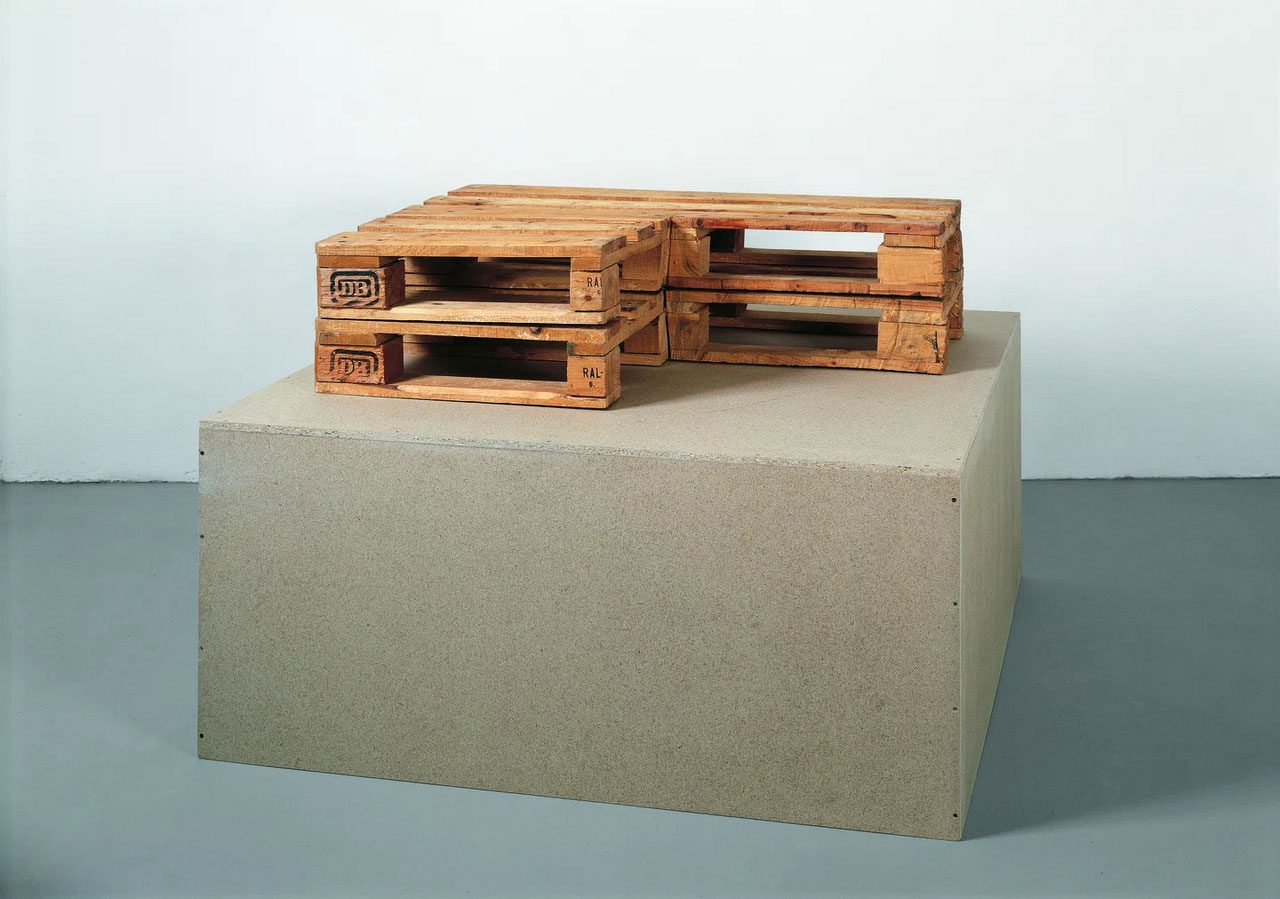
Photo: Martin Kippenberger, Design for a Mothers’ Rest Home in Heilbronn, 1985, wooden pallets, 30 cm × 120 cm × 80 cm (11-13/16″ × 47-1/4″ × 31-1/2″), wooden pallets 60 cm × 160 cm × 110 cm (23-5/8″ × 63″ × 43-5/16″), base, Courtesy Pace Gallery
Info: Pace Gallery, 5 Hanover Square, London, United Kingdom, Duration: 26/11/2025-14/2/2026, Days & Hours: Tue-Sat 10:00-18:00, www.pacegallery.com/
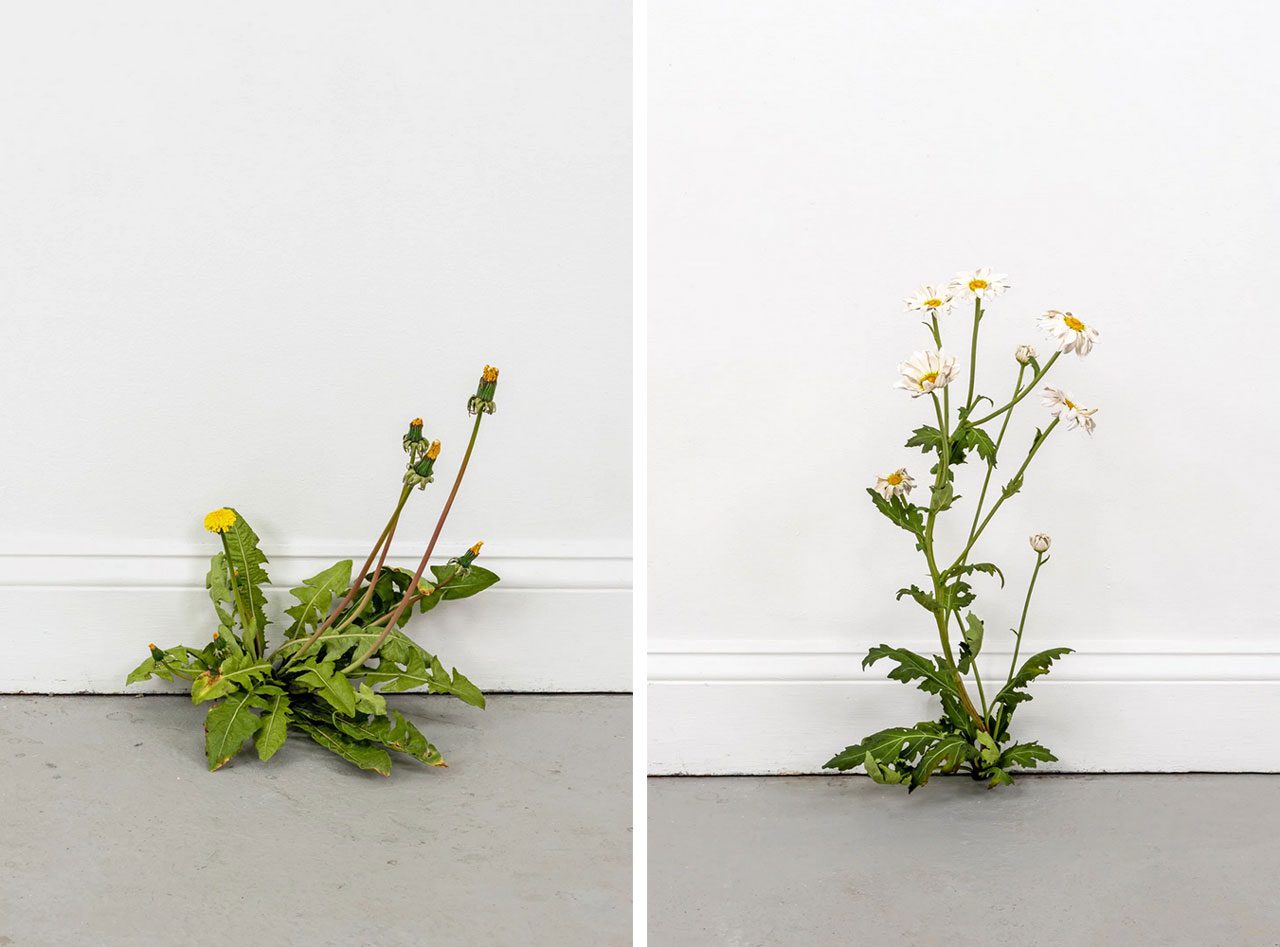
Right: Tony Matelli, Weed (770), 2025, painted bronze, 53.3 cm × 22.9 cm × 20.3 cm (21″ × 9″ × 8″), Courtesy Pace Gallery
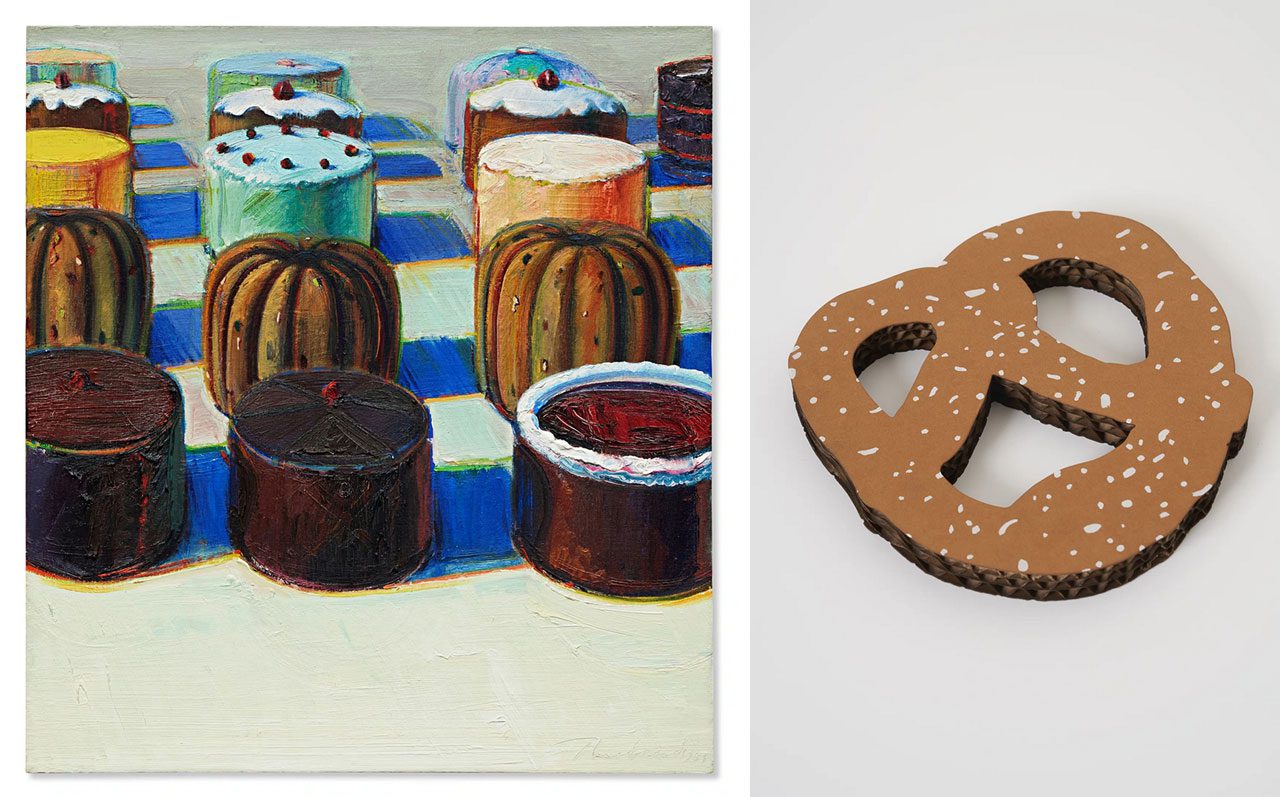
Right: Claes Oldenburg, N.Y.C. Pretzel, 1994, painted cardboard in plexiglass vitrine, 16.5 cm × 17.1 cm × 1.3 cm (6-1/2″ × 6-3/4″ × 1/2″), Courtesy Pace Gallery
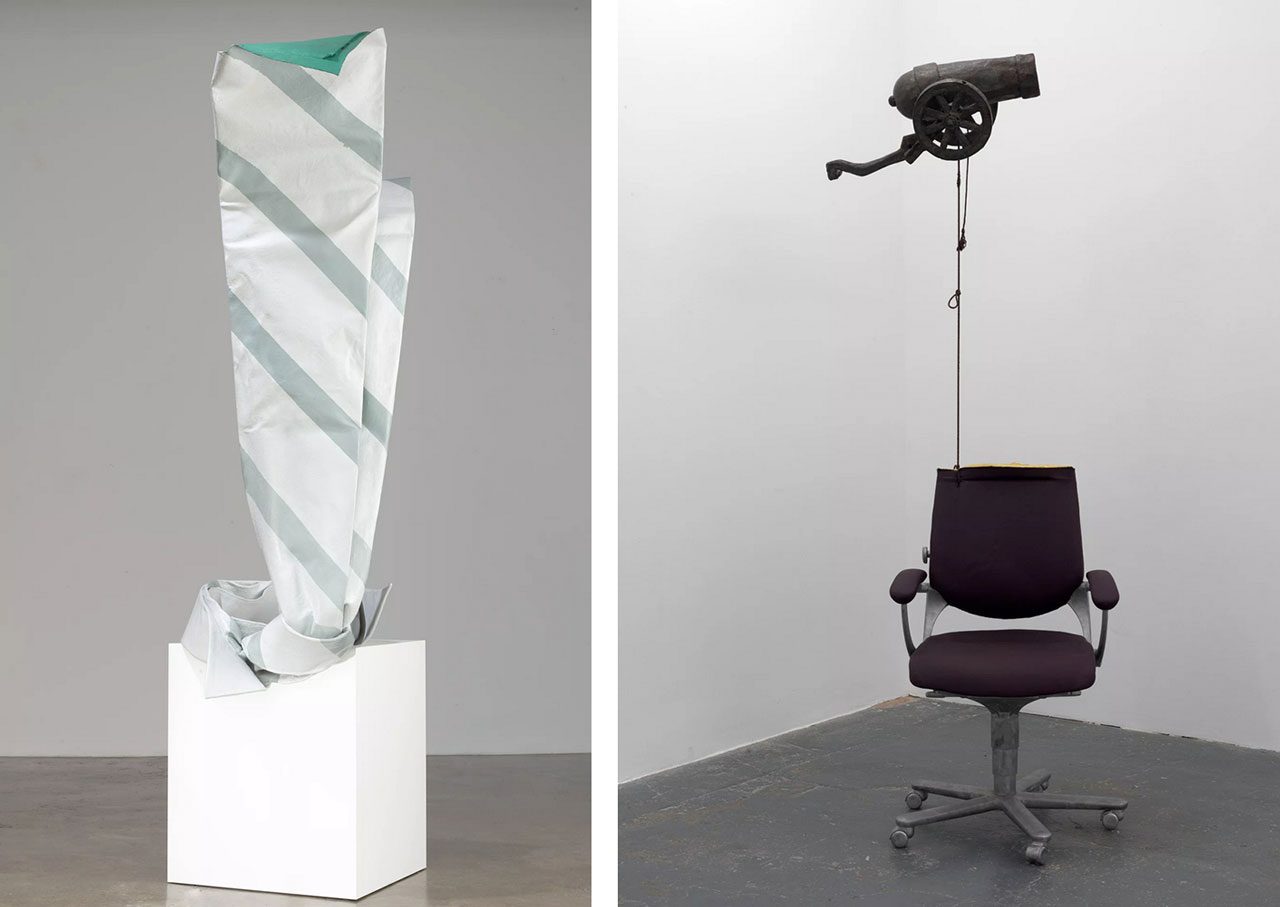
Right: Urs Fischer, A Thing Called Gearbox, 2004, cast aluminium, acrylic paint, iron rod, string and copper, 231 cm x 68 cm x 67.5 cm (91″ x 26 3/4″ x 26 5/8″ in.), Courtesy Pace Gallery
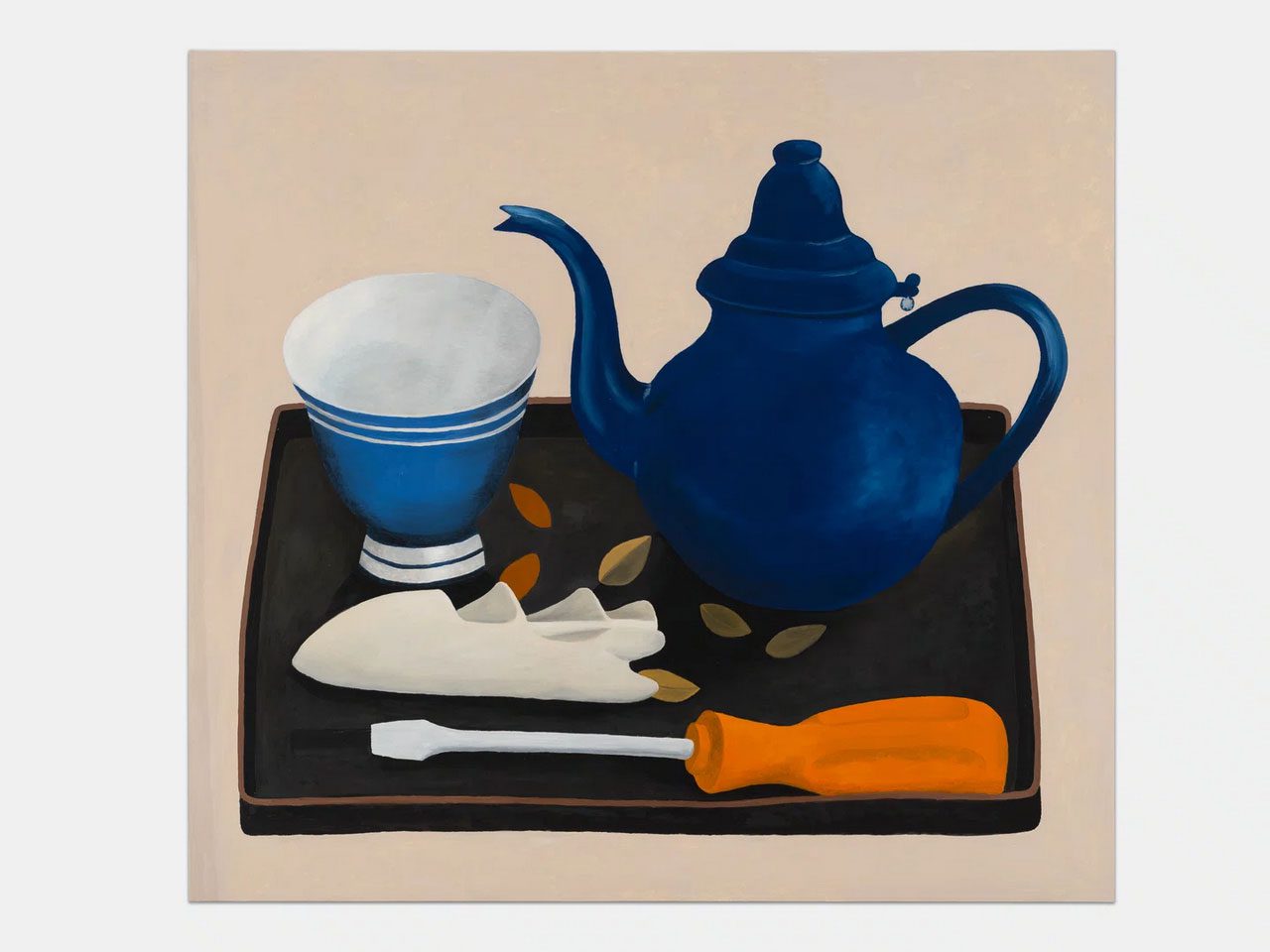
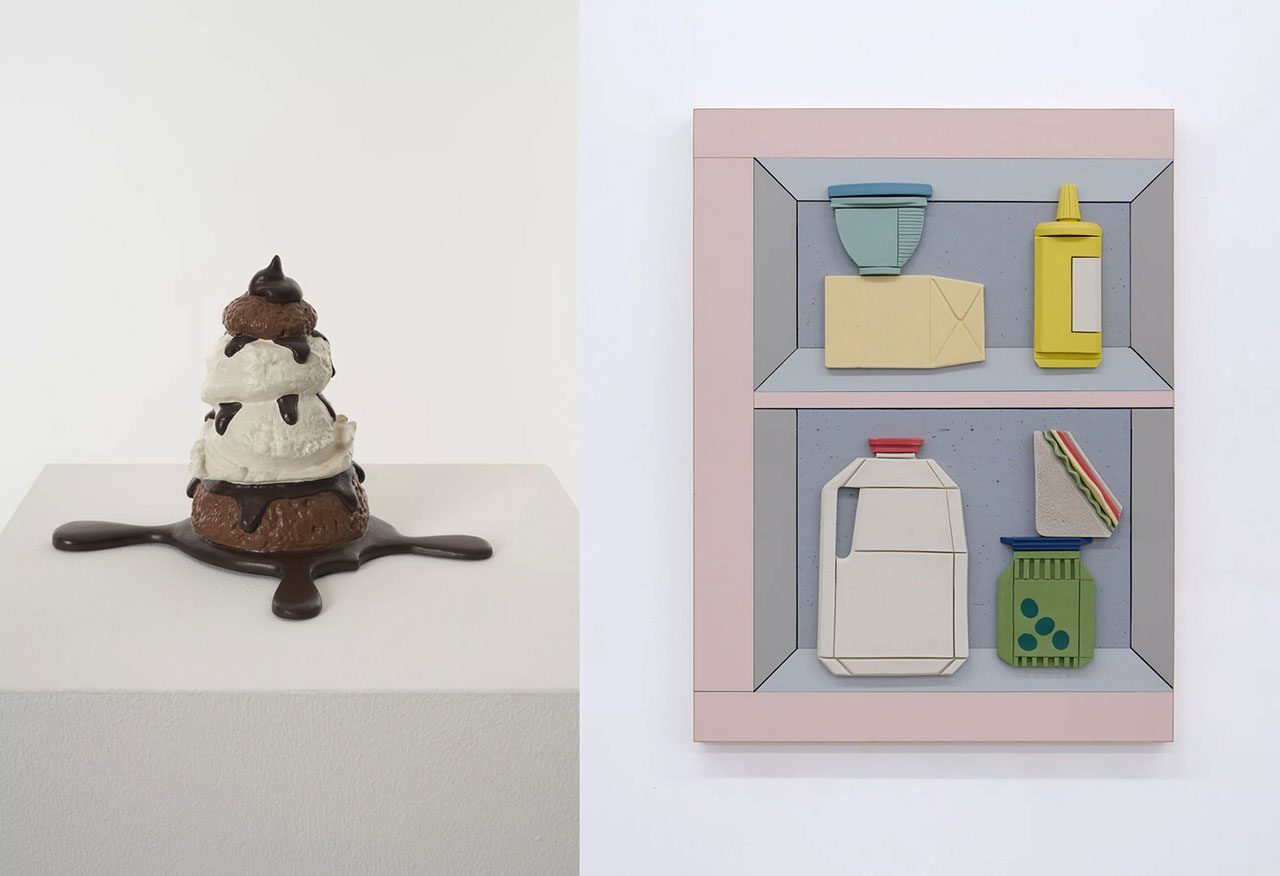
Right: Genesis Belanger, Kitchen Table Issues, 2025, porcelain, veneered plywood and laminate, 29″ × 22″ × 1-3/4″ (73.7 cm × 55.9 cm × 4.4 cm), Courtesy Pace Gallery
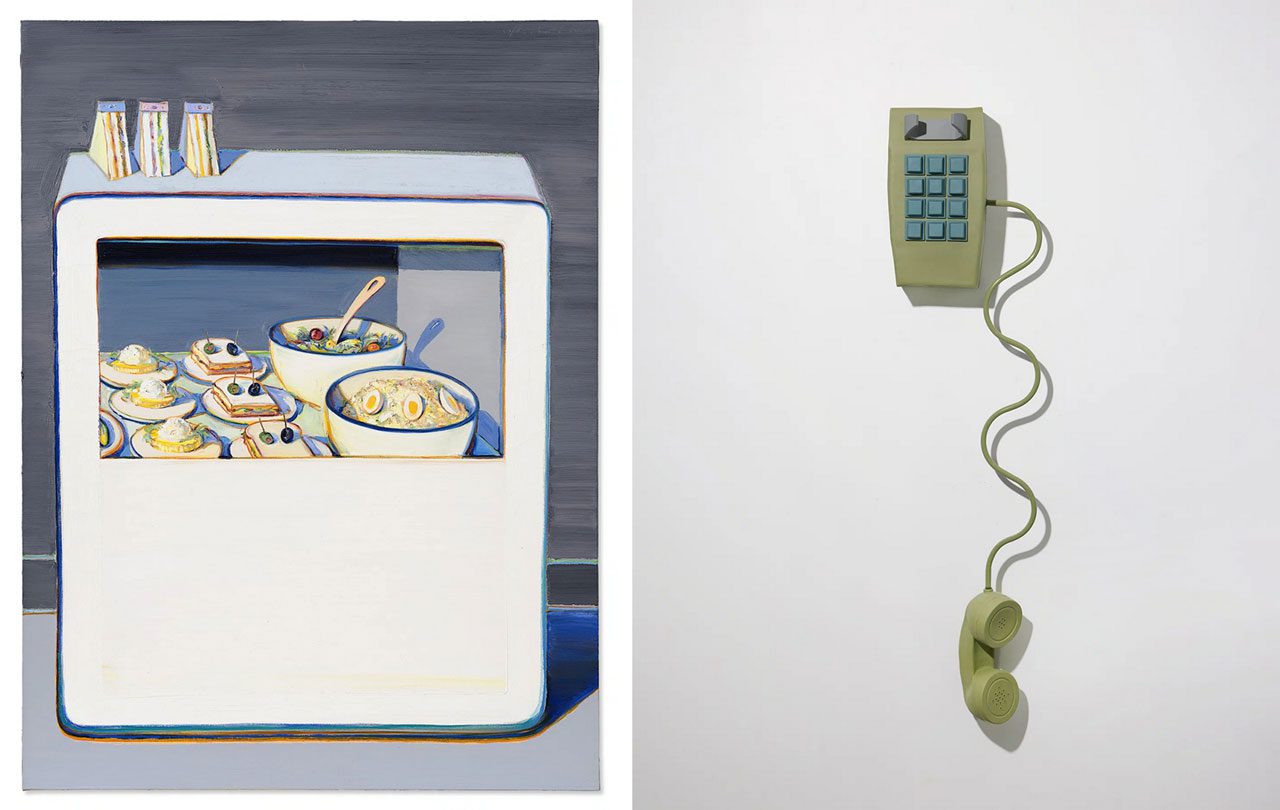
Right: Genesis Belanger, Do Not Disturb, 2025, ceramic, powder coated steel and structural epoxy, 51″ × 12-3/4″ × 7-1/2″ (129.5 cm × 32.4 cm × 19.1 cm), Courtesy Pace Gallery