PRESENTATION: Iman Issa-Lass uns spielen
Iman Issa’s work is driven by her intense interest in history and her insistence on questioning the preconceptions that govern knowledge. She asks how we come to know a place, an object, or a piece of history; how memory intersects with understanding; and how imagination can help us to radically re-envision what we think we know.
By Efi Michalarou
Photo: Lenbachhaus Munich Archive
In “Lass uns spielen”, Iman Issa presents a body of work that challenges the boundaries between language, form, and historical imagination. Known for her conceptual clarity and her ability to distill complex political realities into sculptural and textual fragments, Issa invites visitors into a space where play becomes a method of inquiry—an active process through which meaning is constructed, questioned, and sometimes dismantled.
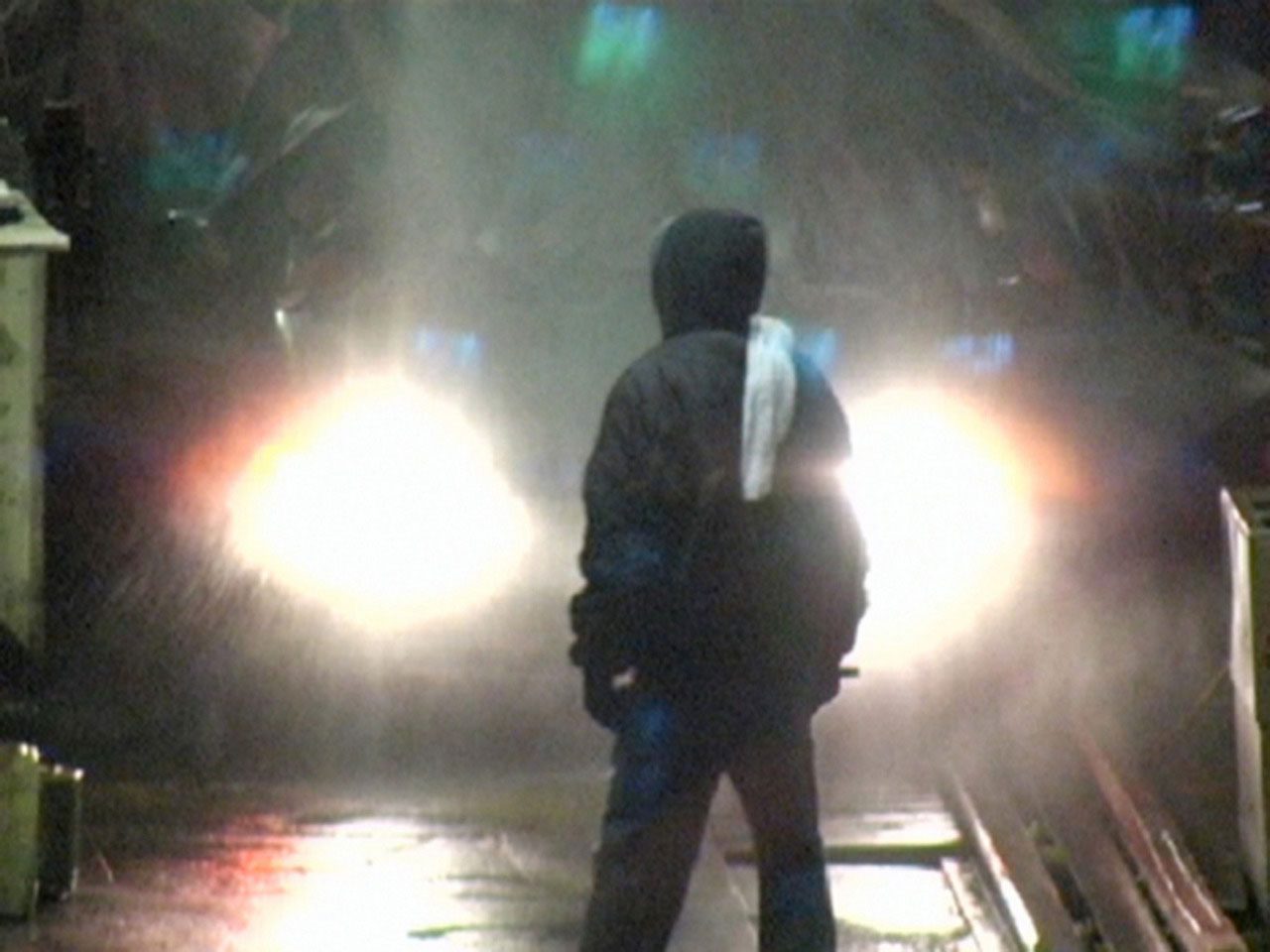
The exhibition includes examples from almost all of Issa’s series. The works on view span nearly 20 years, from the 2006 video “Car Wash” to the photographs in 2025’s “Das Spiel: Guess Which of the Given Captions Is the Correct One” and focuses on how objects and narratives shift when removed from their original context. Issa’s works often present themselves as proposals, reconstructions, or variations of existing monuments, speeches, or cultural artifacts. Yet the source material is never explicitly revealed. Instead, viewers are left with elegantly crafted sculptural ensembles paired with short texts that hint at themes of commemoration, identity, or collective memory. By withholding direct references, Issa asks audiences to confront the fluidity and instability of interpretation. The “play” she invokes is not childish but generative: an invitation to experiment, to test associations, and to engage critically with the narratives that shape public consciousness.
At the same time, the exhibition foregrounds Issa’s signature precision. Her sculptural forms are restrained, almost classical in their clarity. Colors are muted; shapes appear deliberately distilled, stripped of excess ornament. This aesthetic discipline underscores the conceptual rigor of her practice: the idea that minimal means can produce expansive and layered readings.
The work “Which of the Given Captions Is the Correct One” (2025) is structured like a game in which viewers are confronted with ten photographs. Each photograph is accompanied by several captions, only one of which is correct. Also provided is a wall of clues that may help visitors determine which of the captions is correct. Although only one answer is correct, there may be connections to draw between all of the given captions.
In the series “Doubles : Photograph – (Un)Like (M)Any Other(s)” (2024- ) each display revolves around two photographs from different geographies and time periods (one of which is always attributed to the year of production) that share the same title. Although the displays themselves are not photographs per se, they re- volve around photography in its many facets, treating it as a way of thinking and a manner of approaching the world as opposed to a technique attached to the device of a camera. Moreover, all of the displays deal with a kind of photography that records places, times, peoples, and things that may appear generic. It may seem that the refer- ents could be related to any place, any time, any peoples, or any things, but they are in fact related to very specific places, very specific times, very specific peoples and things.
The series “I, the Protagonist” (2023- ) presents drafts of portraits of characters from works of literature, art, film, or dance. Each portrait is con- structed in the character’s name and is accompanied by a text panel providing information about them and the work from which they are extracted. Most of the characters belong to works that are nuanced and complex while also lending themselves to politically con- venient narratives. The portraits are created in an attempt to navigate the space between the nuanced nature of these characters and the narratives they could easily be reduced to.
The series “Proxies, with a Life of Their Own” (2019-2022) is composed of a collection of self-portraits which are simultaneously portraits of other figures. The shape of each portrait/self- portrait is always qualified by a state- ment attributed to the chosen figure. All of the self-portraits are based on a single generic form from which they might diverge to achieve singularity.
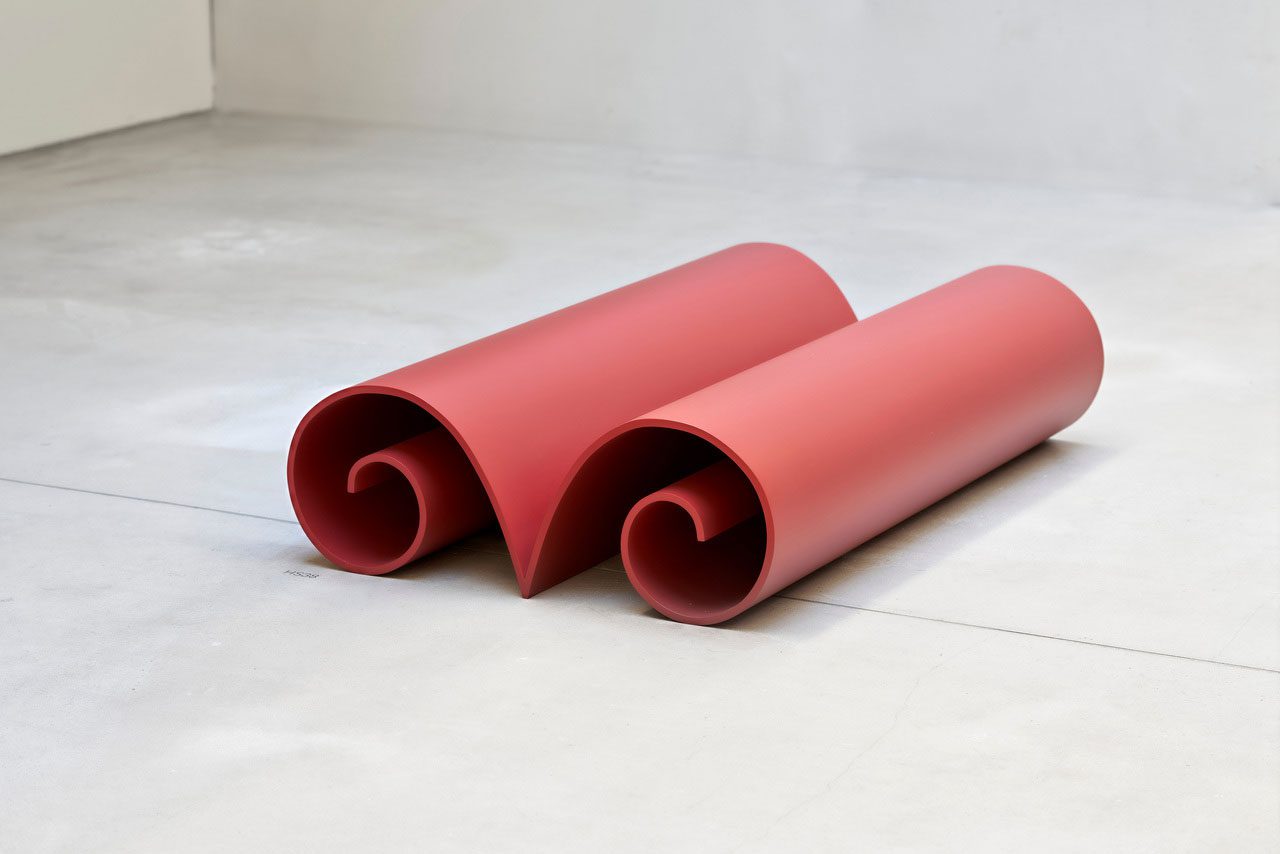
For her series “Heritage Studies” (2015– ), Issa begins her process in encyclopedic museums, where she takes walks, gravitating toward ancient objects that strike her as resonant. She takes notes and makes sketches based on her observations, particularly noting the scope and nuance of the stories told by the museum in its joining of seemingly simple historic fragments with short pieces of interpretive text on their origin, date, location, and symbolism or ideological function. For Issa, these elements also tell a related story about how an individual object travels from its place of origin to end up a historical artifact, on display in a specific vitrine within a particular museum.
The series “Lexicon” (2012-2019) comprises a range of dis- plays, each of which is presented as a contemporary remake of an exist- ing artwork—albeit one that looks nothing like the original. With video, sculpture, photography, and audio elements, it offers a visual lexicon for a variety of terms such as Laboring, Destiny, Mourning, Dancer, Devotees, and Monologist. The text panels that accompany each display provide a secondary narrative describing the con- tent of the original artworks on which the remakes are based.
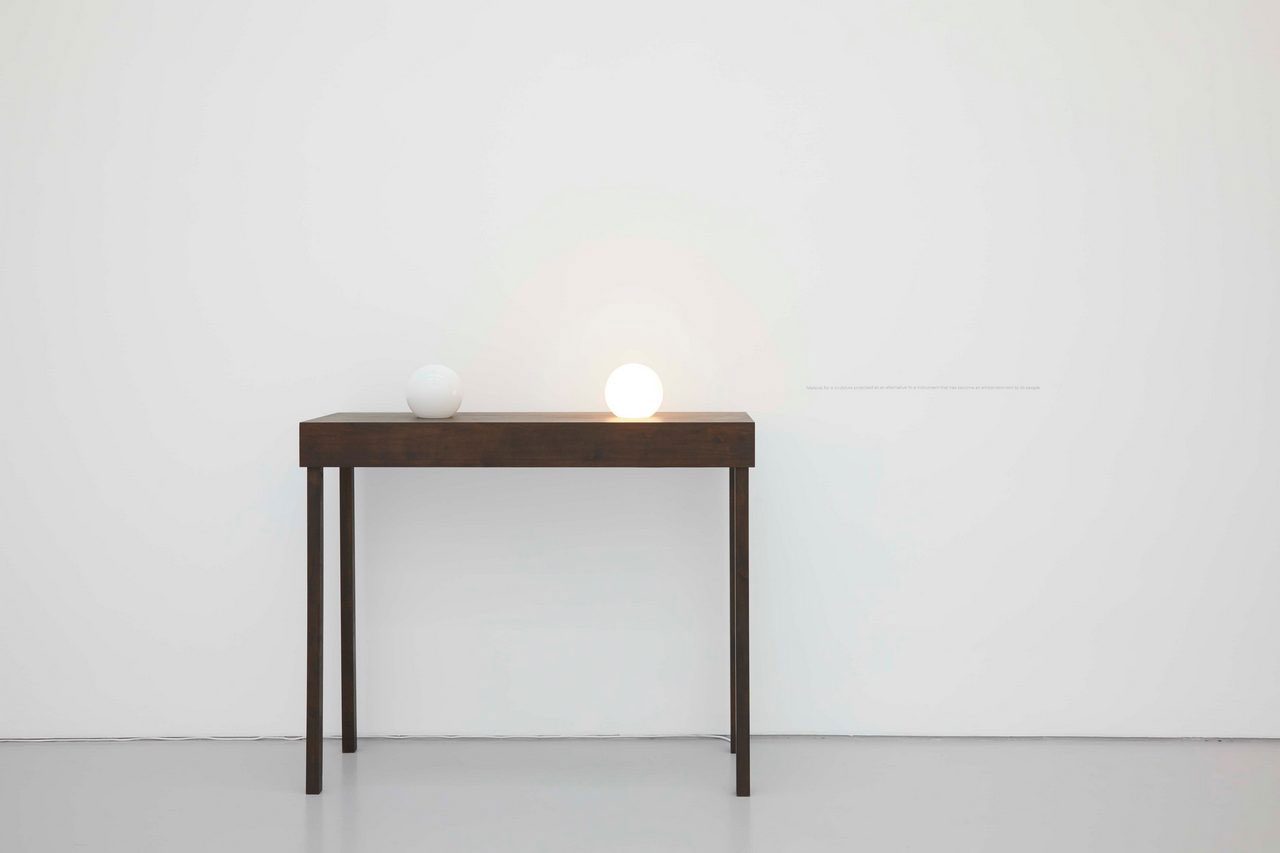
The series “Material” (2s010-2012) composed of ten displays, each of which is presented as a proposal for an alternative form to an existing monument or memorial. The original monument or memorial is not recalled by name, but rather through a description in vinyl text on the wall that also serves as the title of the work.
“Lass uns spielen” ultimately reflects Issa’s larger artistic project: to reframe how we encounter cultural and historical material and to invite a more active, critical, and imaginative engagement with the structures that surround it. In a world saturated with fixed narratives and prescribed meanings, Issa offers a refreshing counterpoint. She opens a space where ambiguity is not a problem to be solved but a condition to be inhabited—playfully, thoughtfully, and with a keen awareness of its transformative potential.
Photo: Iman Issa, Heritage Studies #38, 2020, Courtesy Sylvia Kouvali © Iman Issa 2025
Info: Curator: Stephanie Weber, Lenbachhaus Munich, Luisenstraße 33, Munich, Germany, Duration: 25/11/2025-12/4/2026, Days & Hours: Tue-Wed & Fri-Sun 10:00-18:00, Thu 10:00-20:00, www.lenbachhaus.de/en/
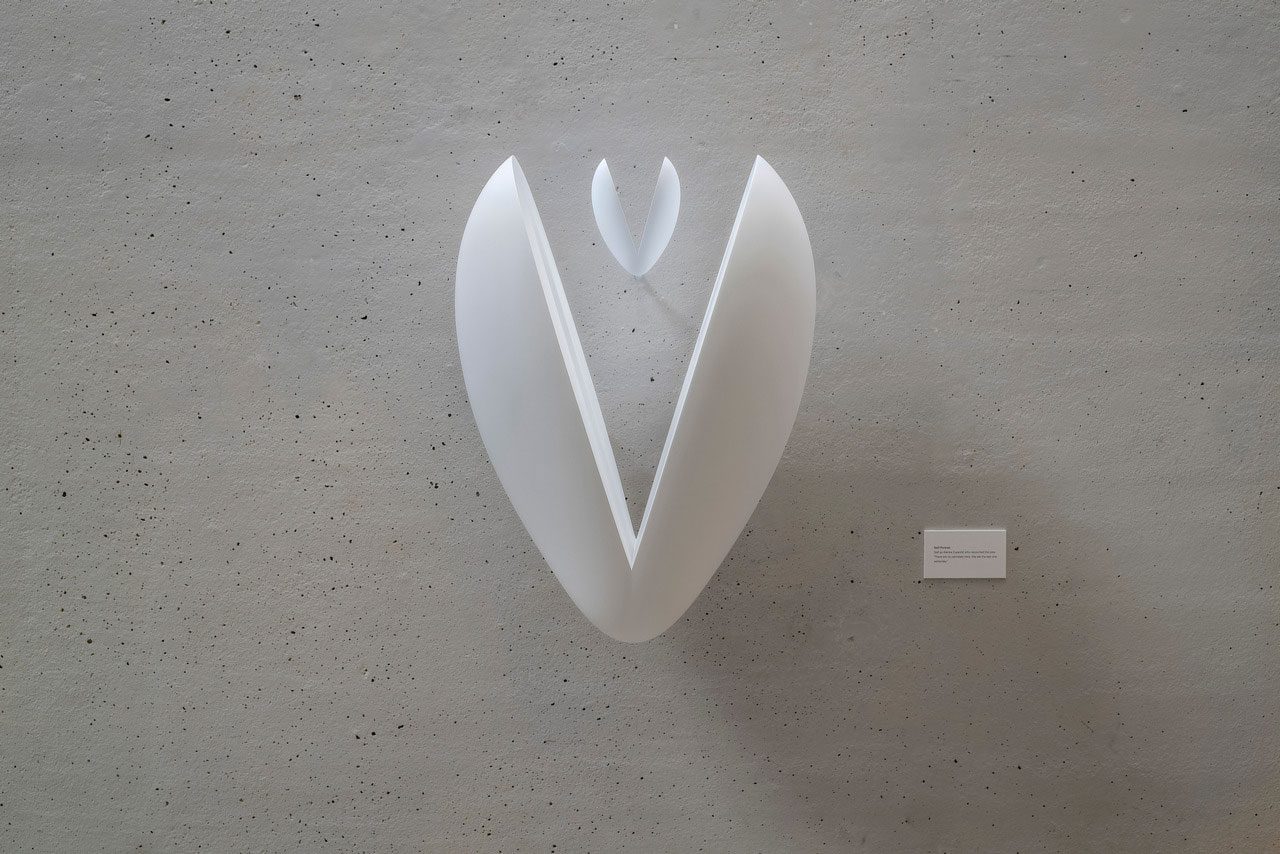
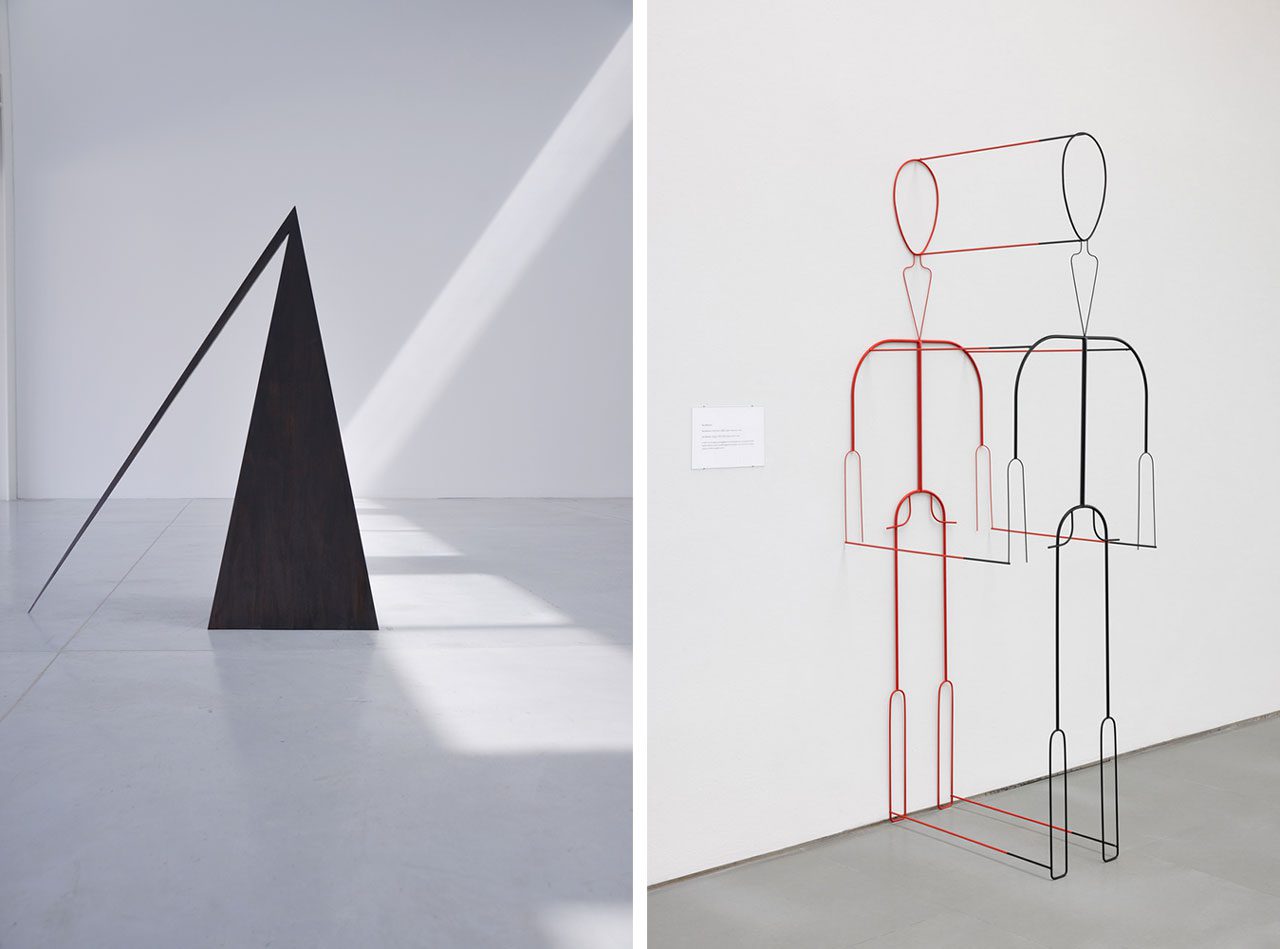
Right: Iman Issa, Two Women, 2024, Courtesy carlier gebauer, Berlin © Iman Issa 2025