
ART CITIES: Los Angeles-Vincent Fecteau, Simone Leigh, Marisol
Sculpture is never neutral. It is a body in space, a declaration of presence, a refusal to vanish. In this exhibition, the artists are brought together not as a coincidence of practice but as a constellation of resistance. Their works remind us that sculpture can be fragile, monumental, or witty, but always political.
By Dimitris Lempesis
Photo: Matthew Marks Gallery Archvive
The exhibition “Vincent Fecteau, Simone Leigh, Marisol” is not a gathering of three sculptors by chance. It is a deliberate constellation, a carefully composed chorus of voices that speak across generations, geographies, and political histories. To place Vincent Fecteau, Simone Leigh, and Marisol together is to insist that sculpture is never neutral. Sculpture is a body in space, a declaration of presence, a refusal to vanish. It is testimony, resistance, and survival made tangible.
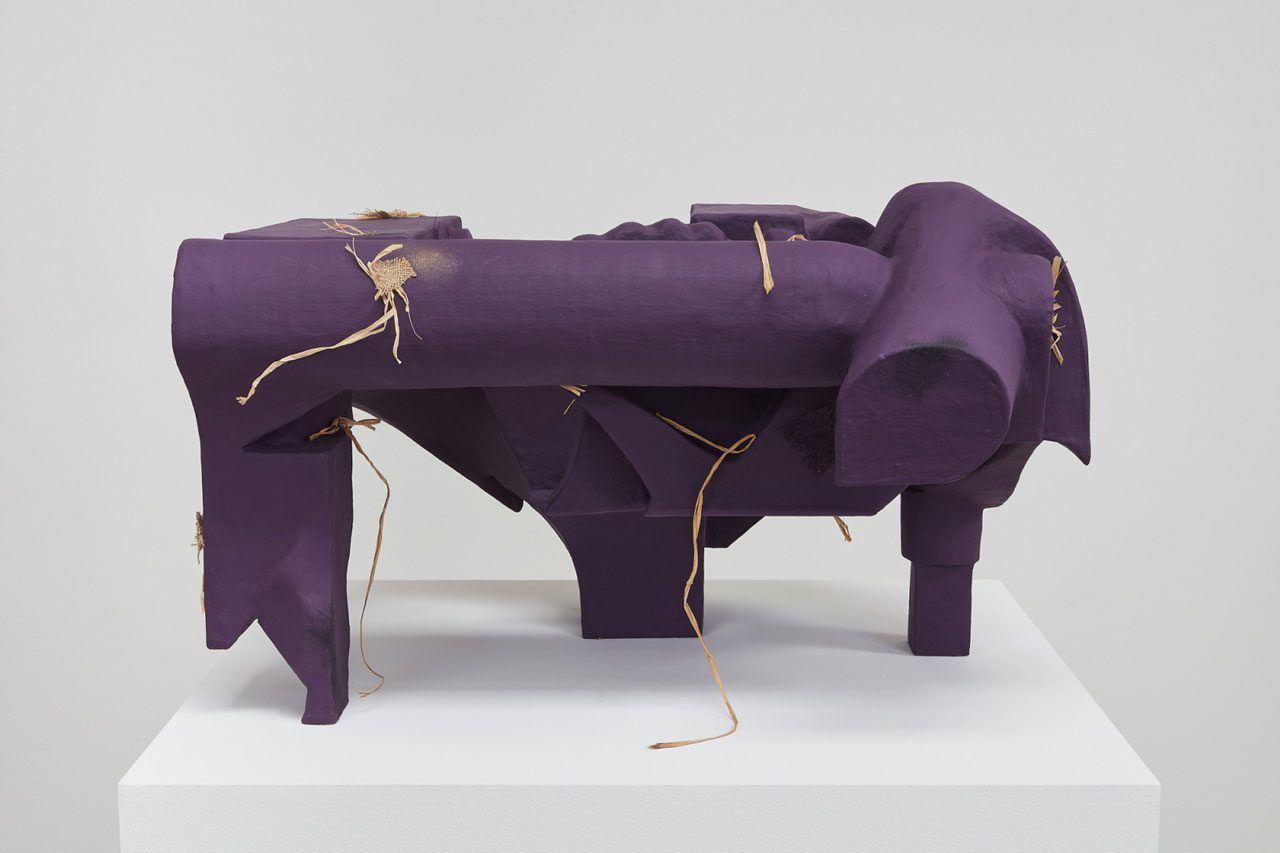
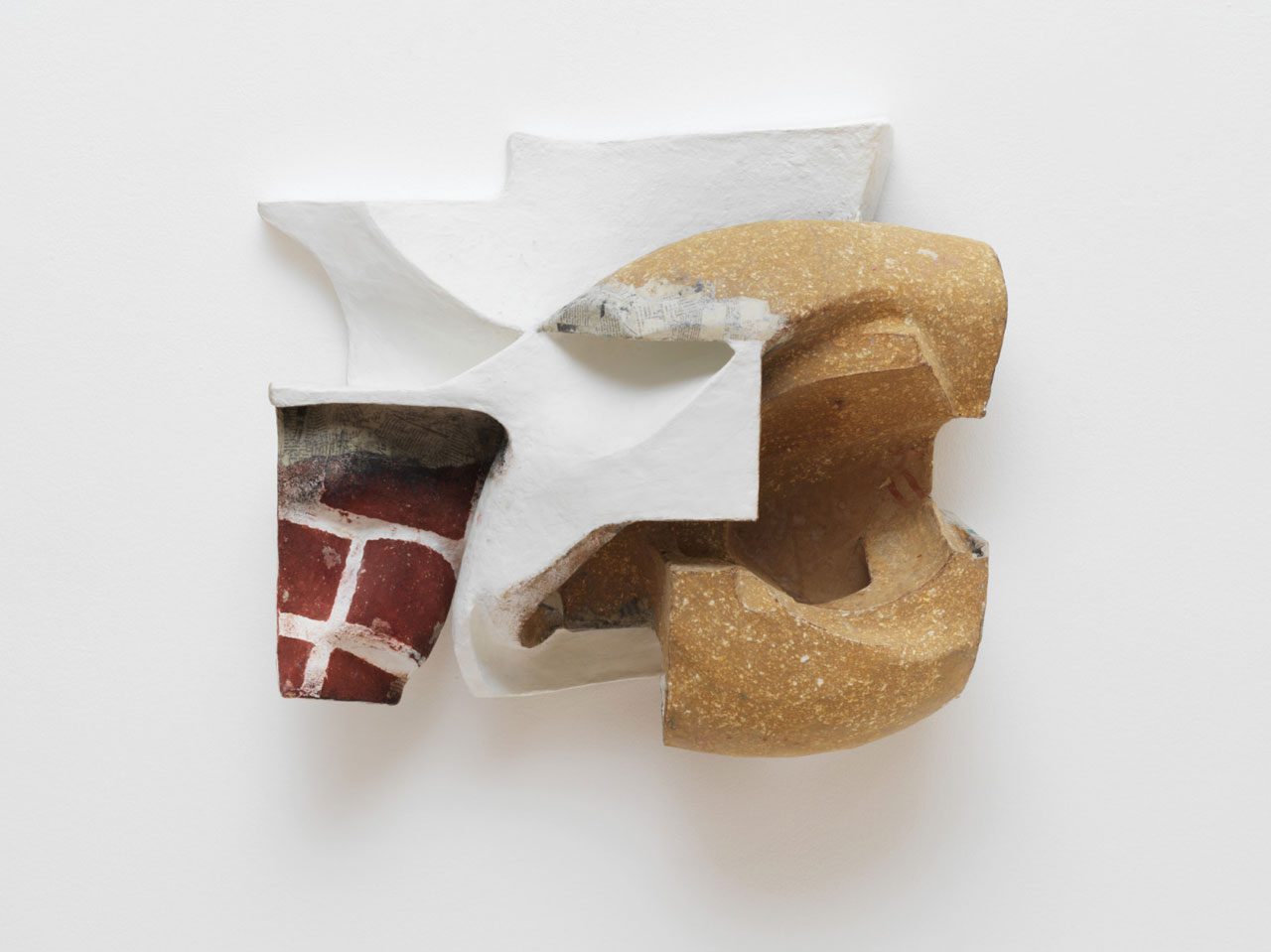
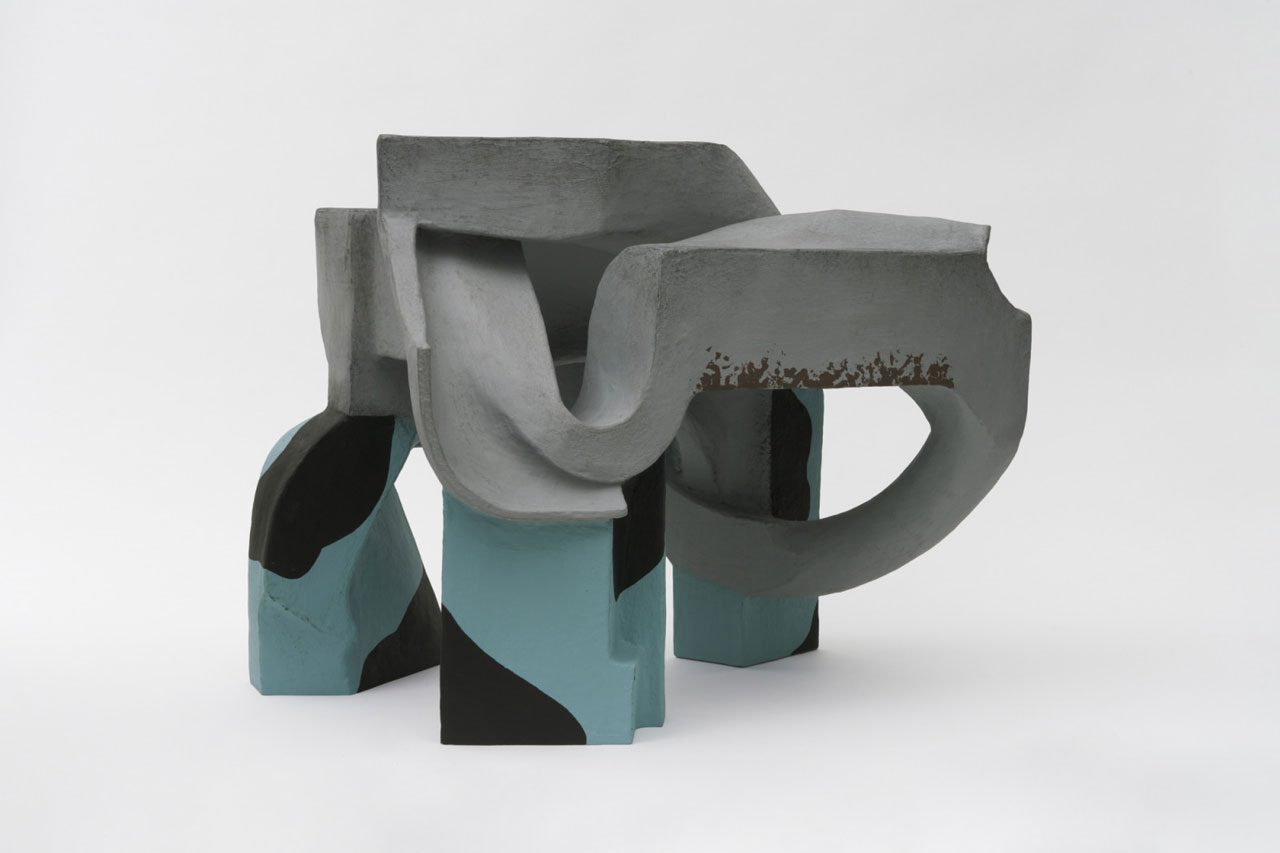
Vincent Fecteau works with fragile materials—papier-mâché, cardboard, string—constructing modestly scaled architectures that whisper of uncertainty. His sculptures, made between 2019 and 2022, resist singular readings. They hover between abstraction and recognition, recalling fragments of architecture, furniture, or everyday objects without ever settling into clarity. In their precariousness, they echo the instability of postwar abstraction, where fragility itself became a language. Fecteau’s refusal of monumentality is not retreat but resistance: an insistence that ambiguity can be a form of survival in a world that demands certainty.
Simone Leigh creates monumental ceramic and bronze figures that reclaim space through Black feminist thought. Her sculptures abstract the female body, often erasing facial features to emphasize collective identity over individual portraiture. The body becomes vessel, monument, and archive. Leigh draws upon sculptural traditions of Africa and the African diaspora, reimagining antiquity through a contemporary lens. Her figures stand as guardians of memory, embodiments of resilience, and monuments to healing. In their scale and presence, they challenge the erasures of history, insisting that Black women’s bodies are not only visible but central to the narrative of art.
Marisol, the Venezuelan-American sculptor who rose to prominence in the late 1950s, wielded wit and satire as her sharpest tools. Her painted and carved wooden figures, often incorporating her own likeness, expose the absurdities of power with humor that cuts to the bone. In Social Security (1975), she cast her own face and carved the words “My name is Marisol” and “I have been an artist all my life,” asserting identity with disarming clarity. In “To My Dead Dog Sebastian” (1957), she turned sculpture into an intimate act of mourning, proving that satire and tenderness can coexist. For Marisol, every sculpture was, in her words, “a kind of self-portrait”—a reminder that the artist’s body and voice are inseparable from the work.
Placed together, these three artists form a constellation of strategies: fragility, monumentality, wit. They are not opposites but allies. Each strategy is a tool of resistance, survival, and healing. Fecteau’s fragile architectures, Leigh’s monumental vessels, and Marisol’s satirical figuration all insist that sculpture is a language of presence—a way to inhabit space against erasure.
This exhibition situates their practices within a global lineage. From Europe’s fragile abstractions to Africa’s monumental traditions to Latin America’s satirical critiques, artists have used form to resist disappearance and to embody memory. Sculpture has always been more than material; it is testimony, archive, and monument. Fecteau, Leigh, and Marisol join this lineage, speaking to one another across time and space, across histories of repression and resilience. Their dialogue reminds us that sculpture is not only an object but a living presence, a chorus of voices that refuses silence.
Photo: Vincent Fecteau, Untitled 2019, Papier-mâché, resin clay, acrylic, burlap, raffia, 20½ × 27¼ × 34 inches; 52 × 69 × 86 cm, © Vincent Fecteau, Courtesy the artist and Matthew Marks Gallery
Info: Matthew Marks Gallery, 1062 North Orange Grove, Los Angeles, CA, USA, Duration: 22/11/2025-31/12025, Days & Hours: Tue-Sat 10:00-18:00, https://matthewmarks.com/
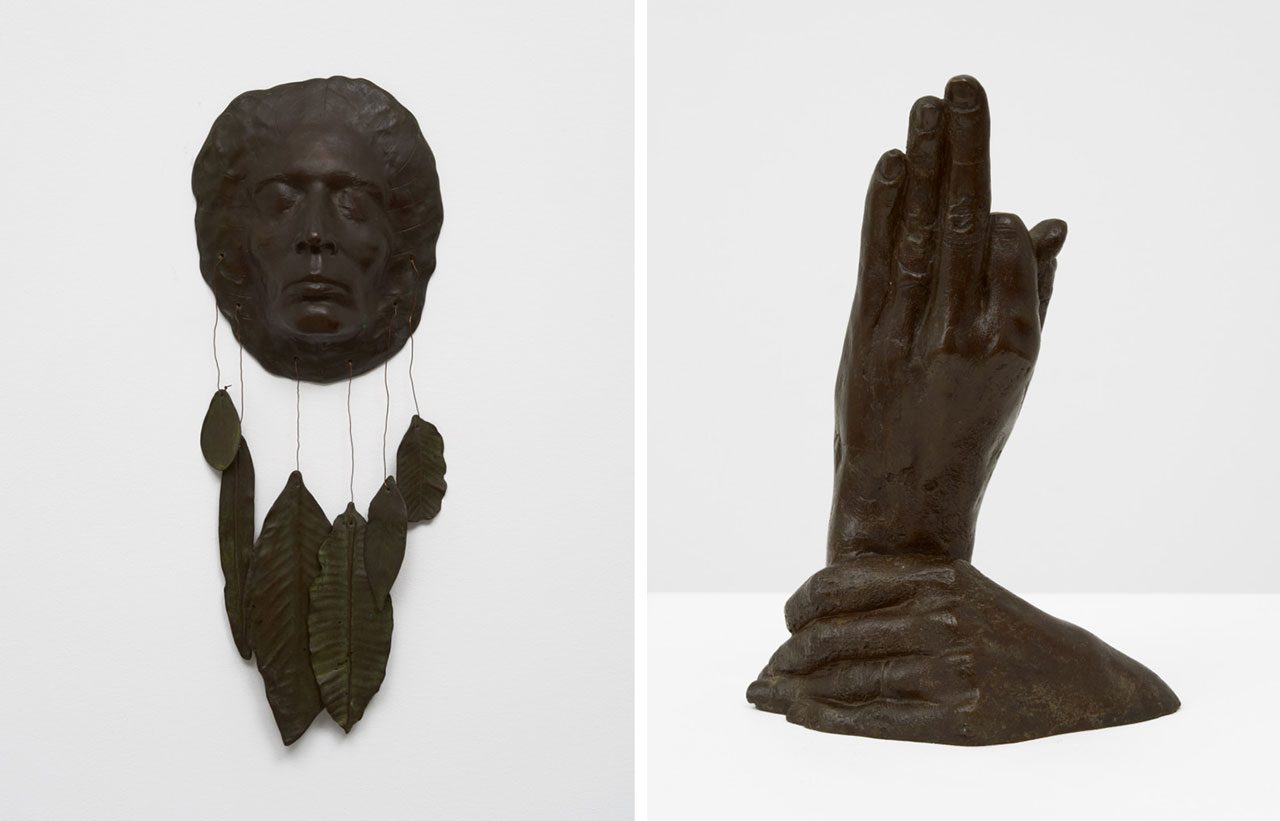
Right: Marisol, Hand Holding Hand c. 1985, Bronze, 9⅛ × 6¼ × 4 inches; 23 × 16 × 10 cm, © MARISOL, Courtesy the artist and Matthew Marks Gallery
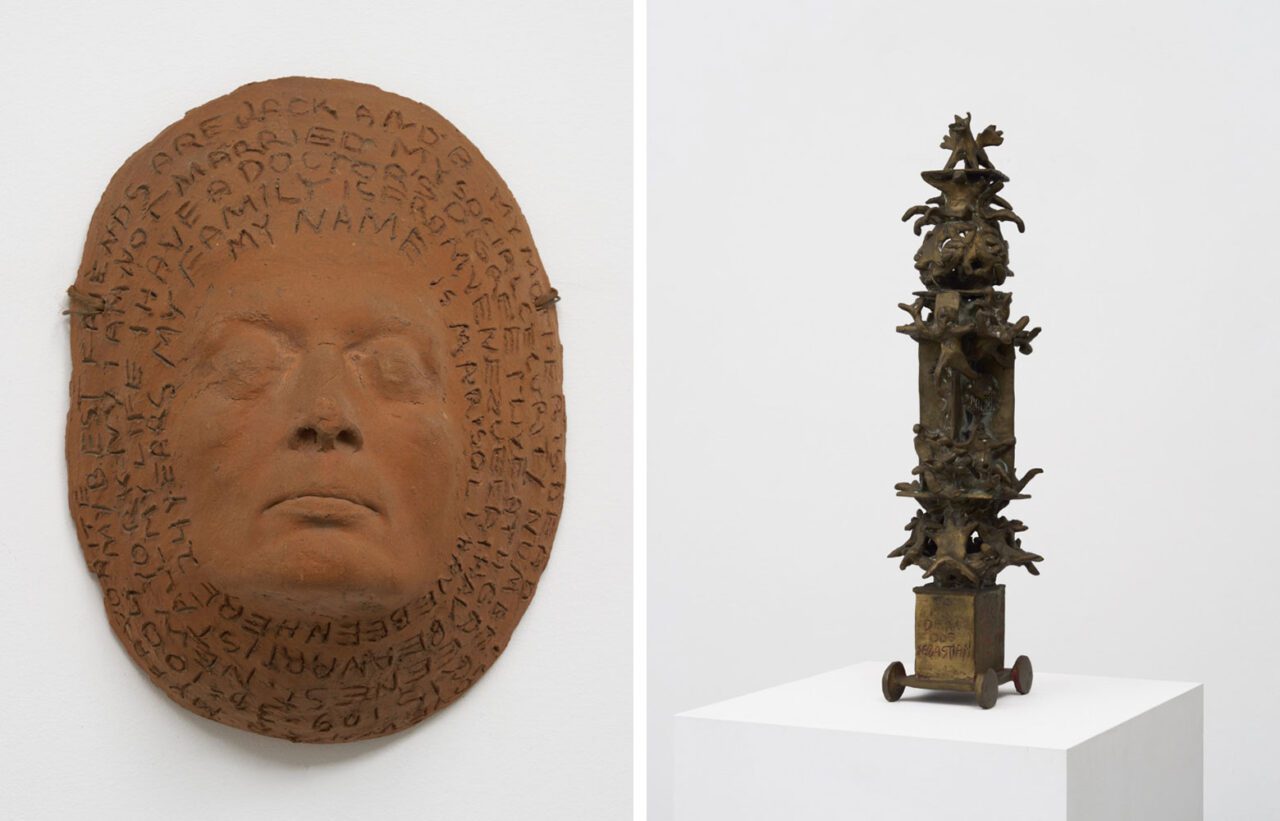
Right: MARISOL, To My Dead Dog Sebastian 1957,Painted bronze, 24½ × 7½ × 6 inches; 62 × 19 × 15 cm, © MARISOL, Courtesy the artist and Matthew Marks Gallery
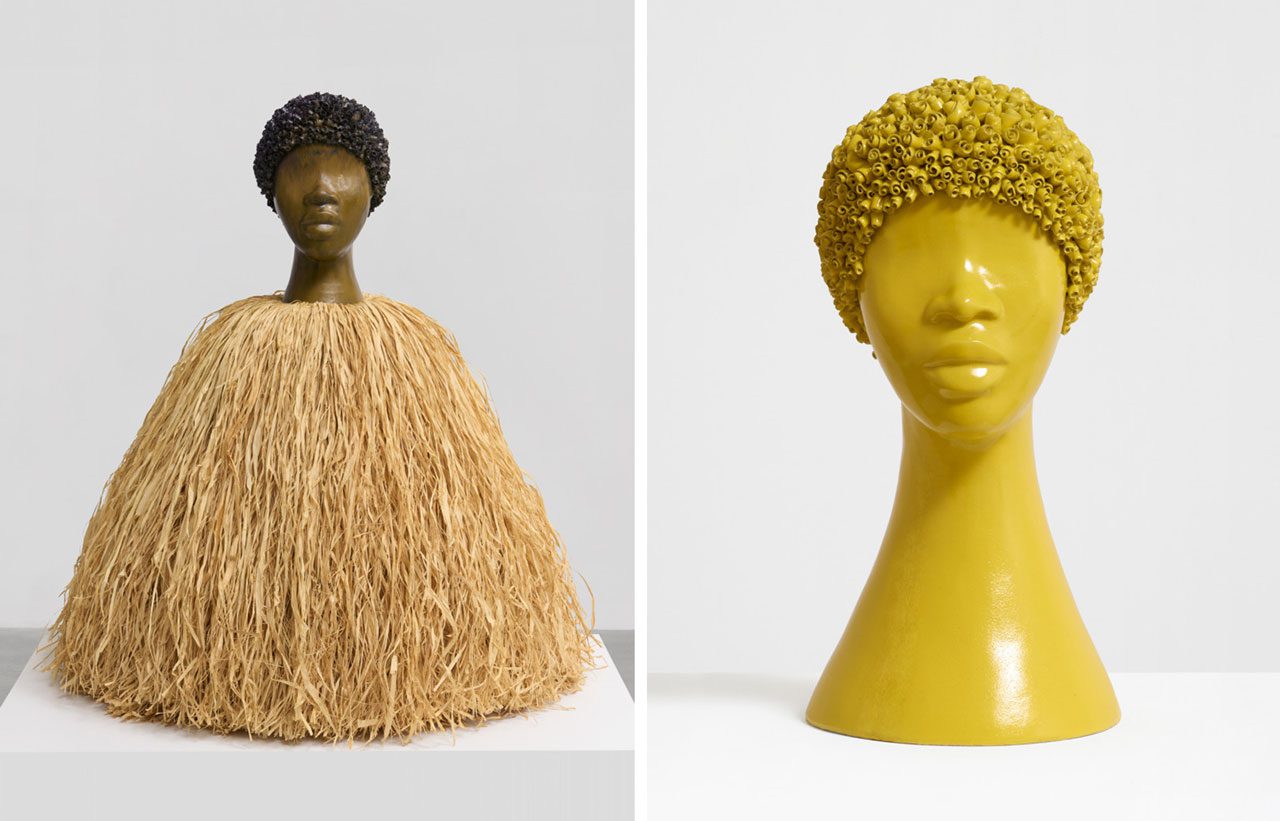
Right: Simone Leigh, Untitled 2025, Stoneware, 24 × 12 × 13 inches; 61 × 31 × 33 cm, © Simone Leigh, Courtesy the artist and Matthew Marks Gallery