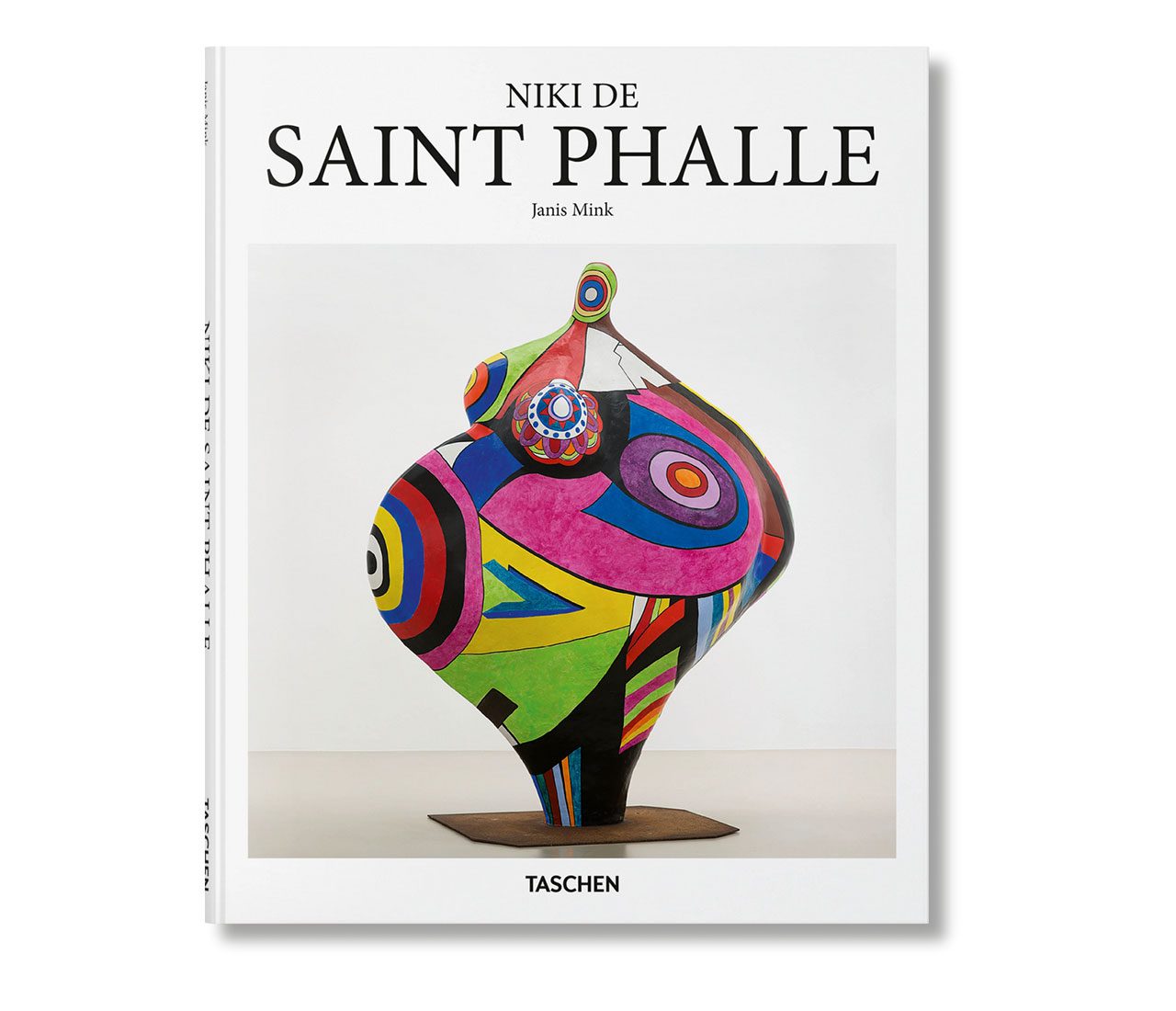
BOOK: Niki de Saint Phalle, Taschen Publications
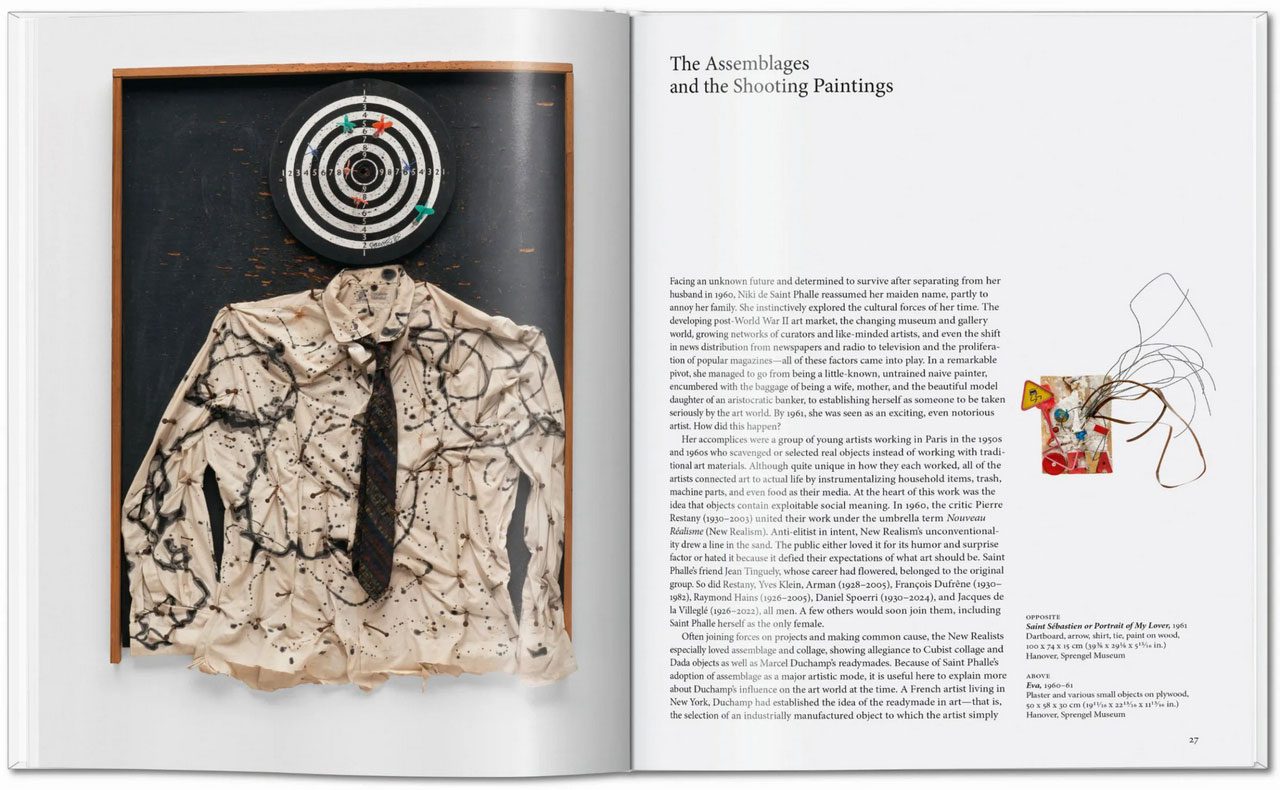
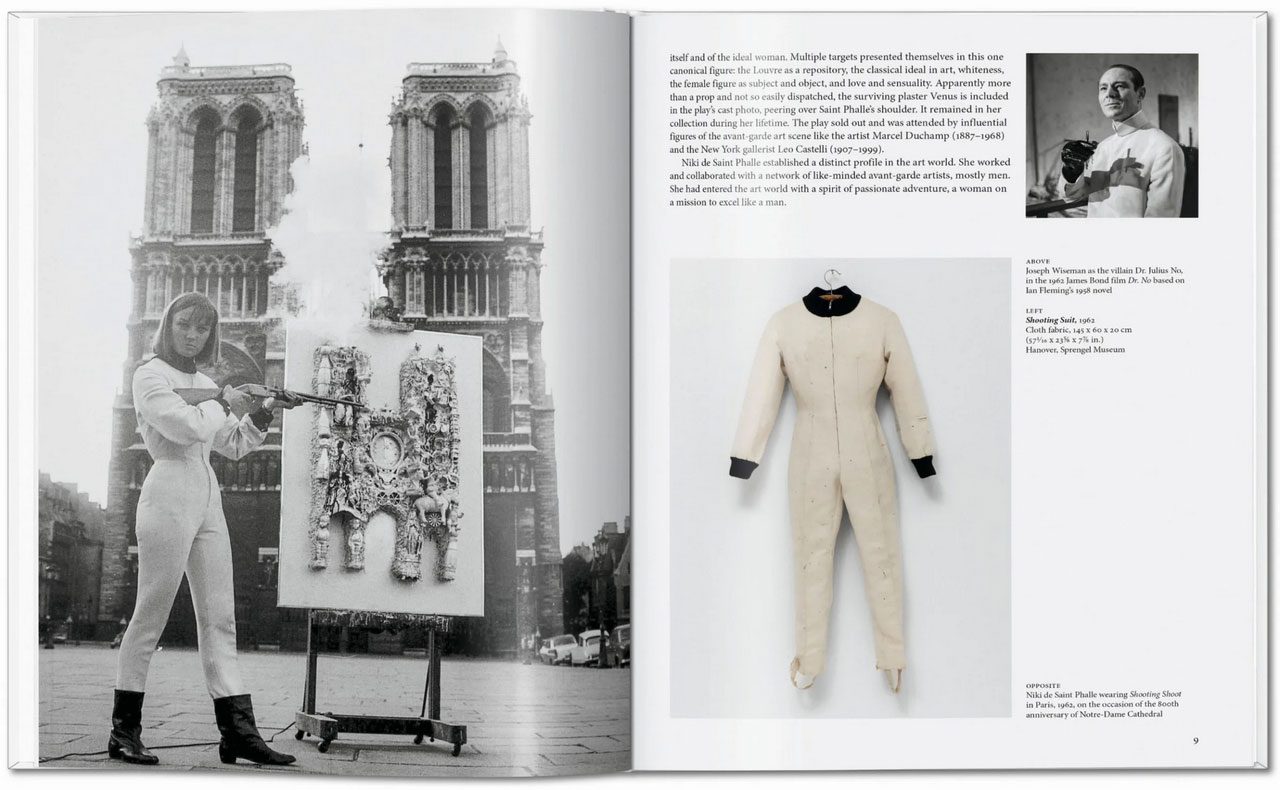
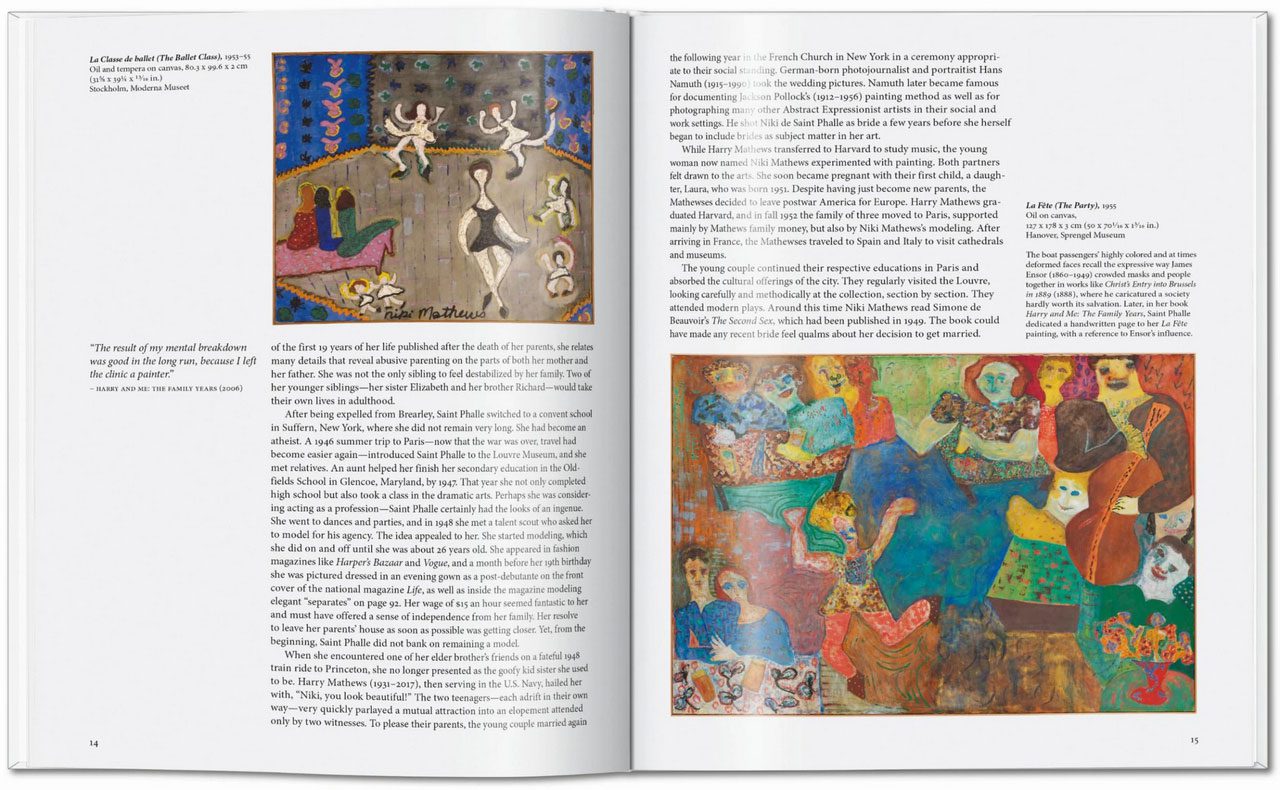
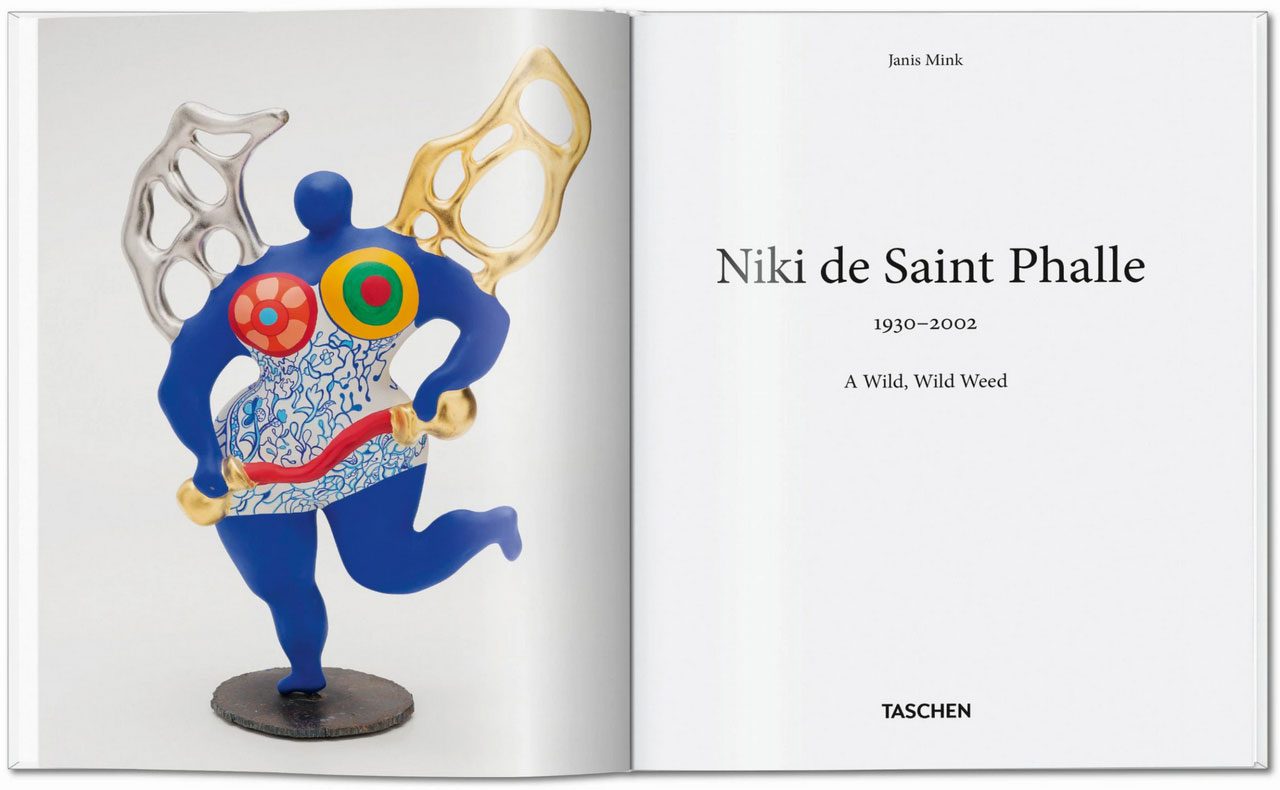
A central figure in the development of Nouveau Réalisme in early 1960s Paris, Niki de Saint Phalle worked alongside artists such as Arman, Yves Klein, and Jean Tinguely, using found objects rather than traditional art materials. By incorporating household items, machine parts, toys, and other everyday materials into her early assemblages, she forged a direct connection between art and life. In 1961, she created her first shooting painting, or Tir, inaugurating a series of performative works in which she fired a gun at reliefs made of plaster, paint, wood, wire, and small objects. These dramatic actions, staged in locations ranging from the Impasse Ronsin in Paris to a garden in Amsterdam, a sandpit outside Stockholm, and the Malibu Hills, resulted in explosive, chance-driven compositions produced through destruction.
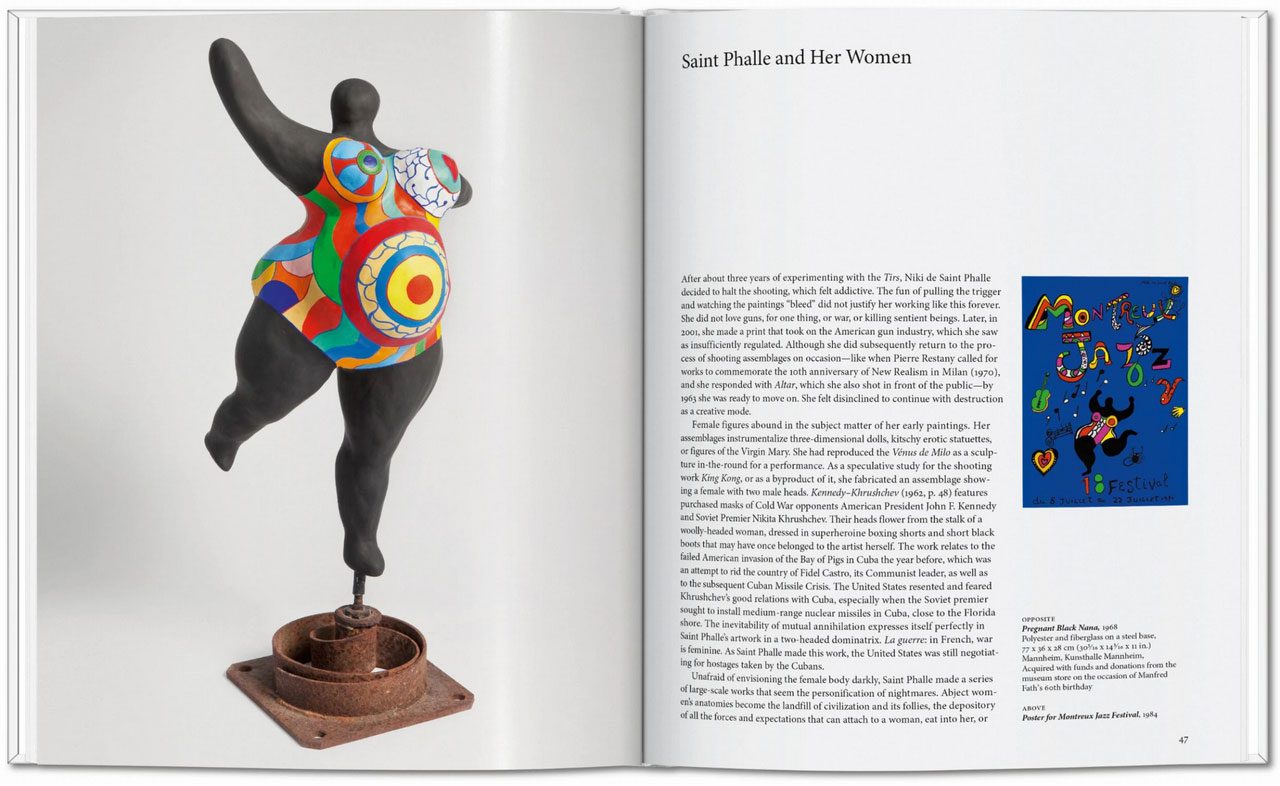
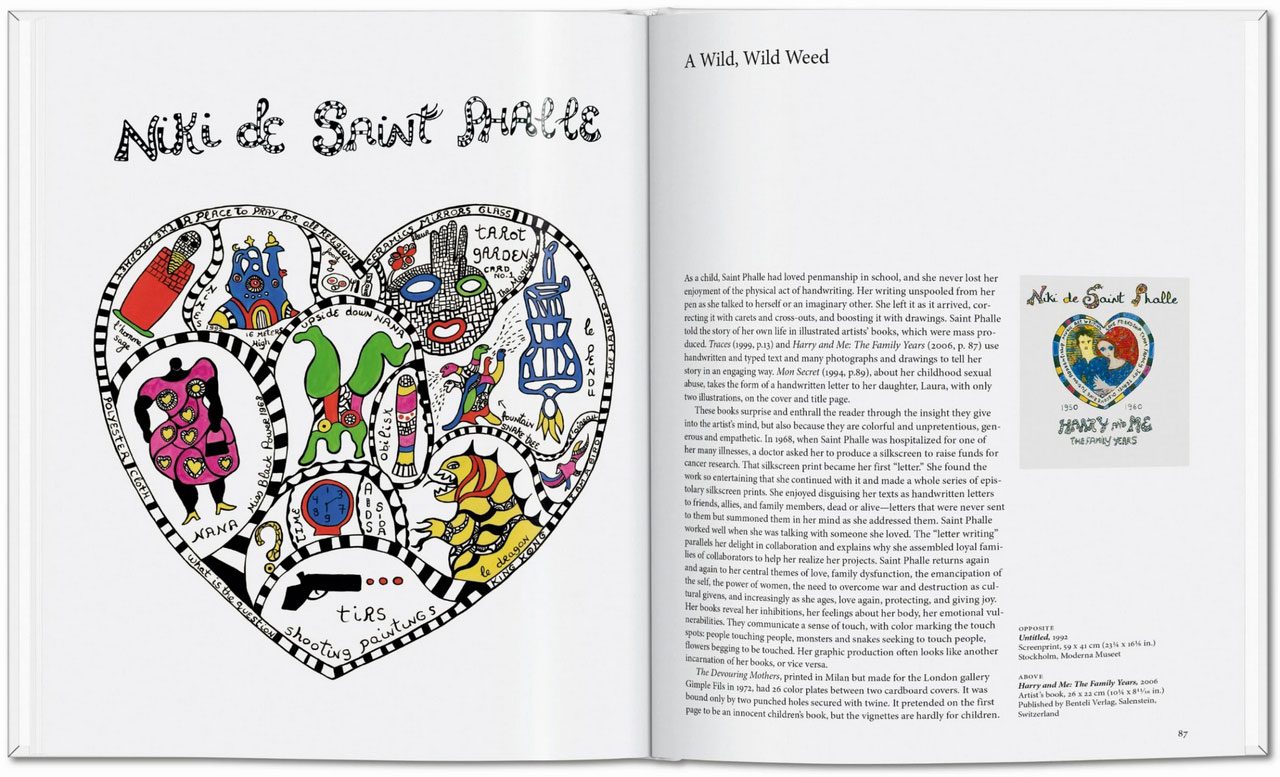
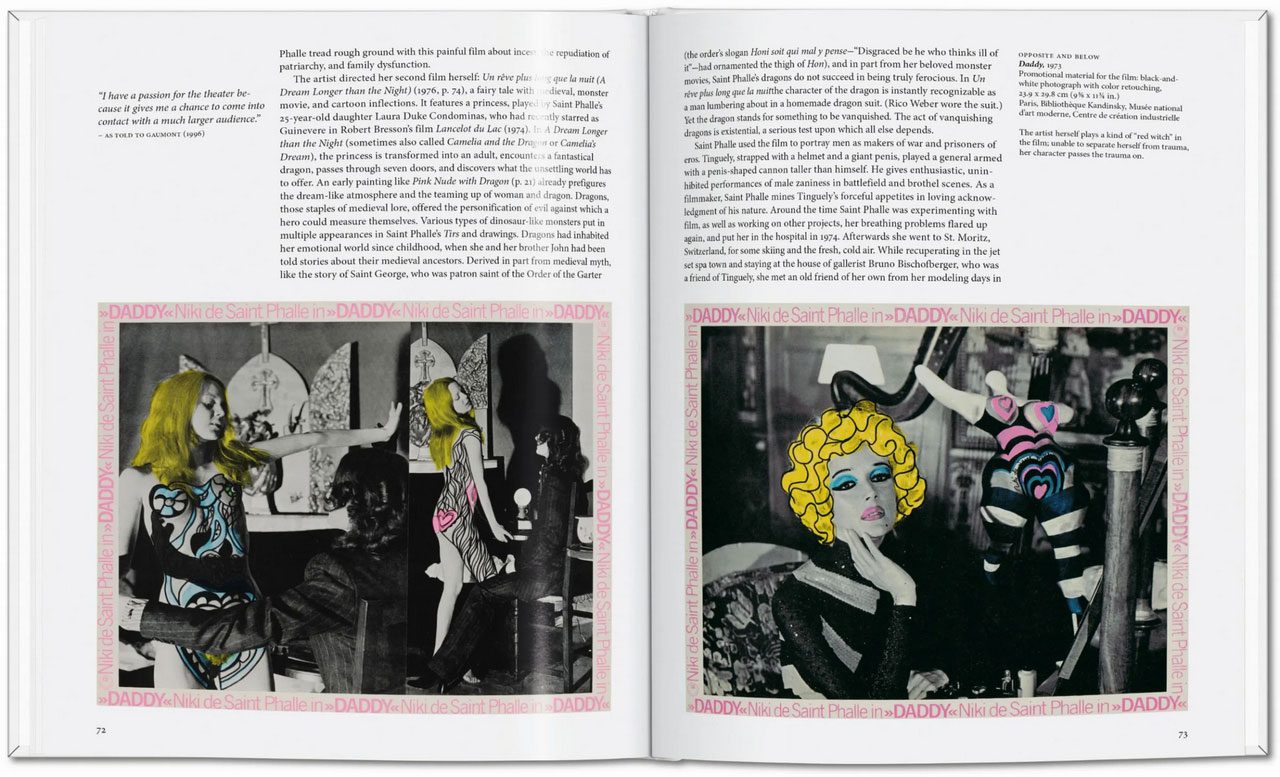
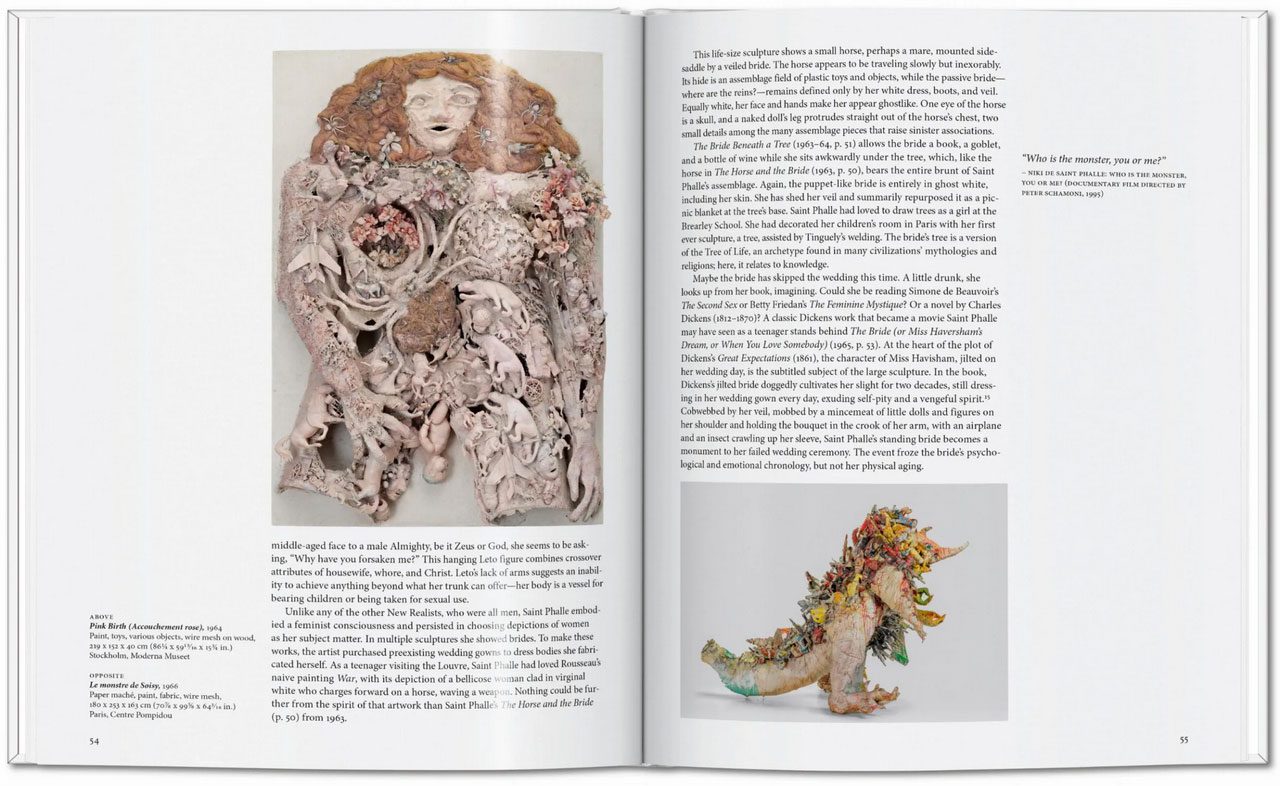
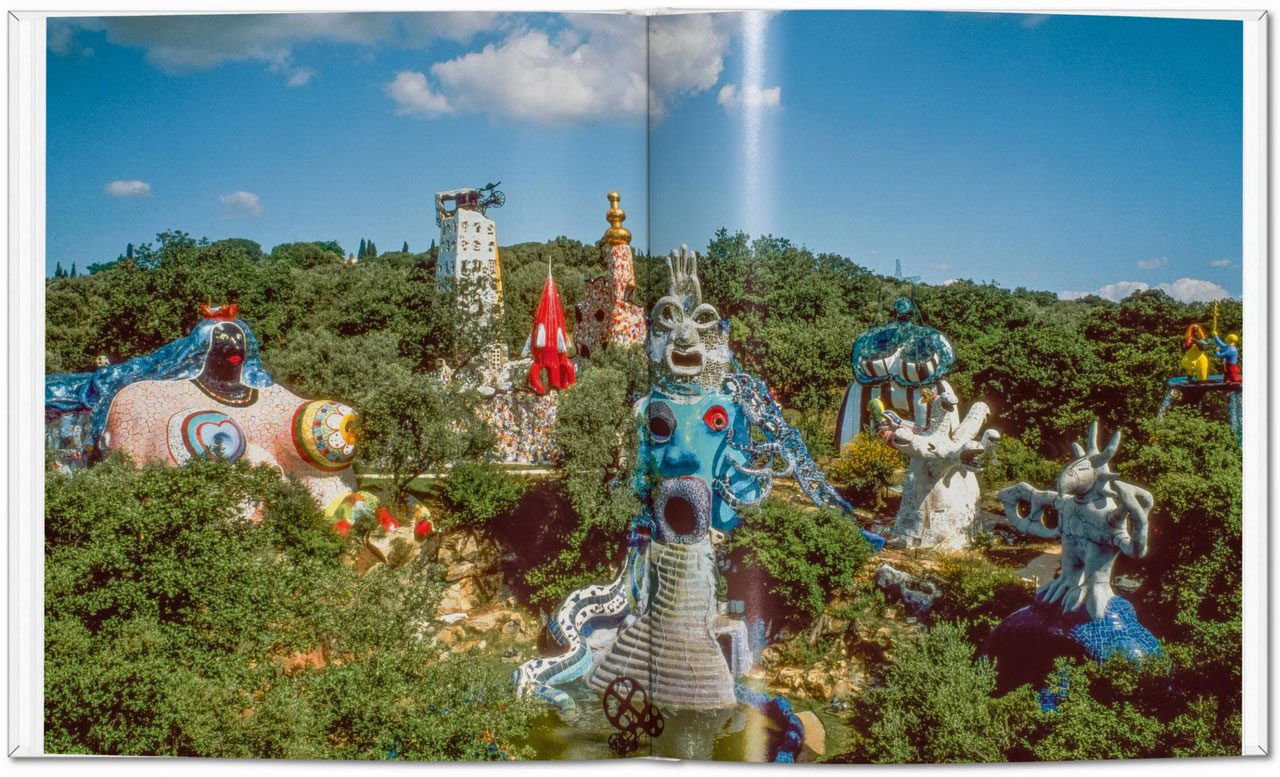
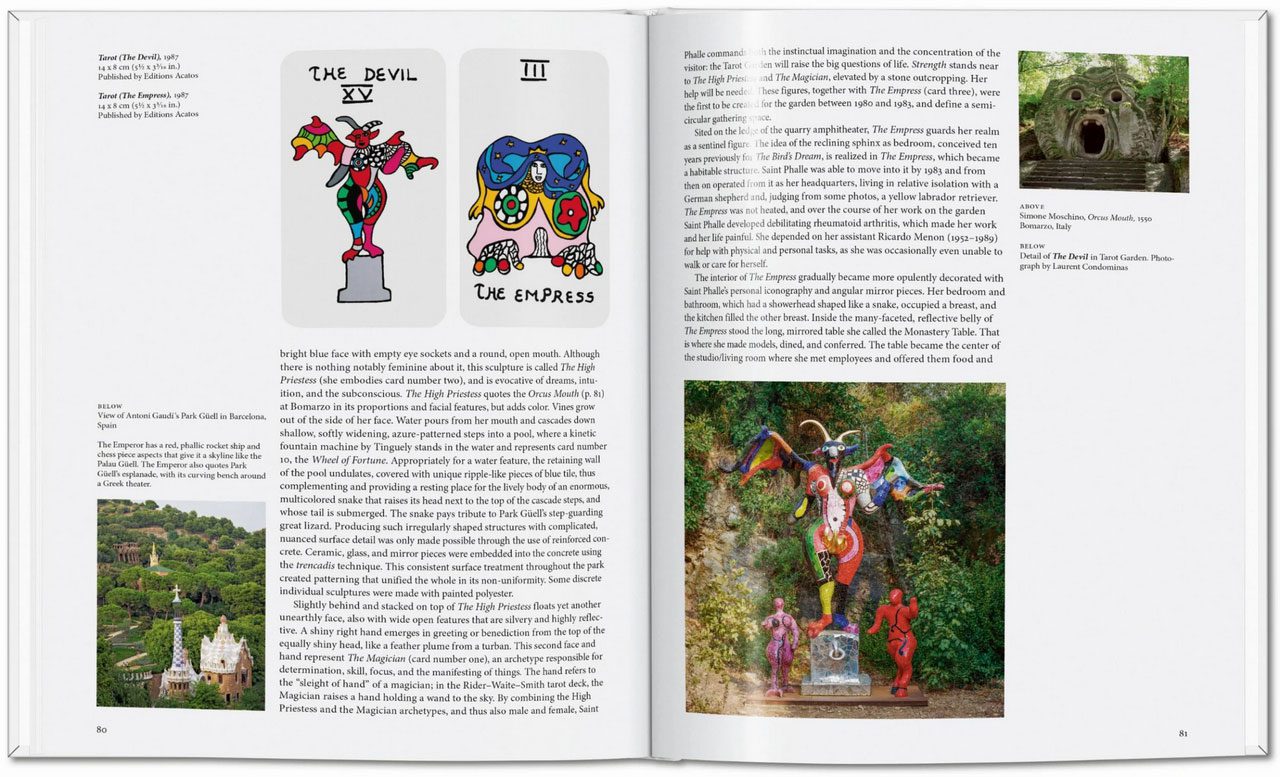
This book by Taschen Publications introduces Saint Phalle’s diverse body of work and highlights her major contributions to twentieth-century art. Throughout her career, she explored themes surrounding femininity, power, and the body. Her sculptures, from birthing figures to embodiments of life and death, both celebrate and scrutinize the female form, as seen in works such as “Pink Birth” (1964) and the immersive “Hon En Kathedral” (1966). Many of her early Nanas were inspired by real women in her life, named after her friends and family members. Saint Phalle later expanded her practice into filmmaking with projects like “Daddy” (1973), into publishing with artist’s books such as “AIDS: You Can’t Catch It Holding Hands” (1987), and into large-scale immersive environments. Her most ambitious endeavor, the Tarot Garden, is a monumental sculpture park populated by figures modeled on the 22 Major Arcana of the Tarot deck—archetypes she interpreted as symbolic forces of destiny. –Dimitris Lempesis