PRESENTATION: Raoul Hausmann-Vision. Provocation. Dada. Part II
Raoul Hausmann is a leading figure in the artistic avant-garde of the 20th century. Throughout his life he challenged conventions of every kind. In his all-round resolve to move on from the status quo and make “tomorrow” happen he was a multi-media artist avant la lettre. As a co-founder of Berlin’s Dada movement, nicknamed its “Dadasopher”, he pioneered a broad repertoire of styles and formats which continue to influence artistic production today (Part I).
By Efi Michalarou
Photo: Berlinische Galerie Archive
When one considers the great ruptures of the 20th century—those moments when art, politics, and technology collided to produce something radically new—Raoul Hausmann stands as one of the most electrifying figures at the epicenter of change. Restless, brilliant, and defiant, Hausmann (1886–1971) refused to be confined by the limits of any single medium or discipline. His creative trajectory—spanning painting, collage, sound poetry, photography, philosophy, and even mechanical invention—charts nothing less than a century-long dialogue between art and modernity itself.
To mark its 50th anniversary, the Berlinische Galerie has mounted “Vision. Provocation. Dada.”, the most comprehensive retrospective ever devoted to this radical innovator. Featuring over 200 works—paintings, collages, drawings, photographs, films, and archival materials—the exhibition unfolds across seven chronological chapters, tracing Hausmann’s evolution from Expressionist painter to Dada provocateur, from inventor of the “optophone”to philosopher of perception. It is not only an homage to a singular artistic mind but a testament to the persistence of invention as an act of resistance.
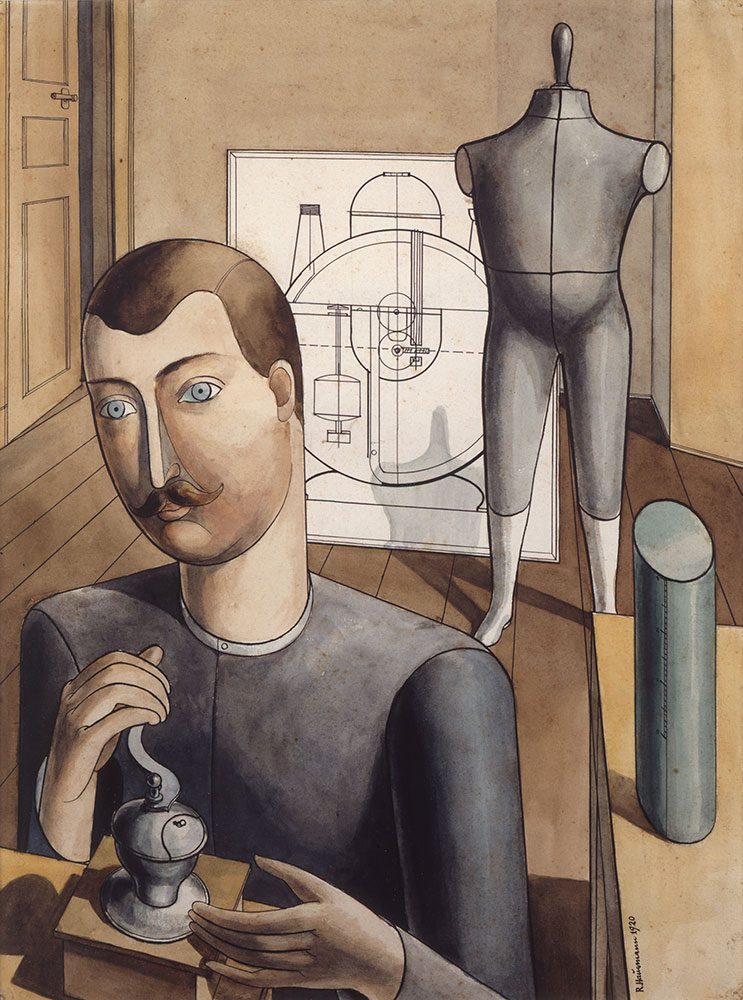
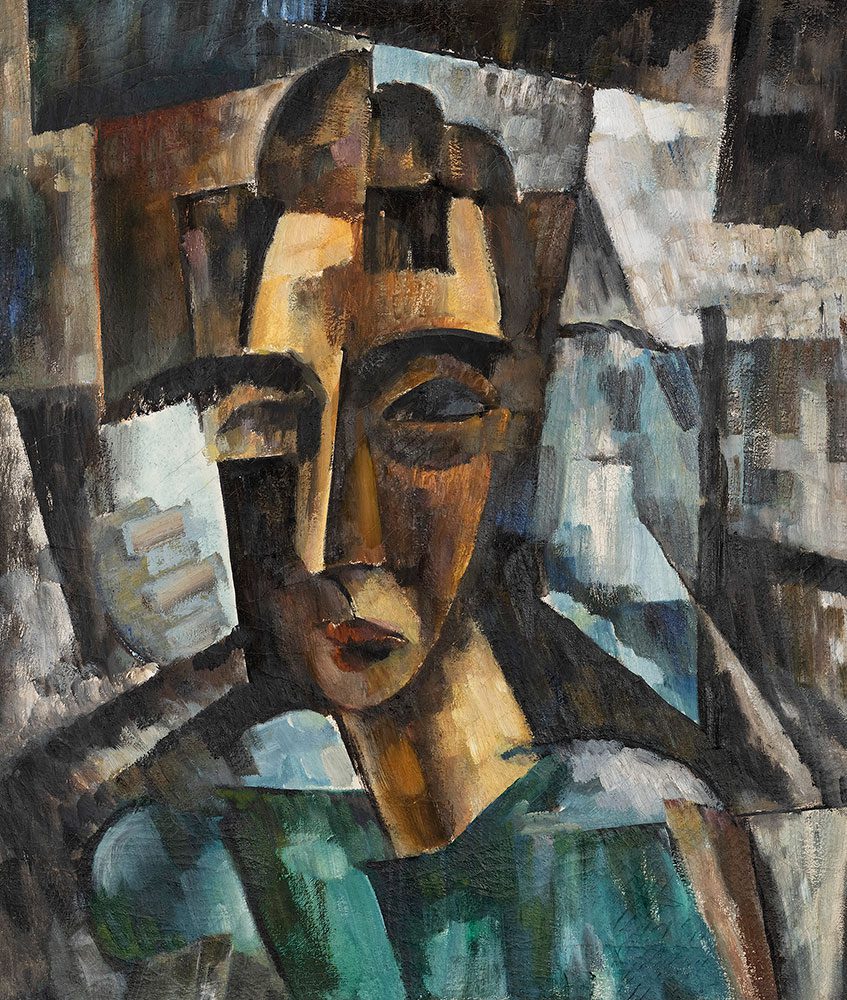
“The painter paints like the ox lows” — Beginnings (1905–1917): Born in Vienna and raised in Berlin, Hausmann was introduced to art early through his father, a court painter to Kaiser Wilhelm II. Yet it was his encounter with Expressionism around 1912 that truly ignited his independence. Through contact with artists like Erich Heckel and Ludwig Meidner, and exposure to Herwarth Walden’s Sturm gallery, Hausmann absorbed the expressionist revolt against academic art and translated it into his own language—one that balanced structure and chaos, intellect and emotion. His relationship with fellow artist Hannah Höch, beginning in 1915, proved both creative and tempestuous. Their intense seven-year bond—documented in portraits and correspondence—was a crucible for experimentation, both personal and artistic. “My work is very personal Cubism,” Hausmann declared, revealing the self-confidence and contradiction that would define him. His early Expressionist period, marked by emotional charge and social critique, foreshadowed the more radical disruptions to come.
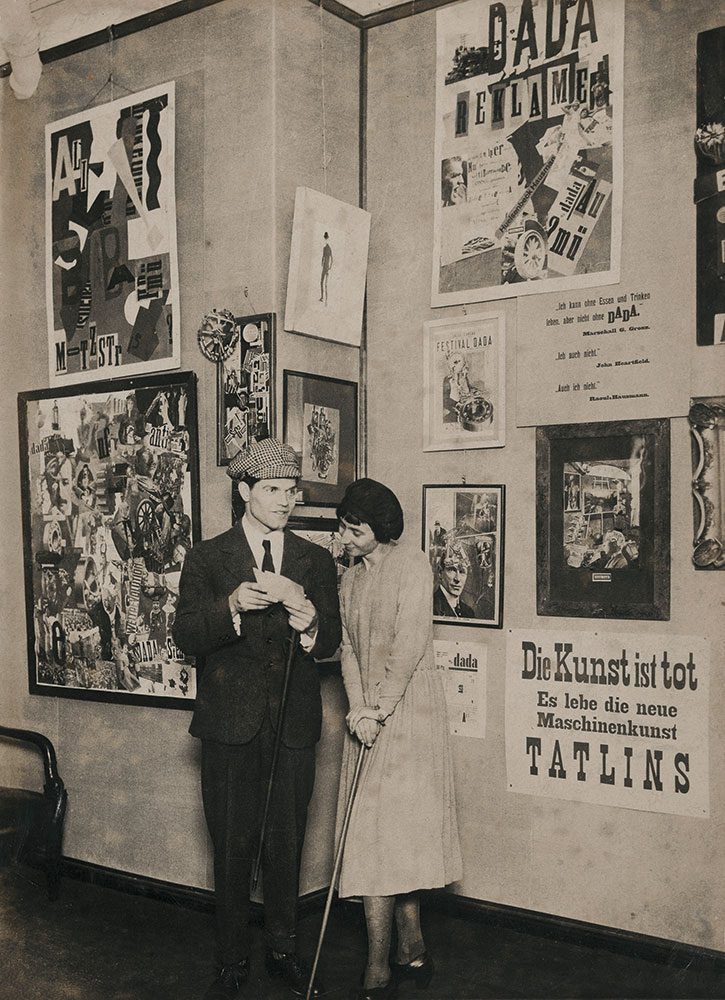
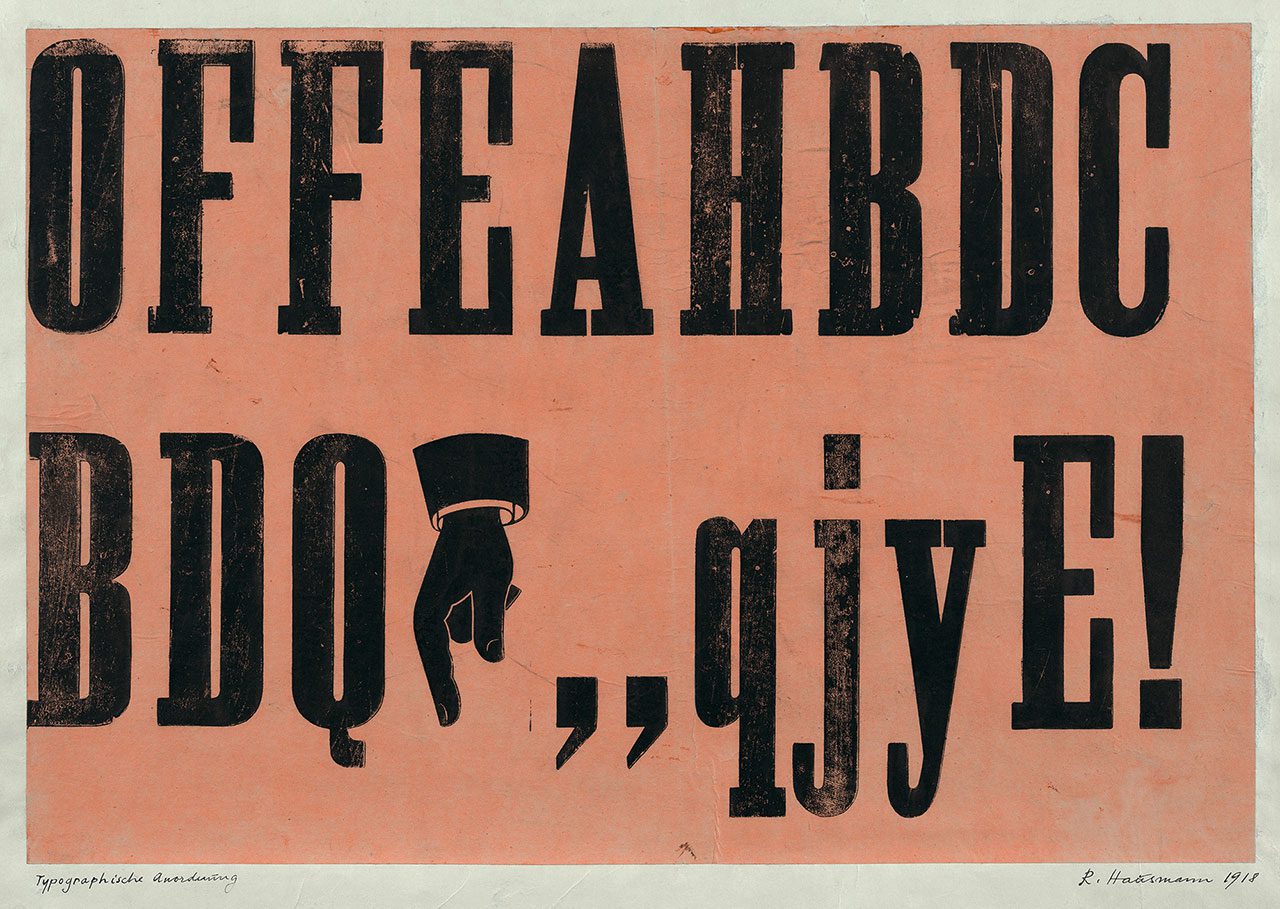
“Dada is more than Dada” — Revolutionary Anti-Art (1918–1921): When the Dada spark leapt from Zurich to Berlin in 1918, Hausmann was ready. Dada was not a movement for him—it was a life philosophy, a total reconfiguration of perception and politics. Alongside Hannah Höch, Hausmann co-invented photomontage, one of the defining artistic strategies of the 20th century. He also produced “poster poems”—the first literary readymades—where typography, sound, and image collided. As co-editor of “Der Dada and a fiery performer at the notorious Dada soirées, Hausmann embodied the movement’s irreverent energy. He lampooned art and authority alike, reciting sound poems, performing absurd dances, and orchestrating happenings long before the term existed. His Dada practice was never mere nihilism; it was a declaration of intellectual freedom. As the self-proclaimed “Dadasopher”, he sought to awaken consciousness and dismantle bourgeois complacency. “Dada,” he insisted, “is more than Dada.” It was the beginning of conceptual art, performance, and the politics of the absurd.
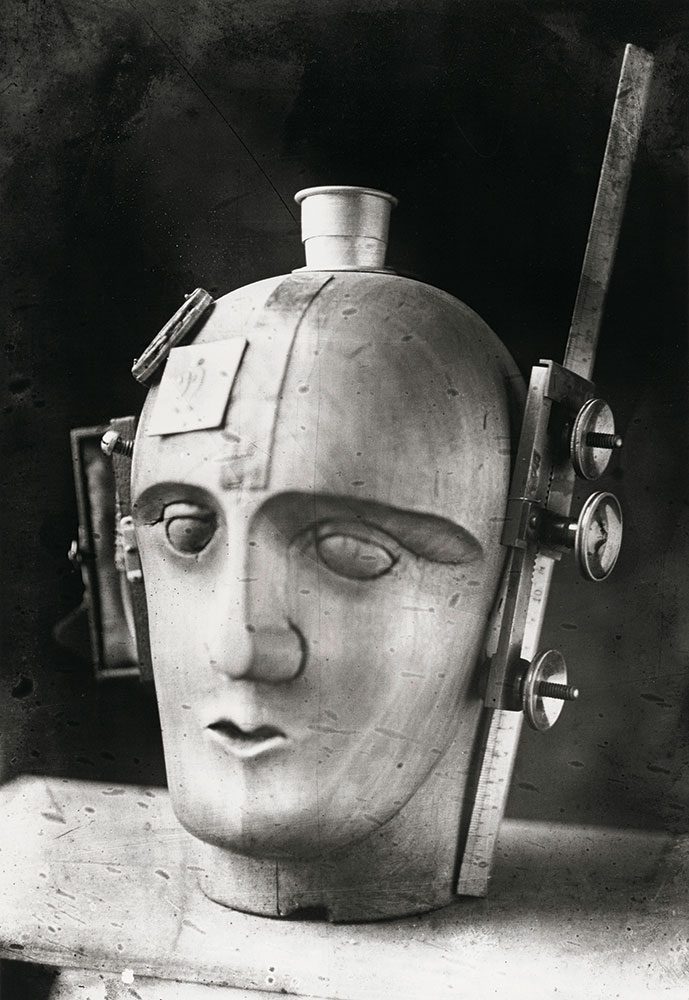
“The conquest of all our senses” — Synaesthesia and the Optophone (1921–1927): By the early 1920s, Hausmann turned his gaze toward perception itself. His experiments with visual poetry evolved into a fascination with synaesthesia—the blending of sensory experiences. His theoretical model, which he called “PRÉsentism”, proposed an expanded awareness of space, time, and sensation. Seeking to literally translate sight into sound, he invented the “optophone”, a device designed to transform images into musical tones and vice versa. These were not eccentric curiosities but visionary attempts to fuse art with science, intuition with technology. Hausmann anticipated the contemporary artist-engineer: the notion that creativity and invention were not separate, but parallel forms of human curiosity. His “machines for perception” read today like blueprints for media art and immersive technologies.
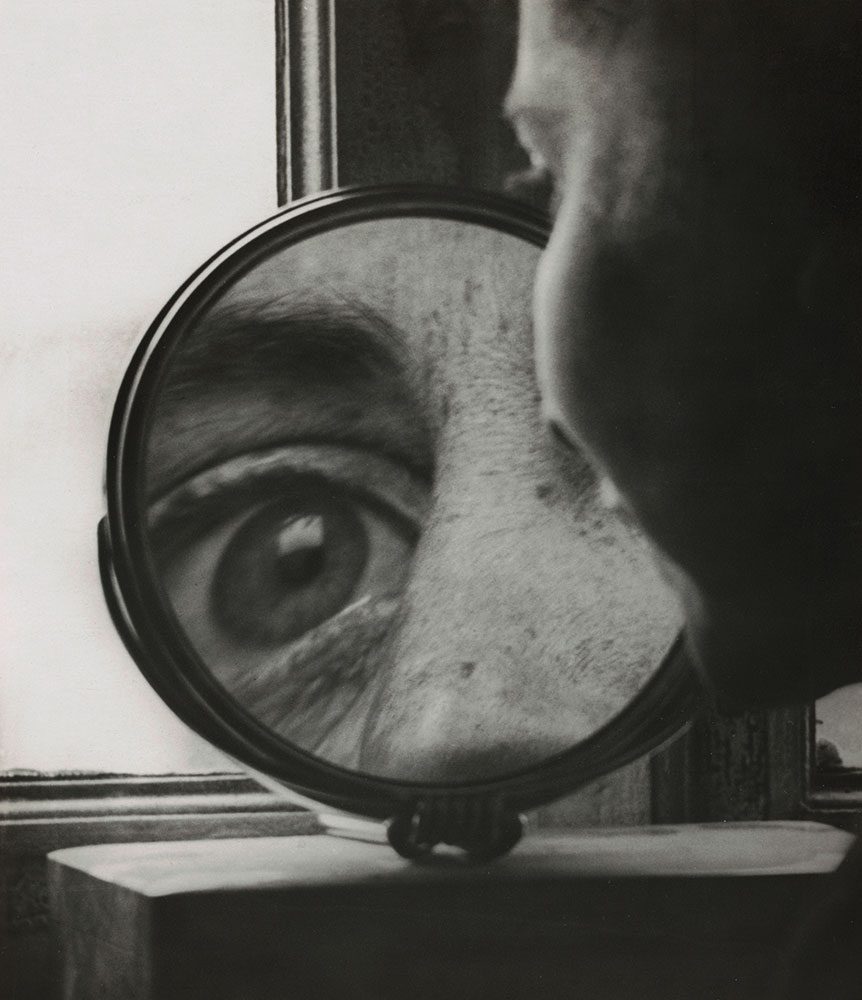
“Seeing is a magical process” — Photography (1927–1947): In 1927, Hausmann embraced photography, not as documentation but as a philosophical tool. Rejecting the formalism of the “New Vision,” he used the camera to train the eye to perceive anew. His photographs—of household objects, nudes, landscapes, and everyday textures—hover between intimacy and estrangement. They invite the viewer to feel what they see. “Seeing is a magical process,” he wrote, and his lens sought to restore that magic to a mechanized world. Even as he denied being a photographer, Hausmann became a pioneering theorist of photographic perception, publishing extensively on technique and aesthetics. He saw the medium as an educational force—capable of reshaping the way people engaged with reality. His photography blurred the line between vision and touch, echoing his Dadaist pursuit of multi-sensory experience.
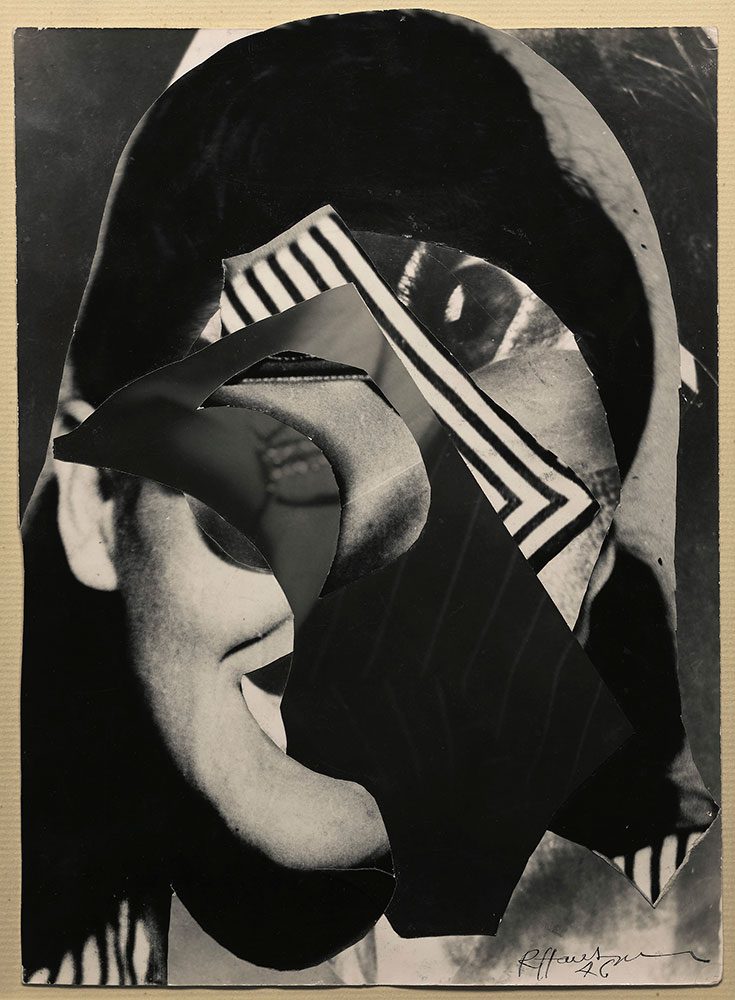
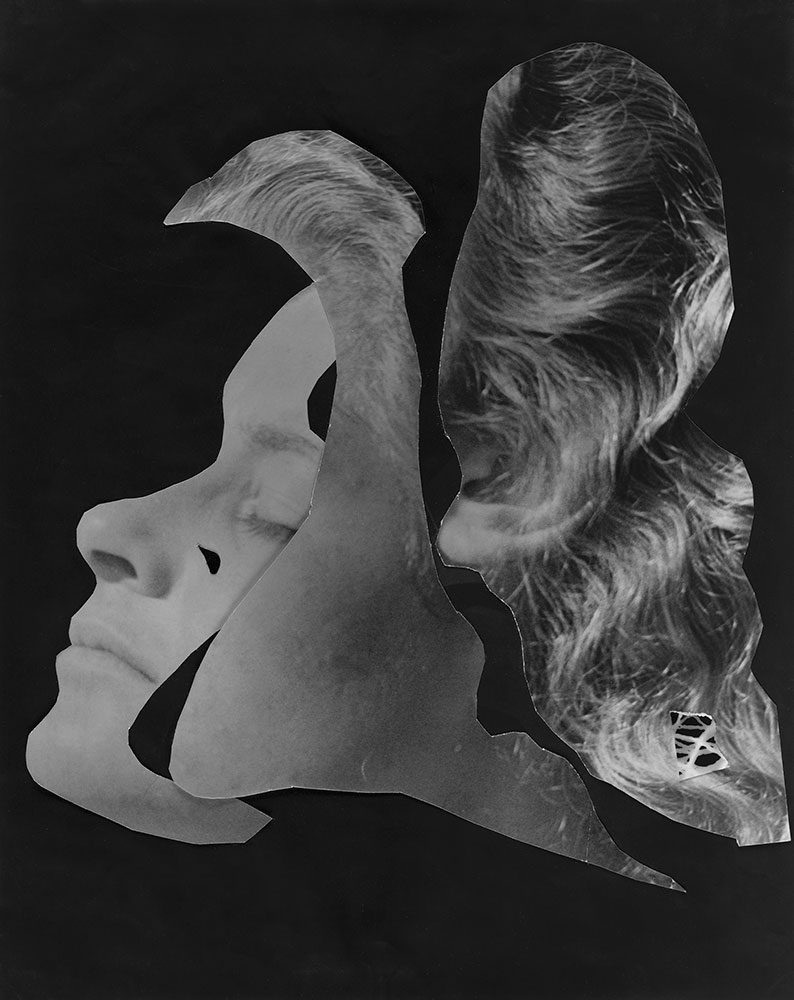
“Make tomorrow happen” — Exile and Renewal (1945–1959): Branded a “degenerate” artist by the Nazis, Hausmann fled Germany in 1933 with his wife, Hedwig Mankiewitz, and his lover, Vera Broïdo, both Jewish. After years of precarious exile, he settled in Limoges, France. There, amidst loss and displacement, he rediscovered creation. Hausmann turned again to collage, photograms, and photo-pictograms—fusing fragments of vision into poetic coherence. In his seventies, he began to paint in organic abstraction, suggesting regeneration and survival. His adaptability, even in exile, was remarkable. The man who had once declared war on tradition continued to invent, transform, and defy despair. His postwar works radiate a quiet resilience—proof that the avant-garde spirit can endure even under erasure.
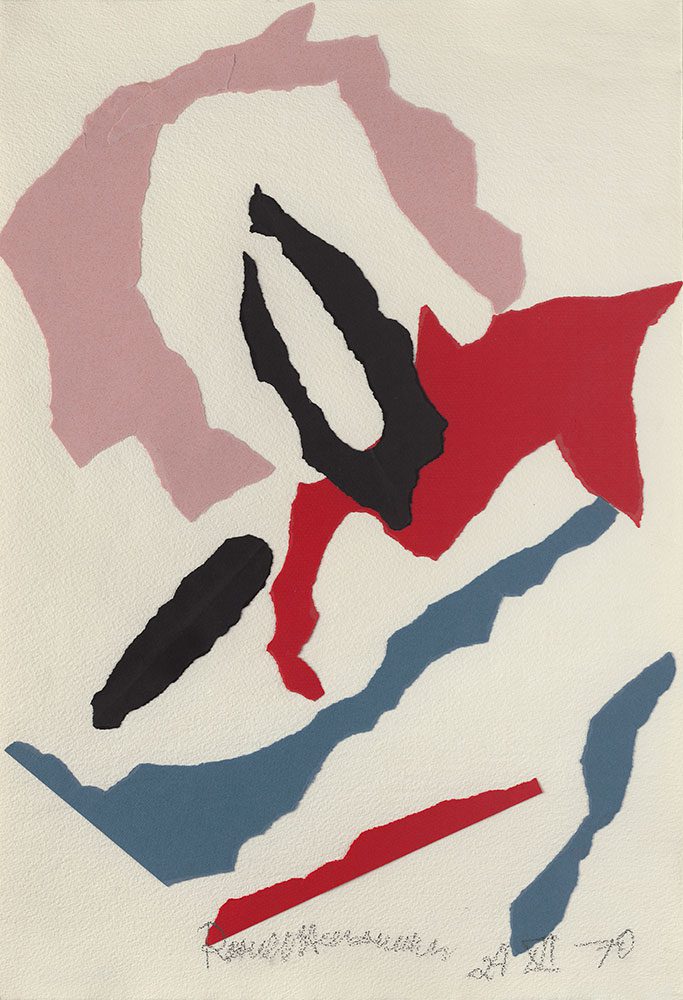
“Old times ahead” — Late Work (1960–1971): In his final decade, as Dada was rediscovered by a new generation, Hausmann revisited his early ideas with renewed vigor. Younger artists from the Neo-Dada and Fluxus movements sought him out as a living link to the origins of the avant-garde. Though he dismissed them as echoes, the dialogues invigorated his late years. Blindness did not deter him; he created his final collages entirely by touch—literal extensions of his lifelong obsession with the unity of the senses.
“Mr. Me” and the Others — Networks of Influence (1913–1971): Hausmann was as polarizing as he was magnetic. Friends and foes alike recognized in him a relentless provocateur. Yet his intellectual generosity fostered vibrant exchanges with figures such as Kurt Schwitters, Hans Arp, Theo van Doesburg, László Moholy-Nagy, and Otto Freundlich. The exhibition’s final section reconstructs these connections through letters, manifestos, and collaborative works, revealing an intricate web of mutual influence. Crucially, the show also highlights the women in his life—not just Höch and Broïdo, but a circle of female artists and thinkers who shaped his work yet were long omitted from the narrative. In acknowledging them, the exhibition reframes Hausmann not merely as the solitary genius of Dada, but as a node within a wider constellation of avant-garde thought.
A century after Dada’s explosive birth, Hausmann’s practice feels startlingly contemporary. His belief that perception is political—that how we see determines how we live—resonates in today’s world of algorithmic vision and sensory overload. His “optophone” prefigures digital interfaces; his “poster poems” anticipate data art; his “sound poetry” foreshadows performance and media experimentation. “Vision. Provocation. Dada.” reminds us that Raoul Hausmann’s legacy is not confined to art history—it is a living challenge to rethink the boundaries between art, life, and technology. Tireless in his pursuit of change, Hausmann was, and remains, a radical of the senses.
Photo: Raoul Hausmann, OFFEAH, Typographical Arrangement, Poster Poem, 1918, © VG Bild-Kunst, Bonn 2025, Repro: © Berlinische Galerie/Anja Elisabeth Witte
Info: Berlinische Galerie-Museum for Modern Art, Photography and Architecture, Alte Jakobstraße 124-128, Berlin, Germany, Duration: 8/11/2025-16/3/2026, Days & Hours: Wed-Mon 10:00-18:00, https://berlinischegalerie.de/