TRIBUTE: John Akomfrah-Listening All Night To The Rain, Part II
John Akomfrah is a hugely respected artist and filmmaker, whose works are characterised by their investigations into memory, post-colonialism, temporality and aesthetics and often explore the experiences of migrant diasporas globally. Akomfrah was a founding member of the influential Black Audio Film Collective, which started in London in 1982 alongside artists David Lawson and Lina Gopaul, who he still collaborates with today alongside Ashitey Akomfrah as Smoking Dogs Films (Part I).
By Efi Michalarou
Photo: Museo Nacional Thyssen-Bornemisza
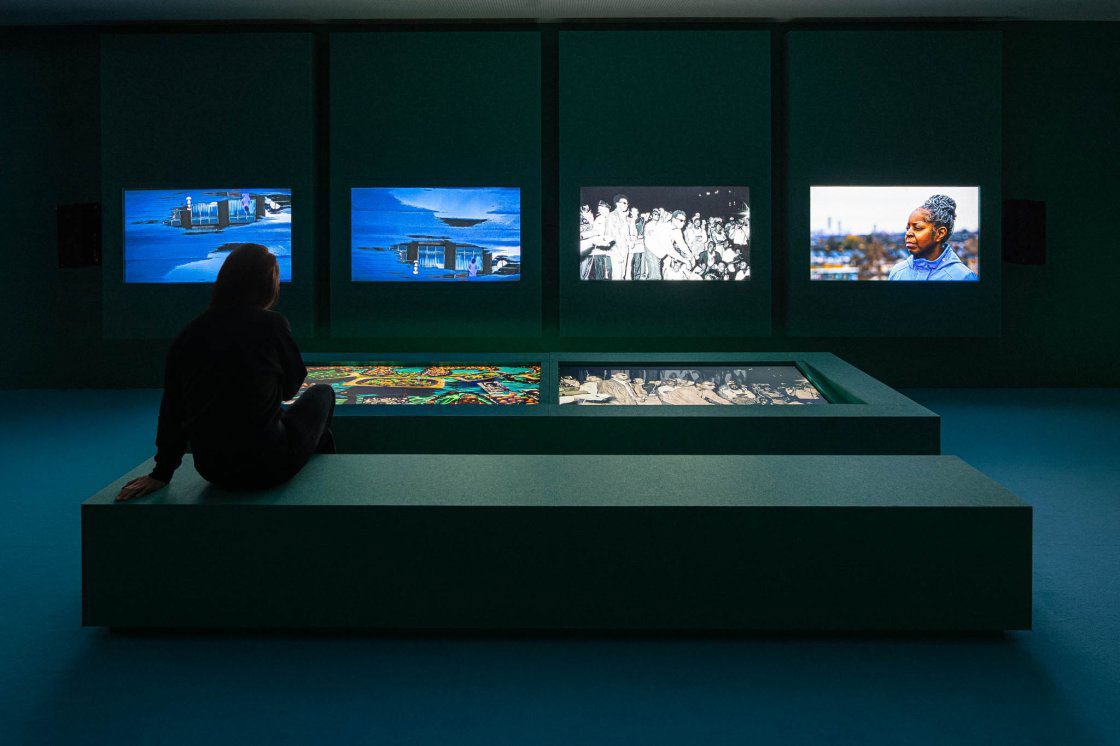
When John Akomfrah unveiled “Listening All Night To The Rain” at the British Pavilion of the 2024 Venice Biennale, it was immediately recognised as one of the artist’s most ambitious undertakings to date—a visual symphony of sound, image, and memory. Now reimagined for the Museo Nacional Thyssen-Bornemisza, the installation continues Akomfrah’s exploration of post-colonial legacies, ecological precarity, and the politics of aesthetics, while placing renewed emphasis on the act of listening itself. The exhibition’s title, borrowed from the 11th-century Chinese poet and artist Su Dongpo, evokes both exile and transience. Like Su Dongpo’s meditations on impermanence, Akomfrah’s work contemplates what it means to endure and to bear witness in a fractured world. It proposes that listening—beyond merely hearing—is a radical gesture: an act of attention and empathy that becomes a form of activism.
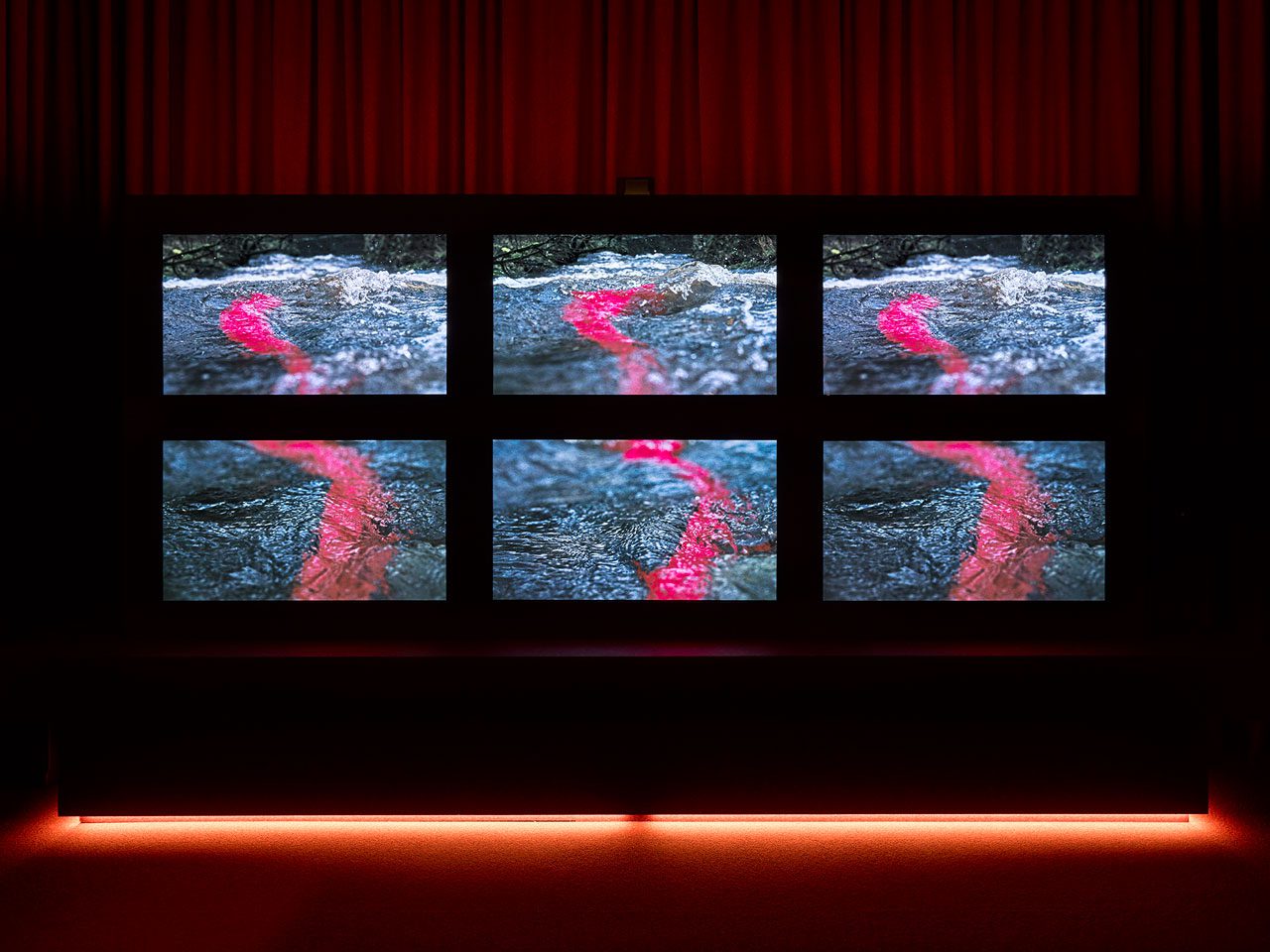
Structured into five overlapping multimedia “cantos,” Listening All Night To The Rain draws upon the notion of acoustemology, a term coined by ethnomusicologist Steven Feld to describe how sound shapes our understanding of the world. Across these movements, Akomfrah interlaces newly filmed sequences with archival images, fragments of text, and recordings sourced from vast international collections. The result is a cinematic palimpsest where history, myth, and personal memory intertwine. Water recurs as the exhibition’s connective tissue—appearing as mist, rain, flood, and sea. Like sound, it flows, circulates, and returns, echoing the dispersal of diasporic communities and the fluctuations of time. Through this fluid motif, Akomfrah collapses rigid distinctions between past and present, human and non-human, realism and dream. The physical staging mirrors this conceptual layering. Each installation unfolds within sculptural altarpieces that recall religious architecture, their screens embedded within richly colored fields inspired by Mark Rothko. These immersive environments transform the act of viewing into one of reverie and contemplation, suggesting that abstraction, too, can illuminate the rawness of human experience.
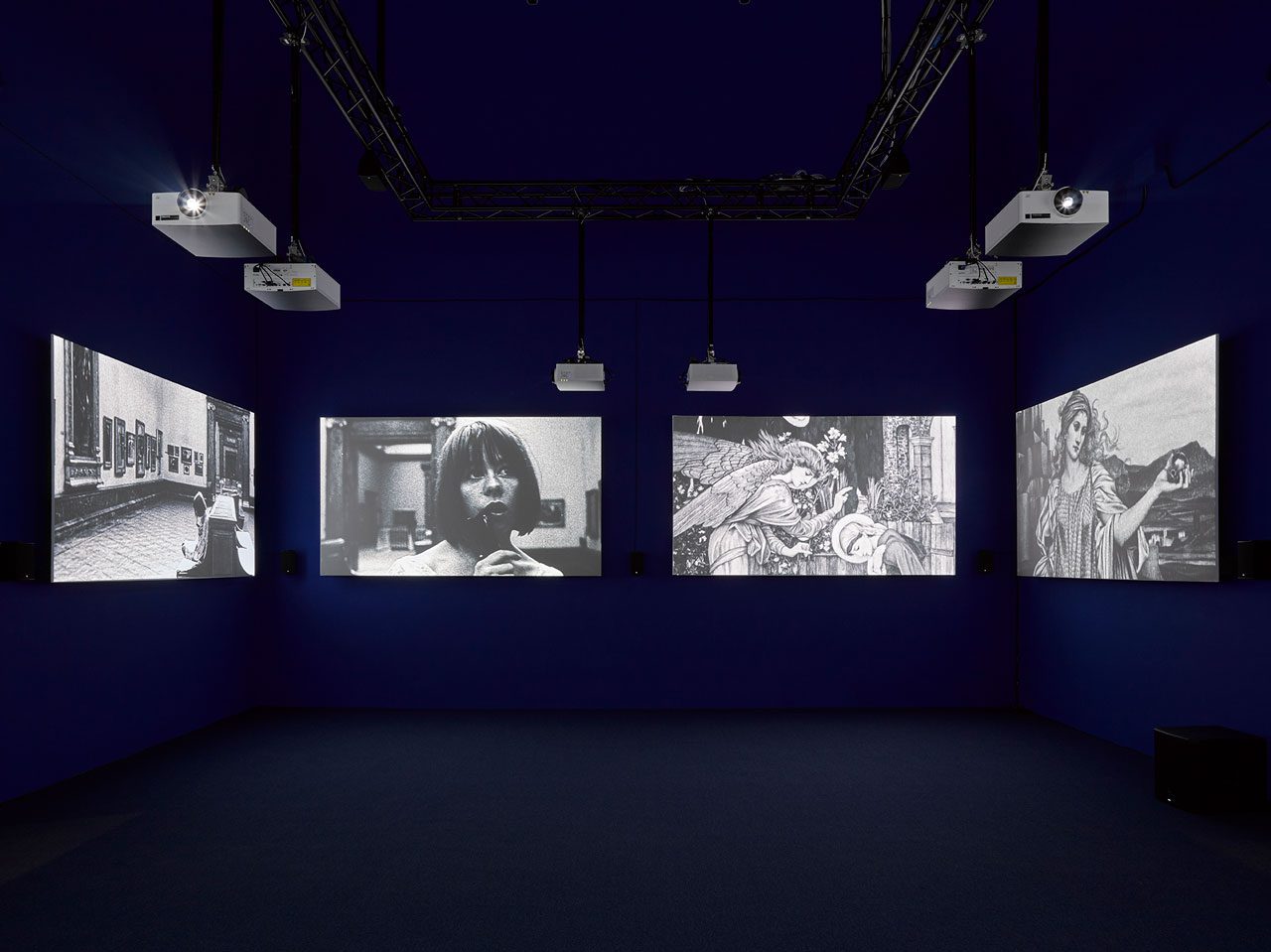
In “Canto I”, Akomfrah turns his gaze toward the Global South, foregrounding voices long marginalised by imperialism. Through a montage of protest imagery, colonial archives, and lyrical re-enactments, he constructs a visual requiem for histories of displacement and endurance. The museum’s neoclassical architecture becomes part of the narrative—a stage for intervention rather than preservation.
By contrast, “Canto IV “ unfolds along a coastal shoreline, populated by spectral figures and the detritus of past lives—rubber ducks, butterfly specimens, fruits, obsolete listening devices. Beneath the water, shoals of fish dart through sonic layers of sea shanties and shipbuilding rhythms. Here, Akomfrah maps the intertwined histories of exploration, labour, and exile, transforming the sea into both graveyard and archive.
“Canto VI” revisits the anti-colonial struggles of Africa and Asia from the 1940s to the 1970s—the Mau Mau rebellion in Kenya, the Congo’s fight for independence, Nigeria’s civil war, and the Partition of India. Through archival film and staged tableaux, these histories are reframed through diasporic memory, revealing how the trauma of empire continues to reverberate across generations.
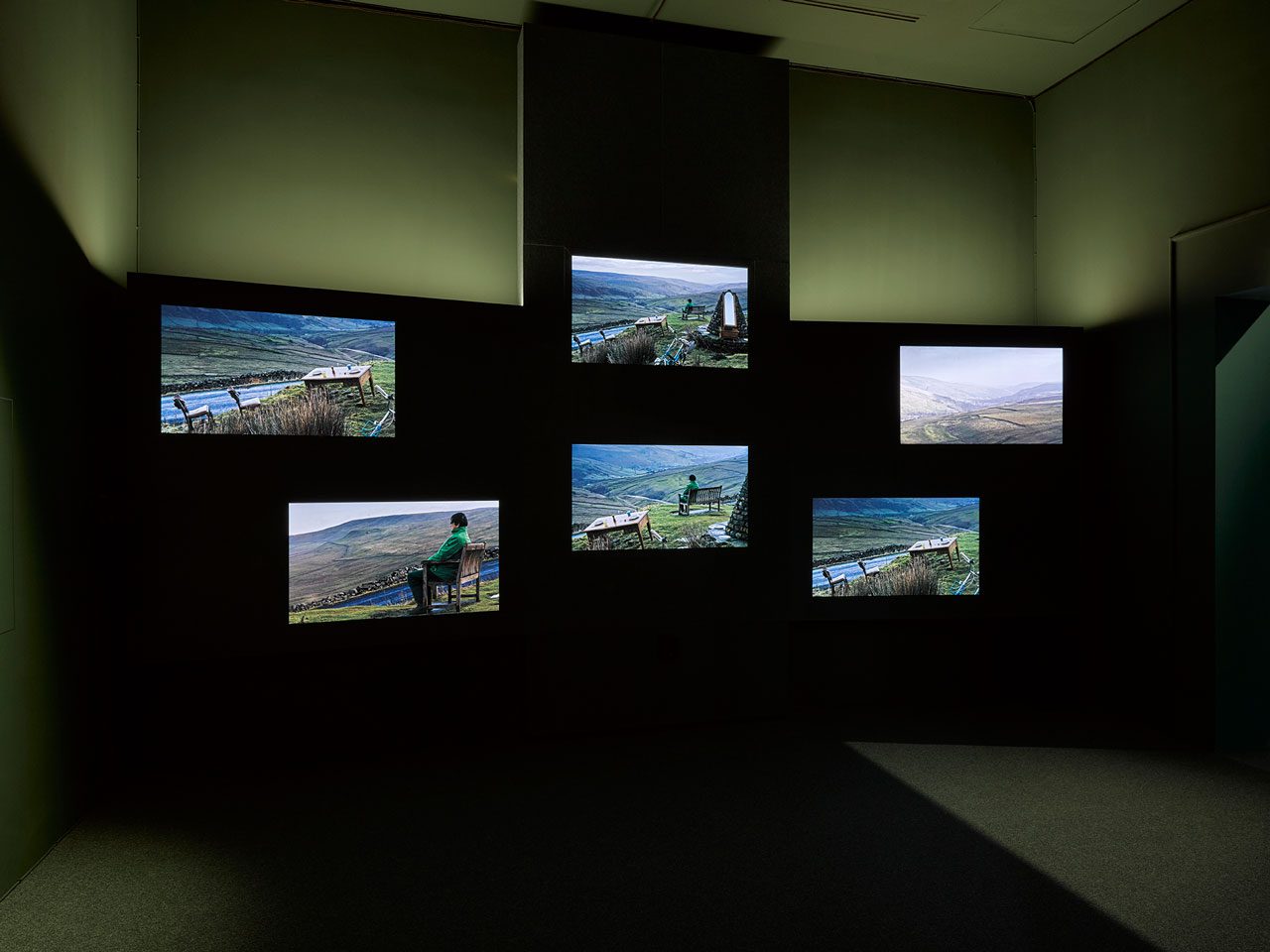
Meanwhile, “Canto VII” addresses the Windrush generation and the lived realities of postwar migration to Britain. Against landscapes filmed in Yorkshire and Scotland, Akomfrah captures moments of resilience and tenderness amid systemic racism and economic decline. Speeches by Martin Luther King Jr., Angela Davis, and Malcolm X punctuate the sequence, connecting the Black British experience to global movements for justice.
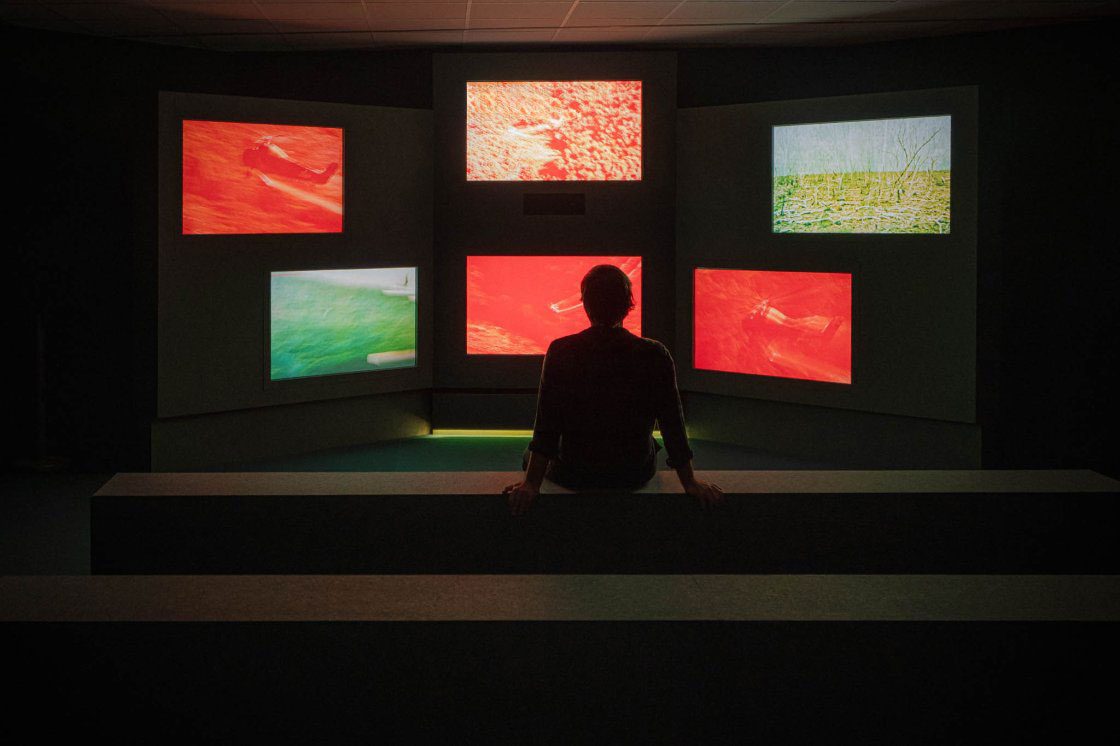
Finally, “Canto “VIII” confronts the environmental aftermath of war. Juxtaposing footage from Korea and Vietnam with surreal, dreamlike compositions, Akomfrah traces the continuum between military conflict and ecological devastation. The work becomes a lament for the planet itself, an elegy for lands and lives scarred by empire and industry.
Through its intricate layering of sound and image, “Listening All Night To The Rain” positions listening not as passive reception but as a political stance. Akomfrah’s method—part bricolage, part elegy—demands that viewers slow down, absorb, and reflect. His films remind us that histories of violence, migration, and ecological ruin are not discrete events but overlapping frequencies in a shared global soundscape. In its fusion of the poetic and the political, Akomfrah’s work extends the lineage of artists who use the gallery as a site of reckoning and repair. By inviting us to listen—all night, to the rain and beyond—he asks what it might mean to attune ourselves to the murmurs of the world: to the whispers of the dispossessed, the echoes of forgotten lands, and the fragile harmonies that still persist amid the noise.
Photo: John Akomfrah, Listening All Night To The Rain, Installation view Museo Nacional Thyssen-Bornemisza-Madrid, 2025, Image: © Maru Serrano, Courtesy the artist and Museo Nacional Thyssen-Bornemisza
Info: Curator: Tarini Malik, Museo Nacional Thyssen-Bornemisza, P.º del Prado, 8, Madrid, Spain, Duration; 4/11/2025-8/2/2026, Days & Hours: Mon 12:00-16:00, Tue-Sun 10:00-19:00, www.museothyssen.org/
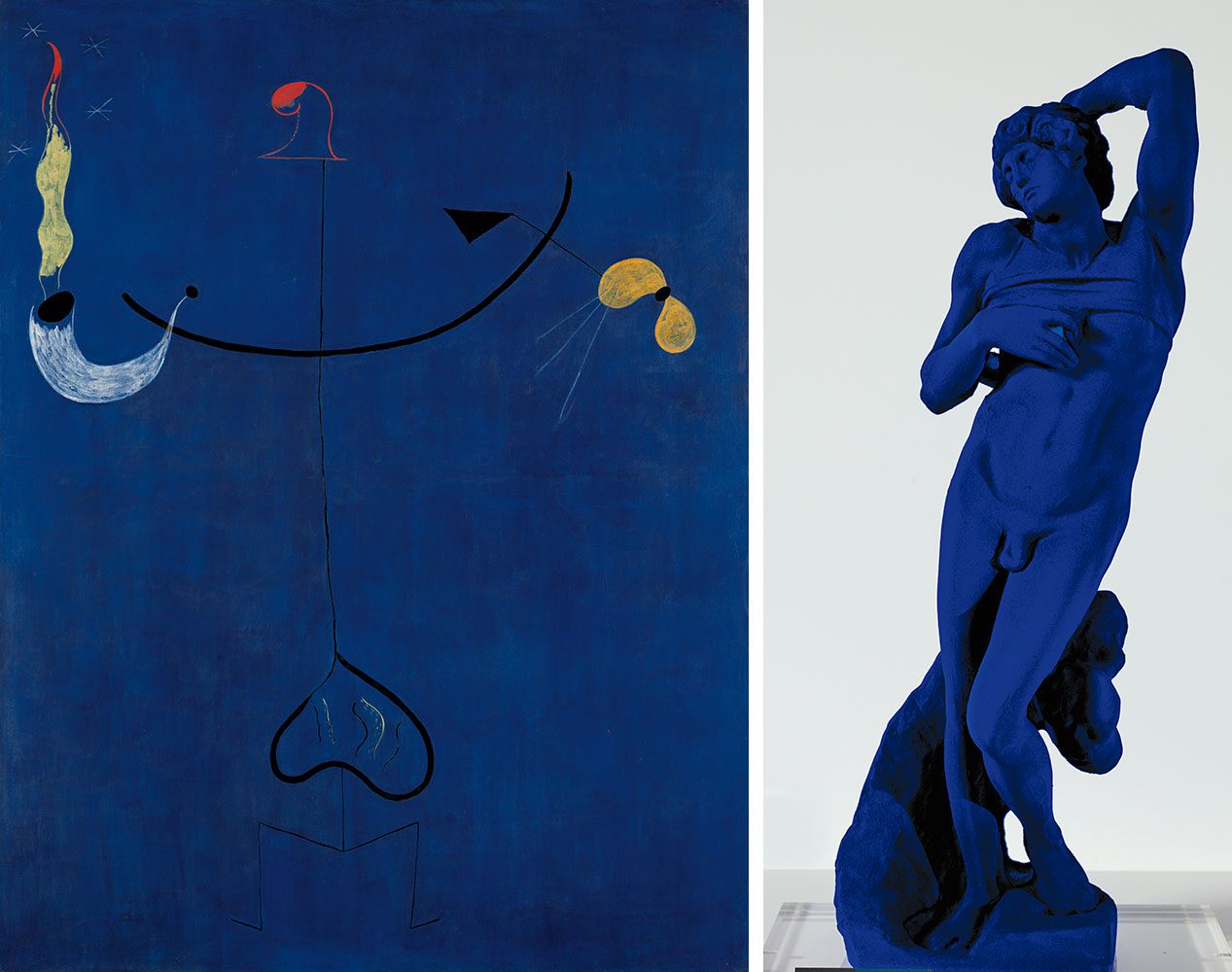
Right: Yves Klein, The Dying Slave (by Michelangelo) n.d, Blue pigments and synthetic resin on plaster. 58 cm. Carmen Thyssen Collection. © The Estate of Yves Klein c/o VEGAP, 2025