PRESENTATION: Thomas Hirschhorn-Cartographies of the Precarious
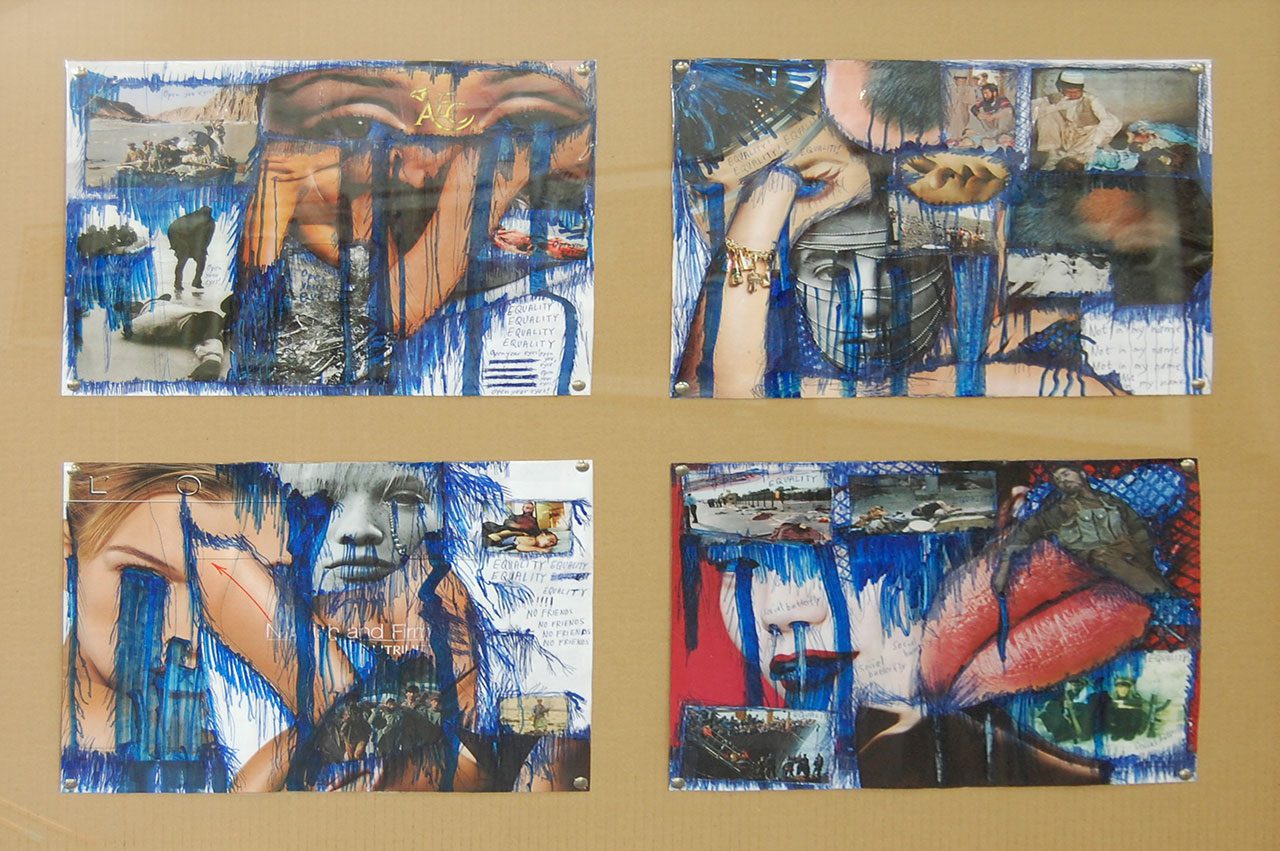
When Thomas Hirschhorn left Zurich for Paris in 1983, he carried with him not only the lessons of his formative years at the Kunstgewerbeschule Zürich but also a radical belief: that art must remain energetically, insistently entangled with the world. Since the mid-1980s, this conviction has manifested in what he calls “displays”—makeshift stalls, windows, and sculptural environments cobbled together from cardboard, aluminum foil, packing tape, and photocopied images. These humble materials, combined with ballpoint marginalia and newspaper clippings, vibrate with Hirschhorn’s recurring urgencies: culture, economy, politics, religion. In other words, the substance of daily life.
By Efi Michalarou
Photo: Museo Helga de Alvear Archive
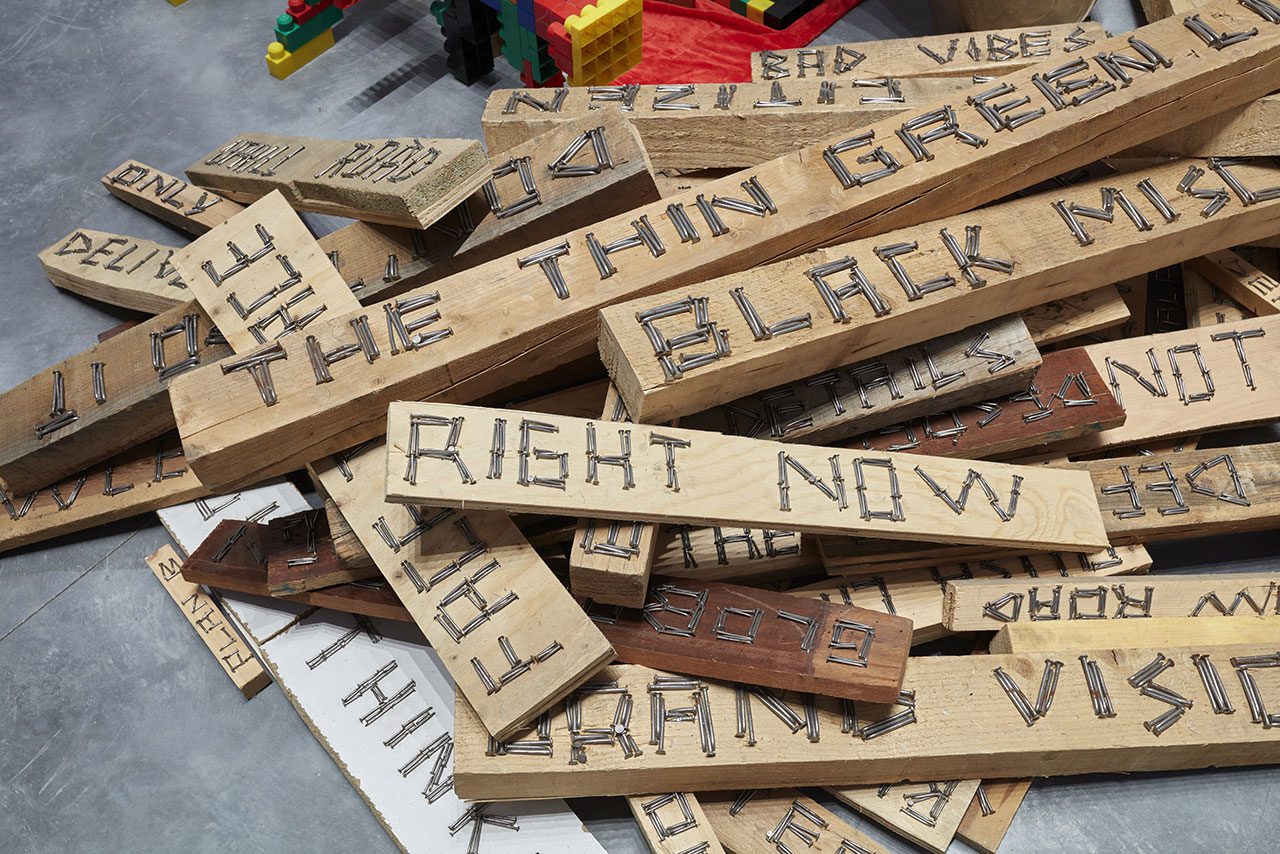
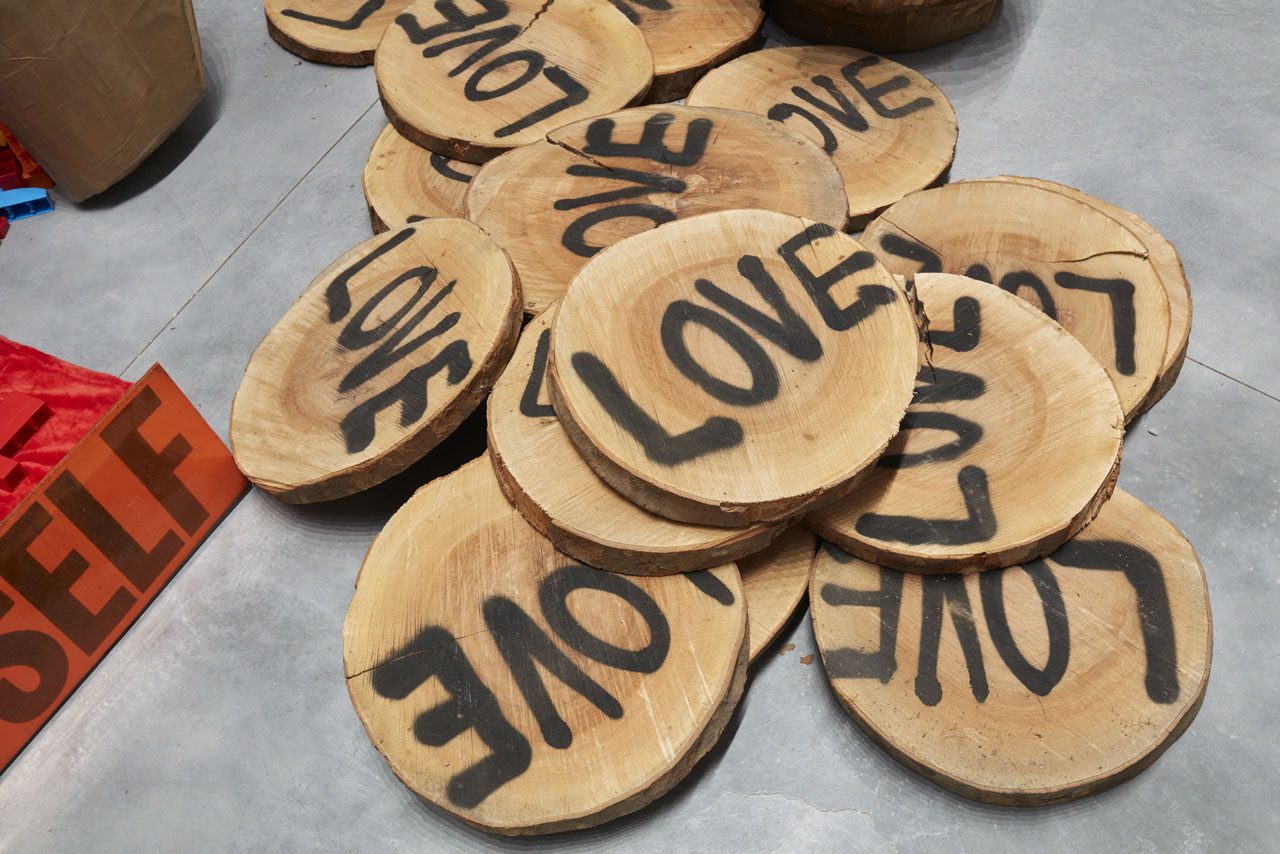
At Museo Helga de Alvear in Cáceres, Spain, these urgencies unfold across “My Atlas # Our Atlas,” Hirschhorn’s first major anthological exhibition in two decades. Rather than surveying a career by tidy chronology, the show proposes a living, breathing constellation of ideas—an unruly terrain of works past and present that asks viewers to navigate not a timeline but a worldview. At the heart of the exhibition is “My Atlas” (2025), Hirschhorn’s ambitious and deeply personal response to Aby Warburg’s “Mnemosyne Atlas”. Spanning 45 large cardboard panels sheathed in black plastic, the work operates as both map and manifesto. Images of Hirschhorn’s artworks—some iconic, others previously unseen—are juxtaposed with display cases holding original pieces and additional works arranged directly on the floor. True to the artist’s ethos, My Atlas rejects linearity. It remains, as Hirschhorn describes, “non-chronological, infinite, in constant development, evolving, and open to completion.” This refusal of finality is central: the work insists on art as a porous system, one that grows through dialogue, friction, and the viewer’s own interpretive labor. In an age of algorithmic sequencing and prescriptive narratives, “My Atlas” stands as a radical assertion of visibility—“what is to be seen and what is given to be seen.” A second new work, “Gravity, Mass and Democracy” (2025), extends Hirschhorn’s inquiry into the interplay of physics and politics. Suspended like a precarious membrane between the museum’s ground and first floors, a horizontal net supports taped, cardboard forms marked with percentages—objects that hover, sag, or plummet through to the floor below. Visitors walk beneath and alongside the structure, experiencing its tensions viscerally.
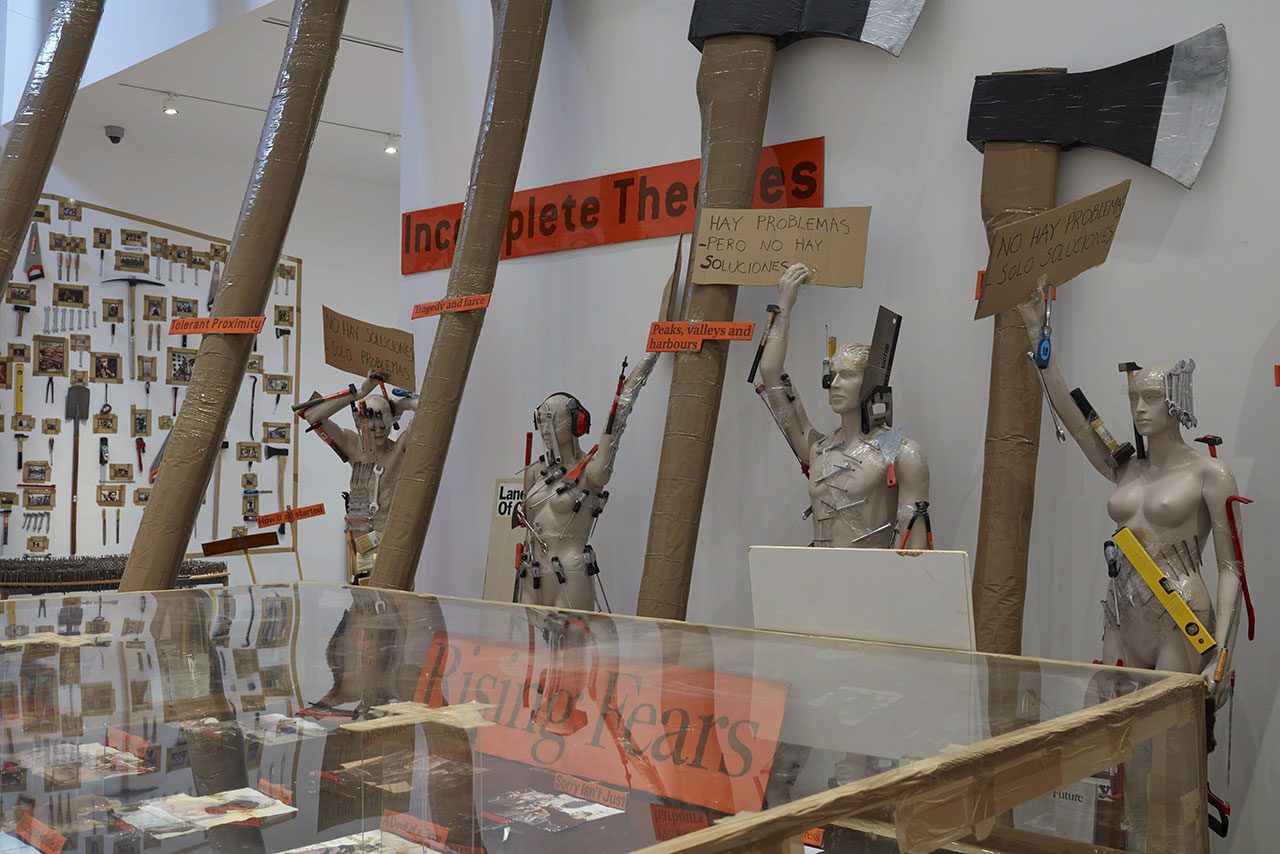
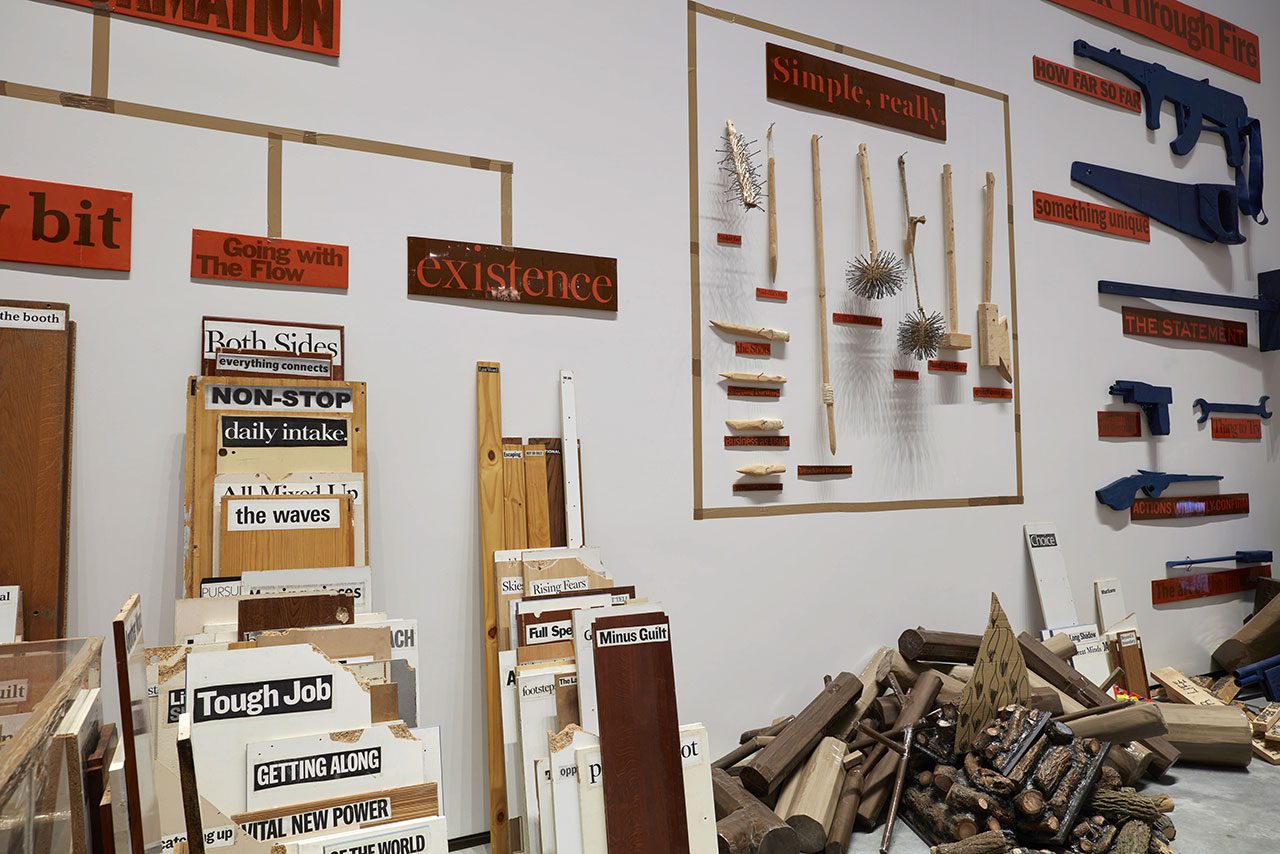
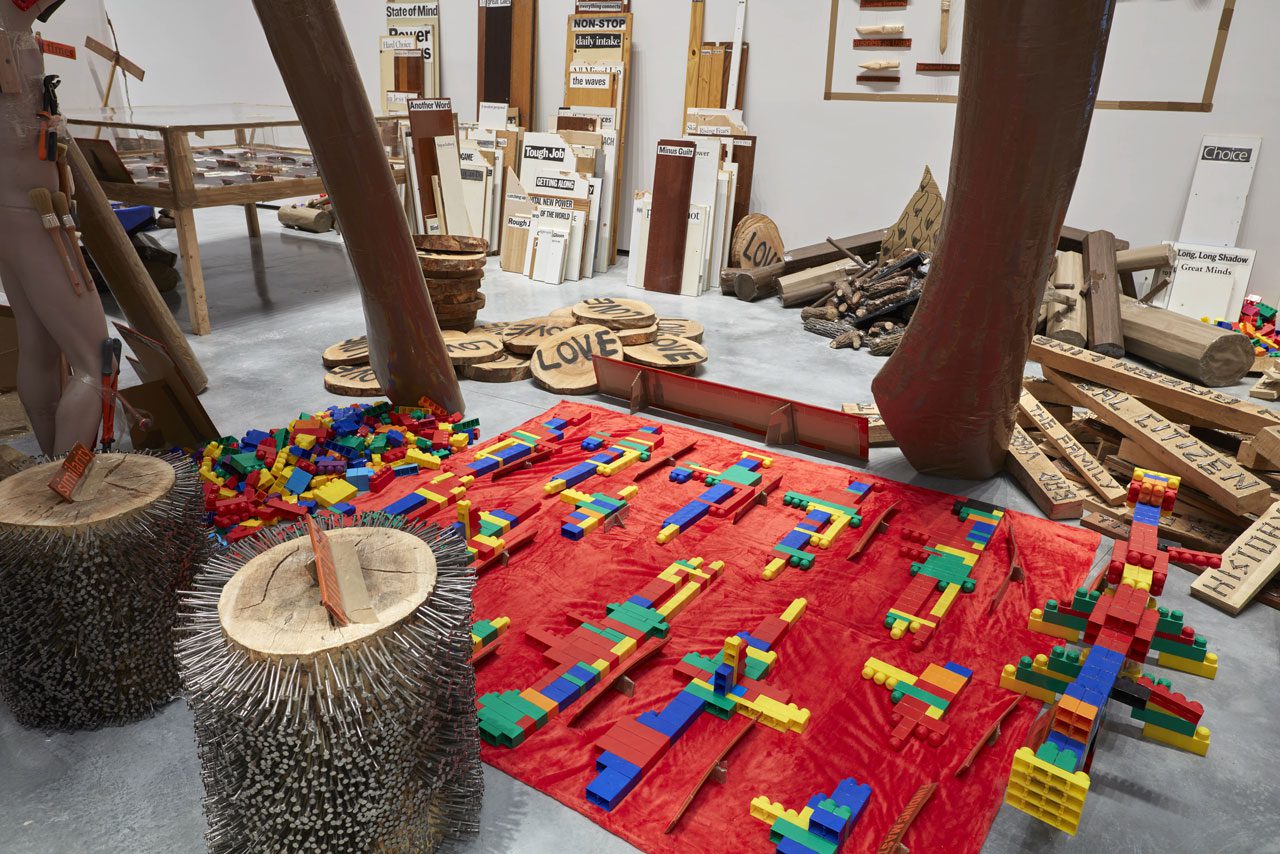
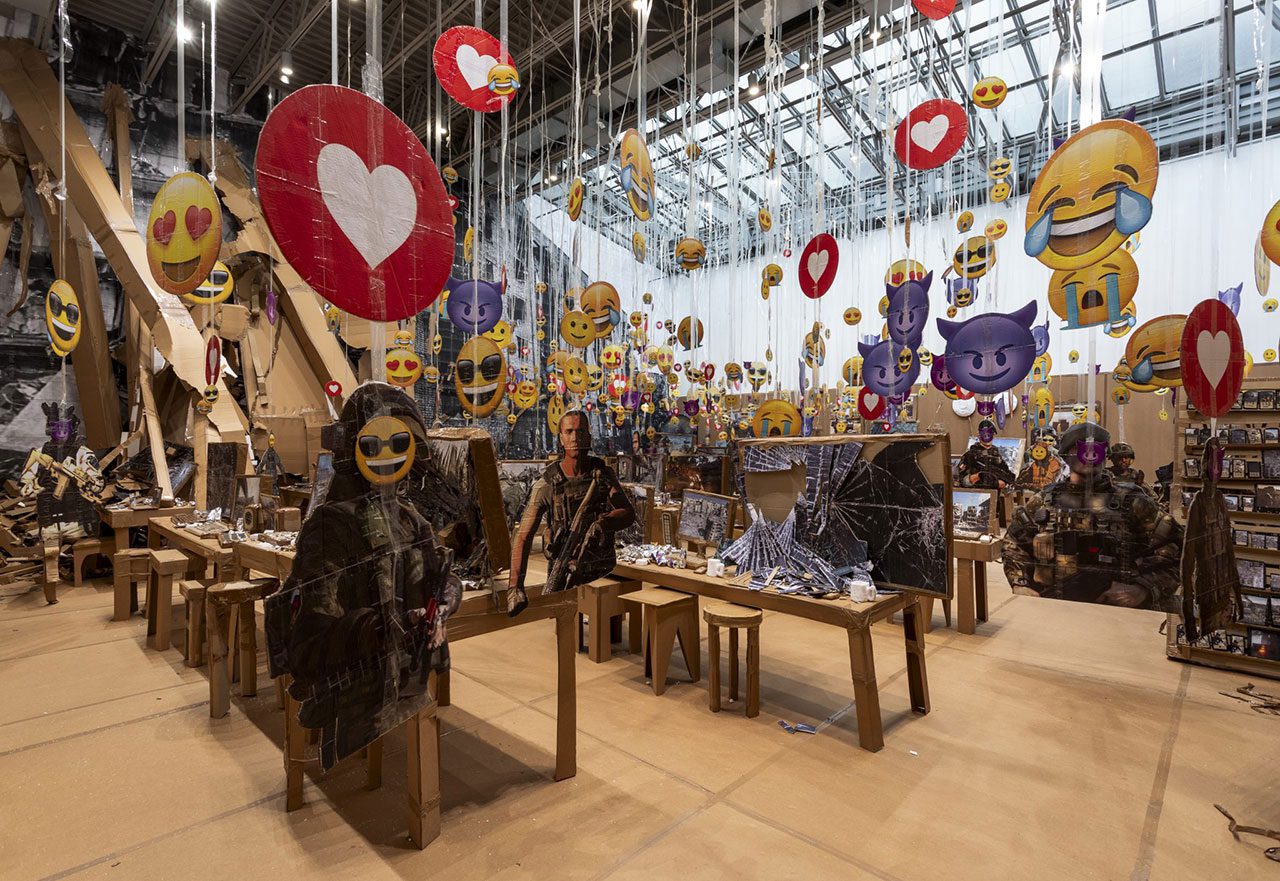
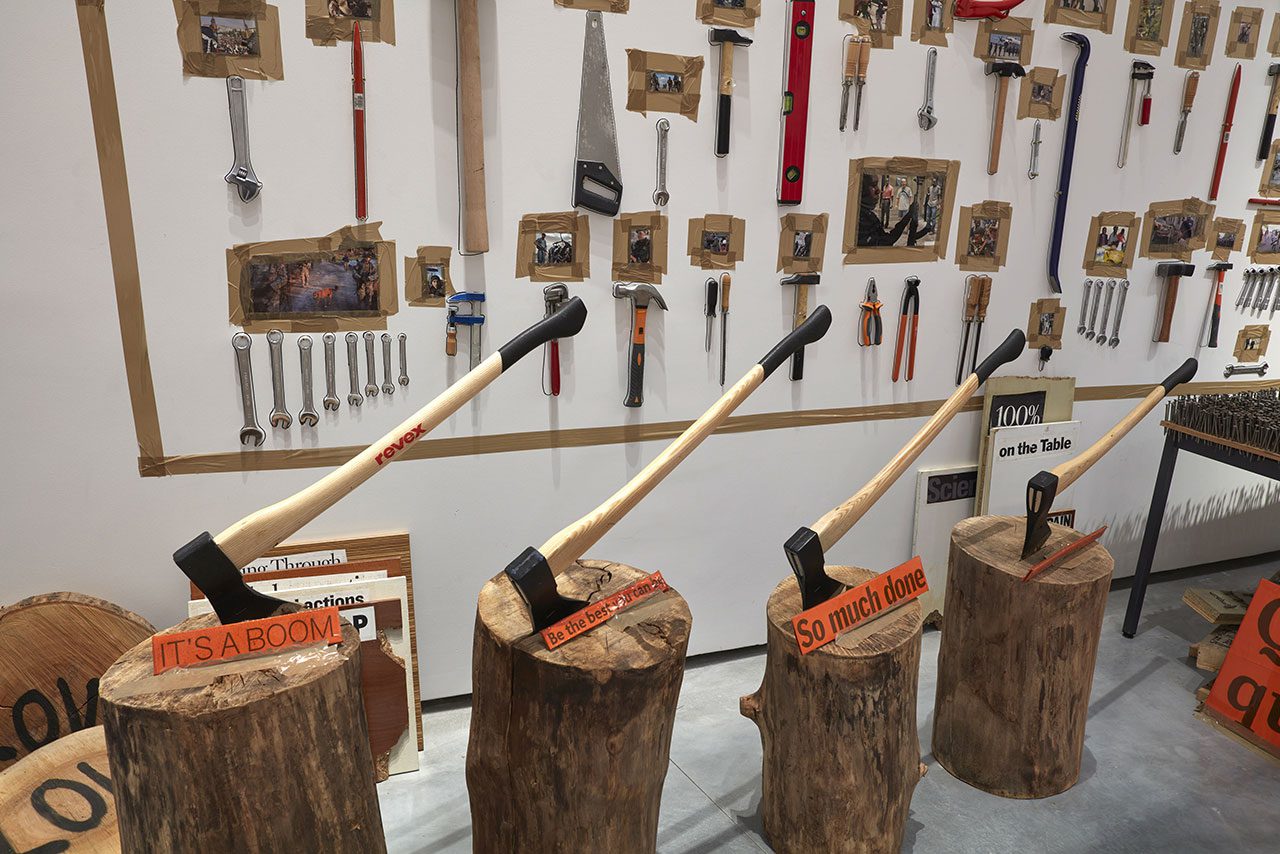
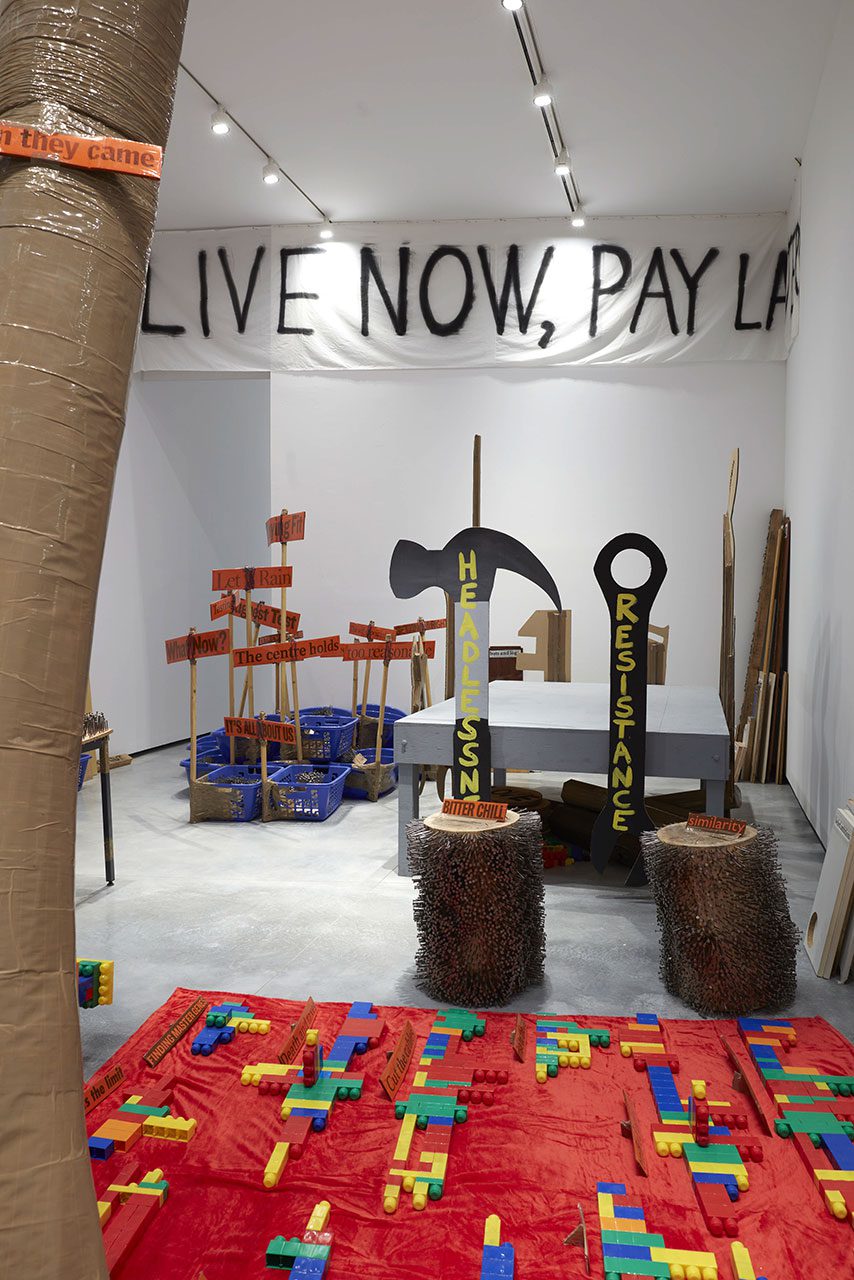
Here, Hirschhorn turns the notion of “mass” into a philosophical hinge: between material density and political collectivity, between the literal pull of gravity and the conceptual weight of democracy. The sculpture invites viewers not only to observe but to inhabit its contradictions. Encountered at the museum’s entrance, the monumental “Fake it, Fake it – till you Fake it”. (2024) acts as a pointed entry into the exhibition’s political present. Constructed of cardboard “computers,” “credit cards,” and other props that parody contemporary digital life, the sculpture probes the ideological machinery behind virtuality, social media, and AI. In an era where authenticity is contested territory, Hirschhorn’s analog fragility becomes a provocation: What does it mean to make art in times of war and disinformation? What remains real when the fake is omnipresent? The work’s materiality—its deliberate flimsiness—becomes a critical stance. Cardboard, tape, and foil anchor the viewer in a physical world that resists abstraction, reminding us that precarity can also be a form of truth-telling. The exhibition also revisits “Power Tools” (2007) from the Helga de Alvear Collection, reinstalled within a newly conceived environment: “Power Tools – Workshop” (2025). More than a display, the workshop invites visitors to handle books, tools, and materials, encouraging them to construct their own provisional works. Participation becomes a form of understanding. Hirschhorn’s belief in “doing” as a democratic force—art as shared agency rather than passive consumption—resonates throughout this space. “My Atlas # Our Atlas” is ultimately a proposition: that Hirschhorn’s work is not a closed universe but a shared terrain, a cartography built through mutual encounters. The exhibition makes visible the intellectual and emotional architecture of an artist who has spent four decades wrestling with form, politics, and the ethics of representation. In a world increasingly defined by fracture—digital, social, geopolitical—Hirschhorn’s steadfast commitment to fragile materials and expansive thought feels both urgent and deeply humane. His atlas is not simply his own; it becomes, as the title promises, ours.
Photo: Hirschhorn Thomas, Power Tools, 2007, Installation with diverse materials and videos, Length 800 cm, Minimum height must be 560 cm, © Hirschhorn, Thomas, Museo de Arte Contemporáneo Helga de Alvear, Courtesy the artist and Museo de Arte Contemporáneo Helga de Alvear
Info: Curator: Sandra Guimarães, Museo de Arte Contemporáneo Helga de Alvear, Calle Pizarro 10, Cáceres, Spain, Duration: 14/11/2025-20/5/2026, Days & Hours: Tue-Sat 10:00-14:00 & 17:00-20:00, Sun 10:00-14:30, www.museohelgadealvear.com/