
PRESENTATION: Theorimata 4-Botanologies: Ecology issues in contemporary visual art practices
The exhibition Theorimata 4 organized by AICA Hellas takes place for the first time at the Municipal Gallery of Athens, presenting artistic proposals by prominent art critics from Greece. This important institution, seen as a continuation of the former Panhellenic exhibitions, returns biennially to offer a representative snapshot of contemporary Greek art. As highlighted by AICA’s President and founder of the Theorimata institution, Emmanuel Mavrommatis, in the exhibition catalogue, the initiative preserves its independence and remains free from both private and state interference when it comes to artistic selections.
By Valia Katsimpa
Photo: Valia Katsimpa’s Archive
This year’s exhibition, entitled “Botanologies: Ecology issues in contemporary visual art practices”, conceived by art theorist and curator Matina Charalampi, focuses on a critical approach to ecology, emphasizing the interaction between art and science as well as the collective nature of artistic dialogue. The participating artworks act as archives—sometimes scientific, sometimes poetic, sometimes activist—broadening the field of art and environmental awareness in our time.
The opening evening was marked by a short yet moving speech by AICA’s president, who reflected on the history and significance of “Theorimata” and shared his optimistic vision for its future—a vision of the institution evolving further and acquiring a permanent exhibition venue, such as the Athens Municipal Gallery space hosting it this year.
While all artworks sparked my interest, some inevitably stood out for the quality of their visual approach and conceptual depth. Sozita Goudouna’s curatorial proposal, featuring artist Kleitia Kokalari, explores through the power of a wounded abstraction the tragic transformation of the natural system itself into a scapegoat, systematically sacrificed on the altar of economic growth and material prosperity.
Next, under the curation of Katerina Kazolea, Stavros Panagiotakis presents a hybrid painterly world. The heron’s figure traverses a colorful, ever-shifting landscape of vegetation—fragile yet enduring—capturing nature as a moving palimpsest.
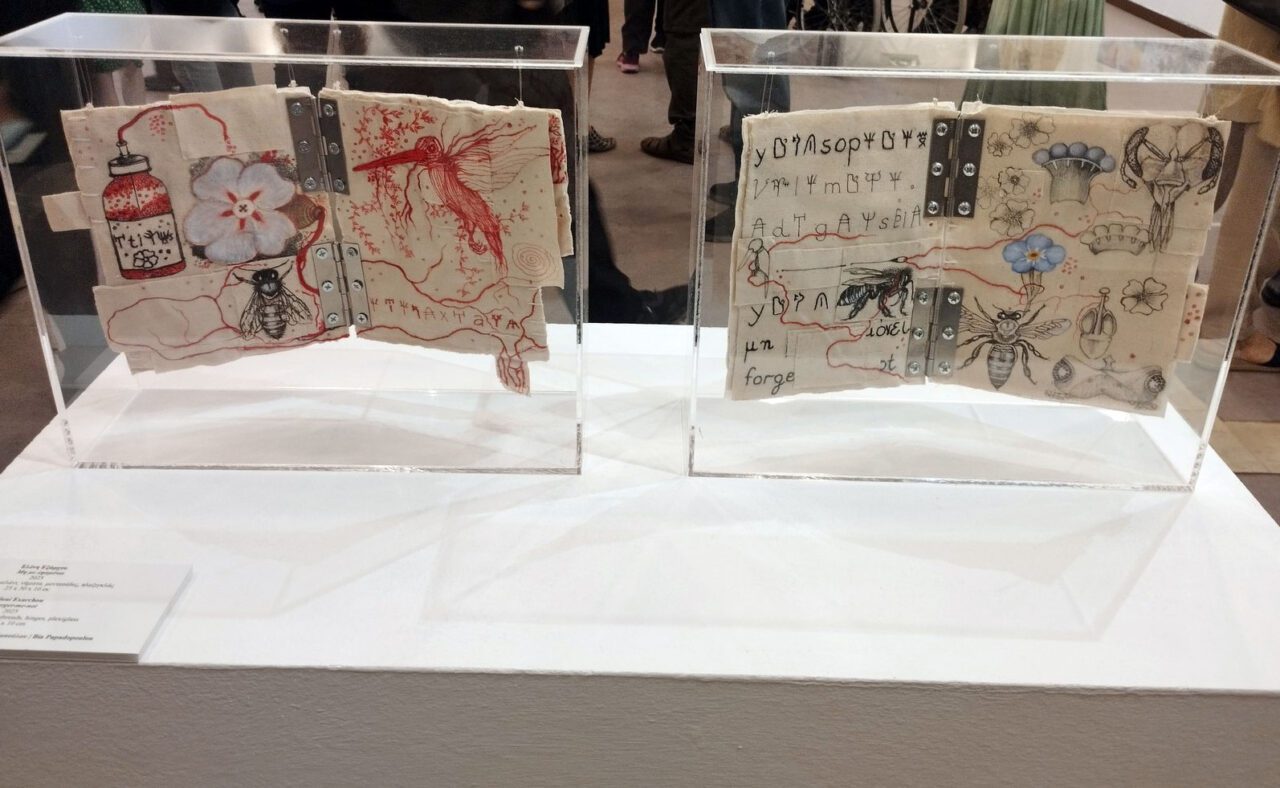
Eleni Exarchou’s coded textile narrative (curated by Bia Papadopoulou) combines fabric, ink, and plexiglass, highlighting the detail and memory of ecosystems through beekeeping motifs and flowering plants. Her work functions as a visual “diary,” mapping interrelations among insects, linguistic systems and flora.
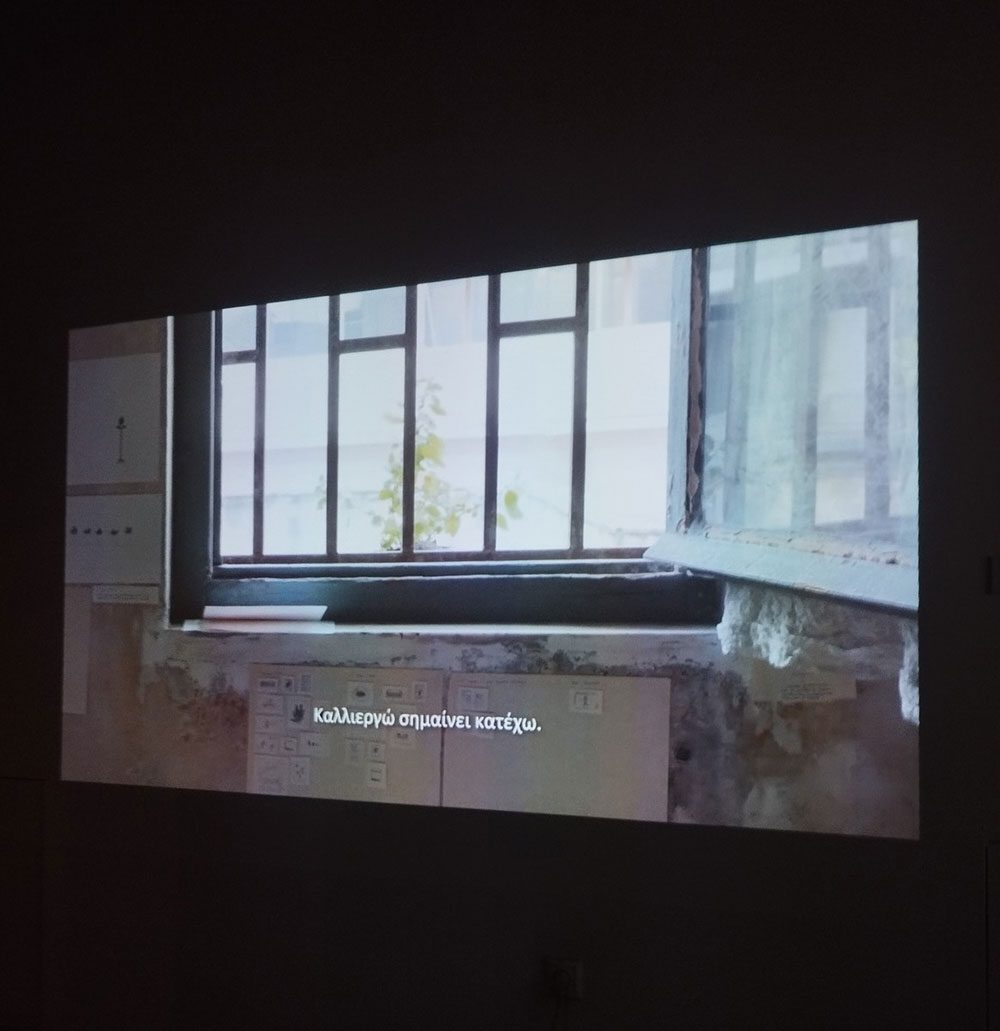
The installation by Athina Koumparouli, curated by Elli Leventaki, moves between a fleeting past and an undefined future. Using organic materials, metal and glass, the artist creates an allegorical ecosystem where decay and resilience coexist. The polarity of “preservation and destruction” that runs through Koumparouli’s time capsules finds subtle echoes in Catriona Gallagher’s video work (curated by Elli Paxinou), which turns its gaze toward “perdikaki”, a modest weed overlooked in the Greek countryside. Gallagher’s work documents this seemingly insignificant vegetation, approaching biodiversity through collection, observation and poetic documentation. Ambiguous, lyrical questions—such as “how can one preserve something without killing it?”—permeate her video.
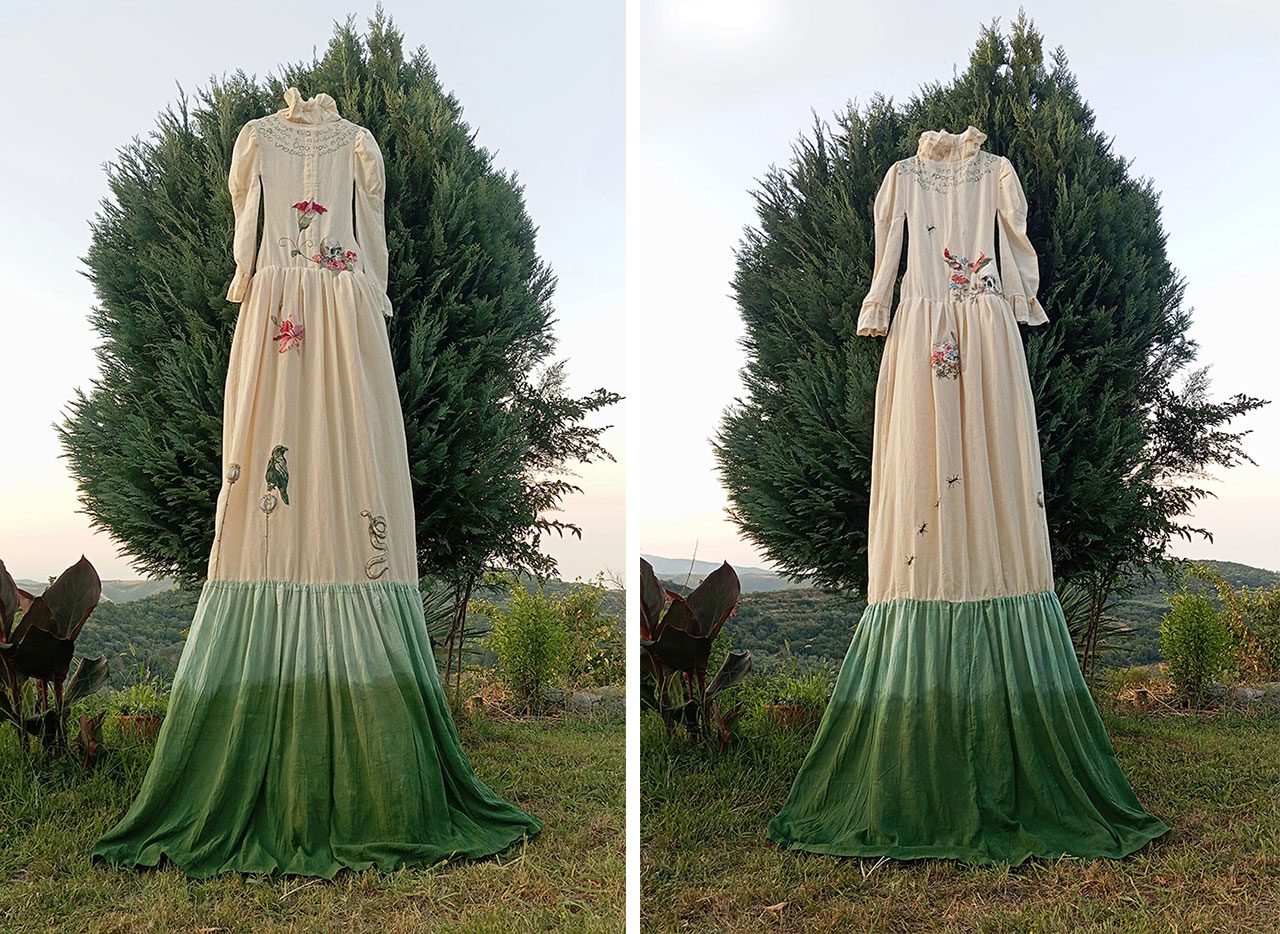
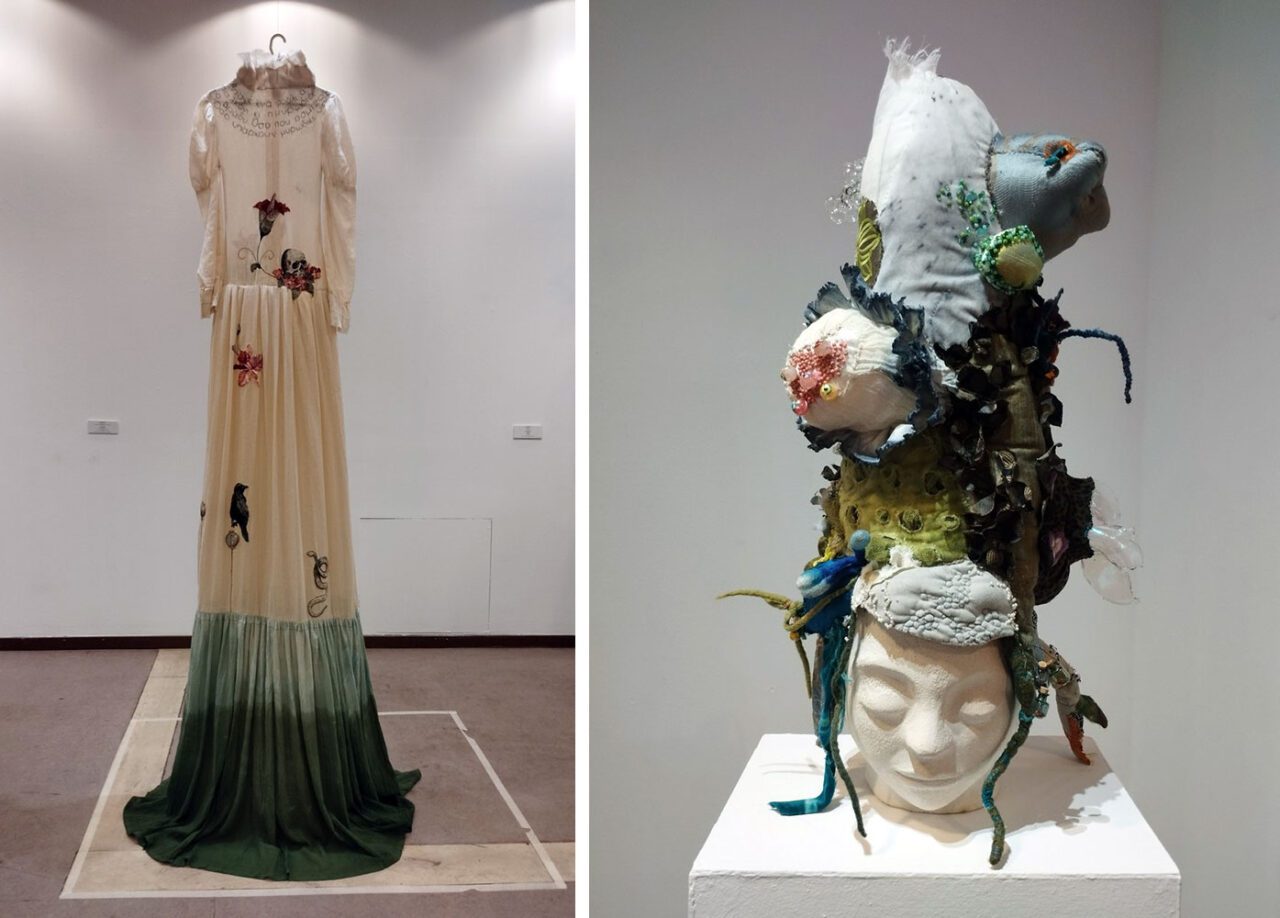
Suspended at the heart of the exhibition, Iphigenia Sdoukou’s floating dress (curated by Efi Michalarou) hovers between presence and disappearance—a lyrical equilibrium between life and death, blossoming and decay, hope and loss. Entitled “Flora in Periculo est, Sdoukou” revisits Botticelli’s “Primavera”, translating its archetypal image into a deeply personal visual idiom. The interplay of botanical motifs inspired by the Renaissance masterpiece with shadowy, foreboding symbols generates a charged atmosphere, one that carries the weight of ecological reckoning. The empty shell of the dress seems to tremble at the slightest movement, the faintest whisper, the most delicate breeze—acting as a silent conductor of a performance whose conclusion—tragic or redemptive—lies entirely in our own human hands.
Vangelis Savas addresses the bleak trajectory of humanity’s bond with the ecosystem in his installation “Stumbling in Cracked Eart”h (curated by Matina Charalampi). Seeking to assemble a digital archive of vanished plant species, the artist fabricates semi-transparent, 3D-printed forms that evoke not so much the likeness of endangered flora as the fossils of life forms evolved to withstand the dystopian climates of an imagined future.
Across the curatorial proposals of AICA members and the nearly corresponding number of participating artists, “Theorimata” reasserts its timeliness and sensitivity to urgent social and ecological concerns that call for reflection and response. For art is never a neutral observer; it mirrors—most vividly in moments of crisis—those transformations that may elude collective perception. That is where the true obligation of artists and thinkers lies: not only to document the pulse of an era or weave it into the fabric of artistic discourse, but to awaken shared imaginings of new ways of being, new practices of coexistence and stewardship. Art, after all, has always had—and will always retain—the power to see beyond the boundaries of its own age.
Art critics and their selected artists:
Dionissia Giakoumi – Antonia Papatzanaki
Sozita Goudouna – Kleitia Kokalari
Gelly Gryntaki – John Stamatiou
Maria D. Kagiadaki – Electros (aka Babis Vekris)
Katerina Kazolea – Stavros Panagiotakis
Artemis Kardoulaki – Vivy Tsioga
Eva Kekou – Virginia Filippoussi
Elli Leventaki – Athina Koumparouli
Emmanuel Mavrommatis – Maro Karagounaki
Efi Michalarou – Ifigenia Sdoukou
Konstantinos Basios – Antigoni Kavvatha
Elli Paxinou – Catriona Gallagher
Bia Papadopoulou – Eleni Exarchou
Niki Papaspirou – Nikos Iavazzo and Andreas Kalli
Constantinos Proimos – Maria Papanikolaou
Irini Savvani – Konstantina Sylikou
Kyriakos Spirou – Babak Akhtesamipour and Dimitris Gousis
Athena Schina – Sotiria Alevizou
Julia Sysalova – Ksenia Mazheyko
Faye Tzanetoulakou – Sofia Fotiadou
Eurydice Trichon Milsani – Angelos Merges
Lina Tsikouta – Emilia Bouriti
Matina Charalampi – Vangelis Savvas
Anna Hatziyiannaki – Markos Novak
Photo: Ifigeneia Sdoukou, Flora in periculo est, 2025, Cotton fabric with hand embroidery. 300 x 70 cm, © Ifigeneia Sdoukou, Courtesy the artist
Info: Organizing Committee: AICA Hellas Board of Directors, Municipal Gallery of Athens | Building A, Germanikou & Myllerou St., Metaxourgeio, Athens, Greece, Duration: 24/10-16/11/2025, Days & Hours: Tue-Sat 11:00-19:00, Sun 10:00-16:00, https://aica-hellas.org/ and www.opanda.gr/
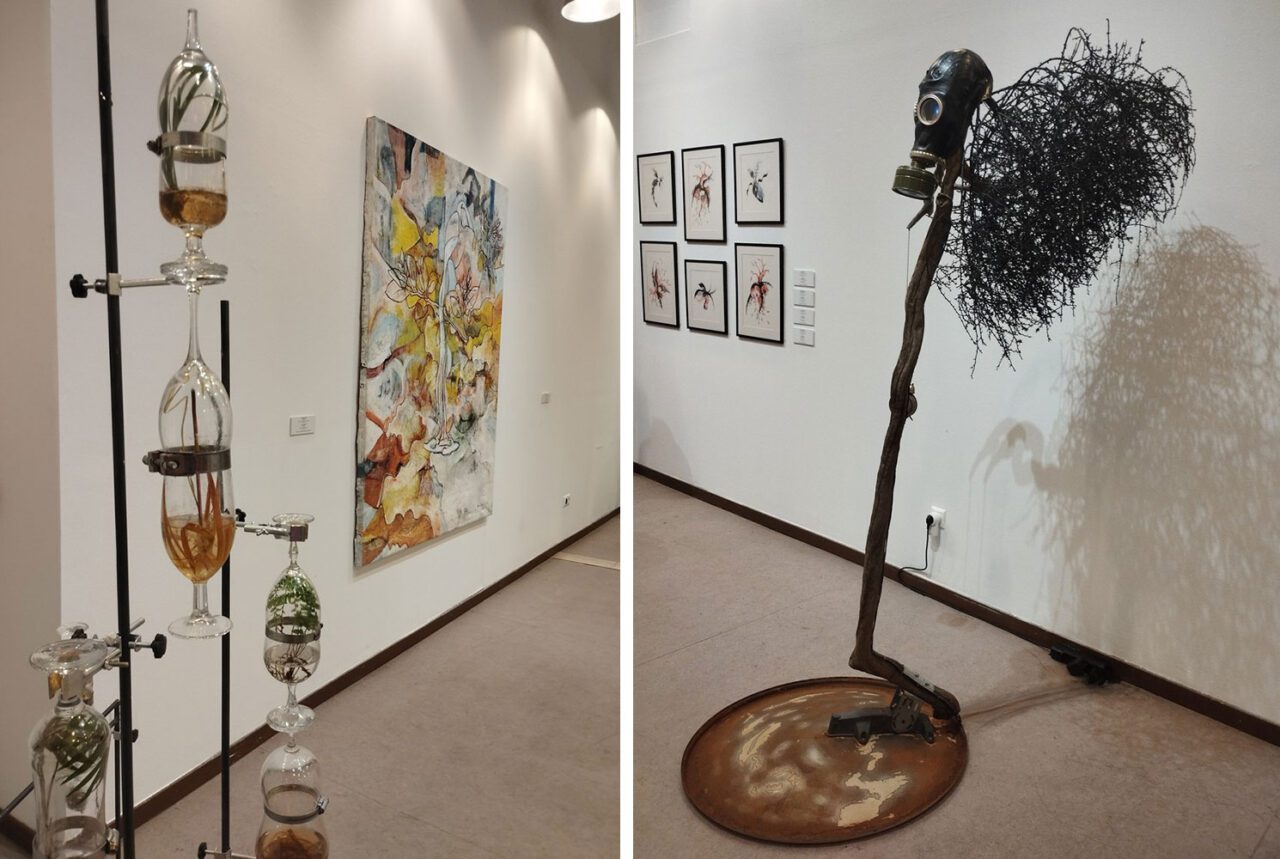
Right: Nikos Ivazzo and Andreas Kalli, Here comes the sun… Tumbleweed, LULLABY 2025, Sculptural Vido installation., © Nikos Ivazzo and Andreas Kalli, Photo: Valia Katsimpa
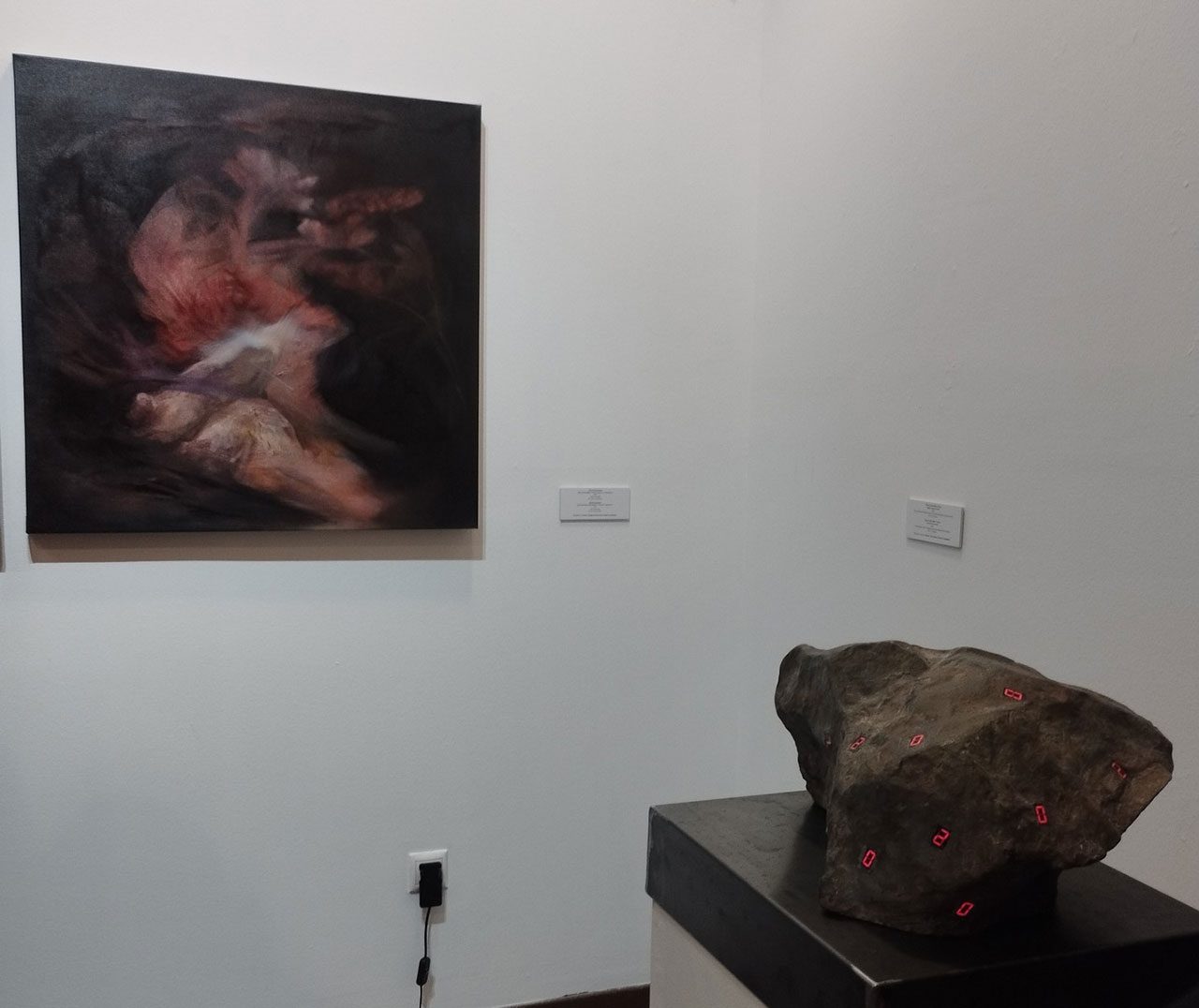
& Electros (aka Babis Vekris), Fossil of rare earths, 2022, © Electros (aka Babis Vekris), Photo: Valia Katsimpa
Right: VIvy Tsioga, Lichens, 2025, © VIvy Tsioga, Photo: Valia Katsimpa
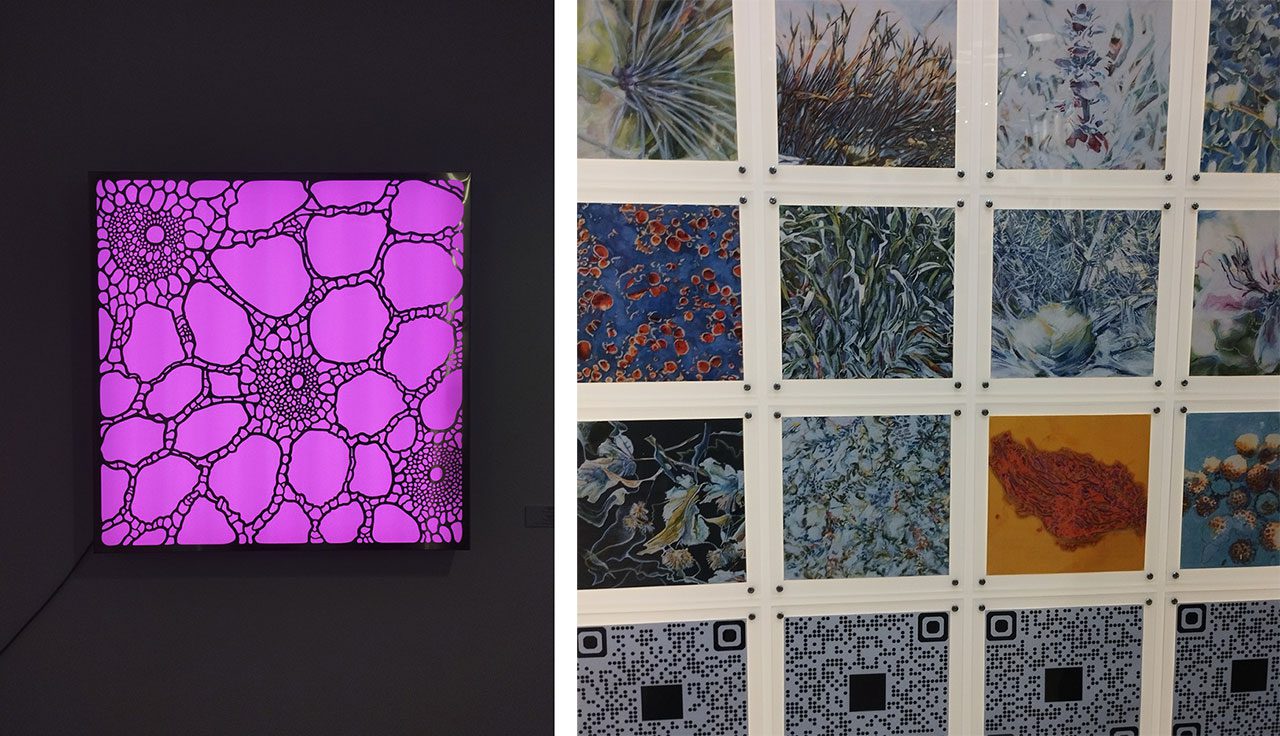
Right: Maro Karagkounaki, Meta – Nature (detail), 2025, © Maro Karagkounaki, Photo: Valia Katsimpa