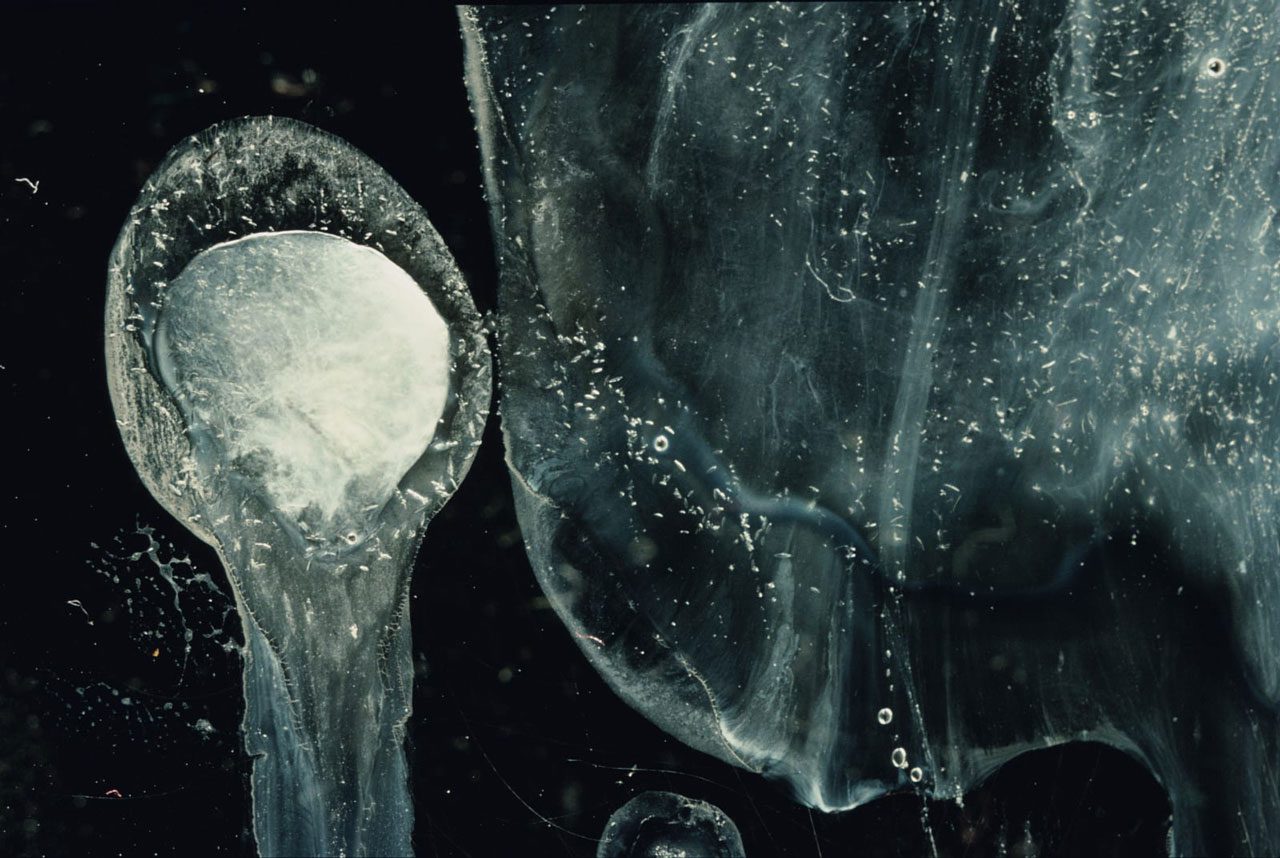
PHOTO:Andres Serrano-A Personal Mythology, Immersions and Bodily Fluids
For more than thirty years, Andres Serrano has stood as one of the most provocative and unflinching chroniclers of American life on the margins. His work—rooted in photography yet charged with painterly gravity—explores the uncomfortable intersections of belief, body, and value. Following the global infamy of Piss Christ (1987), Serrano’s art has remained a lightning rod for questions that extend far beyond aesthetics: What is sacred? What is obscene? What does it mean to look at suffering—or to refuse to?
By Dimitris Lempesis
Photo: Galerie Nathalie Obadia Archive
Born in 1950 in New York to a Catholic family, Serrano was trained as a painter before turning to photography in the 1970s. This shift was not an abandonment of painting, but a transposition. His photographs retain a compositional discipline that recalls the Baroque masters—Caravaggio’s light, Zurbarán’s stillness—filtered through the formalism of the modern avant-garde.
His earliest “Early Works” (1983–87) replaced traditional vanitas with visceral substitutes—a calf’s brain suspended in a jar—announcing the thematic tension that would define his practice: the sacred versus the corporeal, the spiritual refracted through flesh.
A decisive moment arrived in 1986 when curator William R. Olander invited Serrano to participate in “FAKE” at the New Museum of Contemporary Art. There, Serrano produced Milk, Blood—a photograph divided into minimalist panels of red and white. The purity of abstraction met the rawness of organic material.
This work sparked the series “Bodily Fluid”s (1986–1990), vast monochromes made from milk, urine, blood, and semen. These are not provocations for their own sake; they are meditations on life’s elemental substances. As the artist has noted, “Blood evokes the sacrifice of Christ, milk the nurturing of the Virgin, semen and urine the trivial flesh.” Each image vibrates between transcendence and contamination.
In the series “Immersions” (1987–1990), Serrano’s material world deepened. Religious figurines and crucifixes were submerged in bodily fluids, the murky translucence transforming them into relics of new devotion. Light, refracted through fluid, becomes revelatory—a metaphor for faith obscured and rediscovered.
“Piss Christ “(1987) emerged from this series and quickly became one of the most contested artworks of the century. Branded blasphemous by some, defended as spiritual by others, it brought Serrano into global focus. Yet to the artist, it was never about provocation but about empathy: to remind us that Christ’s suffering was physical, human, and painfully real. As he said “If this Christ shocks, it is perhaps because we have forgotten what he really represents: not a decorative piece of jewelry, but the extreme suffering of a man.”
The late 1980s context is vital. As AIDS ravaged communities and the body became a site of political anxiety, Serrano’s work acquired deeper urgency. His monochromes of blood and semen became quiet elegies to fragility and resilience. Behind their pristine surfaces lies a recognition of mortality and stigma—the body as both site of beauty and vessel of fear.
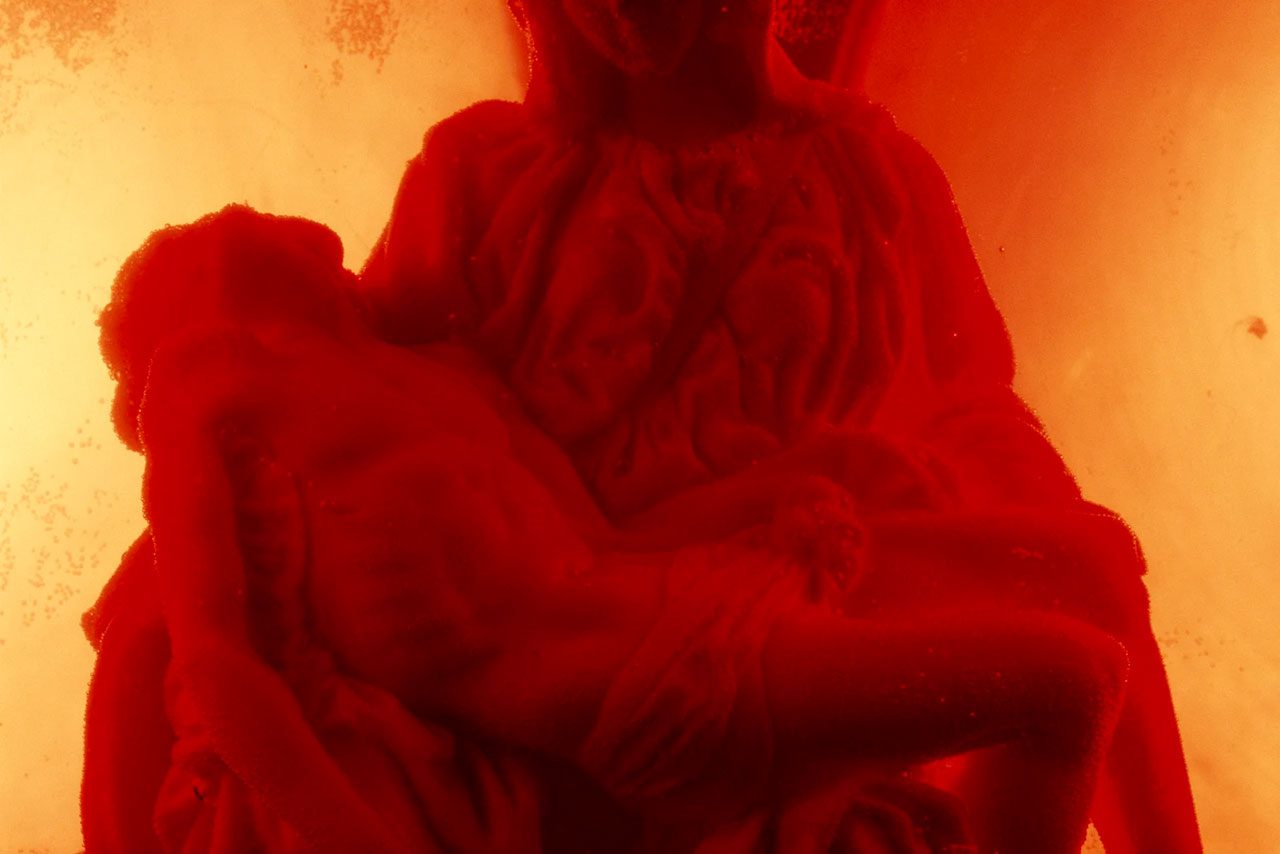
Serrano’s photography consistently returns to art history. Works echo the “Pietà”, “The Rape of the Sabine Women,” and “The Winged Victory of Samothrac0”e. These icons, once held aloft by museums and churches, are reactivated in contemporary form—submerged, reframed, rendered unstable. As Serrano says, “What happened in the past does not always remain in the past.”
The exhibition “A Personal Mythology: Immersions and Bodily Fluids (1986–1990)” at Galerie Nathalie Obadia gathers fifteen works that mark Serrano’s artistic genesis. In revisiting them nearly four decades later, their resonance feels renewed. They confront us with our discomfort and our faith—whether in God, art, or the image itself.
In an age saturated with images and moral posturing, Serrano’s work remains disarmingly direct. He asks us not merely to look but to see: the sanctity of the body, the persistence of suffering, the limits of our tolerance. His art is neither cynical nor purely transgressive—it is a mirror that demands reflection.
By returning to his origins, Serrano reminds us that the sacred and the profane are not opposites, but coordinates of the same human map. In that convergence—between purity and pollution, reverence and revolt—his art finds its timeless relevance.
Photo: Andres Serrano, Pieta II (Immersions), 1990, Pigment print on archival paper 285 g, back-mounted on dibond, plexiglass 3mm anti-UV, wood frame, 82,55 x 114,3 cm (32 1/2 x 45 inches), Edition of 10 + 2 AP, © Andres Serrano, Courtesy the artist and Galerie Nathalie Obadia
Info : Galerie Nathalie Obadia, 3 rue du Cloître Saint-Merri, Paris, France,, Duration: 10/11/2025-24/1/2026 , Days & Hours: Mon-Sat 11:00-19:00, www.nathalieobadia.com/

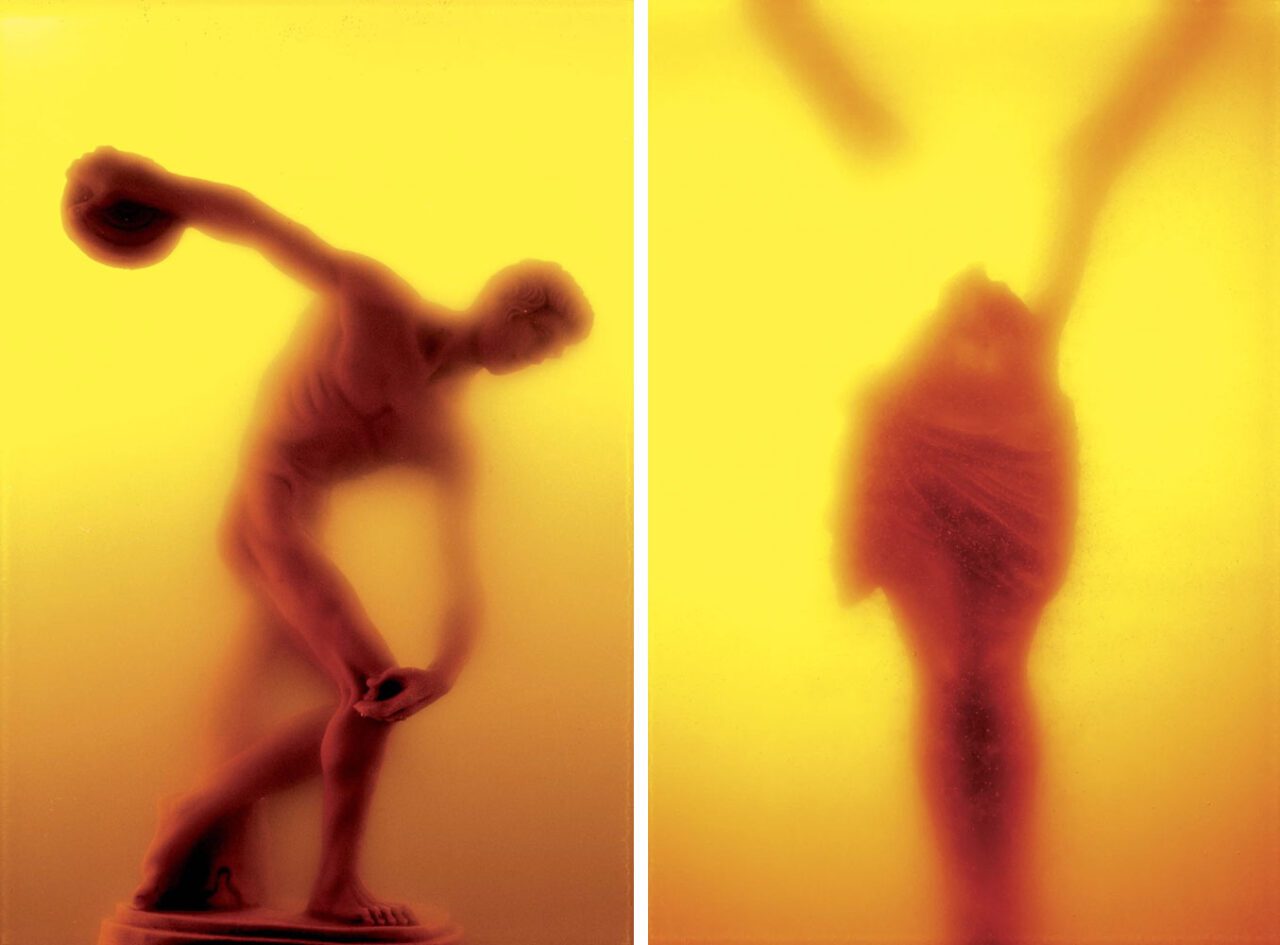
Right: Andres Serrano, Winged Victory (Immersions), 1987 , Pigment print, back-mounted on dibond, wooden frame, 114,3 x 83,2 cm (45 x 32 3/4 inches), Edition of 10 + 2 AP, © Andres Serrano, Courtesy the artist and Galerie Nathalie Obadia
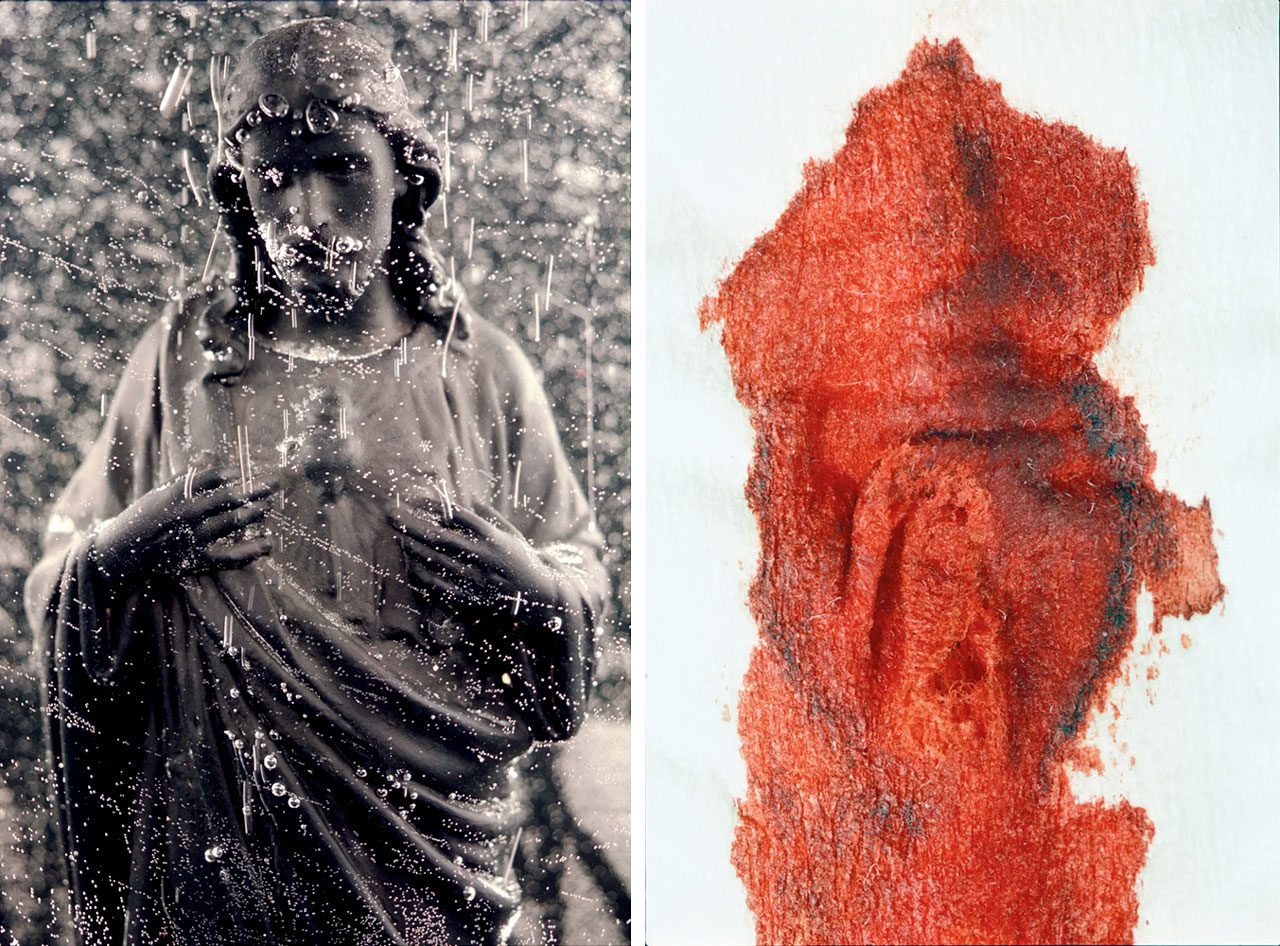
Right: Andres Serrano, Red River #3 (Bodily Fluids), 1989, Cibachrome, plexiglass, wooden frame, 165,1 x 114,3 cm (65 x 45 inches), Edition of 4 + 2 AP, © Andres Serrano, Courtesy the artist and Galerie Nathalie Obadia
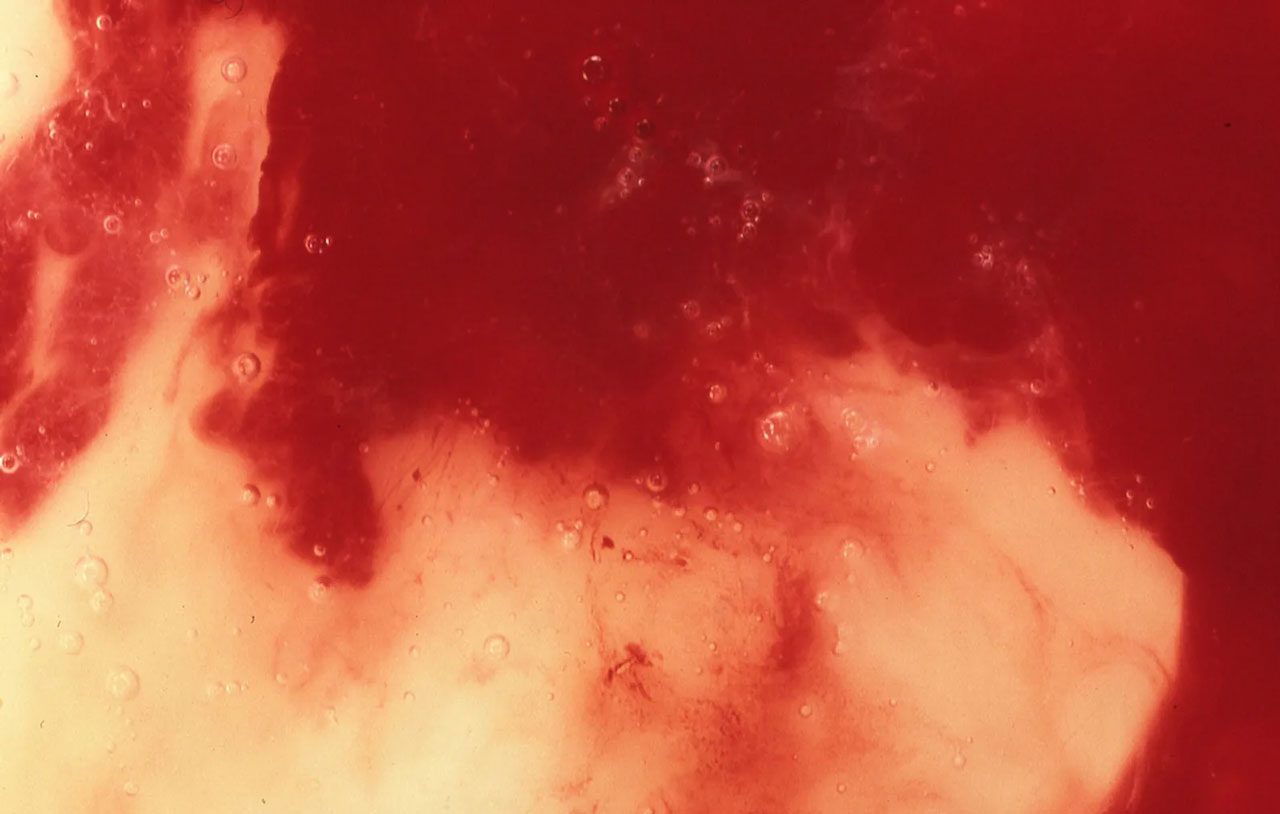
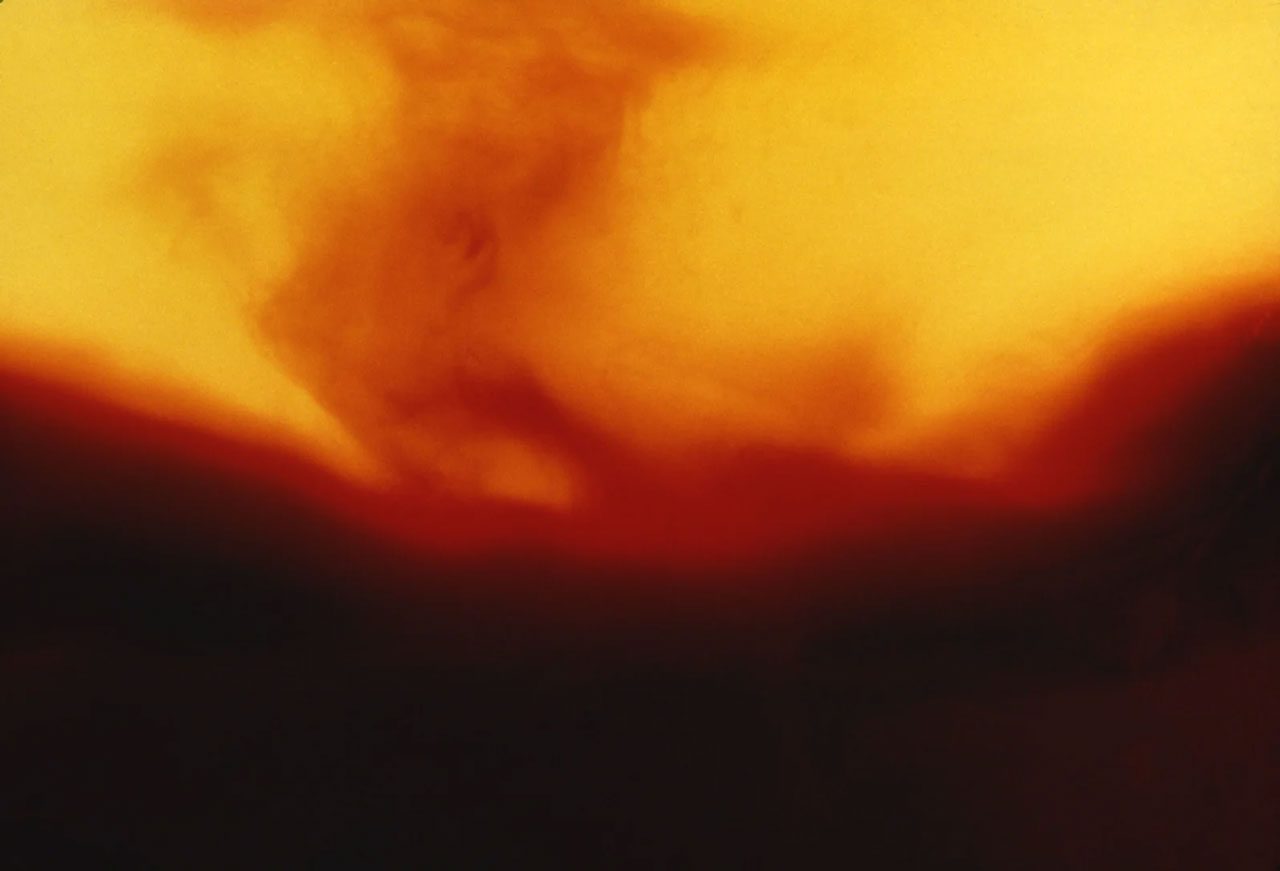
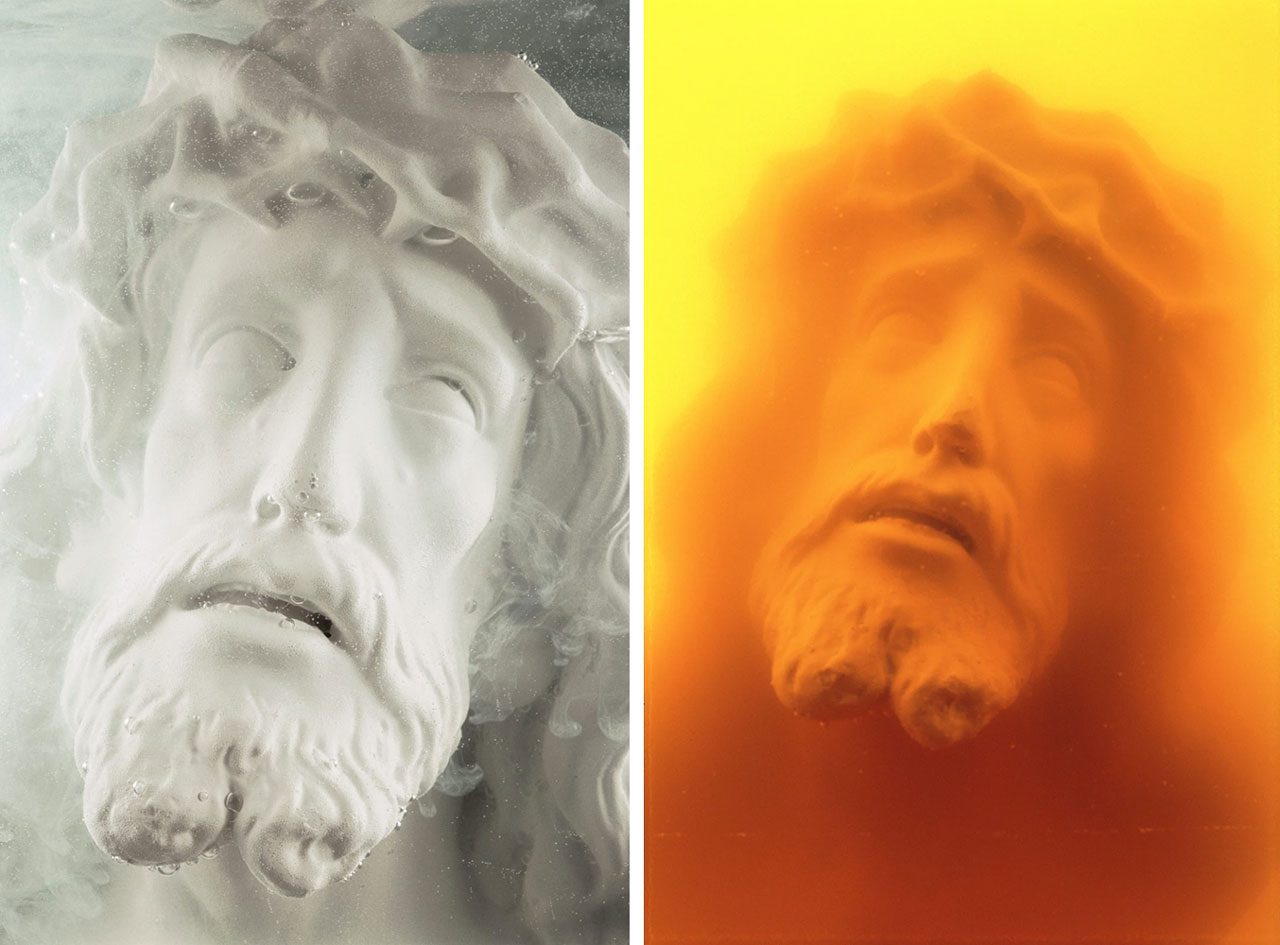
Right: Andres Serrano, Ecce Homo (Immersions), 1988, Pigment print on archival paper 285 g, back-mounted on dibond, plexiglass, wooden frame, 165,1 x 114,3 cm (65 x 45 inches), Edition of 4 + 2 AP, © Andres Serrano, Courtesy the artist and Galerie Nathalie Obadia