
PRESENTATION: To Define a Feeling-Joan Mitchell, 1960–1965

Few painters have captured emotion in motion quite like Joan Mitchell. Across her more than four-decade career, Mitchell developed a visual language that was entirely her own—rooted in abstraction, yet driven by the pulse of lived experience. Her paintings throb with feeling: color as memory, gesture as sensation, composition as consciousness.
By Efi Michalarou
Photo: David Zwirner Gallery Archive
The exhibition “To Define a Feeling: Joan Mitchell, 1960–1965” zeroes in on a brief yet pivotal chapter in this evolution, illuminating how Mitchell’s art transformed during one of the most dynamic and introspective periods of her life. Curated by Sarah Roberts, Senior Director of Curatorial Affairs at the Joan Mitchell Foundation, the exhibition caps a yearlong celebration of the centennial of Mitchell’s birth. It brings together a remarkable assembly of paintings and works on paper from public and private collections, including rarely seen pieces from the Foundation’s own holdings.
Between 1960 and 1965, Mitchell spent extended summers and autumns sailing the Mediterranean with her companion, painter Jean Paul Riopelle. Anchored along France’s Côte d’Azur, they ventured to Corsica and Italy, absorbing the expanse of the sea, the fractured light, the rocky coastlines. Back in her Paris studio, these sensory impressions resurfaced on canvas—not as literal landscapes, but as emotional and spatial reverberations.
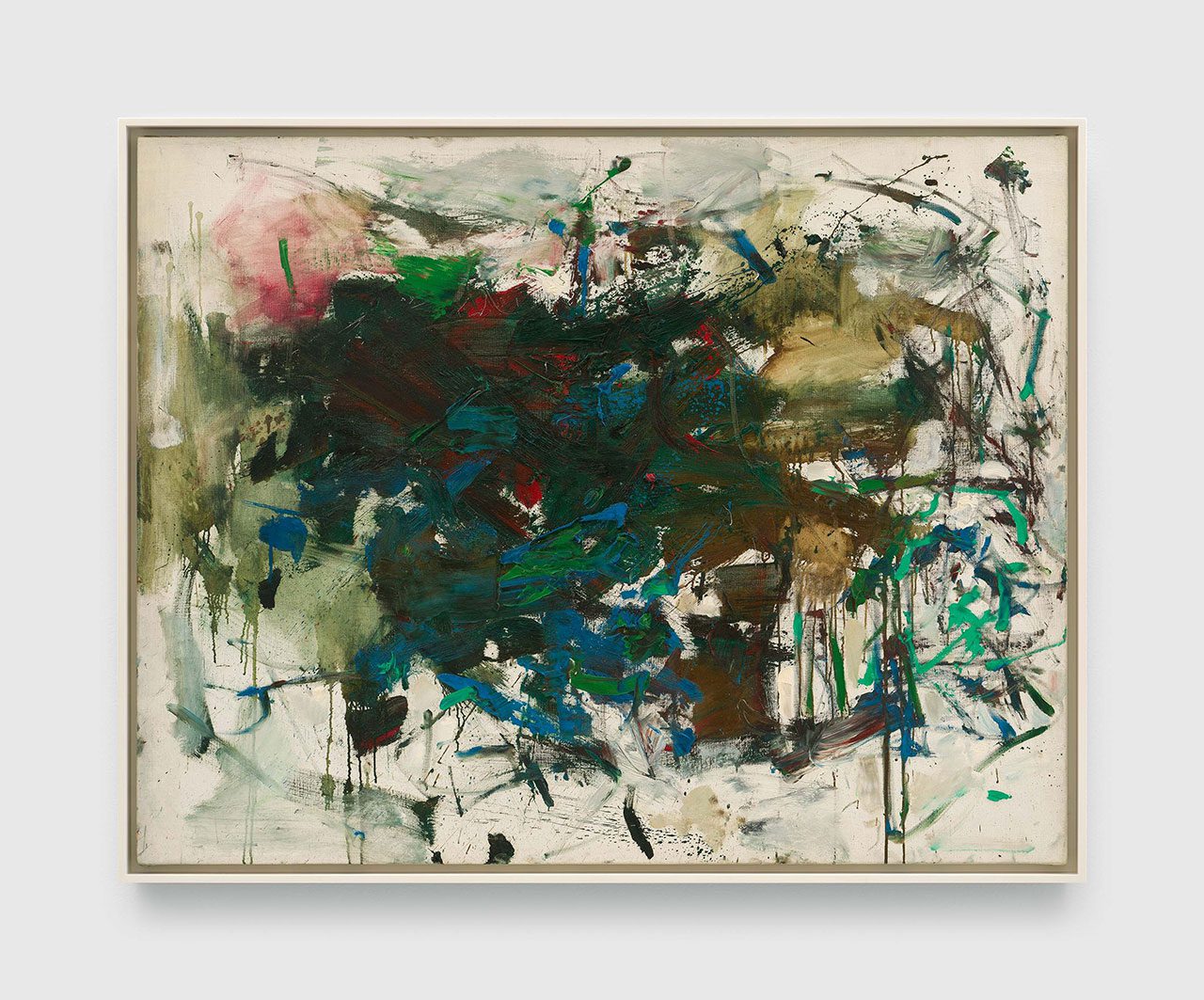
The paintings from this period mark a radical departure from her earlier, more structured works. Dense, swirling brushstrokes in deep blues and greens anchor the center of her canvases, partially veiling buried tones that pulse beneath the surface. These compositions, turbulent and introspective, abandon the grounding framework that once defined her landscapes in favor of new, experimental arrangements.
The poet John Ashbery once described Mitchell’s work as “an unhurried meditation on bits of landscape and air.” In the paintings of this period, that meditation becomes stormier—less about depicting a view, more about translating the weather within.
The early 1960s were marked by both personal and global turmoil. Mitchell endured the loss of loved ones, grappled with the assassination of John F. Kennedy, and observed growing social unrest across the United States and France. These events, layered with the rhythms of her daily life—reading poetry, conversing with artist friends, contemplating her own practice—fed into her canvases.
For Mitchell, abstraction was not an escape from reality but a means to engage with it. “Clement Greenberg said there never should be a central image,” she recalled in a 1965 interview with art historian Dorothy Seckler, “so I decided to make one.” This defiant spirit—both intellectual and instinctual—permeates her work from these years.
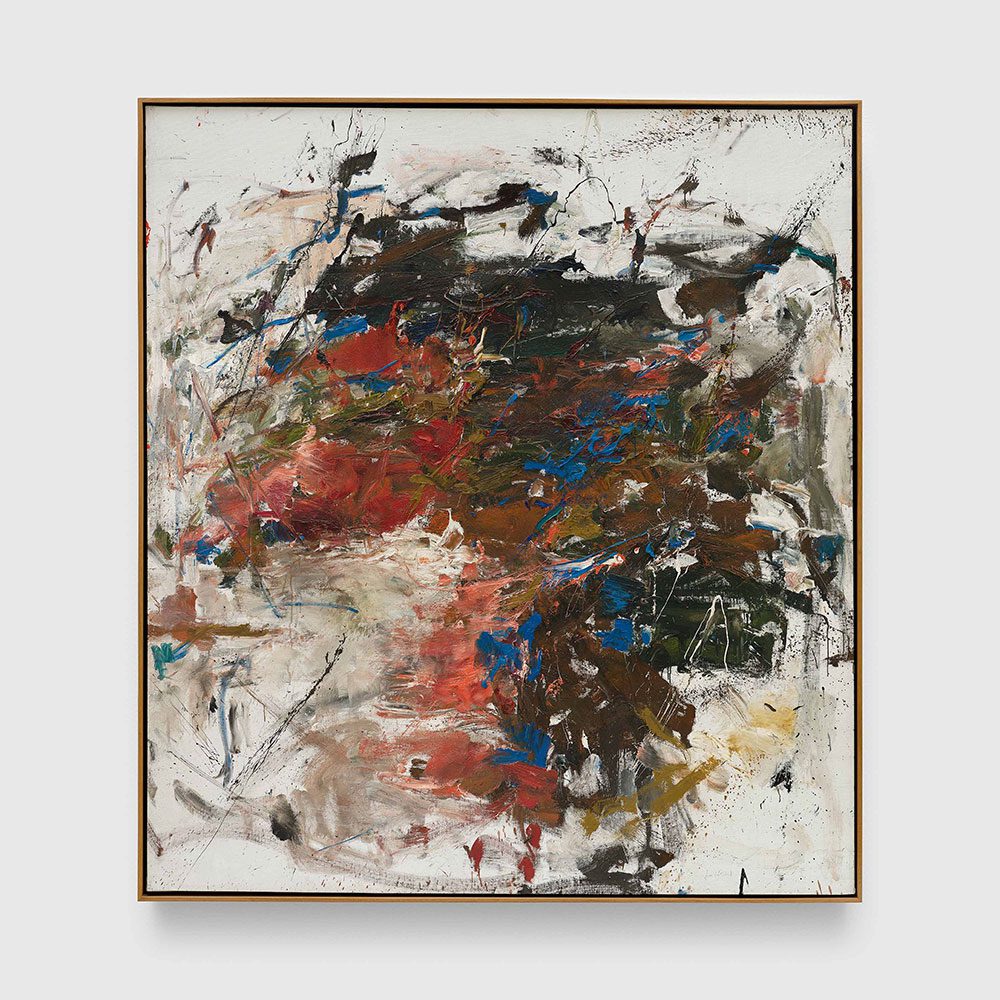
Her “central images” were not focal points in a traditional sense; rather, they functioned as gravitational fields, dense accumulations of gesture and pigment that held emotional weight. She deliberately disrupted conventions of balance and harmony, favoring enigmatic palettes punctuated by flashes of color and energy.
By 1962, Mitchell’s palette had deepened—dark greens, browns, and blues so rich they earned the series the informal moniker of her “black paintings,” though true black seldom appears. These works hover between somberness and radiance, their forms suspended in off-white fields like islands adrift in mist.
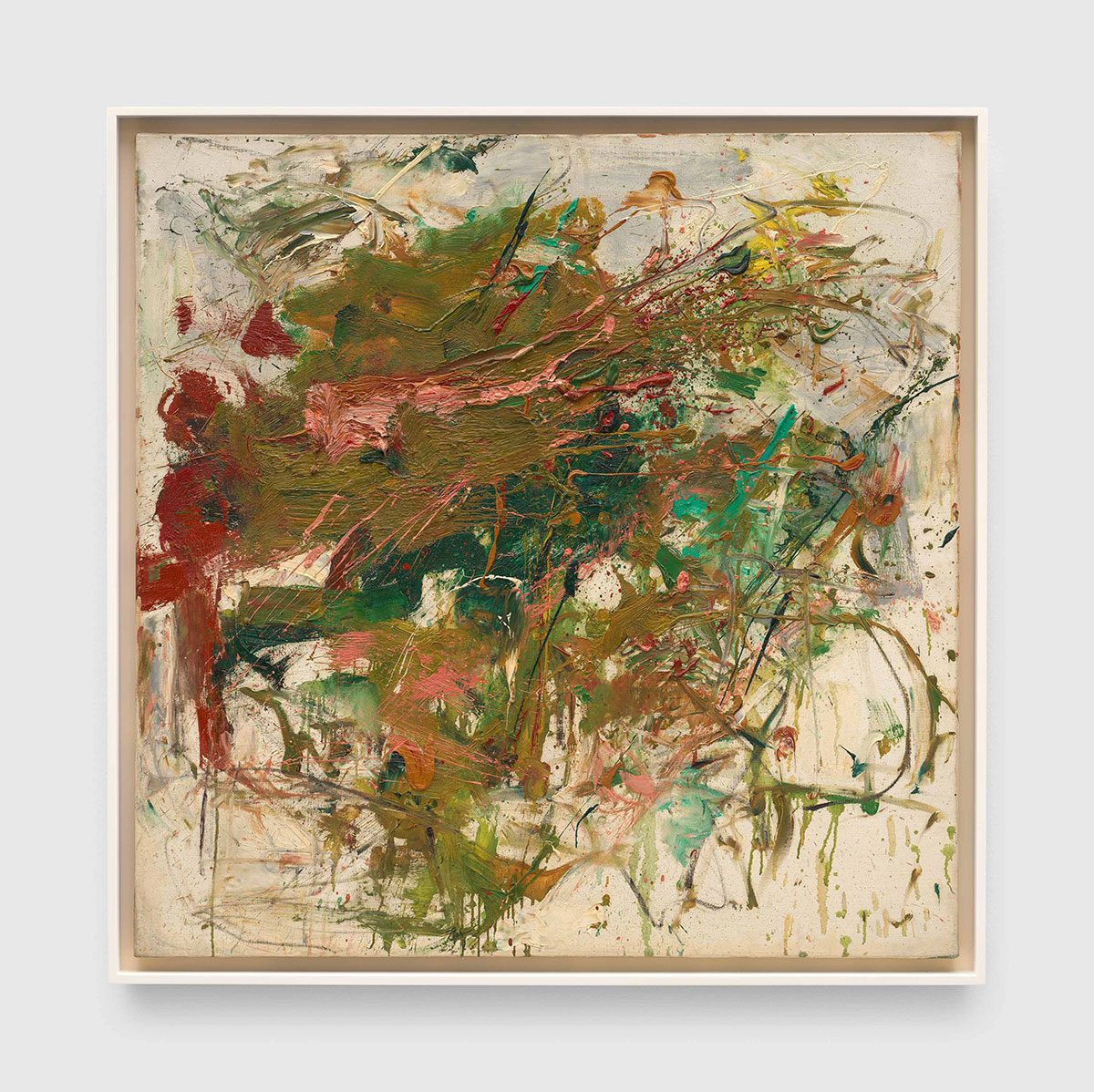
Within a few short years, her approach would shift again. By 1964–65, the heavy central masses dissolved into looser constellations of square forms and tangled brushwork, signaling the restless evolution that defined her practice.
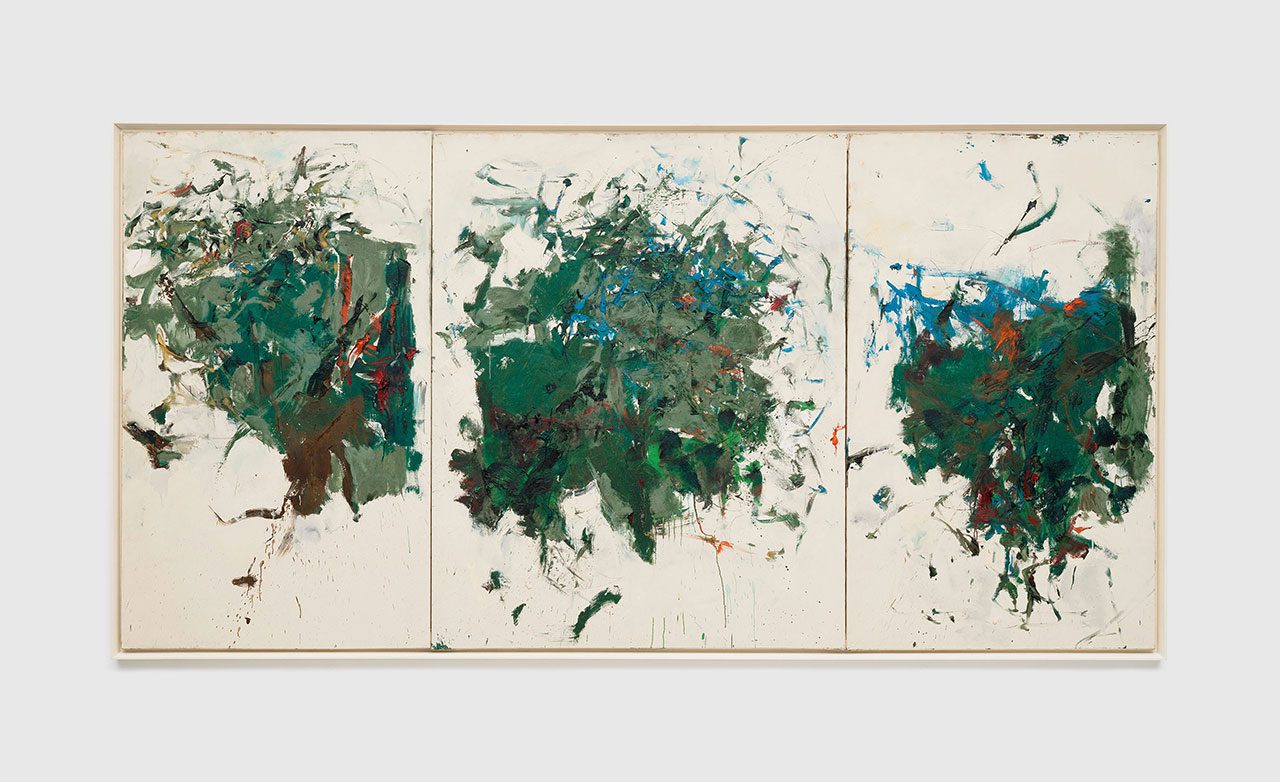
Among the standout works is “Mandres” (c. 1962), a transitional painting that marks Mitchell’s early experimentation with concentrated central forms. The expansive triptych “Untitled” (1963) exemplifies her growing engagement with multi-panel formats, inviting viewers into a panoramic dialogue of movement and mood.
Also featured are intimate small-scale paintings inspired by stations of the Paris Métro, first shown in her 1965 solo exhibition at New York’s Stable Gallery. One of these—on loan from the Hofstra University Museum of Art—reveals how even her smallest canvases contain the same explosive energy as her monumental works. Complementing these are rarely seen works on paper, made with charcoal, crayon, and watercolor, that extend her exploration of form and color into new, tactile dimensions.
In every sense, this exhibition lives up to its title. Between 1960 and 1965, Joan Mitchell did not paint landscapes or memories; she painted what it felt like to have them. Each stroke, each field of color, each rupture of the surface is an attempt to define a feeling—that ineffable space between perception and emotion.
Standing before these works, one feels the intensity of that pursuit. The sea, the sky, loss, love, the hum of poetry, the passage of time—all merge into something both universal and deeply personal. For Mitchell, painting was a form of thought, but one inseparable from touch, from presence, from the pulse of being alive.
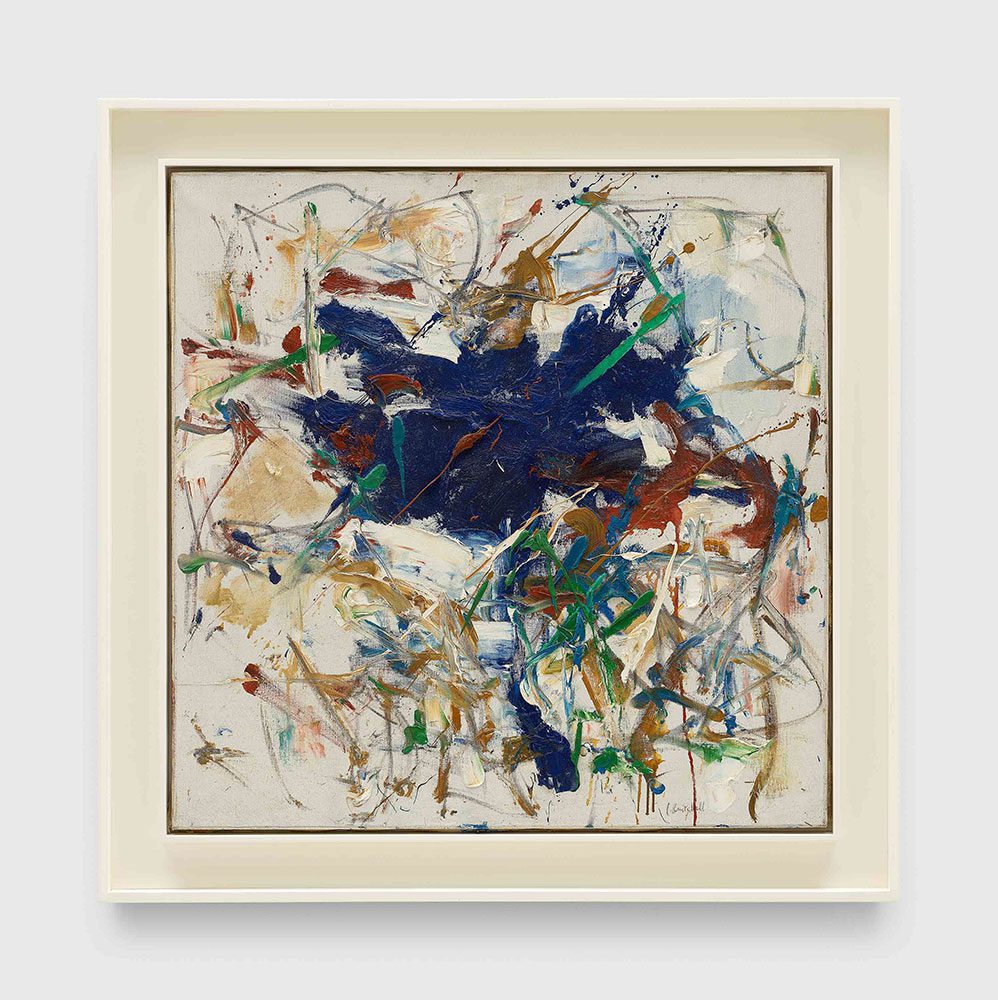
Photo: Joan Mitchell, Peinture I, 1964, Oil on canvas, 39 1/4 x 39 inches (99.7 x 99.1 cm), Framed: 40 1/4 x 40 1/4 inches (102.2 x 102.2 cm), Signed lower right recto, Sarofim Foundation Collection , © Estate of Joan Mitchell
Info: Curator: Sarah Roberts, David Zwirner Gallery, 537 West 20th Street, New York, NY, USA, Duration: 6/11-13/12/2025, Days & Hours: Tue-Sat 10:00-18:00, www.davidzwirner.com/
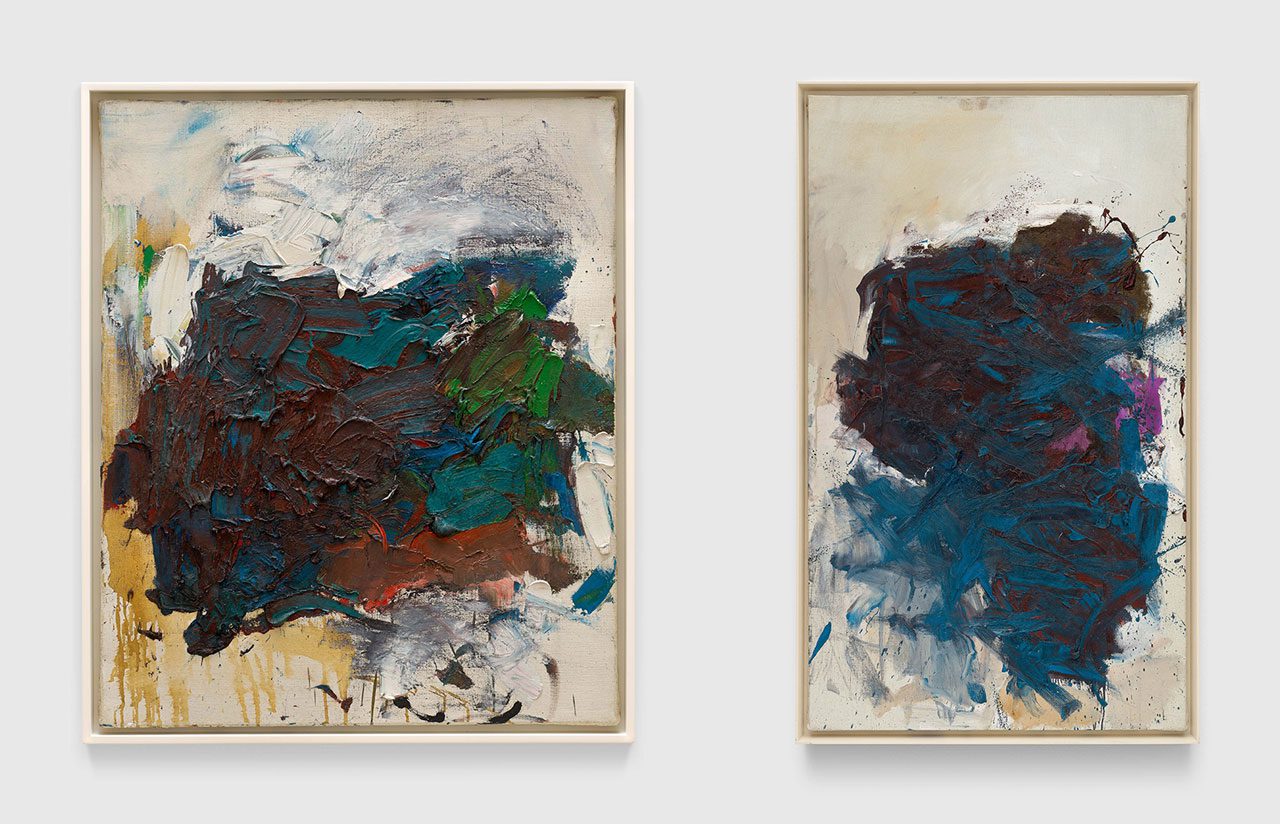
Right: Joan Mitchell, Untitled, c. 1964, Oil on canvas, 63 5/8 x 38 inches (161.6 x 96.5 cm), Framed: 66 3/8 x 40 1/2 inches (168.6 x 102.9 cm), Collection Joan Mitchell Foundation, © Estate of Joan Mitchell
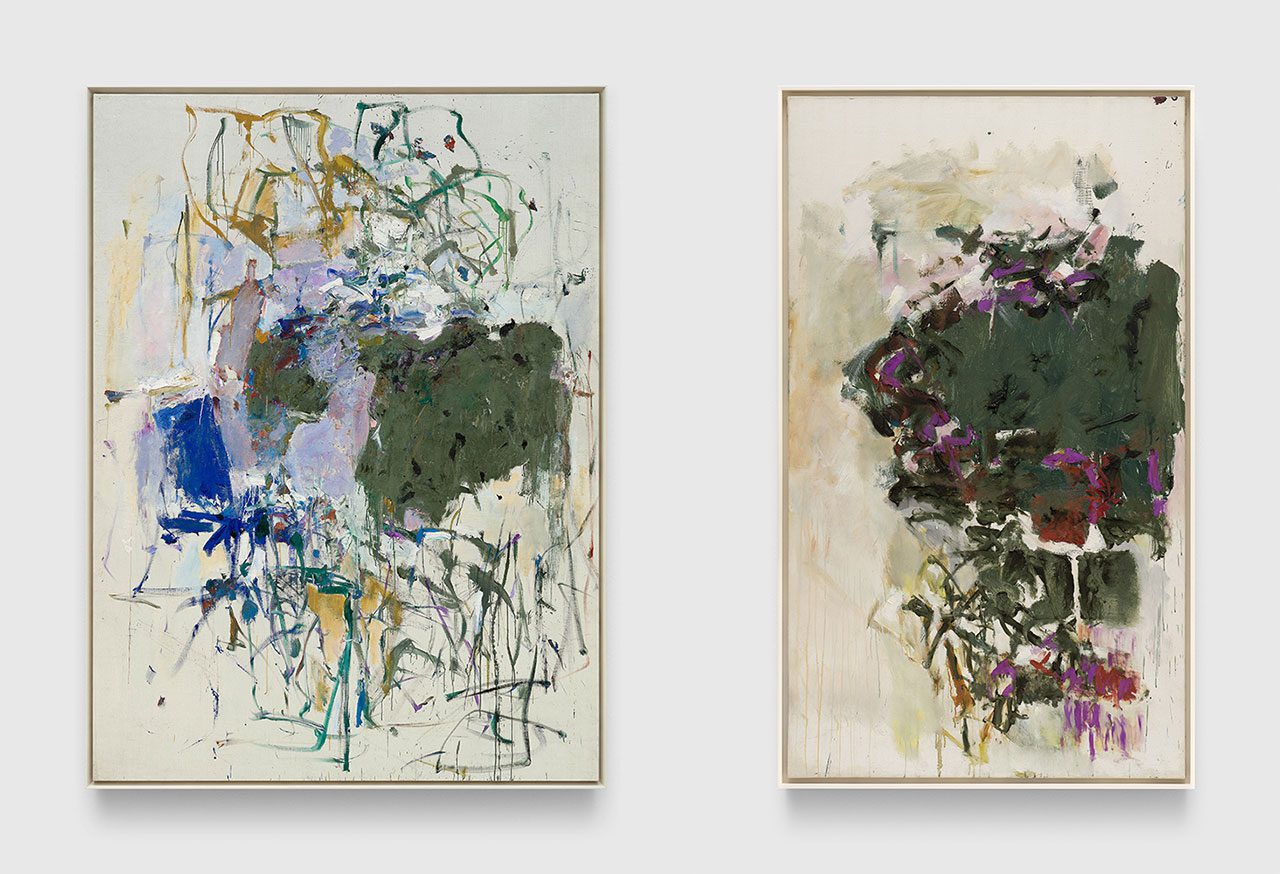
Right: Joan Mitchell, Untitled, c. 1965, Oil on canvas, 76 3/4 x 44 3/4 inches (194.9 x 113.7 cm), Framed: 79 x 47 inches (200.7 x 119.4 cm), © Estate of Joan Mitchell
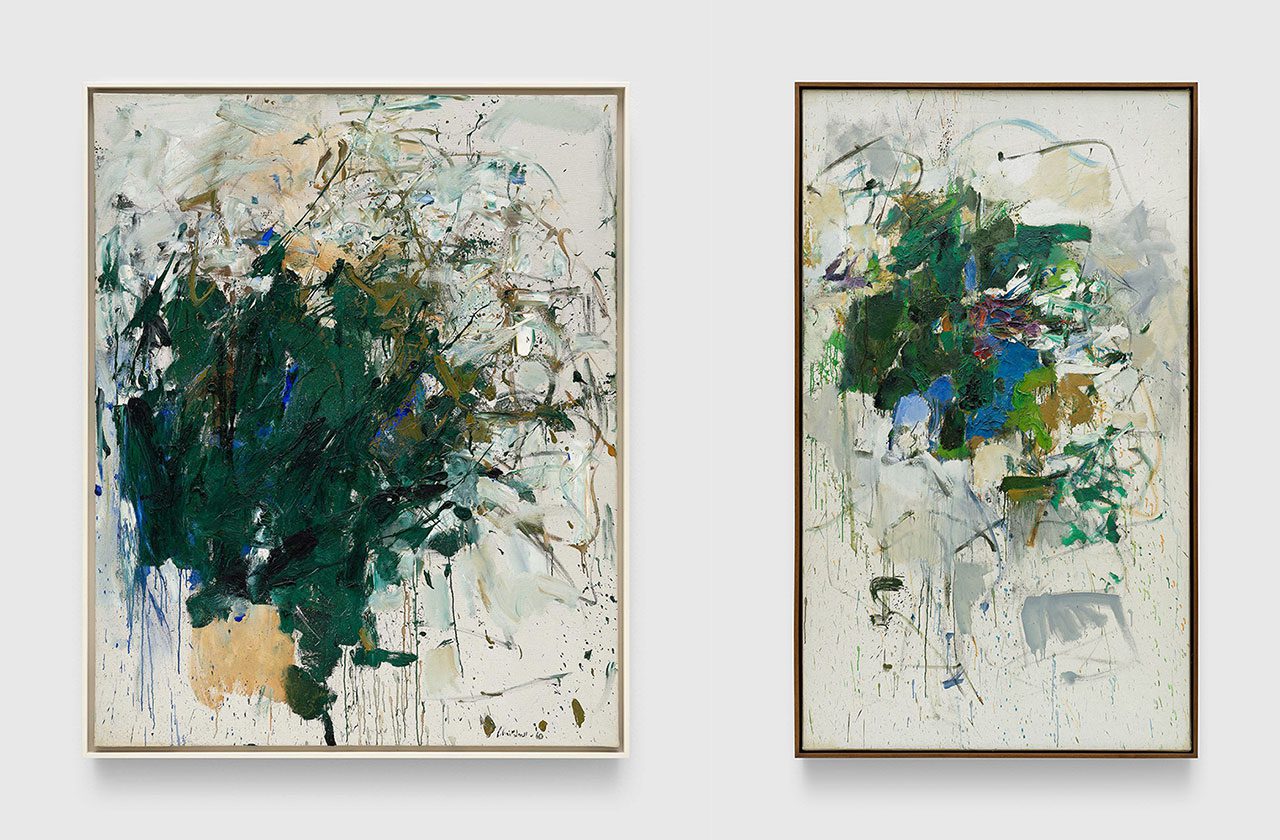
Right: Joan Mitchell, Untitled, c. 1965, Oil on canvas, 76 7/8 x 45 inches (195.3 x 114.3 cm), Framed: 78 1/2 x 46 3/4 inches (199.4 x 118.8 cm), Collection of Josh and Suzy Tanzer, © Estate of Joan Mitchell