PHOTO: Patrick Faigenbaum
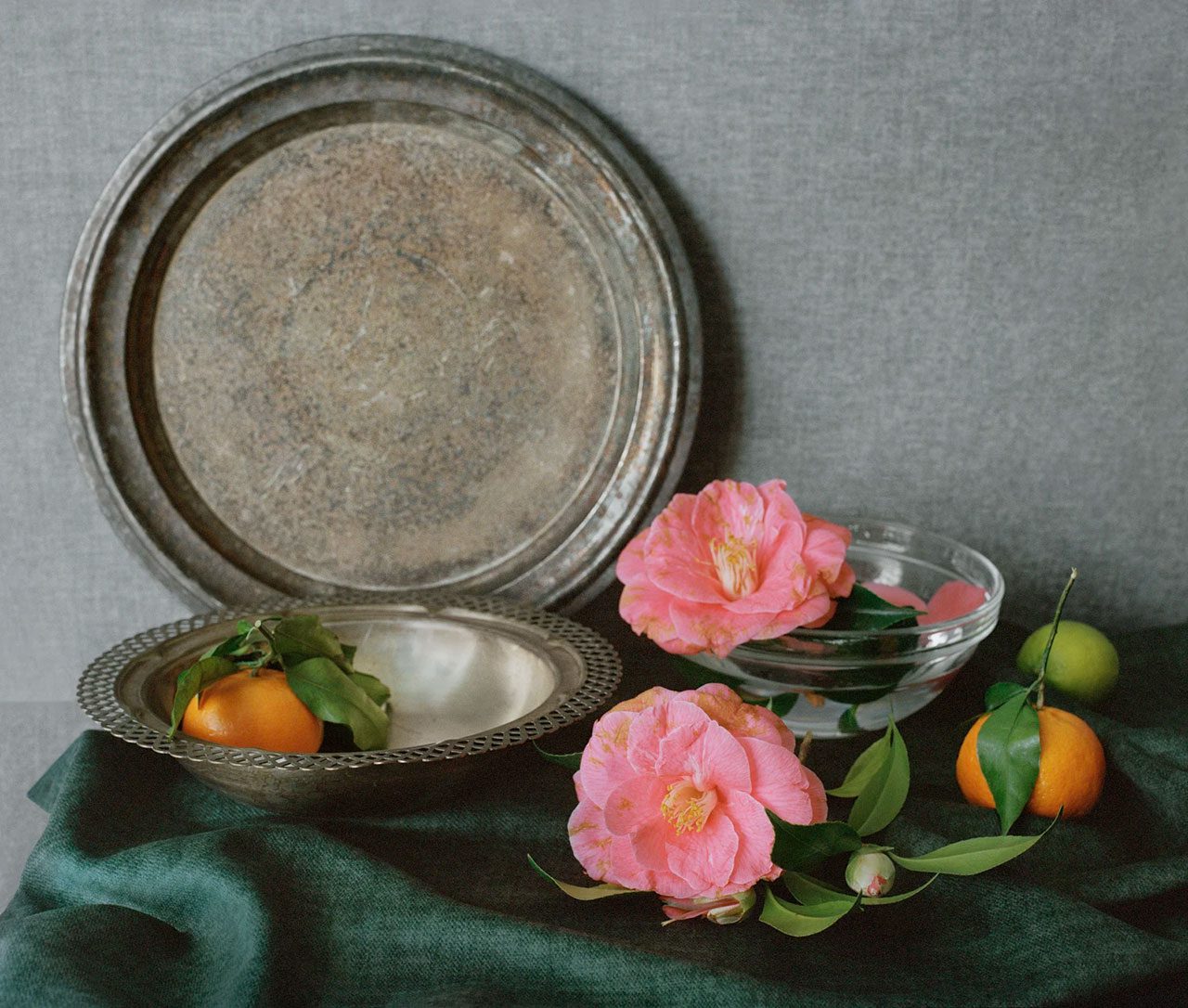
Born in Paris in 1954, Patrick Faigenbaum has built over four decades an oeuvre that merges the rigour of documentary photography with a painterly sensibility rooted in classical composition. Trained as a painter, he gravitated to photography in the 1970s, sought residence at the Académie de France – Villa Medici (1985–1987) and was awarded the prestigious Prix Henri Cartier‑Bresson in 2013.
By Dimitris Lempesis
Photo: Galerie Nathalie Obadia Archive
In his ongoing practice, Faigenbaum investigates what he calls the “interstice between things” — that quiet space where light grazes fruit, an object, or the corner of a room and time seems suspended. The current exhibition brings together three distinct series that exemplify this delicate poise: “Rue de Clichy, juin 2024”, “Cristallerie Saint-Louis” (2022) and “Santulussurgiu” (1999–2019).
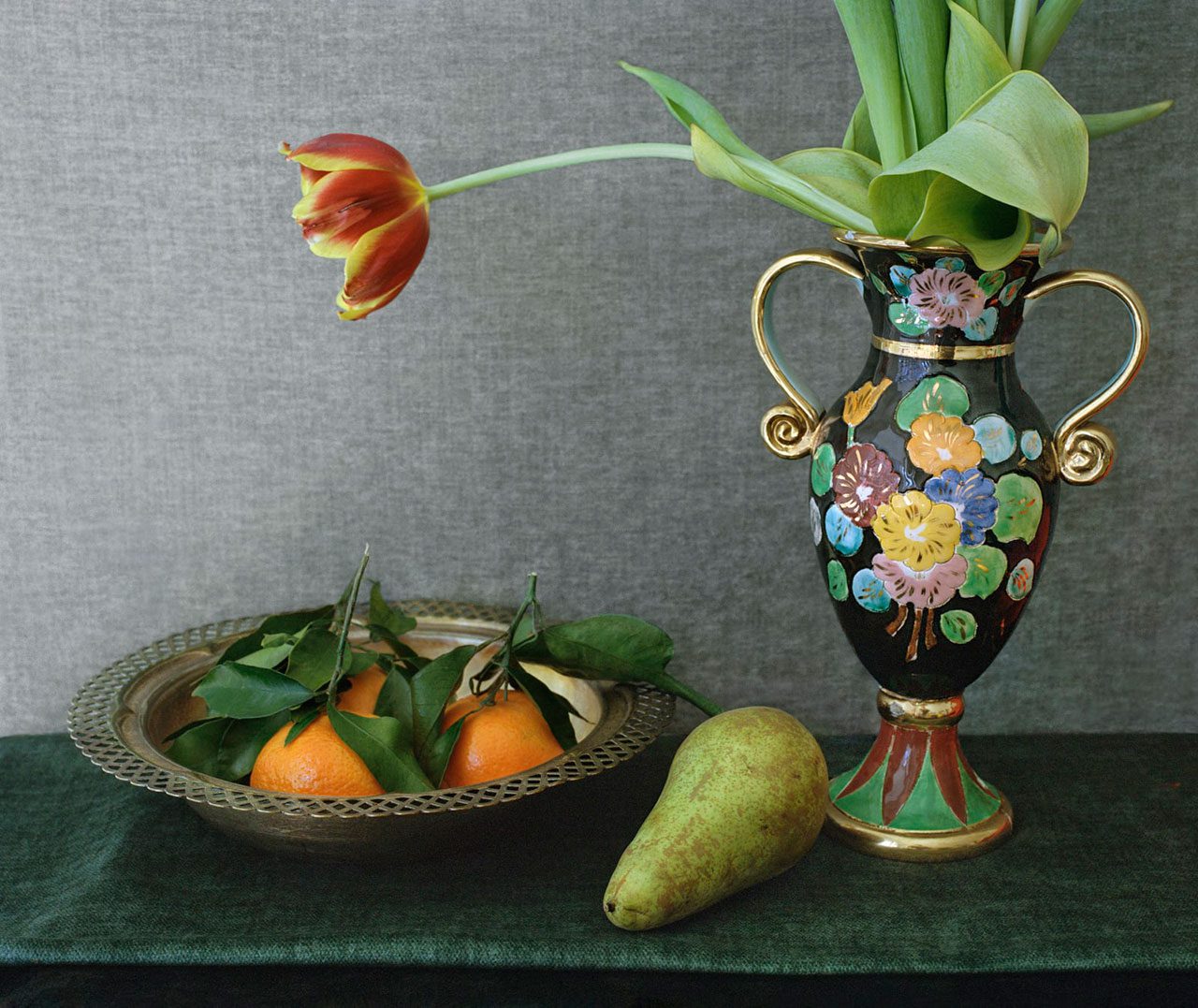
Following the earlier “L’appartement de Suzanne – 34, rue de Clichy” (2016–2021), this newest body of work extends Faigenbaum’s intimate exploration of his late mother’s Parisian apartment. In the wake of her passing in 2015, the artist began photographing each room in undisturbed stillness — not as memorial portraiture but as a meditation on memory, objects and the domestic archive. From 2024 he reopened long-forgotten boxes of childhood utensils and photographed them before their dispersal: “Before parting with them, I wanted to preserve the memory, so I set about creating these images,” he confides. Here, metal reflects light, porcelain shows its fragility and everyday utensils become silent actors in a domestic narrative. The compositional rigour is palpable: shaped by his painting training, each object, each space, is framed as if in a canvas. The work is quietly unsettling — no human figure appears, yet the traces of a life, lineage and intimate attachment linger. In this series, Faigenbaum suggests that memory resides not only in faces or landscapes but in the “interstice” of things — the ordinary held in light, still life given weight by time.
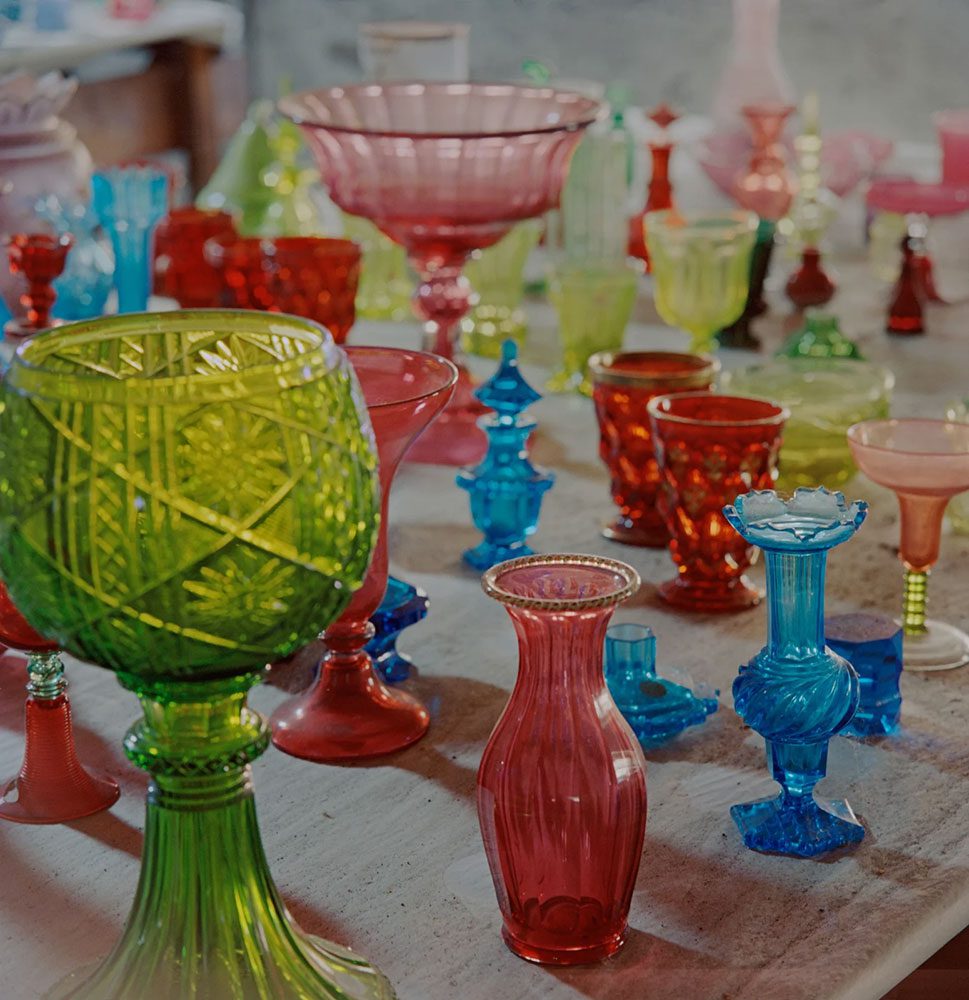
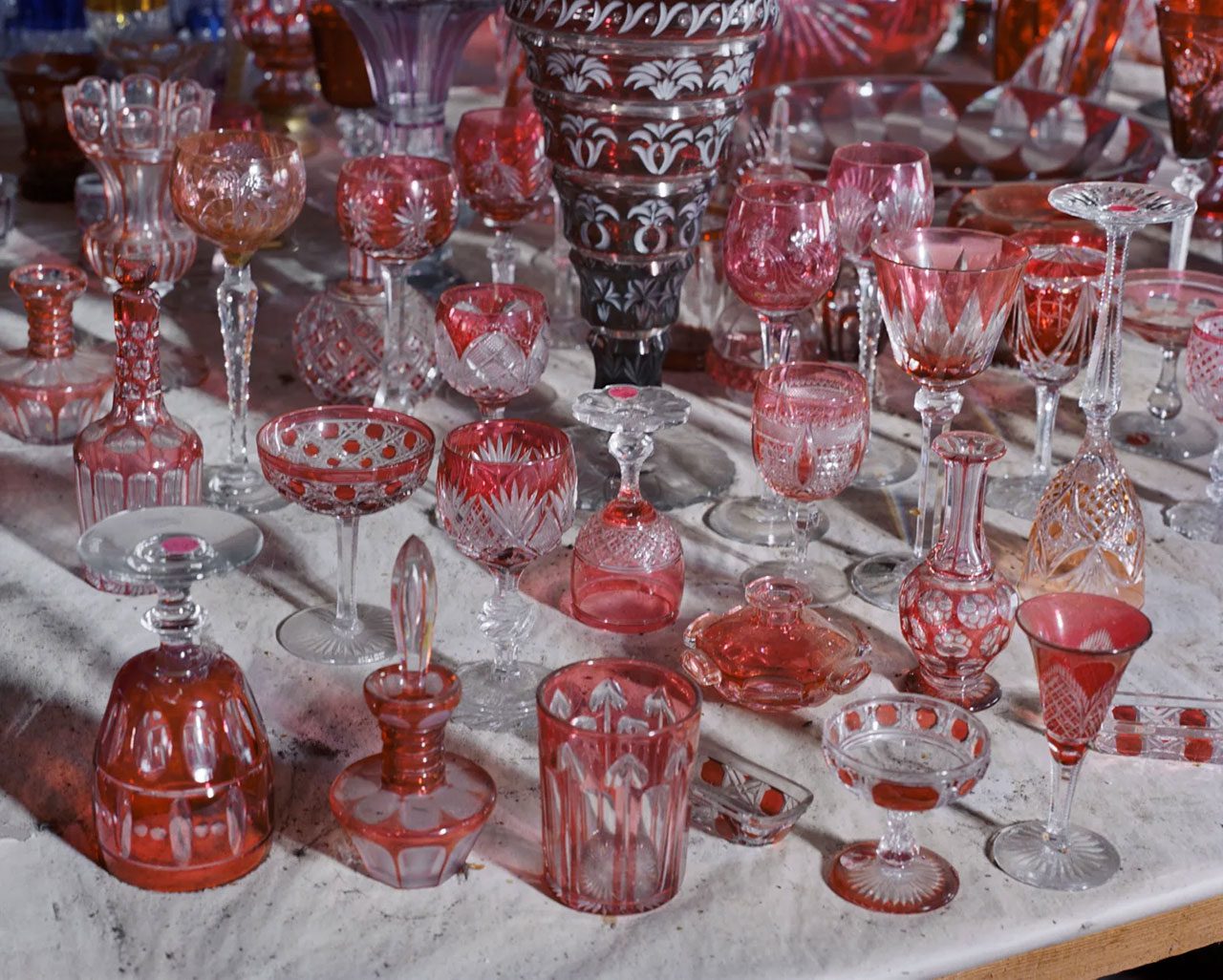
Invited by the Fondation d’entreprise Hermès in 2022, Faigenbaum undertook several weeks of immersion at the renowned crystal factory in Saint-Louis-lès-Bitche, in the Northern Vosges. Here his lifelong fascination with the multicolour roemers of his youth — glassware once part of his aunt’s wedding trousseau — found renewed impetus. Within the workshop and its surrounding terrain, he documented the artisans, their gestures, the shimmering output of crystal — again framing “ordinary” processes as if in a painting. What emerges is a vision of craft, tradition, material and time, where the making itself becomes as much subject as the final object. Within this series, glass becomes vessel, artisan becomes subject and light becomes the sculptor. Jean-François Chevrier observes how “accumulated and arranged in the archives, the objects constitute a whole world, analogous to the surrounding landscape.” The exhibition demonstrates how Faigenbaum brings documentary rigor and painterly attention to what might otherwise remain industrial background: the workshop is elevated into a realm of stillness, craft and narrative presence.
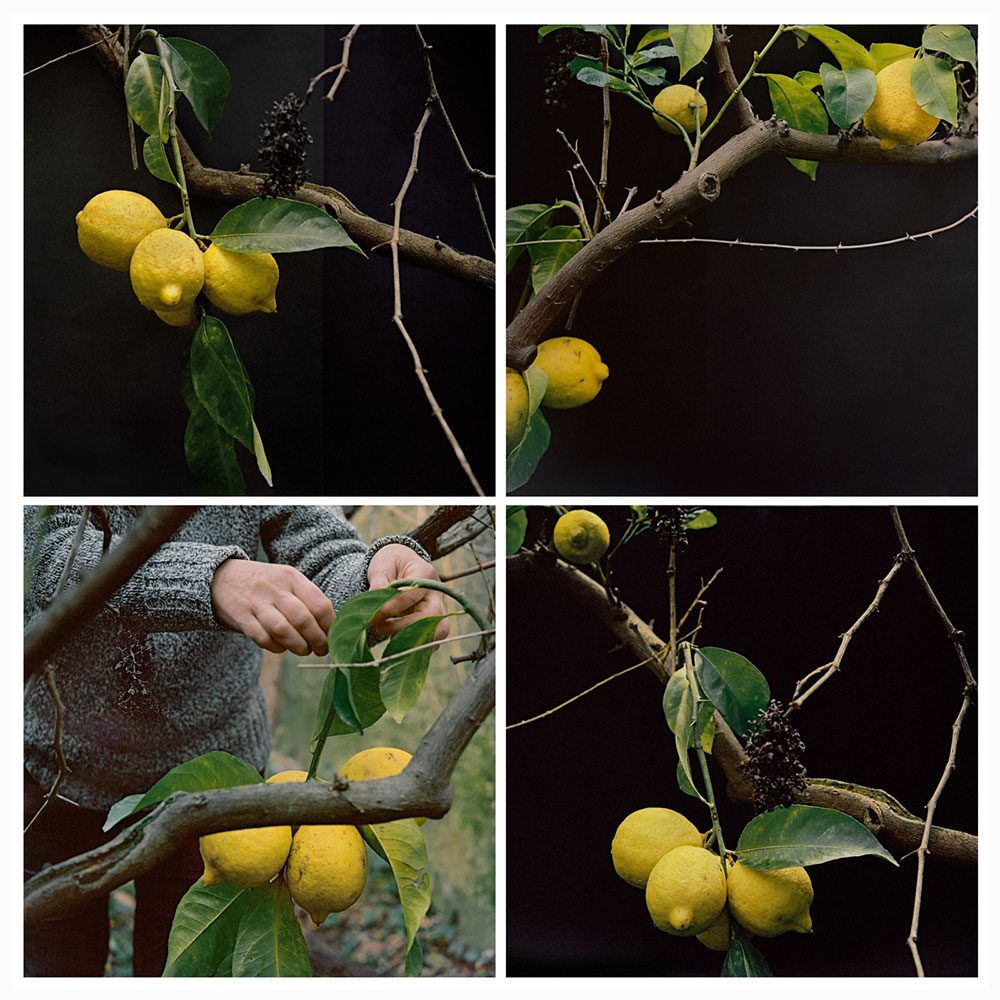
Spanning some twenty years of photographic engagement, the “Santulussurgiu” series takes us to the artist’s wife’s native village in Sardinia, where Faigenbaum has regularly holidayed since the late 1990s. This is a Mediterranean fresco: radiant light, quiet landscapes, still lifes and portraits merge in a contemplative whole. Among the exhibited works is the photographic montage “Le Citronnier” (2019), described by Chevrier as “landscapes in miniature.” Here again, absence of human figures heightens presence; what appears is place, memory, light and time. Faigenbaum positions territory, family history and lineage as inseparable. As his practice matured, the shift from portraiture to territory becomes clear — the work reveals how space and place are mined for their quiet resonance.
What draws these three distinct series together is a notion of “interior geography” — a network of memory, lineage, transmission. In each case, Faigenbaum turns away from the overtly spectacular and instead hones in on the ordinary, the lived, the almost invisible. Objects, places, light and time. His training as a painter is consequential. Through his images we perceive how photography can borrow from painting the art of composition, the study of light/ shadow, still life and vanitas, but remain deeply photographic: rooted in revelation, in the trace of reality.
In “Rue de Clichy”, the apartment becomes archive; in “Cristallerie Saint-Louis”, the factory becomes atelier and relic; in “Santulussurgiu”, place becomes memory grave. The absence of figures does not render these works impersonal — on the contrary: the human is present as absence, as trace, as habit and object. Faigenbaum’s notion of slowness — where photography resists immediacy and instead allows for reflection, uncertainty, suspension — comes alive in the quietude of his compositions. Light grazes an object, a surface, a shadow; the image holds its breath.
In an era saturated with images, the work of Patrick Faigenbaum stands out for its refusal to hurry. His is photography as contemplation. The historical legacy of painting is not a nostalgic homage but a living grammar: framing, still life, composition, chiaroscuro become tools of inquiry. Meanwhile, documentary rigor ensures the work isn’t merely aestheticised but rooted in place, object and human trace.
Photo: Patrick Faigenbaum, Rue de Clichy, juin 2024 (1), 2024, Pigment inkjet print, 50,3 x 60 cm (19 3/4 x 23 9/16 inches), Framed: 56,3 x 66 x 4 cm (22 1/8 x 25 15/16 x 1 9/16 inches), Edition of 5 + 2 AP, © Patrick Faigenbaum, Courtesy the artist and Galerie Nathalie Obadia
Info: Galerie Nathalie Obadia, 3 rue du Cloître Saint-Merri, Paris, France, Duration: 10/11/2025-24/1/2026, Days & Hours: Mon-Sat 11:00-19:00, www.nathalieobadia.com/