
ART CITIES: Malmö-Edi Hila
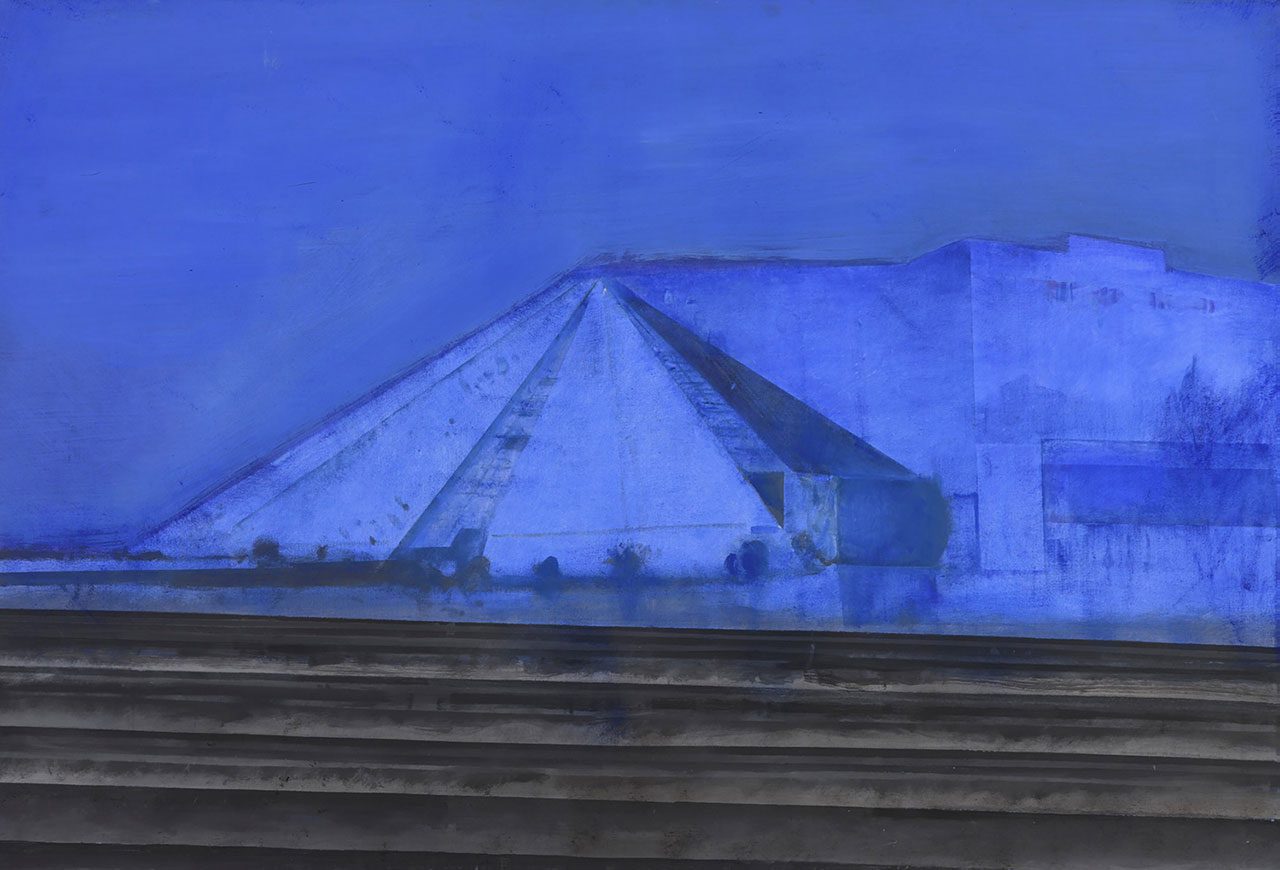
Edi Hila is one of Albania’s most significant contemporary artists. Living and working in Tirana, Hila’s practice reflects the complex social and political transformations of his country, often exploring themes of memory, transition, and everyday life. His work gained international recognition when he represented Albania in the nation’s first-ever pavilion at the Venice Biennale in 1997. Since then, Hila has held major solo exhibitions, his participation in documenta 14, presented across Athens and Kassel, marked a pivotal moment in his career, affirming his status as a central and influential voice within the global contemporary art scene.
By Dimitris Lempesis
Photo: Moderna Museet Archive
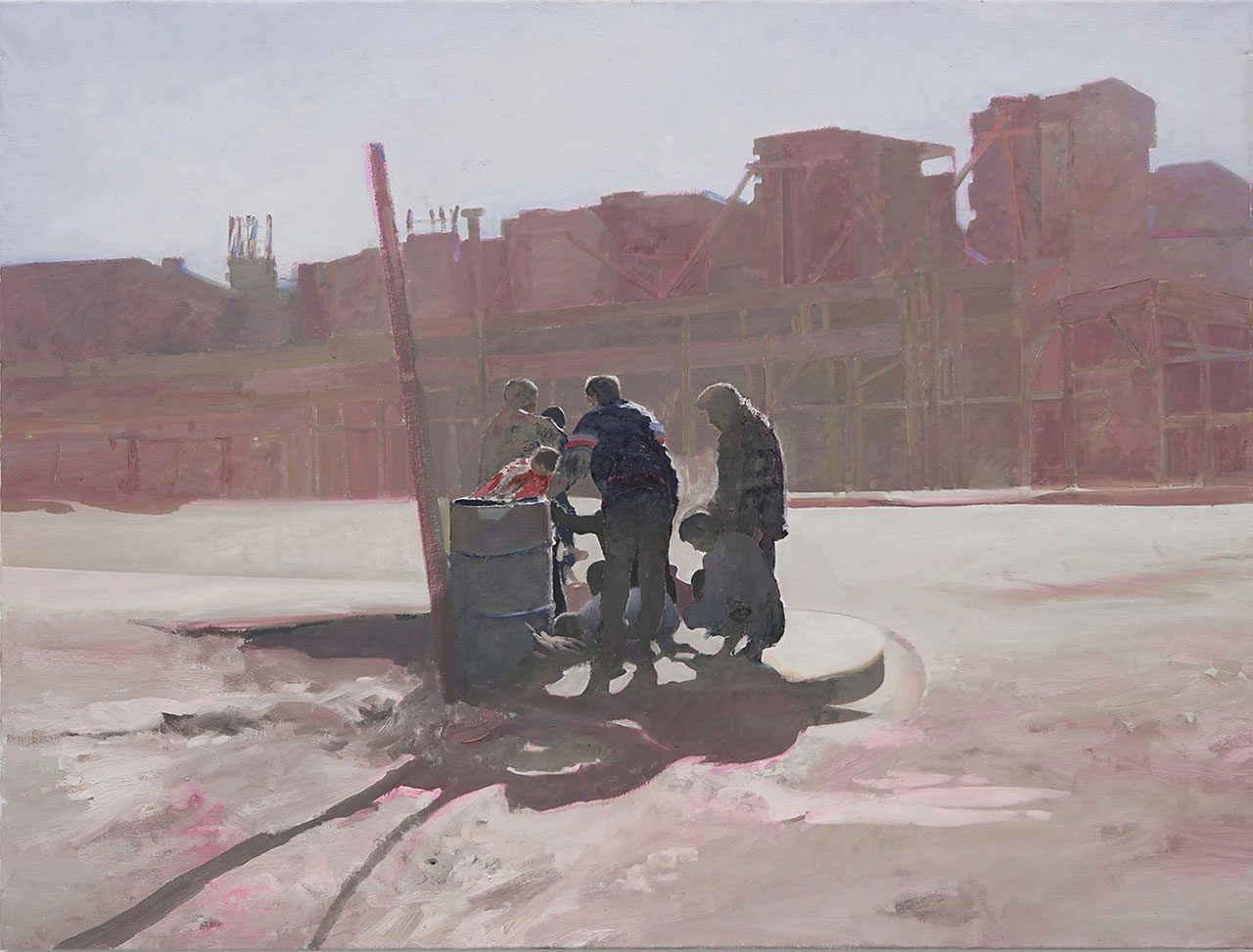
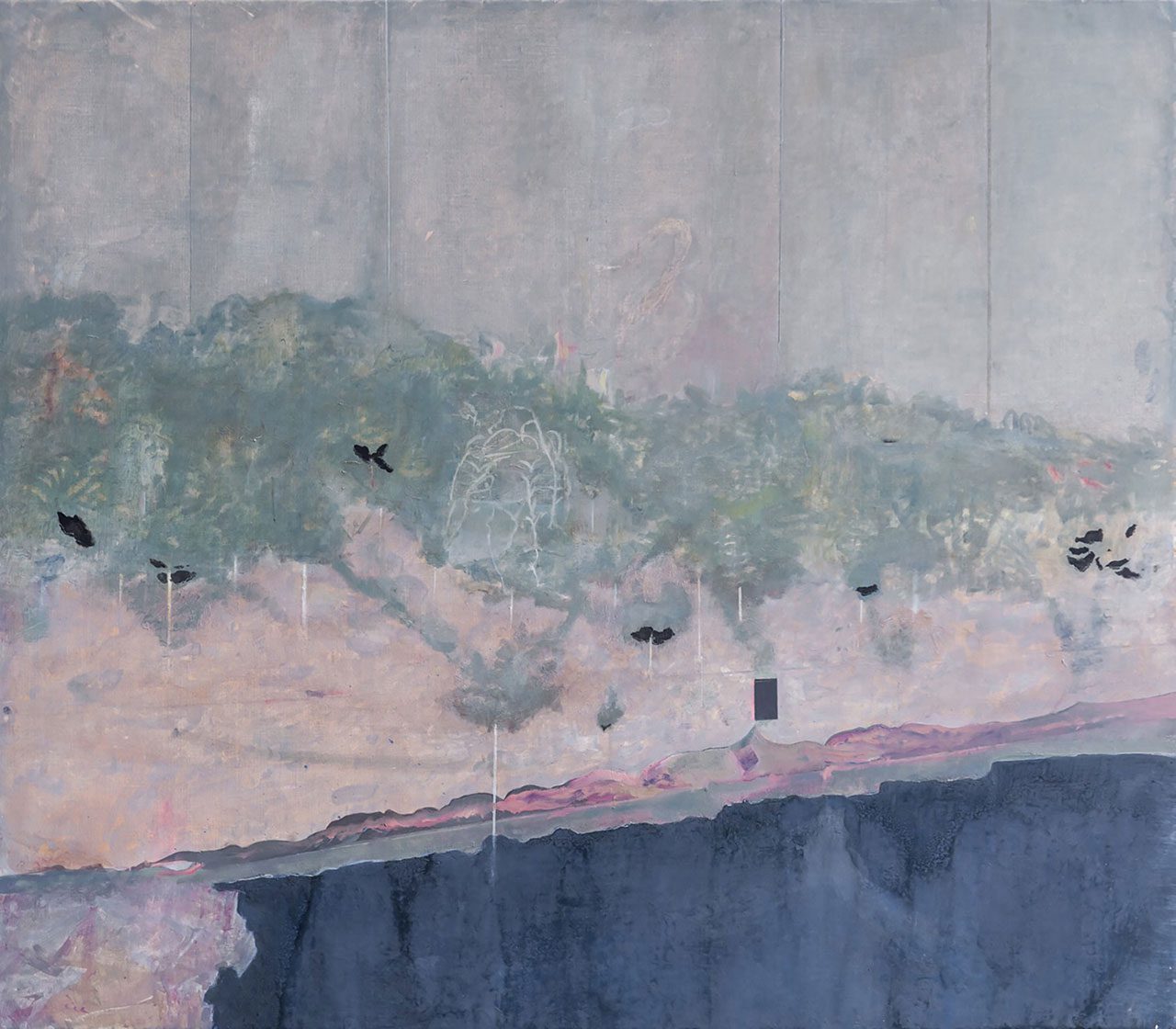
In Edi Hila’s paintings, the fragile beauty of transformation takes form. Through his meticulous brushwork, fragments of everyday reality become timeless meditations on change — the shifting moods, values, and desires that define both Albania’s turbulent past and the uncertain world we inhabit today. With subdued greys offset by tender shades of pink, blue, and gold, Hila renders the emotional topography of a society caught between ruin and rebirth. Now, Moderna Museet Malmö presents “Fracured Horizons”, Edi Hila’s first solo exhibition in Scandinavia, offering an in-depth view of one of the Balkan region’s most influential contemporary artists.
The year 1991 marked the end of one of Europe’s most repressive regimes: Albania’s communist government:. For over four decades, the nation lived in isolation — closed borders, banned passports, and punishments for those who dared to flee. When the regime finally collapsed, the sudden exposure to freedom brought not only hope, but confusion, loss, and disorientation. It was in this fractured landscape that Edi Hila found his voice. Freed from the constraints of Socialist Realism, he developed a distinctive painterly language he calls “paradoxical realism” — a mode that captures the in-between spaces of transition, where utopias dissolve and new dreams tentatively emerge.
“Edi Hila’s paintings from this period speak of enthusiasm, ingenuity, and grand dreams,” notes curator Joa Ljungberg, “but also of the confusion that erupted, and the traces of lawlessness and corruption in cities and natural landscapes. As viewers, we are led through stifling air and dusty streets, yet the stillness and poetic colour palette anchor us in an art-historical tradition that stretches back centuries. His work is deeply entrenched in the aesthetics of the Italian Renaissance.”
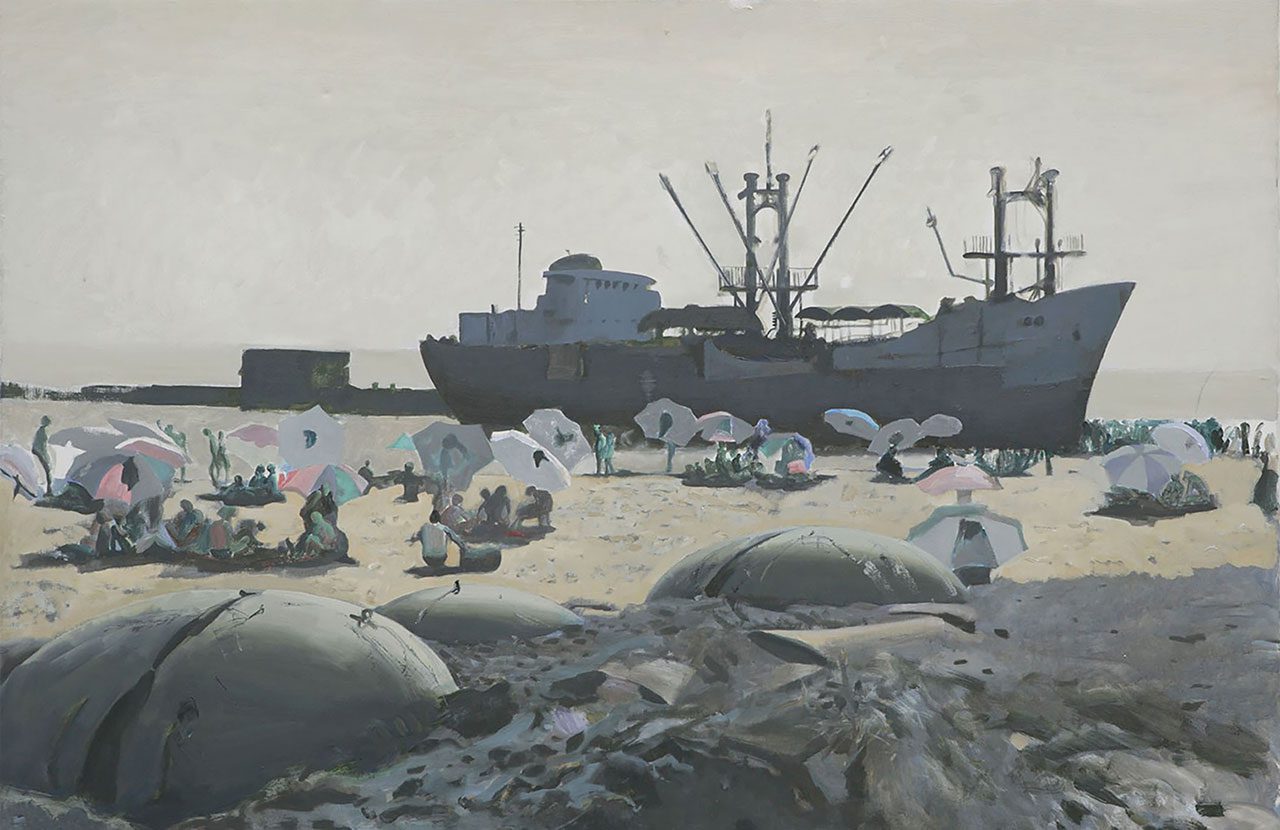
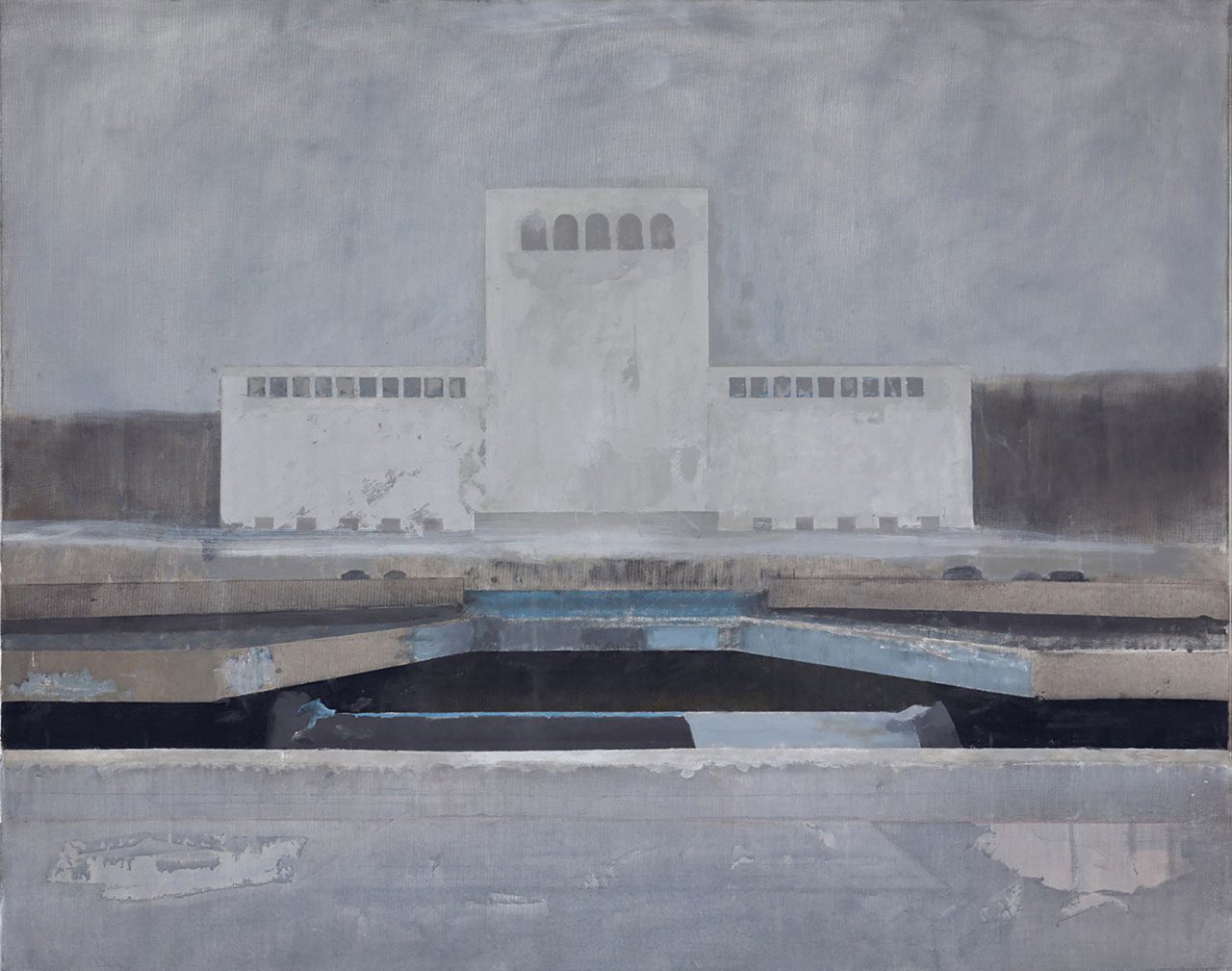
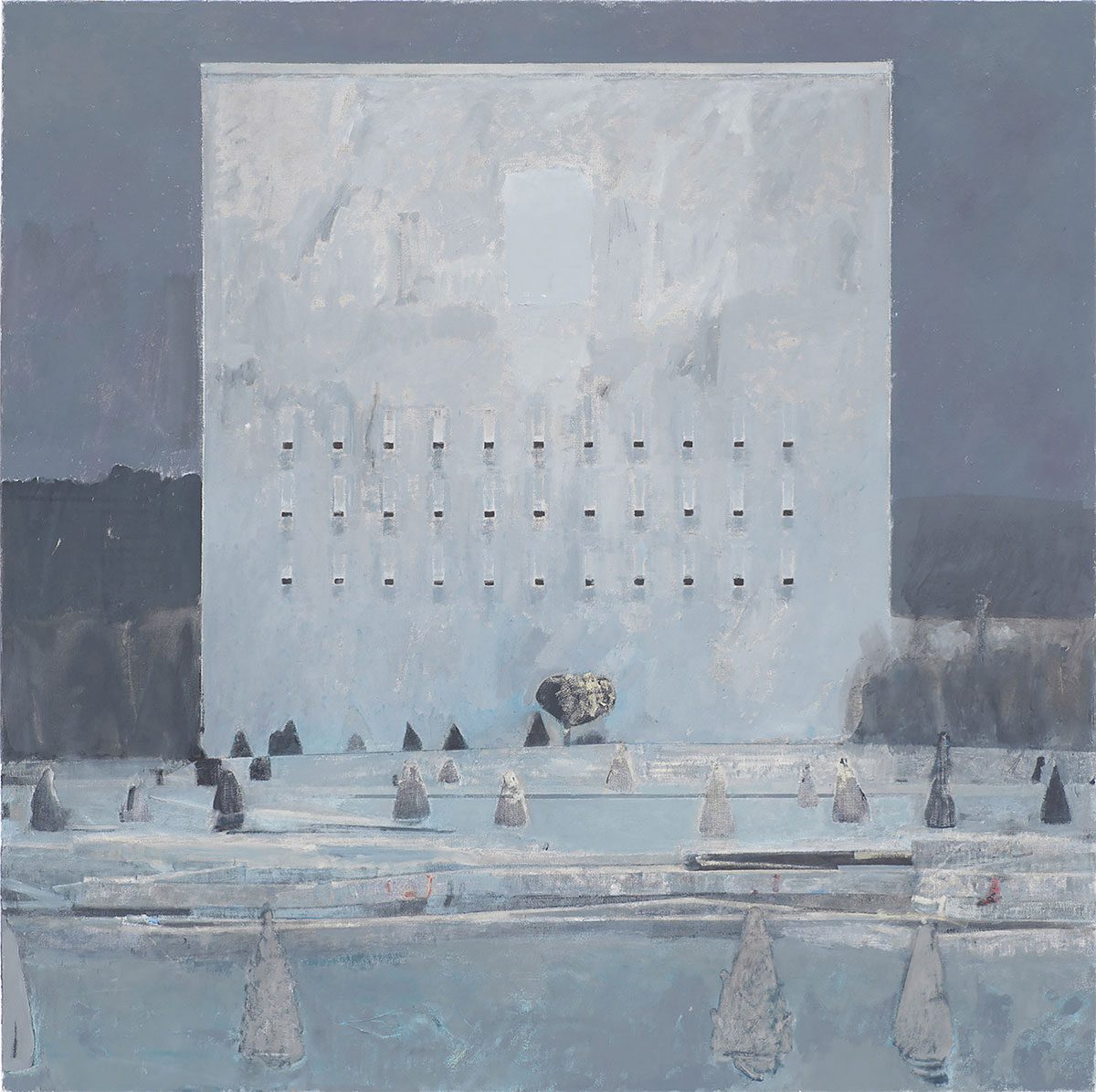
In Hila’s compositions, architecture becomes a metaphor for history itself — monumental, immovable, yet quietly eroded by time. Public buildings rise like sealed monuments, their façades mute custodians of vanished ideologies and forgotten utopias. The viewer’s gaze is often obstructed; the horizon — a symbol of freedom and possibility — remains just out of reach. In other works, a solitary ship cuts through the darkening waters, its deck heavy with the silhouettes of migrants. The scene evokes both peril and promise, reflecting a collective longing to escape the weight of the past and to navigate toward a still-unseen shore.
As global uncertainties deepen, Hila’s gaze extends beyond Albania’s borders. In his more recent works, the tent emerges as a central motif — a temporary architecture that embodies both vulnerability and resilience. It stands as a symbol of refuge, mobility, and coexistence with the natural world. At once poetic and political, the tent signifies survival amid collapse, a fragile shelter when permanence is no longer possible. In some paintings, fractured horizon lines dissolve into crystal-like forms or distant encampments, suggesting both the instability of our present and a restless yearning to move forward.
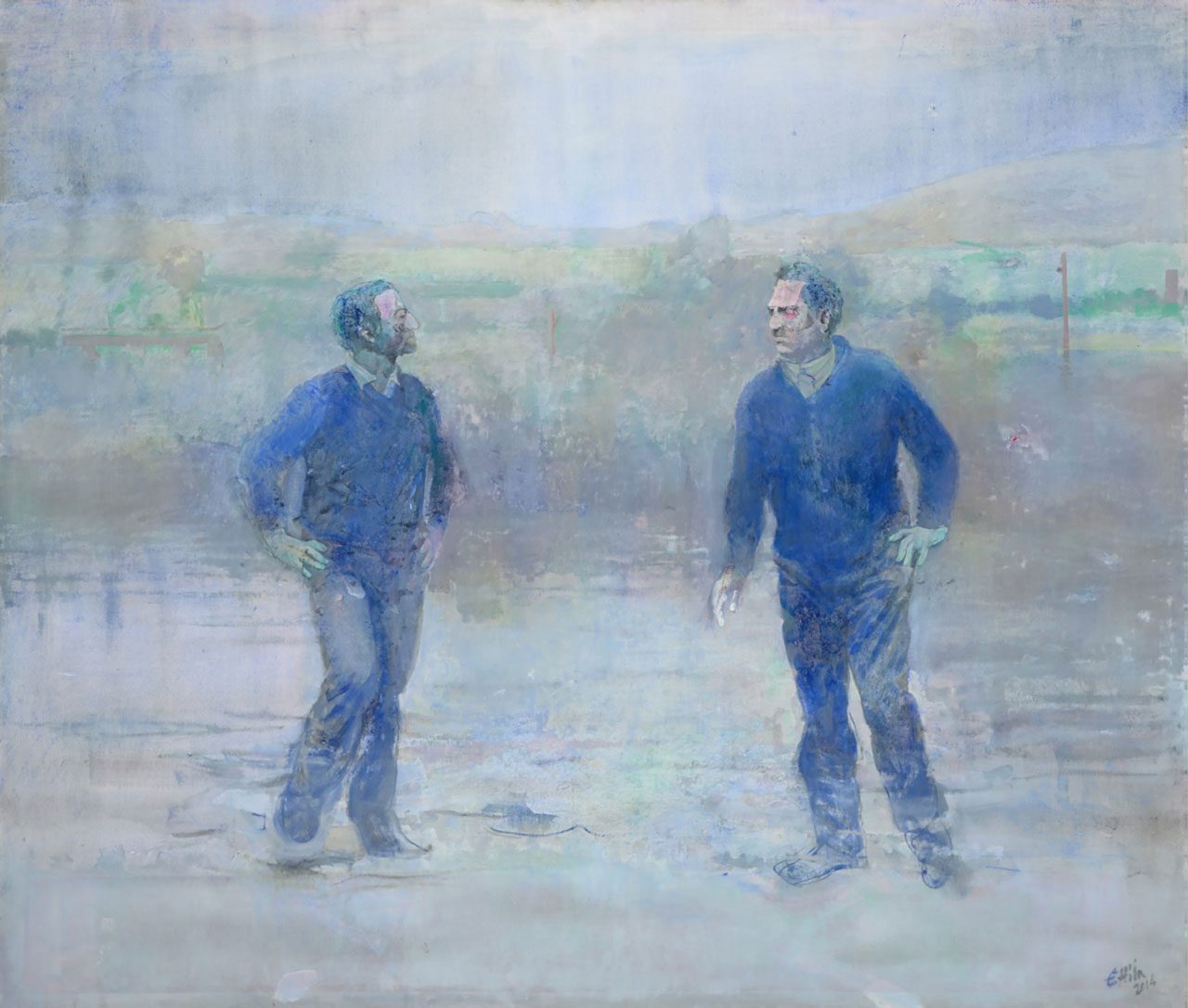
Edi Hila’s art resists the immediacy of documentary realism, preferring instead a slow, meditative gaze. His canvases hold tension between stillness and flux, melancholy and hope. In transforming the social upheavals of Albania into visual poetry, Hila achieves something rare — a universal language of transition. Through his “paradoxical realism,” we glimpse not only a nation’s metamorphosis, but also our own. His work reminds us that history is never distant; it lives in every cracked wall, every shadowed street, every dream deferred yet not forgotten.
Photo: Edi Hila, Pyramides, From the series Relations, 2011 Courtesy Collection Van Abbe Museum, Eindhoven, the Netherlands Photo: Peter Cox Eindhoven, the Netherlands
Info: Curator: Joa Ljungberg, Moderna Museet Malmö, Ola Billgrens plats 2-4, Malmö, Sweeden, Duration: 8/11/2025-12/4/2026, Days & Hours: Tue-11:00-17:00Wed & Fri-Sun, Thu 11:00-19:00, www.modernamuseet.se/
Sager, NYC
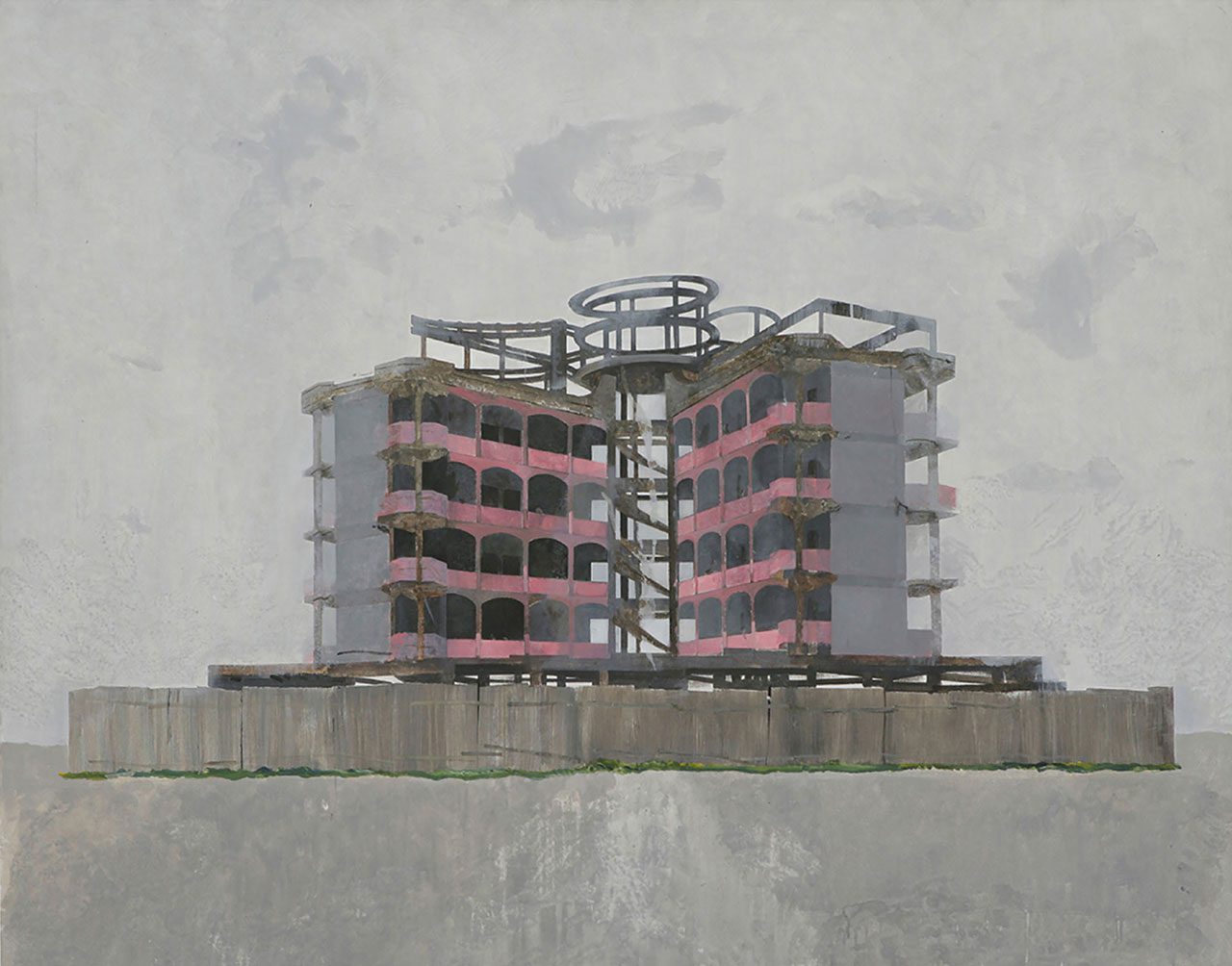
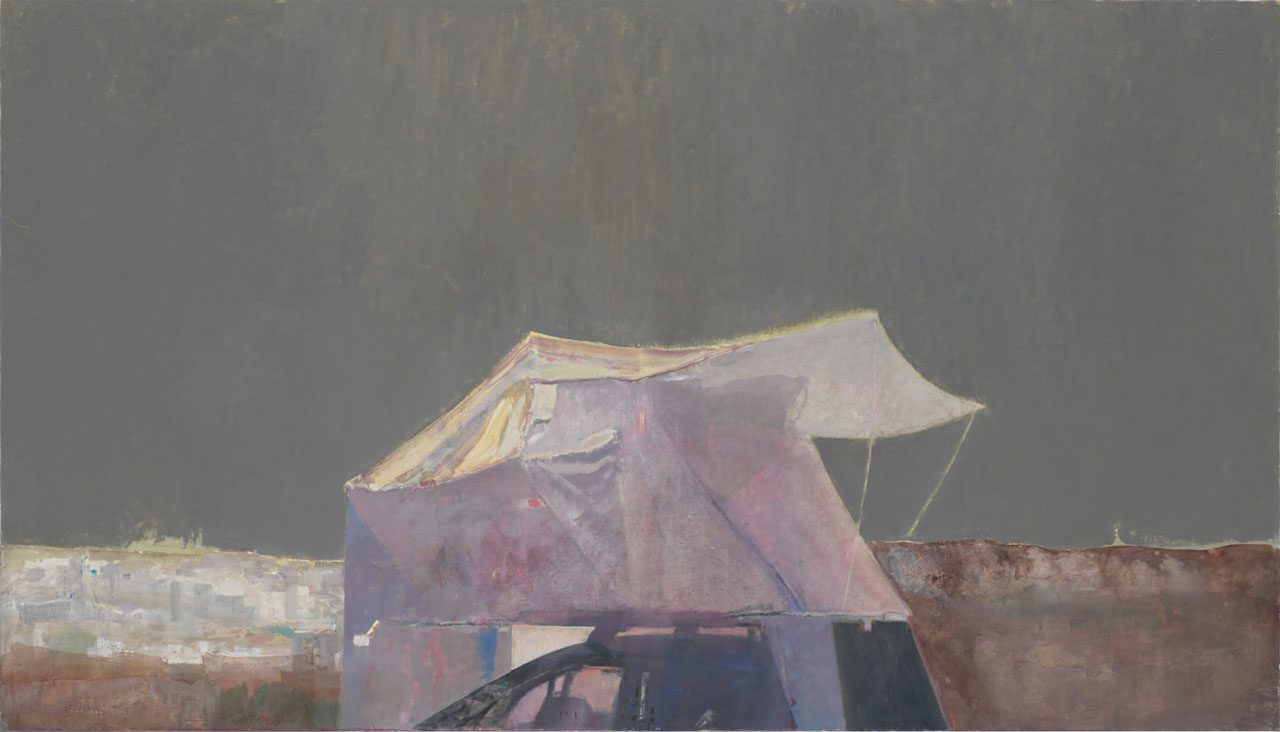
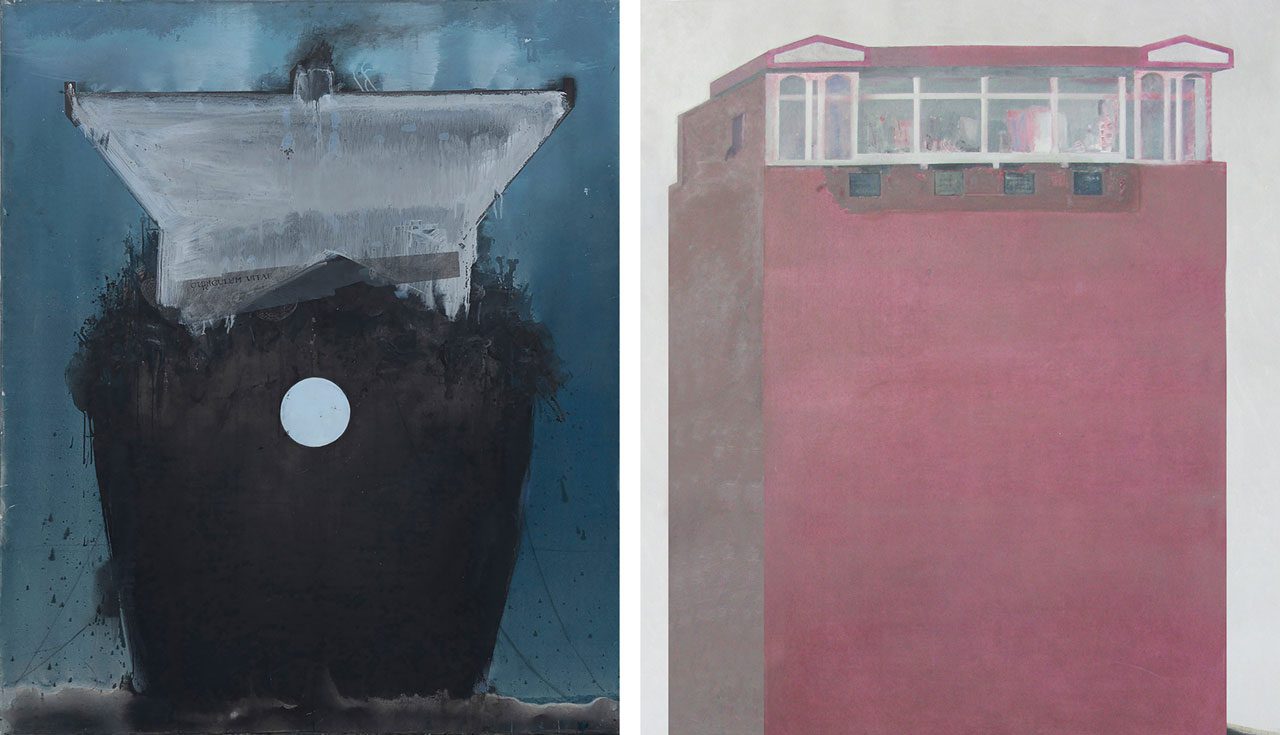
Right: Edi Hila, Penthouse 7, From the series Penthouse, 2013 Collection of the artist, Courtesy Galerie Mitterand