PRESENTATION: Anni Albers-Constructing Textiles
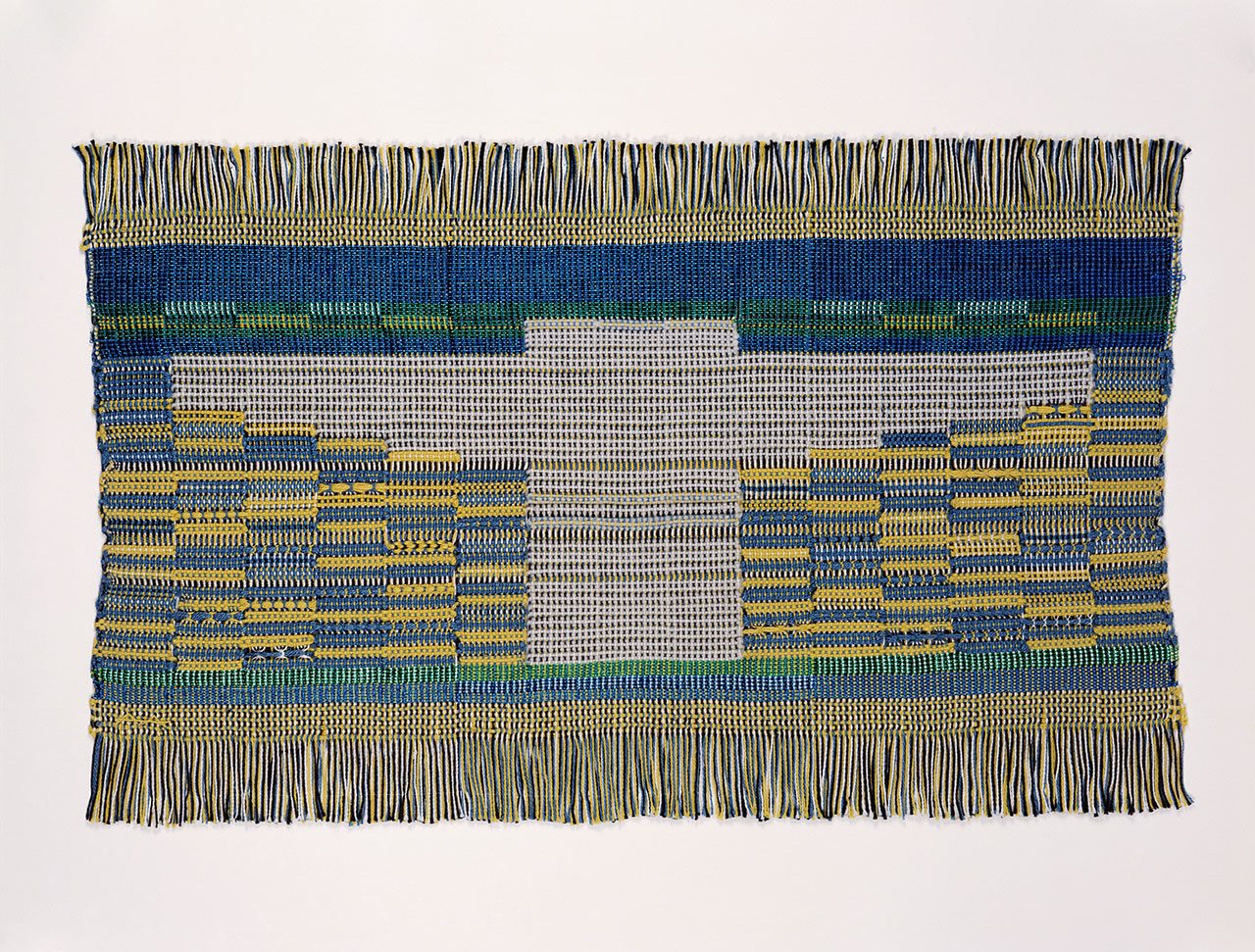
Known for her pioneering graphic wall hangings, weavings, and designs, Anni Albers is considered one of the most important abstract artists of the twentieth century, as well as an influential designer, printmaker, and educator. Across the breadth of her career, she combined a deep and intuitive understanding of materials and process with her inventive and visually engaging exploration of form and color.
By Efi Michalarou
Photo: The Zentrum Paul Klee Archive
The exhibition “Constructing Textiles” explores the deep and enduring dialogue between textile and architecture in the work of Anni Albers. Renowned for her profound understanding of materials and their applications, Albers stands as one of the most innovative figures in modern design. Her explorations into texture, structure, and utility continue to resonate today, particularly in light of contemporary concerns around sustainability, material scarcity, and energy use.
After emigrating to the United States in 1933, Anni Albers established herself as a weaver, designer, and visual artist. Alongside her painterly woven compositions—autonomous works that bridge craft and fine art—she developed a wide range of functional textiles for interiors and architectural spaces, which she called “utility objects.” For Albers, weaving was not merely craftwork but a form of architectural thinking: a process of construction in threads.
The exhibition presents works from across Albers’s career, with a special focus on her architectural interventions, tracing the interplay between art, textiles, and built form—between weaving and building—that defined her vision.
Anni and her husband, the artist Josef Albers, arrived in New York Harbor on Thanksgiving Day in 1933, bound for the newly founded Black Mountain College in North Carolina. Invited by architect Philip Johnson, Josef was to establish a curriculum in visual design. Both had been leading figures at the Bauhaus, which had been forced to close earlier that year under Nazi pressure.
Soon after their arrival, the couple began traveling extensively in Latin America—especially to Mexico, Chile, and Peru. Anni, who had already studied pre-Columbian textiles and artifacts at the Museum of Ethnology in Berlin, was deeply inspired by the techniques, patterns, and colors of Mesoamerican and Andean weavers and potters. These encounters profoundly shaped her artistic language.
In 1936, Albers created “Ancient Writing”, one of her first “pictorial weavings.” Loosely woven with black rayon and punctuated by geometric forms in pale threads, the work evokes ancient symbols and inscriptions—an abstract meditation on the origins of written language. Decades later, in her seminal text “On Weaving” (1965), she would dedicate her work “to my great teachers, the weavers of ancient Peru.”
Language, code, and communication became recurring motifs in Albers’s art. Her 1962 weaving “Code”, with its irregular knots and supplementary weft threads, recalls the khipu—the intricate knotted recording devices used by the ancient Andean peoples. Through these tactile systems of signs, Albers translated the concept of language into the language of threads. After 1963, she expanded these explorations into her works on paper, probing the boundaries between writing, structure, and material.
Annelise Else Frieda Fleischmann—who would become Anni Albers—joined the Bauhaus weaving workshop in Weimar in 1922. After marrying Josef Albers in 1925, she modernized her name and artistic identity. Among her key influences was Paul Klee, whose teaching in the weaving department inspired her for decades to come. With little formal instruction, the young Bauhaus weavers learned through hands-on experimentation, discovering material properties directly at the loom. This spirit of inquiry became the foundation of Albers’s lifelong approach.
For Albers, weaving was construction—an architectural act in miniature. Her early commissions at the Bauhaus demonstrated this philosophy vividly. In 1930, at the request of Bauhaus director Hannes Meyer, she designed acoustic wall textiles for the ADGB Trade Union School in Bernau. Her material innovation was remarkable: the back of the fabric, made from chenille yarn, absorbed sound, while the cellophane front reflected light with a silvery glow. This interplay of material and function would remain central to her work for decades.
In the U.S., Albers continued to develop textiles that engaged with space and architecture. Between 1948 and 1950, Walter Gropius commissioned her to create fabrics for the Harvard Graduate Center dormitories. The resulting checked bedspreads were both practical and visually dynamic—designed to brighten the modernist interiors while concealing wear from “dirty shoes and cigarette burns.”
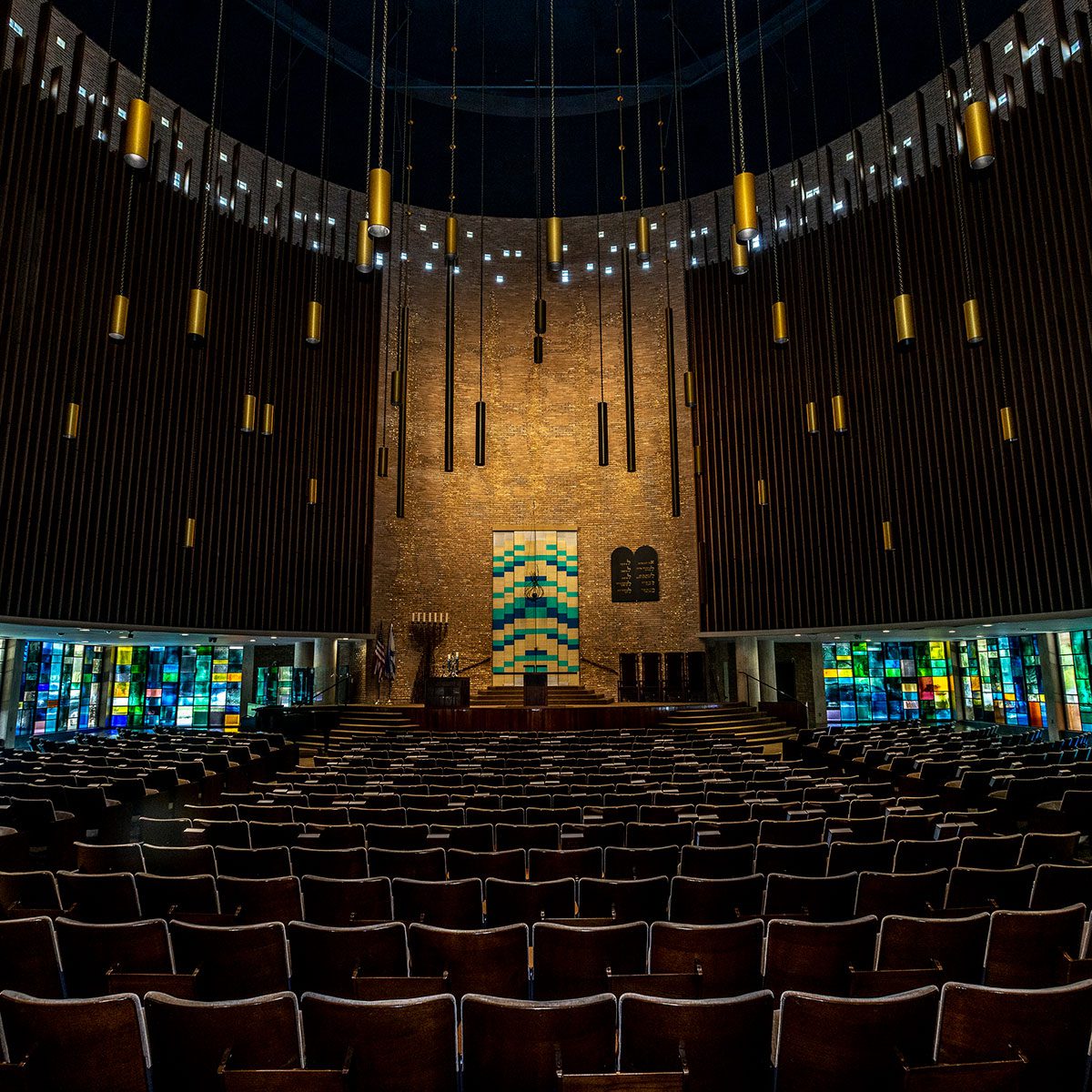
Her sensitivity to environment extended to sacred spaces as well. For Dallas’s Temple Emanu-El (1957), she designed eight shimmering panels in metallic Lurex threads—movable, luminous textiles that defined the atmosphere of the vast sanctuary. These and other architectural collaborations are featured in the exhibition through large-scale photographs and original textile samples.
In 1949, Anni Albers became the first textile artist to receive a solo exhibition at the Museum of Modern Art in New York. Anni Albers: Textiles traveled to 26 museums across the United States and introduced her pioneering use of materials such as cellophane and jute in flexible, semi-transparent room dividers—an elegant alternative to rigid architectural partitions.
At the Zentrum Paul Klee, Albers’s textiles are presented not as static artworks but as spatial elements—continuing her conviction that weaving should occupy “the place of a contributing idea in architecture.” Through her visionary synthesis of art, design, and structure, Anni Albers redefined what it means to build with thread.
Photo: Anni Albers, Sheep May Safely Graze, 1959, Cotton and synthetic fiber, 36,8 × 59,7 cm, The Museum of Arts and Design, New York, gift of Karen Johnson Boyd, through the American Craft Council, 1977, © 2025 The Josef and Anni Albers Foundation/ProLitteris, Zurich
Info: Curators: Fabienne Eggelhöfer and Brenda Danilowitz. Zentrum Paul Klee, Monument im Fruchtland 3, Bern, Switzerland, Duration: 7/11/2025-22/2/20266, Days & Hours: Tue-Sun 10:00-17:00, www.zpk.org/
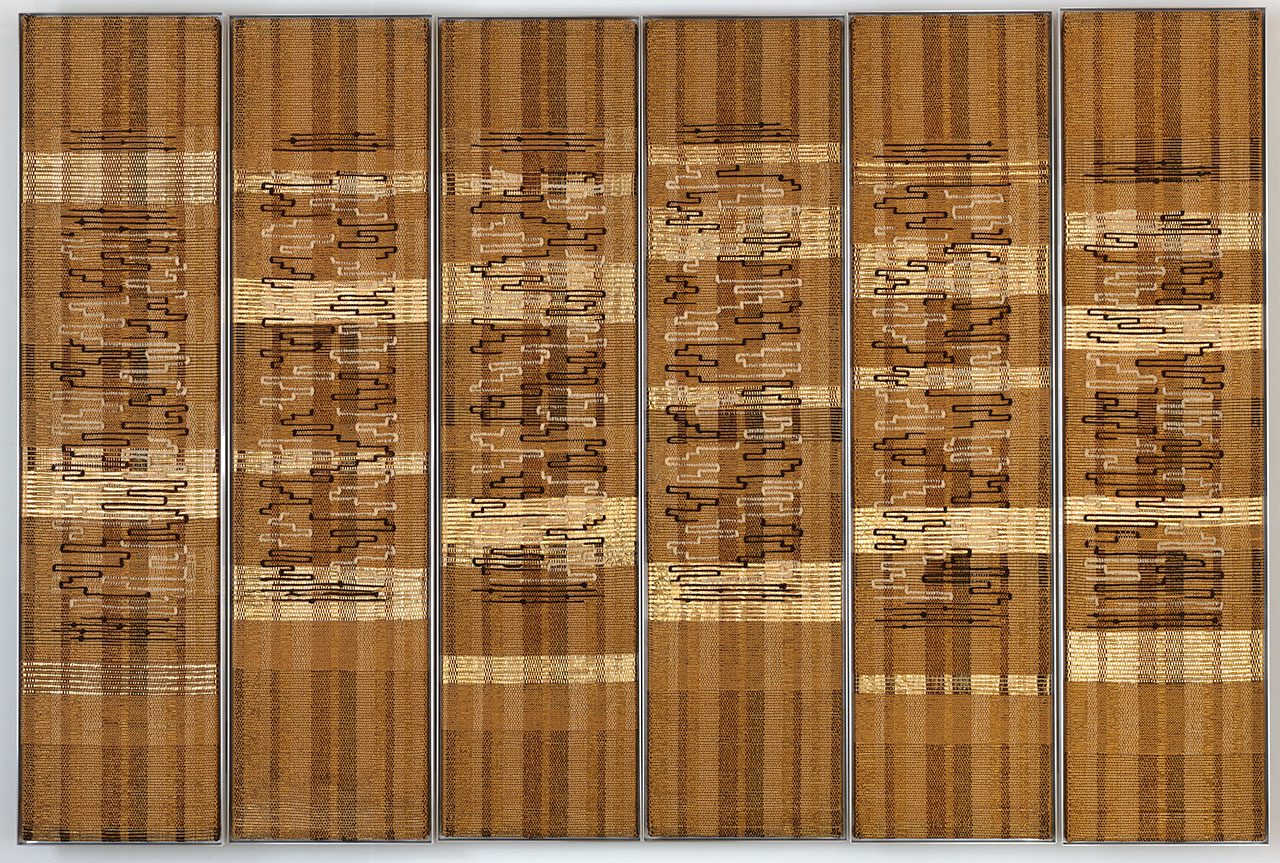

Right: Anni Albers, Code, 1962, Cotton, hemp and metallic thread, 58,4 × 18,4 cm, Photo: Tim Nighswander / Imaging4Art The Josef and Anni Albers Foundation, Bethany, CT, © 2025 The Josef and Anni Albers Foundation/ProLitteris, Zurich
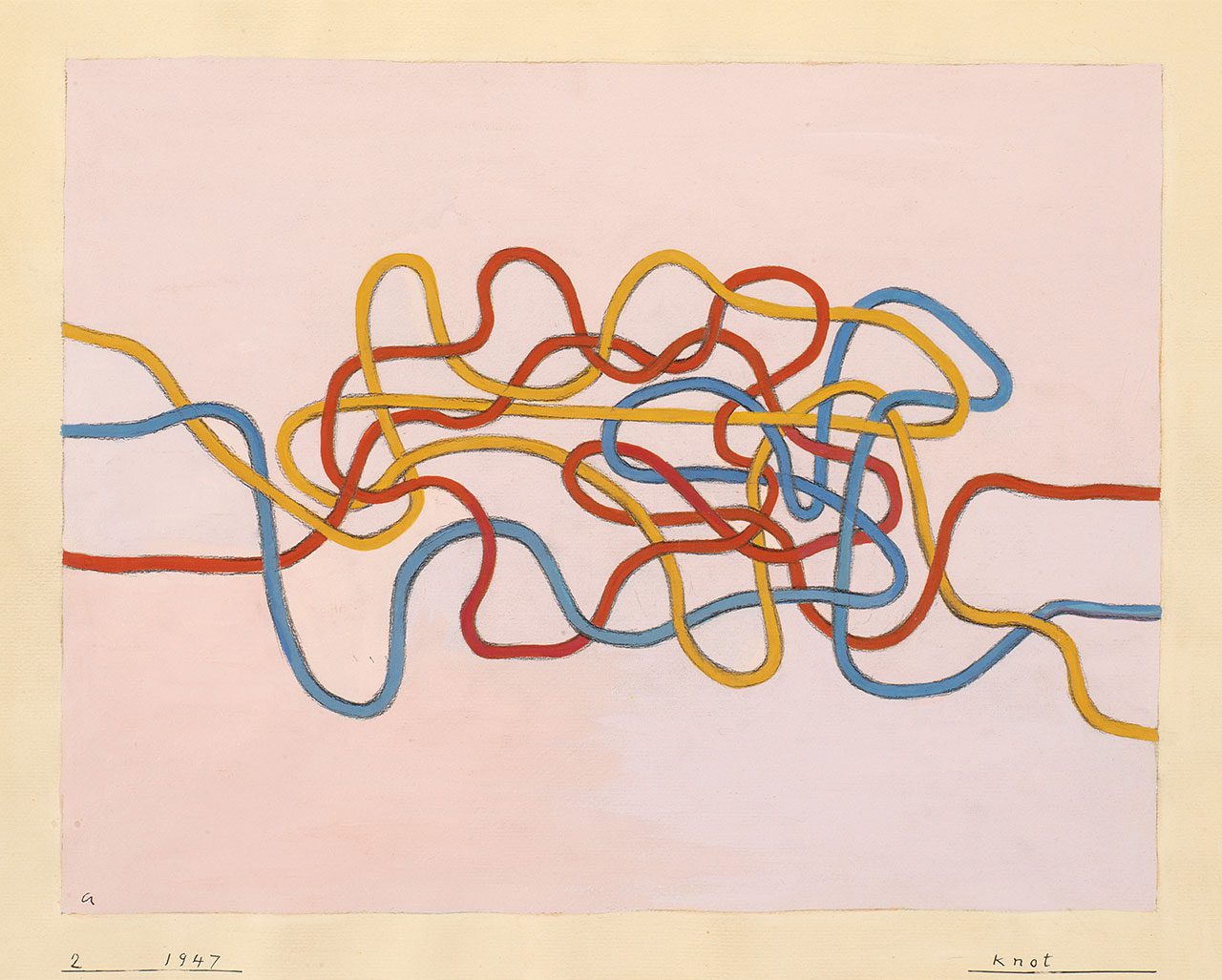
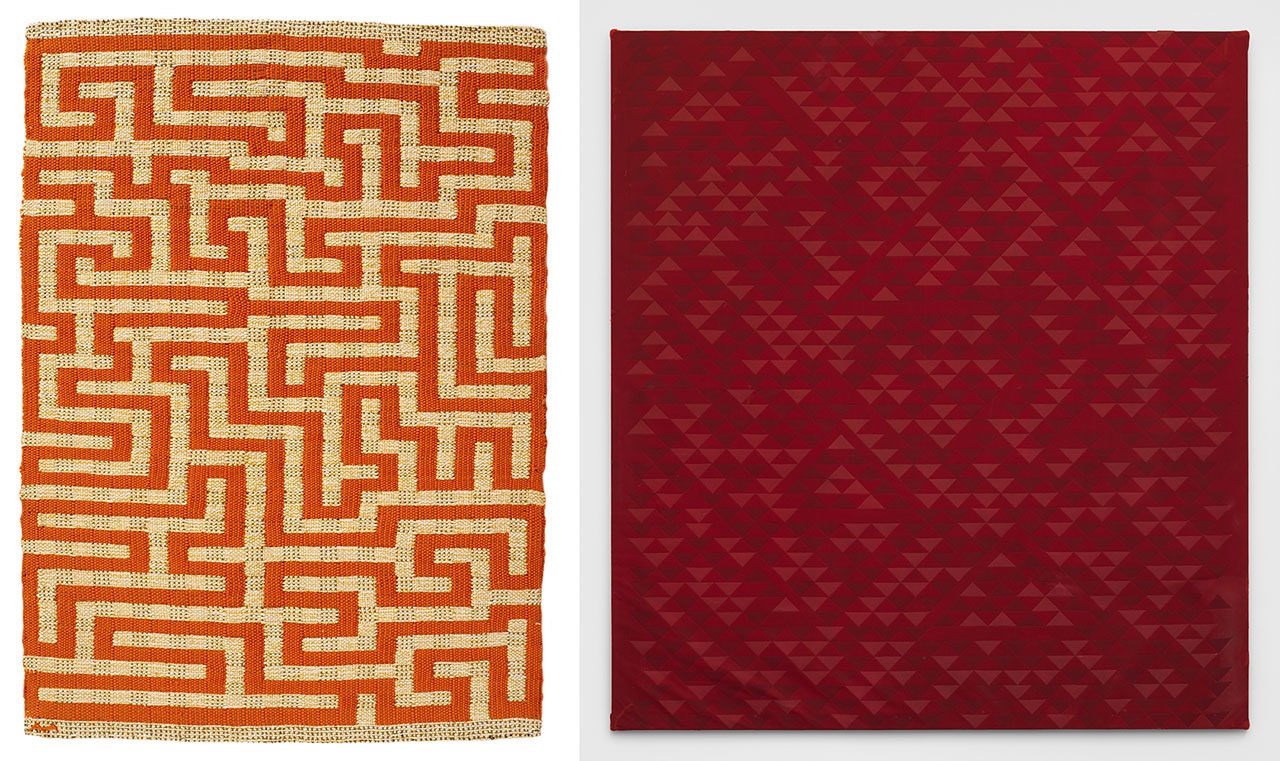
Right: Anni Albers, Camino Real, 1968, Wool and cotton, 294 × 269 cm, Private Collection, © 2025 The Josef and Anni Albers Foundation/ProLitteris, Zurich Courtesy The Josef and Anni Albers Foundation and David Zwirner
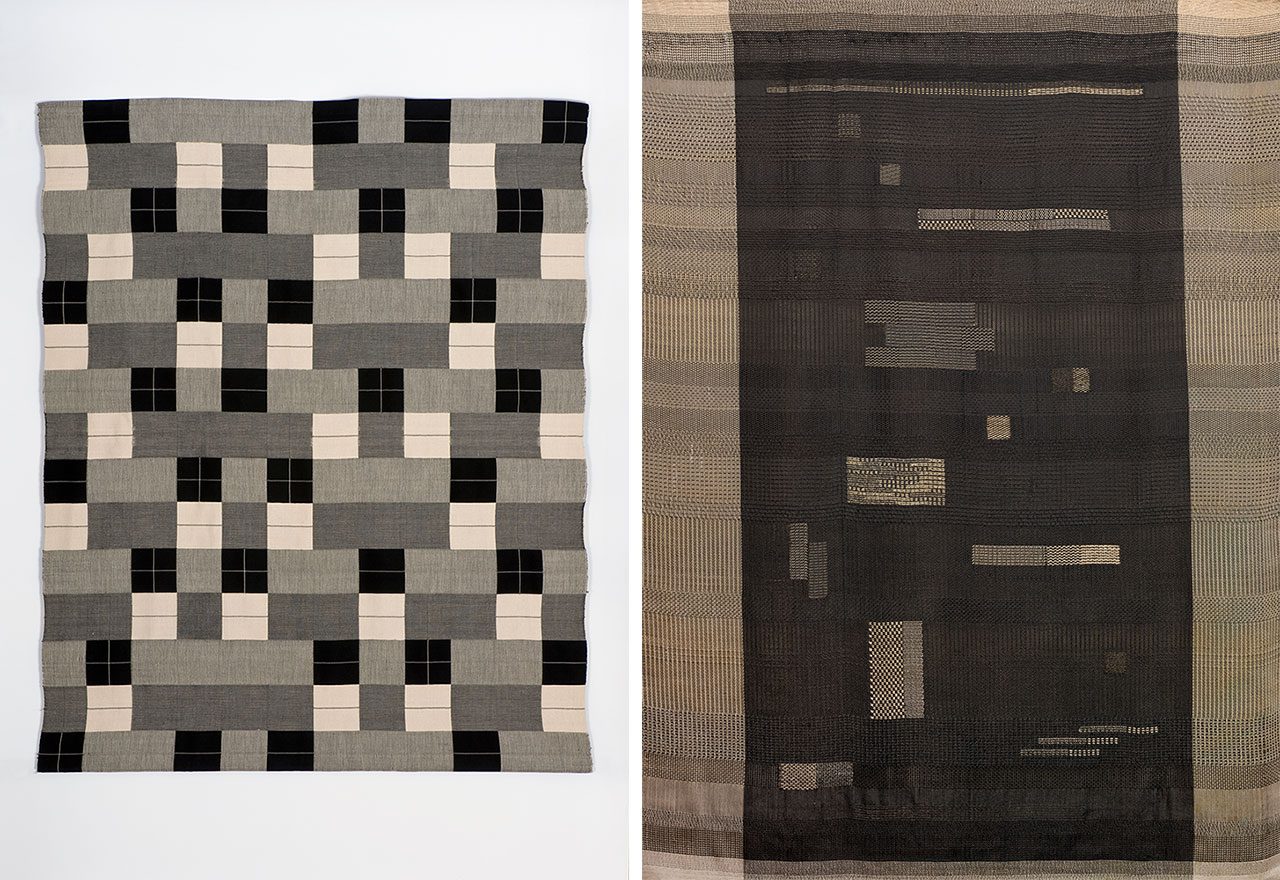
Right: Anni Albers, Ancient Writing, 1936, Cotton and rayon, 150,5 × 111,8 cm, Smithsonian American Art Museum, Washington, D.C., Gift of John Young Foto: bpk / Smithsonian American Art Museum / Art Resource, NY