
ART NEWS: Nov.01
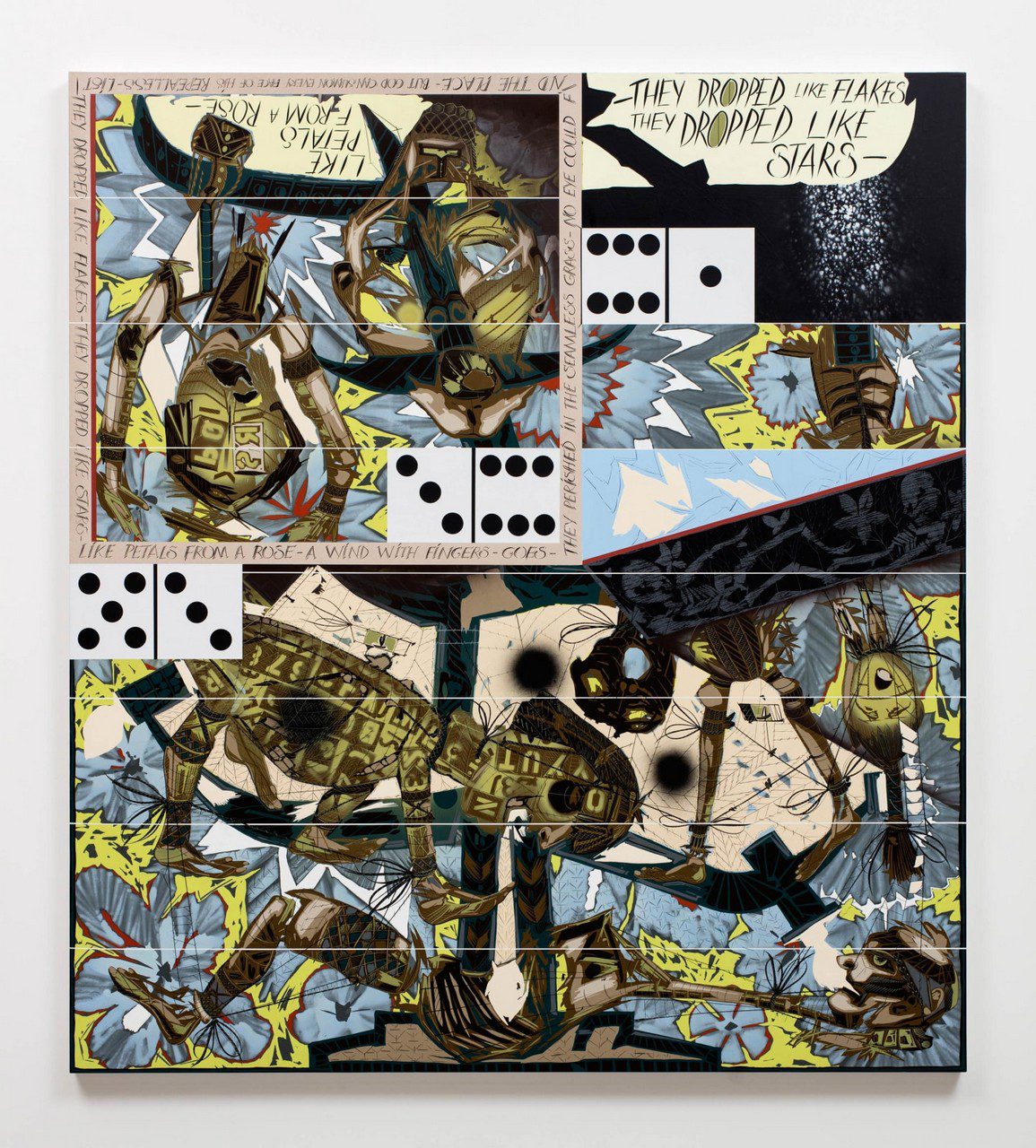 Lari Pittman’s solo exhibition “Caprichos and Nocturnes” focuses on his “Nocturne” and “Capricho” series. Created in 2015, both series share a visual language of symbolic text and art historical references as Pittman interweaves literature, history, craft, and decorative arts into intricate compositions. The “Nocturne” series unfolds as a visual analogue to the musical form, offering romantic, dreamlike reflections on the mysteries of night. Against dark, star-strewn grounds, Pittman layers recurring motifs of eggs and hybrid robotic creatures, conjuring scenes that feel at once ancient and futuristic. His restrained palette of mauves, earthy yellows, greens, and browns imbues the works with a quiet intensity, while the recurring egg motif suggests regeneration. Departing from his long-standing engagement with horror vacui, these works introduce a sense of visual openness, allowing the compositions to breathe. By contrast, the “Capricho” series adopts a more somber register, juxtaposing violence and decay with utopian fantasy to investigate trauma and power as culturally and historically transmitted structures. Here, Pittman pays homage to “Los Caprichos”, the late-18th-century etchings by Francisco Goya that exposed the brutality of human behavior and the oppressive social conditions of his time. He also embeds the works with excerpts from Emily Dickinson’s poetry—specifically regarding the body, pain, and death. Info: Lehmann Maupin Gallery, 213 Itaewon-ro, Yongsan-gu, Seoul, Korea, Duration: 6/11-27/12/2025, Days & Hours: Tue-Sat 11:00-19:00, www.lehmannmaupin.com/
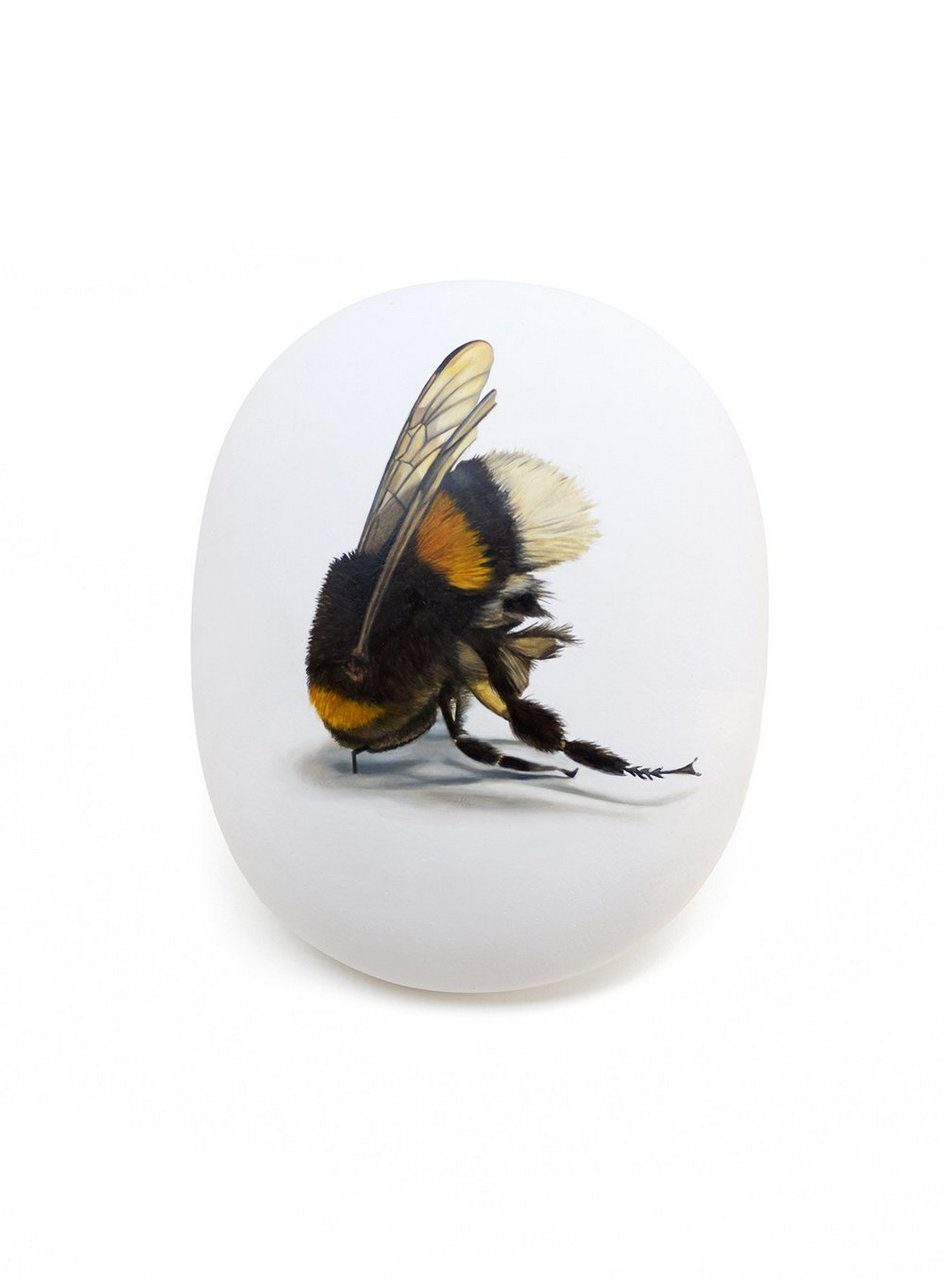 With the exhibition “Natures Molles”, French multidisciplinary artist France Bizot revisits the great traditional artistic themes — such as still life and the nude — through a poetic exploration of form, medium, and perception, expressed in two series on ceramics and on wood. Rather than spreading oils on canvas, Bizot chooses ceramics that she shapes herself as the setting for her work: forms of almost ideal roundness, offered to painting like fragile, living spheres. Each piece is unique, a return to the earth and to the simplicity of everyday objects. Lemons, eggs, and balloons become familiar shapes that recall the great masters, from Cézanne to Chardin, but here the artist inscribes them within a decidedly contemporary approach. Alongside this dominant theme of still life, Bizot also turns her gaze to the representation of the nude, following in the footsteps of past masters, notably in the mannerist odalisques beloved of Ingres or Parmigianino. Indeed, does not a series of balloons weave, with subtlety, an unexpected dialogue between the fragility of still life and the unsettling intimacy of the nude? The curve of the ceramic embraces the painted forms, creating a visual and symbolic continuity. The rounded works heighten this sense of weightlessness, as if floating upon the gallery walls. Info: Backslash Gallery, 29 rue Notre-Dame de Nazareth, Paris, France, Duration: 6/11-20/12/2025, Days & Hours: Tue-Sat 14:00-19:00, www.backslashgallery.com/
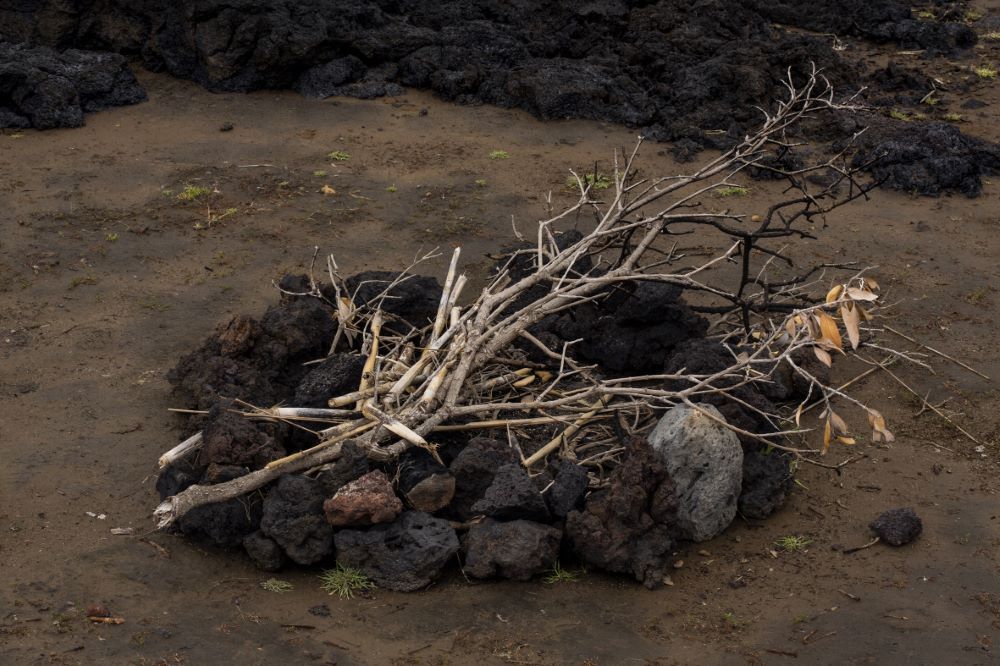 Like the swirl of dust that forms before our eyes in the video that gives Manuela Marques’ exhibition its title, “Vortex” seems to be infused with the same breath: as the natural phenomena that animate the earth’s system. Winds, storms, clouds, marine and atmospheric currents, as well as volcanic and seismic forces, run throughout the exhibition. Several photographs in the exhibition suggest passages, changes of state between the elements, such as the waves of a rough sea that seem to or the clouds that evoke the formation of a column of volcanic ash in the diptych. Other images, such as the storm Manuela Marques perceives in a moving head of hair telescope different scales of space and time – from the telluric scale to that of the human body, from astronomical time to the subjective experience of the present. Each of them brings into play our relationship with phenomena that are as much beyond us as they determine our very existence. Bringing together twelve photographs taken between 2019 and 2022, the “wall of images” that Manuela Marques imagined for the exhibition reinforces these effects of scale, correspondences and passages between natural elements. Another set of four photographs, “Records” (2018), can be seen as the “eye” of the vortex around which the exhibition revolves. Info: Galerie Anne Barrault, 51 rue des Archives, Paris, France, Duration: 6/11/2025-10/1/2026, Days & Hours: Tue-Sat 11:00-19:00, https://galerieannebarrault.com/
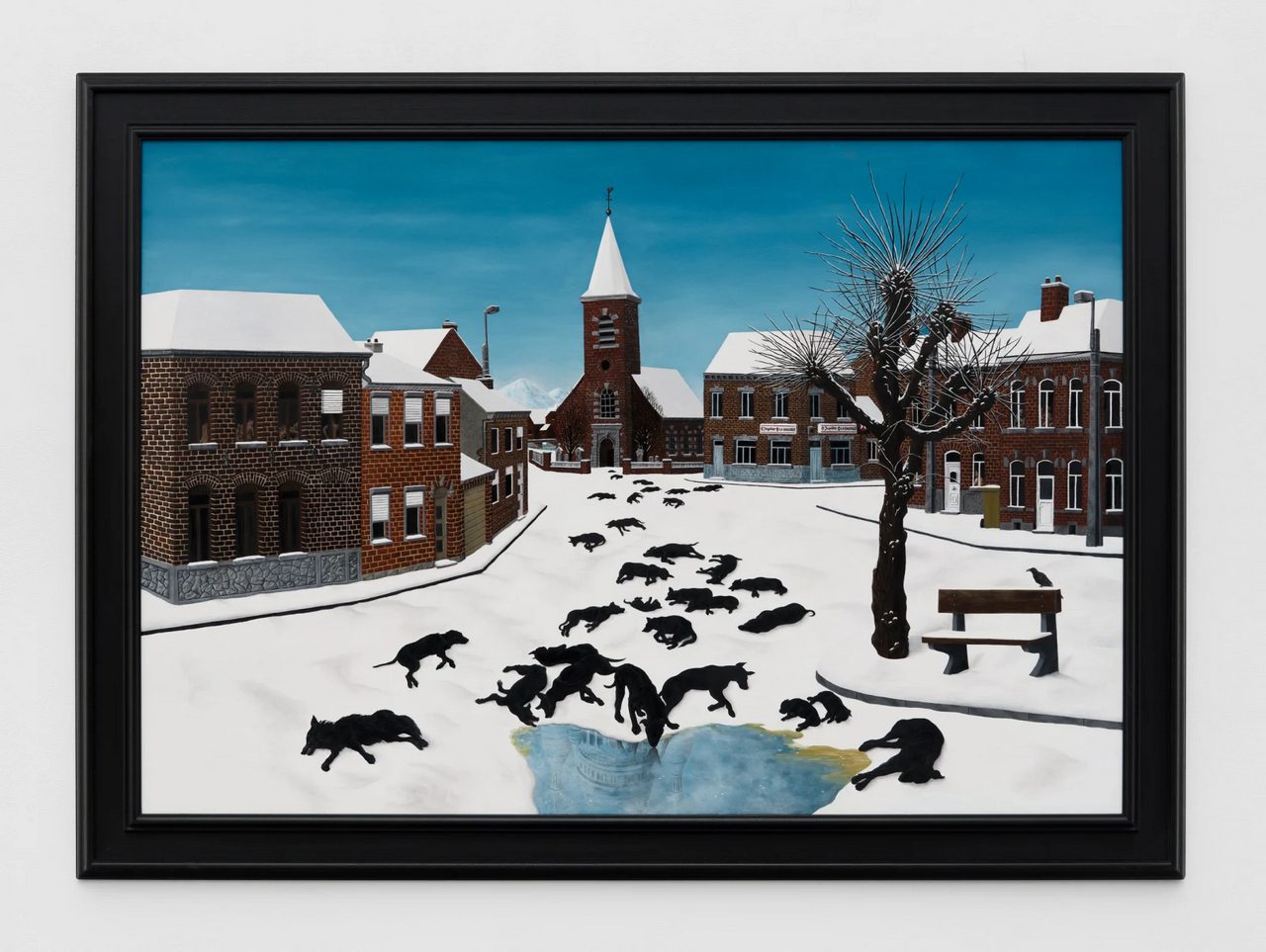 With a singular ensemble of eleven paintings, Sacha Cambier de Montravel carries the viewer into a snow-covered landscape at the heart of post-industrial Flanders. The exhibition “I sat Beauty on my knees. – And I found her bitter” resonates with the Flemish pictorial tradition of the sixteenth century, with Brueghel the Elder as its foremost figure. The architecture of the region forms the backdrop for a wandering in which the protagonists yield to gestures that are at once sensual and destructive. Here, the wounds of the present continue this tradition: human and canine figures evoke the contemporary homosexual condition, while the frozen surfaces turn into mirrors of a world in search of meaning. The choice of wood panels as medium, echoing ancient practices where art and craftsmanship converge, imparts a distinctive materiality to the work. The grain of the wood, still perceptible beneath the paint, engages with sculpted frames that suspend each scene in a space poised between past and present. This temporal dimension continues in his reinterpretations of historical works, most notably “The Massacre of the Innocents-“Brueghel’s masterpiece-which he transposes onto the village of Esplechin, set against an architectural backdrop marked by the legacy of the coal-mining era. The monumental tree emblematic in this painting, borrowed from the Flemish painter but enlarged, seems to have survived the centuries as a silent witness to violence: from the massacres perpetrated under the Duke of Alba¹ to the persecution of homosexuals today. In the frozen puddle, the image of the Sacré Coeur emerges as an echo of the violence of the Paris Commune. Info: Galerie Nathalie Obadia, 8 rue Charles Decoster, Brussels, Belgium, Duration: 6/11/2025-10/1/2026, Days & Hours: Tue-Sat 10:00-18:00, www.nathalieobadia.com/
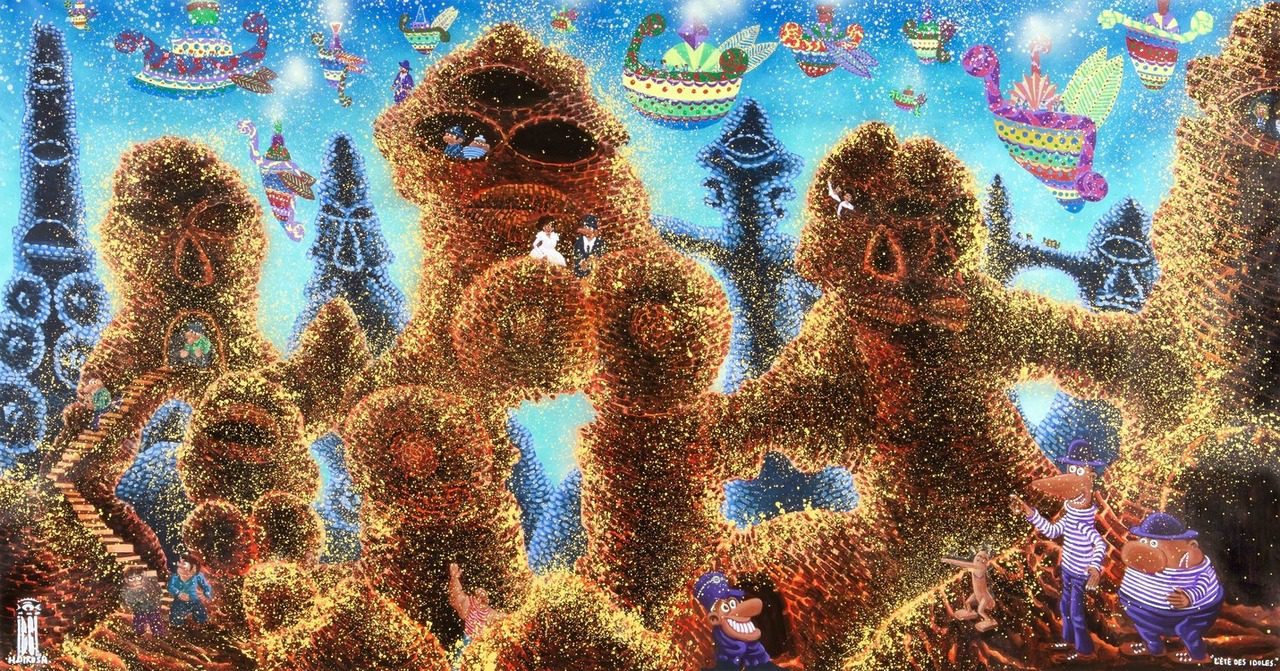 Hervé di Rosa’s solo exhibition “Idolâtries” , is the second chapter of a cycle initiated in Paris with “Idoles et trésors” confirms the vitality of an oeuvre which, for more than forty-five years, has sought to dismantle disciplinary boundaries and to reconcile popular culture with the legacy of art history. A central figure of the French artistic movement Figuration Libre, Di Rosa invents worlds where the grotesque contests the marvellous, where comic strips cross paths with the shadow of Brueghel, where African sculpture enters into dialogue with the Flemish Renaissance. In Brussels, he irreverently revisits Brueghel’s monumental cycle of the seasons: snowy landscapes, fairy-like ruins, and chimerical architectures become the stage for an unbridled mythology, saturated with colour and populated by jubilant, often trivial figures. The exhibition extends beyond painting: ceramic sculptures created in Cameroon and Portugal are presented alongside vast canvases, abolishing any hierarchy between image and object, fine arts and so-called minor arts. In this deliberate polymorphism, Di Rosa scrambles the maps of artistic orthodoxy and reaffirms the legitimacy of all forms of expression. A great traveller and keen observer, he summons memories of Mexico and Cameroon as readily as the visions of Piranesi or Hubert Robert to weave a fractured narrative, stripped of moral constraints. Info: Templon Gallery, Veydtstraat 13, Brussels, Belgium, Duration: 6/11/2025-10/1/2026, Days & Hours: Tue-Sat 11:00-18:00, www.templon.com/
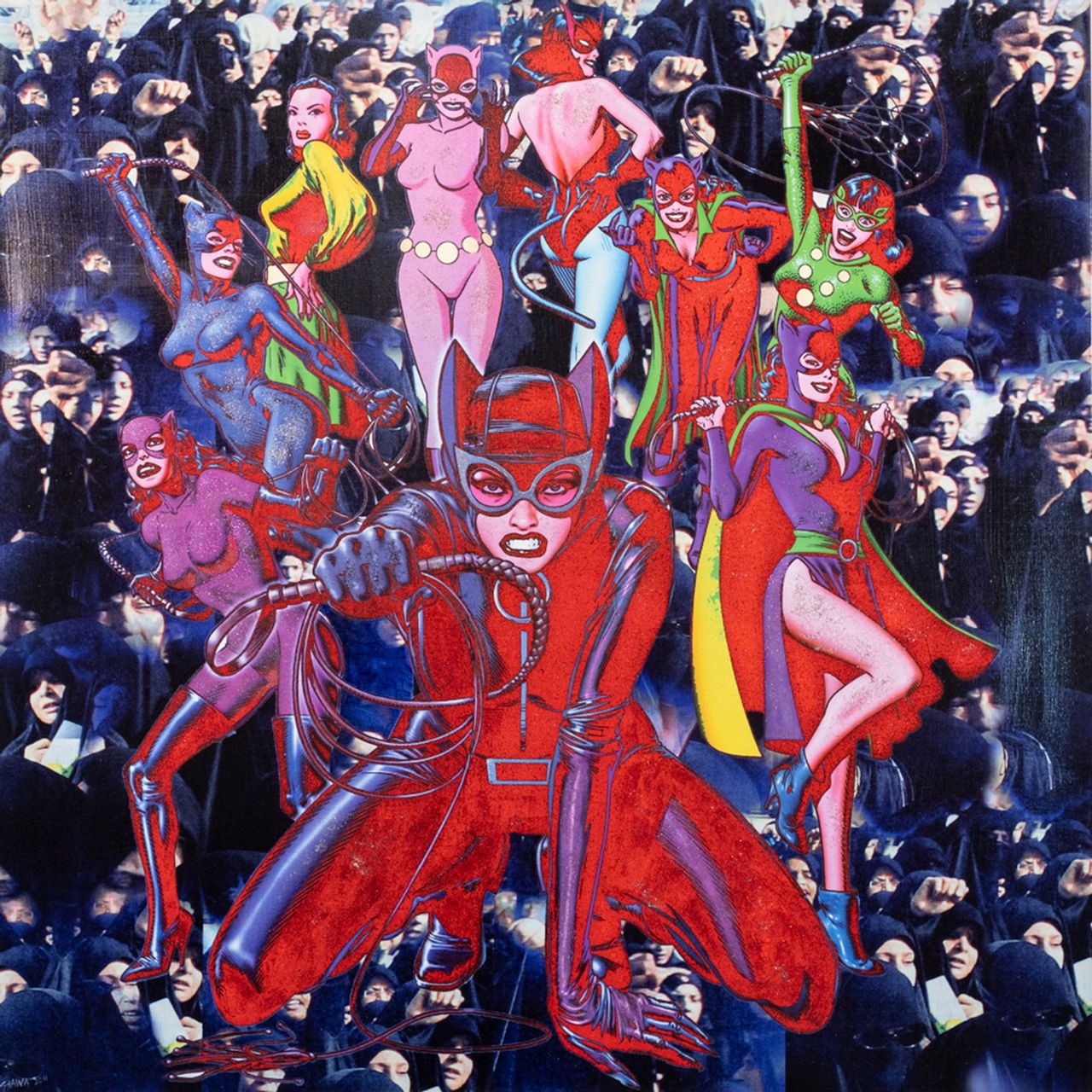 The exhibition “Inside Paradise” presents the works of the iconic Palestinian artist Laila Shawa, offering insights into her uniquely trans-cultural visual language. In her art, Islamic ornament meets Western pop art, and Byzantine calligraphy sits alongside graffiti tags. This distinctive idiom—sometimes described as Islamo-pop—is not hybrid in a conciliatory sense but in a critical one: it repurposes inherited forms across cultures to expose systems of power and violence that transcend borders. In doing so, Shawa’s practice both extends and complicates the canon of global contemporary art. With the exhibition Inside Paradise, her work returns to Poland, where it was first shown in 1980 at the Central Exhibition Bureau in Warsaw as part of the exhibition of Palestinian painting. For Shawa, an artist from Gaza whose life was also intertwined with Beirut and London, art was a means of speaking out—a voice shaped both by her personal journey and by the collective experience of the Palestinian people. Her practice was shaped equally by her studies in Cairo, Rome and Salzburg with artists such as Renato Guttuso and Oskar Kokoshka, as well as by historical religious iconography and the ongoing violence and political traumas of the present. She moved fluidly between mediums—from painting and printmaking to installation—merging an interest in West Asian visual culture, Islamic ornamentation, politics, and mass media. Printmaking, however, occupies a central place in her oeuvre, functioning both symbolically and practically: it allows for the multiplication of images, the amplification of messages, and a challenge to the singular, elite status often attached to art. Info: Curator: Jakub Gawkowski, TRAFO Center for Contemporary Art , Świętego Ducha 4, Szczecin, Poland, Duration: 6/11/2025-15/2/2026, Days & Hours: Tue-Thu & Sun 11:00-19:00, Fri-Sat 11:00-21:00, https://trafo.art/
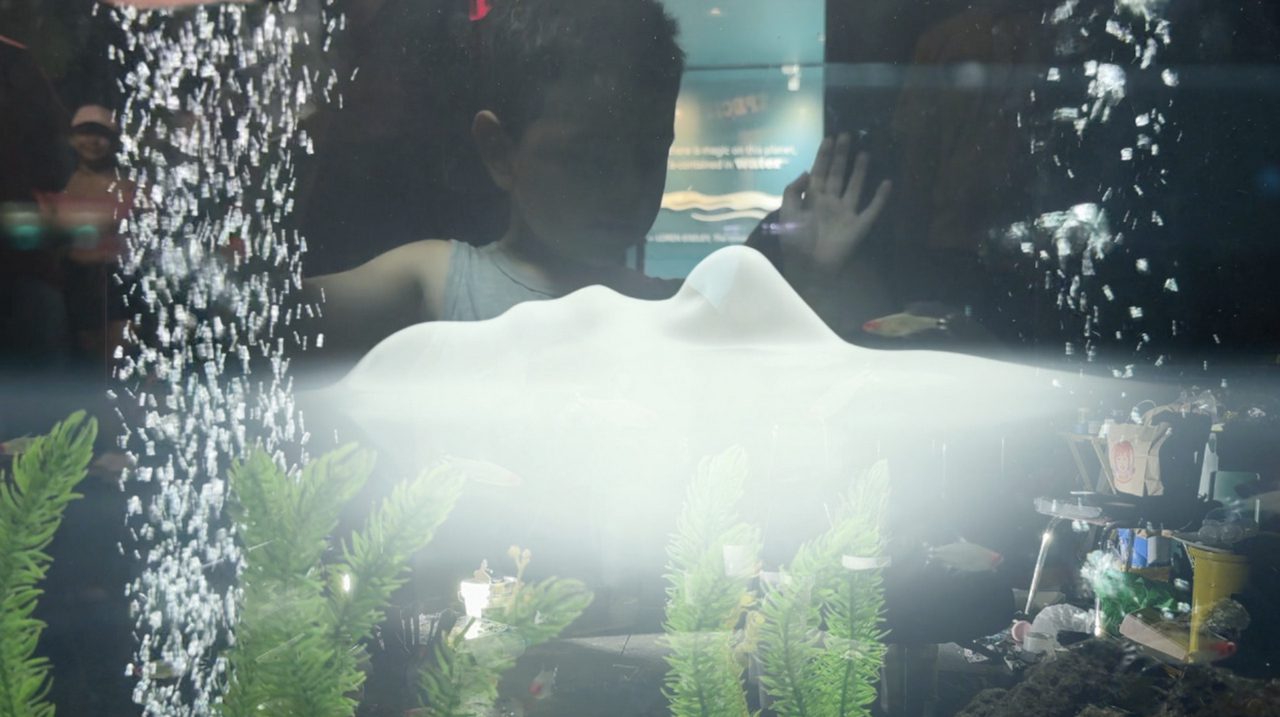 A throughline in Trisha Baga’s expansive practice is their ongoing exploration of machines as narrative creatures. Baga empathizes with the tools and systems their work engages, often invoking them as metaphors for reflection, connection, and destruction. Their solo exhibition “MORE” takes its title from one of the first words a child utters as well as the driving desire behind technological development: perpetual “advancement,” more data, more speed. An immersive 3D video, a constellation of ceramic works, and a series of video projections on paintings transform the gallery into an offbeat computer desktop, a living interface where the operations of a system remain visible. This suspension between the everyday and the bizarre is mirrored in the exhibition’s title video, an associative and recursive composition that metabolizes original footage, Hollywood science fiction, and found sound into what Baga calls “a shape-shifting other that moves through different bodies of material.” The work’s form and concept are shaped by a power struggle with new software designed to predict, suggest, and complete. Made with an editing program that insists on a “primary storyline,” MORE pushes back against such hierarchical structure with a fractalized narrative approach. Its layered construction becomes a metaphor for the antagonistic clash between human intuition and the automated logics that now seek to guide creative labor. Info: SOCIÉTÉ Gallery, Wielandstraße 26, Berlin, Germany, Duration: 7/11/2025-15/1/2026, Days & Hours: Tue-Sat 11:00-18:00, https://societeberlin.com/
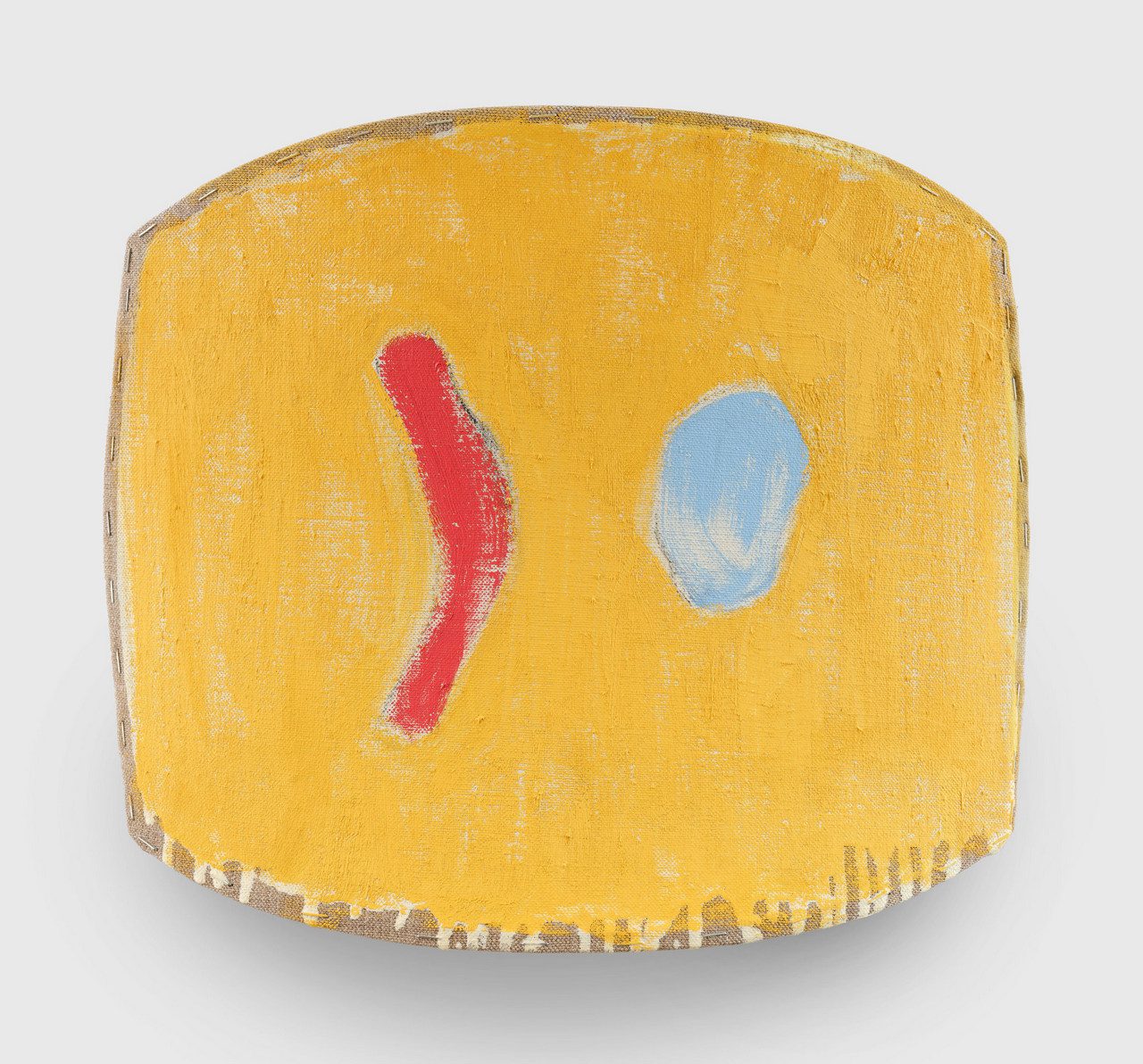 “Intervals” is the title of an exhibition of shaped canvas paintings by Ron Gorchov, marks the first time the artist’s work has been the subject of a solo exhibition in Los Angeles. The exhibition features eleven of the shaped canvas works for which Gorchov eventually became well known and includes examples from two series that he elaborated on continuously from the late 1960s and early 1970s, respectively, until the end of his career. Nine “shield” or “saddle” works, each of which consists of a single painted concave canvas panel, are accompanied by two vertically oriented arrays of stacked concave panels. In both cases, the shapes of the panels give them a distinctly architectural, even monumental, presence, even as their painted surfaces allow them to read as windows with views into illusionistic spaces. A similar tension animates the dialectic between flatness and dimensionality that is a constant throughout the artist’s production. If the formats of these works are what first call the viewer’s attention, it is their modulated surfaces, colors, and compositional juxtapositions that reveal their qualities through extended looking. The single-panel shields are characterized by vertical pairs of irregular, kidney- or lozenge-shaped forms that hover over fields of luminous color. In each, Gorchov uses three colors, one for each of the forms and one for the background. Info: David Kordansky Gallery, 5130 W. Edgewood Pl., Los Angeles, CA, USA, Duration: 7/11-13/12/2025, Days & Hours: Tue-Sat 10:00-18:00, https://www.davidkordanskygallery.com/
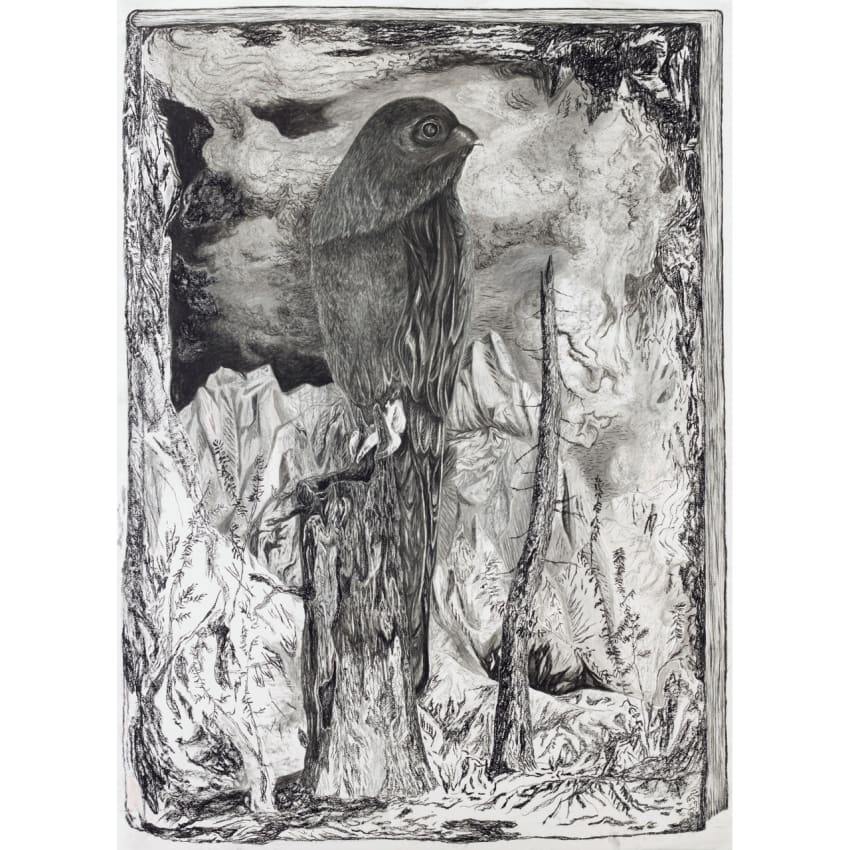 Jeff Olsson’s solo exhibition “Palace of the Forest” presents a selection of drawings from the past year. It is a glimpse of an ongoing process rather than a final statement. His charcoal drawings, especially those placed in a natural setting, represent the duality Scandinavians associate with the forest. It is both alluring and frightening at the same time, a place to enjoy nature but also to fear it. As recently as the beginning of the twentieth century, the forest in the Nordic regions was somewhere that signified a terrifying and wild place, especially in winter, when daylight hours are short and losing your way could mean certain death. Something ancient and prehistorical about drawing lives on in Olsson’s imagery, even though they are of course contemporary. A poetic and substantive connection to a primitive creation with the coal from a burned-out campfire. The drawings often reminiscent of relics or messages from a time that no longer exists, or that has not yet arrived. They carry an inherent melancholy and despair and seem to be drawn out of necessity rather than pleasure. But in the austerity there is also a childish dark humor and an almost manic desire to tell stories. The pen, stick or piece of charcoal continues an endless journey on the paper. Info: Galleri Magnus Karlsson, Fredsgatan 12, Stockholm, Sweden, Duration: 7/11-6/12/2025, Days & Hours: Tue-Fri 11:00-17:00, Sat 12:00-16:00, www.gallerimagnuskarlsson.com/
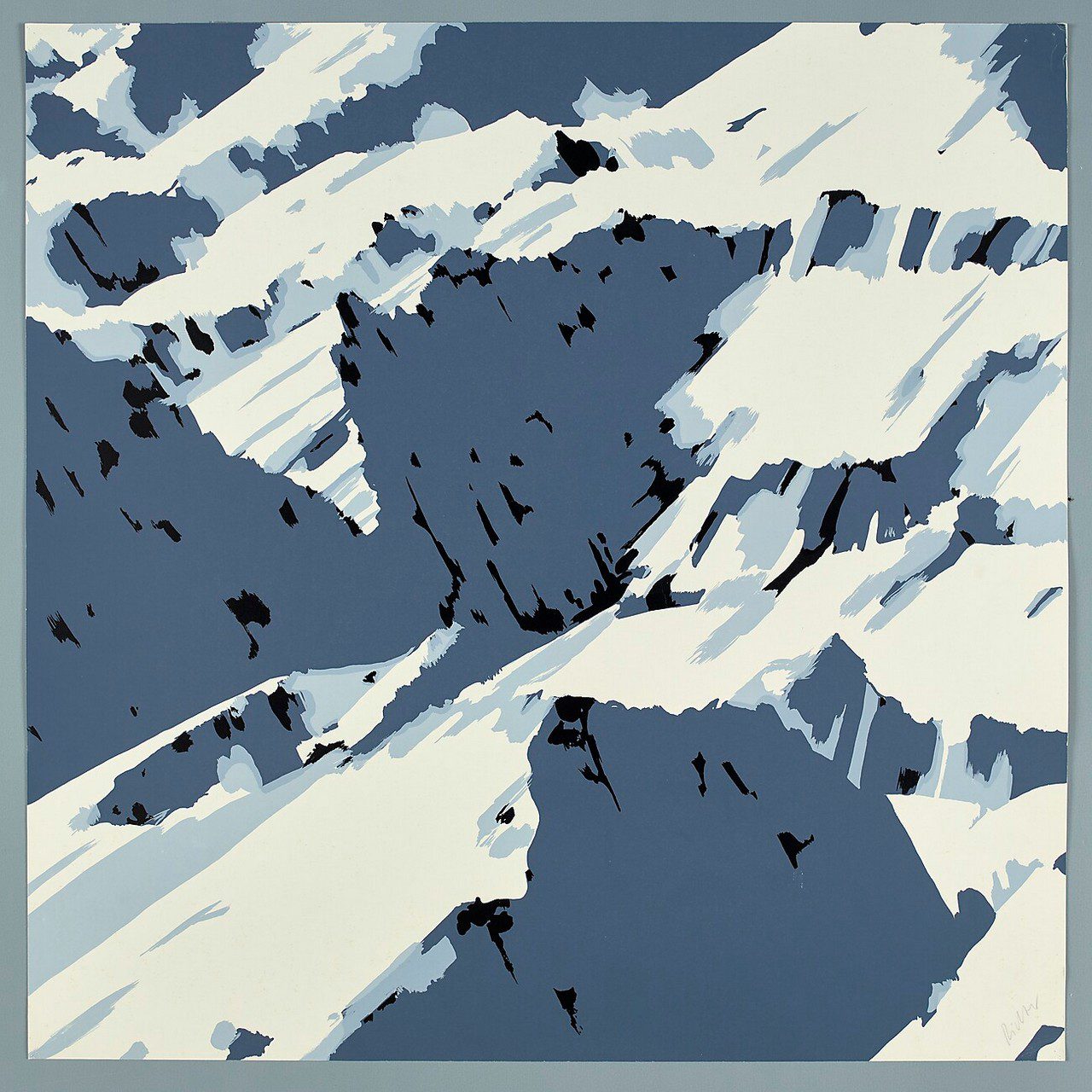 To mark the 100th anniversary of the Griffelkunst-Vereinigung Hamburg e. V., the Hamburger Kunsthalle is showing “100 Years of griffelkunst”, a broad selection of lithographs, screenprints, etchings, woodcuts and also photographs and C-prints from the last 100 years of the programme, as well as some archive documents in the Galerie der Gegenwart. The association has been publishing original graphic editions since 1925, making print series by selected artists available to its members. The works are chosen not according to their formal or thematic coherence but because they provide a representative idea of the respective artist’s oeuvre based on examples of their graphic work. The Griffelkunst-Vereinigung editions typically showcase established national and international artists alongside lesser-known, often younger artists of diverse nationalities and generations as well as collaborations with printmakers. This extraordinary graphics association today counts 4,500 members throughout Germany. The Hamburger Kunsthalle has been involved from the outset and has presented many of the series in various exhibitions over the years. Info: Curator: Dr. Corinne Diserens, Research Assistant: Jana Pfort, Hamburger Kunsthalle, Glockengießerwall 5, Hamburg, Germany, Duration 7/11/2025-18/1/2026, Days & Hours: Tue-Wed & Fri-Sun 10:00-18:0,Thu 10:00-21:00, www.hamburger-kunsthalle.de/
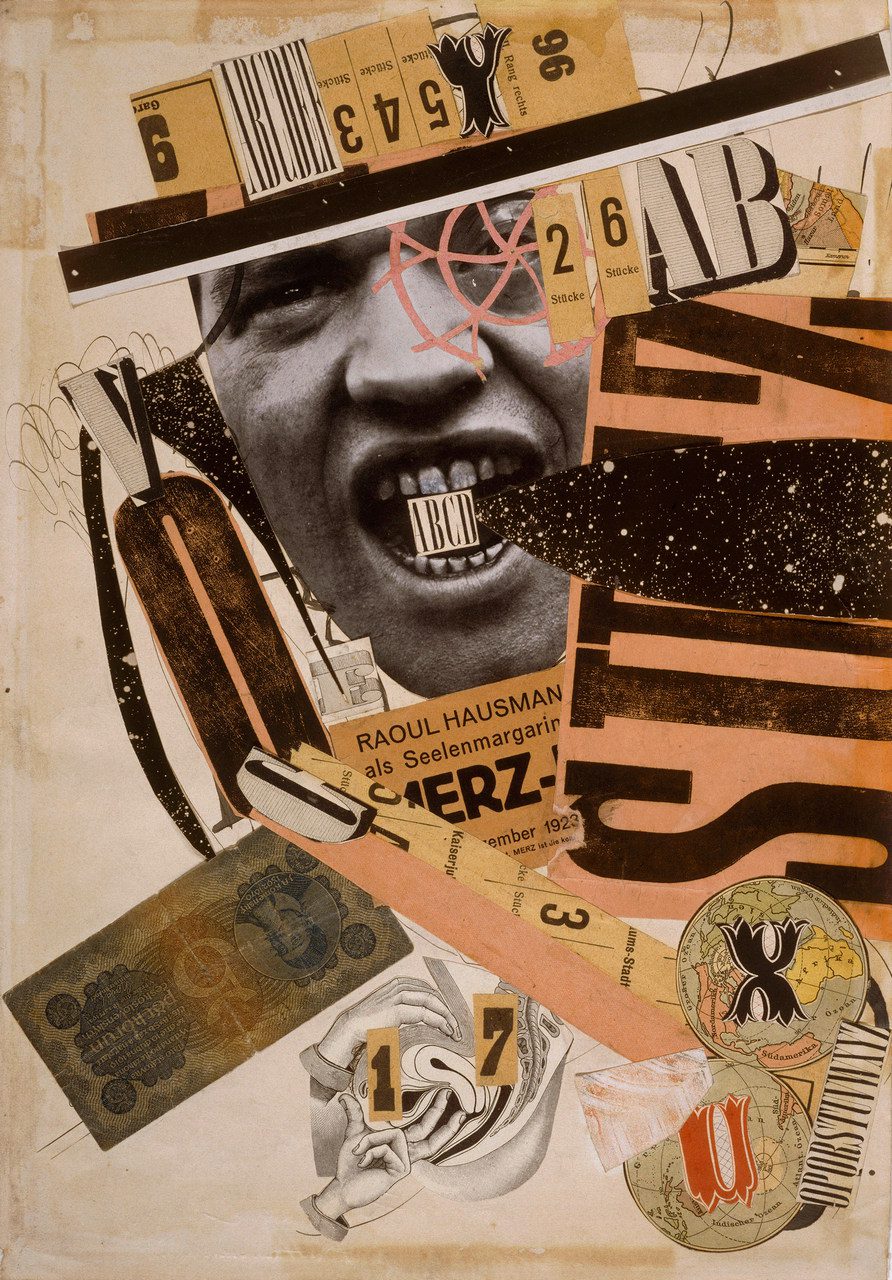
Raoul Hausmann was one of the most innovative avant-garde artists of the modernist era. Art and life, in his view, were inextricably connected. His desire to discard familiar forms and constantly enact “tomorrow” made him a trailblazer in multi-media art. As a Dadaist he was among those who invented collage, but he also devised synaesthetic apparatus, penned experimental texts, gave performances that explored the relationship between body, sound and space, and merged the visual with the haptic in his photography. Throughout his life, not only in his art but also in his quest for new ways to live and to think the world, he was eager to break free of convention and swim against the bourgeois tide. The big retrospective “Vision. Provocation. Dada.” at the Berlinische Galerie, featuring some 200 works from collections in Germany and abroad, will showcase this multi-facetted and pioneering creativity which so influenced subsequent generations of artists and place it in the context of current discourse. Hausmann’s late œuvre, produced after he left Nazi Germany for France, will feature prominently thanks to generous input from the Musée d’art contemporain de la Haute-Vienne ‒ Château de Rochechouart. This continues the acclaimed series of collaborative ventures between the Berlinische Galerie and other European museums. Info: Berlinische Galerie-Museum for Modern Art, Photography and Architecture, Alte Jakobstraße 124-128, Berlin, Germany, Duration: 8/11/2025-16/3/2026, Days & Hours: Wed-Mon 10:00-18:00, https://berlinischegalerie.de/
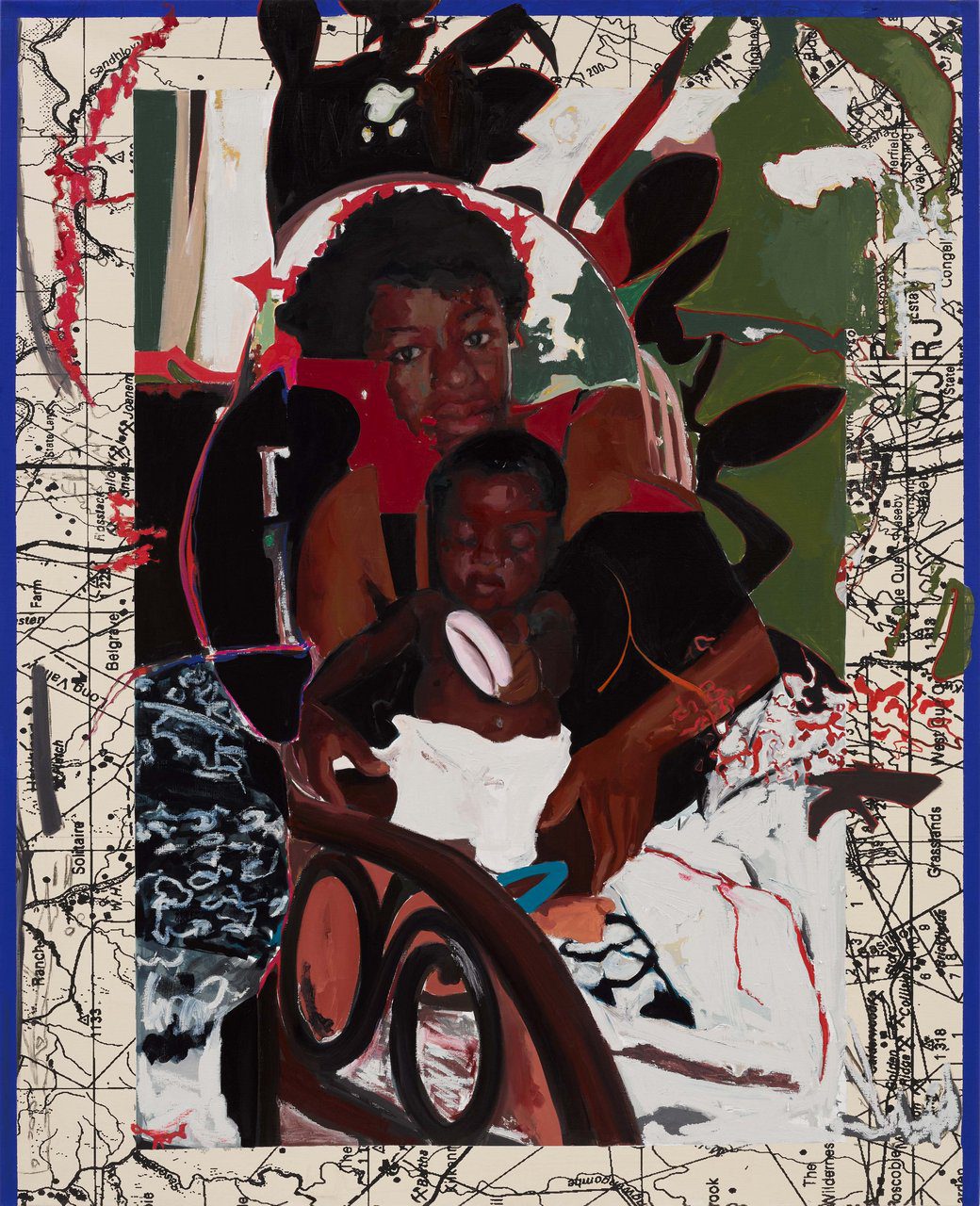 “They have always been here” is the first solo exhibition in the Netherlands by Zimbabwean artist Kudzanai-Violet Hwami. Specially for this occasion, Hwami is creating new work, including layered paintings, digitally reworked photographs, and her very first bronze sculptures. With rich, saturated colors, personal photographs and archival material, she draws attention to people who have often been rendered invisible in history – in particular queer people of colour within the African diaspora. In her paintings – using oil and acrylic paint, printmaking, pastel, pencil and charcoal – intimate and political themes come together. She draws inspiration from family albums, vintage magazines, and archival material. For Kunsthal Rotterdam she is also presenting two bronze sculptures, her first step into three-dimensional work. The exhibition further includes large-scale photographs taken during a journey to Zimbabwe. Digitally expanded and reworked, these images imagine what might lie beyond the frame. Ghostly scenes appear in which faces blur, vanish or distort – like memories that slip away and can never be fully grasped. By reworking images and adding fragments, Hwami dissolves the boundary between fact and fiction. Her work shows how identity is never fixed, but continuously remembered and retold. Info: Kunsthal Rotterdam, Museumpark, Westzeedijk 341, Rotterdam, The Netherlands, Duration: 8/11/2025-12/4/2026, Days & Hours: Tue-Fri 10:00-17:00, Sat-Sun: 10:00-18:00, www.kunsthal.nl/