ART CITIES: Rome-Emilio Isgrò

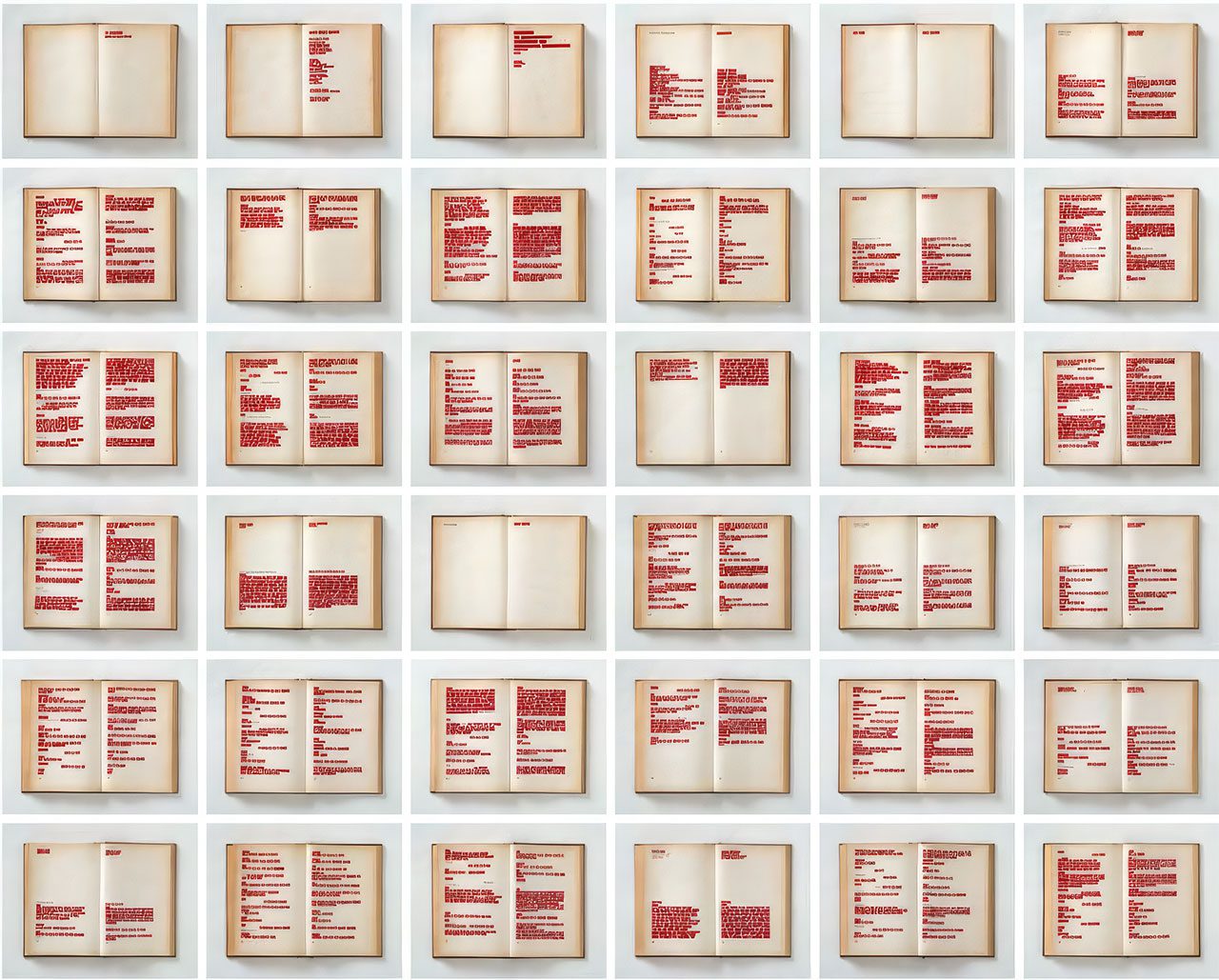
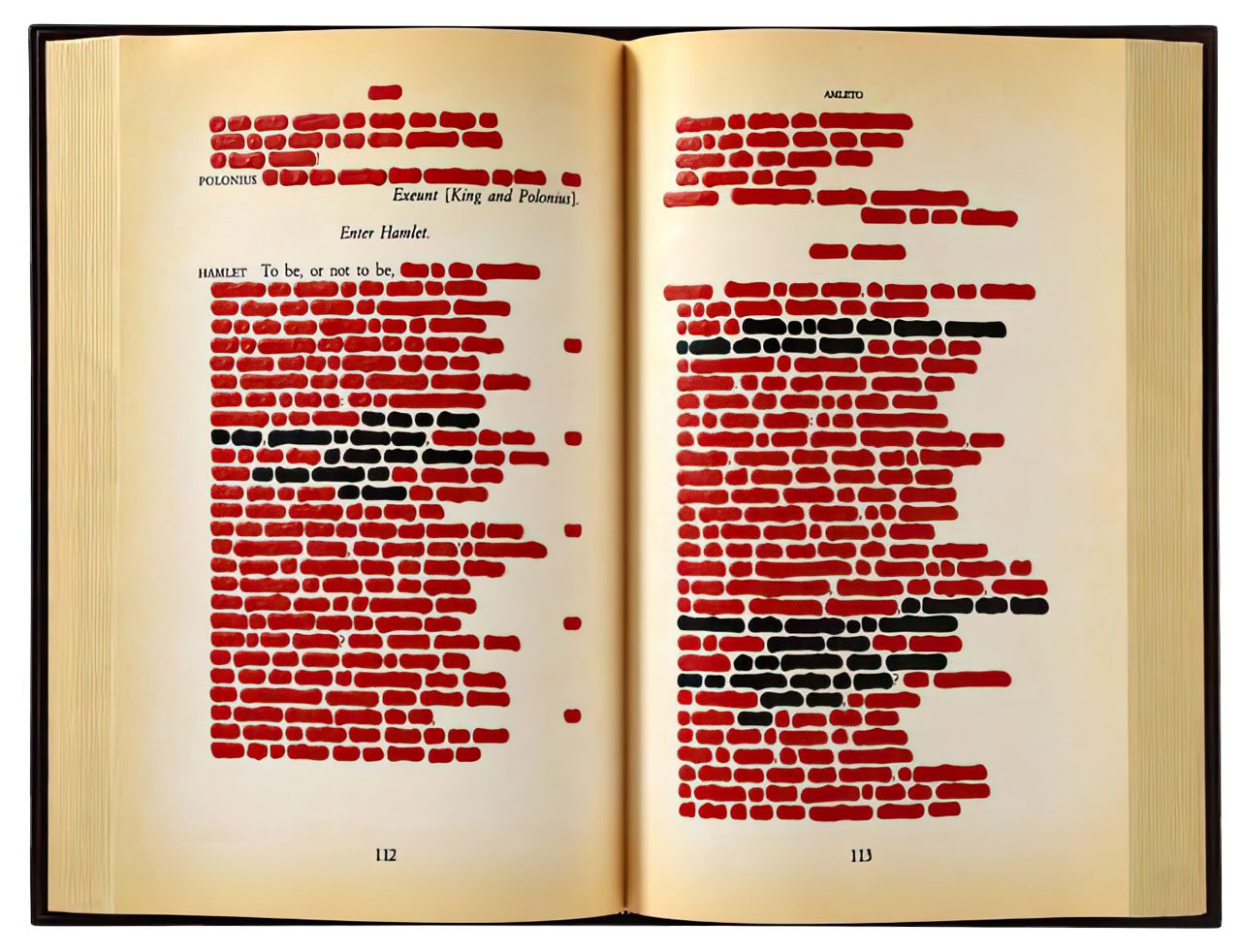
Emilio Isgrò, Othello, 2019, acrylic on paper mounted on book and wood panel, 36 elements, 10,62 x 13,38 in - 27 x 34  cm, certificate of authenticity by Archivio Emilio Isgrò, Milan, dated 13 May 2021, archive no. 0148, historical archive no. F247. © Emilio Isgrò, Courtesy the artist and Tornabuoni Art

Emilio Isgrò is a pioneering Italian artist and writer.  Aged 19 he moved to Milan, where made his literary debut with a collection of poems entitled “Fiere del Sud”. His love of the written word would lay the foundations for his artistic career and, in 1964, Isgrò pioneered a new form of conceptual art called “visual poetry”. Questioning the proliferation of information, he began using black India ink to strike out passages from a variety of brochures, newspaper articles and literary classics such as Dante’s Divine Comedy and Shakespeare’s tragedies.

By Efi Michalarou
Photo: Tornabuoni Art Archive

“Rosso Shakespeare” is, an exhibition that aims to trace a path through the writings and visual works of Emilio Isgrò, who, before becoming an artist, first emerged as a poet and writer. If, as a thought experiment, one were to imagine that Isgrò’s entire visual oeuvre had never existed, his literary and poetic production alone would suffice to justify this and many other exhibitions and to leave an indelible mark on the cultural landscape. Isgrò’s first poems, published by Schwarz in 1956, drew the attention of Pier Paolo Pasolini, who wrote about them in his article “La Poesia e il Sud” (“Il Punto“, May 25, 1957). A close friendship with Eugenio Montale followed, though the poet famously ceased speaking to Isgrò in 1966, after his provocative statement “Word is dead.” A collection of his poems was published by Vittorini and Calvino in Einaudi’s Menabò, while his novels were printed by Feltrinelli, Mondadori, and Sellerio. Among them, “L’avventurosa vita di Emilio Isgrò”— recently reissued by Interlinea—was shortlisted for the Premio Strega. He worked as a journalist for “Il Gazzettino“, in Venice, editing, among others, articles by Giovanni Comisso. The story goes that, while revising one of Comisso’s texts—removing what he considered superfluous—, Isgrò conceived the idea of exploring the expressive and poetic power of “Cancellatura” (Erasure). He later served as an editor at “Oggi“ under Enzo Biagi and continues to contribute to “Corriere della Sera“ and “La Lettura“. Isgrò was invited by Ludovico Corrao to Gibellina, where he was commissioned to create a work inspired by Aeschylus’s “Orestea” for the reconstruction of the city destroyed by the 1968 earthquake. His theatrical trilogy “L’Orestea di Gibellina” was staged among the ruins of the town on three occasions between 1983 and 1985. This multifaceted body of work highlights the impossibility of separating Isgrò’s literary production from his visual art. It is therefore the “word”—far from dead—that serves as the unifying thread between these two parallel paths. It is therfore the word that – when erased – transcend its literal meaning to become a metaphor for the essential.And it is still the word, or rather, a multitude of words that composes his writings. “Rosso Shakespeare” seeks to explore the boundary where word and image converge.

Photo: Emilio Isgrò, Othello, 2019, acrylic on paper mounted on book and wood panel, 36 elements, 10,62 x 13,38 in – 27 x 34  cm, certificate of authenticity by Archivio Emilio Isgrò, Milan, dated 13 May 2021, archive no. 0148, historical archive no. F247. © Emilio Isgrò, Courtesy the artist and Tornabuoni Art

Info: Tornabuoni Art, Via Bocca di Leone 88, Rome, Italy, Duration: 5/11/2025-14/2/2026, Days & Hours: Tue-Sat 10:00-13:00 & 14:00-19:00, www.tornabuoniart.com/
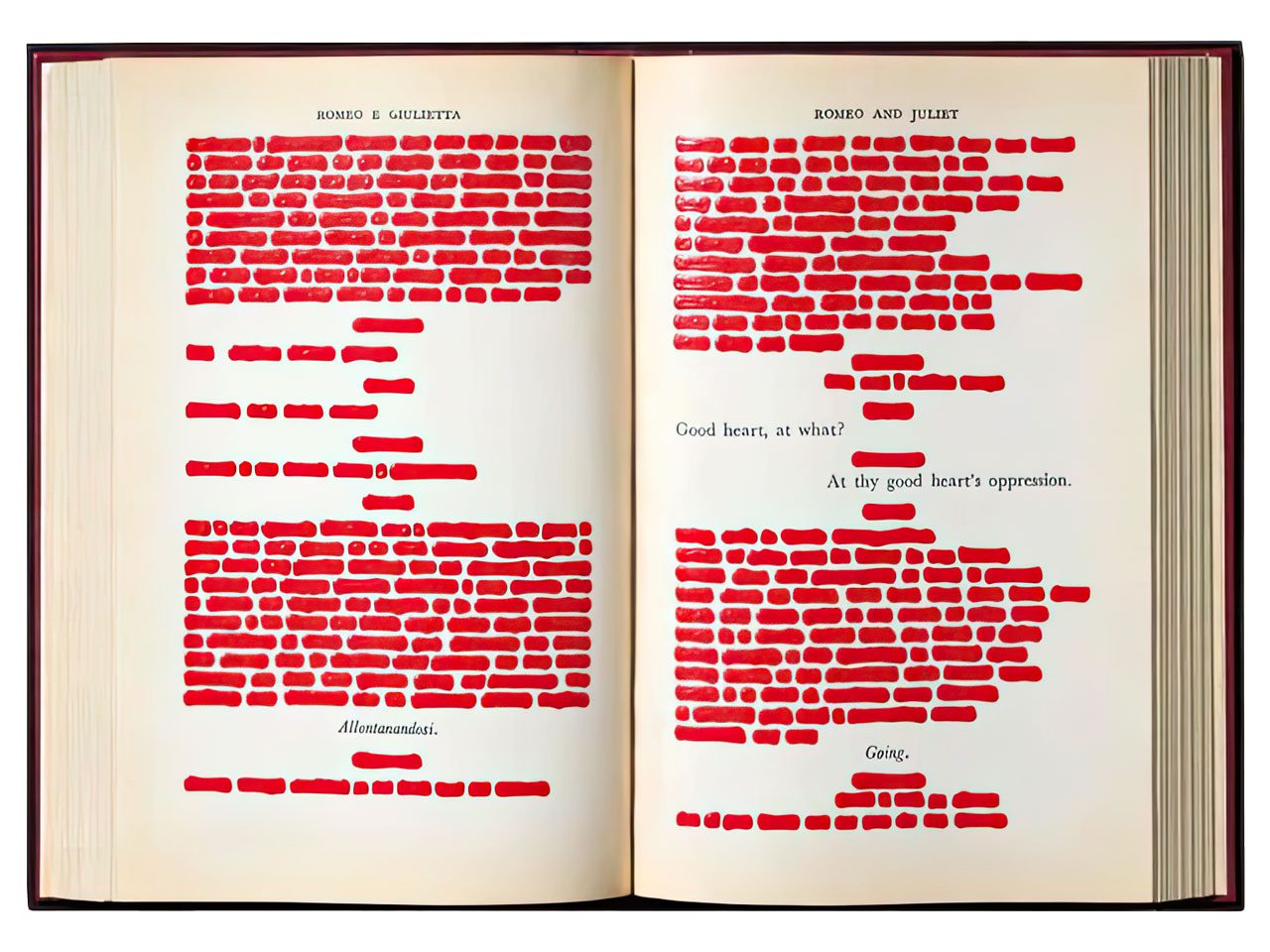
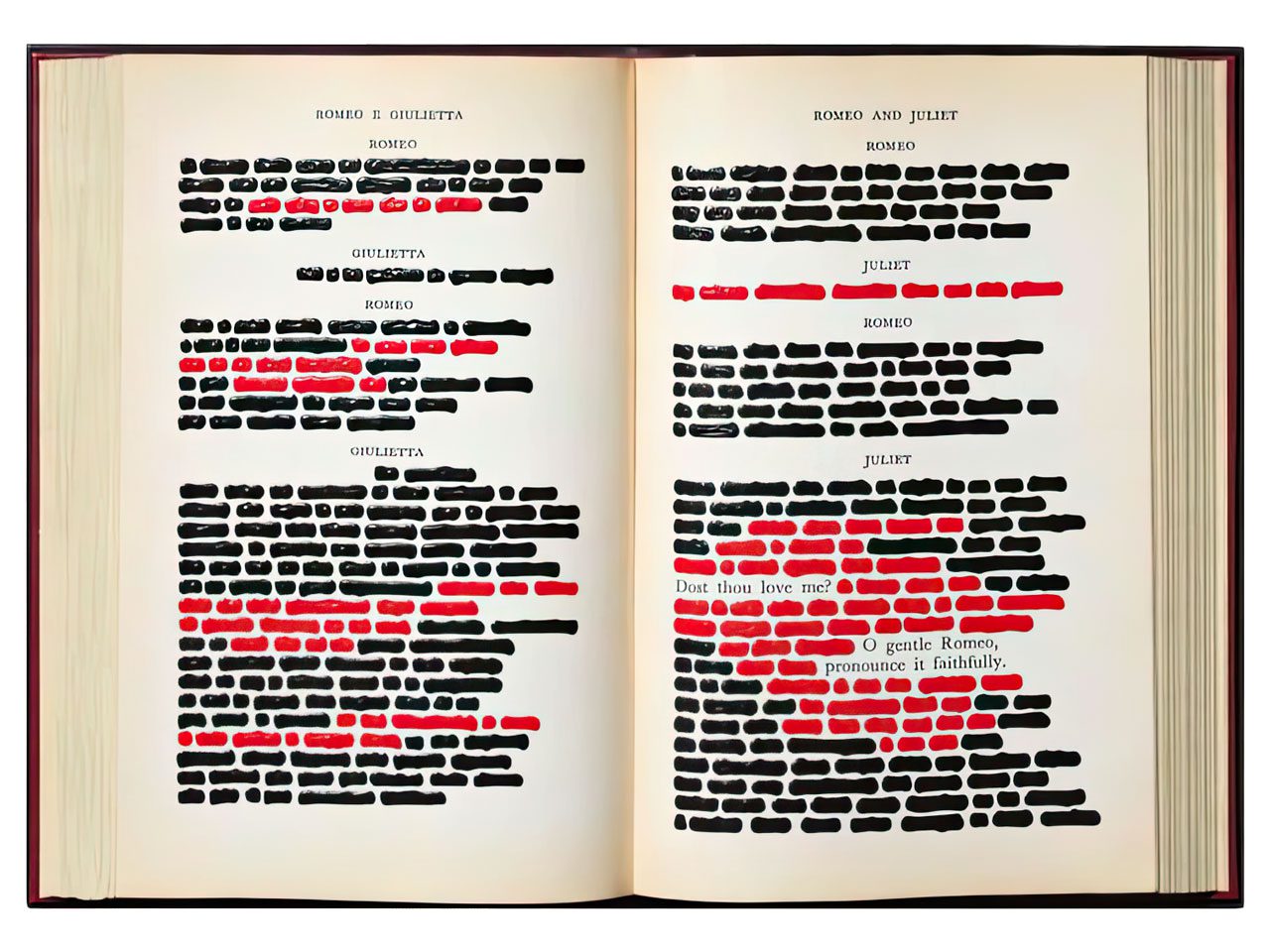
Emilio Isgrò, Romeo and Juliet, Going, 2019, acrylic on fabric paper mounted on book and wood panel, 18,89 x 26,57 x 2,16 in - 48 x 67,5 x 5,5 cm, reverse: signed, titled, dated and numbered Emilio Isgrò / Romeo and Juliet, Going / 2019 / K 105.. © Emilio Isgrò, Courtesy the artist and Tornabuoni Art
Emilio Isgrò, Romeo and Juliet, Going, 2019, acrylic on fabric paper mounted on book and wood panel, 18,89 x 26,57 x 2,16 in – 48 x 67,5 x 5,5 cm, reverse: signed, titled, dated and numbered Emilio Isgrò / Romeo and Juliet, Going / 2019 / K 105.. © Emilio Isgrò, Courtesy the artist and Tornabuoni Art


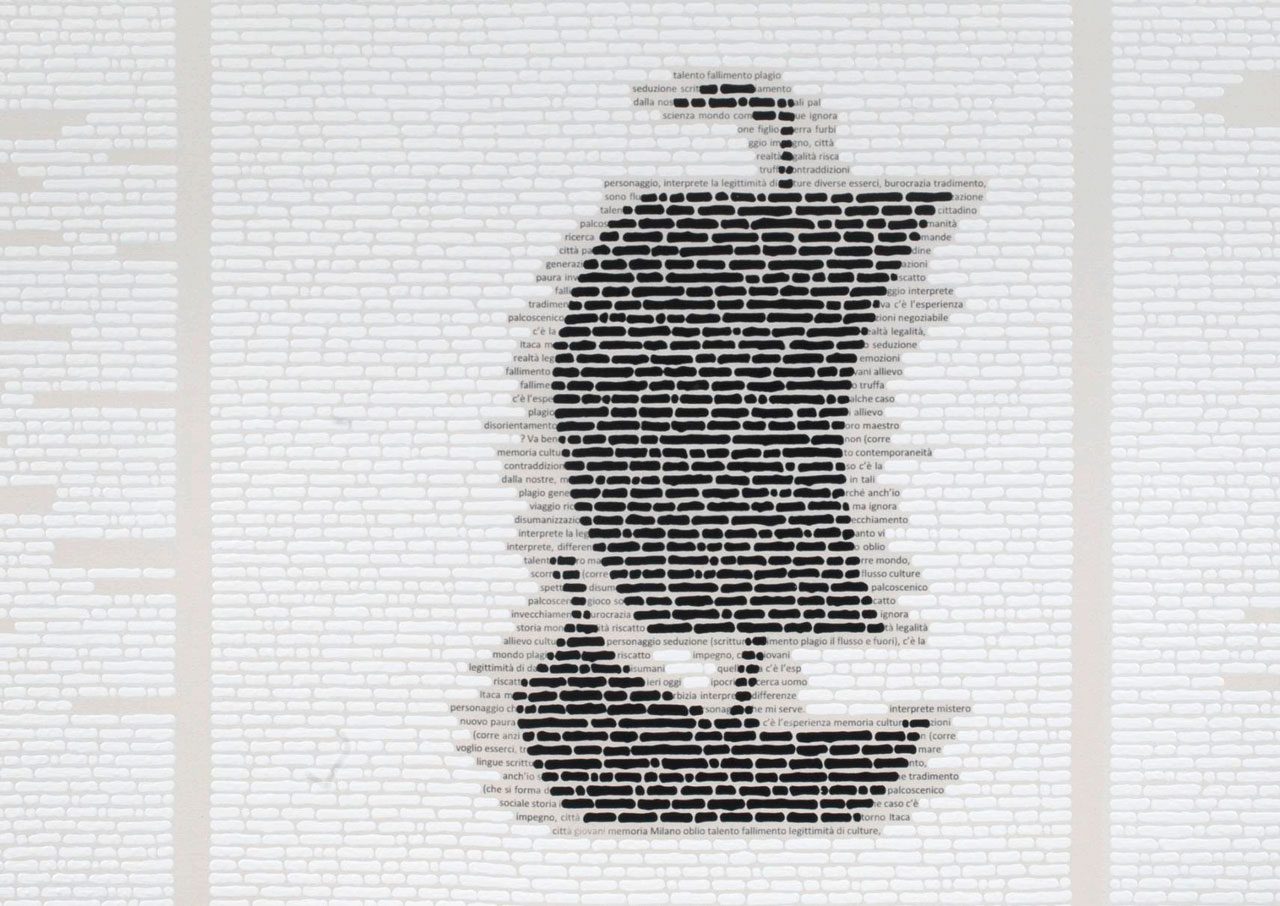
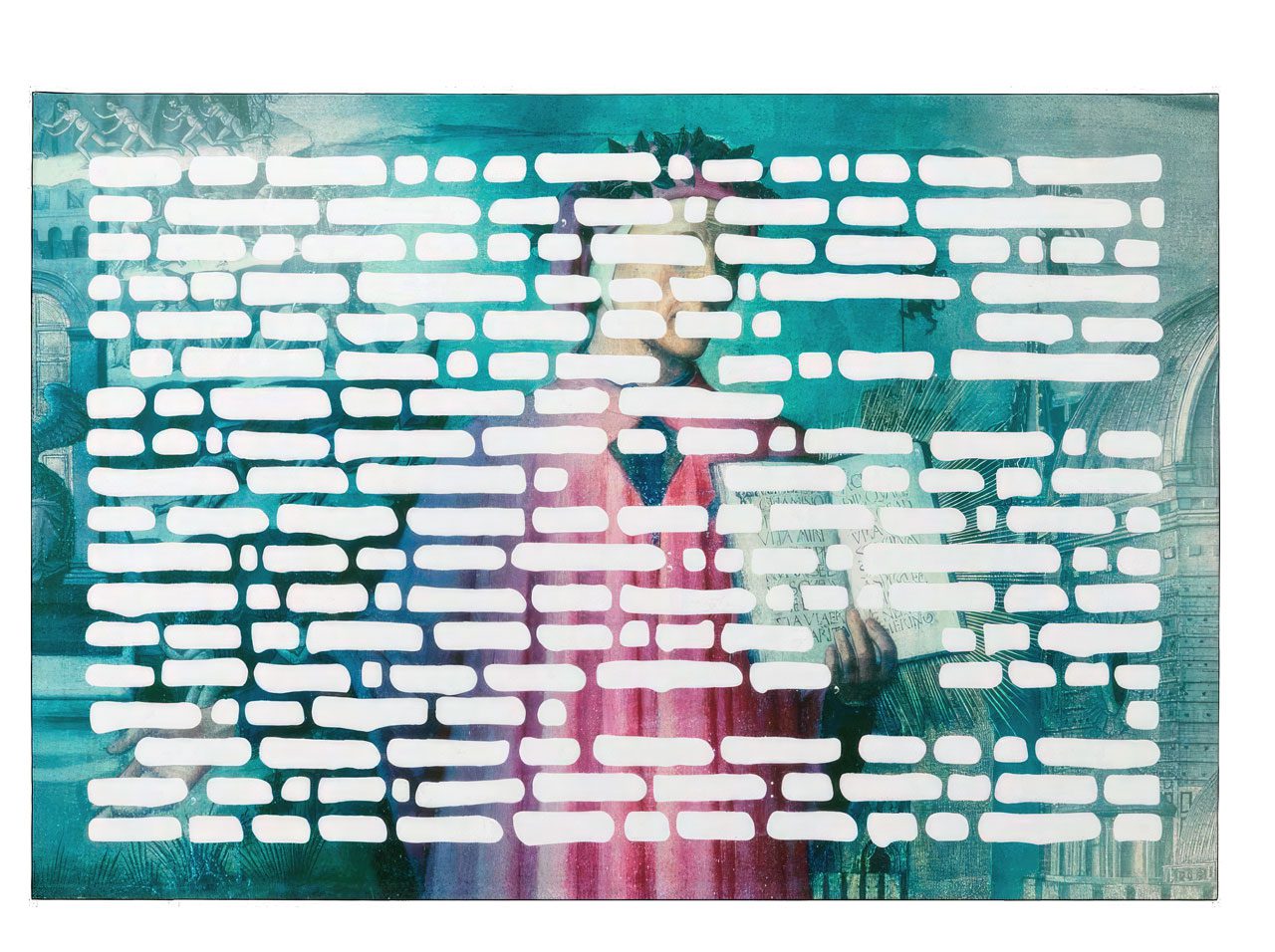
Emilio Isgrò, La mano di Dante, 2014, acrylic on printed canvas mounted on wood, 34,84 x 51,37 in - 88,5 x 130,5 cm, reverse: signed, titled, dated and numbered on the reverse: Emilio Isgrò / La mano di Dante / 2014 / B 167. certificate of authenticity by Emilio Isgrò on photograph, © Emilio Isgrò, Courtesy the artist and Tornabuoni Art
Emilio Isgrò, La mano di Dante, 2014, acrylic on printed canvas mounted on wood, 34,84 x 51,37 in – 88,5 x 130,5 cm, reverse: signed, titled, dated and numbered on the reverse: Emilio Isgrò / La mano di Dante / 2014 / B 167. certificate of authenticity by Emilio Isgrò on photograph, © Emilio Isgrò, Courtesy the artist and Tornabuoni Art


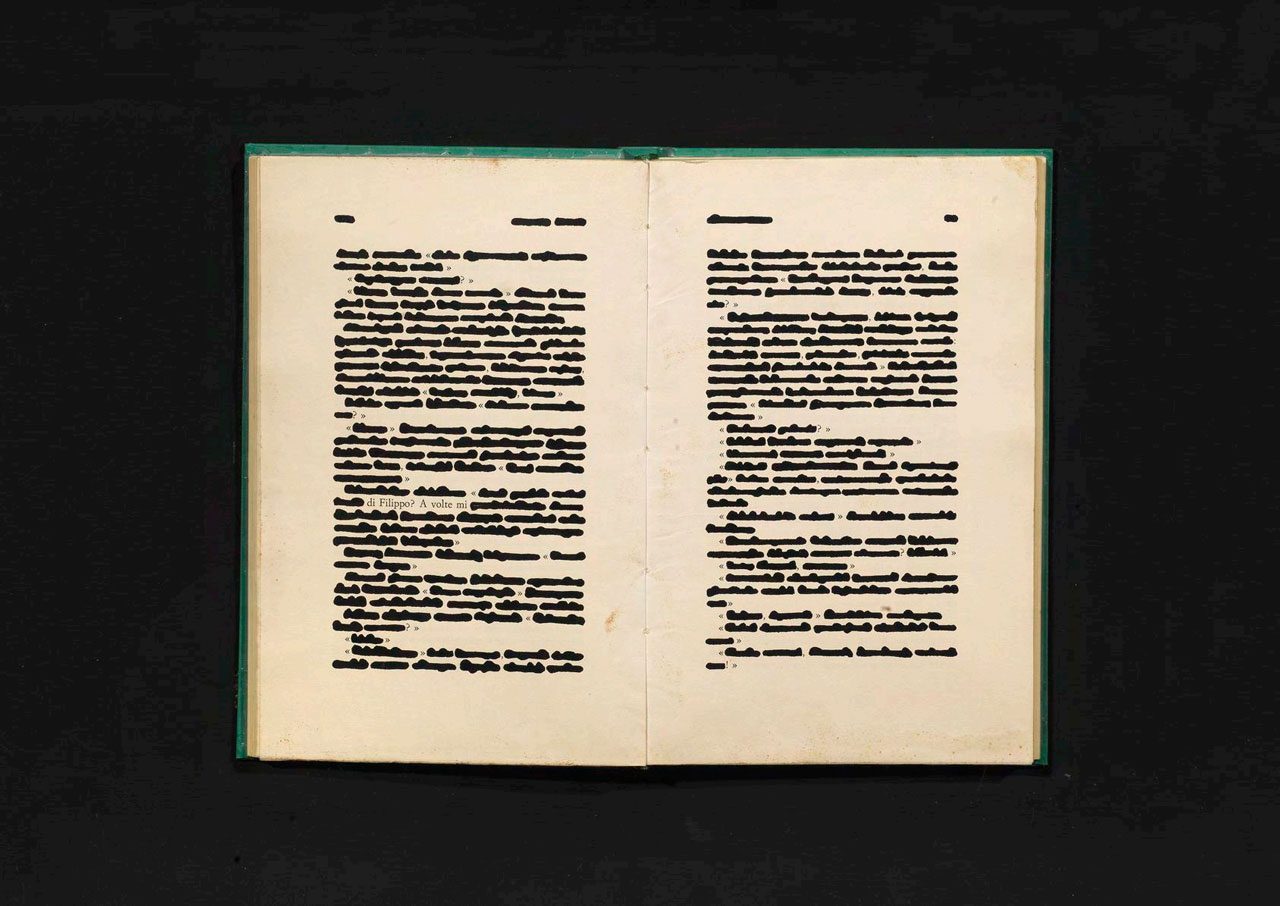
Emilio Isgrò, Filippo, 1973, ink on book in wooden and plexiglass box. 16,14 x 23,97 x 2,91 in - 41 x 60,9 x 7,4 cm, reverse: signed, titled and dated Filippo / Emilio Isgrò / 1973., certificate of authenticity from Archivio Emilio Isgrò, Milan, dated 15 May 1973, archive no. M6., © Emilio Isgrò, Courtesy the artist and Tornabuoni Art
Emilio Isgrò, Filippo, 1973, ink on book in wooden and plexiglass box. 16,14 x 23,97 x 2,91 in – 41 x 60,9 x 7,4 cm, reverse: signed, titled and dated Filippo / Emilio Isgrò / 1973., certificate of authenticity from Archivio Emilio Isgrò, Milan, dated 15 May 1973, archive no. M6., © Emilio Isgrò, Courtesy the artist and Tornabuoni Art


Emilio Isgrò, Romeo and Juliet, Gentle, 2019, acrylic on fabric paper mounted on book and wood panel, 18,89 x 26,57 x 2,16 in - 48 x 67,5 x 5,5 cm, reverse: signed, titled, dated and numbered Emilio Isgrò / Romeo and Juliet, Gentle / 2019 / K 106., © Emilio Isgrò, Courtesy the artist and Tornabuoni Art
Emilio Isgrò, Romeo and Juliet, Gentle, 2019, acrylic on fabric paper mounted on book and wood panel, 18,89 x 26,57 x 2,16 in – 48 x 67,5 x 5,5 cm, reverse: signed, titled, dated and numbered Emilio Isgrò / Romeo and Juliet, Gentle / 2019 / K 106., © Emilio Isgrò, Courtesy the artist and Tornabuoni Art


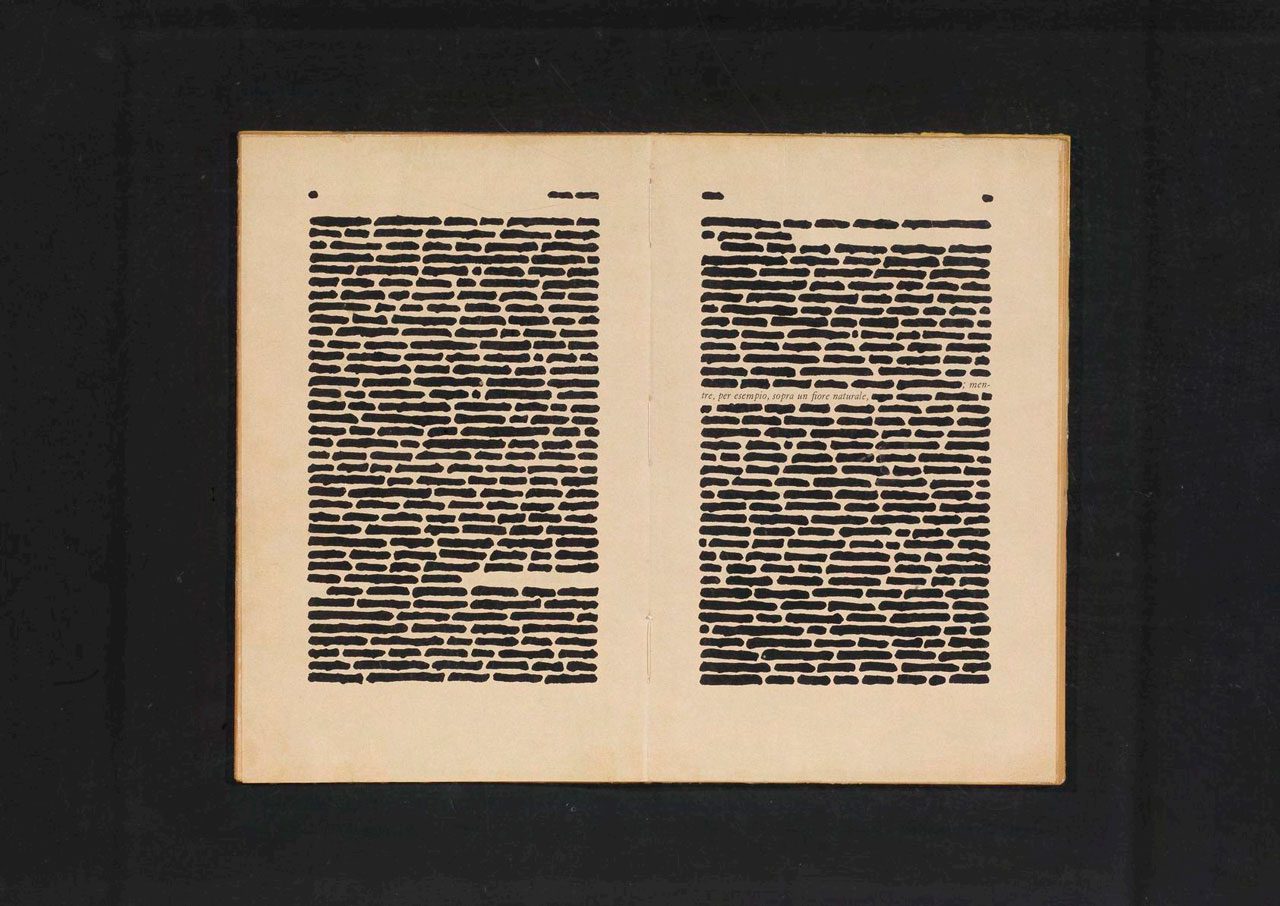
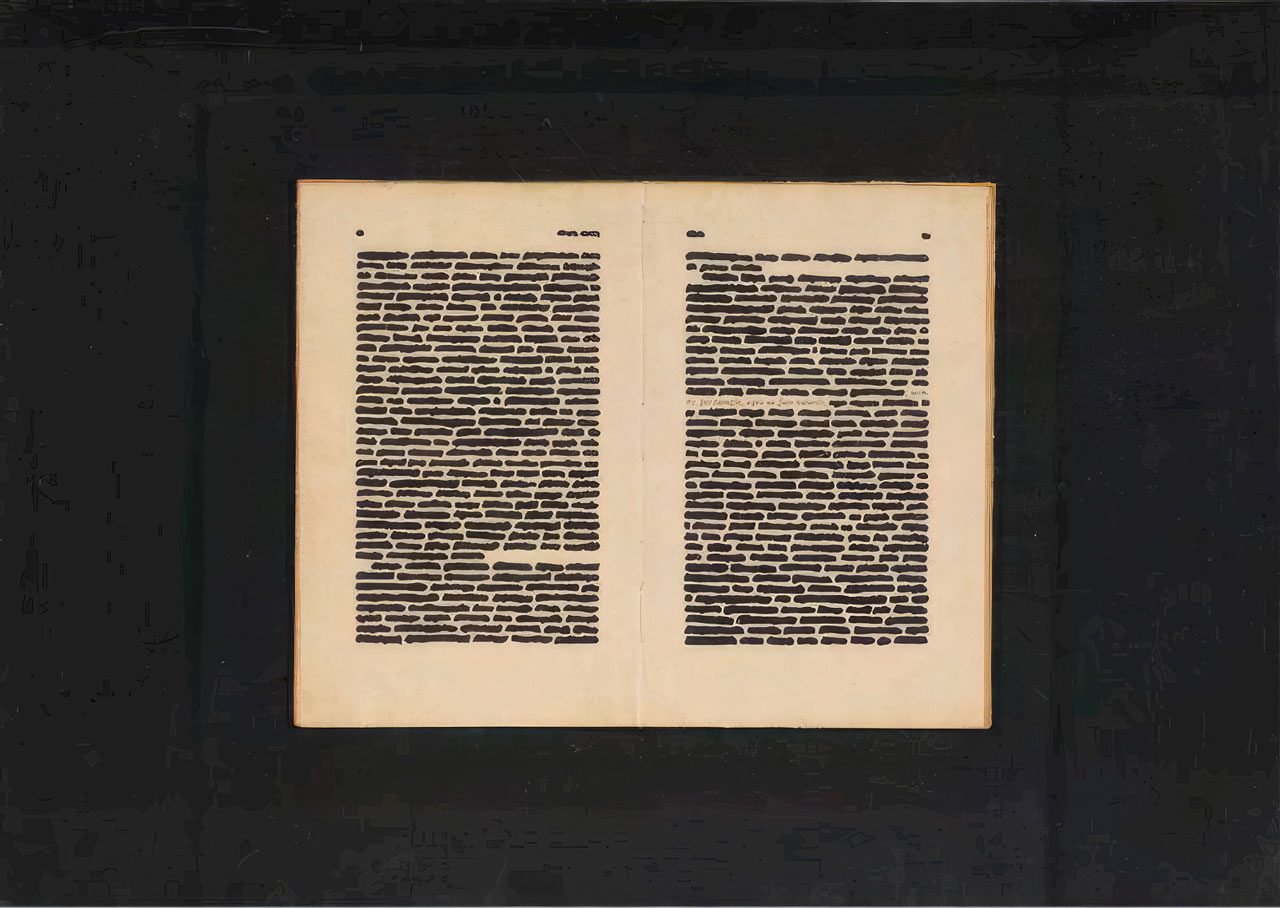
Emilio Isgrò, Sopra un fiore, 1971, ink on book in wooden and plexiglass box, 15,94 x 23,81 x 4,33 in - 40,5 x 60,5 x 11 cm, reverse: Signed, titled and dated: “Emilio Isgrò Sopra un fiore libro cancellato 1971”; label: Galleria d’Arte dei Mille, Bergamo. certificate of authenticity by Archivio Emilio Isgrò, Milan, dated 21/07/2ink on book in wooden and plexiglass box021, n° 0161., © Emilio Isgrò, Courtesy the artist and Tornabuoni Art
Emilio Isgrò, Sopra un fiore, 1971, ink on book in wooden and plexiglass box, 15,94 x 23,81 x 4,33 in – 40,5 x 60,5 x 11 cm, reverse: Signed, titled and dated: “Emilio Isgrò Sopra un fiore libro cancellato 1971”; label: Galleria d’Arte dei Mille, Bergamo. certificate of authenticity by Archivio Emilio Isgrò, Milan, dated 21/07/2ink on book in wooden and plexiglass box021, n° 0161., © Emilio Isgrò, Courtesy the artist and Tornabuoni Art


Emilio Isgrò, Enter Hamlet, 2019, 18,89 x 25 x 2,75 in - 48 x 63,5 x 7 cm, © Emilio Isgrò, Courtesy the artist and Tornabuoni Art
Emilio Isgrò, Enter Hamlet, 2019, 18,89 x 25 x 2,75 in – 48 x 63,5 x 7 cm, © Emilio Isgrò, Courtesy the artist and Tornabuoni Art


Emilio Isgrò, Odysséus (detail), 2018, acrylic on canvas mounted on wood panel, 42,12 x 96,85 in - 107 x 246 cm, reverse: signed, titled, dated and archive number Emilio Isgrò Odysséus 2018 K 112. certificate of authenticity by Archivio Emilio Isgrò, Milan, dated 13 May 2021, archive no. 0150, historical archive no. K112., © Emilio Isgrò, Courtesy the artist and Tornabuoni Art
Emilio Isgrò, Odysséus (detail), 2018, acrylic on canvas mounted on wood panel, 42,12 x 96,85 in – 107 x 246 cm, reverse: signed, titled, dated and archive number Emilio Isgrò Odysséus 2018 K 112. certificate of authenticity by Archivio Emilio Isgrò, Milan, dated 13 May 2021, archive no. 0150, historical archive no. K112., © Emilio Isgrò, Courtesy the artist and Tornabuoni Art


Emilio Isgrò, Sopra un fiore, 1971, ink on book in wooden and plexiglass box, 15,94 x 23,81 x 4,33 in - 40,5 x 60,5 x 11 cm, reverse: Signed, titled and dated: “Emilio Isgrò Sopra un fiore libro cancellato 1971”; label: Galleria d’Arte dei Mille, Bergamo., certificate of authenticity by Archivio Emilio Isgrò, Milan, dated 21/07/2ink on book in wooden and plexiglass box021, n° 0161., © Emilio Isgrò, Courtesy the artist and Tornabuoni Art
Emilio Isgrò, Sopra un fiore, 1971, ink on book in wooden and plexiglass box, 15,94 x 23,81 x 4,33 in – 40,5 x 60,5 x 11 cm, reverse: Signed, titled and dated: “Emilio Isgrò Sopra un fiore libro cancellato 1971”; label: Galleria d’Arte dei Mille, Bergamo., certificate of authenticity by Archivio Emilio Isgrò, Milan, dated 21/07/2ink on book in wooden and plexiglass box021, n° 0161., © Emilio Isgrò, Courtesy the artist and Tornabuoni Art


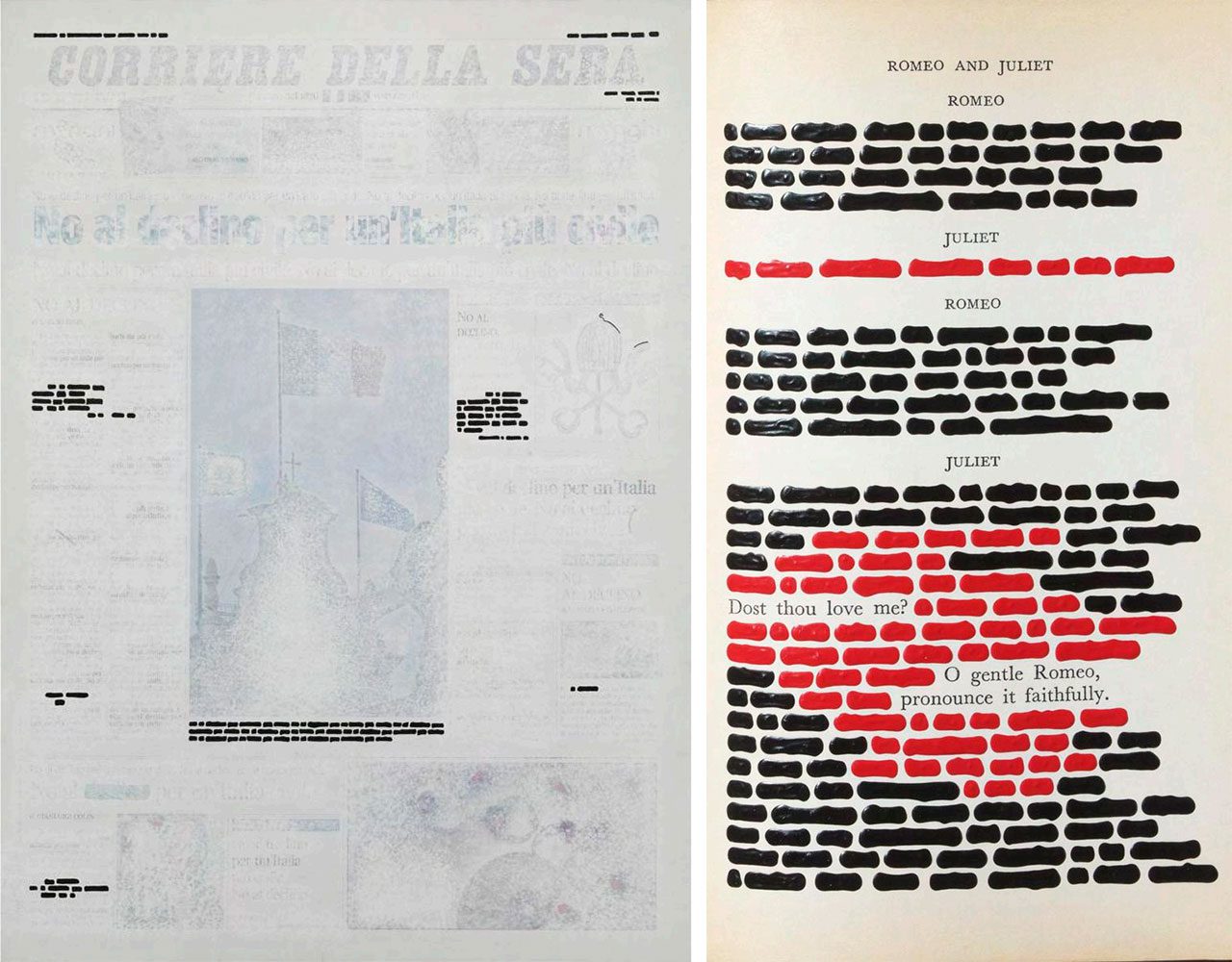
Left: Emilio Isgrò, Ala italiana, 2013, acrylic on canvas mounted on wood panel, 70,86 x 51,18 in - 180 x 130 cm, reverse: signed, titled, dated and numbered on the reverse: Ala italiana / Emilio Isgrò 2013 / N 38. certificate of authenticity certificate of authenticity by Emilio Isgrò on photograph., © Emilio Isgrò, Courtesy the artist and Tornabuoni Art Right: Emilio Isgrò, Romeo e Giulietta (detail), 2022, acrylic on printed canvas mounted on book and wood panel, 38 elements, 12,4 x 15,66 x 1,57 in - 31,5 x 39,8 x 4 cm, © Emilio Isgrò, Courtesy the artist and Tornabuoni Art
Left: Emilio Isgrò, Ala italiana, 2013, acrylic on canvas mounted on wood panel, 70,86 x 51,18 in – 180 x 130 cm, reverse: signed, titled, dated and numbered on the reverse: Ala italiana / Emilio Isgrò 2013 / N 38. certificate of authenticity certificate of authenticity by Emilio Isgrò on photograph., © Emilio Isgrò, Courtesy the artist and Tornabuoni Art
Right: Emilio Isgrò, Romeo e Giulietta (detail), 2022, acrylic on printed canvas mounted on book and wood panel, 38 elements, 12,4 x 15,66 x 1,57 in – 31,5 x 39,8 x 4 cm, © Emilio Isgrò, Courtesy the artist and Tornabuoni Art