PRESENTATION: Tarik Kiswanson-The Relief
For over a decade, Tarik Kiswanson has explored the fluid terrain of rootlessness, metamorphosis, and memory. His work—spanning sculpture, video, sound, and installation—emerges from a legacy of displacement and transformation, permeating every form he creates. Deeply personal yet profoundly universal, Kiswanson’s art resonates with collective histories of rupture, loss, and regeneration, offering spaces where trauma and hope coexist.
By Dimitris Lempesis
Photo: Institut suédois Archive
Awarded the Prix Marcel Duchamp in 2023, Kiswanson has become one of the most acclaimed Swedish artists of his generation, celebrated internationally for his ability to transform materials and spaces into meditations on human endurance. His solo exhibition, “The Relief,” presents two newly commissioned works alongside pieces being shown in France for the first time—each probing the relationship between history, identity, and the fragile process of healing.
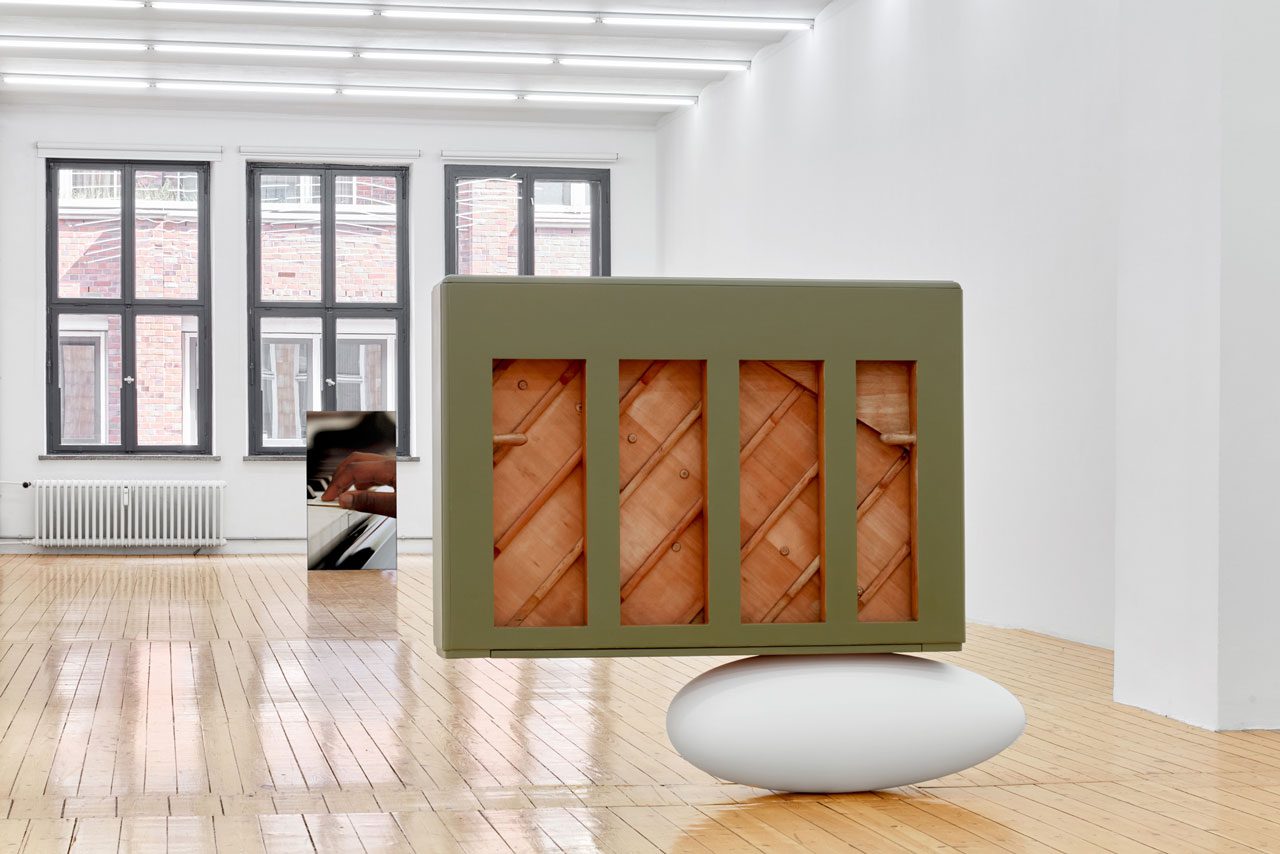
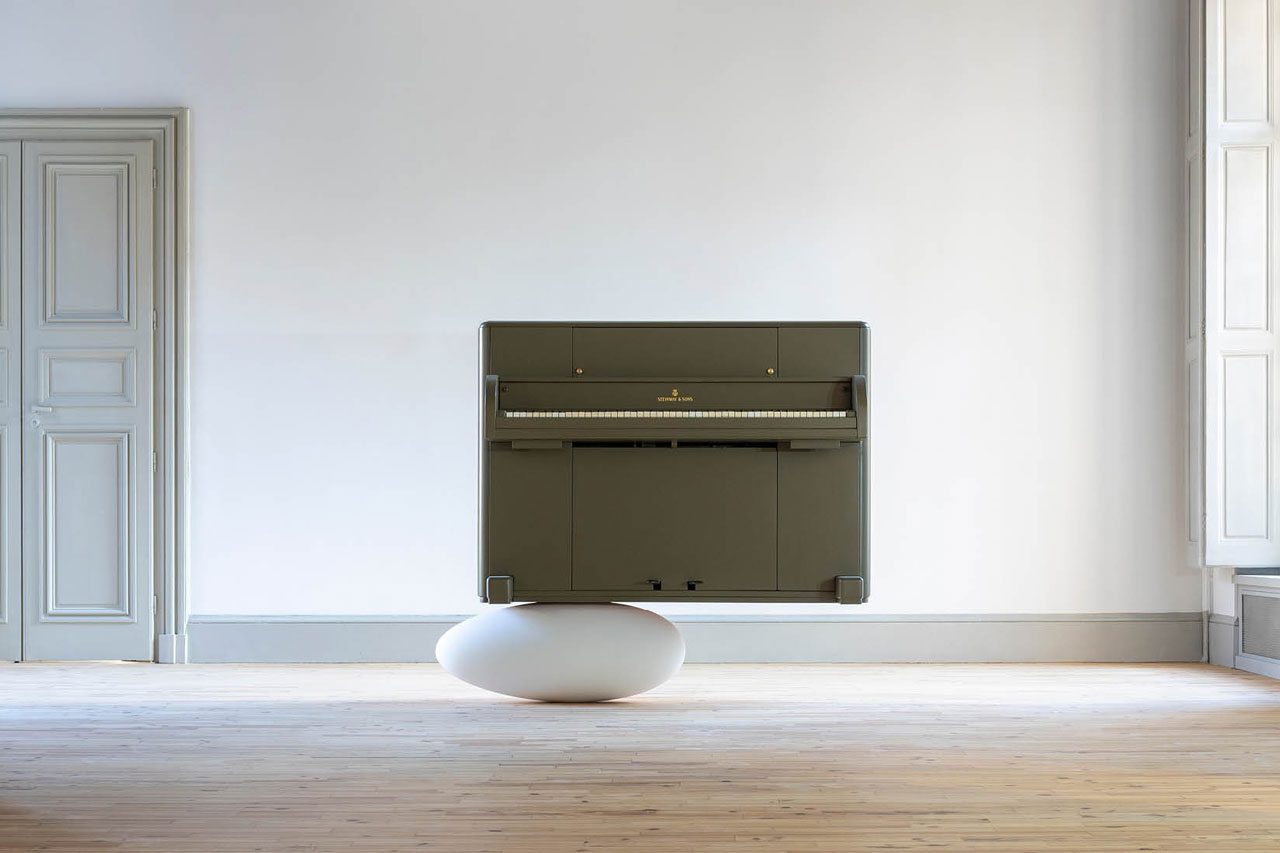
At the center of the exhibition stands a poignant dialogue between two symbols: a “Steinway Victory Vertical” piano from 1944 and a pristine white sculpture reminiscent of a cocoon or egg—an emblem recurring throughout Kiswanson’s oeuvre. The upright piano, parachuted to soldiers during World War II to lift morale amidst devastation, floats delicately above the cocoon-like form. The juxtaposition evokes both solace and rebirth—the piano, once a balm for wartime spirits, now suspended in an otherworldly calm; the cocoon, a vessel of renewal and collective memory. Together, they embody the belief that creation itself holds the power to save, to comfort, to regenerate.
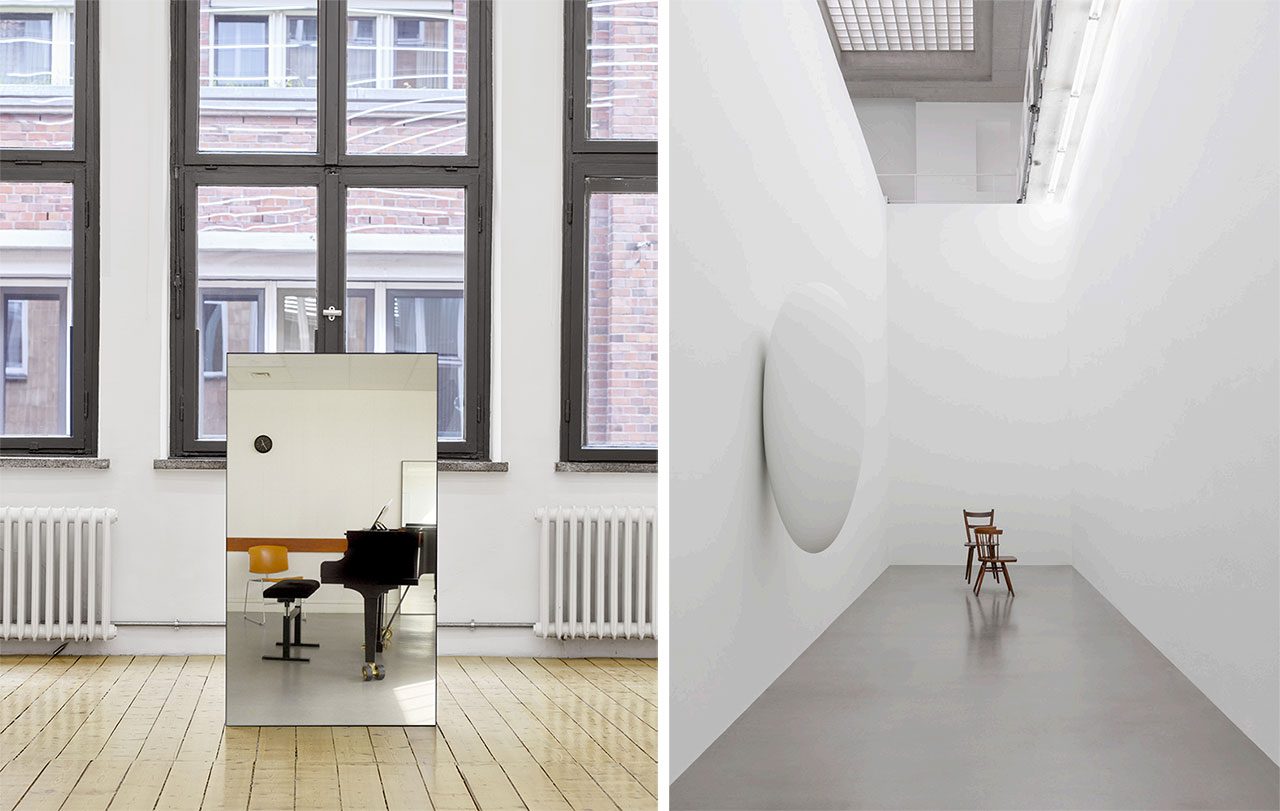
In a nearby video installation, students from the Saint-Denis Conservatory attempt to perform “Ode to Joy”—Beethoven’s timeless hymn to unity and peace, later adopted as the anthem of the European Union. Their hesitant gestures, interrupted rhythms, and moments of silence transform the performance into a quiet reflection on belonging. Who is Europe? Who claims its ideals, and who is excluded from them? The work becomes a mirror held up to the continent’s fractured identity, asking viewers to reconsider what community truly means in a postcolonial, post-war world still grappling with division.
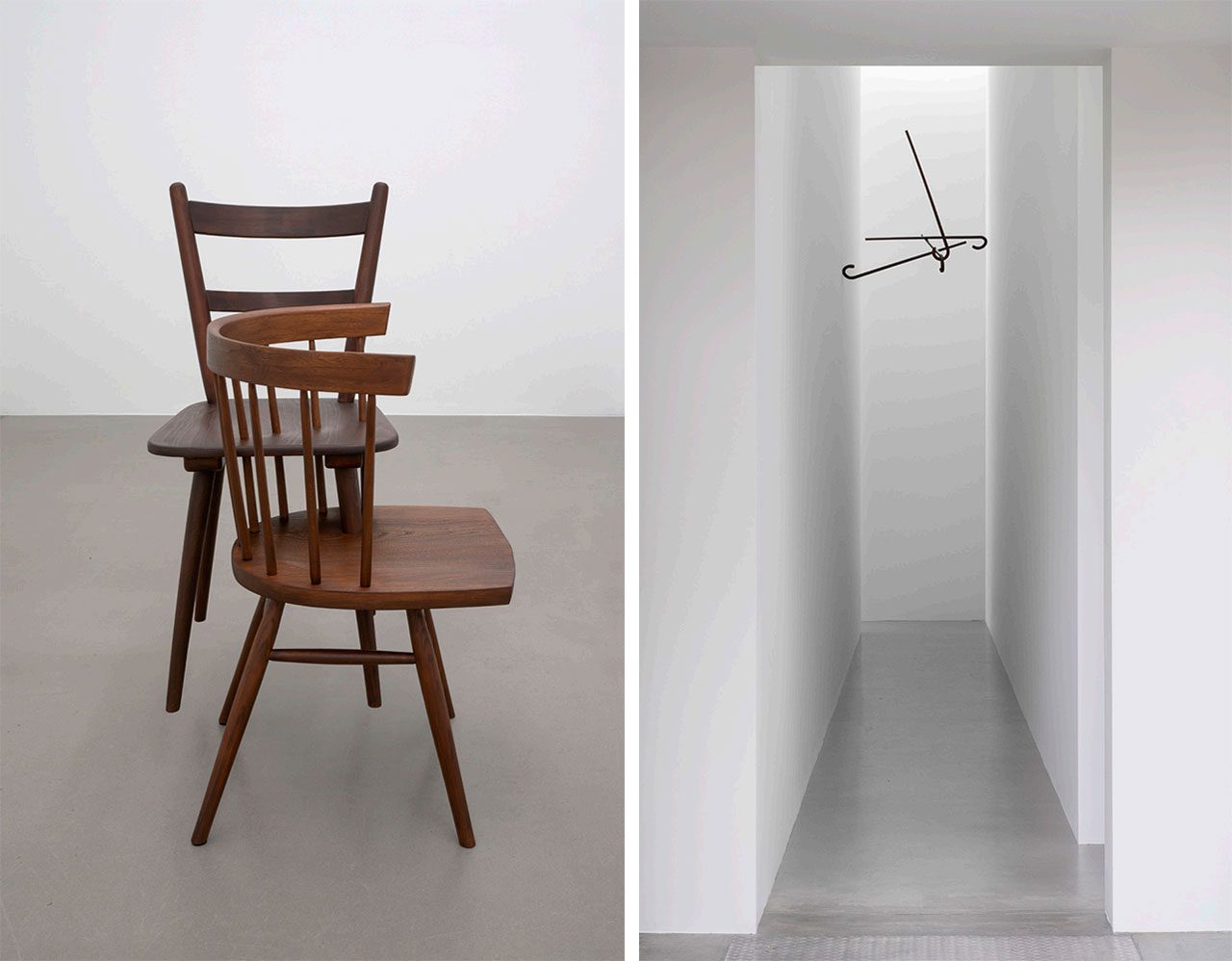
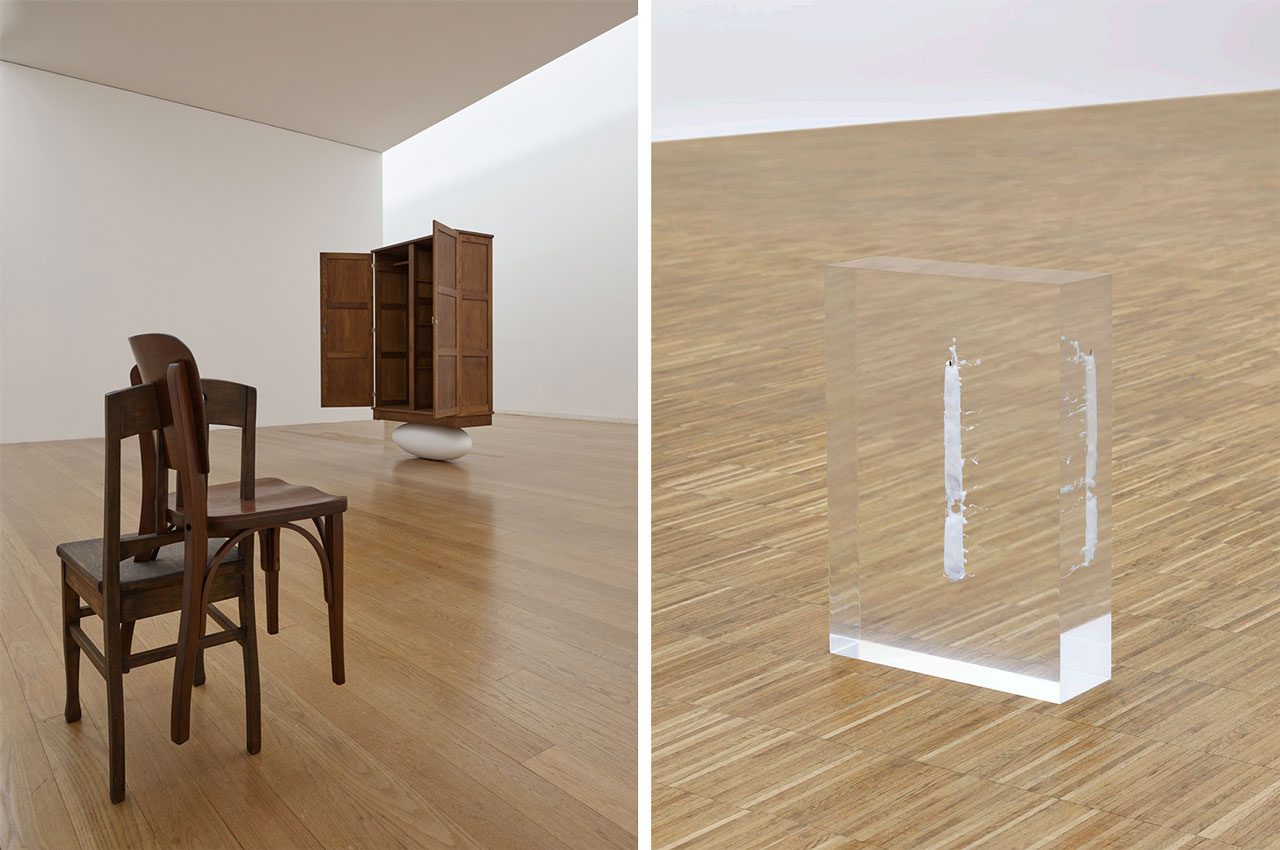
Kiswanson’s “Foresight” continues this exploration through the language of objects. The sculpture merges two chairs from 1945: one designed by George Nakashima, a Japanese-American architect interned during World War II, and another by Adolf Gustav Schneck, a German architect associated with the Nazi regime. The conjoined forms—both elegant, both bearing the scars of history—speak to the entanglement of narratives often kept apart. They embody contradiction, the coexistence of violence and silence, and the shared yet conflicting legacies of modernity. Through such works, Kiswanson performs what might be called a material archaeology of memory. He recovers and reconfigures objects, allowing them to articulate what words cannot—the unspeakable dimensions of human experience. His practice does not aim to resolve the contradictions of our collective past but to make them visible, to confront them with tenderness and clarity.
In Kiswanson’s world, trauma is not an endpoint but a passage. His installations are spaces of transformation, where remembrance becomes an active process 11/1/2026, works, one senses both fragility and endurance—a recognition that, despite our fractures, we continue to rebuild. Tarik Kiswanson invites us to inhabit these in-between spaces, where the boundaries between history and present, self and other, collapse into something altogether new. Through his art, we are reminded that to remember is not simply to look back—it is to reimagine how we move forward.
Photo: Tari Kiswanson, The Relief, Exhibition view Institut suédois-Paris, 2025, Photo: Edward Greiner, Courtesy the artist and Institut suédois
Info: Institut suédois, 11 rue Payenne, Paris, France, Duration: 25/10/2025-11/1/2026, Days & Hours: Tue-Wed & Fri-Sun 12:00-19:00, Thu 12:00-21:00, https://paris.si.se/